Polokwane work needs screens that stay readable in hard daylight
Polokwane brings bright midday sun, open sites and traffic movement that can pull attention away from a screen in seconds. For that setting we specify outdoor LED screen trailers and LED boxes with high brightness, the right pixel pitch for the viewing distance, and content that stays legible from the pavement, a roadside turnout or an event field.
Smaller audience distances need finer pixel pitch. Bigger roadside placements can work with a broader pitch if the message is built for quick reading, larger text and strong contrast. The technician on site checks the angle, height and content flow so the screen is seen properly from the direction that matters most.
Where the site is exposed, the trailer base and screen frame must be handled with care. Wind limits are checked before lifting, and the screen is only raised when conditions allow it. If the ground is uneven or access is tight, that changes the setup plan too, especially on split parking areas, school grounds and roadside lay-bys.
Trailer lifts, rotation and the power choice on the day
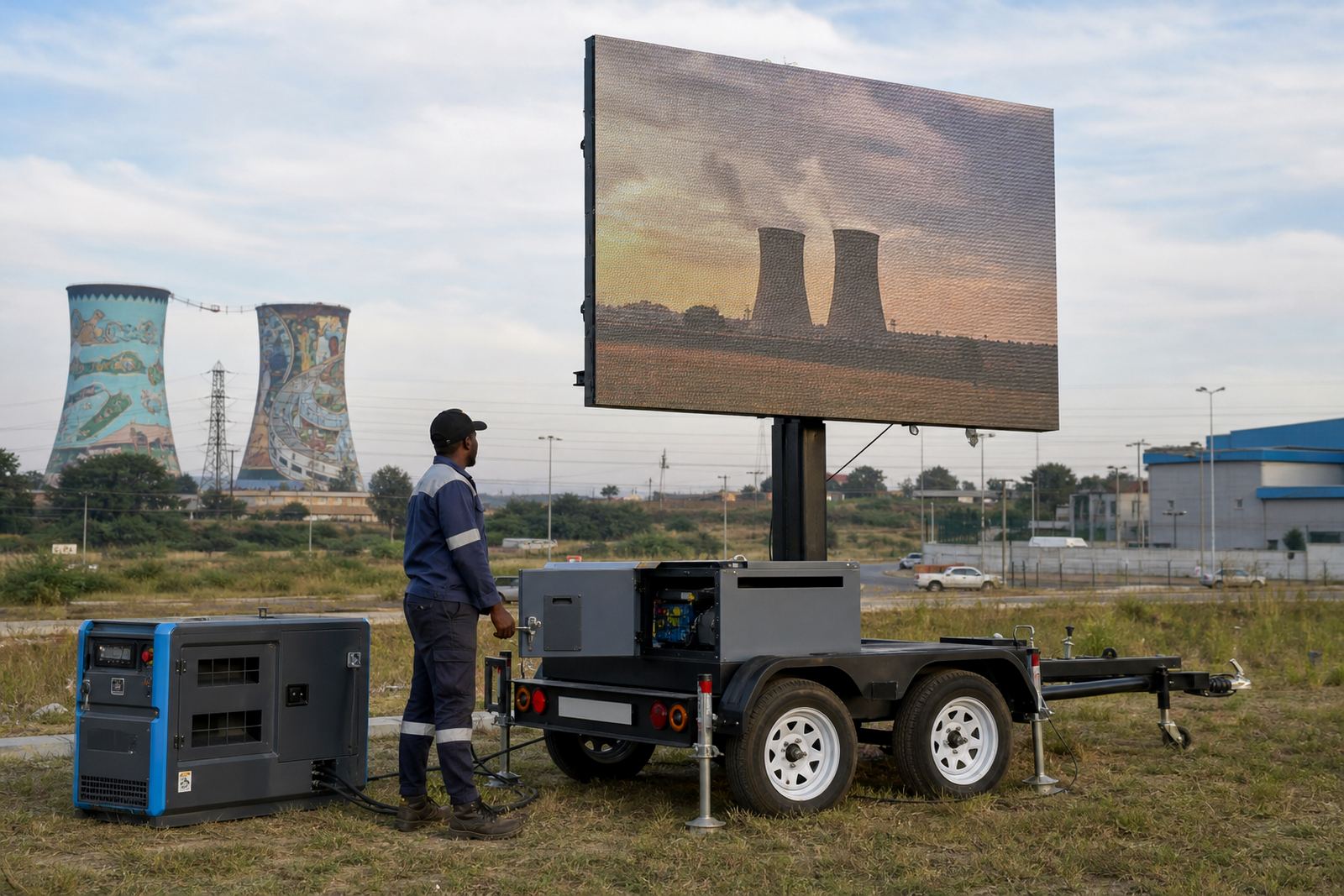
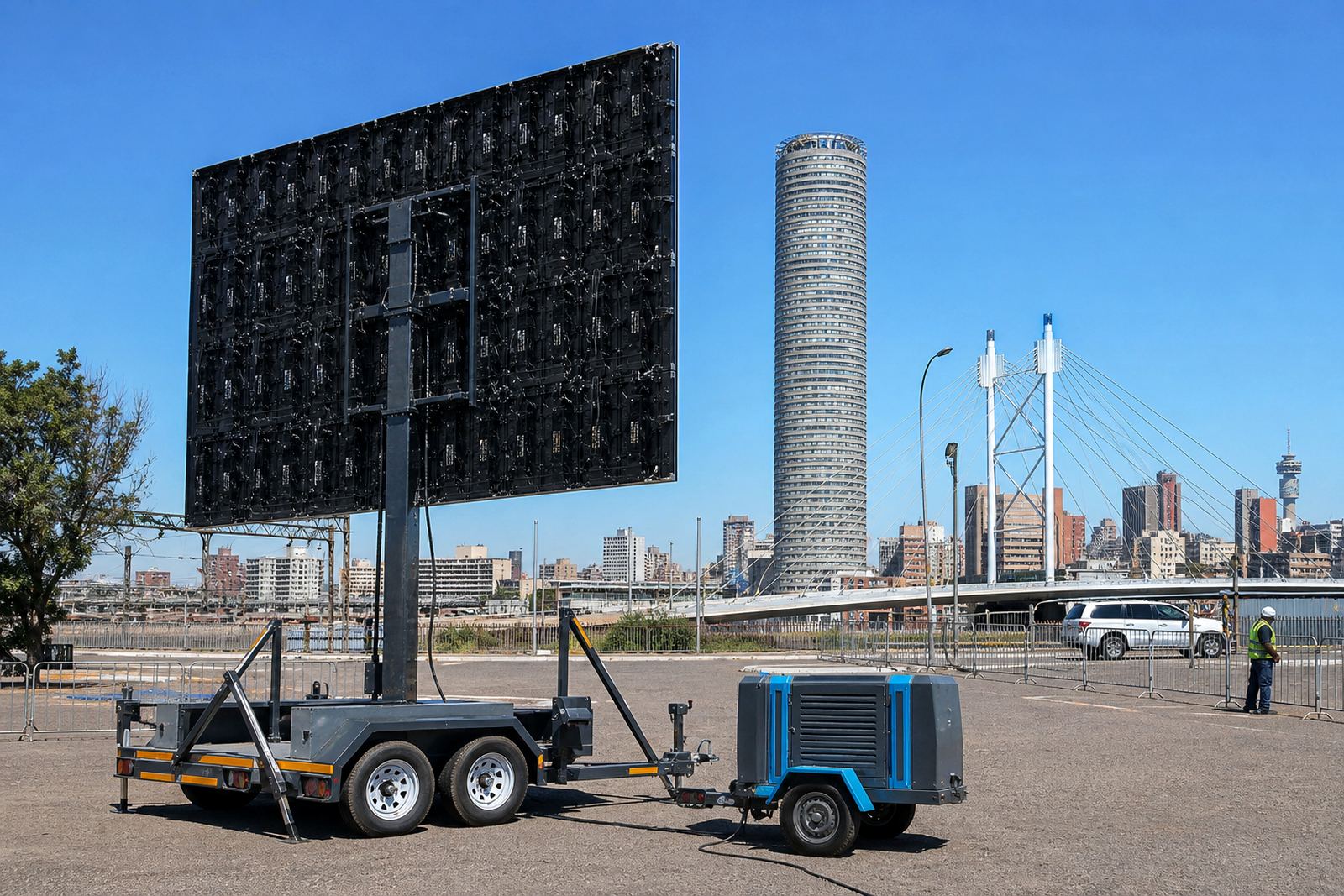
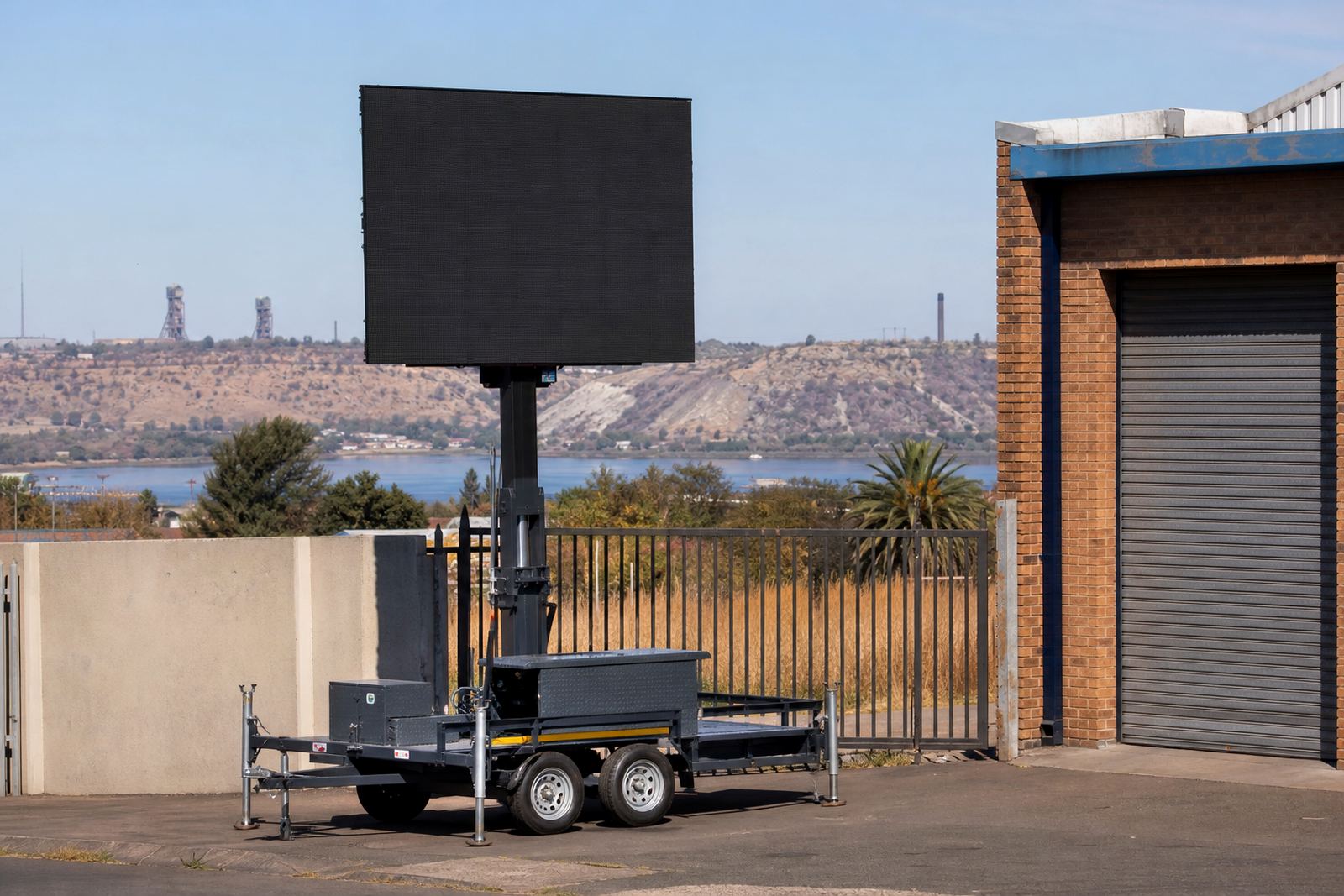
Outdoor LED screen trailers are built for fast positioning and a neat footprint. The hydraulic lift raises the screen to viewing height, and rotation helps the face line up with the crowd, the entrance flow or the direction of passing traffic. That matters on Polokwane roads where sightlines can be long and the audience may only catch a few seconds at a time.
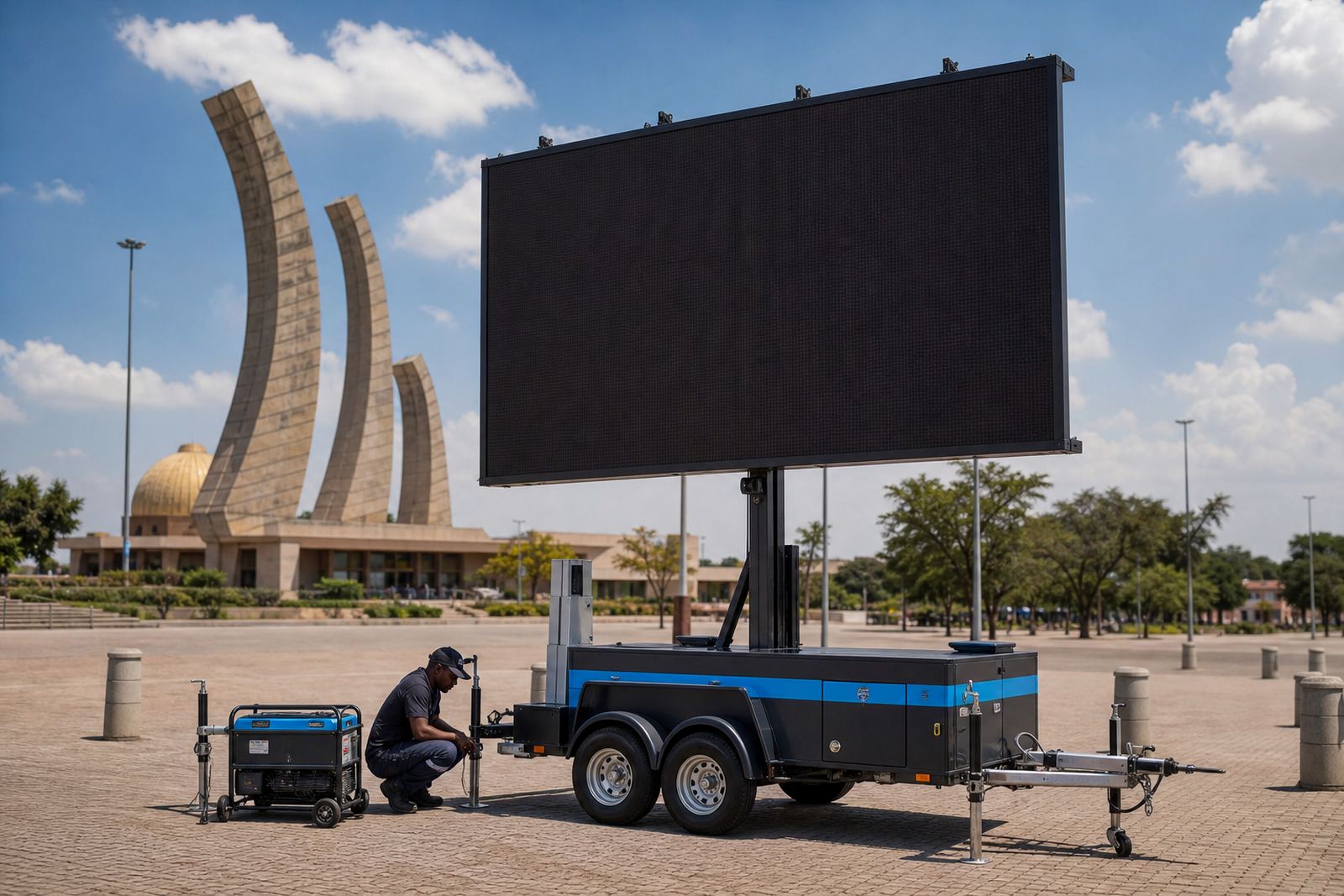
Power planning depends on the site. Some placements run from generator power, others can be set up on mains power if the venue has the supply and access required. Our team checks cable runs, safe placement and the practical side of getting power to the unit without blocking public movement. For sites with live feed or long playback windows, stable power planning becomes part of the setup rather than a last-minute fix.
- Hydraulic lift for screen height and visibility
- Rotation to face the crowd or roadside traffic
- Generator or mains power, depending on the site
- Playback support for ads, stills, schedules and live feed
- Weather checks before, during and after setup
Who books Polokwane screen hire and what they use it for
Polokwane deployments suit retail teams, event organisers, roadshow crews and brand managers who need a screen that can move with the campaign. A trailer screen works well where the audience is passing through rather than seated in one fixed place. That makes it useful for store launches, sports days, campus activity, market exposure and community programmes.
The same setup can be used for a short campaign stop or a longer run with repeat content. Some clients need one strong advert on loop, others need a schedule with mixed clips, live camera feed or day parts. We load the material, check the format and manage playback on site so the screen is ready to work as planned.
Roadside stops around Polokwane also need a practical view of timing, access and local control. If a site needs permit guidance, we flag the general requirements early so the organiser can work through the relevant municipal steps. That is especially useful for public areas, advertising along busy approaches and placements where traffic or pedestrian flow needs to be managed carefully.
The ground conditions we watch around Polokwane
Polokwane weather can move quickly from clear sun to strong wind, and dust can show up on open sites. That changes how we approach the trailer position, the screen angle and the protection of cables, playback gear and mounting points. On a windy afternoon the safest plan may be to wait, shift position or change the viewing direction.
We also look at road access, ground firmness and the space needed for towing, stabilising and lifting the screen. On some sites a clear parking strip is enough. On others, the route in matters more than the final pitch point because the unit has to enter, turn and settle without blocking traffic or damaging the surface.
Common Polokwane site factors we cover include:
- Open sunlight and glare at different times of day
- Wind exposure on roadside and field locations
- Dust, loose ground and surface protection
- Safe audience distance from the screen and trailer
- Access for towing, parking and pack down
Delivery, setup and pack down across the city and nearby routes
Our base is in Germiston, but Polokwane jobs are scheduled as part of a wider South African delivery route. That lets us handle single-day activations, multi-stop roadshows and repeat placements where the screen needs to move between locations. The logistics plan is built around the road, the site gate and the timing of the programme.
Setup includes positioning the trailer, lifting the screen, checking the playback unit and lining up the content sequence. If the event needs live feed support, the technician manages the feed and keeps an eye on image quality. At pack down, the screen is lowered, secured and prepared for transport so the next site can be handled properly.
We also cover nearby work where the route reaches beyond the city centre. Polokwane, Ekurhuleni, Kempton Park and the broader Gauteng corridor often connect into wider campaign runs, while the same team can keep the setup consistent across different towns and venue types.
The team behind the screen in Polokwane
LEDBox work is handled by a small specialist team rather than a loose chain of contractors. Sibusiso Shezi oversees the operation as Managing Director, Anika Chetty handles operations, and Thabo Bhengu leads screen work on site. Noluthando Maluleke coordinates logistics, Ruan Mabena supervises fabrication and Karabo Abrahams manages playback details when content has to run cleanly through the programme.
That structure helps on Polokwane jobs where several parts must line up at once: transport, access, power, screen height, content order and site safety. If a campaign includes multiple stops, the same team keeps the practical details aligned from one location to the next without turning the job into guesswork.
Polokwane bookings work best with the tow time in mind, so tell us the start time on the day. That is where the location, screen size need, timing, content type and access notes can be shared for the Polokwane area or a wider route that includes other towns.