

Getting the screen into the right spot
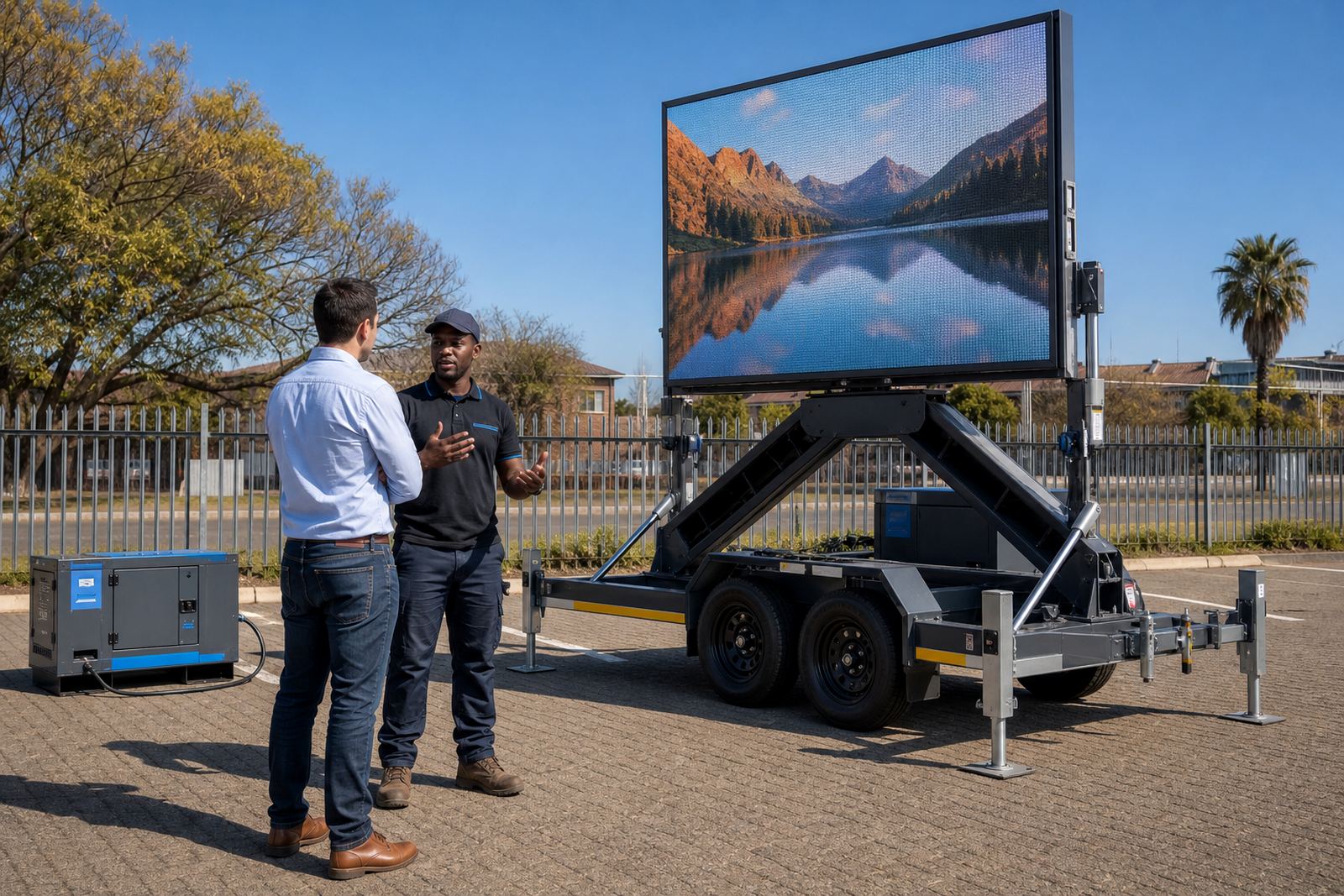
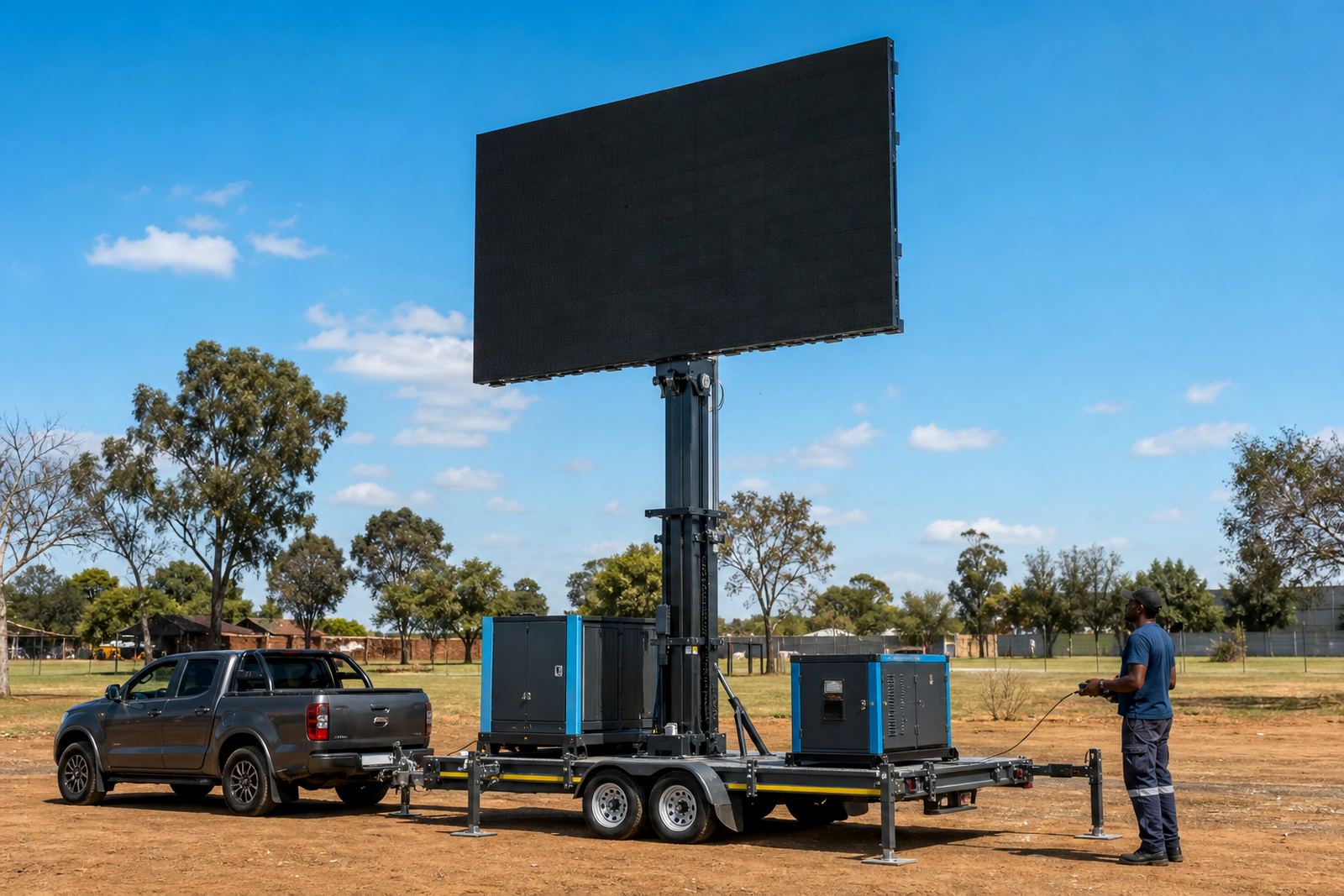
A good support job starts before the trailer rolls in. We look at access roads, turning space, surface condition, viewing angles and where the crowd will stand, then match the screen position to the site. For tight venues in Ekurhuleni or busy roadside setups, that means planning the drop point, cable runs and vehicle movement before the truck arrives.
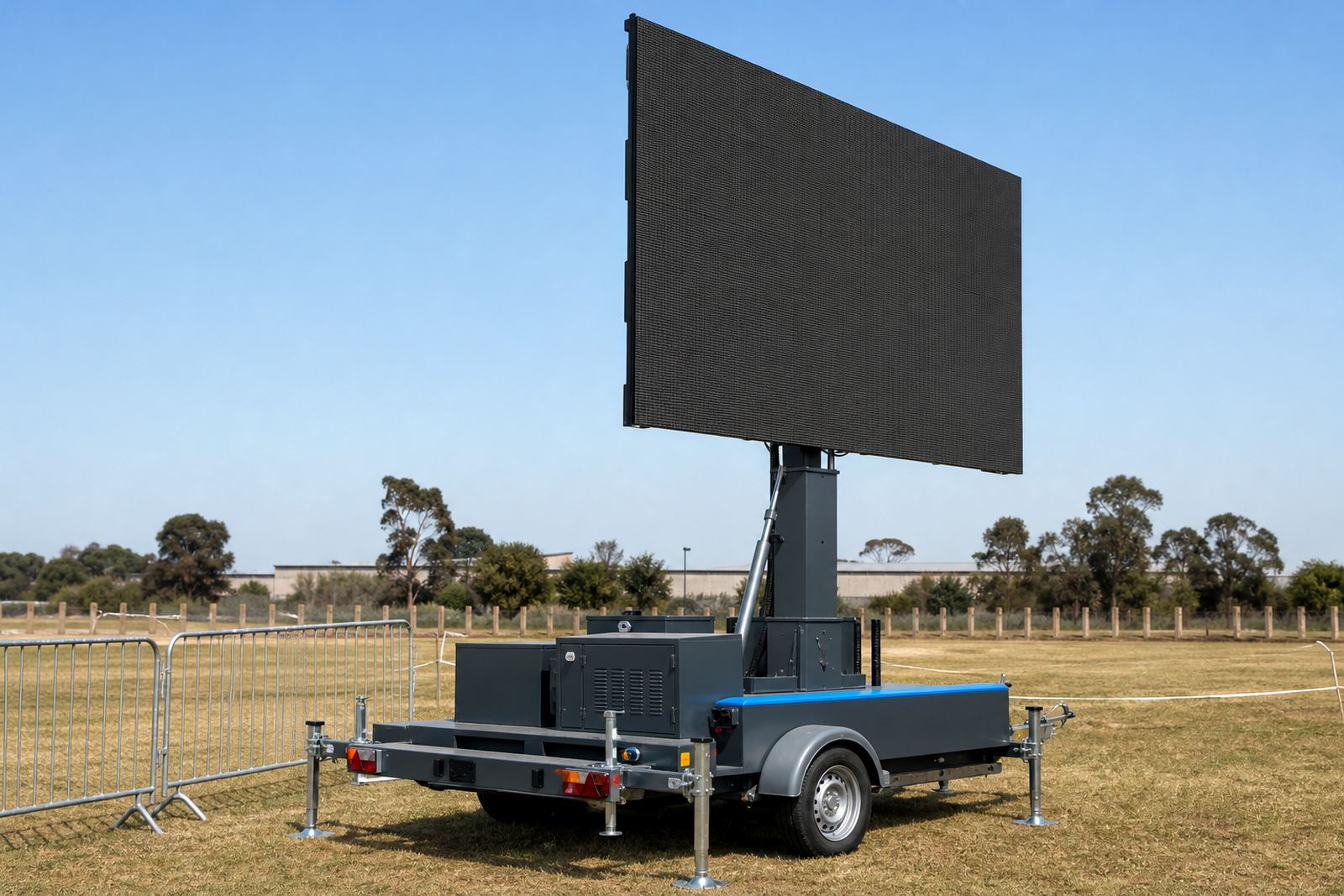
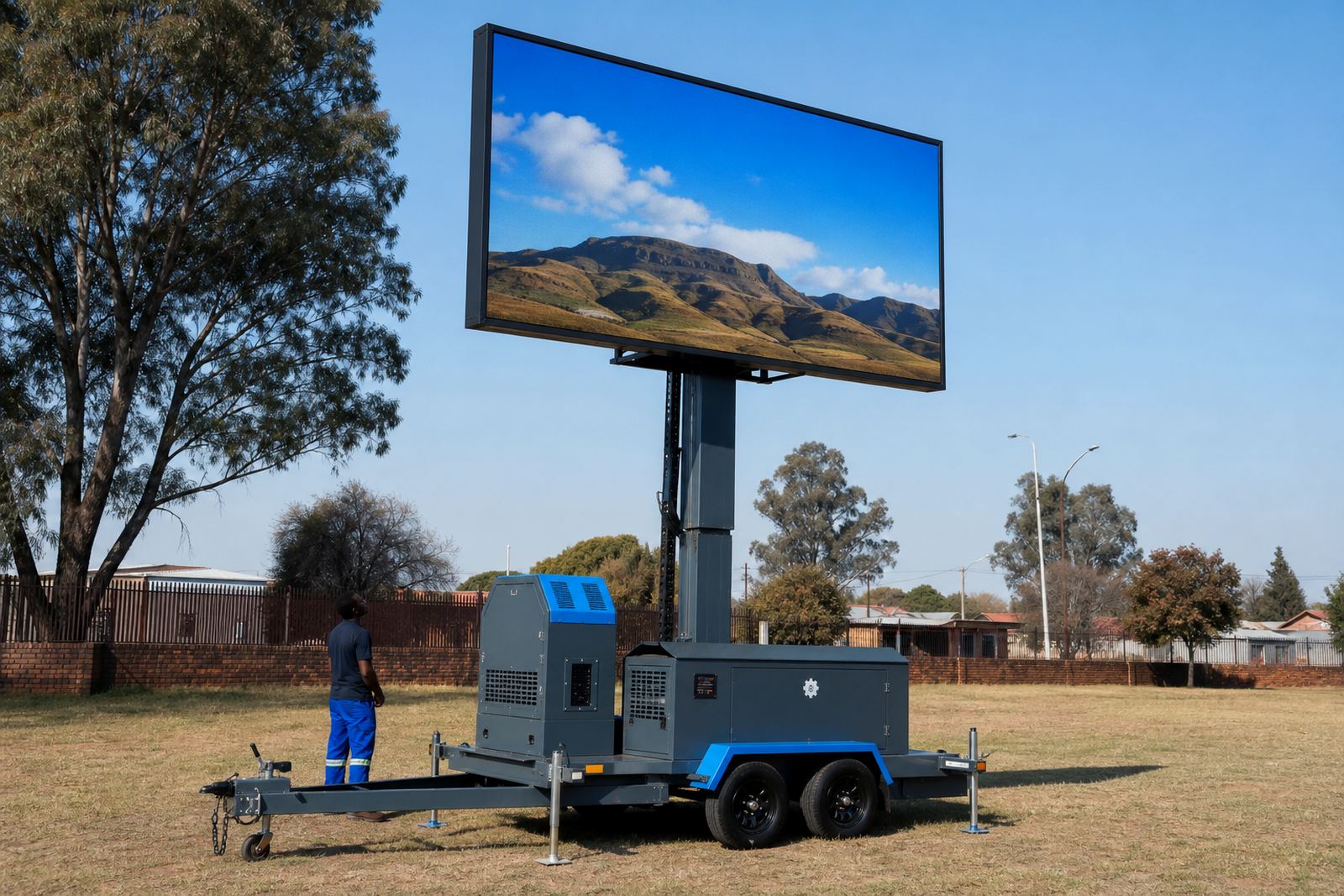
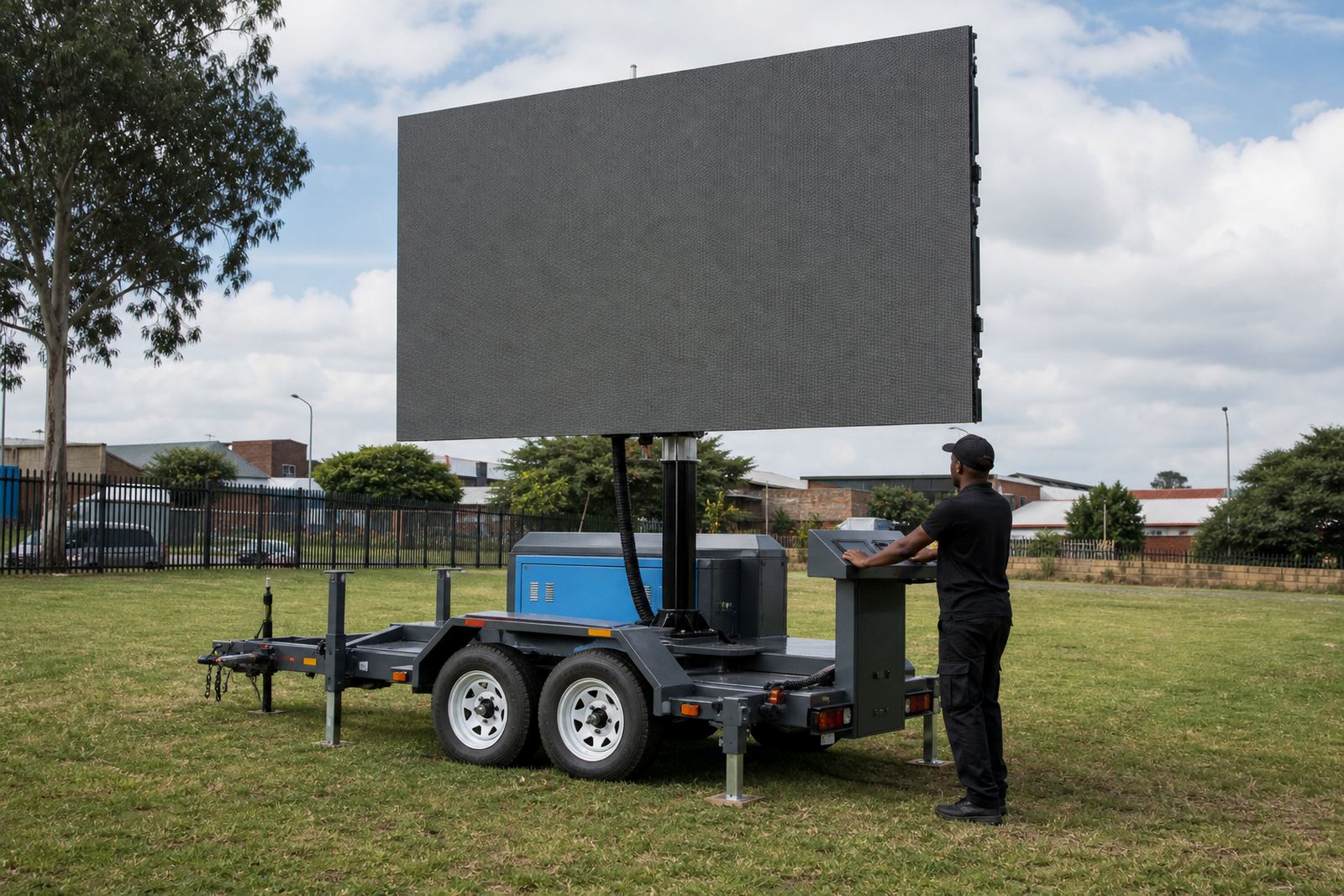
Outdoor LED screen trailers are chosen for daylight visibility, with pixel pitch matched to viewing distance and brightness set high enough for sunlit conditions. Where the ground is uneven or the crowd line shifts, the hydraulic lift and rotation system helps place the screen cleanly without forcing the whole layout to bend around it.
Power, playback and the people on the ground
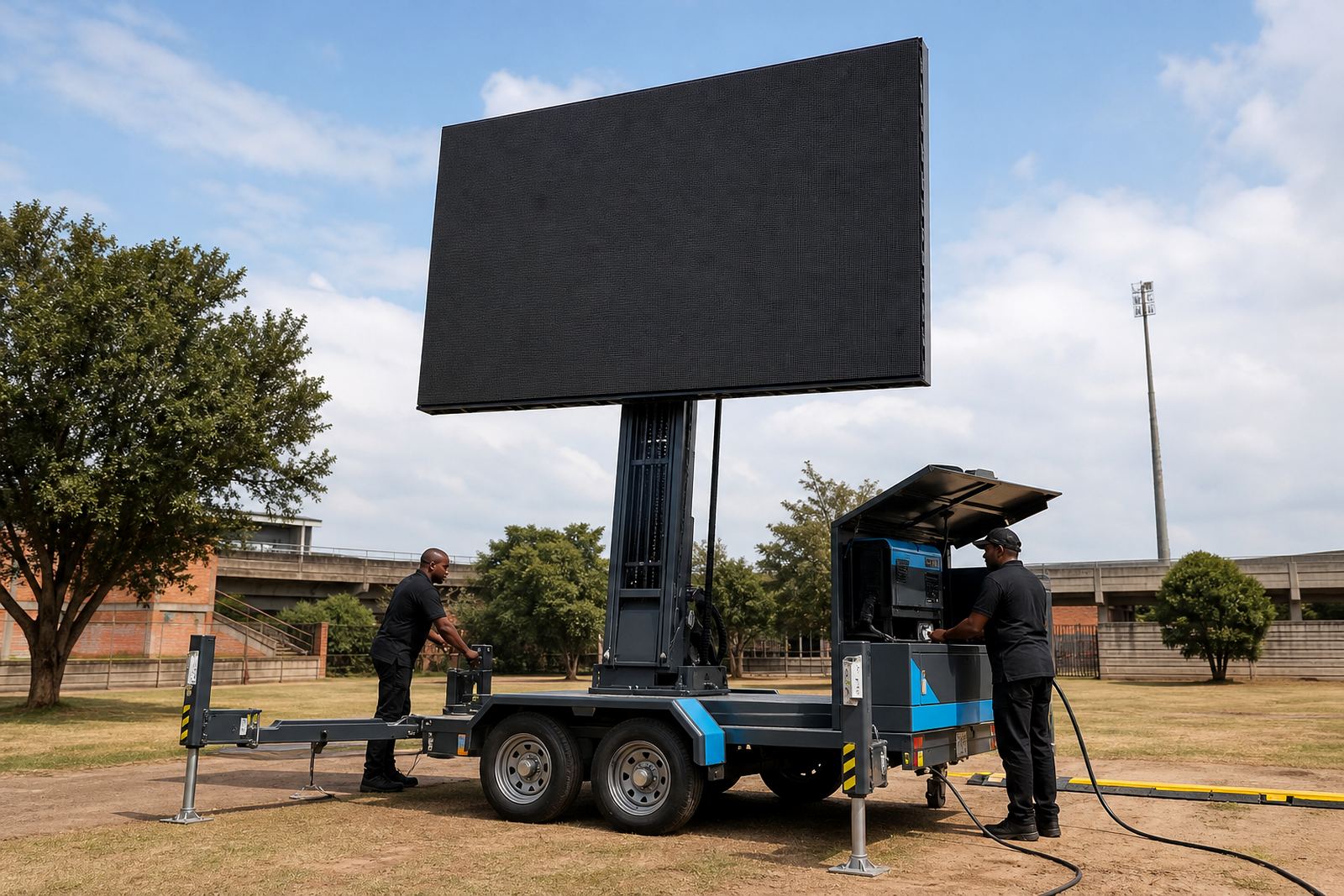
Some sites run from generator power, others from mains power, and the plan changes with the venue. We look at the load, cable path and switch-over points so the screen, media player and support gear stay stable during the event. Content loading is handled before showtime, then playback is monitored on site so slides, loops and live feeds stay in step with the programme.
- Content loading for adverts, sponsor loops and event graphics
- Live feed support for match days, announcements and stage screens
- Power planning for generator or mains supplied sites
- Playback management for scheduled runs and timed segments
Wind, weather and municipal steps
Outdoor screens need a careful eye on weather. Wind limits matter on raised trailers, especially where open ground, high stands or coastal gusts can change the working conditions. If the forecast turns rough, the team watches the setup closely and adjusts the plan where needed.
Municipal approval can also form part of the process, depending on the site, road verge, public access and local rules. That can affect where the trailer sits, how long it remains in place and what paperwork is needed for a public facing display. The details vary from one area to another, so the support plan has to match the venue, not just the screen.
Jobs that need more than a screen and a truck
Support work often includes more than delivery and setup. A sports day may need a simple loop with timing notes. A roadshow may need a multi-stop plan, pack down at one site and a clean reset at the next. Concert support can need live feed handling, stronger crowd control planning and a tighter watch on cue changes.
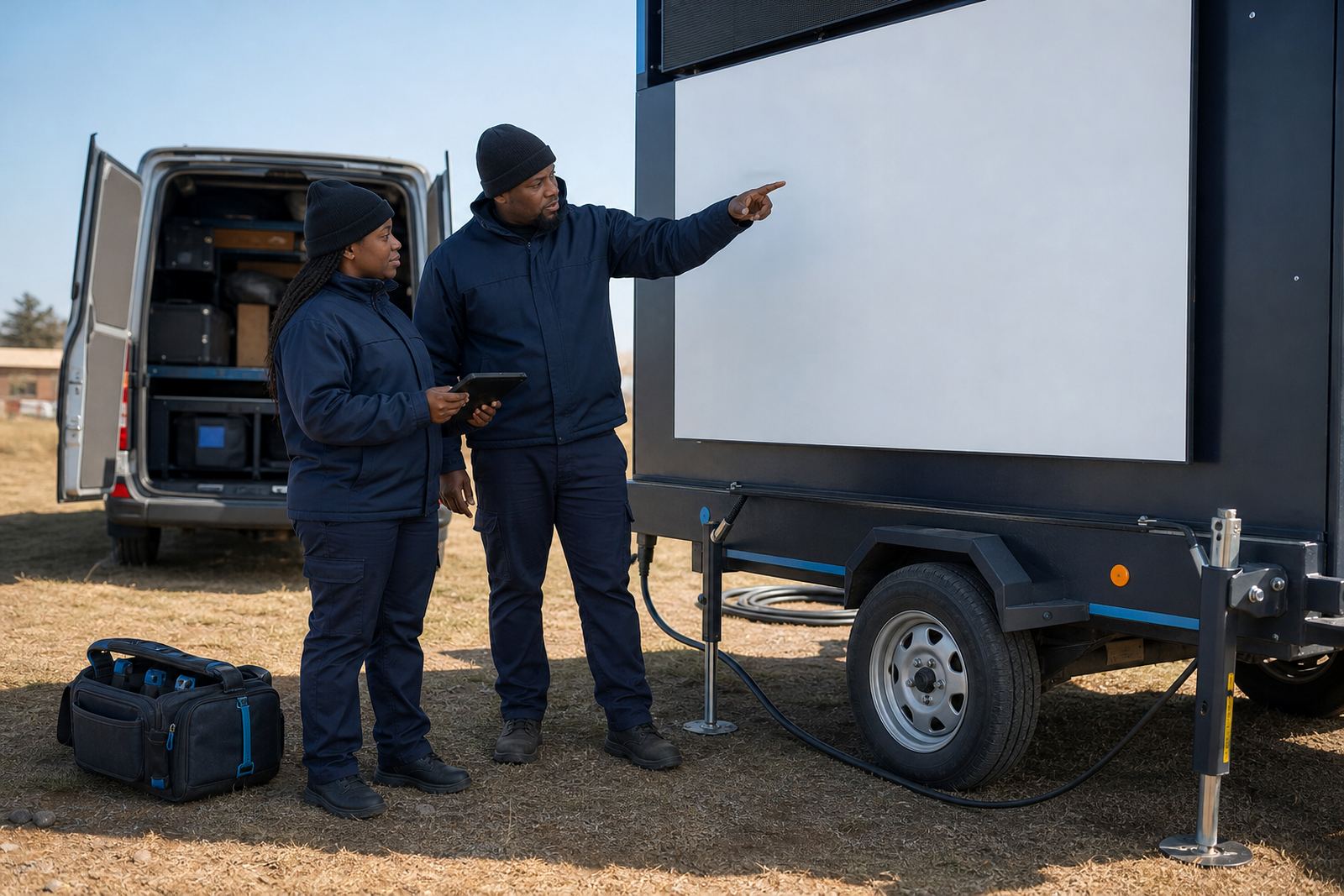
Our on-site technicians handle the moving parts that keep the display usable during the day. That covers screen checks, content loading, playback changes, basic fault tracing and pack down when the event closes.
Where our support teams move
We work from Germiston and support sites across Johannesburg, Pretoria, Durban, Bloemfontein, Polokwane, Kempton Park and the wider Ekurhuleni area. Each route needs its own travel plan, access note and set-up window, especially when the screen has to pass through security points or shared loading bays.
- Site checks before delivery
- Delivery and setup at the venue
- On-site technicians during the run
- Weather monitoring and pack down
What to send through our contact form
When a support request comes in, it helps to include the venue name, town, event date, screen type, expected crowd size and whether the site has generator or mains power. If the display needs live feed input, mention the source and the part of the programme it supports. That gives the team enough detail to map the truck, the screen and the playback plan to the site conditions.
For short roadshows or longer campaign runs, multi-stop planning is useful when the screen moves between venues with different access points, permit rules and viewing distances. Our contact form is the best place to begin that process.