

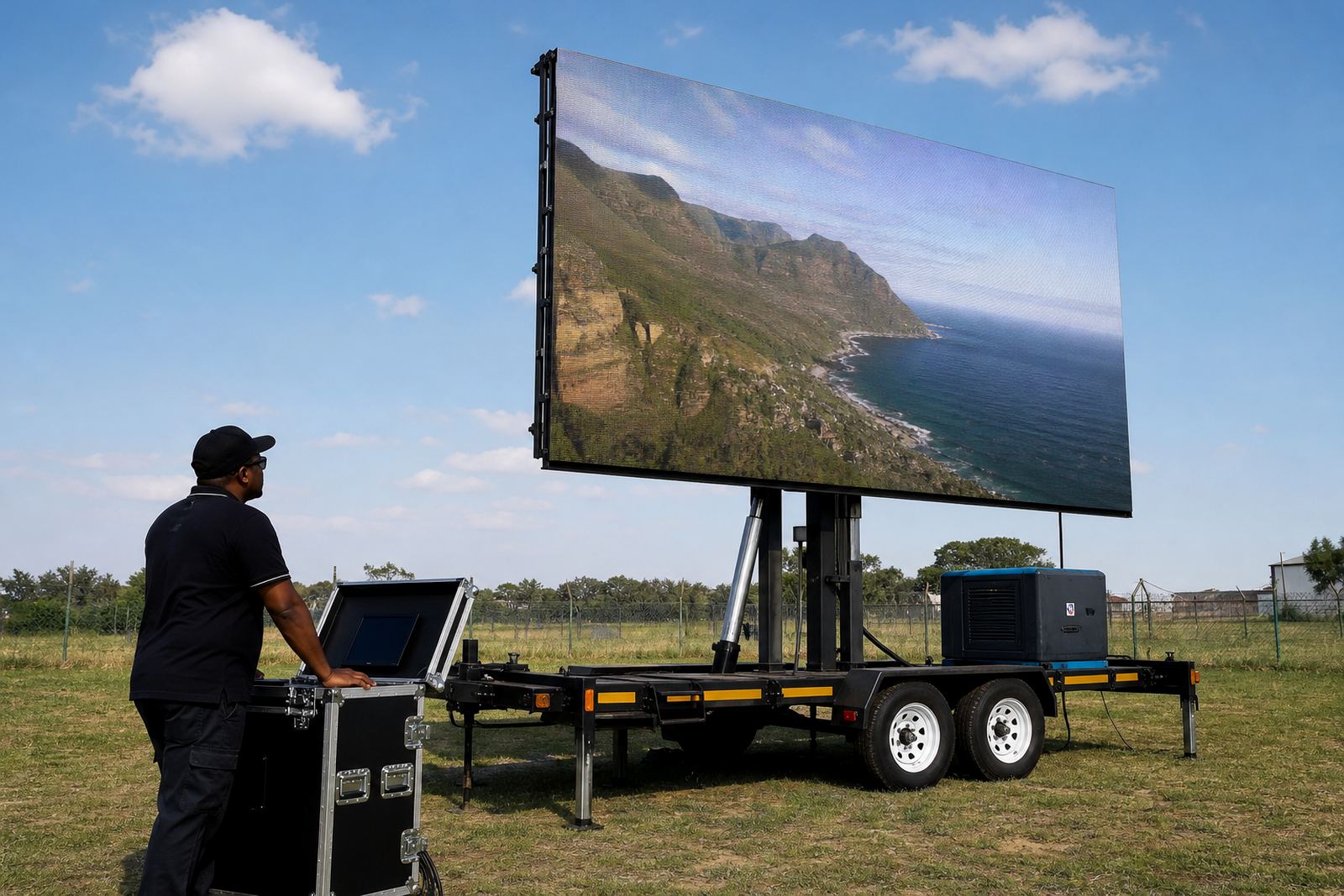
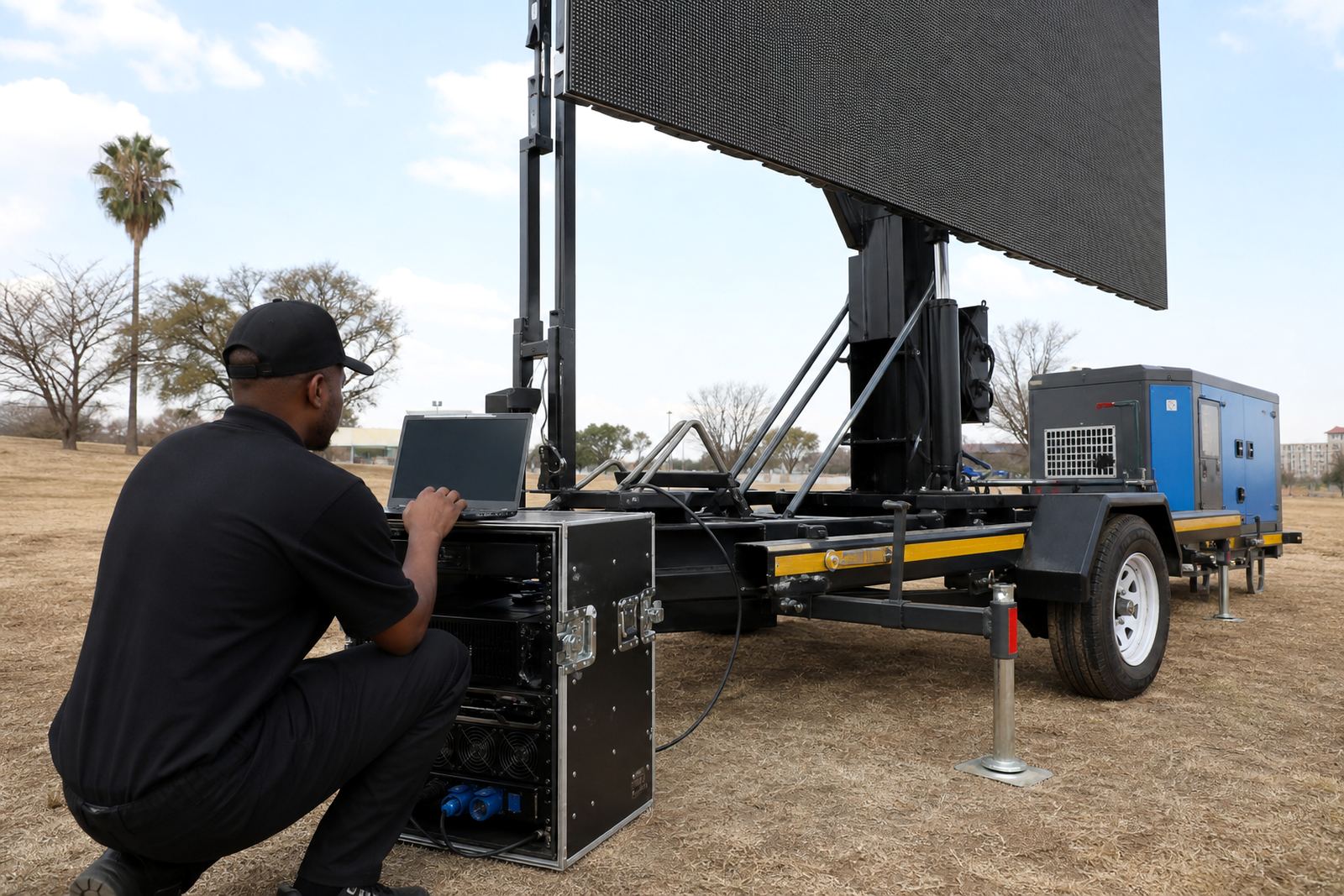
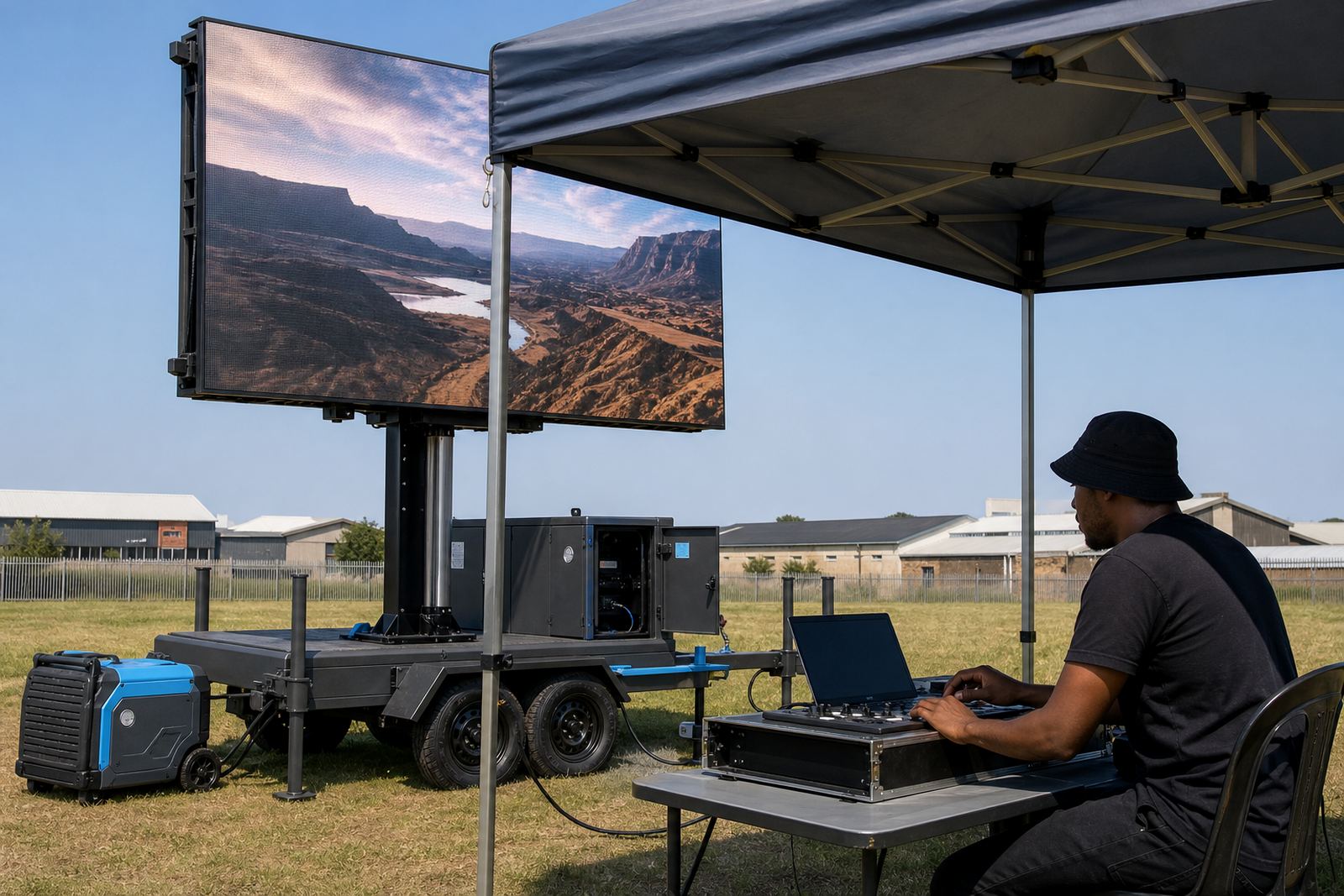
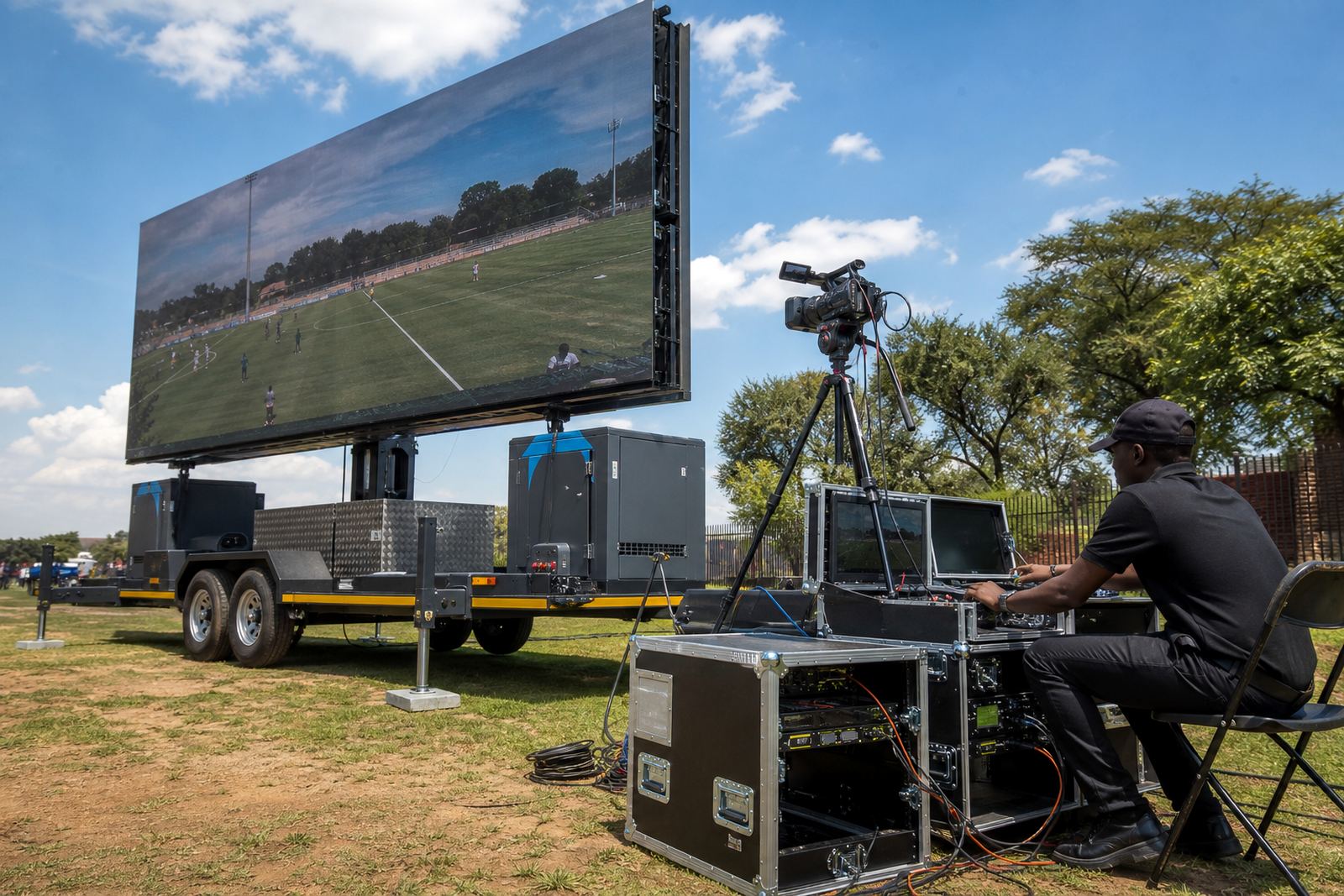
From Germiston to the venue gate
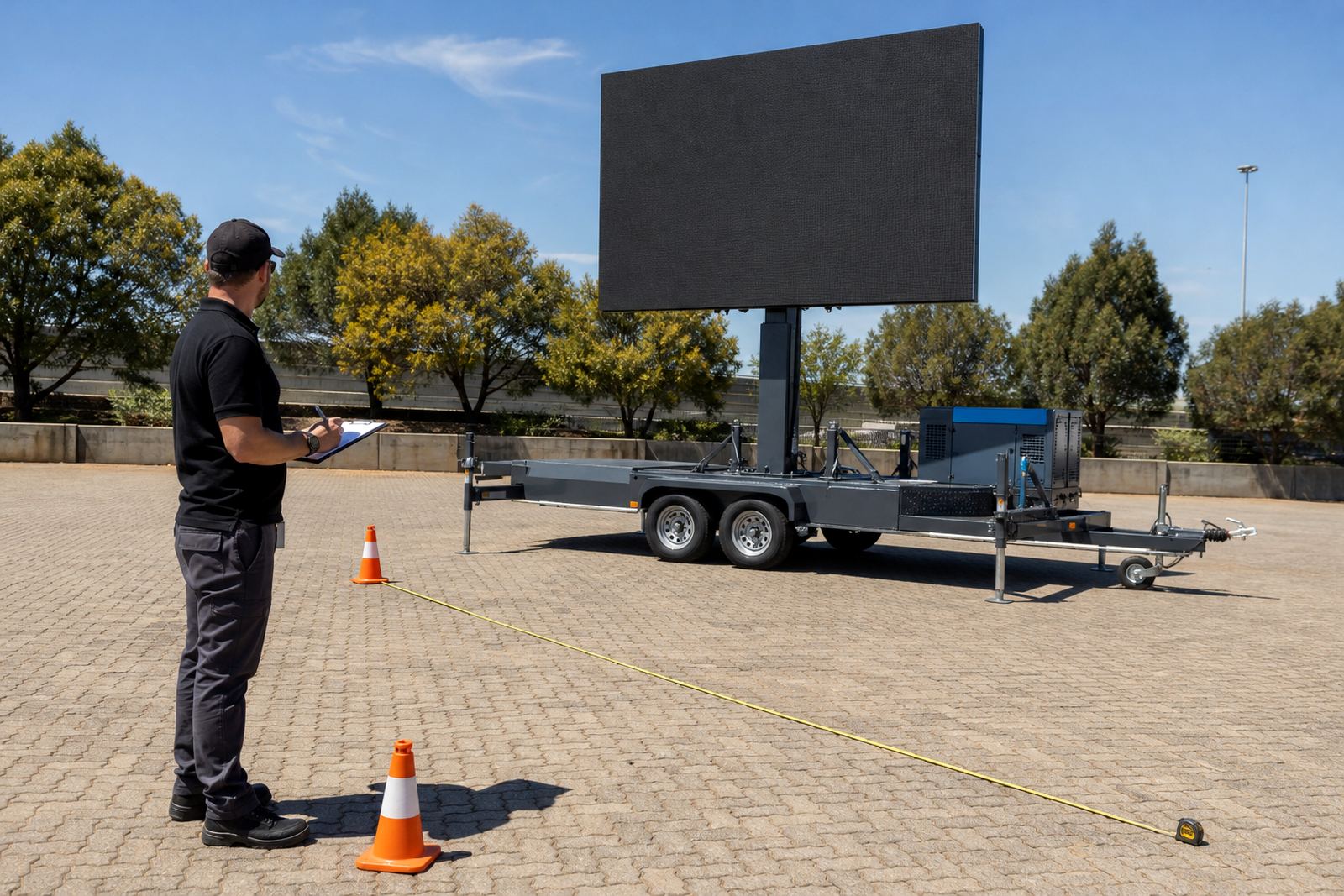
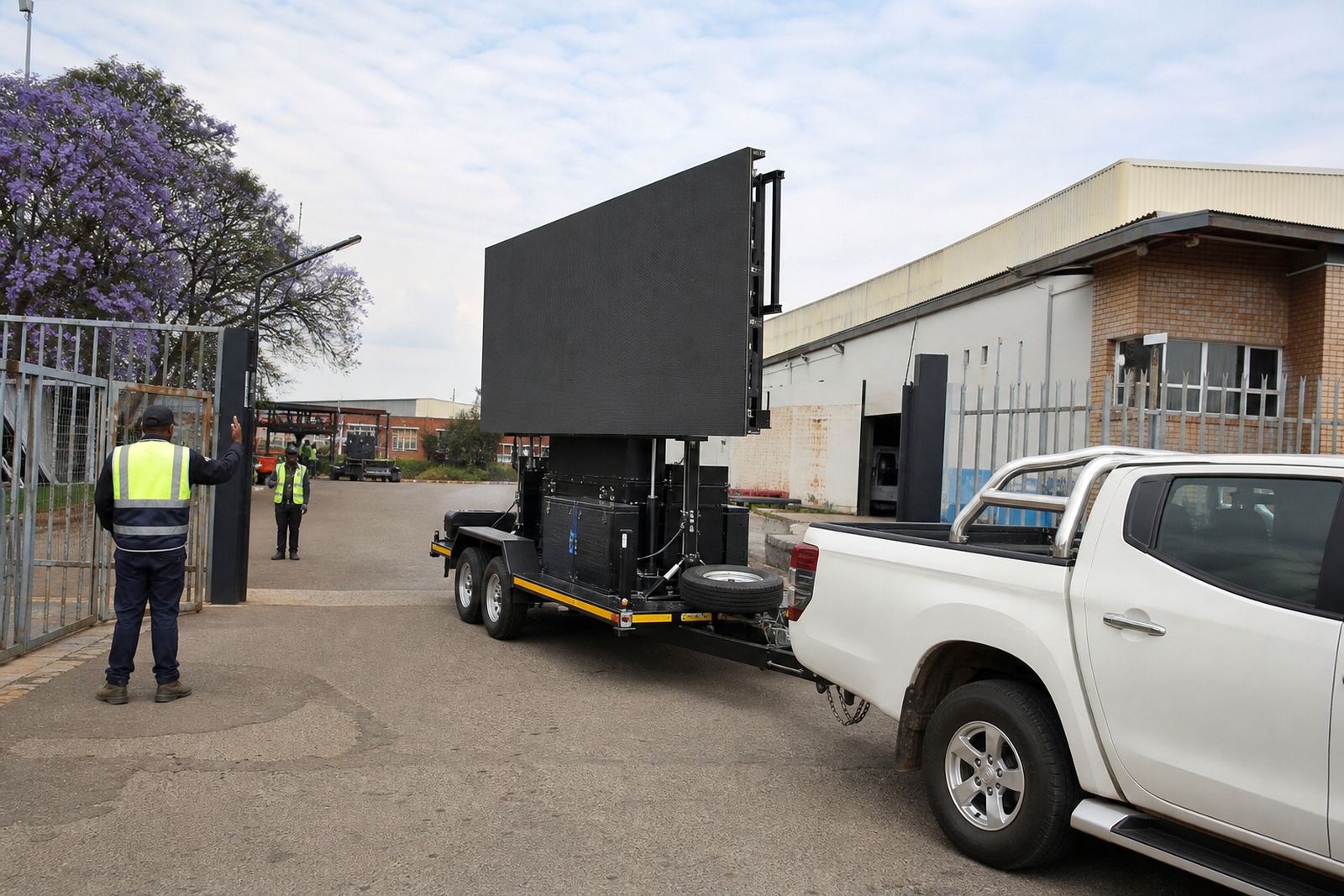
Our base in Germiston, Ekurhuleni supports campaigns across Johannesburg, Pretoria, Durban, Bloemfontein and Polokwane, with routing planned around the actual site and the access roads that lead to it. A trailer or box screen is moved as a working unit, so access width, turning space, parking control and the offload point all matter before the truck is dispatched.
For roadshows and multi-stop work, the sequence is mapped in advance so the screen, crew and playback kit arrive in the right order. That keeps the site changes cleaner when a venue has tight time windows, security rules or municipal restrictions on where a unit may stand.
What the screen package needs on the day
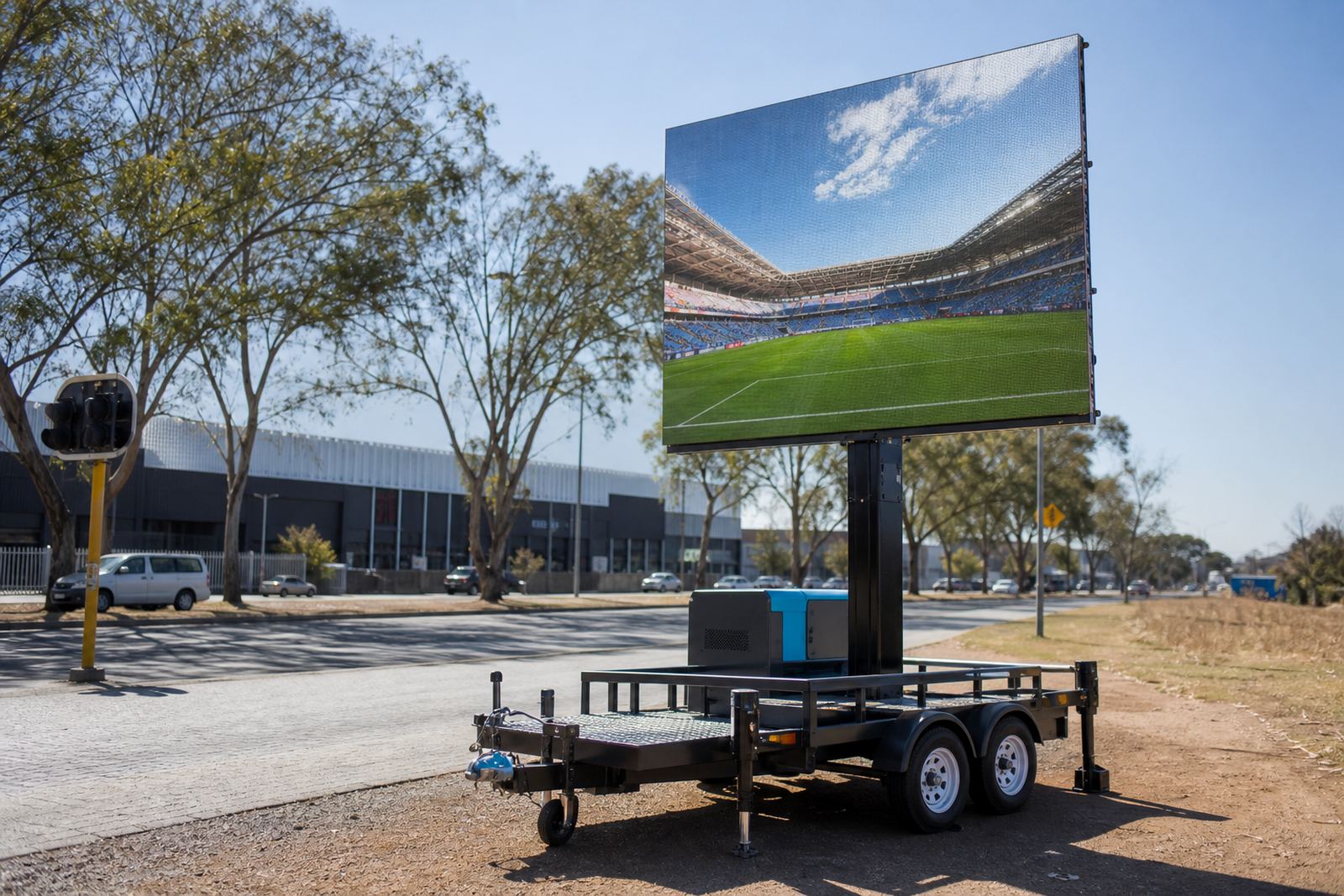
An outdoor LED screen trailer or fixed LED box is not just a display panel. The job also includes hydraulic lift or rotation where the unit is designed for it, control of the viewing angle, brightness suited to daylight use, and content playback that stays stable through the full run.
- Screen pitch selected for viewing distance and image detail
- Brightness set for daylight and changing cloud cover
- Power supplied from generator or mains where the site allows it
- Playback tested before doors open or crowds build up
- Live feed support available where a programme needs it
On-site work that keeps the display steady
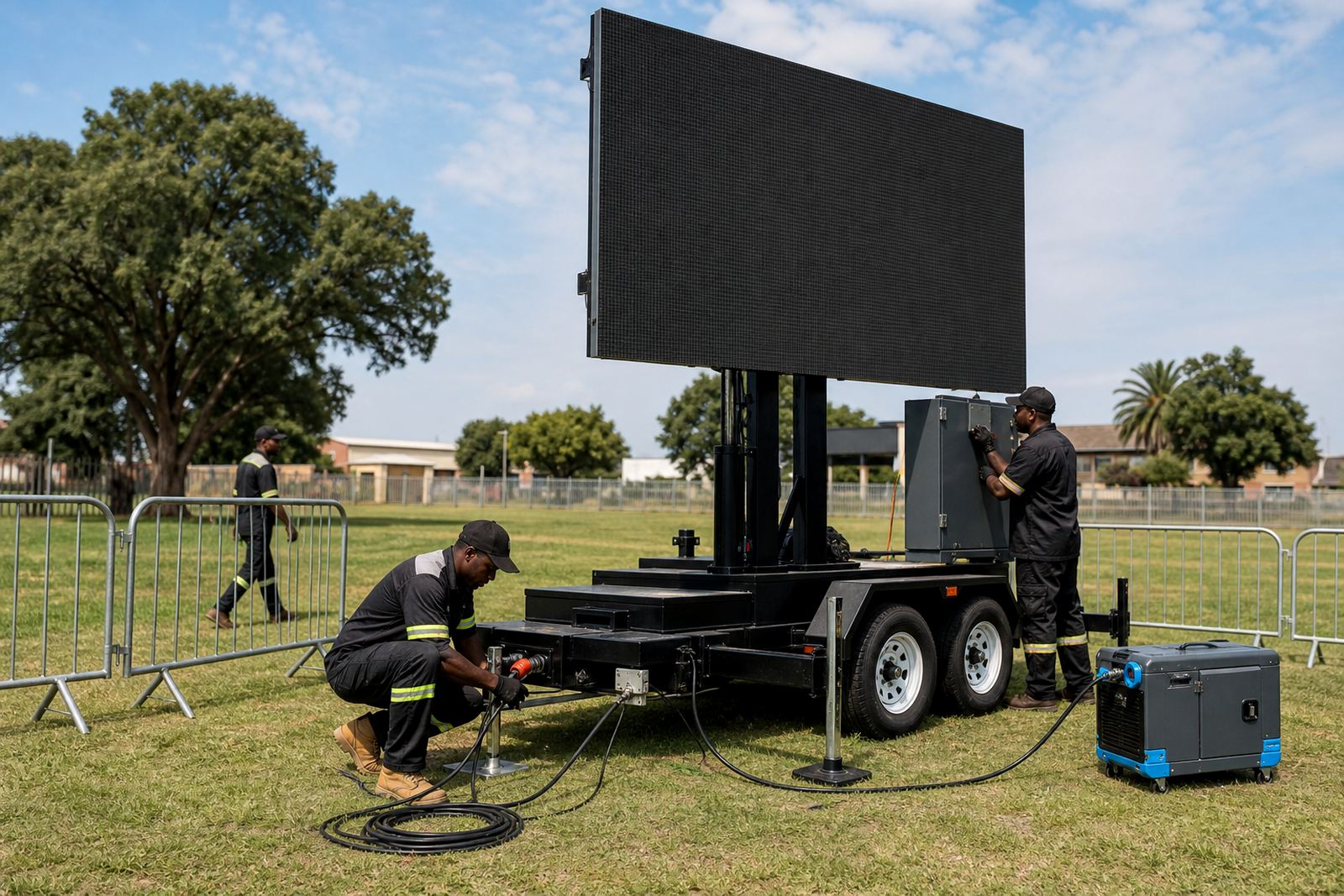
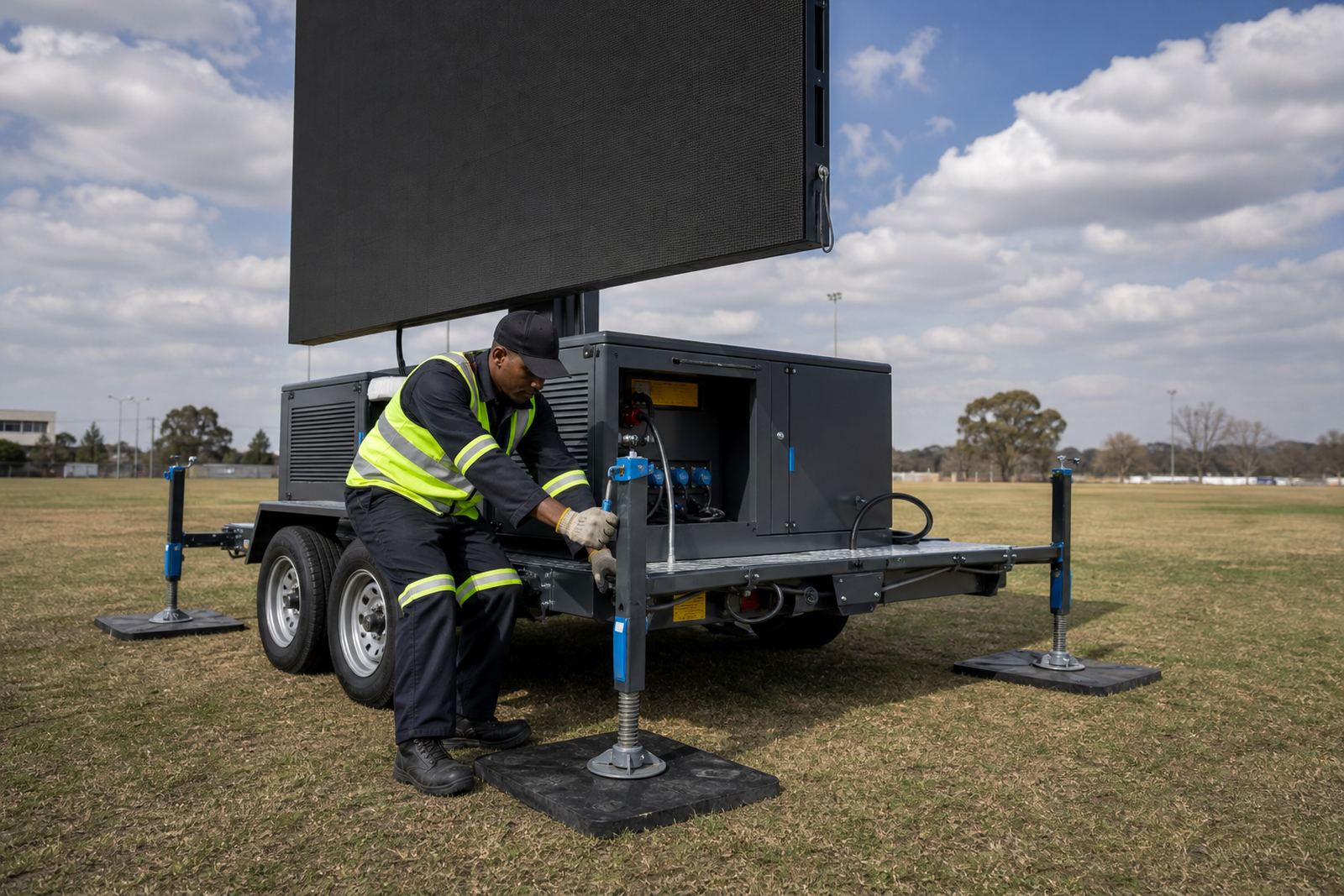
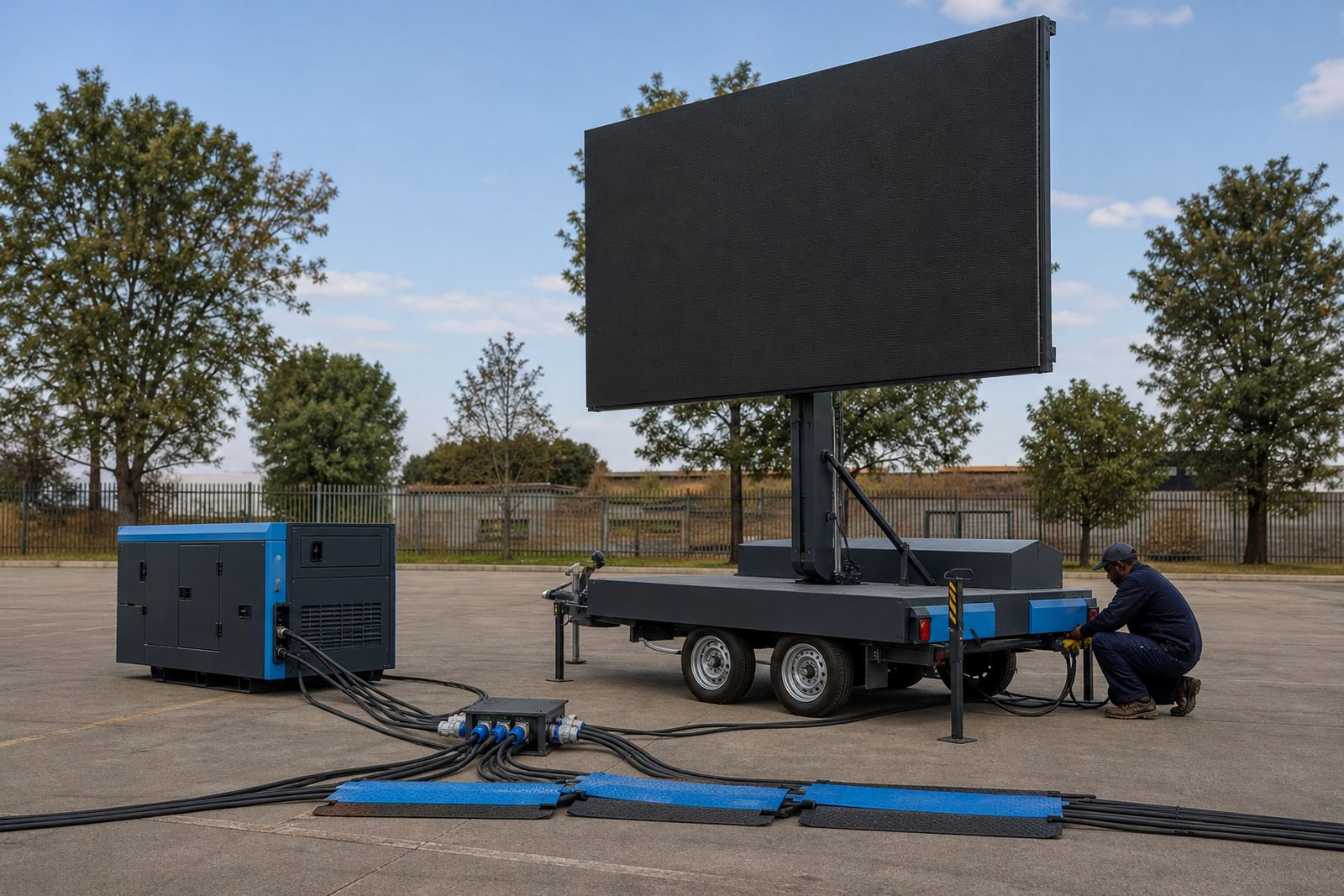
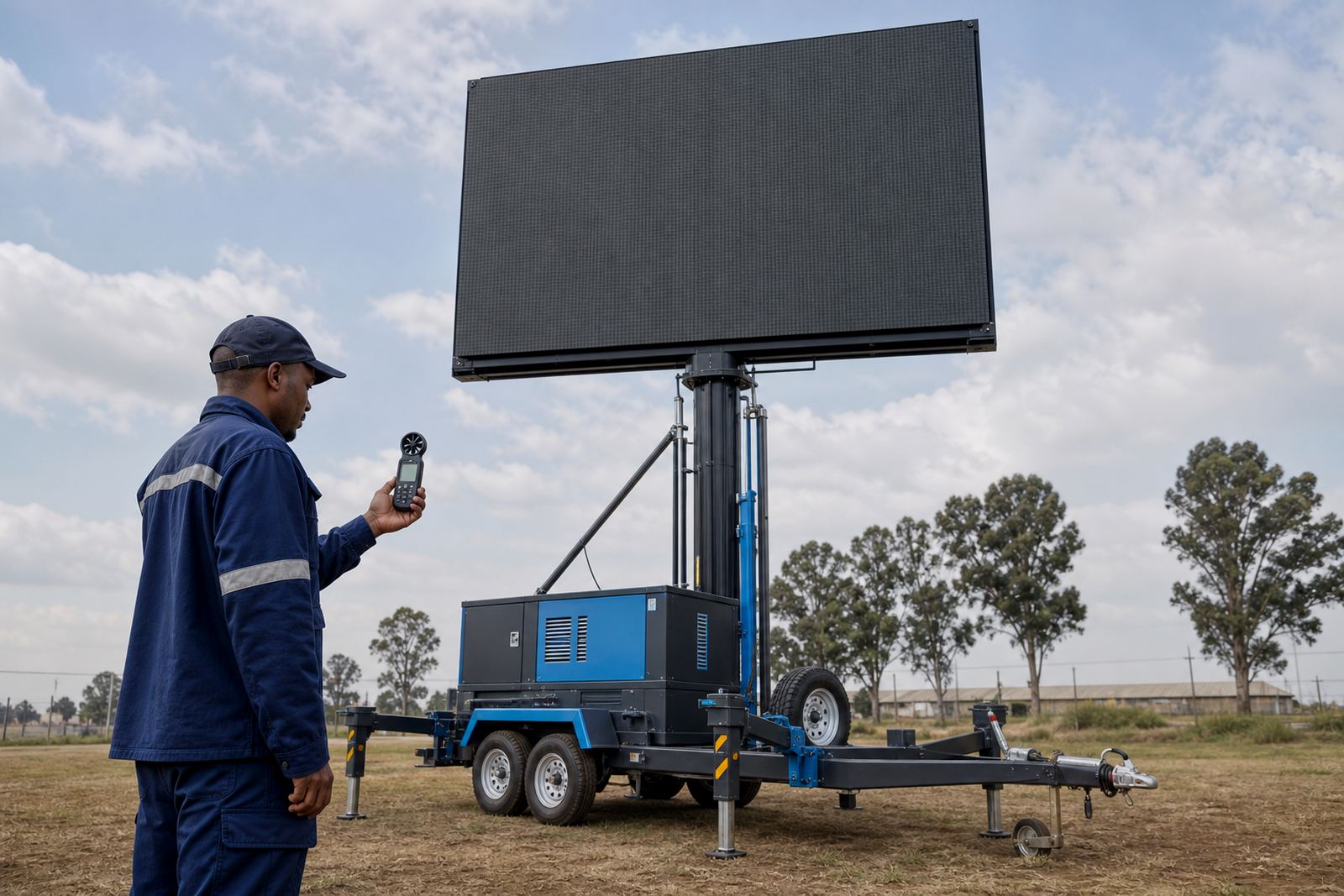
Once the unit is in position, the technician checks alignment, cable runs, grounding points and the screen image itself. Wind limits matter on outdoor equipment, so the team watches site conditions and pauses lift or rotation work if the conditions move outside the safe operating range.
Content loading and playback management sit with the operator on site, which helps when a sponsor logo, schedule change or running order needs to be adjusted at short notice. The aim is not fancy wording, just a clean display that stays readable from the stands, the forecourt or the roadside.
Permits, access and municipal ground rules
Some sites need permit guidance, especially when a trailer stands near a public road, pavement, sports ground or municipal property. Local rules can touch on placement, height, noise, access control and whether a display may remain in one position for the full event.
We work through those practical points with the organiser before the unit moves, so the setup matches the venue layout and the local conditions. If the site has security gates, grass protection rules or a narrow entrance, that is part of the plan too.
Choosing between trailer and box screen work
The right option depends on where the display will stand, how long it must run and how often it needs to move. A trailer suit works well for roadshows, sport days and promotions with more than one stop, while a box screen can suit a fixed venue or a display that stays in one position longer.
- Choose a trailer when mobility and fast relocation matter
- Choose a box screen when the site stays fixed for the event
- Check the viewing distance against the screen pitch
- Match the power plan to the venue and run time
- Allow for weather monitoring on exposed outdoor sites
Pack down, return load and the next stop
Pack down is booked in the same quote as the setup. The technician closes the system down in the right order, secures the unit for transport and checks that nothing loose is left behind at the venue. For moving campaigns, multi-stop planning keeps the next site connected to the one before it, which saves wasted road time and avoids confusion at arrival.
That is the practical side of delivery and operation. The screen is there to carry the message, and the job around it is what keeps the day orderly.