

Picking the right screen for the site
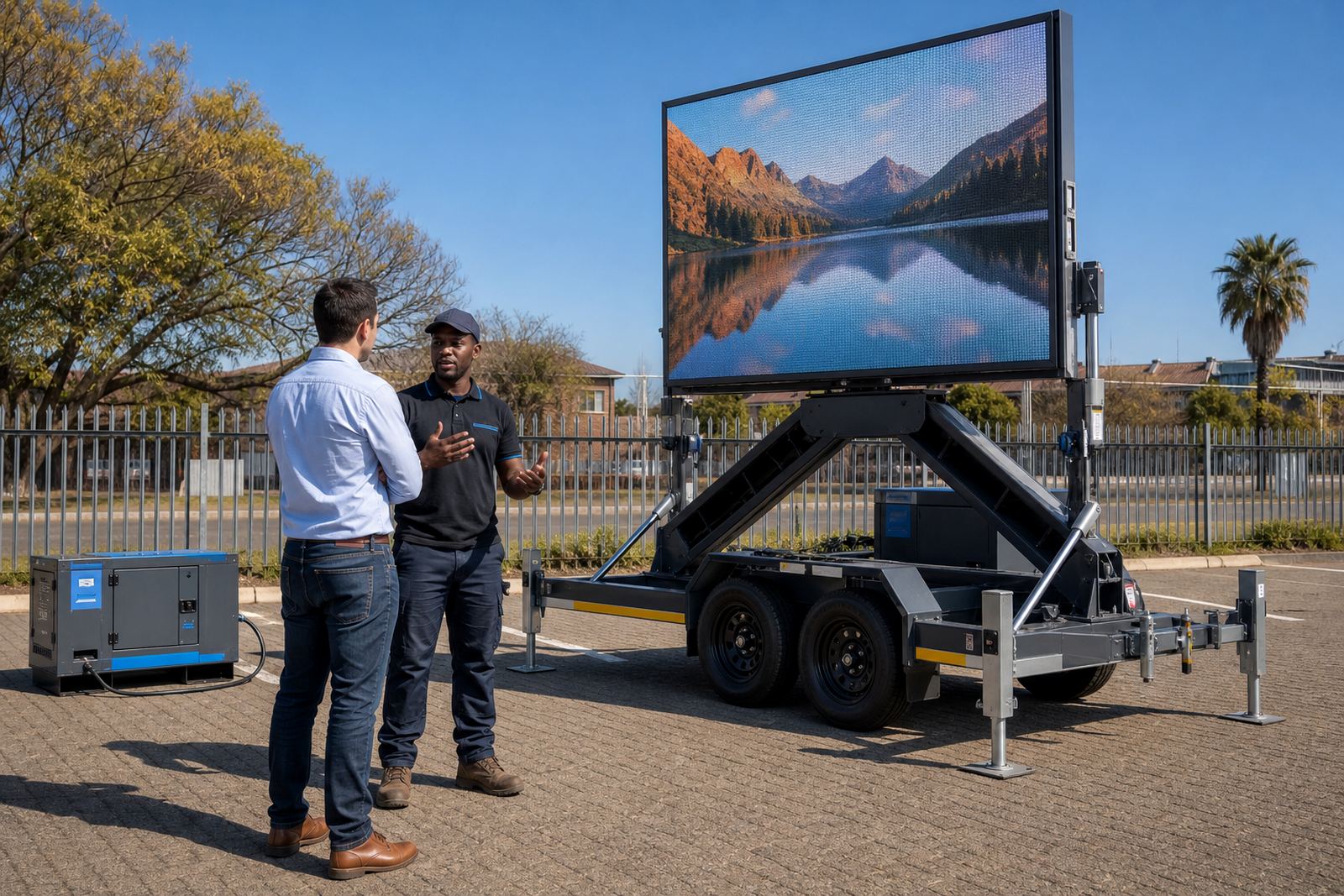
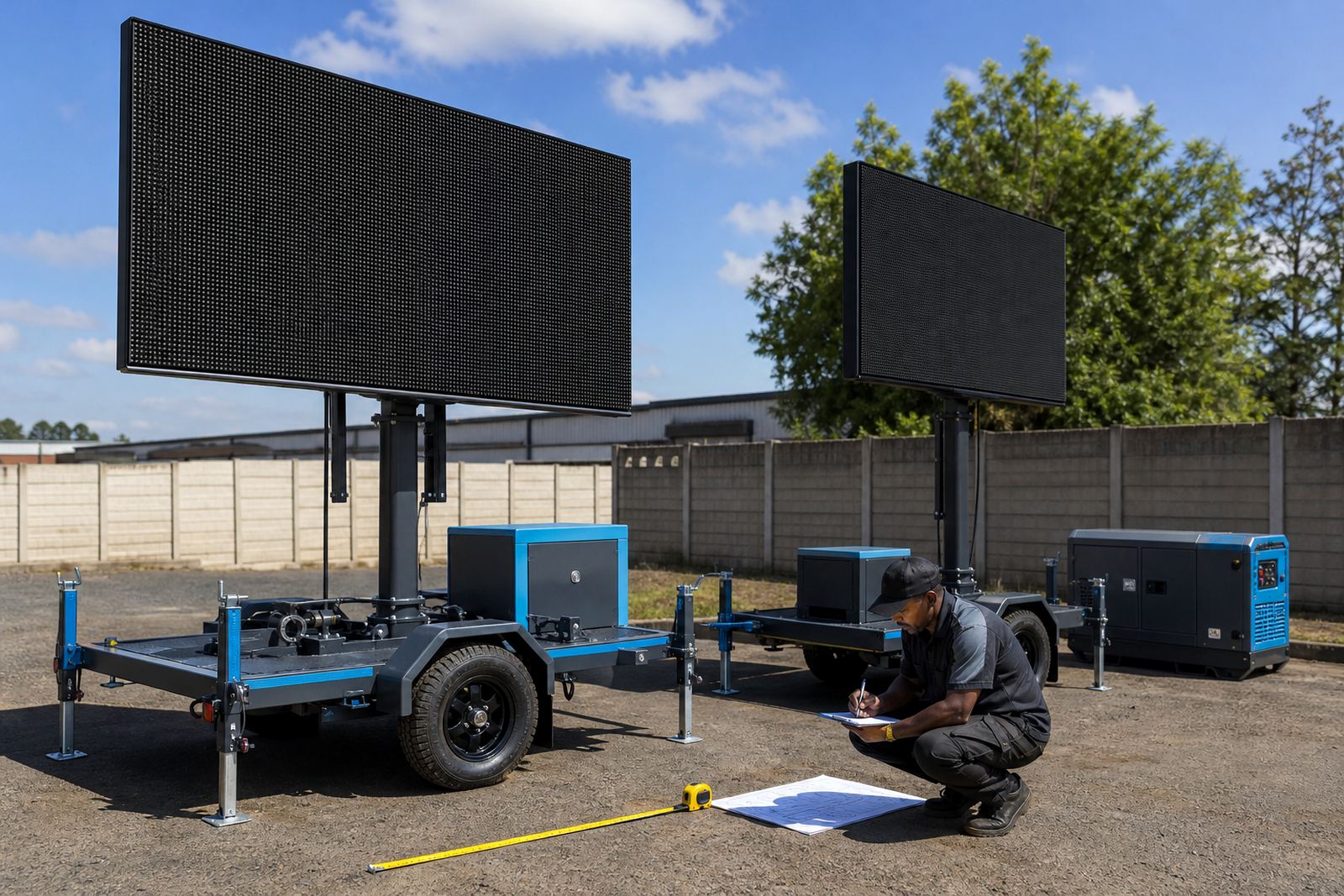
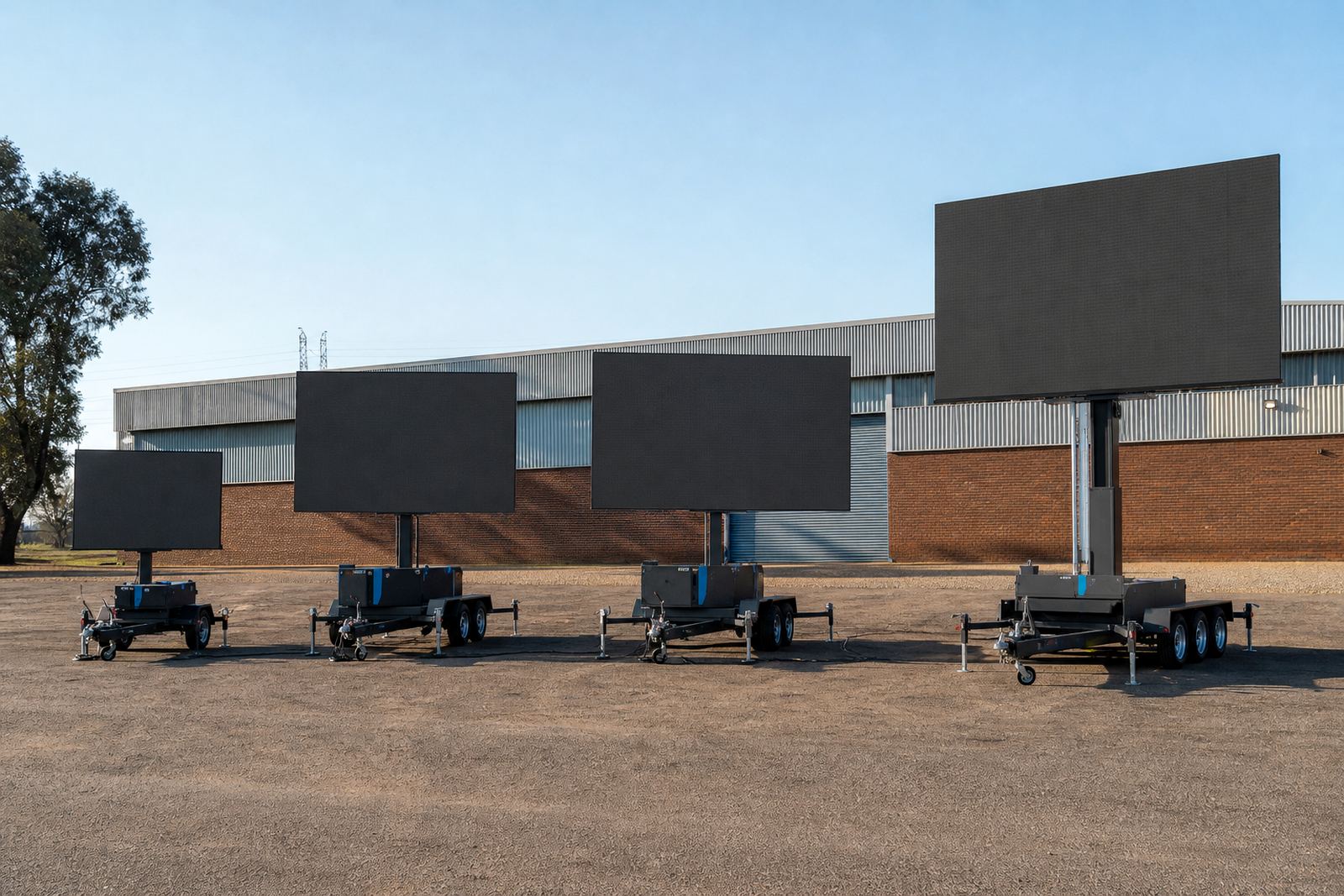
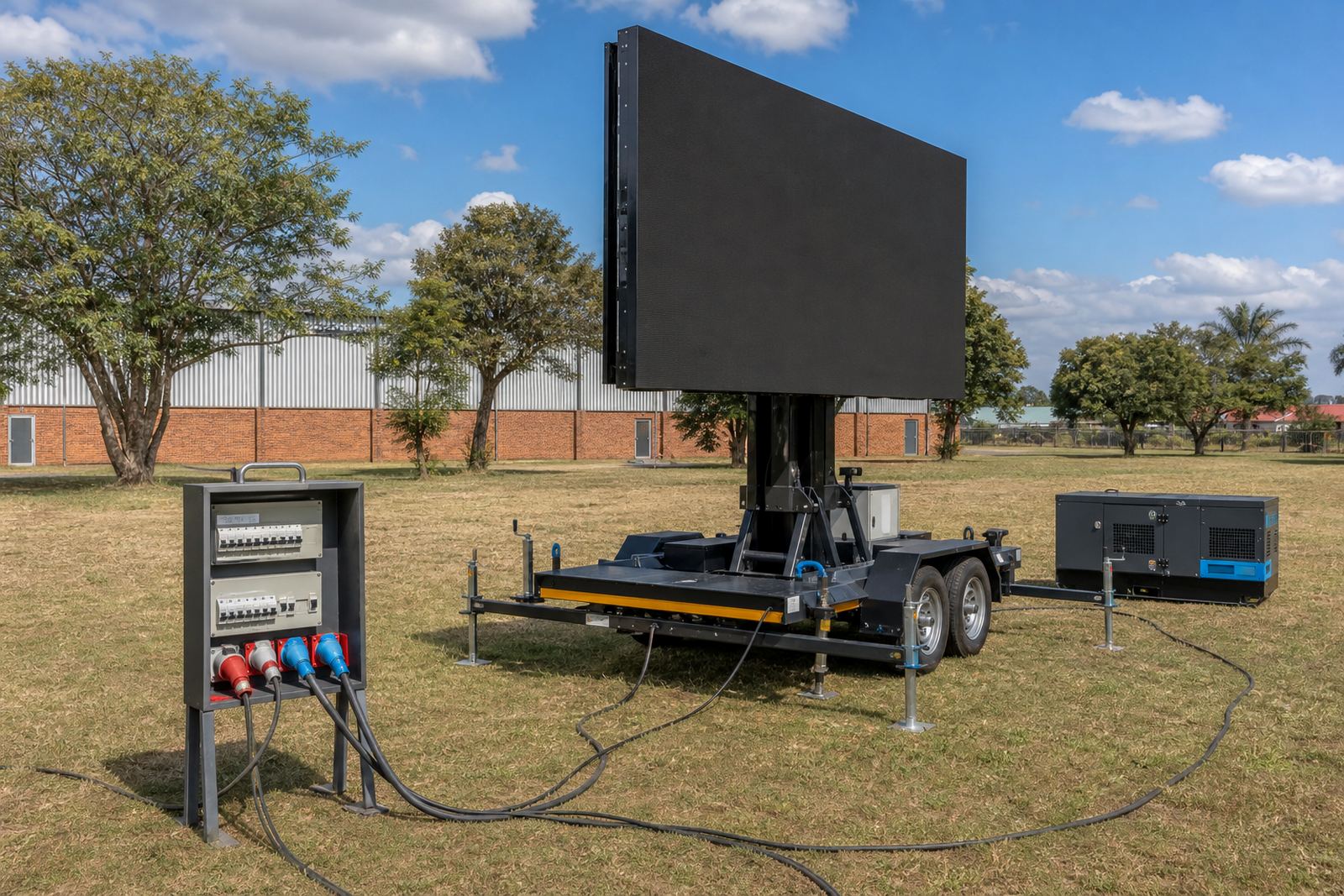
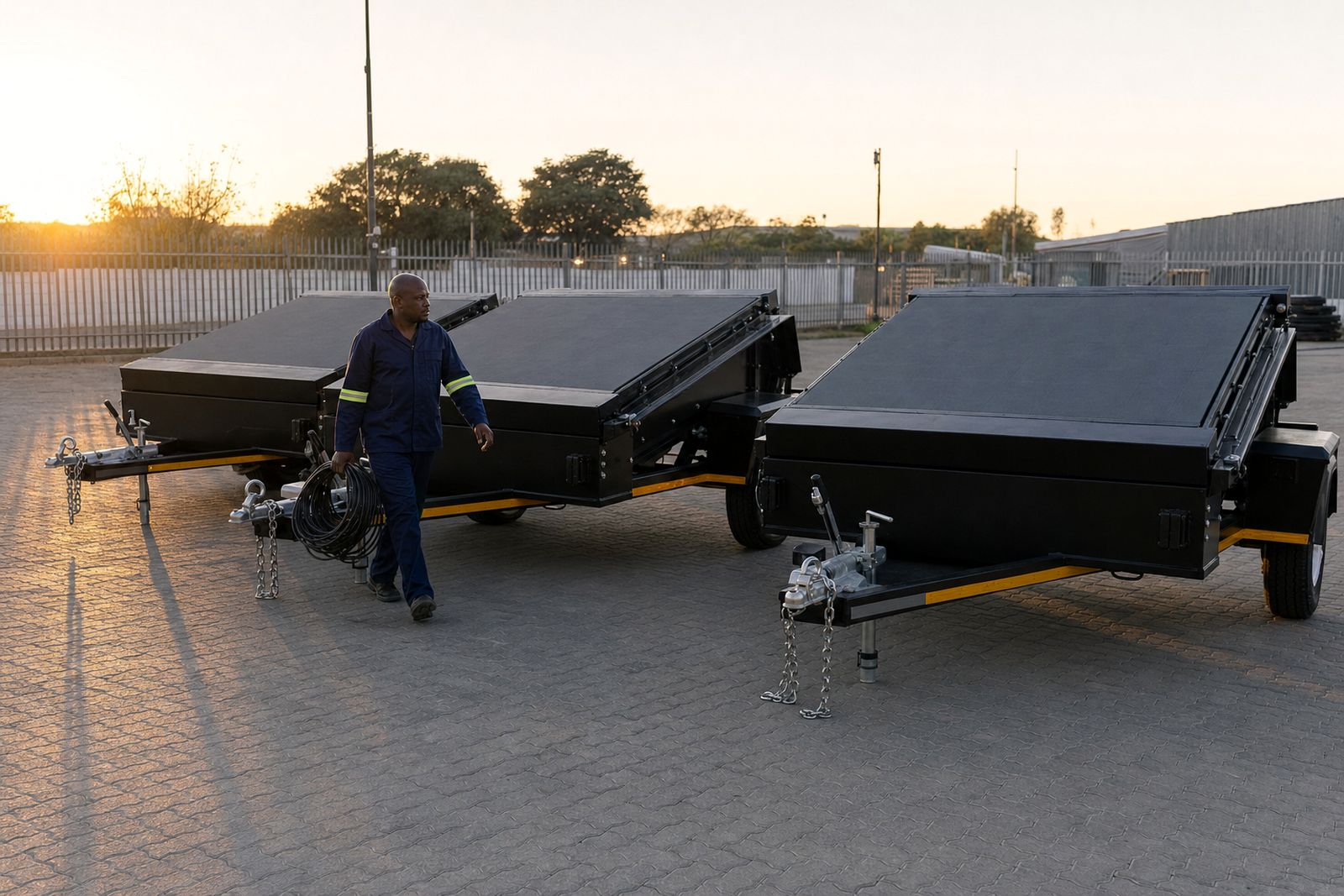
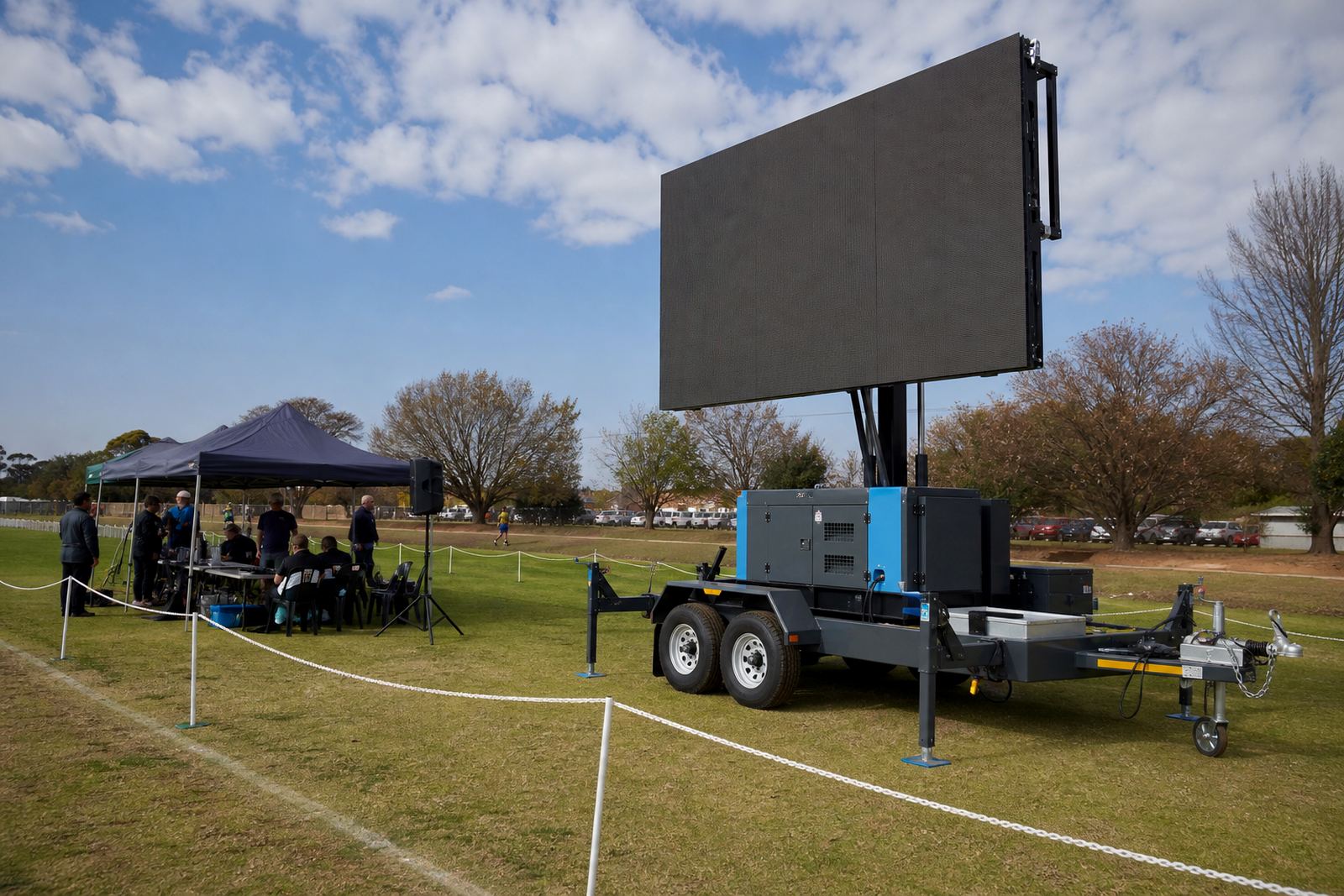
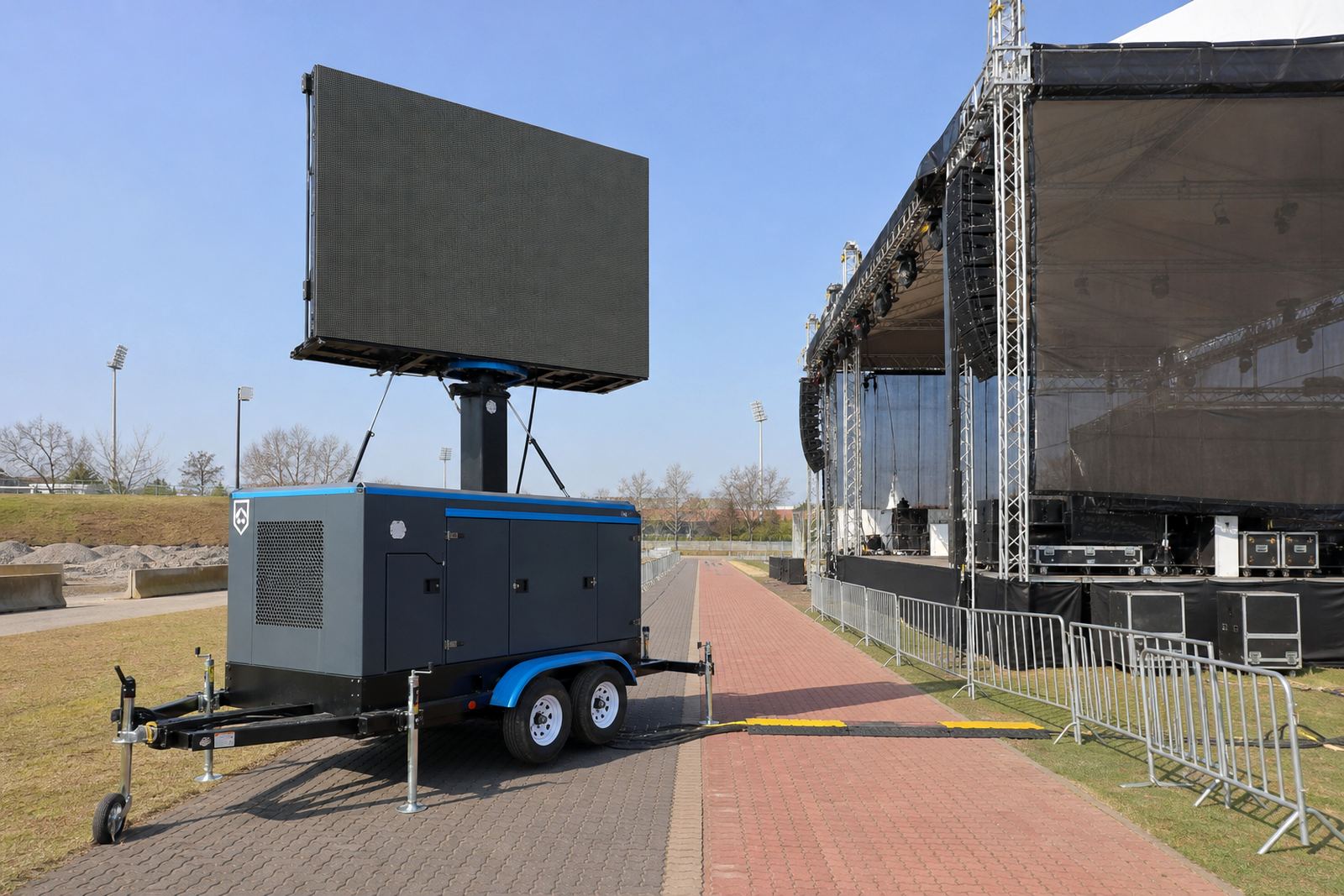
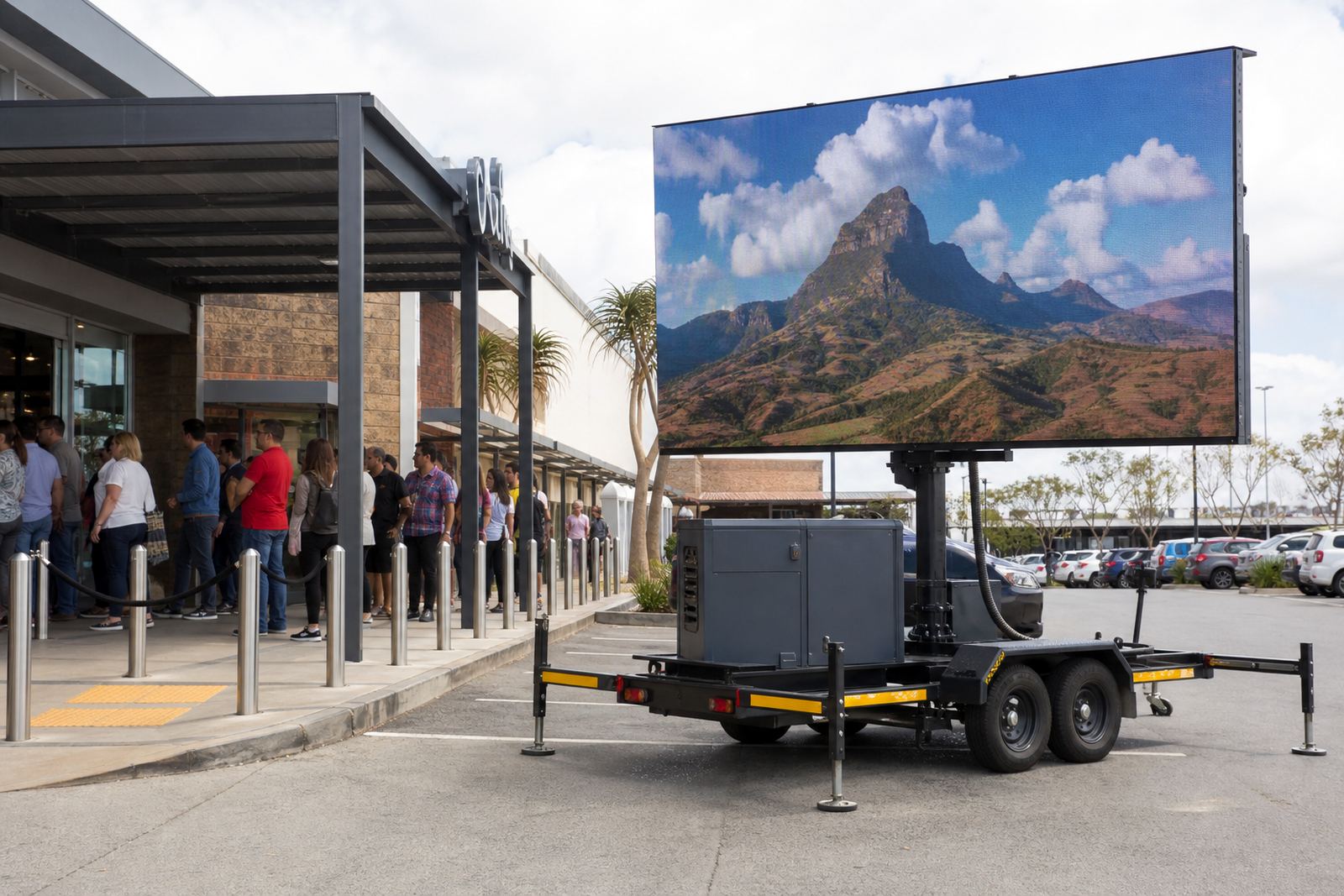
Outdoor LED screens are matched to the space first, then the message. A narrow street activation, a sports field edge or a roadside campaign all ask for different screen sizes, viewing distances and mounting options. For tighter sites, a trailer with a compact footprint may fit better than a fixed box stack, while open grounds often suit larger formats with stronger sightlines.
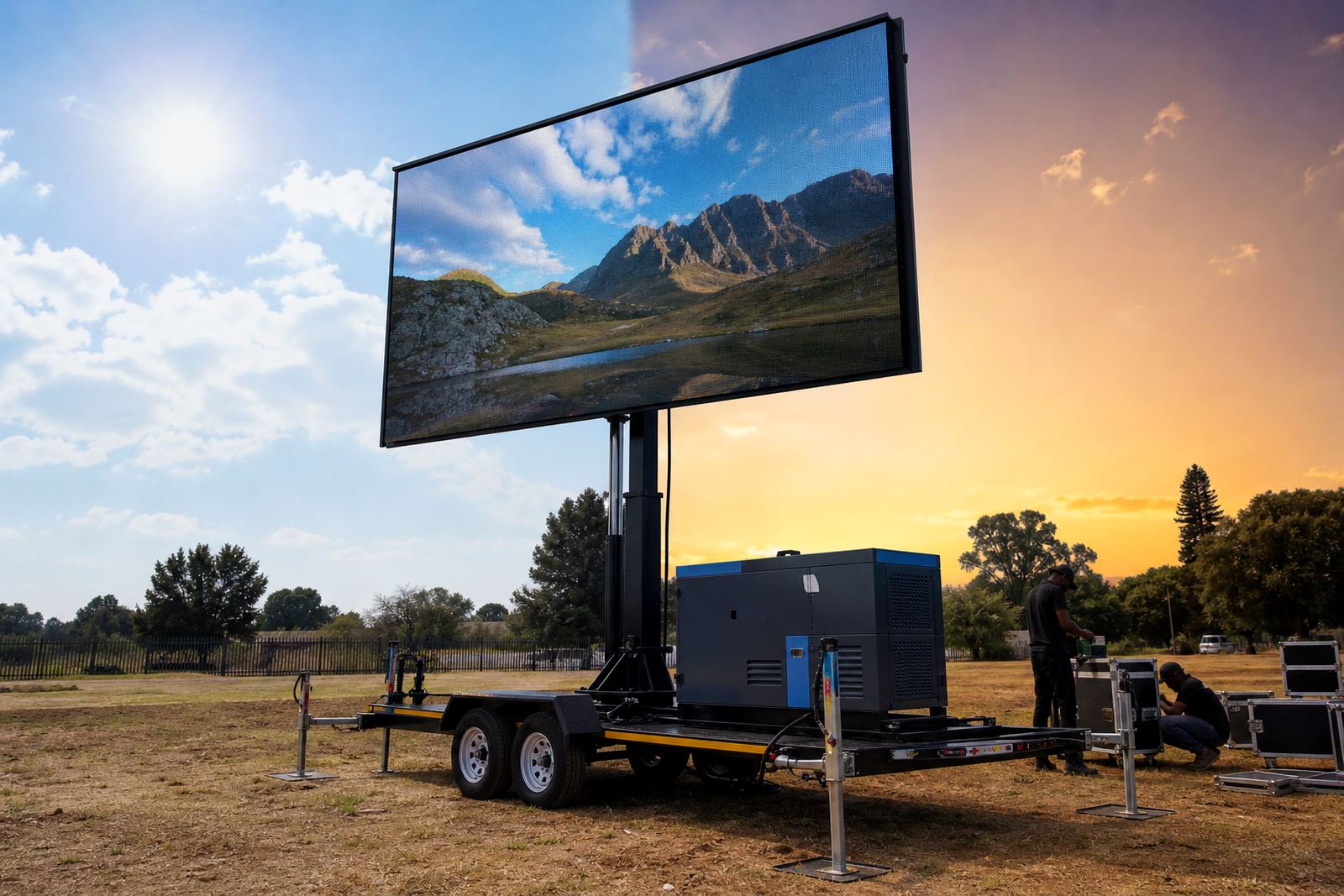
Pixel pitch matters because it shapes how sharp text, logos and motion look from different distances. A smaller pitch gives finer detail, while a larger pitch can work well when people are viewing from further away. Brightness also matters in daylight, especially in strong Gauteng sun or bright coastal conditions where a screen must stay readable without washing out.
Trailer details that affect the real job
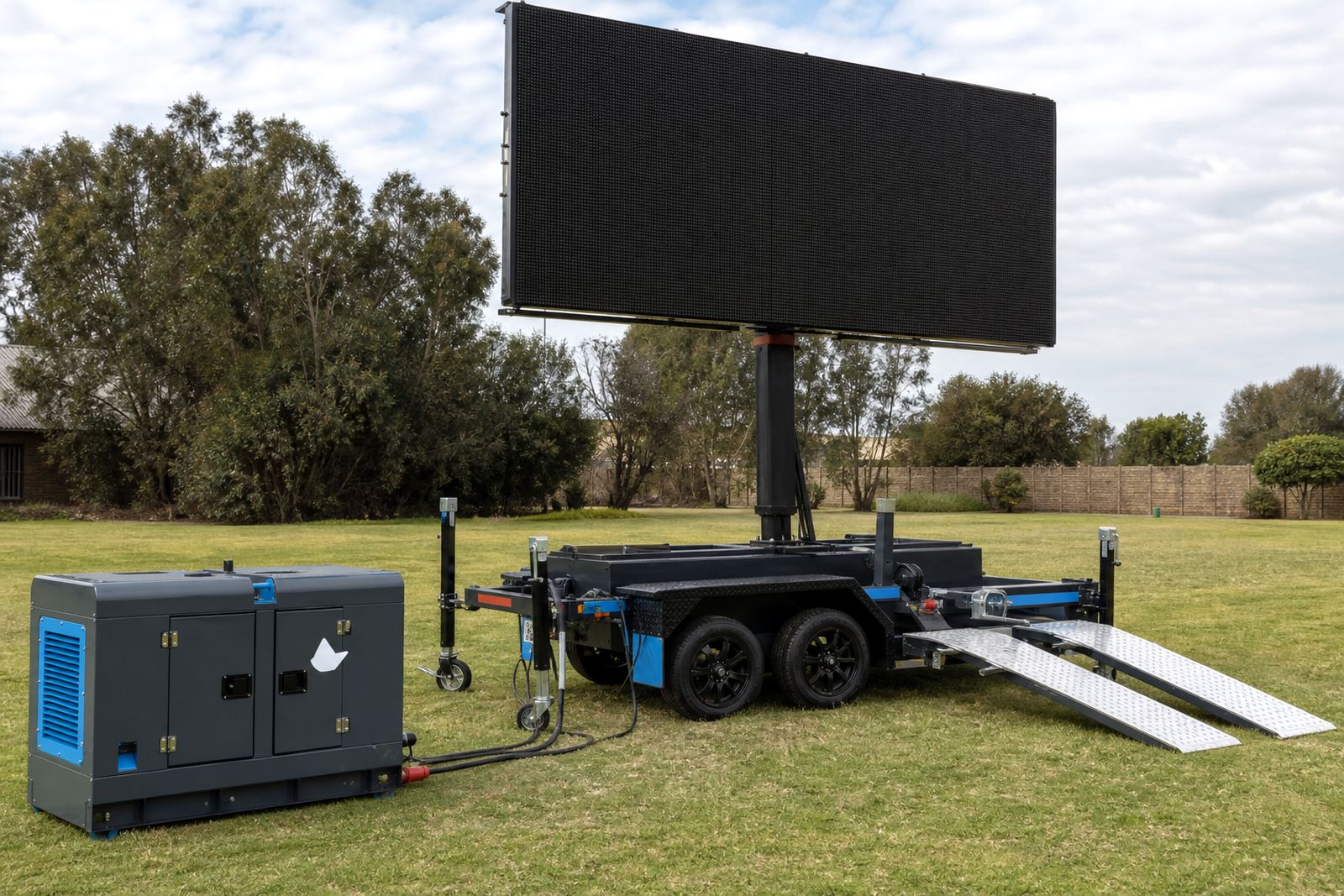
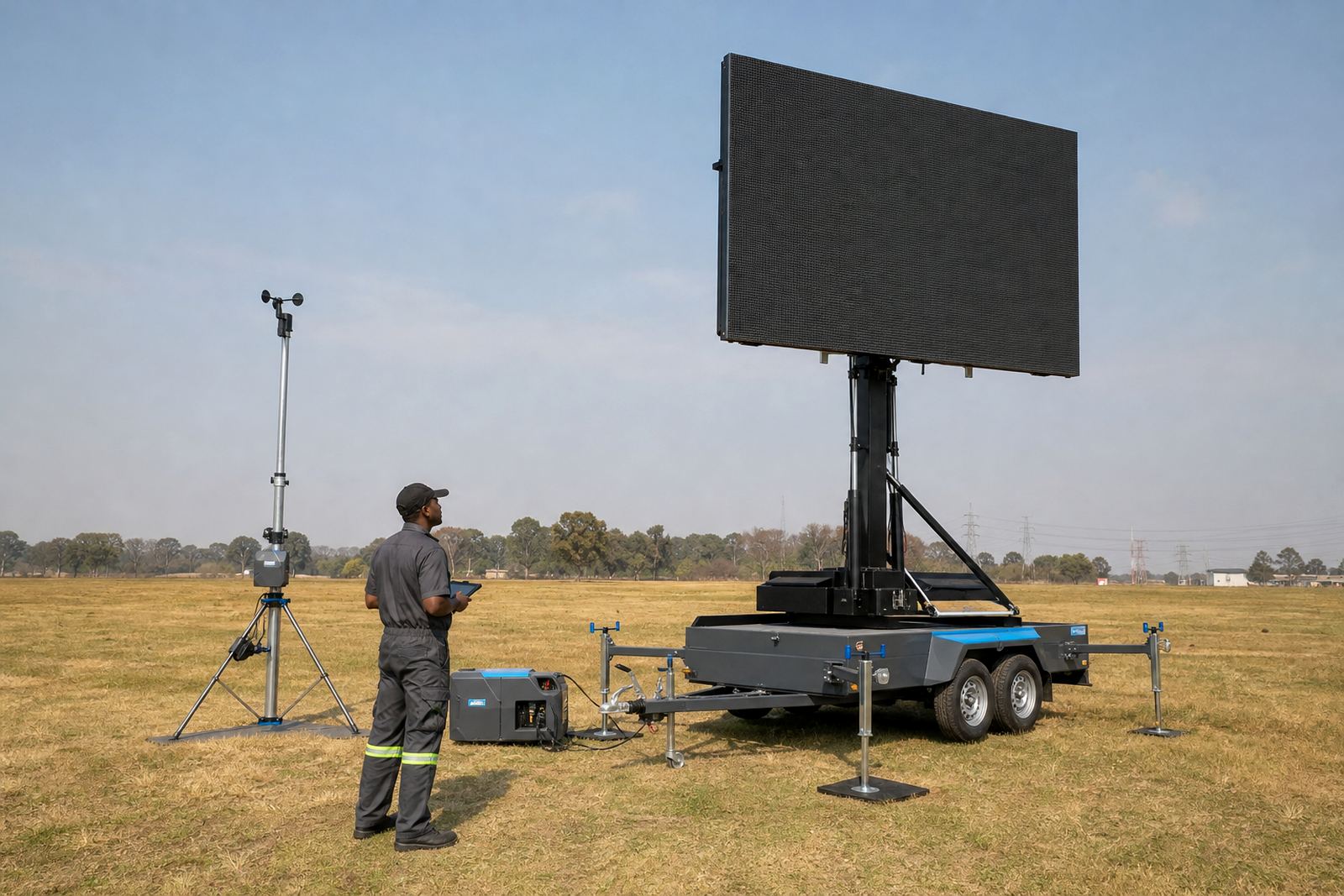
Outdoor LED screen trailers are built for quick deployment, but the hardware still needs careful placement. Hydraulic lift systems raise the screen into position, and some units can rotate to suit road-facing or crowd-facing layouts. Ground conditions matter too, because the trailer must stand level and stable before playback begins.
- Trailer footprint and turning space for delivery vehicles
- Hydraulic lift height and rotation range
- Wind limits for safe outdoor operation
- Generator or mains power options, depending on site access
- Screen size, pitch and viewing distance
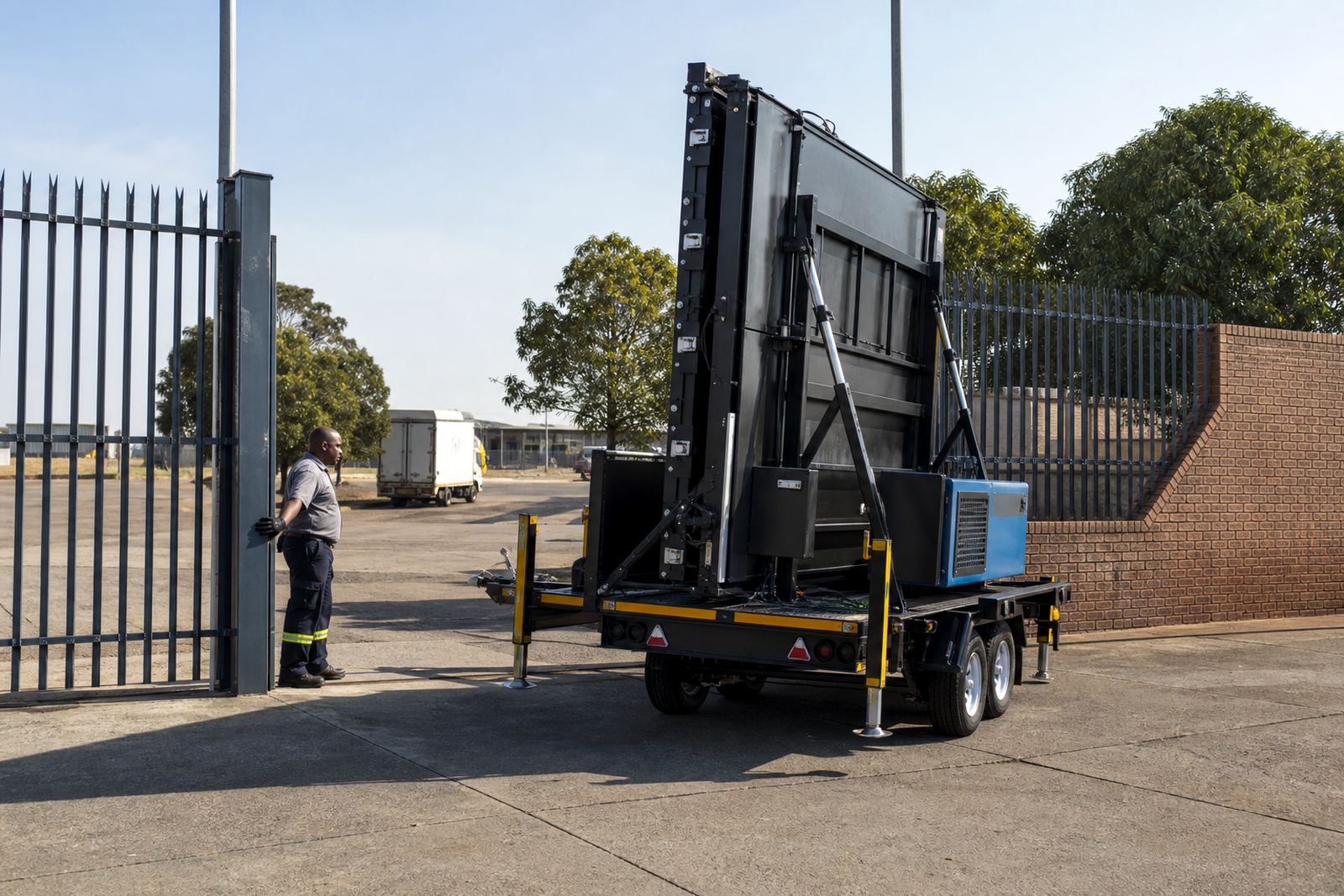
Wind is a real factor on open sites and coastal routes. The screen may need to be lowered or paused if conditions move beyond safe limits. That is part of normal outdoor planning, along with checking overhead lines, access gates and where the audience will gather.
Power, playback and live content handling
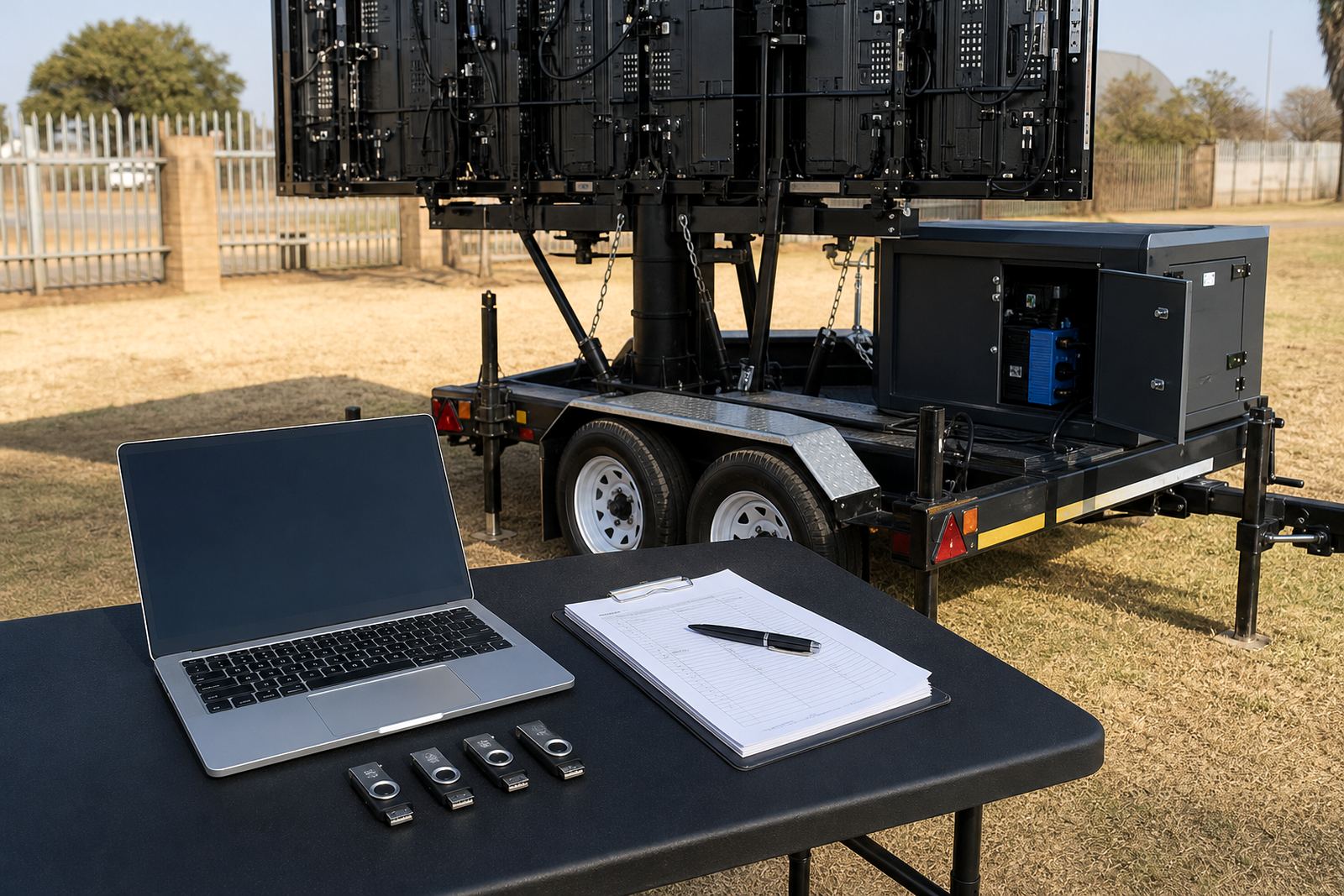
Most outdoor LED hiring jobs depend on clean playback and a sensible power plan. Some sites can run from mains power, while others need generator support because the location has no suitable supply or the route makes a temporary feed impractical. The content source should be checked before arrival so the screen can be loaded without last minute file troubles.
Playback management covers the clip order, sound cues where used, and any live input from cameras or event control. When a roadshow moves between towns, the same playlist may need small changes for each stop. That is where a technician on site matters, because they can manage signal paths, test screens and keep the output steady during the programme.
Permits, site rules and local permissions
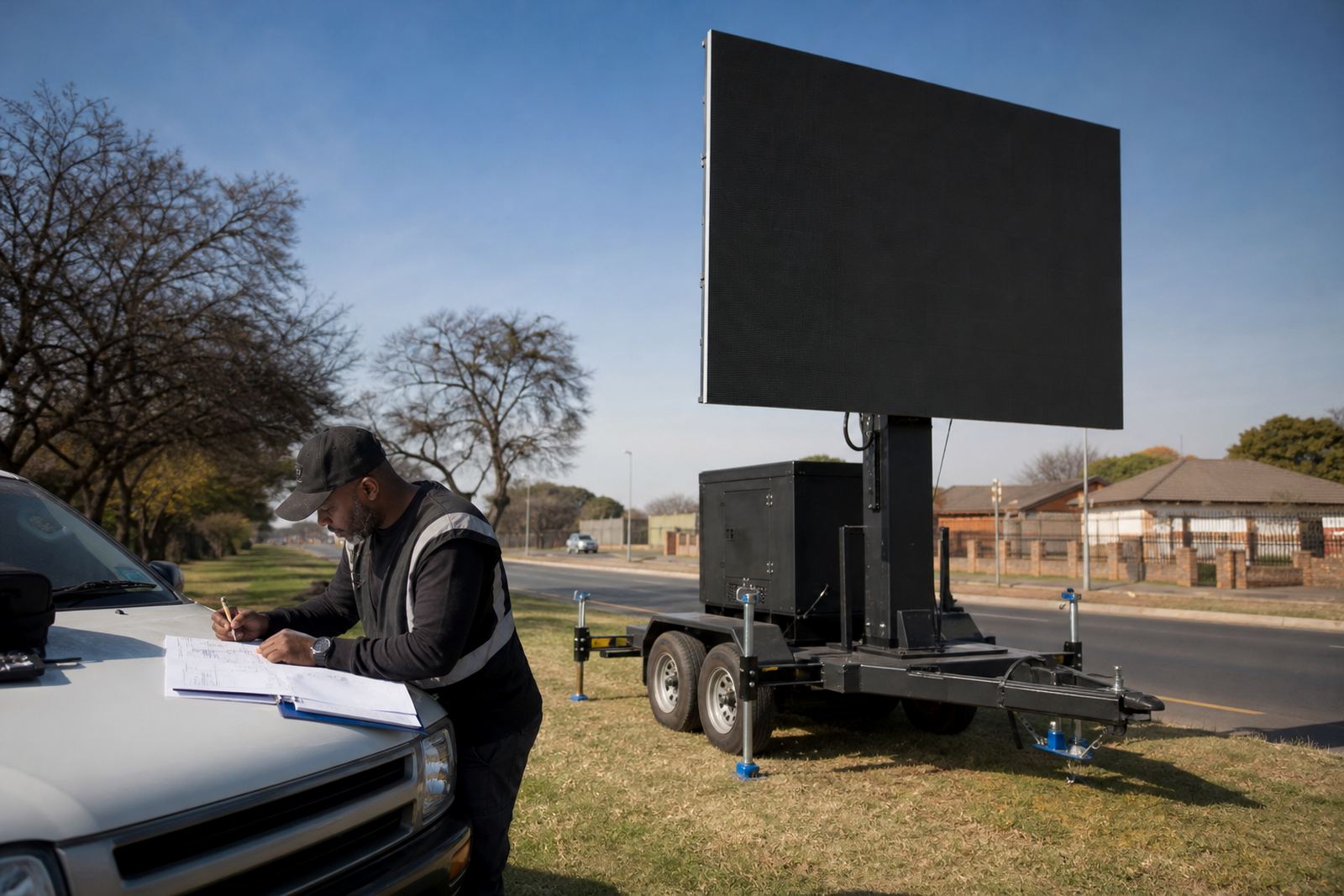
Some outdoor LED installs need permission from venue management, local authorities or property owners, especially where the trailer faces a public road or sits close to pedestrian flow. Permit guidance usually starts with the site address, trading hours, screen size and whether vehicles or crowds will be affected. The exact paperwork varies by municipality and by the kind of placement planned.
- Private venue access and loading permission
- Roadside visibility or traffic impact checks
- Noise, safety and crowd movement considerations
- Event organiser approvals for temporary structures
- Site contact names and access times for delivery
It helps to sort these matters early, because the screen setup, traffic flow and audience positions are all linked. A cramped access route or an unclear permit can slow the whole operation down on site.
What buyers send before a quote is built
A useful brief gives the size of the venue, the town, the dates and the kind of content that will play. If the screen is for a sports day, concert, exhibition or roadshow, say so clearly because each one uses the trailer differently. A day site in Pretoria may need different handling from a late finish in Durban, especially where weather, access and parking differ.
A more detailed brief gives us a better screen match. A good screen plan usually includes the audience distance, the available turning space, the preferred power source and whether the job needs live feed support. If there are multiple stops, add the route order and loading windows so the logistics line up cleanly.
How our team handles the outdoor work
Outdoor LED hiring is not only about the screen itself. Delivery, setup, content loading, weather monitoring and pack down all sit in the same chain of work. The team on site needs to know the display position, the run time, the playback plan and who is signing off the final layout.
At LEDBox, the work is handled from Germiston, Ekurhuleni and moves across Johannesburg, Pretoria, Durban, Bloemfontein and Polokwane. Sibusiso Shezi oversees the operation with Anika Chetty coordinating logistics, Thabo Bhengu leading screen setup, Noluthando Maluleke managing routes, Ruan Mabena supervising fabrication and Karabo Abrahams handling playback details. That mix keeps the technical and practical sides aligned on the same job.
A quick path through the guide library
It points buyers to the parts that matter most before a hire goes out. One guide may focus on screen type, another on power planning, another on content format or venue access. Together they help organisers compare options without guessing at the practical details.
- Compare outdoor trailer formats and box configurations
- Check viewing distance against pixel pitch and brightness
- Plan delivery, setup and technician support
- Match the screen plan to site rules and weather exposure
- Prepare content files, live feeds and playback order
When the site, content and permissions are lined up properly, the outdoor screen does its job without fuss. Getting those three sorted early is most of the work.