

Outdoor screens that travel to the site
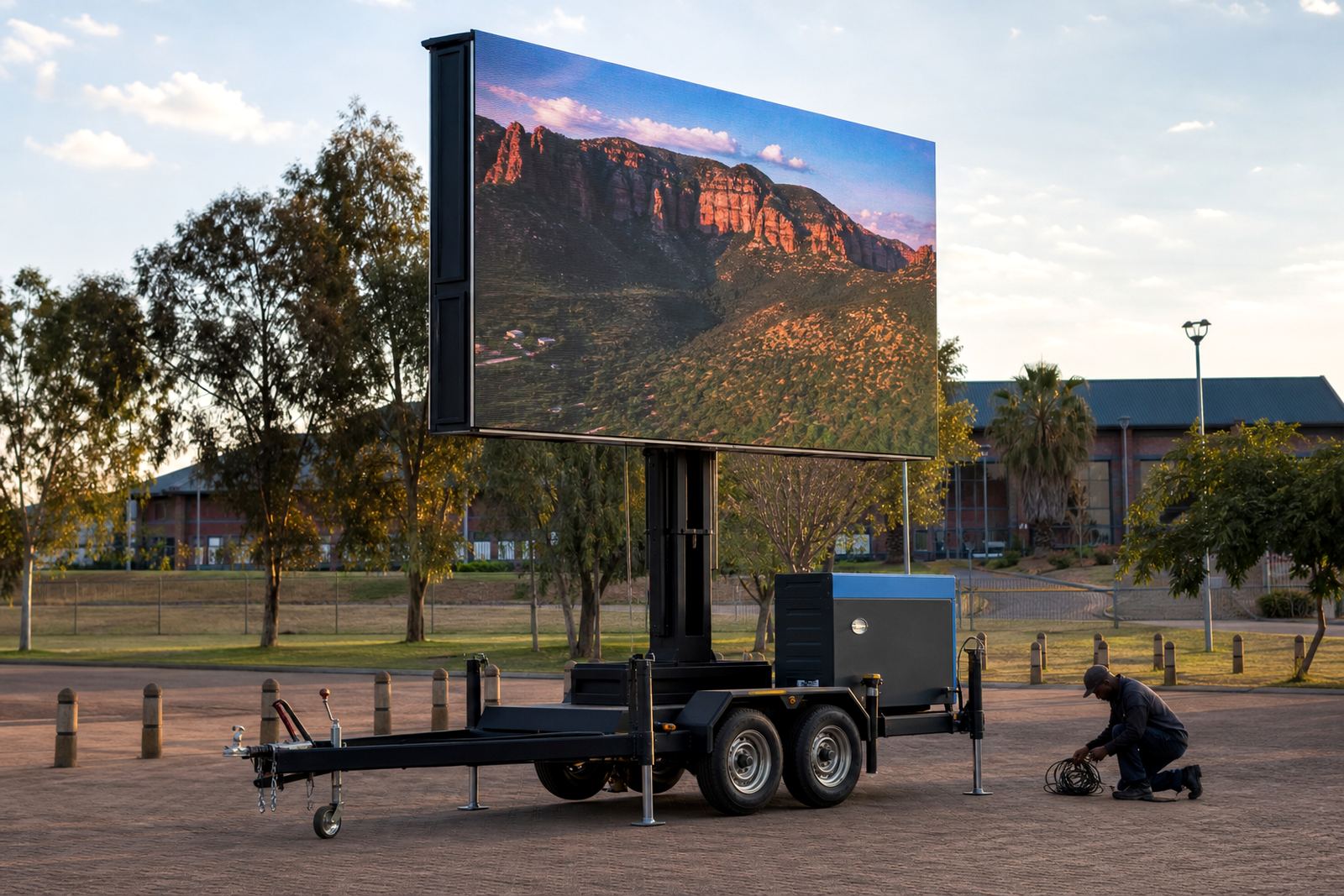
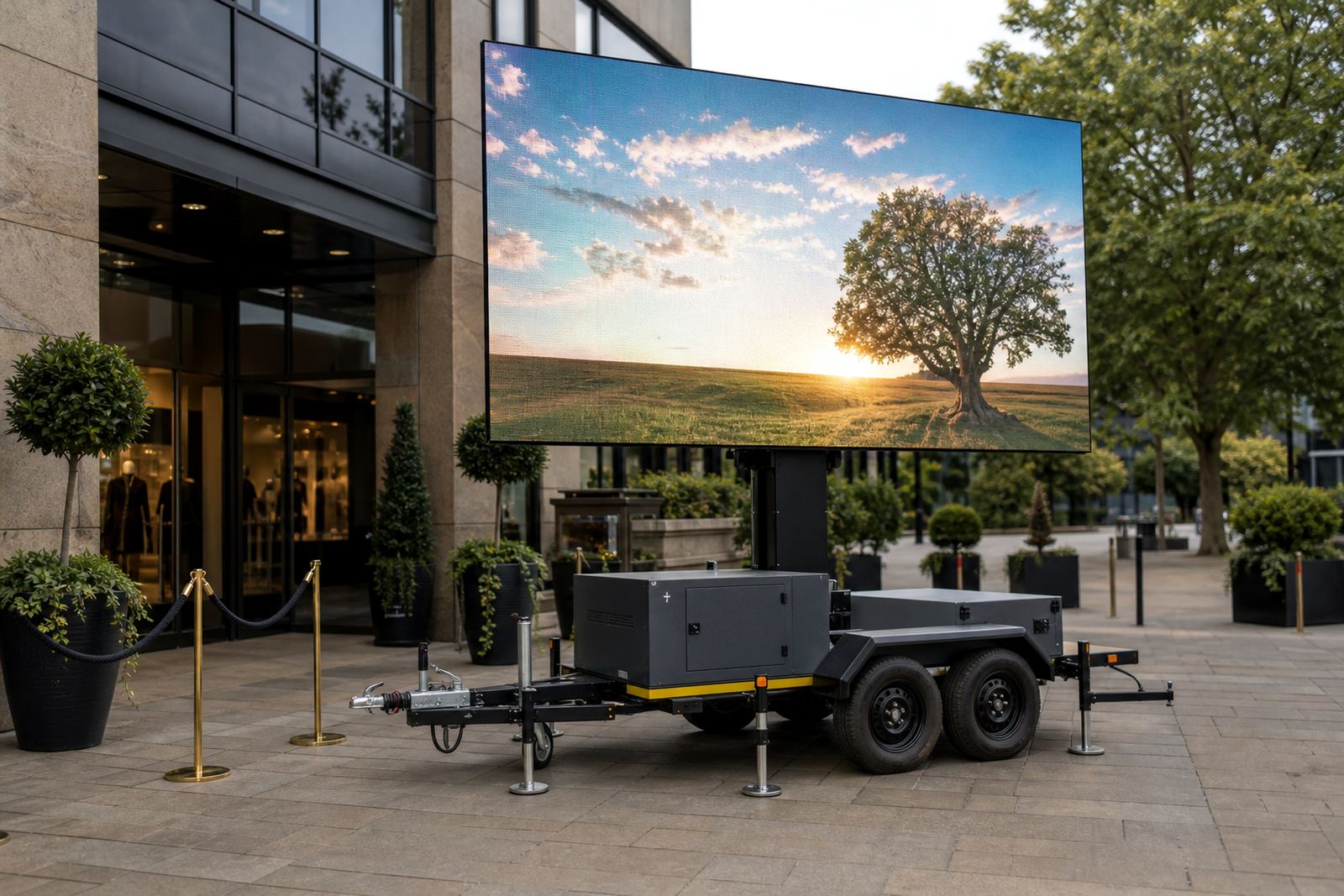
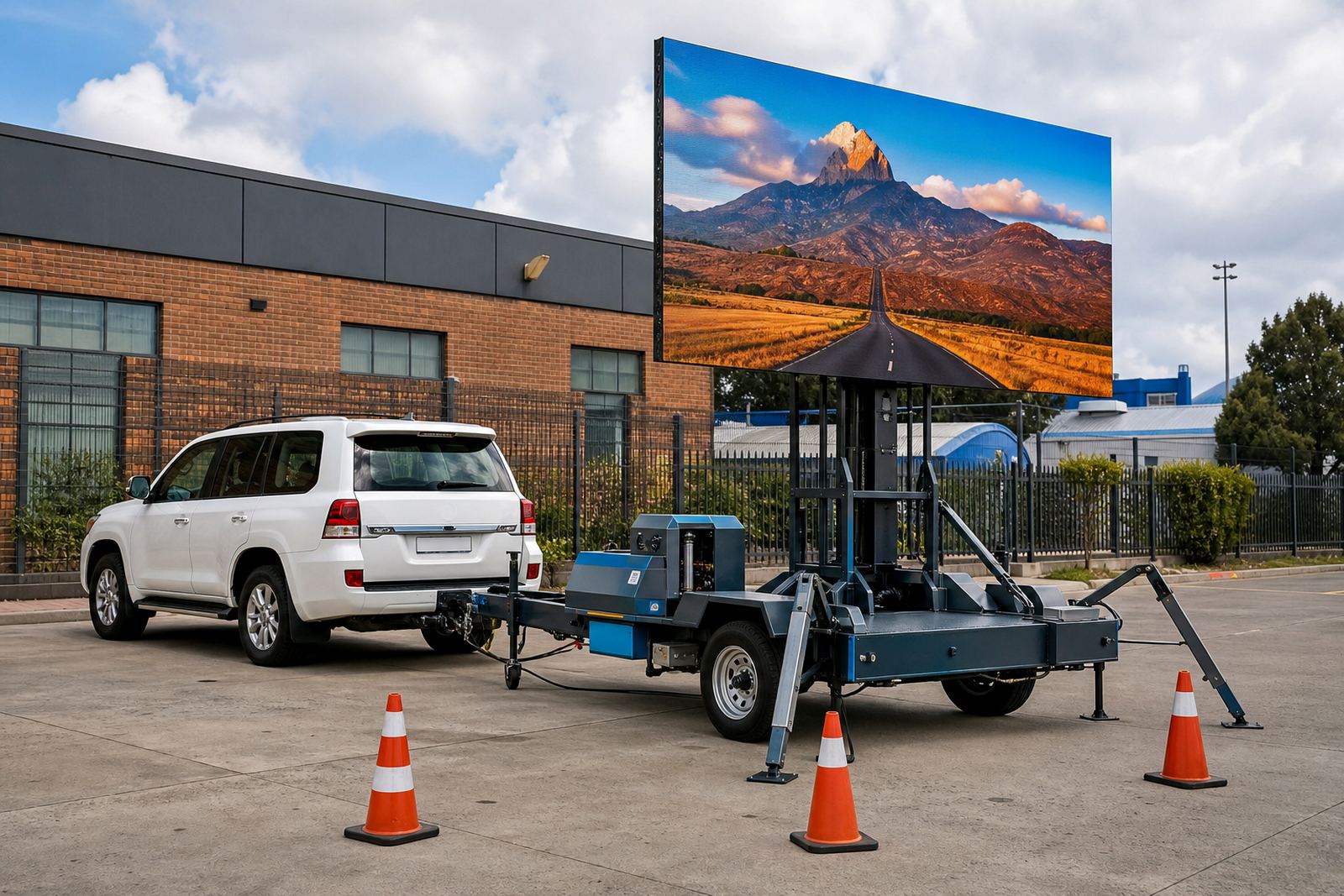
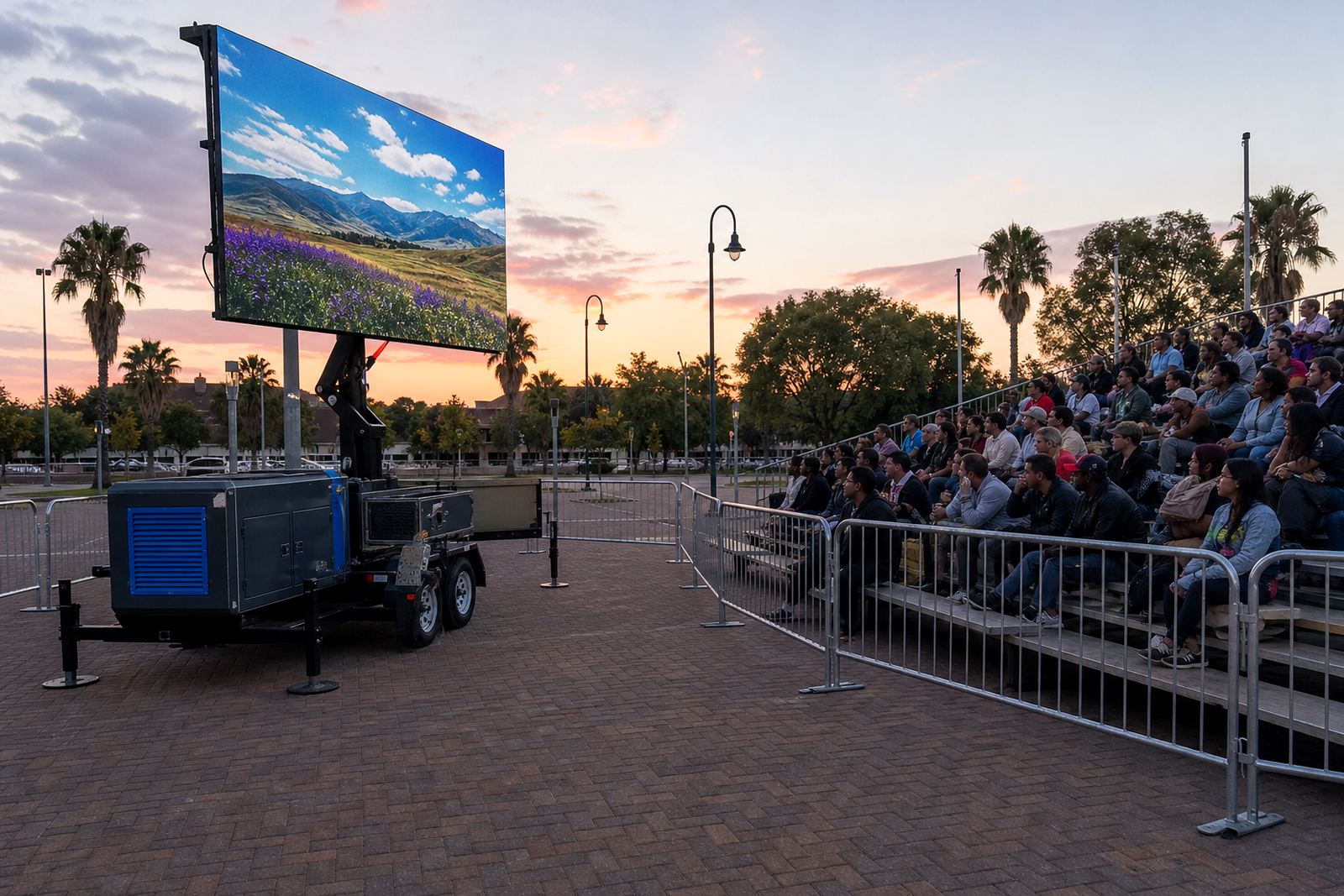
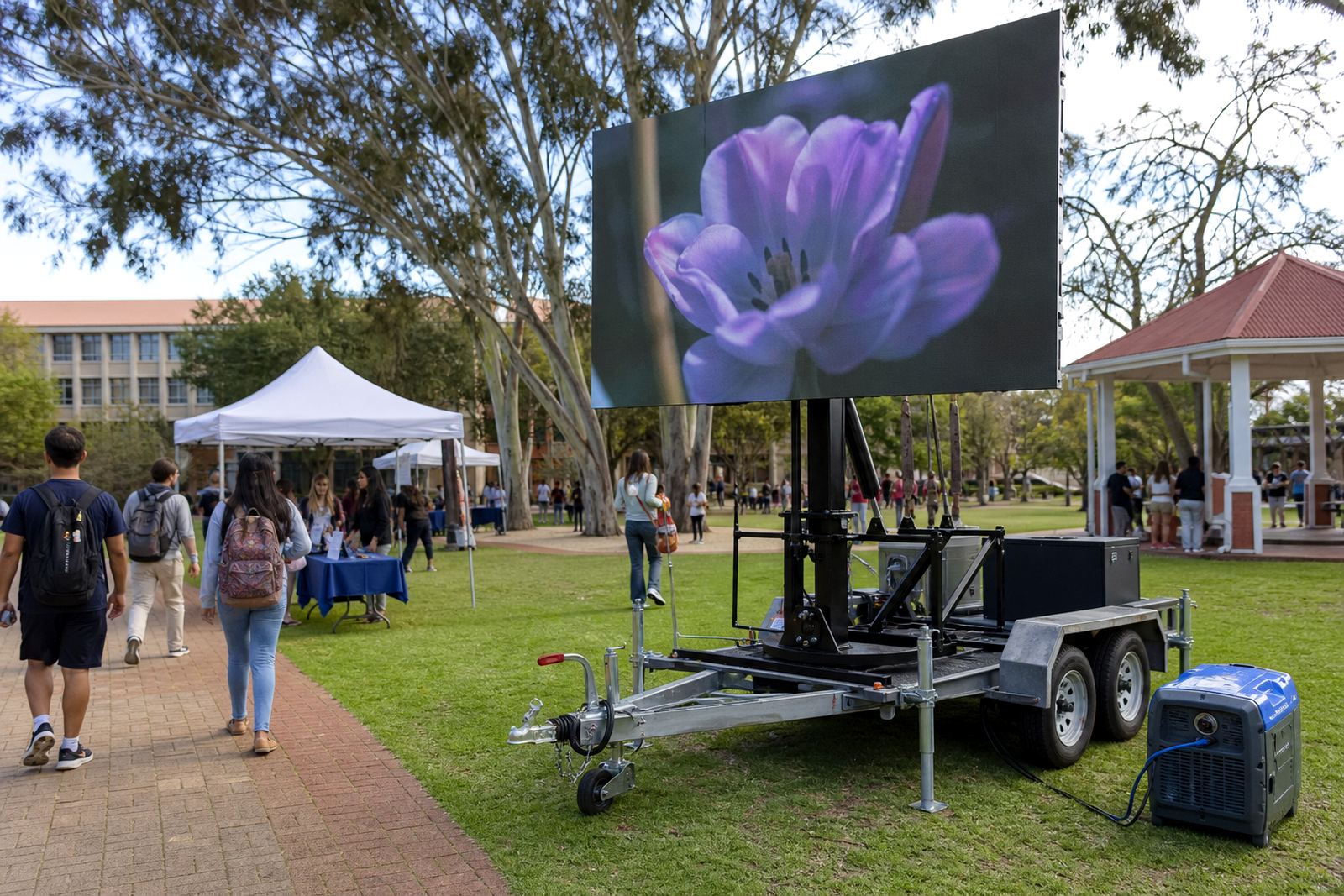
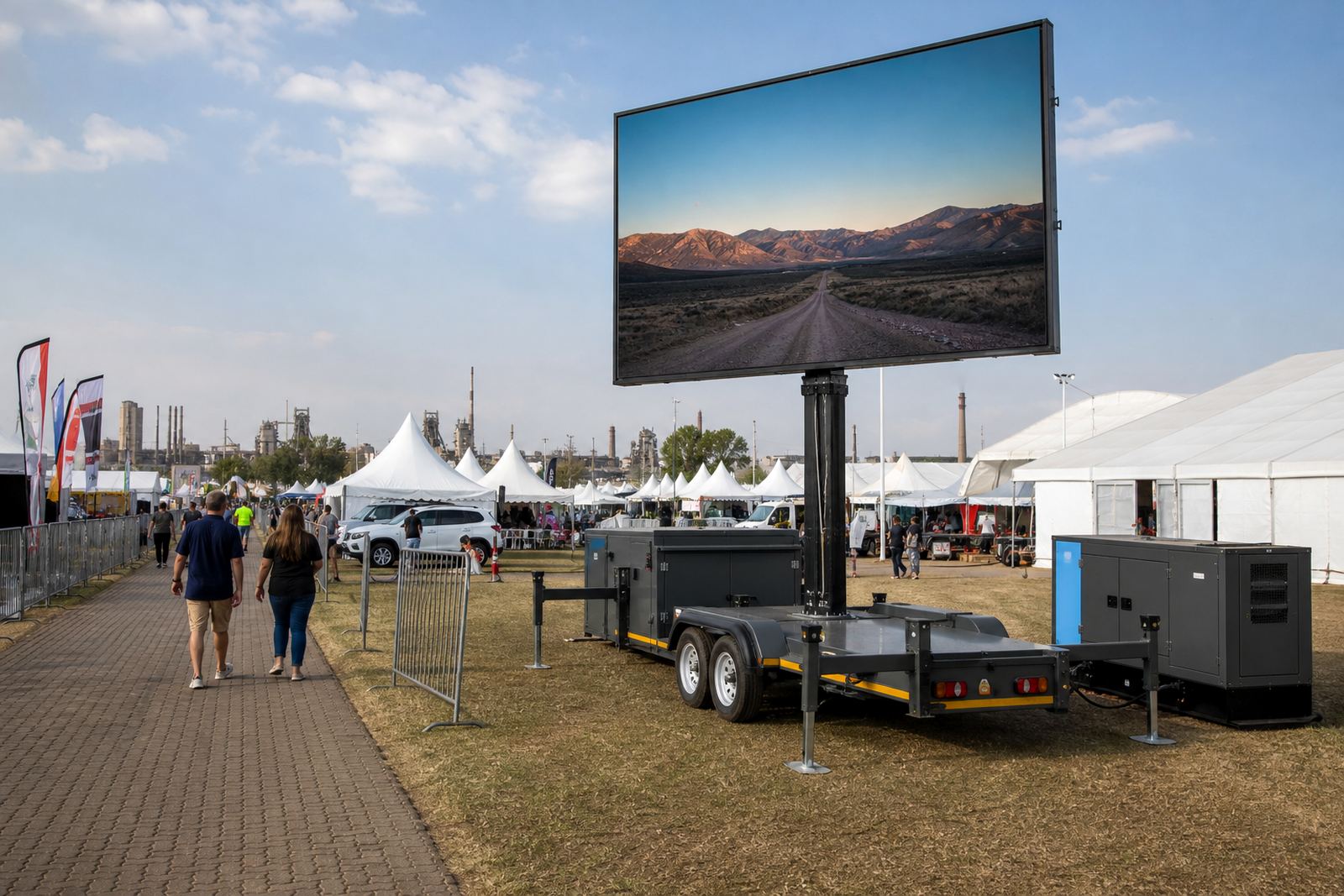
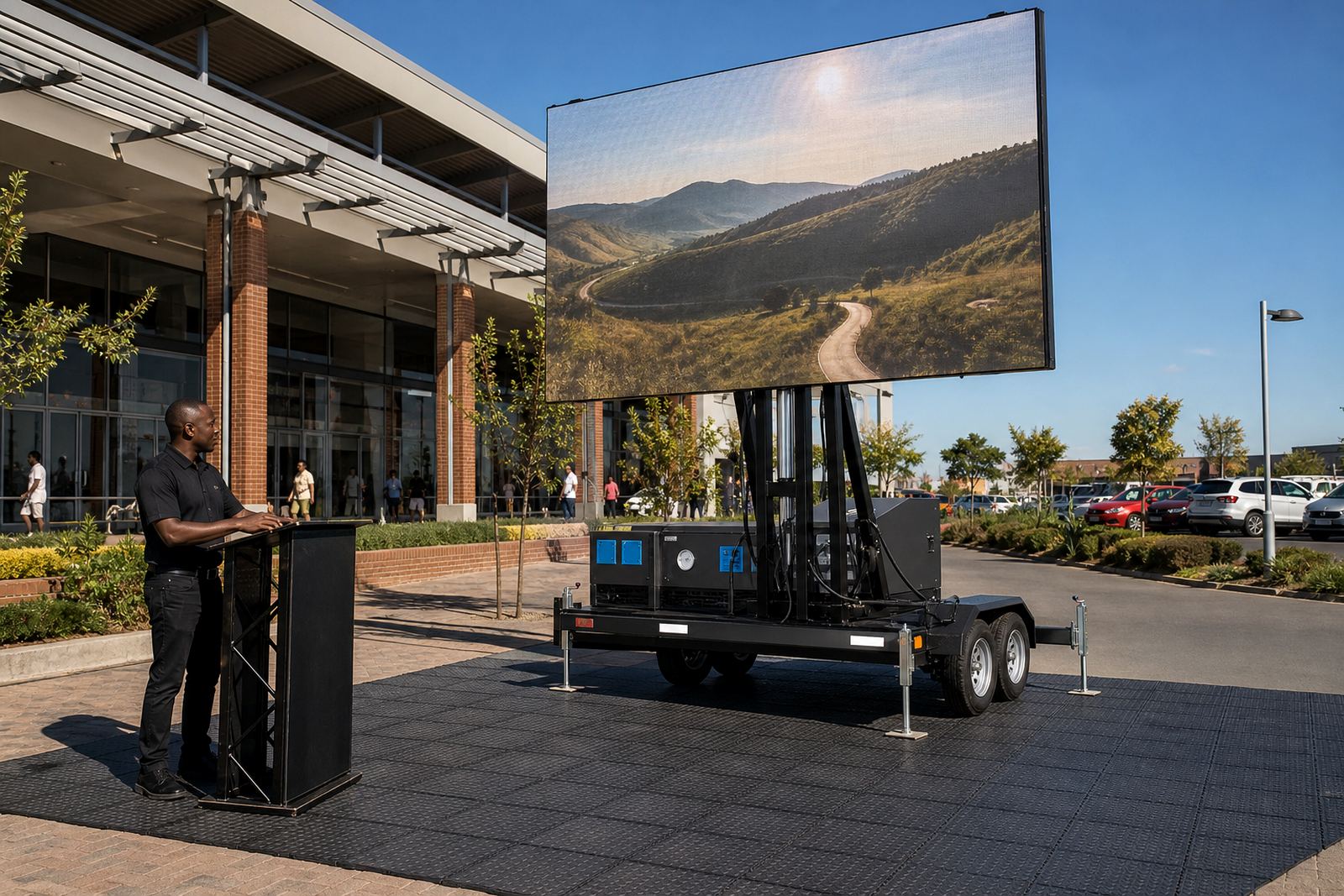
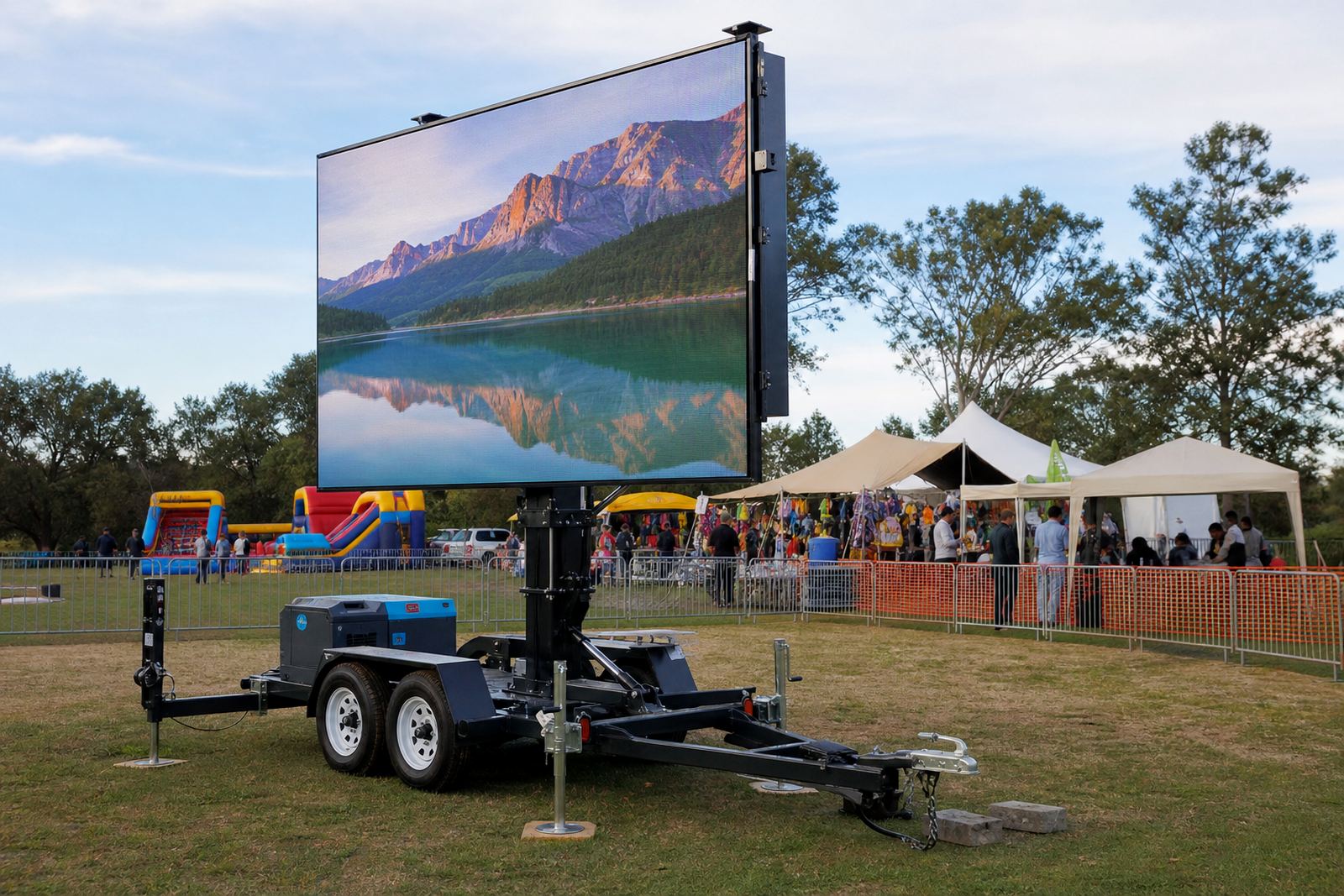
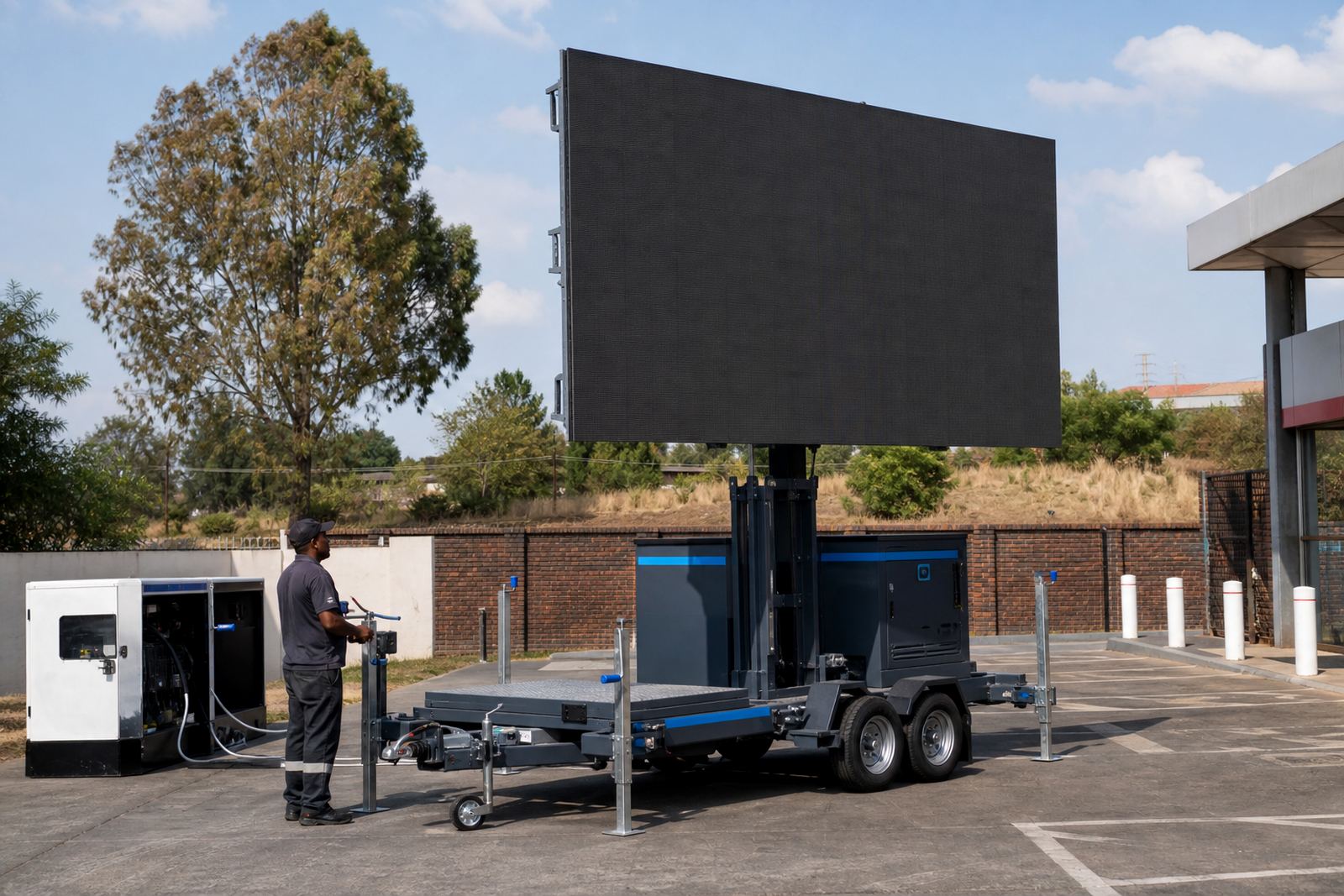
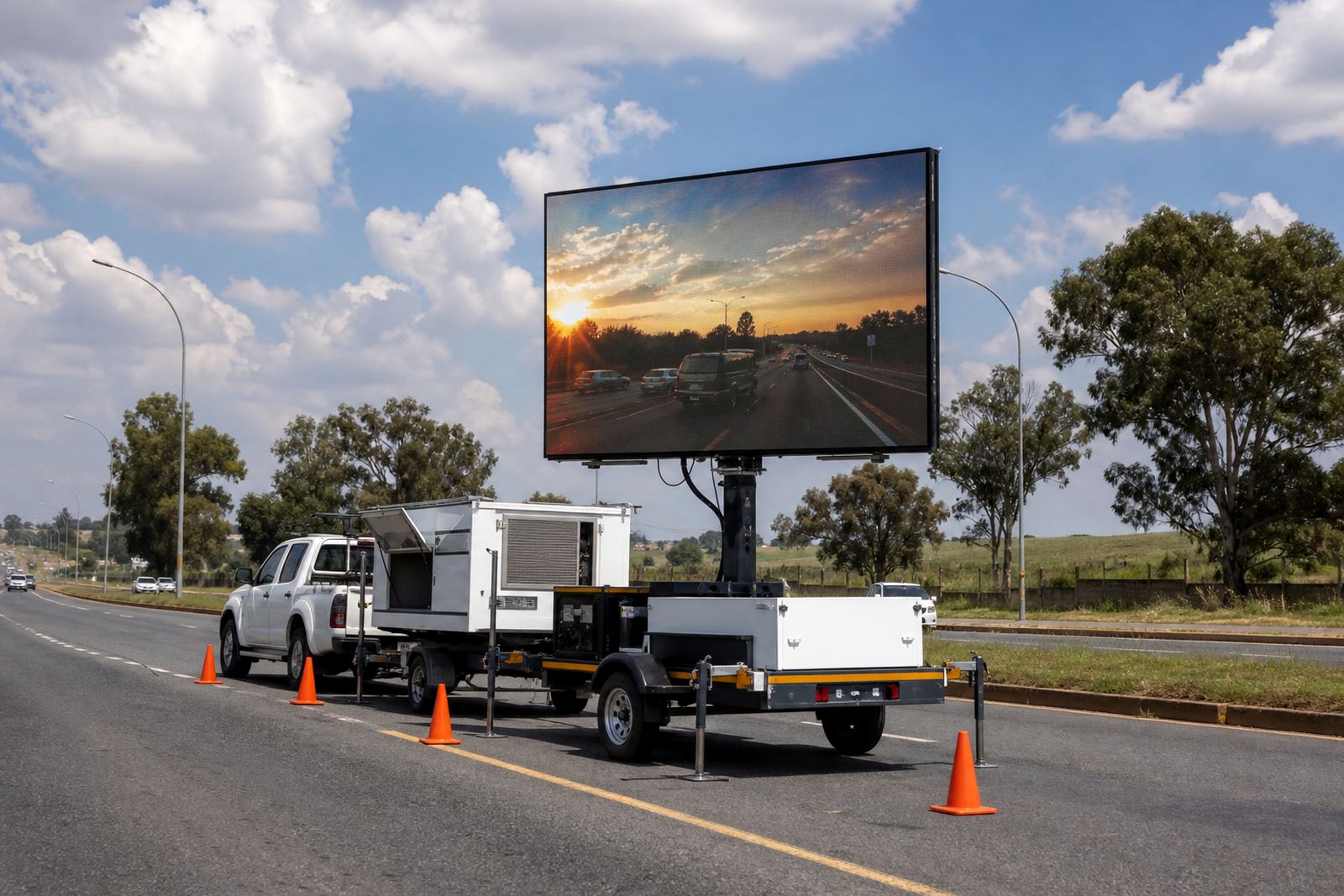
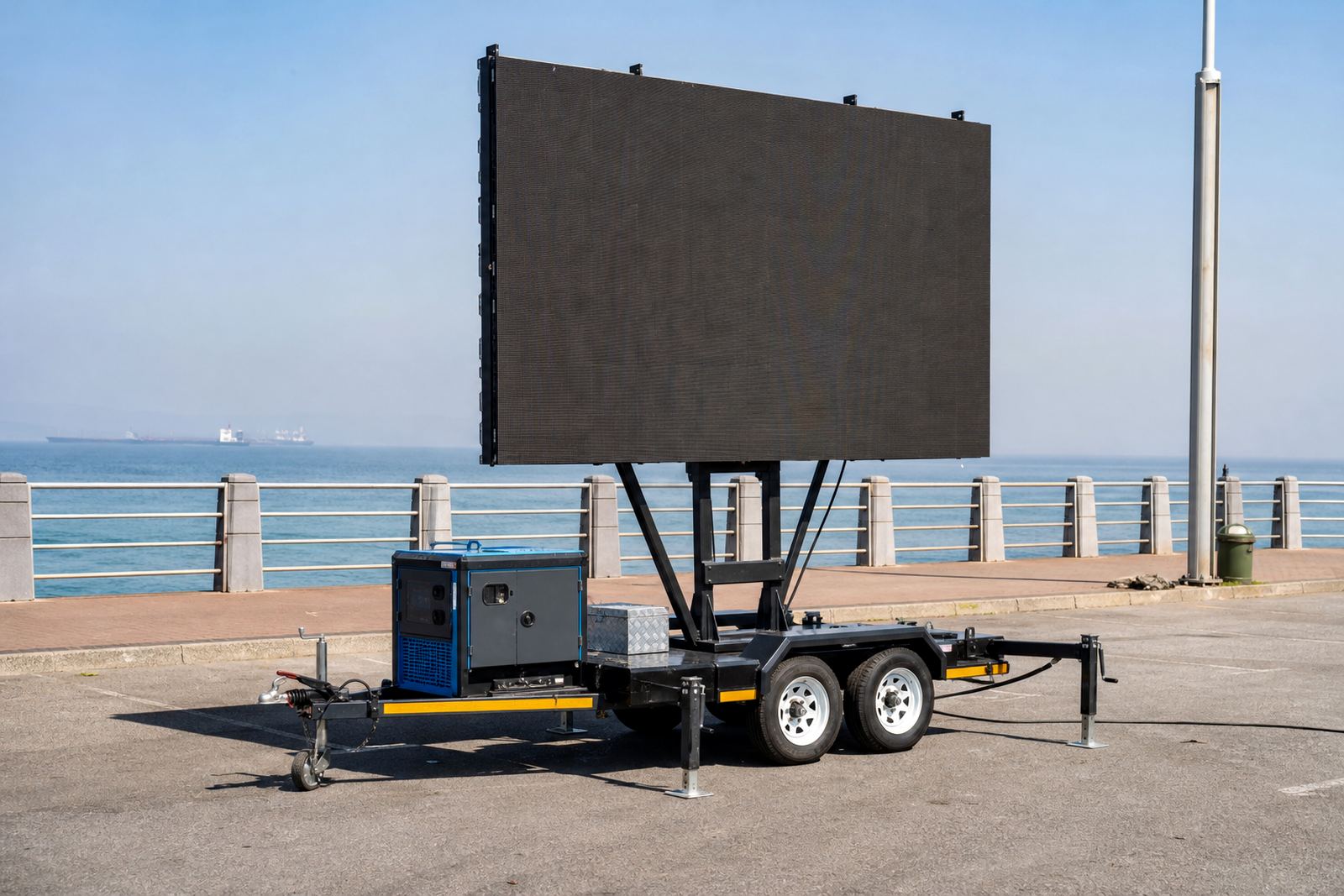
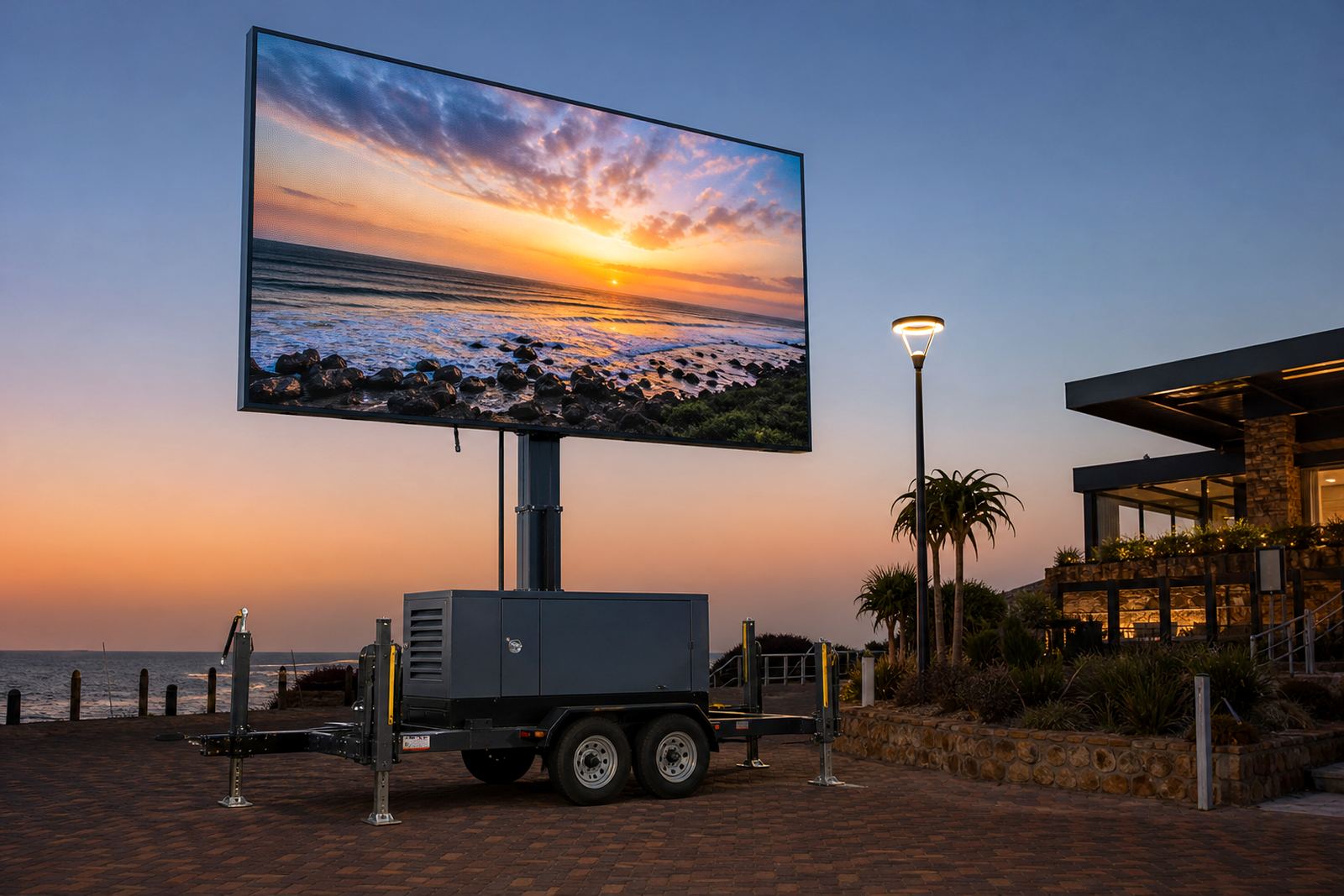
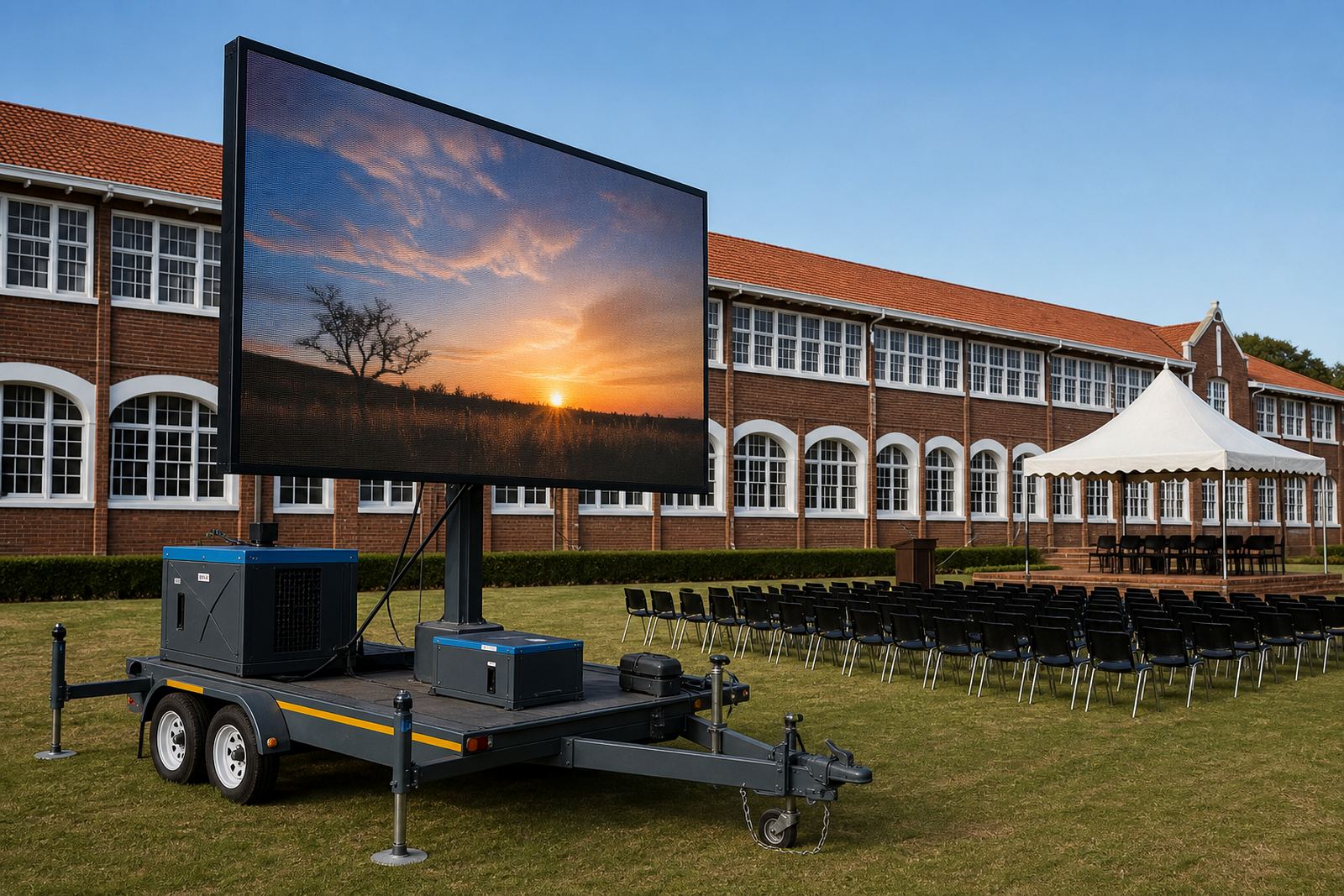
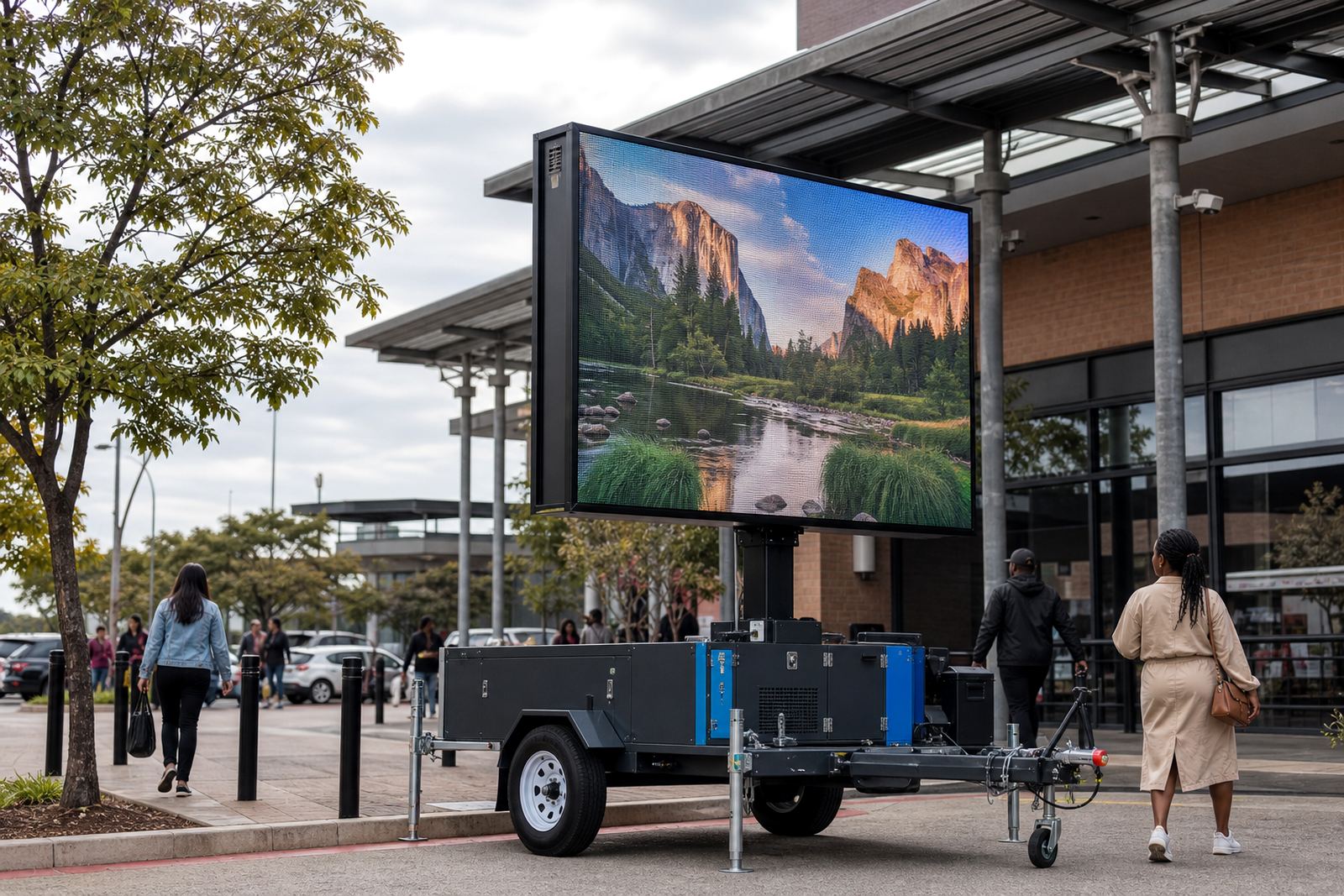
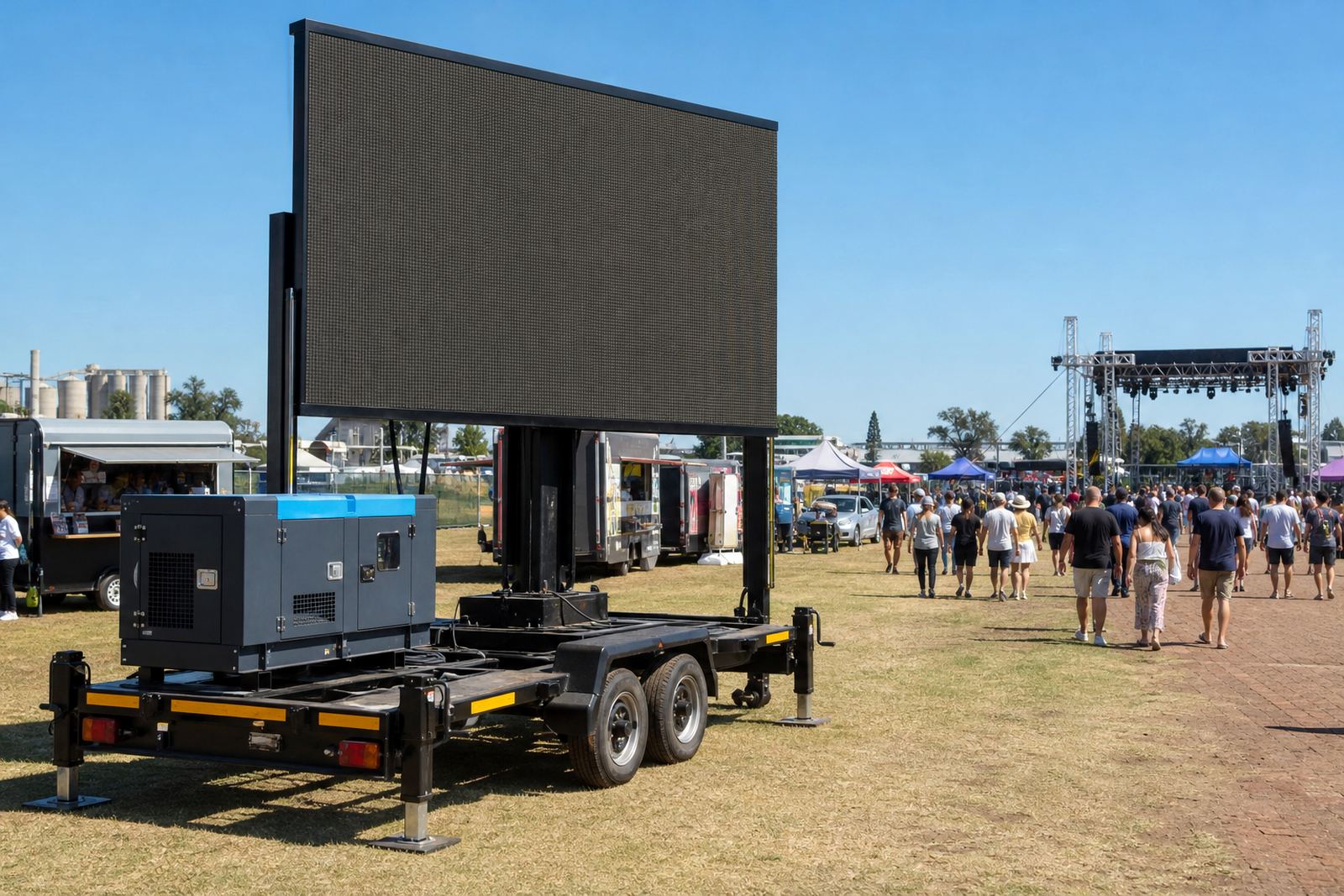
Our deployment work centres on outdoor LED screen trailers and freestanding LED boxes that can be placed where people already gather, then lifted into view for clear outdoor viewing. A typical trailer unit uses a hydraulic lift, rotates for sightlines, and carries a screen suited to daylight visibility with pixel pitch chosen around viewing distance and content detail. For longer programmes, we plan the power path in practical terms, whether that means generator supply or a mains feed where the venue has the right point available.
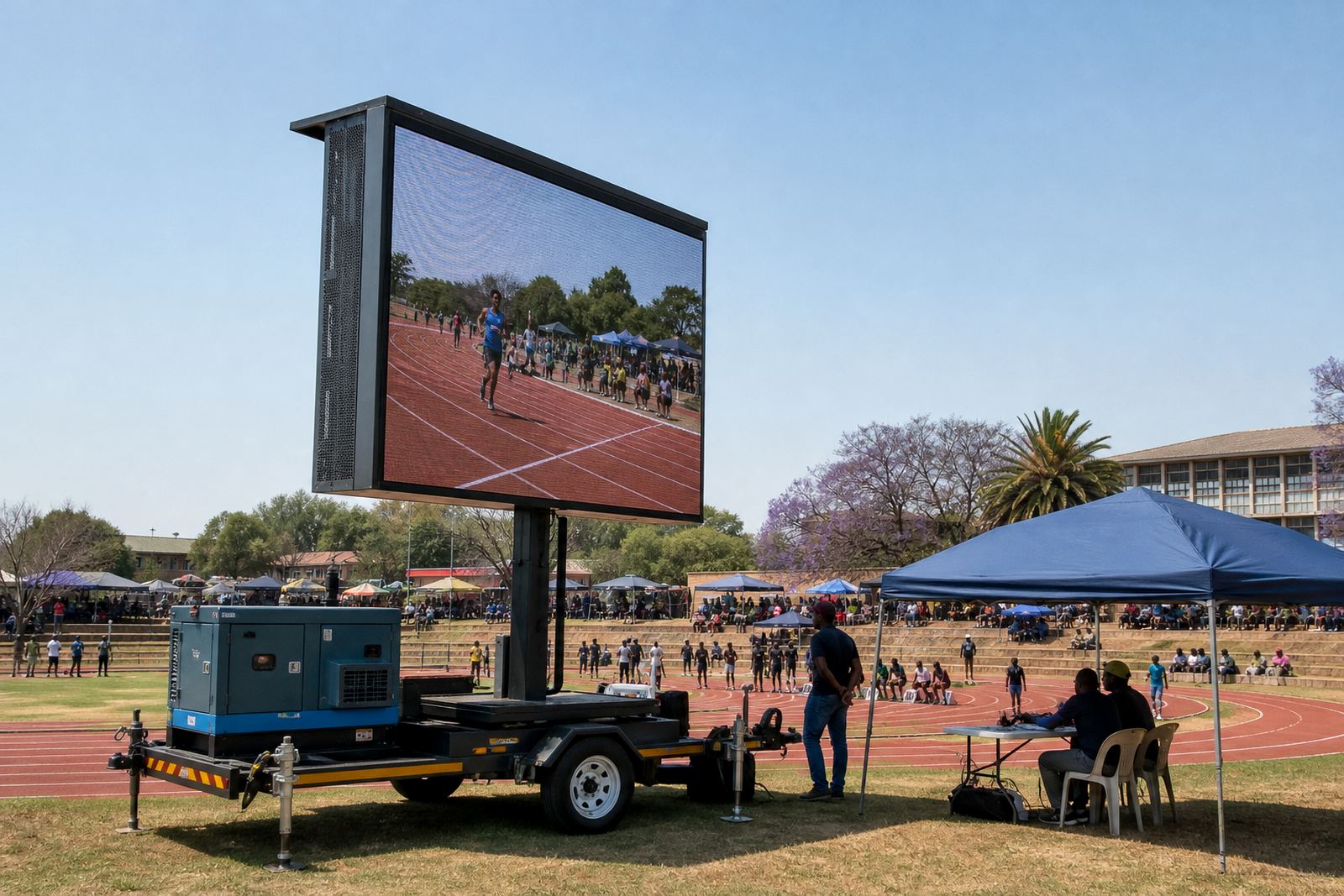
Access, ground and wind conditions differ at each location. That changes how the trailer is parked, how the screen is secured, and whether a permit note is needed for municipal land, a road edge, or a venue under local control. The same screen can work very differently in a sports field, a retail forecourt or a roadside campaign stop, so we plan the place as carefully as the message.
Town first, then the kind of crowd
We think about a job by where it happens and who is watching. Advertisers, schools, municipalities, promoters and roadshow planners all ask different things of the same trailer once it is parked on site. A road-facing campaign in Johannesburg does not call for the same footprint as a stadium screen in Durban or a mall activation in Kempton Park.
On each job we look at how the crowd moves, how far back they stand, where the power comes from and how much the content changes on the day. Some jobs need simple playback from a prepared file, while others need live feed support, timed cues or rolling programme updates through the day.
- Close viewing needs finer pixel pitch and calmer content.
- Daylight viewing calls for strong brightness and proper screen placement.
- Busy sites benefit from clear access lanes and a tidy cable path.
- Longer routes need loading, pack down and travel planning.
What the trailer can do on site
A trailer-mounted screen is built for fast positioning, repeat movement and outdoor viewing. The hydraulic lift brings the screen into the right height band, while rotation helps the panel face foot traffic, stands or passing vehicles. That matters when the audience is not standing in one neat block and the viewing line shifts during the day.
For outdoor use, brightness must cope with sun, cloud and late afternoon glare. Content should be prepared with strong contrast, large type and motion that reads cleanly at distance. Where the site is exposed, wind limits are part of the deployment note and the unit may need to stay within a safe operating range set for the terrain and the weather on that day.
Power, playback and live content support
Some deployments run off generator power and others are tied into mains where the venue setup allows it. Either way, the power plan has to suit the screen load, the site access and the duration of the event. A good deployment also includes content loading before start time, file checks, and playback management once the screen is live.
Live feed support is useful for sport, stage work and public events where the screen must follow a programme that changes during the day. The technician on site handles the practical side, from signal checks to keeping the feed steady while the audience stays in front of the display.
- Content loading for scheduled loops and brand reels.
- Playback management for timed clips and live segments.
- Live feed support for sport, ceremonies and stage updates.
- Power planning for generator or venue supply.
Permits, weather and the realities of open sites
Outdoor screen work often touches municipal rules, venue access conditions and weather monitoring. If a screen is going near a public road, on council land or at a high-traffic venue, the paperwork and site note may need more care than the visual side. Permit guidance helps shape the deployment, but the exact approval path depends on the local authority and the location itself.
Weather monitoring matters because an exposed screen trailer behaves differently in a calm car park and a windy open field. The technician checks the conditions, the ground and the available space before and during the job, then manages pack down when the programme is finished. That keeps the screen work practical and the site tidy after removal.
Places we cover across South Africa
LEDBox deployments move across Germiston, Ekurhuleni, Kempton Park, Johannesburg, Pretoria, Durban, Bloemfontein and Polokwane, with delivery and setup planned around the route. Multi-stop planning helps when a campaign needs the same screen format at more than one point, or when the brief shifts between a launch, a roadshow stop and a weekend activation.
Each job we take records where the screen stood, who it was facing and which crew services went with it. That record is how we decide between a trailer and an LED box for the next booking in the same town.