Timed playback that matches the running order
Playback management starts with the event schedule, not the screen. We map the order of clips, slides, sponsor panels and live moments so the content follows the programme in the right sequence and at the right pace. That includes intro loops before gates open, main reels during peak trade, and short holding messages when the crowd is moving between activities.
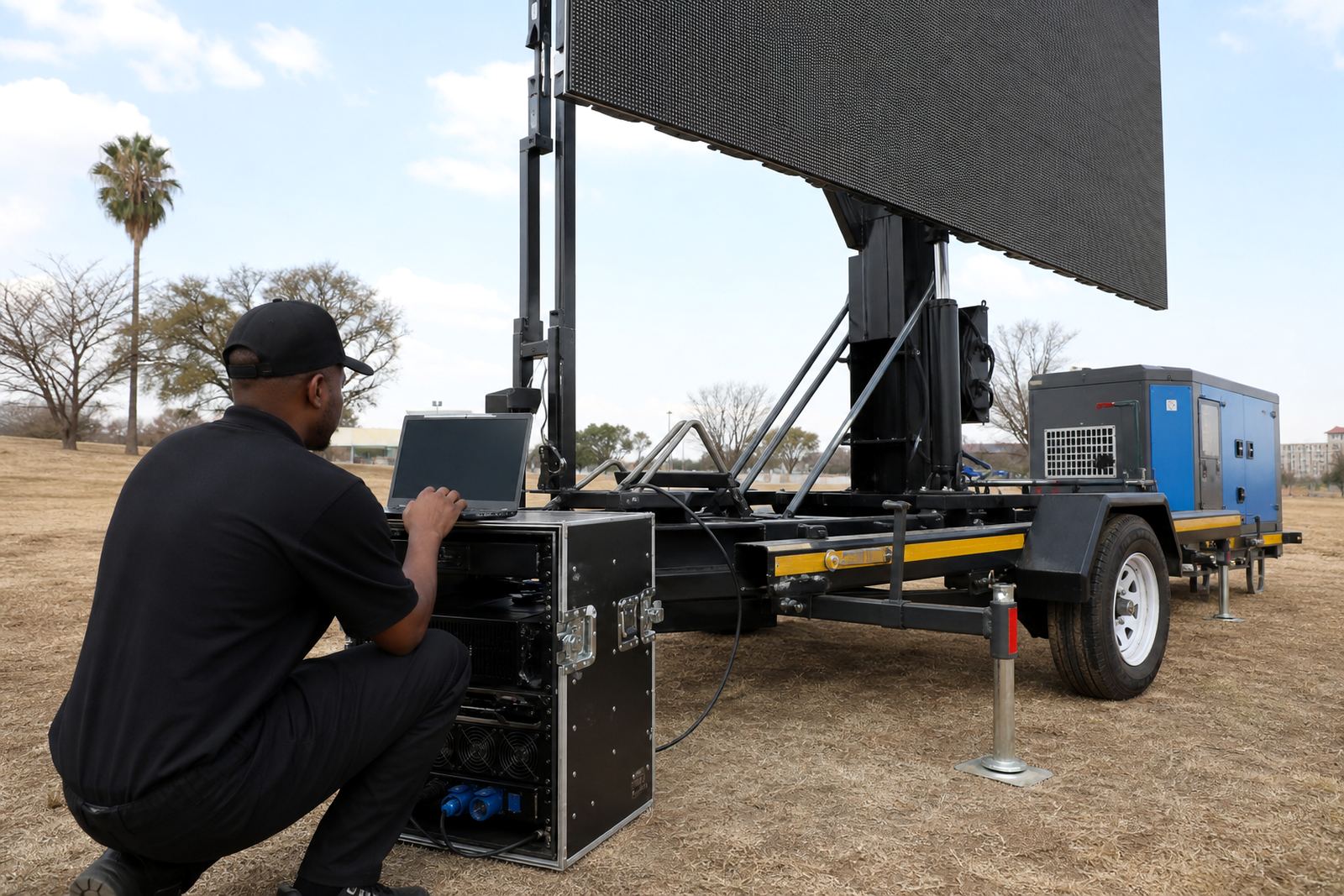
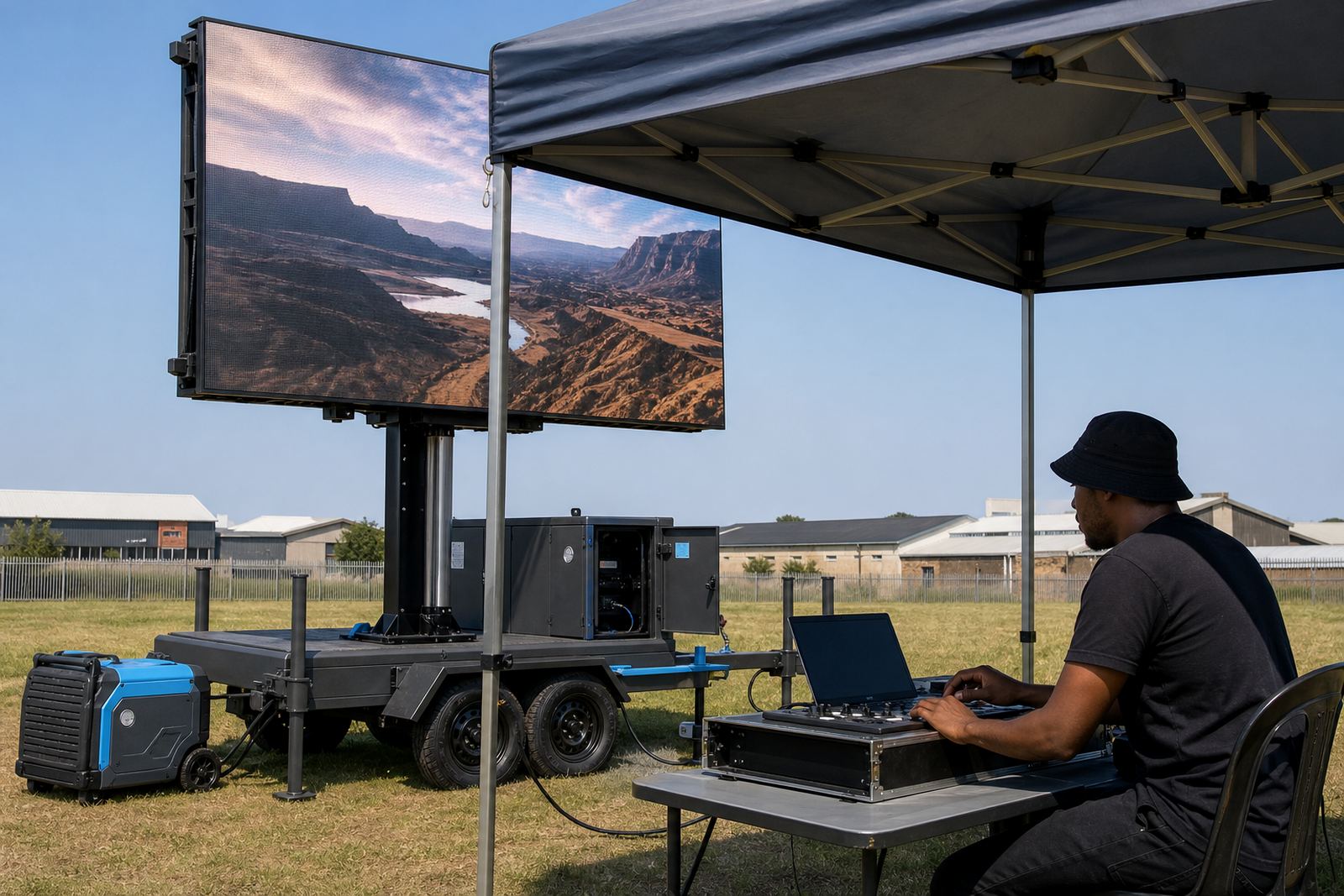
Our on-site technician controls the playback system from the trailer or control point, checks the file order, watches for cue changes and keeps the content moving without awkward gaps. If the event needs a shift from branding to a live feed or a sponsor take-over, the change is handled on site rather than left to chance.
- Timed loops for pre-event, peak-time and close-out blocks
- Cue-based changes for speakers, prize draws and match breaks
- Manual override where the schedule needs a quick switch
- Live monitoring throughout the booked event window
What the screen hardware supports
Our outdoor LED screen trailers and LED boxes are built for bright, open-air viewing. Pixel pitch is selected for the viewing distance and image detail the job needs, with tighter pitches used where viewers stand closer and coarser pitches where the screen is seen from further back. Brightness is set high enough for daylight conditions, so graphics and video remain visible in full sun and late afternoon glare.
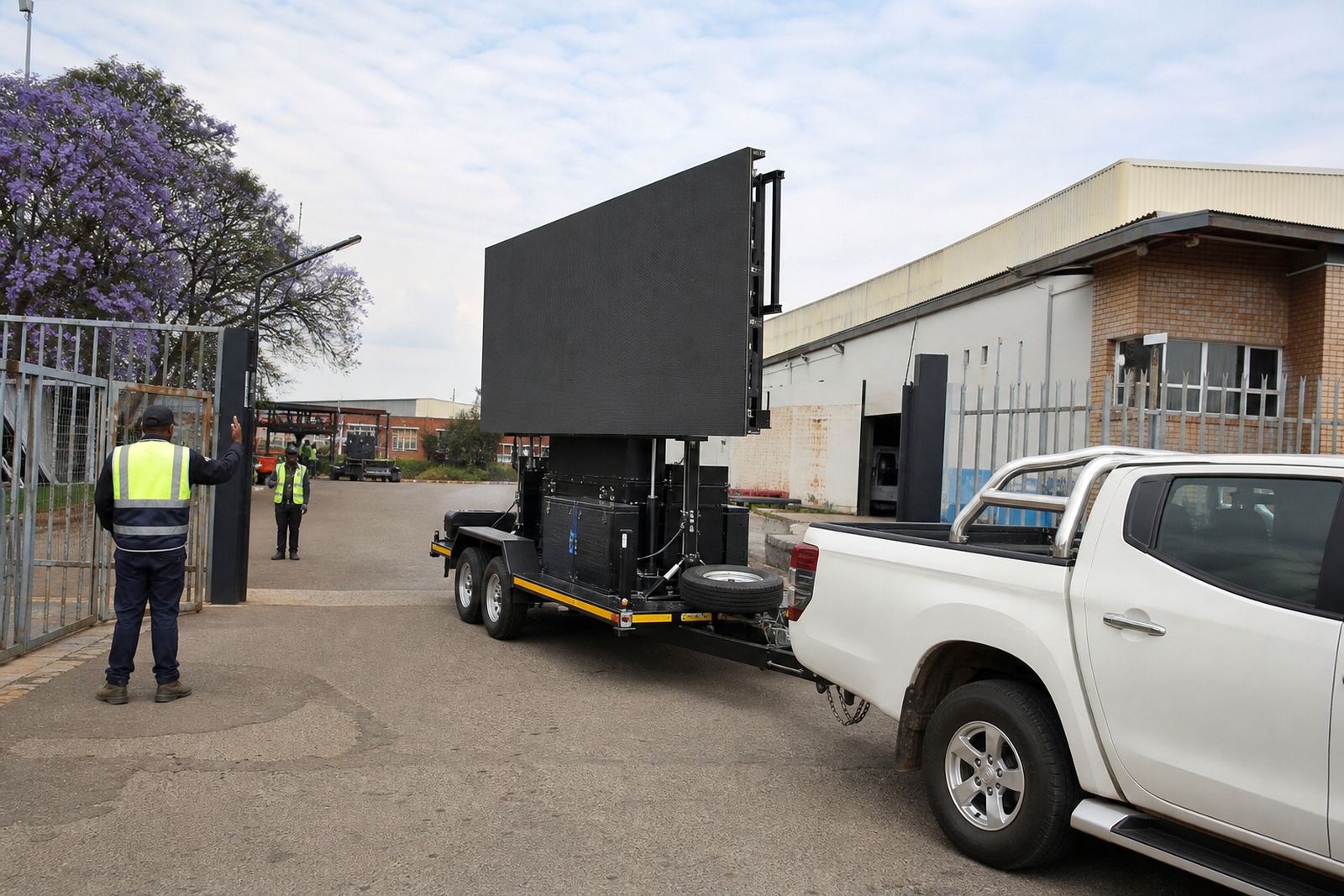
The trailer units can lift hydraulically and rotate into position, which helps with clear sightlines on sports fields, forecourts and roadside promotions. Depending on the site, power can come from a generator or mains supply. The playback setup is matched to the power plan so the screen, processor and media source stay stable during operation. Wind limits are checked before and during setup, because trailer placement and screen height need to stay within safe operating conditions.
- Outdoor-rated LED panels for daylight use
- Pixel pitch selected to suit distance and image detail
- Hydraulic lift and rotation for correct screen angle
- Generator or mains power where the site allows it
How the content is loaded and run
Content loading covers the practical side of getting files onto the system in the right format. We check the media structure, sequence the clips, test the playback order and confirm the live feed path where one is part of the programme. If the event uses multiple sponsor messages, we load them in a clean block so the operator can move through them without hunting for the next file.
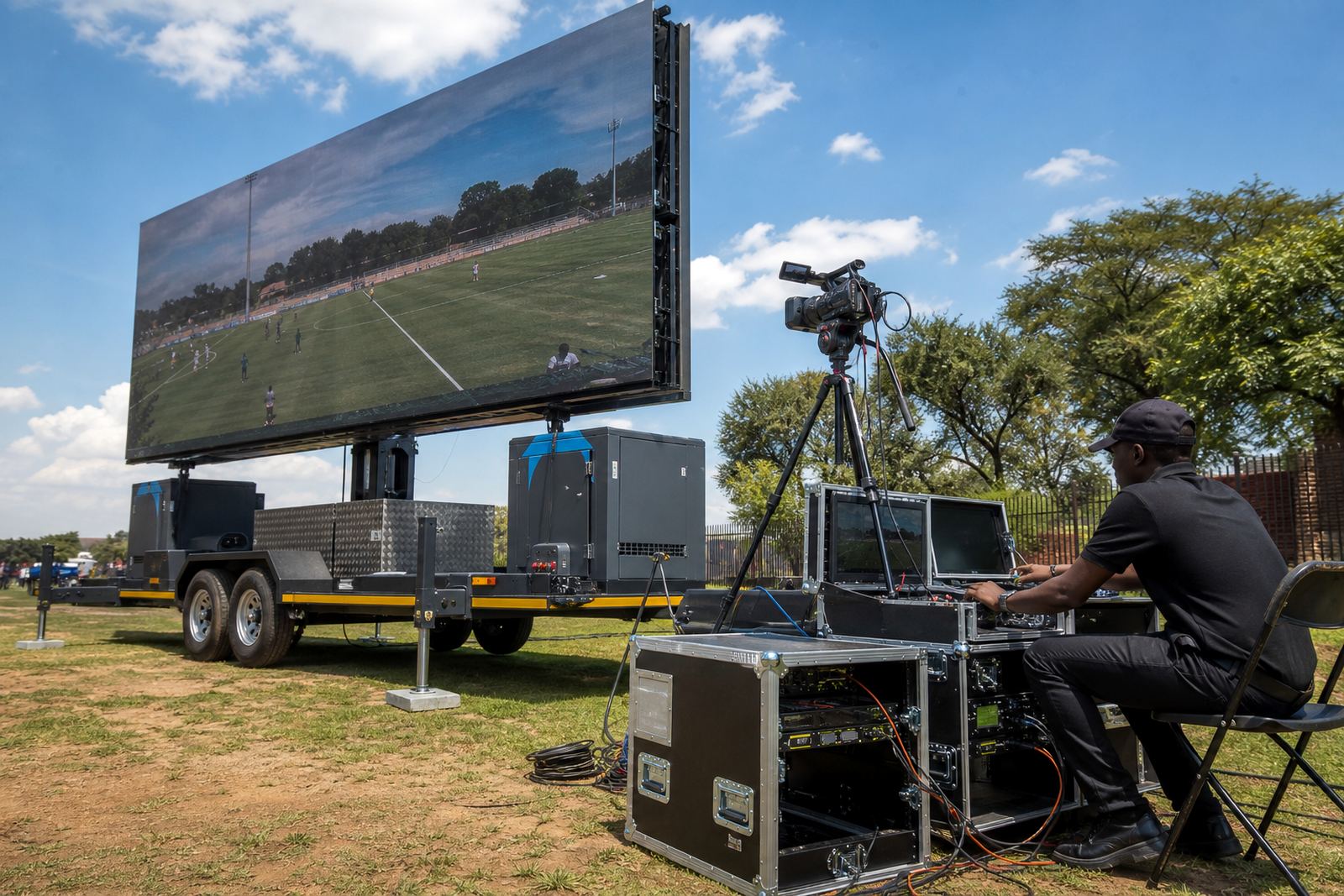
The playback specialist works with the technician on site, which helps when a presenter runs late or a match breaks for extra time. The screen can move from looping visuals to a speaker slide, then back to the main reel, with the change made on the control system and checked on the display itself. That matters on roadshows, school sports days and concerts where timing shifts through the day.
- File loading and order checks before the event starts
- Playback review on the actual screen output
- Live feed support for cameras or event sources
- On-site file swaps where the running order changes
Permits, power planning and site control
Outdoor screen work often needs more than a trailer and a playlist. Site checks cover access, ground conditions, turning space, crowd flow and where the screen can sit without blocking sightlines or emergency routes. Power planning looks at available supply, cable runs and generator placement where mains power is not practical.
Permit guidance is part of the service when a site falls under municipal control or needs written approval for placement, height or roadside exposure. We do not file every local document on your behalf as a blanket rule, but we do guide the process in general terms and make sure the screen plan fits the site requirements. Weather monitoring also matters, especially for windy coastal or open inland sites where a trailer may need to stay within lower operating limits.
- Site checks for access, ground and viewing angles
- Power planning for generator or mains supply
- Permit guidance for municipal approvals where required
- Weather checks tied to the screen and trailer position
What the booking process looks like
Playback management is easier when the event plan is clear from the start. We work from the programme, venue layout and content list, then match the screen format and operator support to the booking. A small brand loop for a retail activation needs a different setup from a concert screen carrying live camera work and sponsor changes.
Once the booking is confirmed, we move through the content check, site plan and equipment allocation. Delivery, setup and operator brief are scheduled together so the trailer arrives ready for the running order, not as an isolated drop-off. If the event spans more than one stop, the playback plan is adjusted for each venue so the content remains relevant from Germiston to Johannesburg, Pretoria, Durban, Bloemfontein or Polokwane.
- Walk-through with the event manager before doors
- Content check against the screen format and resolution
- Site planning for placement, access and viewing
- Delivery, setup and operator handover on site
Pricing that follows the technical load
Pricing for playback management depends on the length of the event window, the amount of content handling, the need for live feed support and whether the booking includes one screen or several stops. A short campaign loop on a single trailer is priced differently from a roadshow with repeated cue changes and active monitoring across the day.
The quote reflects the screen type, power arrangement, technician requirement and any extra preparation for file loading or live input testing. Where the brief includes permit guidance, weather checks or multi-stop movement, those parts are built into the working plan rather than treated as loose add-ons. It keeps the numbers tied to the real labour and equipment on site, which is the only practical way to price this kind of work.
- Single-site loop management or full event control
- Technician and playback specialist allocation
- Power, movement and live feed requirements
- Multi-stop work priced against the route and setup load
Aftercare once the screen is packed down
Aftercare covers the practical close-out after the event. That includes checking that the final file set is accounted for, confirming the screen shut-down sequence, and making sure the playback system is packed with the right media notes for the next booking. Where a campaign runs over several dates, the content structure can be carried forward without starting from scratch each time.
If there was a live feed, sponsor rotation or late programme change, we keep the notes together so the next event day starts from a clean file map. For clients who use trailers across different towns and venues, that record helps the next site run with less friction, especially when the screen is being moved between busy urban venues and open outdoor spaces.
- End-of-event file checks and close-out notes
- Playback records kept for future bookings
- Carry-forward structure for repeat campaign dates
- Pack down linked to the next route or venue
Key facts
| Screen type | Outdoor LED screen trailers and LED boxes |
|---|---|
| Pixel pitch | Selected to suit viewing distance and image detail |
| Brightness | High-brightness output for daylight viewing |
| Power options | Generator or mains power depending on site |
| Movement | Hydraulic lift with rotation for setup and sightline control |
| Coverage | Germiston, Ekurhuleni and major South African event routes |