
Transport That Matches the Screen Load
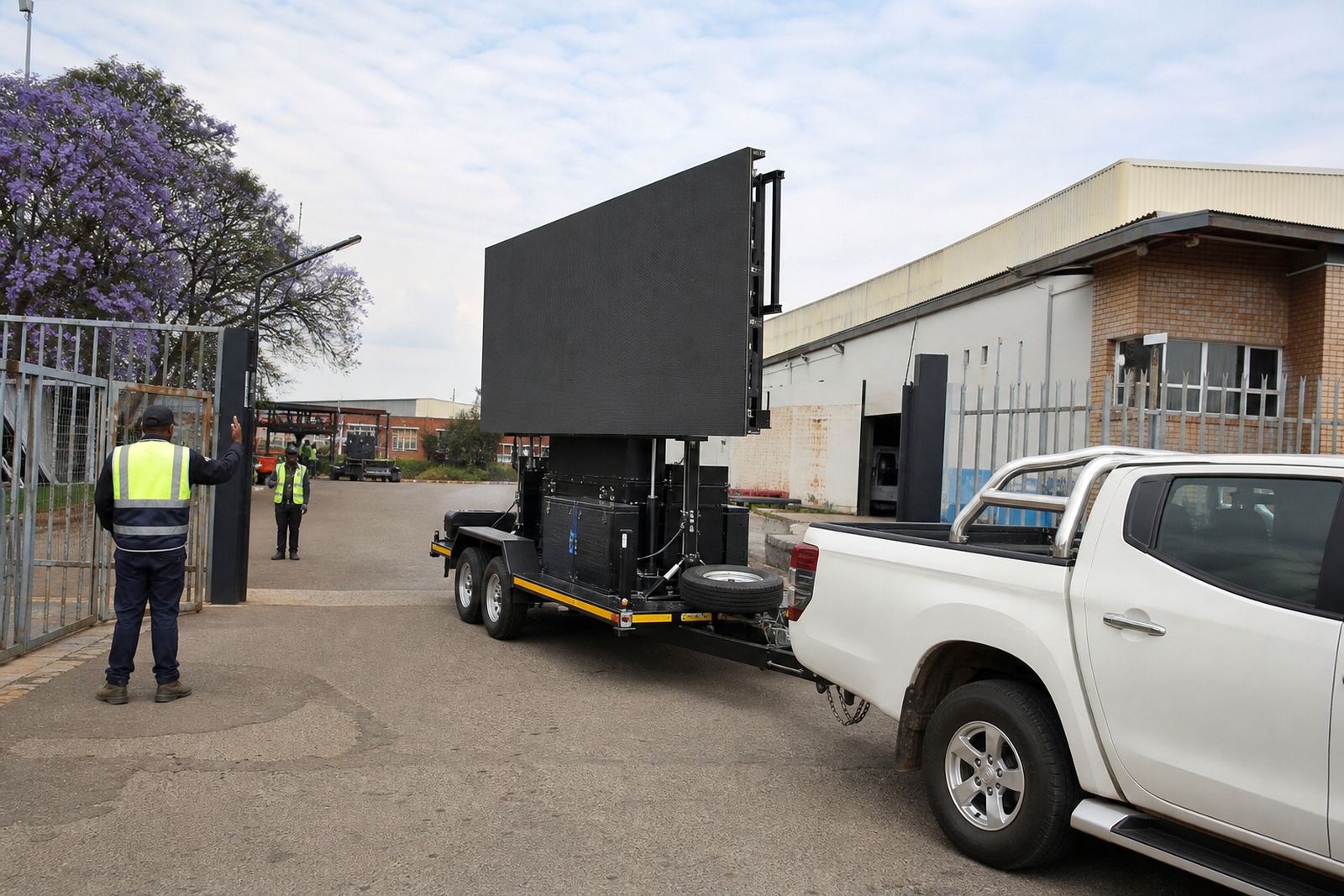
Delivery starts with the exact trailer or box on your booking. An LED trailer or modular LED box is secured for road movement, with attention to weight, tie-down points, access height and the route into the venue. In Germiston, that often means tighter industrial roads and loading bays, while roadshows may call for repeated moves between sites in Johannesburg, Pretoria, Durban, Bloemfontein or Polokwane.
The team plans for the size of the screen face, the trailer frame, the tow vehicle or flatbed access, and the conditions at the receiving point. Outdoor LED screens are built for transport, but they still need careful handling around uneven paving, low trees, soft verges and narrow gates. If a site is awkward, the delivery plan changes to suit the space rather than forcing the screen into it.
- Road transport to the agreed venue or activation point
- Secure loading and unloading for trailer or box format
- Route planning for city sites, industrial areas and open grounds
- Careful handling around access limits, slopes and tight turns
What Arrives on Site With the Screen
Delivery is rarely just a drop-off. The screen arrives with the support required to get it ready for use, including the trailer base or box structure, power cabling, control gear and the technician needed to oversee the first stage on site. For outdoor units, the setup can include hydraulic lift systems that raise the screen into viewing position, and some trailers also allow rotation so the display can face the most useful direction.
Screen spec matters here too. Outdoor LED panels commonly sit in finer pixel pitches for closer viewing or slightly wider pitches for big roadside visibility, and brightness must be strong enough for daylight conditions. That affects transport, because the unit has to arrive complete and clean, with the right control equipment and content files loaded in the correct format. If the screen is being used for live feed support, the delivery includes the gear and checks needed to keep signal flow steady once it is in place.
- Outdoor LED trailer or LED box unit
- Control equipment for content playback
- Power cabling for generator or mains feed
- Hydraulic lift and rotation features where the unit includes them
- On-site technician for setup and first checks
The Site Checks Before the Wheels Stop
Before delivery day, the site needs a practical look over. Access width, ground firmness, overhead clearance, turning space and the final screen position all matter. A sports day on a school field is different from a roadshow along a municipal pavement, and a concert setup has its own crowd movement, barrier lines and parking pressure. We bend the tow plan around the venue's gates and hours, because the venue will not bend for us.
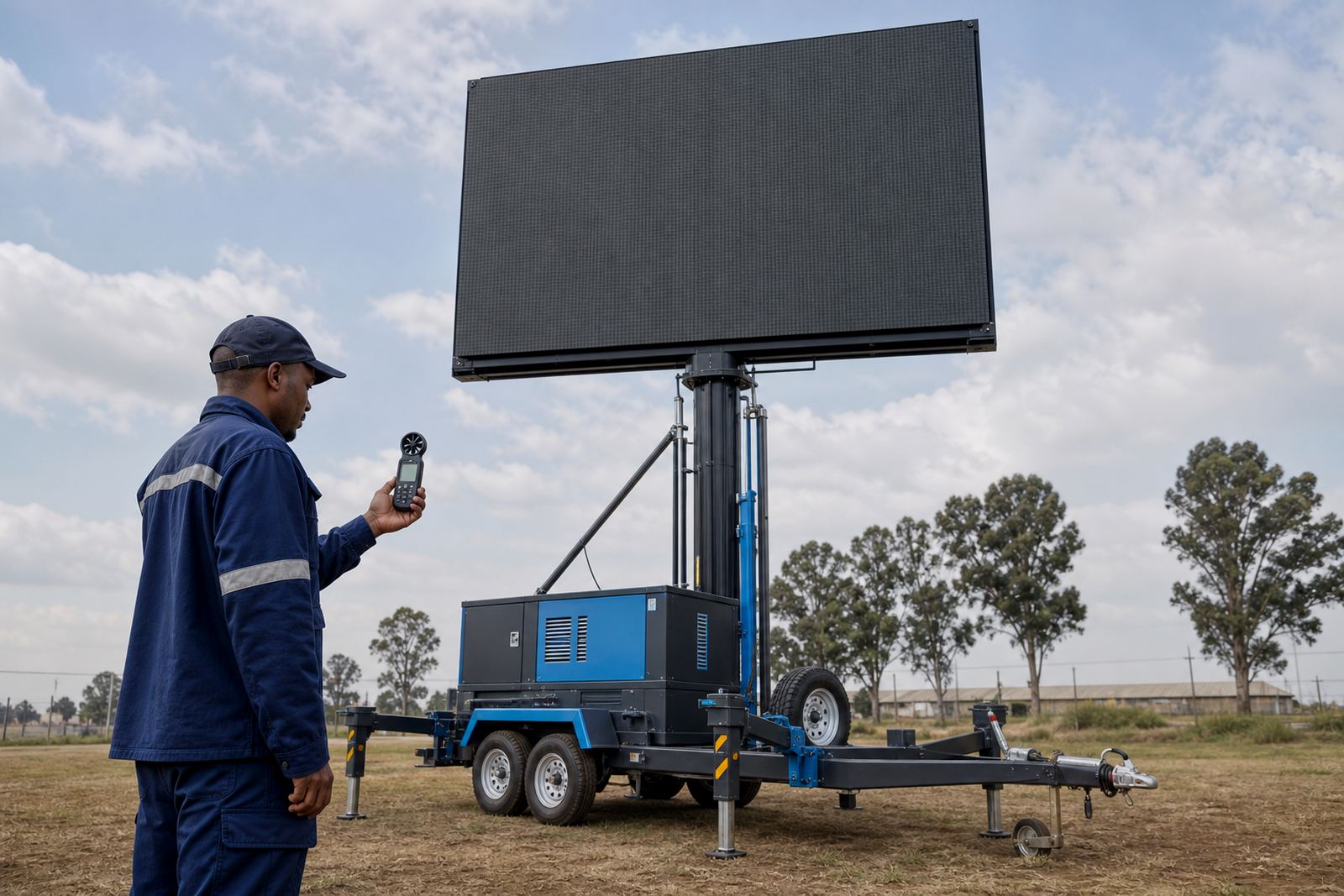
Wind is another point that cannot be guessed. Outdoor LED screen trailers have operating limits and the screen face must be treated with care if conditions become unsafe. The technician monitors conditions on site and can delay raising the screen or keep it lowered until the weather allows safe use. Municipal permit requirements also vary by location and by how long the screen will stay in place, so the paperwork and location note are handled in general terms before the unit moves out.
- Access check for gates, roads, kerbs and turning space
- Ground check for stability and safe positioning
- Wind and weather monitoring before and during setup
- Permit guidance for public sites and temporary activations
Power, Playback and the First Signal
Once the screen reaches the venue, delivery flows into setup and content loading. Outdoor screens may run from generator power or mains power, depending on what the site allows and what the booking includes. The team checks the available supply, cable runs and placement of the power source so that the display sits where it can be seen without tripping hazards or awkward access.
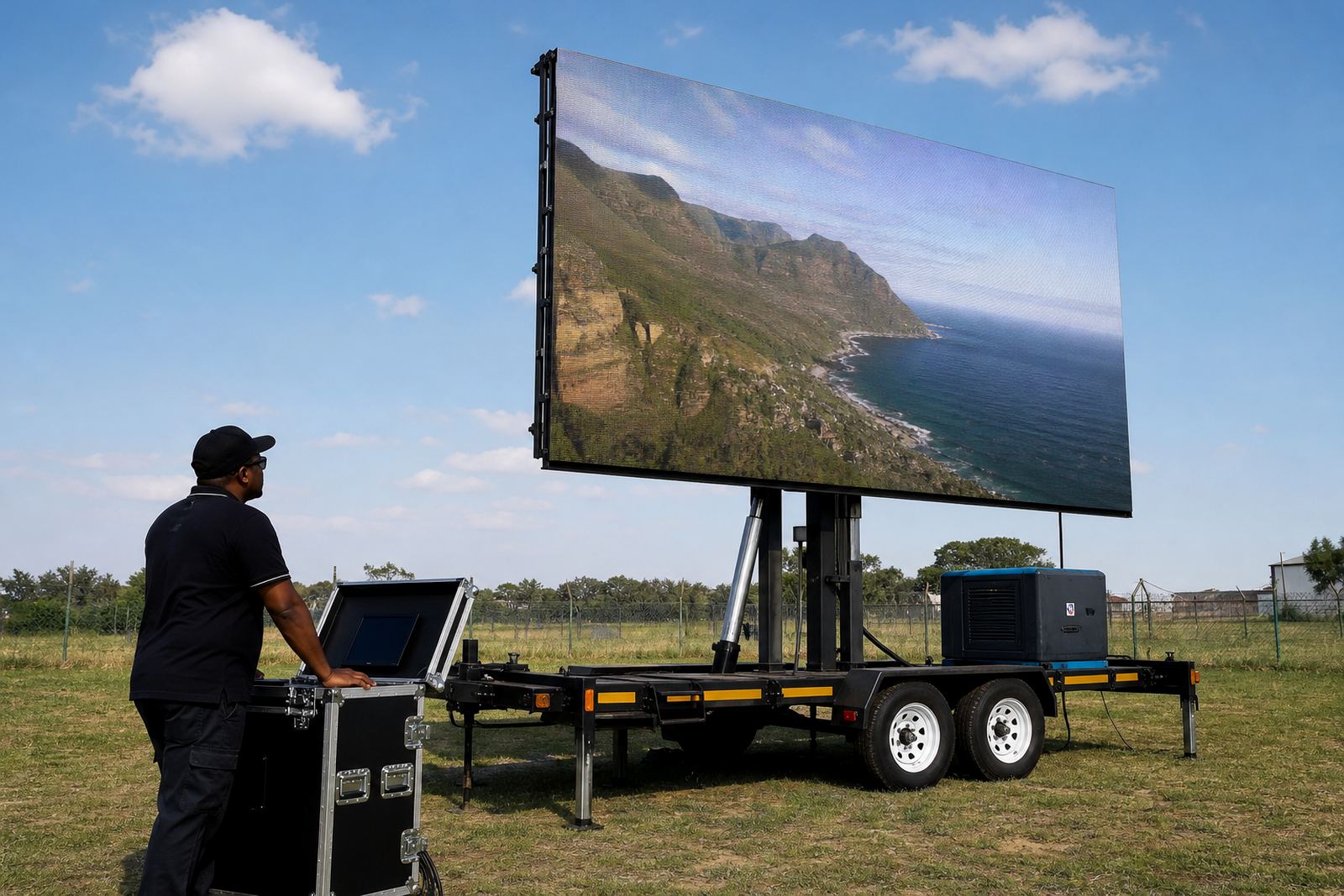
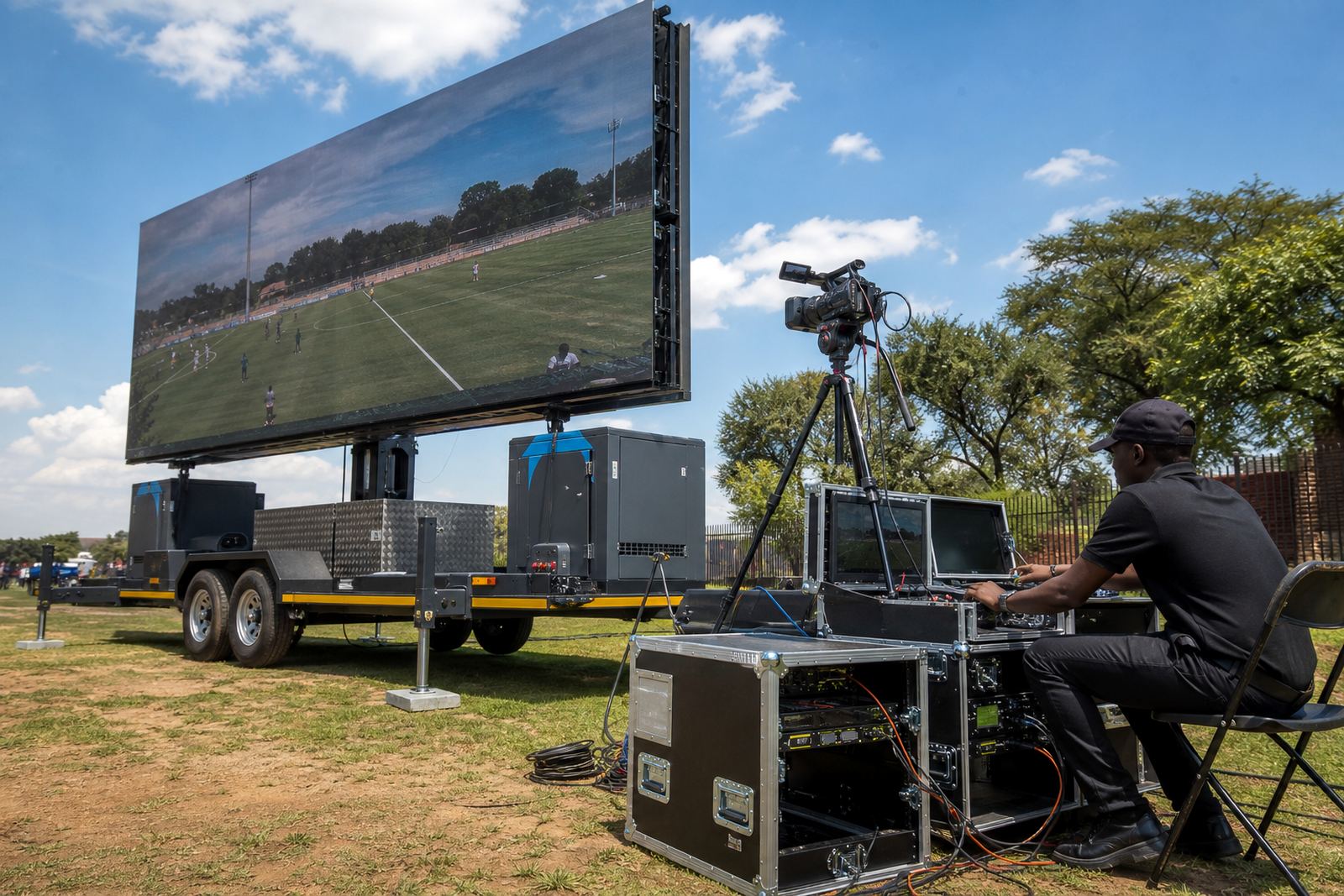
Content playback is part of delivery because the screen has to show the right material in the right order. That may include a single loop for a promotional roadshow, a schedule for a sports day, or a live feed during a concert or public event. If the display needs changing files, the content playback specialist handles the loading and checks the image layout, aspect ratio and sound sync where applicable. The point is to hand over a working screen, not a box of cables and assumptions.
- Generator or mains power planning
- Content loading and playback checks
- Live feed support where the event needs it
- Screen alignment and viewing angle checks
How Delivery Is Priced for Real Jobs
Pricing for delivery is worked around the job itself. Distance from the Germiston base, access difficulty, screen size, number of stops, power needs and the length of time on site all affect the quote. A single venue handover in Ekurhuleni is not the same as a multi-stop route across cities, and a roadside brand activation brings different transport needs from a stadium event or a public square.
The pricing approach stays tied to the practical parts of the move. If the booking needs a trailer, technician, content loading, weather watch and pack down, those items are counted into the plan. If the route includes more than one drop point, the planning reflects that too. There is no shortcut to a fair delivery figure when the screen itself is large, visible and sensitive to where it lands.
- Distance and route shape the transport cost
- Screen size and trailer type affect the job mix
- Number of stops changes labour and vehicle planning
- Site conditions can alter the time and equipment needed
Pack Down, Return Move and Aftercare
After the activation, delivery closes with pack down and the return move. The screen is lowered, power is isolated, cables are cleared and the unit is prepared for transport off site. If the booking forms part of a longer roadshow, the team can move the trailer on to the next point in the route. For one-off events, the same care applies in reverse, because the screen has to leave the site in the same order it arrived.
Our aftercare is hands-on and specific to the equipment. The technician checks for loose fixings, playback issues, transport marks and any weather-related changes from the day on site. If the LED box or trailer will be used for another activation later in the programme, the handover notes help keep the next site move clean and predictable. That is especially useful where the same screen is moving between Gauteng, KwaZulu-Natal and the Free State on a tight event route.
- Safe pack down and clearing of the site
- Return transport or onward move to the next stop
- Post-event check of screen, cabling and playback gear
- Notes for the next activation on a roadshow route
Key facts
| Screen type | Outdoor LED screen trailer or LED box |
|---|---|
| Pixel pitch | Selected to suit viewing distance and content detail |
| Brightness | High-output daylight viewing suitable for outdoor use |
| Lift and orientation | Hydraulic lift on suitable trailer units, with rotation where specified |
| Power options | Generator power or mains power, depending on site setup |
| Coverage | Germiston, Ekurhuleni, Johannesburg, Pretoria, Durban, Bloemfontein and Polokwane |