
A trailer screen that works in open light
The P6 trailer uses a 6 mm pixel pitch, which suits medium to large outdoor audiences where viewers stand a few metres back from the screen. The panel cabinet is rated for bright daylight use, with high nits output so graphics, motion clips and live feeds stay readable when the sun is harsh and the site is not shaded.
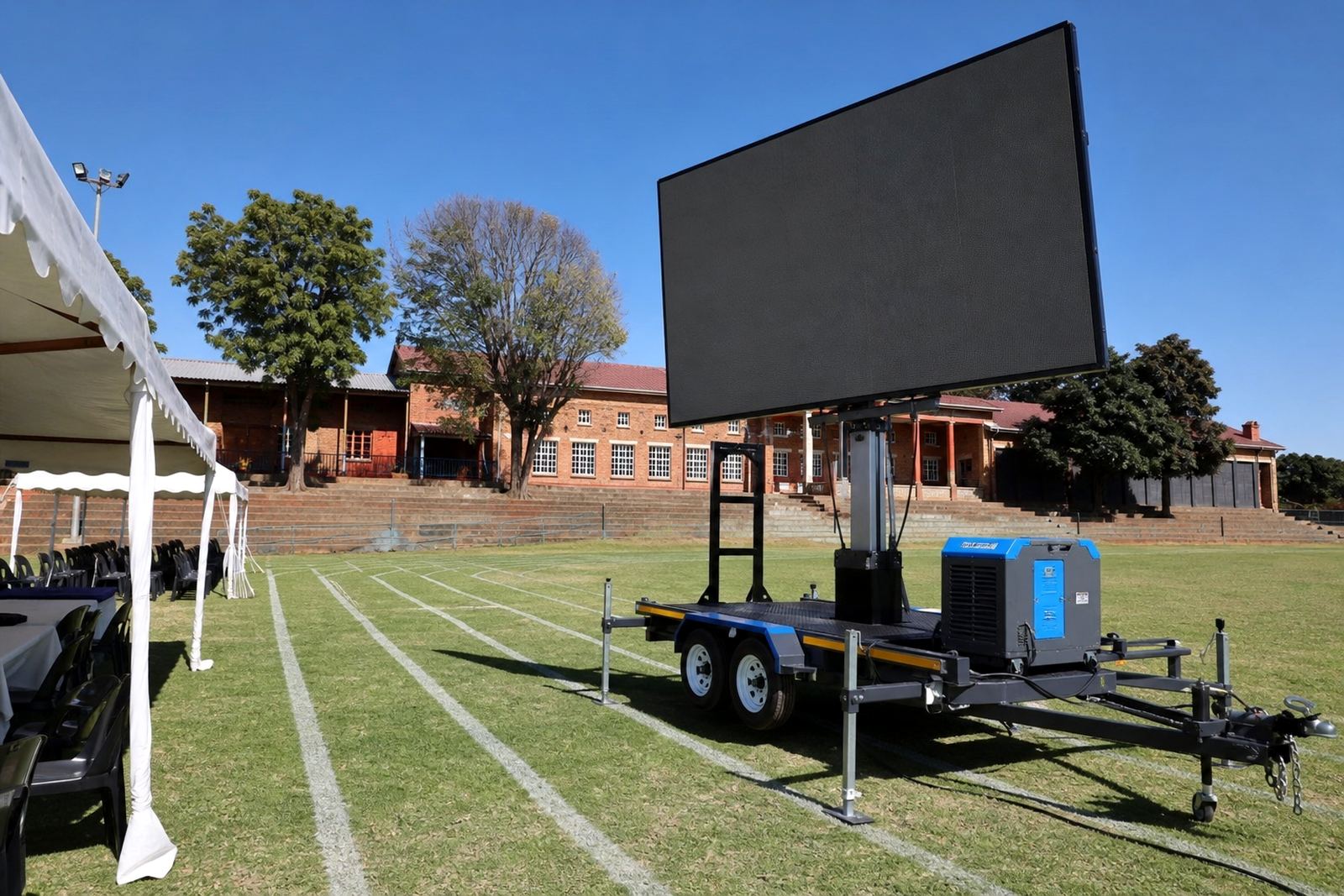
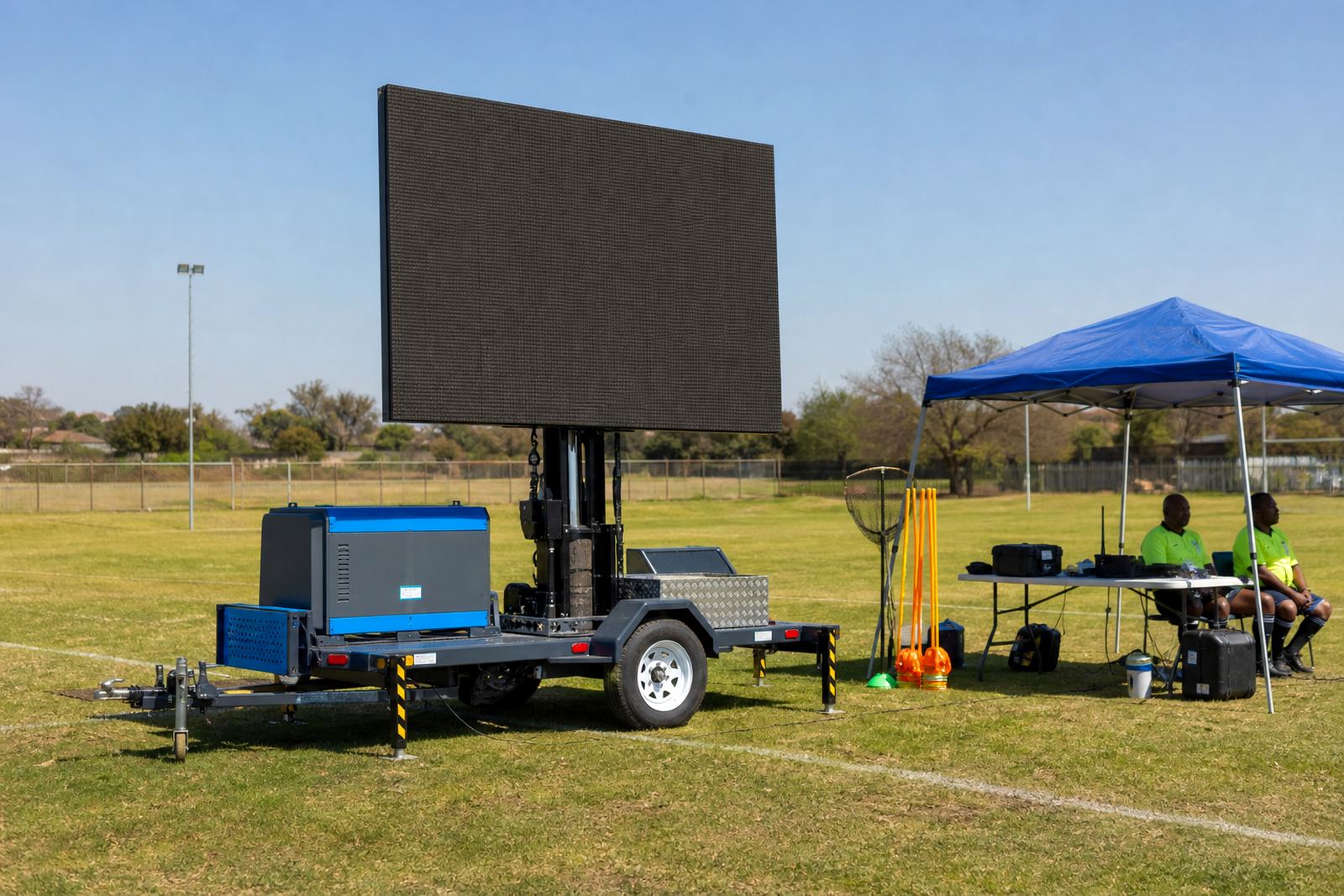
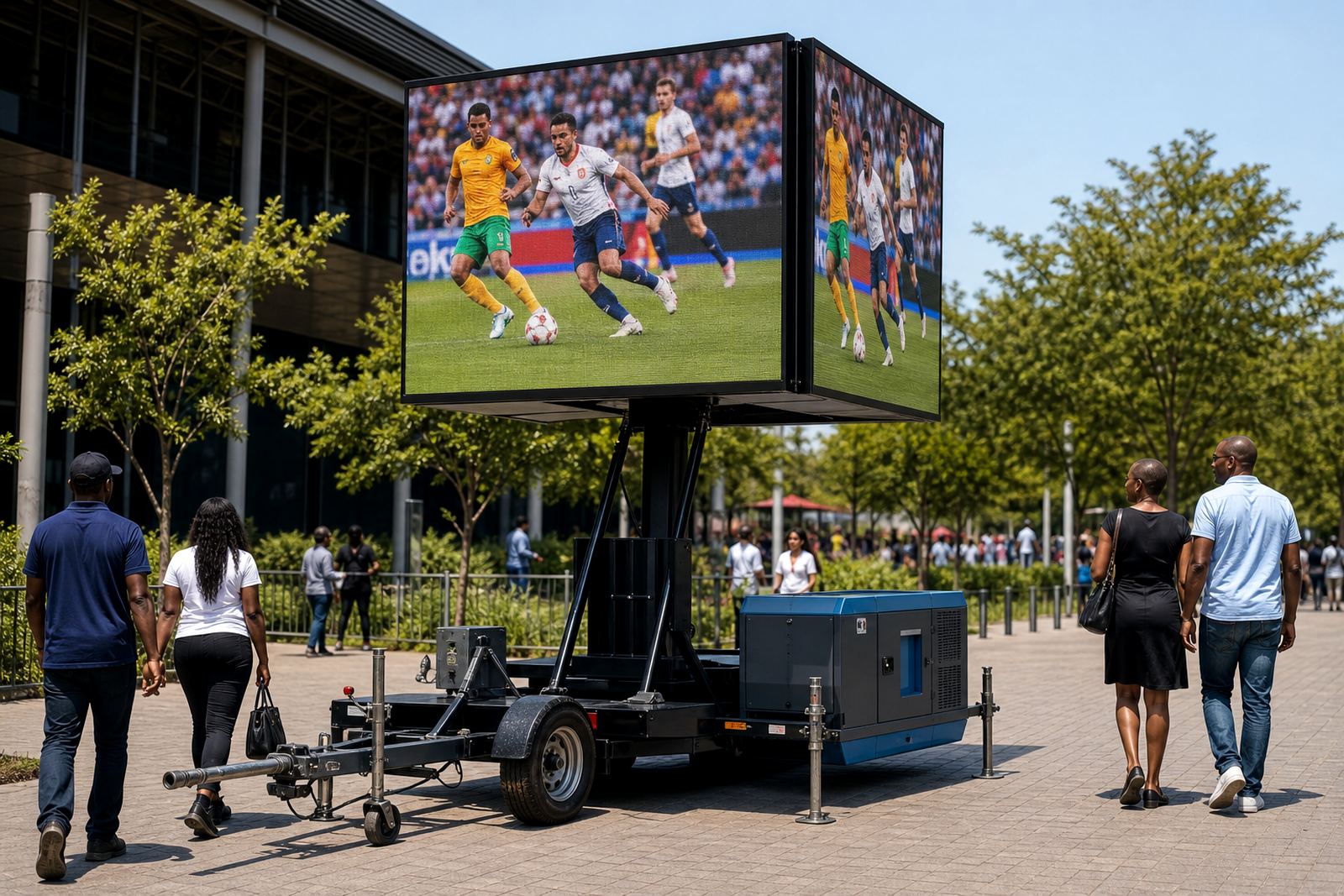
The screen is mounted on a trailer frame with a hydraulic lift system that raises the display into viewing position. Depending on the stop, the screen can also be rotated for better sightlines, which helps on sites where the crowd is spread across a long forecourt, field or parking area.
Typical trailer build and viewing profile
This format is often used when a site needs a fast-moving media point without permanent structure work. The trailer is compact enough for drive-in placement, yet tall enough to create a proper visual anchor once the screen is lifted. For roadshows, the screen can be positioned near a queue line, stage edge or activation zone, then folded away for transport after pack down.
- Pixel pitch: 6 mm for outdoor viewing at event distances
- Brightness: daylight-rated output for open sites
- Screen size: selected to suit the crowd, route and viewing space
- Mounting: trailer base with lift and lock mechanisms
- Rotation: available on selected units for better audience angles
Where the P6 trailer fits best
This unit suits community events, sports days, product launches, dealer days and campaign activations where the audience changes through the day. It also works well for roadshows that move between suburbs, campuses, retail forecourts and municipal spaces. In busy Gauteng sites, the trailer can be placed for clear visibility without blocking pedestrian flow or delivery access.
When the stop is in a coastal town or a windy open field, placement matters just as much as screen size. The trailer must sit on level ground, with enough space for the tow vehicle, the lifting area and the crew working around it. Municipal approval may be needed for public spaces, roadside placements or any site where the trailer sits in view of traffic or foot traffic.
- Roadshows with multiple stops in one campaign
- Outdoor promotions at schools, sports clubs and open grounds
- Public events that need live video, sponsor loops or schedules
- Retail and forecourt activations with changing audience flow
Power, playback and live content handling
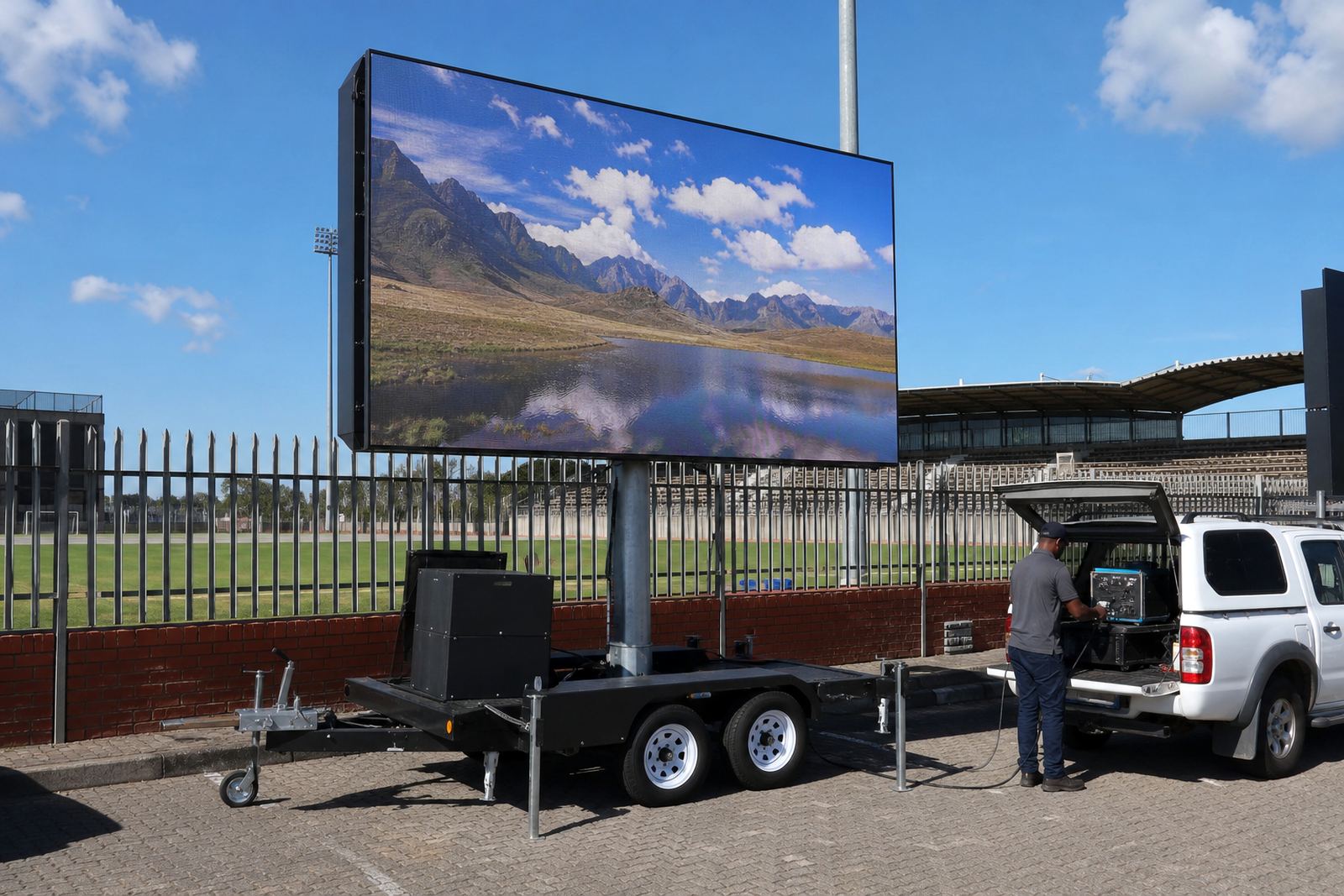
The P6 trailer can run from generator power or from a suitable mains supply where the site offers it. Power planning matters because the screen, processor and support equipment need stable input, especially when the content includes bright motion graphics or live camera feeds. Our technicians check the site load and cable route before the unit is brought into position.
Content is loaded onto the playback system ahead of the event, then checked for aspect ratio, clip order and audio sync where needed. Live feed support can be arranged for speeches, sports coverage or presenter-led segments. If a site has a mixed programme, the screen can switch between adverts, countdowns and live footage without the operator losing control of the flow.
- Content loading for adverts, sponsor loops and wayfinding slides
- Playback management for timed schedules
- Live feed support for ceremonies, sport and stage moments
- Power planning for generator or mains-fed sites
Wind, weather and safety checks on site for the day
Outdoor LED trailers need proper attention to weather and ground conditions. Wind limits are set by the unit specification and the site exposure, so the crew watches the forecast and the surface underfoot before lifting the screen. On exposed Ekurhuleni sites, or open fields near Pretoria and Polokwane, a trailer may need to stay lowered until conditions settle.
Rain, dust and coastal humidity all affect outdoor equipment. The screen enclosure is built for outside use, but the site still needs sensible cable management, secure positioning and clear access for the technician. Where municipal rules apply, permit guidance helps with placement, traffic notes and any public-space conditions that need to be met.
- Weather monitoring before and during the booking
- Secure levelling on hard stand or firm ground
- Clear access for the technician and the tow vehicle
- Permit guidance for public or roadside sites
What to confirm before placing the order
Useful details include the stop locations, the audience size, the programme length and whether the screen will carry ads, live camera work or both. We also need to know if the trailer must fit into a narrow access point, a parking bay or a fenced area, because the tow vehicle and lift clearance matter during setup. If the route includes several stops, multi-stop planning helps with timing, parking and repositioning between locations.
Care is straightforward but it has to be regular. The trailer should be parked on level ground, lifted and packed down by trained crew only, and kept clean after dusty or wet use. Cables, connectors and playback gear need inspection before each outing, especially when the screen is moving between Germiston, Johannesburg, Durban or longer provincial routes.
- Site address and access route
- Power source available on site
- Audience distance and viewing direction
- Permit needs and local site rules
- Programme type, live feed or looping content
- Number of stops for roadshow planning
Key facts
| Trailer type | Outdoor LED screen trailer |
|---|---|
| Pixel pitch | P6 |
| Brightness | High-output daylight viewing |
| Lift system | Hydraulic raise and lower |
| Orientation | Fixed view or rotated position on selected units |
| Power options | Generator or mains supply, depending on site |