
Two faces, one message line
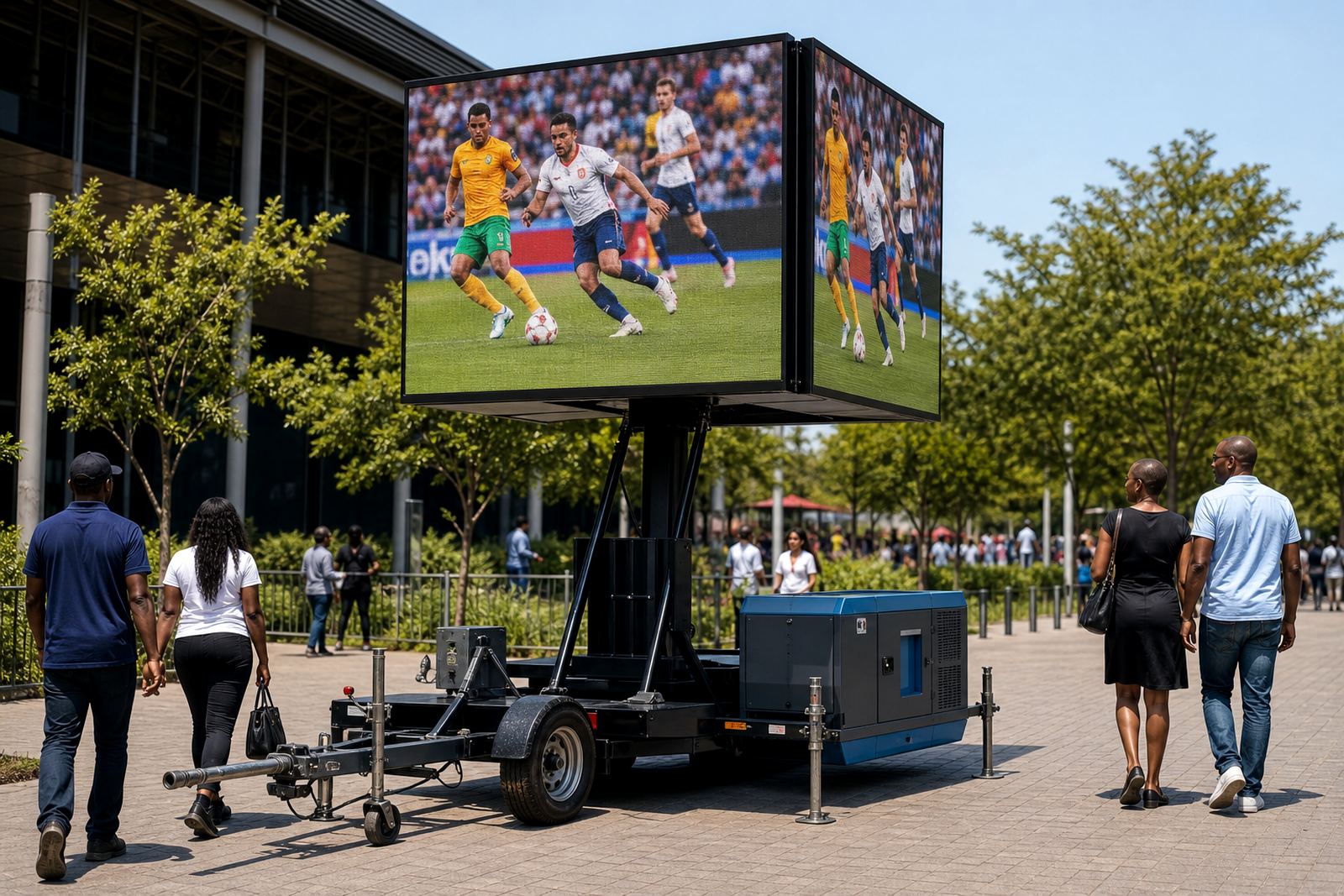
A double-sided unit is built with LED panels on both sides of the frame, so a campaign can be seen from either direction without turning the trailer around or resetting the structure. In practical terms, that makes it useful on roads with split traffic flows, long entrance lanes, sports grounds and temporary sites where people pass the screen from two angles.
Most builds use outdoor LED modules with a pixel pitch selected for the viewing distance. Smaller pitch gives finer image detail at closer viewing ranges, while larger pitch is often used where the audience is further away and the message needs to be read quickly. For daylight work, the screen needs high brightness and solid contrast so content stays legible when the sun is harsh and the road surface throws glare back at the display.
The double-face format can sit on a trailer frame or inside a fixed LED box arrangement. Both need a proper content plan, because each side can carry the same feed or a different programme depending on the brief.
Sizes, pitch choices and screen build
Screen size is set by the viewing area, the approach speed and how much text the artwork carries. Smaller builds are often used for tighter urban sites and gate areas, while larger faces suit roadside visibility and broad open venues. The frame depth, cabinet weight and total wind load all affect the final layout, so the physical build is matched to the site rather than forced onto it.
- Pixel pitch options are chosen by viewing distance and content detail.
- Outdoor brightness is specified for day use and mixed light conditions.
- Cabinet sealing needs to cope with dust, moisture and coastal air in places like Durban.
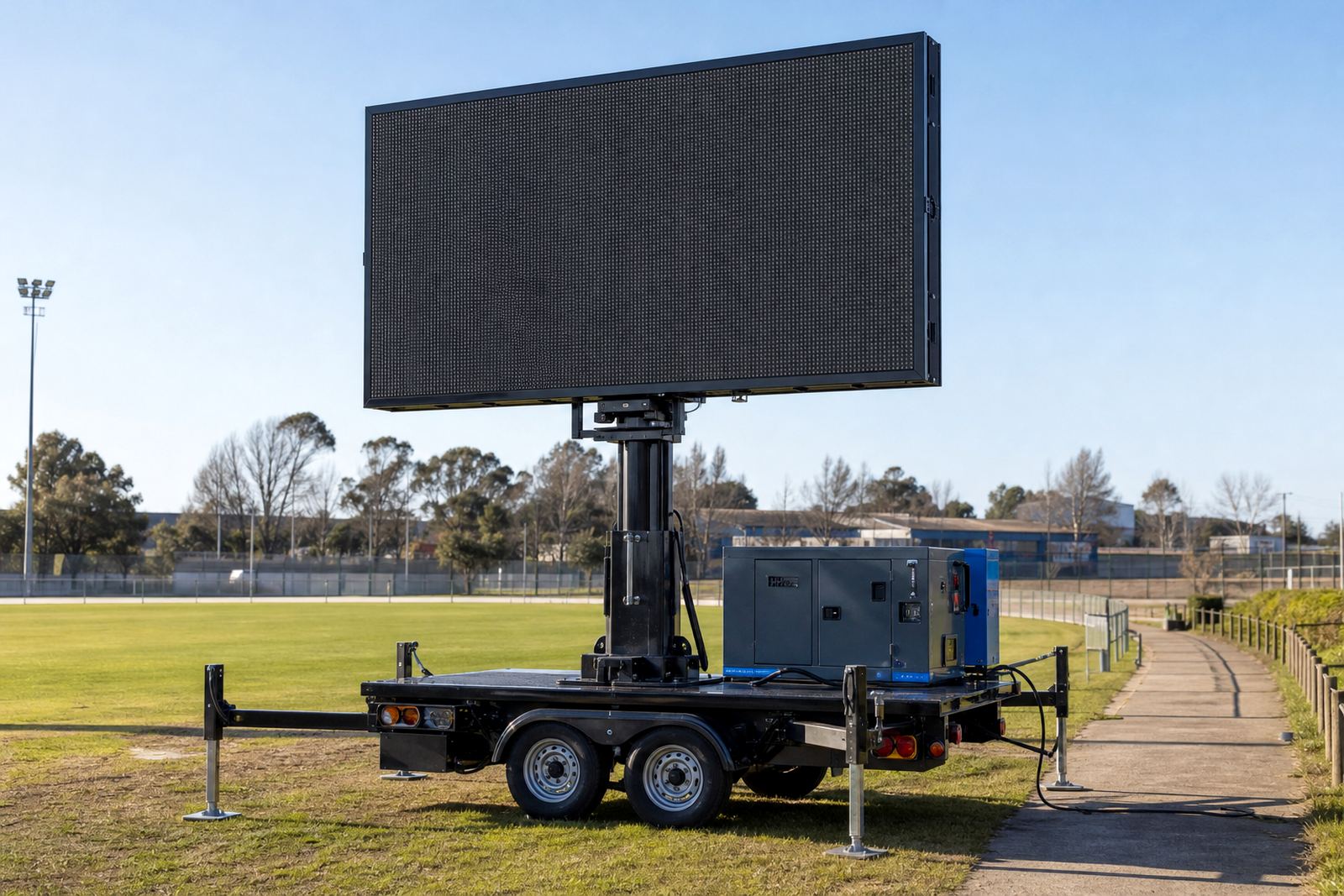
- Trailer builds may include hydraulic lift and rotation for on-site positioning.
- Content can run as a loop, with timed slides, video, live feeds or split-screen layouts.
For road-facing work, the unit must be stable at the intended height and angle. Where the trailer includes hydraulic lifting, that allows the screen face to be raised for visibility and then secured in place for the site conditions. Rotation can help with approach direction, though it still needs a proper safety check and room to work around the unit.
Where a double-face unit does the best work
This format is common on campaign routes, weekend activations, dealer displays, sports days and roadshows where footfall and vehicle traffic move past from both sides. It also works well near junctions, driveways and event access points in Germiston, Kempton Park, Johannesburg and Pretoria, where one face can catch the inbound flow and the other can hold the outbound flow.
For temporary outdoor advertising, the twin-face arrangement helps keep the same message visible for longer without needing a second trailer on site. That is useful where the location has limited space, or municipal rules make a larger footprint harder to place. On highway-adjacent jobs, the message has to stay clean and readable, with enough contrast that the view carries across the lane movement.
- Roadshows where audiences pass the screen from both directions.
- Entrances to sports grounds, expo sites and open-air venues.
- Retail forecourts with two-way vehicle movement.
- Community events that need a clear sponsor message from multiple sides.
- Temporary installations where one unit must do the work of two.
In Durban and other coastal areas, the frame and fixings need regular checks because salt air is hard on exposed metal. Inland sites like Bloemfontein and Polokwane often deal with dust and strong wind, so the chosen height and placement matter just as much as the screen face itself.
Power, permits and on-site fitting
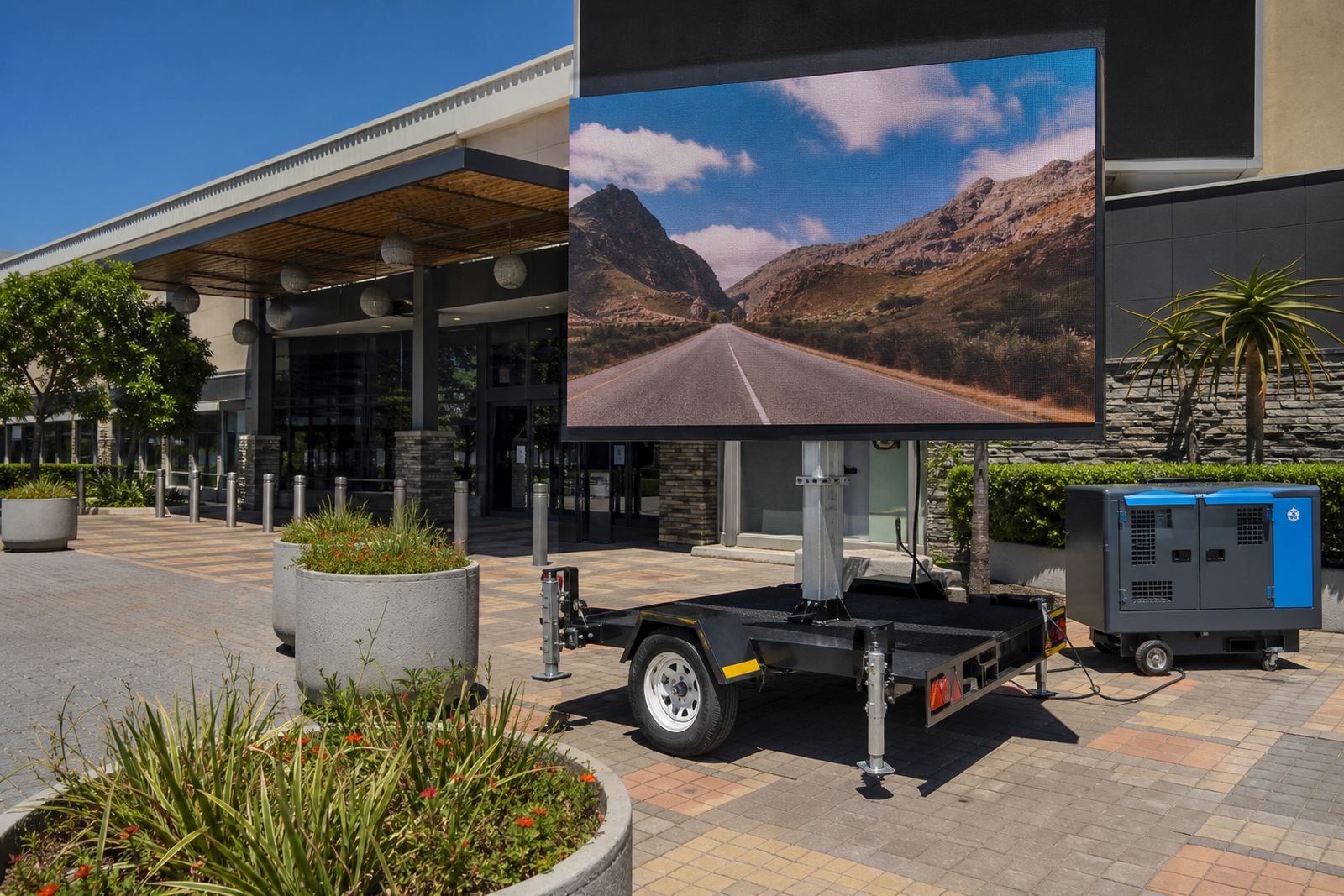
Outdoor LED trailers and LED boxes can run from generator power or mains power, depending on the site layout and what is available at the venue. The choice affects cable routing, fuel planning, noise control and where the unit can be parked. On a double-sided installation, the power plan also needs to allow for the media player, screen controllers and any additional live feed equipment.
Fitting a unit like this is not only about arriving with the screen. It includes site checks, parking position, clearance for lifting, level ground, and enough space for safe access during setup and pack down. If the trailer is being used close to public movement, the team must also consider barriers, pedestrian flow and any municipal permit guidance that applies to temporary signage, road visibility or occupied pavement space.
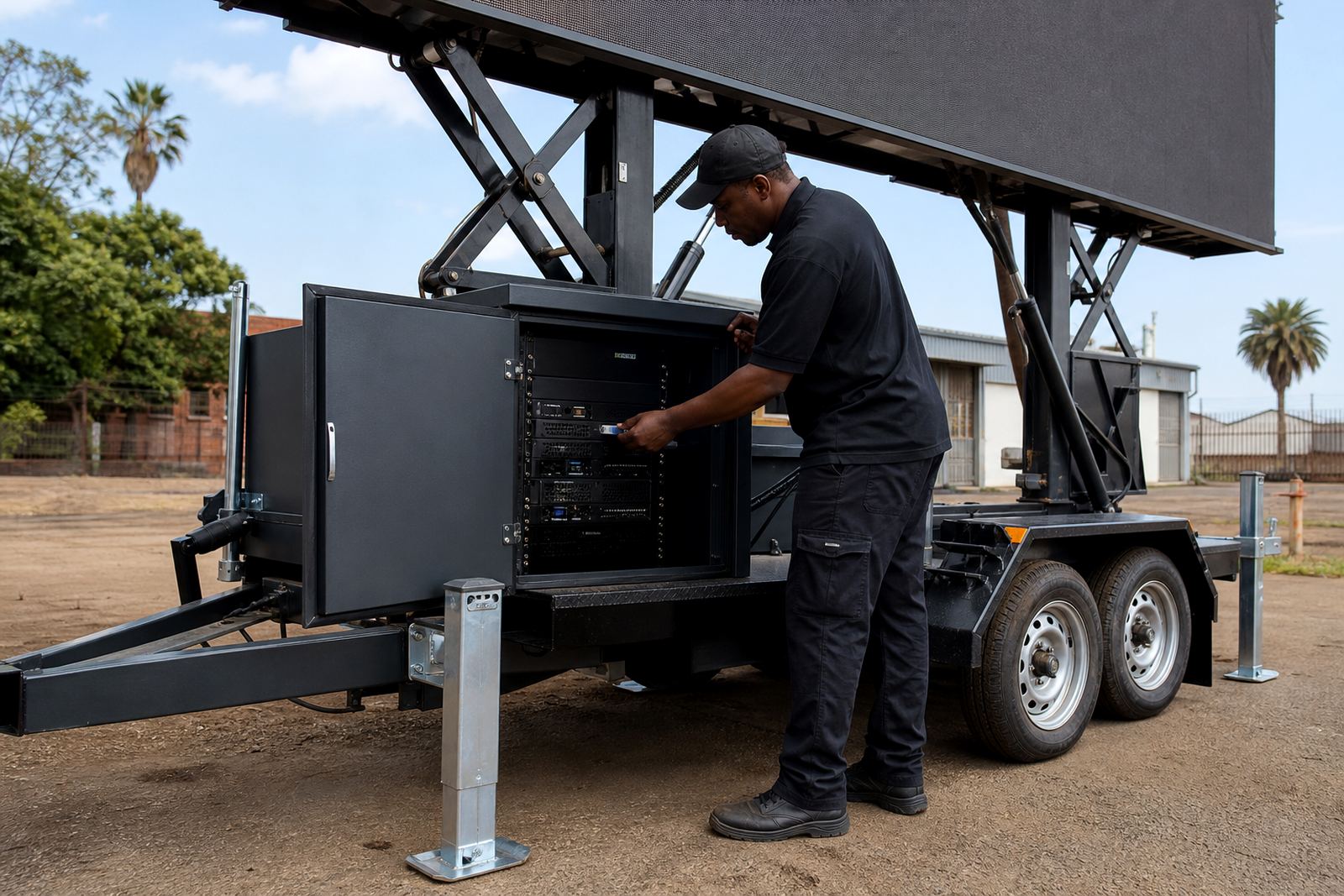
Our on-site technicians handle setup, content loading, playback management and live feed support, so the screen is tested in place before it goes live. That is important for double-sided work because both faces must be aligned, readable and carrying the correct feed. If the brief includes a multi-stop route, the travel plan and power plan need to be set before the first stop.
Looking after the panels, frame and playback gear
Outdoor LED equipment needs regular care, especially where it is moved between sites or kept near the coast. Dust should be cleared from vents and cabinet edges, connectors checked for wear and the screen faces inspected for damaged modules or uneven brightness. Trailer hinges, locks and hydraulic parts also need routine attention, because movement and vibration can loosen hardware over time.
Content playback equipment should be kept dry, cool and free of vibration where possible. A clean storage case and correct cable handling reduce the chance of faults during setup. If a site is windy, the unit must be packed down or secured according to the site condition and the permitted wind limits for that build. Weather monitoring is part of the job, especially when an open site can shift quickly after midday.
- Wipe screen faces with approved non-abrasive methods only.
- Check locks, towing points and lift mechanisms before travel.
- Keep media files organised and tested before loading.
- Inspect power leads, adapters and signal paths for wear.
- Follow the site wind limit and the park-up plan for the day.
The order details that matter most
When ordering a double-sided LED box or trailer, the key details are the screen size, pixel pitch, viewing distance, power source, site position and whether the same content will run on both faces. It also helps to confirm if the unit must face traffic from a fixed angle or if the trailer needs rotation after setup. For road-facing jobs, the team needs to know the approach direction, the available parking space and whether the unit will sit on private property or near a public right of way.
We also need the content format, aspect ratio, playback schedule and whether live feed support is part of the brief. If the job stretches across Johannesburg, Pretoria, Durban, Bloemfontein or Polokwane, transport distance and stop order affect the routing of the trailer and technician. The more exact the site details are, the cleaner the setup becomes on arrival.
A double-sided booking needs both viewing directions marked on a site sketch. If the brief includes municipal permit guidance, delivery, setup, on-site technicians or pack down, those points should be listed with the location and preferred dates so the work can be planned around the route and the venue rules.
Key facts
| Display type | Double-sided outdoor LED box or trailer arrangement |
|---|---|
| Pixel pitch | Selected to match viewing distance and content detail |
| Brightness | High-brightness outdoor rating for daylight visibility |
| Screen motion | Trailer models may include hydraulic lift and rotation |
| Power options | Generator power or mains power, site dependent |
| Support | Delivery, setup, playback management and on-site technician attendance |