
A crowded Fourways site with moving parts
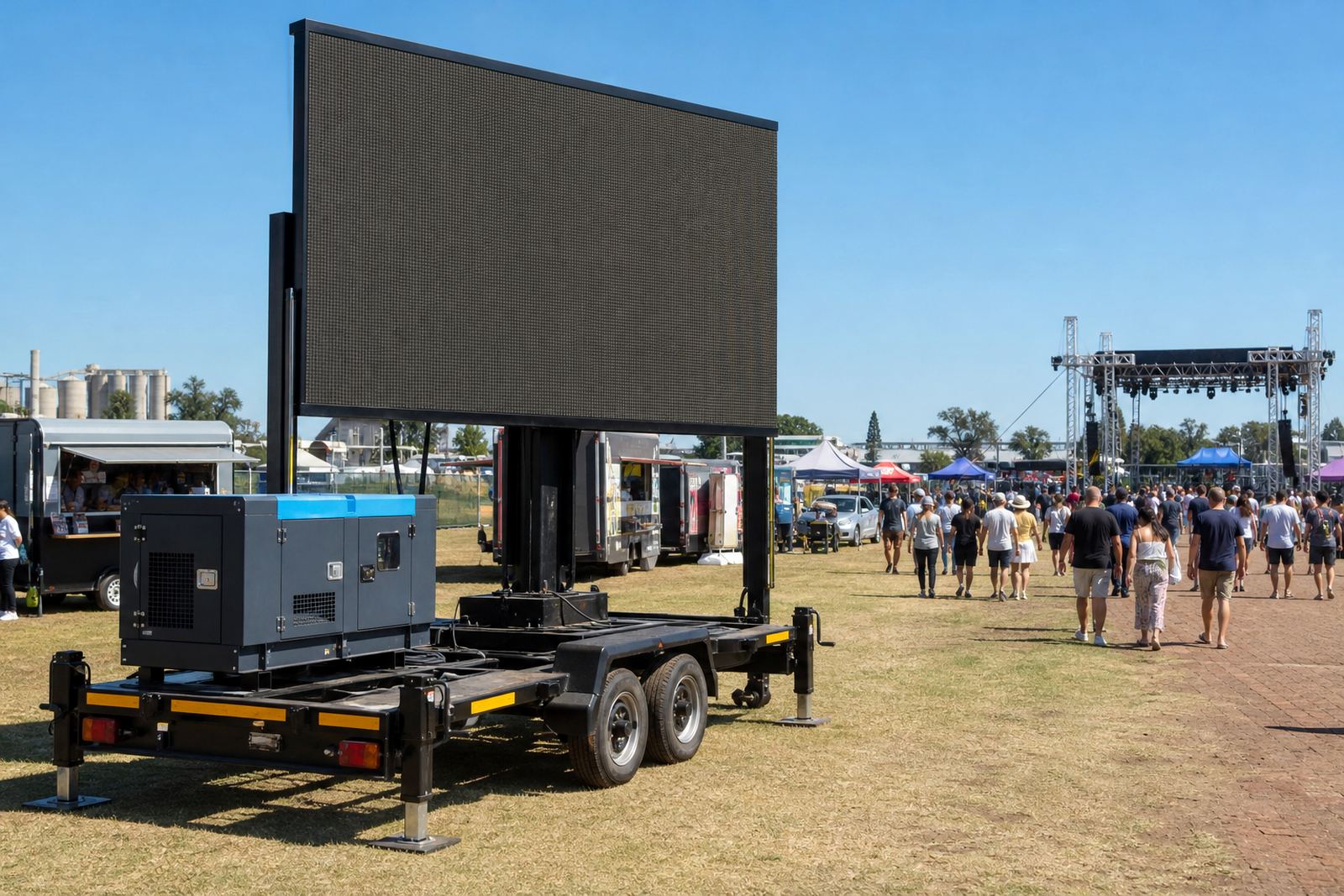
The brief came from an event team in Fourways working on a public festival with steady foot traffic, short programme gaps and a mix of brand messages that had to stay readable in daylight. The screen had to support sponsor loops, timing updates, stage relay visuals and a few live switches during the day, while still fitting into a tight site layout where trucks, barriers and audience routes all had to stay clear. The team also needed a display that could be seen from several angles, because the crowd did not stand still for long and the viewing line changed as the site filled up.
Space was short in places. Access was controlled, the ground area for the trailer was limited and there were other suppliers moving equipment in the same window. The event also needed the screen to stay useful through changing light, so the display had to hold up in full daylight and still remain clear later in the afternoon when shadows moved across the field. That meant planning the position, viewing angle and content layout before the trailer rolled in.
- Festival support for sponsor content and schedule cues
- Outdoor viewing across mixed daylight conditions
- Space planning around audience routes and staging gear
- Content that stayed legible from a distance
Screen trailer details that suited the programme
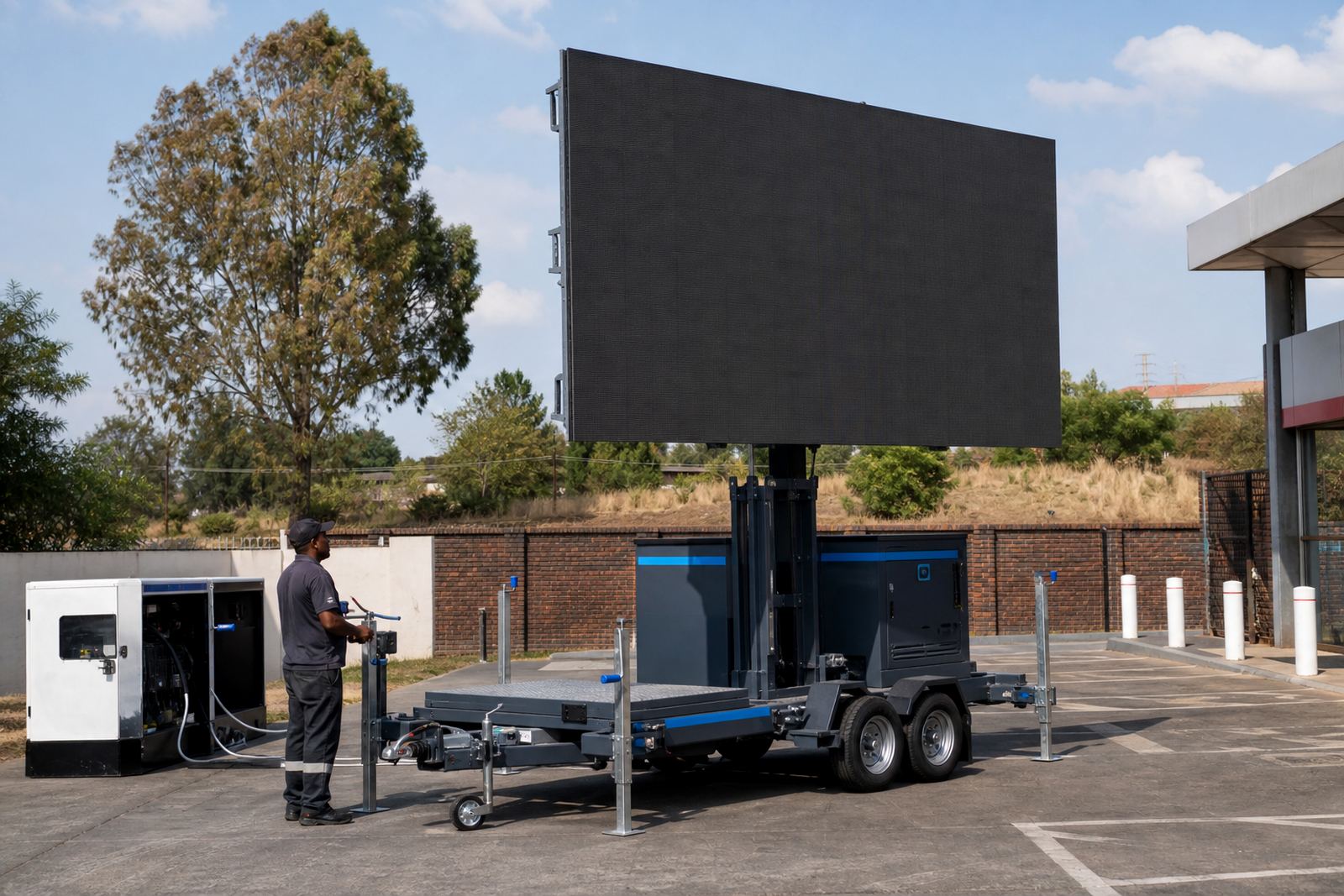
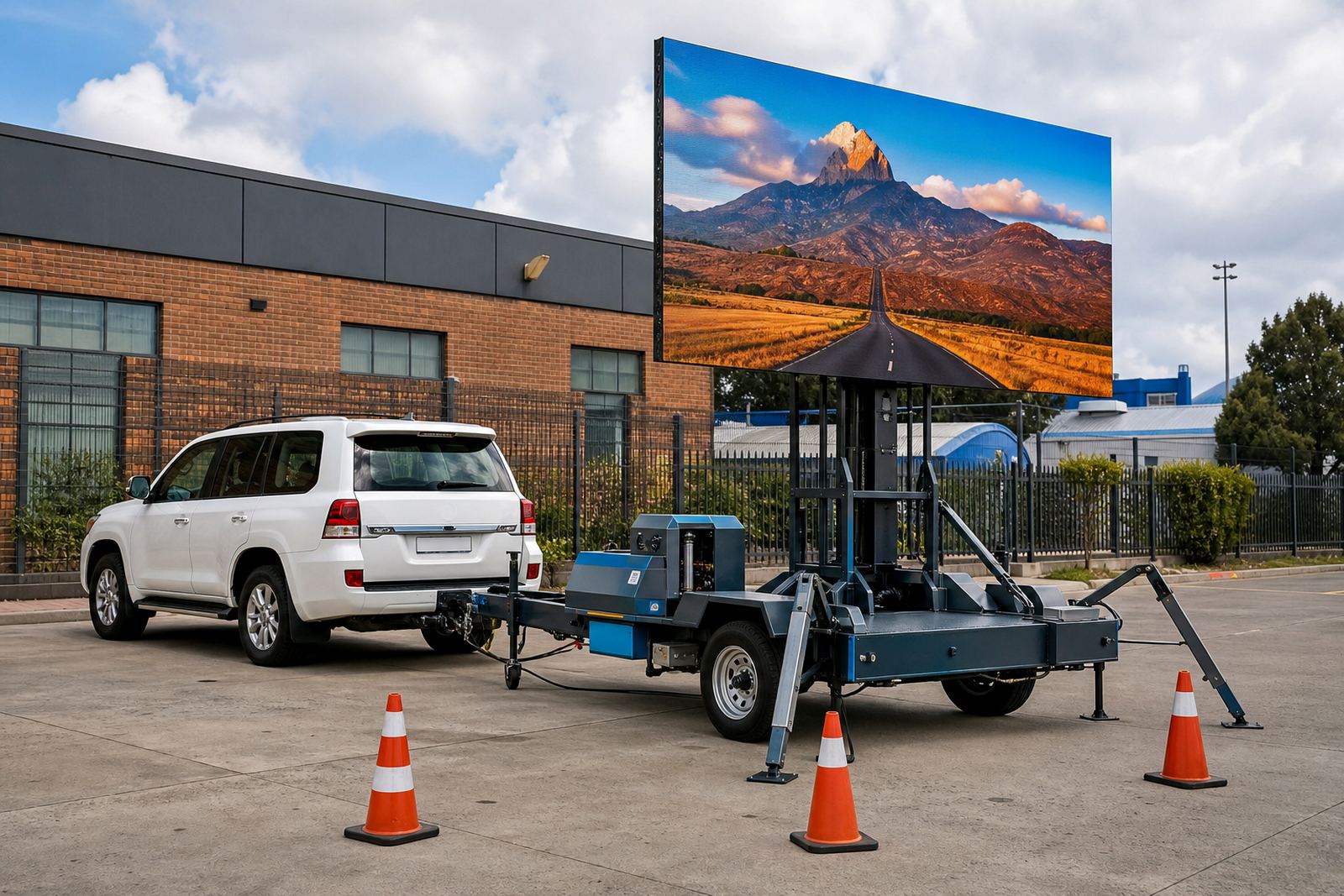
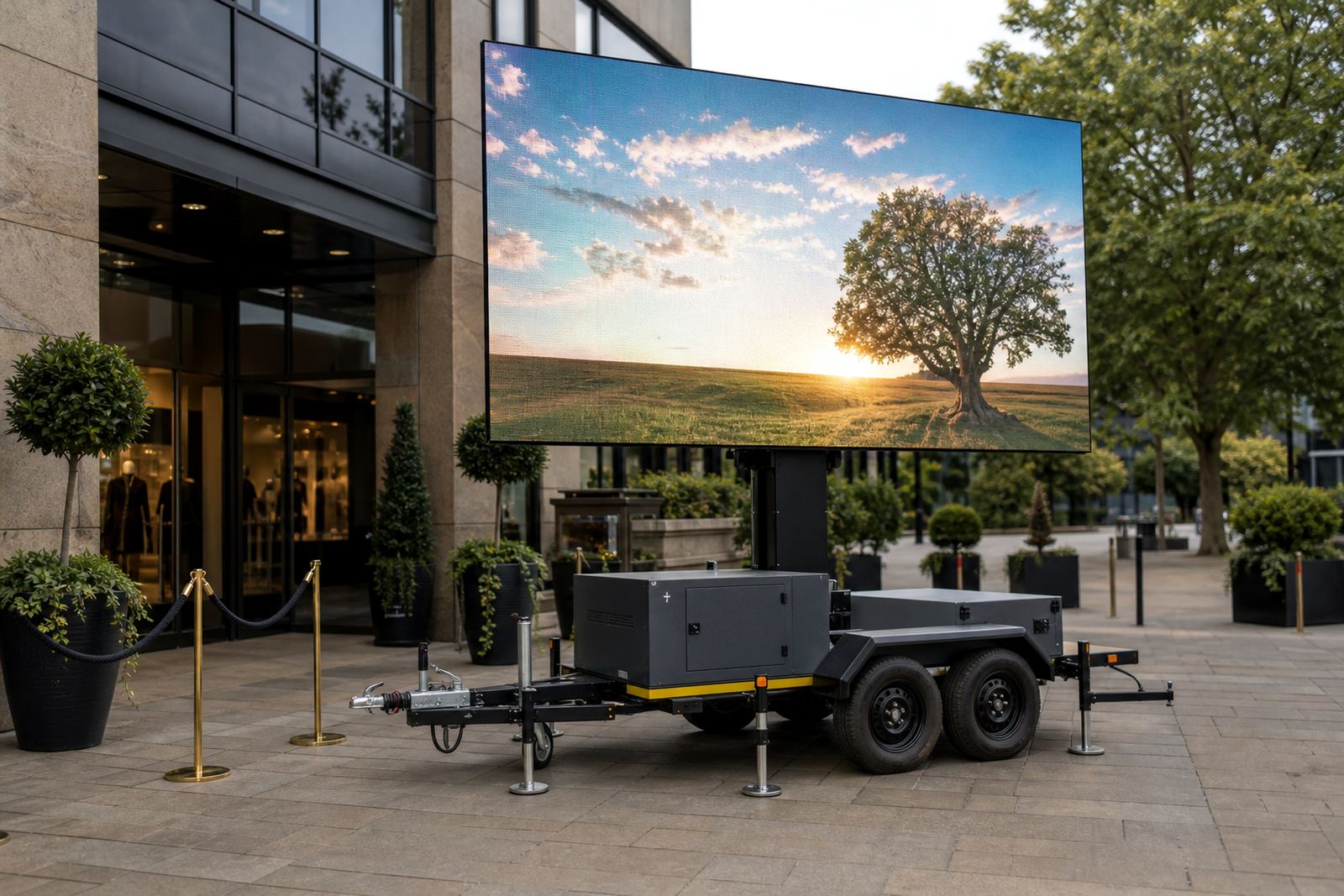
We supplied an outdoor LED screen trailer with a high-brightness display suited to daytime use, with fine enough pixel pitch for clear text, logos and stage relay visuals at festival viewing distances. The trailer included a hydraulic lift and rotation setup so the screen could be raised and set to the right angle for the audience line, then adjusted once the crowd position became clear. That flexibility mattered because the programme board changed during the day and the screen had to stay visible without making the whole site bend around it.
The unit could run from generator power or mains power depending on what the venue allowed and what the event plan required. For this deployment, power planning was handled around the site’s existing supply points and backup needs, with cable runs kept tidy and safe. We also set wind monitoring limits into the operating plan, because an outdoor screen trailer has to be managed with weather in mind before conditions become a problem.
- Outdoor LED trailer with high daylight brightness
- Pixel pitch chosen for readable sponsor copy and timing screens
- Hydraulic lift for height adjustment and screen positioning
- Rotation for better audience alignment on a live site
- Compatible with generator or mains supply
Four weeks from brief to show day
The job ran for more than four weeks. The first week covered site review, content notes and power planning, with attention on where the trailer could stand without blocking traffic or the stage line. The second week handled content loading tests, timing checks and the sponsor loop layout so the transitions stayed neat and easy to read. In week three we confirmed delivery access, permit guidance and the on-site operating sequence. The final week was used for pack-in, positioning, live playback checks and handover.ks and a full run through of stage relay and programme timing files.
The setup itself was handled by our team in Germiston, with transport arranged for the Fourways site and a technician on location to manage the screen through the event window. That included content playback, live feed support when the stage team switched visuals, and weather monitoring through the day. Small adjustments were made to keep the image clean in changing sunlight, and the operating plan kept the screen ready for scheduled changes without slowing the programme.
- Week 1: site check, access planning and power notes
- Week 2: content loading tests and timing review
- Week 3: delivery planning and permit guidance
- Week 4: setup, live operation and pack down
What the on-site team handled during the festival
Our technician remained on the screen operation throughout the festival window, handling playback, switching files and checking that sponsor loops ran in the right order. Stage relay visuals were loaded to keep the audience informed, while programme timings were updated without interrupting the flow of the day. When live cues changed, the screen operator worked with the event team so the display kept pace with the stage rather than sitting ahead of it or falling behind.
We also took care of the display area’s practical setup. That included setup, content loading, safe cable routing, weather checks and pack down once the programme ended. Municipal permit guidance was part of the early planning, since outdoor screens and event structures can fall under local rules depending on the site and the intended viewing area. Nothing about the job was treated as a single drop-and-leave delivery, because a festival screen needs a person who understands the equipment while the crowd is already on site.
- On-site technician for playback and live updates
- Content loading for sponsor loops and stage information
- Weather monitoring and operating checks
- Pack down once the event finished
What the organisers gained from the screen
The screen gave the festival a central visual point that kept sponsor messages visible and the programme easy to follow. People at the venue could see stage relay visuals without needing to crowd the front of the stage, and the timing screens helped the day feel organised even when the site became busy. The event team also had a display that could be handled from one trailer unit instead of piecing together separate screens and temporary fixes across the venue.
From a planning angle, the real value was control. The event kept a clear display path, the sponsor content stayed in circulation and the technical handling sat with one team rather than being spread across several people. The trailer format worked well for a roadshow-style festival because it could be positioned, raised and operated without building out a permanent structure. That made the screen useful not only for the programme itself, but for the flow of the whole site.
- Clear sponsor exposure throughout the programme
- Readable timings for the crowd and crew
- Centralised control for stage relay visuals
- Trailer format suited to temporary event use
What we’d mirror for a similar Fourways setup
For another festival of this kind, we would keep the same structure: early site checking, tight content planning, a raised trailer with a screen sized for daylight viewing, and a technician on location from setup through pack down. The strongest part of this project was the way the display, timing and live relay work fitted together, because that kept the event team from having to juggle separate moving parts in a rush.
We would also keep the weather and power planning in the foreground. Outdoor LED screen trailers do their best work when the trailer position, power source and wind limits are considered before the crowd arrives, not after. In Fourways, that approach kept the screen useful across the day and made the handover between sponsor loops, programme cards and live stage visuals much easier to manage.
- Keep site checks early and specific
- Plan content order before pack-in
- Set the trailer for the best audience angle
- Keep one technician responsible for playback
Key facts
| Project | Fourways Festival Screen |
|---|---|
| Location | Fourways, Johannesburg |
| Screen type | Outdoor LED screen trailer |
| Pixel pitch | Fine pitch suitable for readable text and sponsor graphics at event distance |
| Brightness | High-brightness daylight display |
| Support | Delivery, setup, on-site technician, content loading and pack down |