Tight forecourt, clear sightline
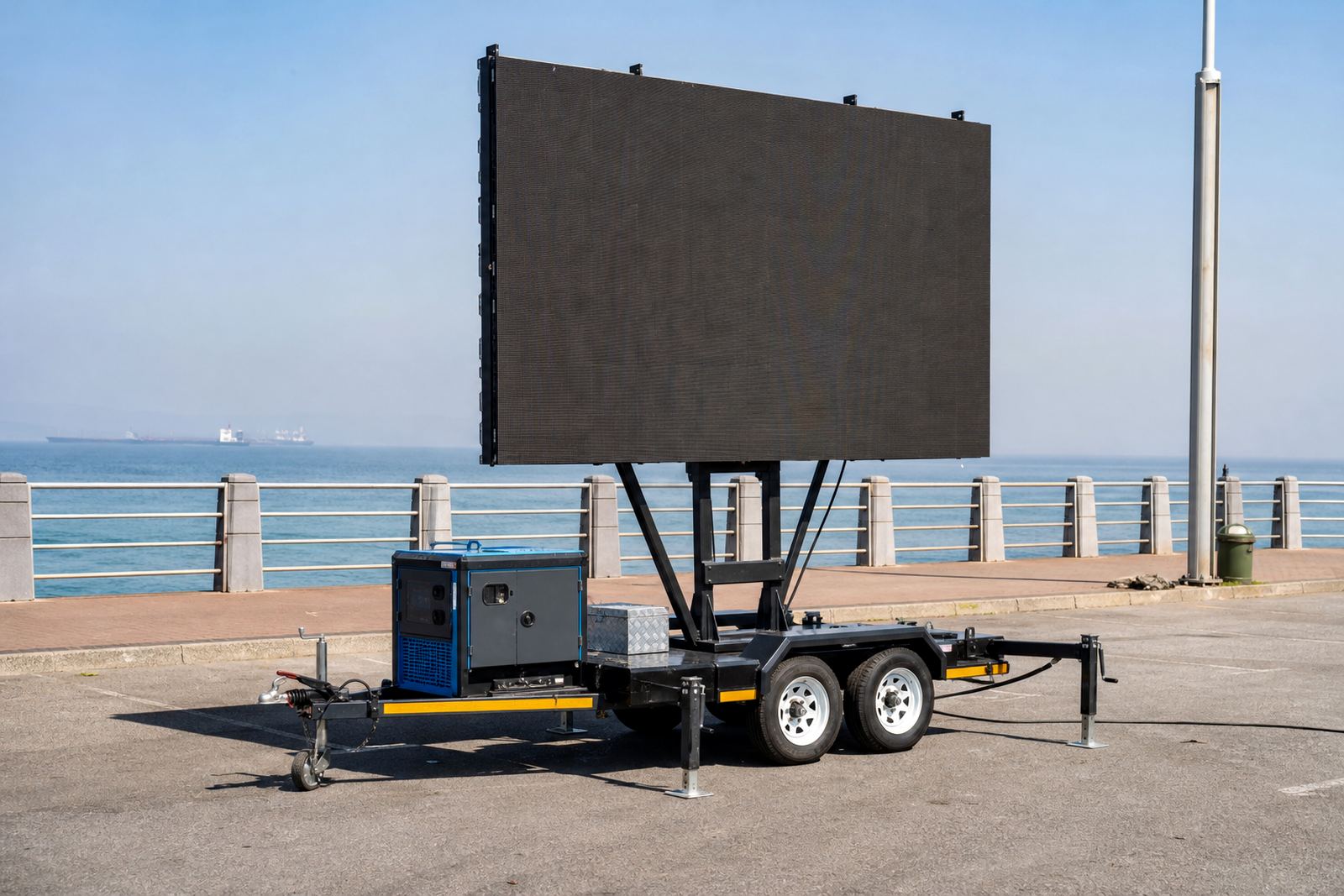
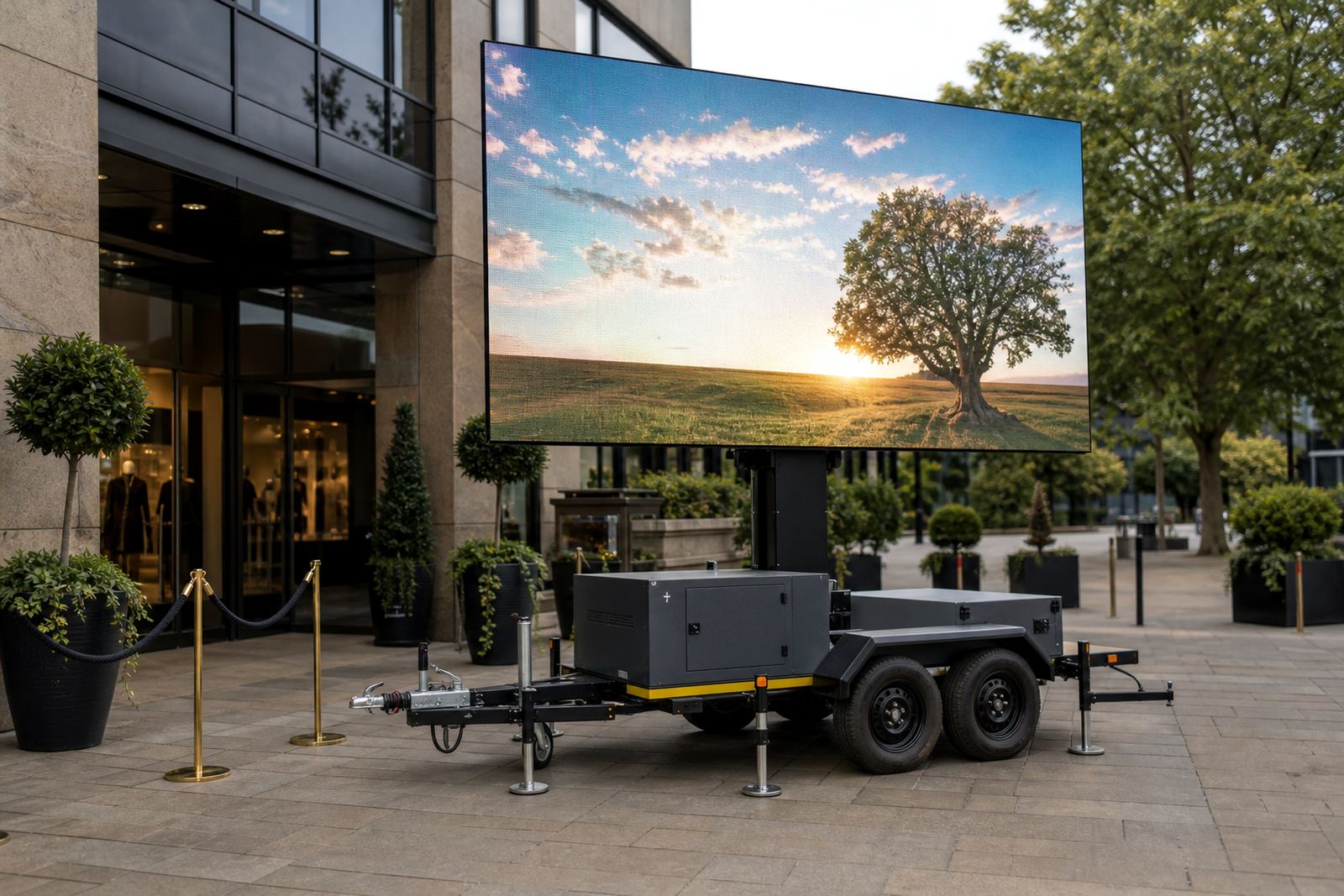
The brief came from a local advertiser running a short campaign stop in Germiston, with the screen positioned inside a forecourt that had narrow turning space, mixed vehicle movement and fixed curb edges. The site needed a visual display that could hold attention from the street side and still sit neatly within the limits of a working commercial yard.
We assessed the surface, the viewing angle and the vehicle paths before delivery, then mapped a position that kept the screen visible without forcing the forecourt into an awkward layout. The client wanted a practical media point rather than a large footprint and that shaped the rest of the plan.
- Compact LED box for a confined commercial forecourt
- Viewing angle set for passing traffic and on-site foot movement
- Placement planned around entry and exit lines
Screen specification for daylight visibility
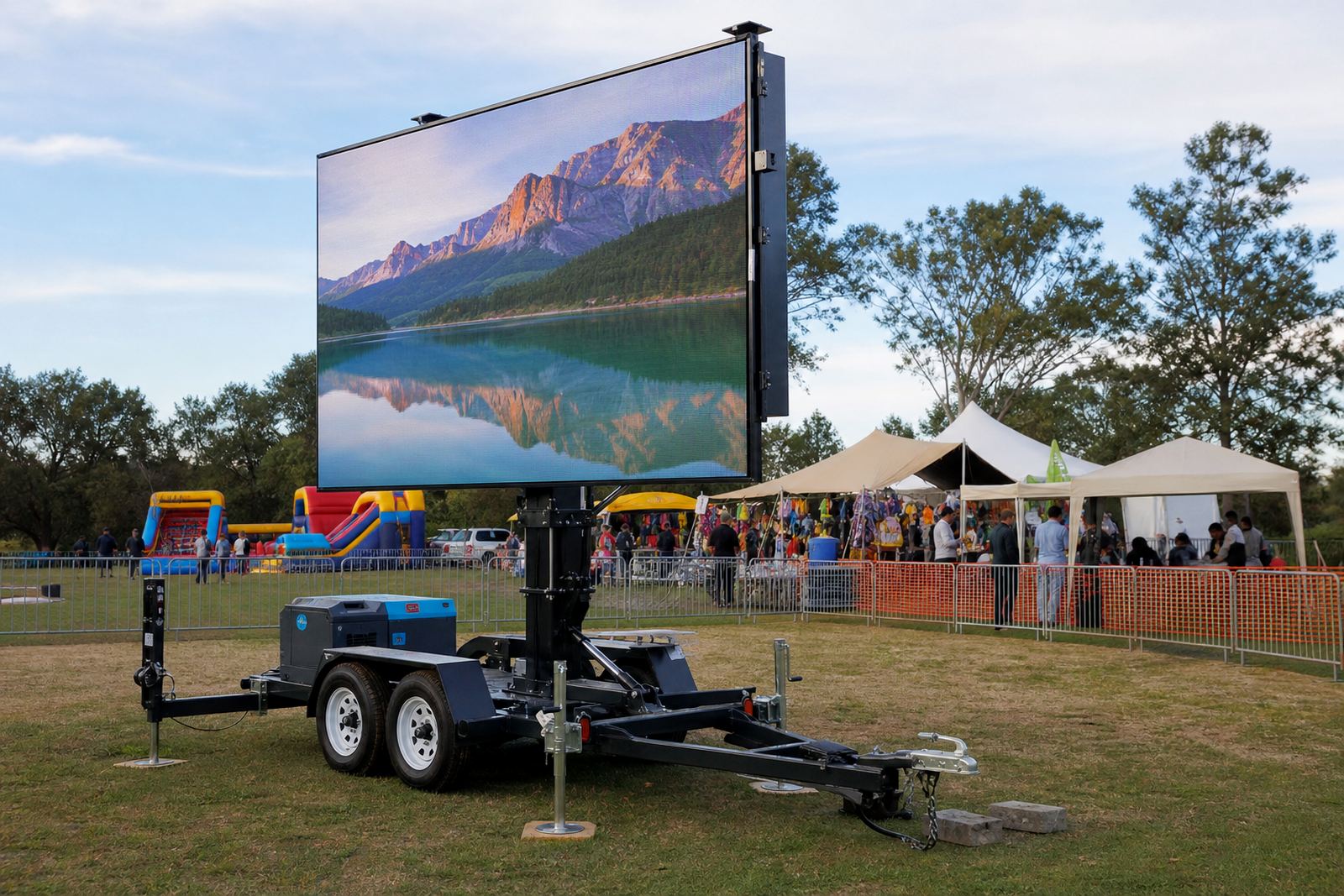
The unit used a fine-pitch outdoor LED panel chosen for close and mid-range viewing, with brightness suited to daytime exposure and changing cloud cover. In a forecourt like this, glare from paved surfaces and nearby glass can work against the picture so the panel output and angle both mattered.
Content playback was loaded ahead of the site visit and checked again on position, with attention to contrast, crop marks and image timing. For outdoor use the trailer or box format also needs firm physical stability, wind limits that are respected, and a power plan that matches the available supply or generator provision.
- Outdoor display with daylight-rated brightness
- Playback checked for logo placement, text size and motion speed
- Wind monitoring kept in step with the site conditions
Getting the structure into place
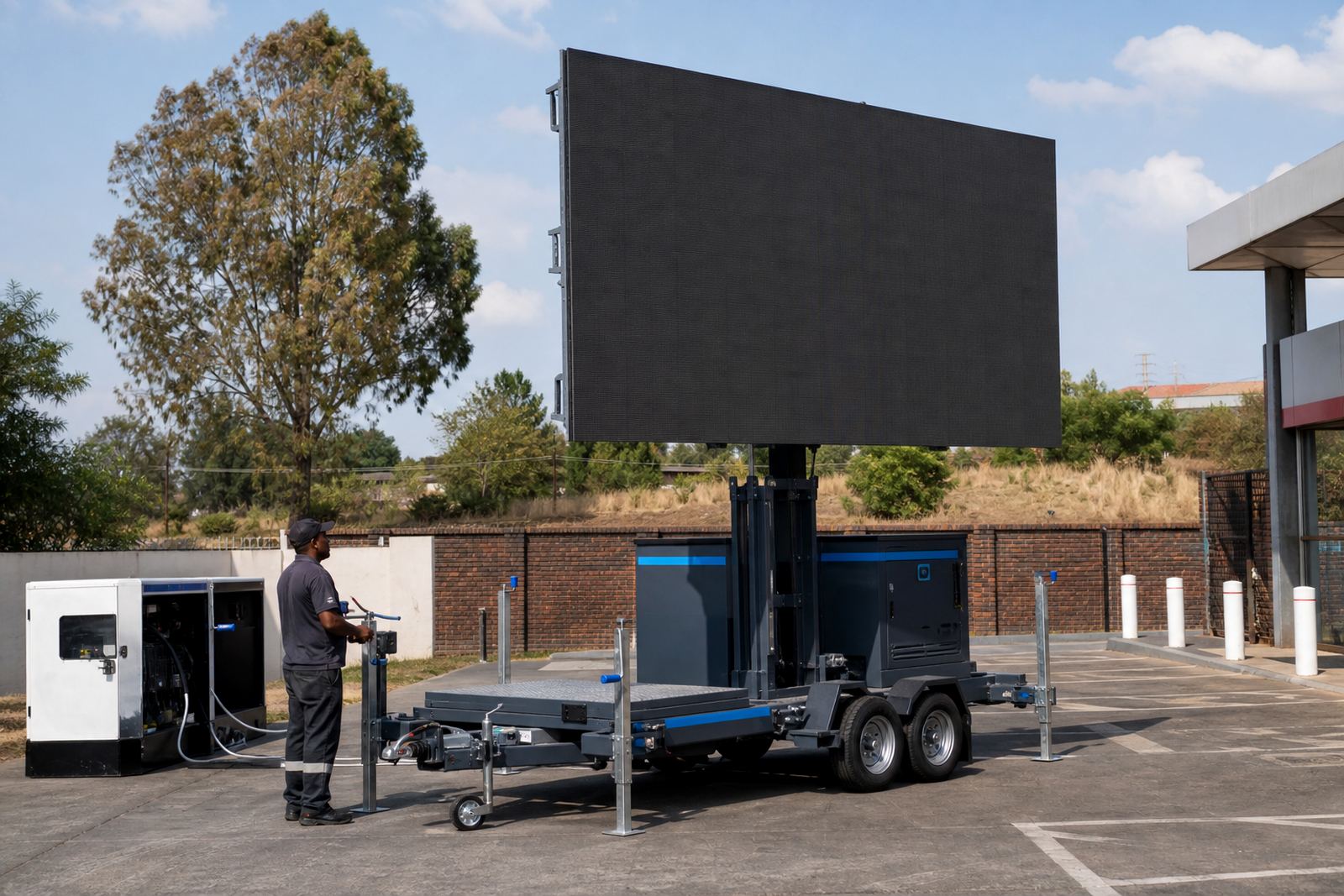
Delivery was arranged with the forecourt opening times in mind, because equipment movement in a commercial yard has to sit around deliveries, customer access and security routines. Our team handled the setup, secured the unit, tested the screen and made sure the cable route stayed tidy and practical.
The hydraulic lift and rotation feature was not needed for every display, but where a trailer format is used it helps with positioning the screen face and managing the viewing direction. On this job, the compact layout made the straight placement the better fit, so the emphasis stayed on safe levelling and a clean operating zone.
- Delivery planned around access to the forecourt
- Setup completed with on-site technician attendance
- Power routing kept neat and easy to inspect
Permits, neighbours and movement around the site
Forecourt work can trigger permit questions when the screen sits near a public pavement, shared access road or service lane. We gave permit guidance in general terms so the client could check the local requirements for placement, visibility and any municipal conditions that might apply to an outdoor screen in a built-up area.
Because the site sat in a busy commercial pocket, we also watched for pedestrian movement, nearby signage and the risk of the screen drawing attention away from vehicle turns. Weather monitoring stayed part of the job too, since a forecourt screen needs a sensible plan for rain, gusts and a surface that can get slippery when conditions change.
- General permit guidance provided for local compliance checks
- Weather watched during the campaign window
- Forecourt circulation kept open for customers and staff
Playback during the campaign stop
The content was loaded with a simple loop structure so the message stayed consistent and did not overload the viewer. For this sort of campaign, the screen needs short segments, strong contrast and readable type at street distance, especially when vehicles are moving in and out of the forecourt.
Our on-site technician handled playback, checked the screen throughout the run and made small content tweaks whenever the timing needed tightening. Live feed support was available as an option for later activations, although this forecourt campaign relied on scheduled playback rather than a live feed.
- Playback set for repeat viewing through the day
- Short-form content suited to passing traffic
- On-site technician handled monitoring and checks
What the Germiston job showed
The forecourt stayed workable because the display matched the size of the site, not the other way around. That mattered in Germiston where commercial yards can be busy, paved areas are often tight, and every metre has to be justified.
The project ran over two weeks from the initial site check through delivery, setup, live run and pack down. The result was a clear campaign point that held attention without crowding the forecourt, and the client had a display format that fitted a local stop rather than a large outdoor field.
- A fortnight on the forecourt, start to finish
- Compact footprint suited to a constrained forecourt
- Screen visibility maintained without blocking movement
Key facts
| Screen type | Compact outdoor LED box for forecourt use |
|---|---|
| Pixel pitch | Fine-pitch outdoor panel for close and mid-range viewing |
| Brightness | Daylight-rated output for outdoor visibility |
| Power | Generator or mains power depending on site access |
| Movement | Trailer formats can use hydraulic lift and rotation |
| Support | Delivery, setup, playback management and on-site technician |