Keeping the message steady at each stop
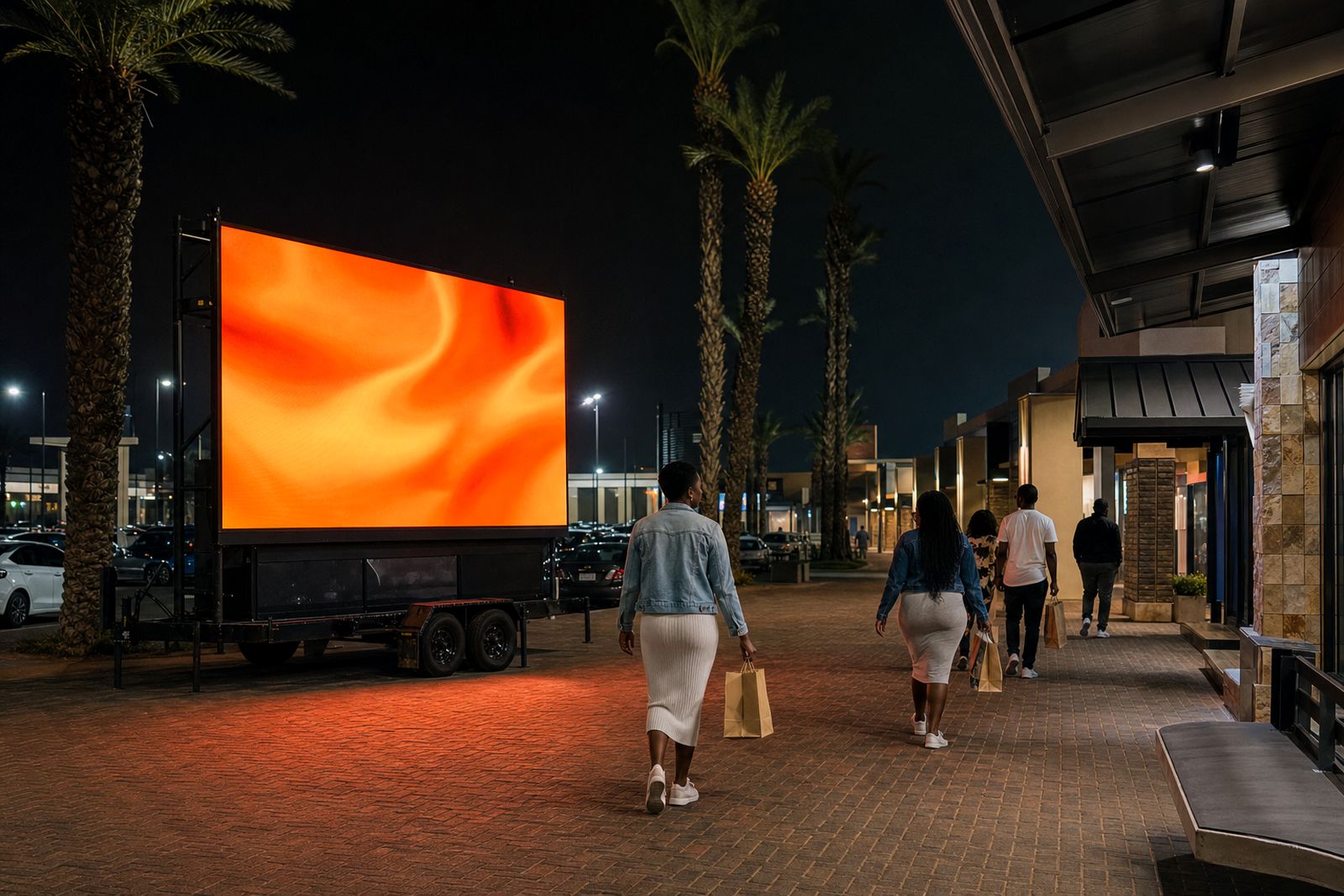
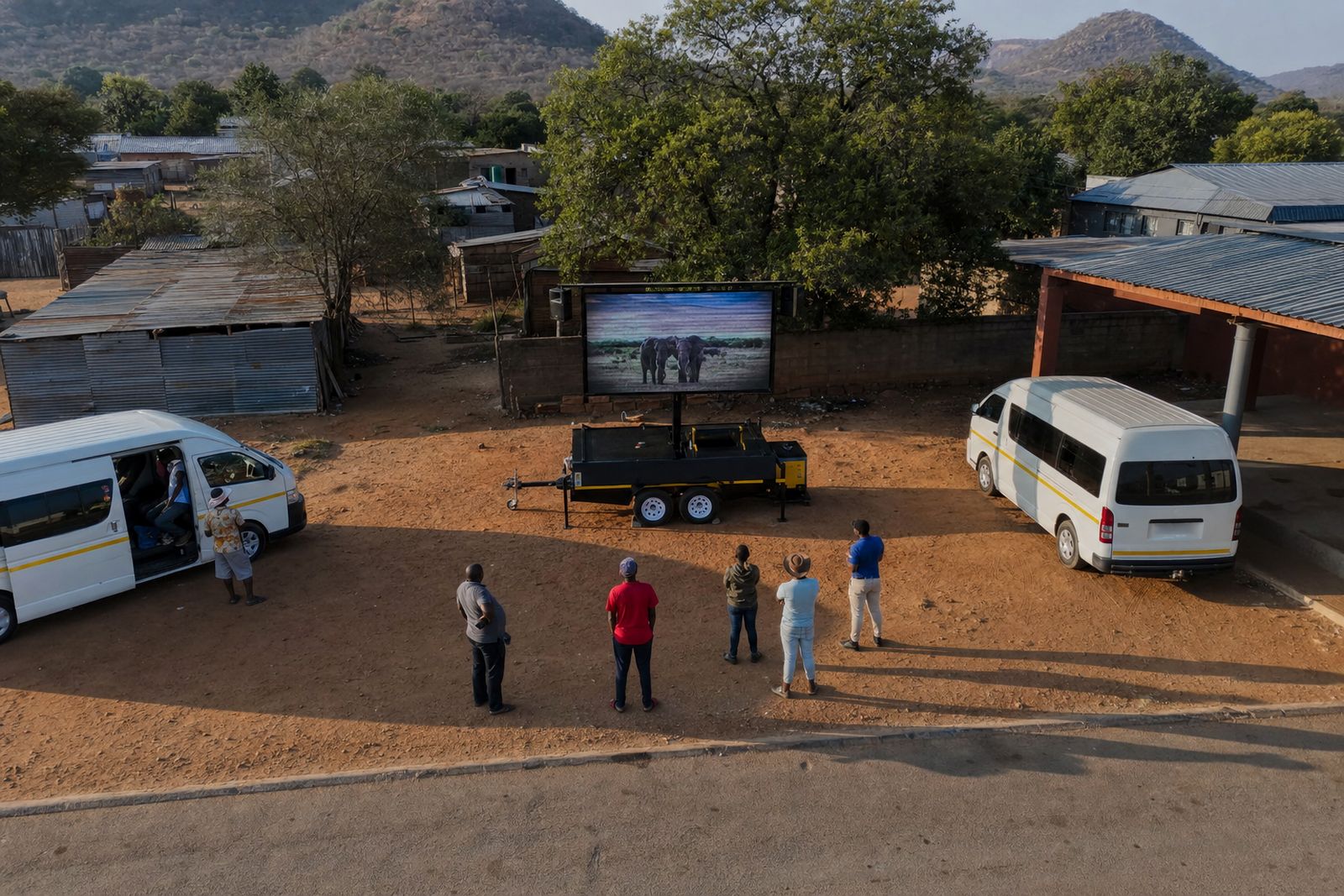
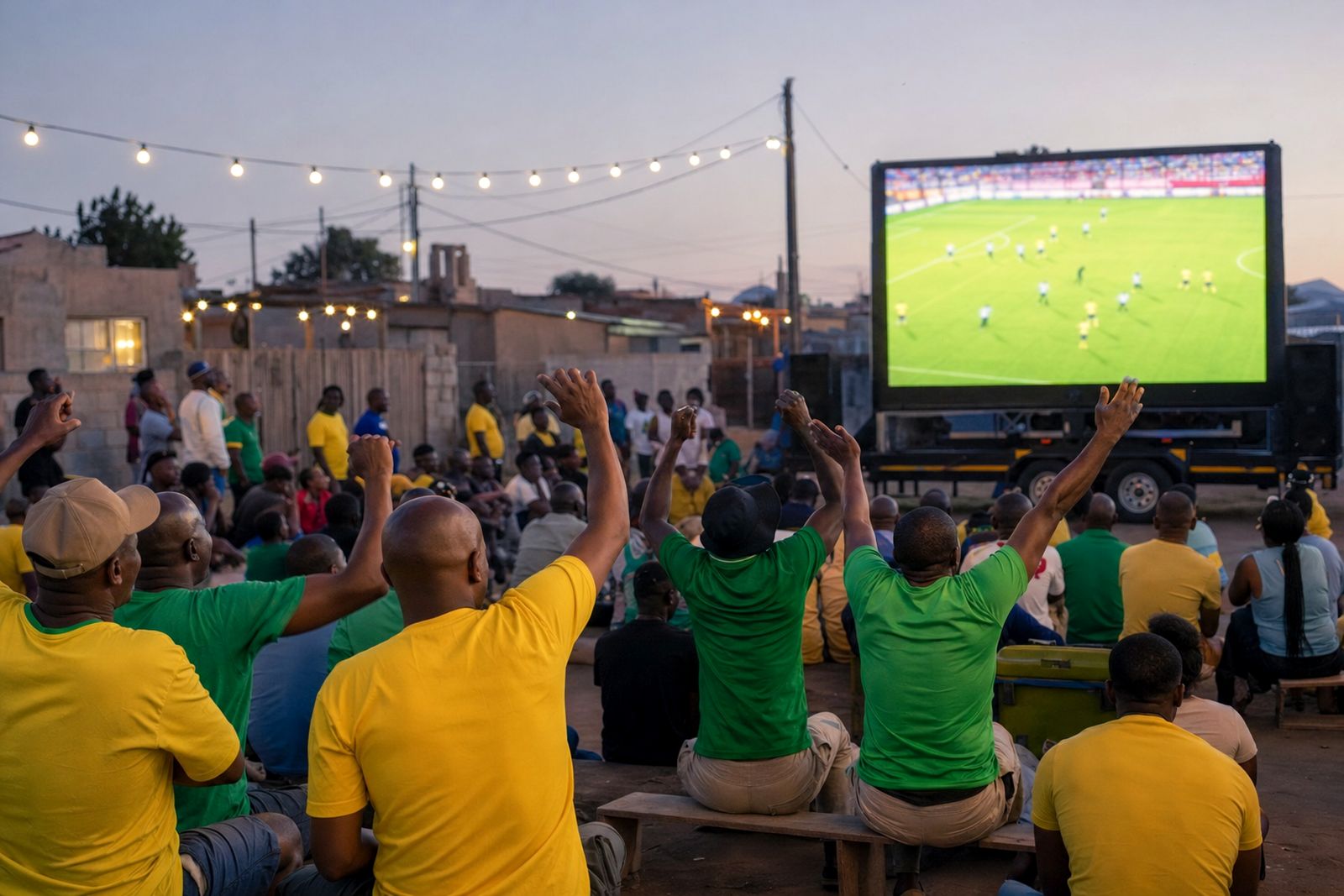
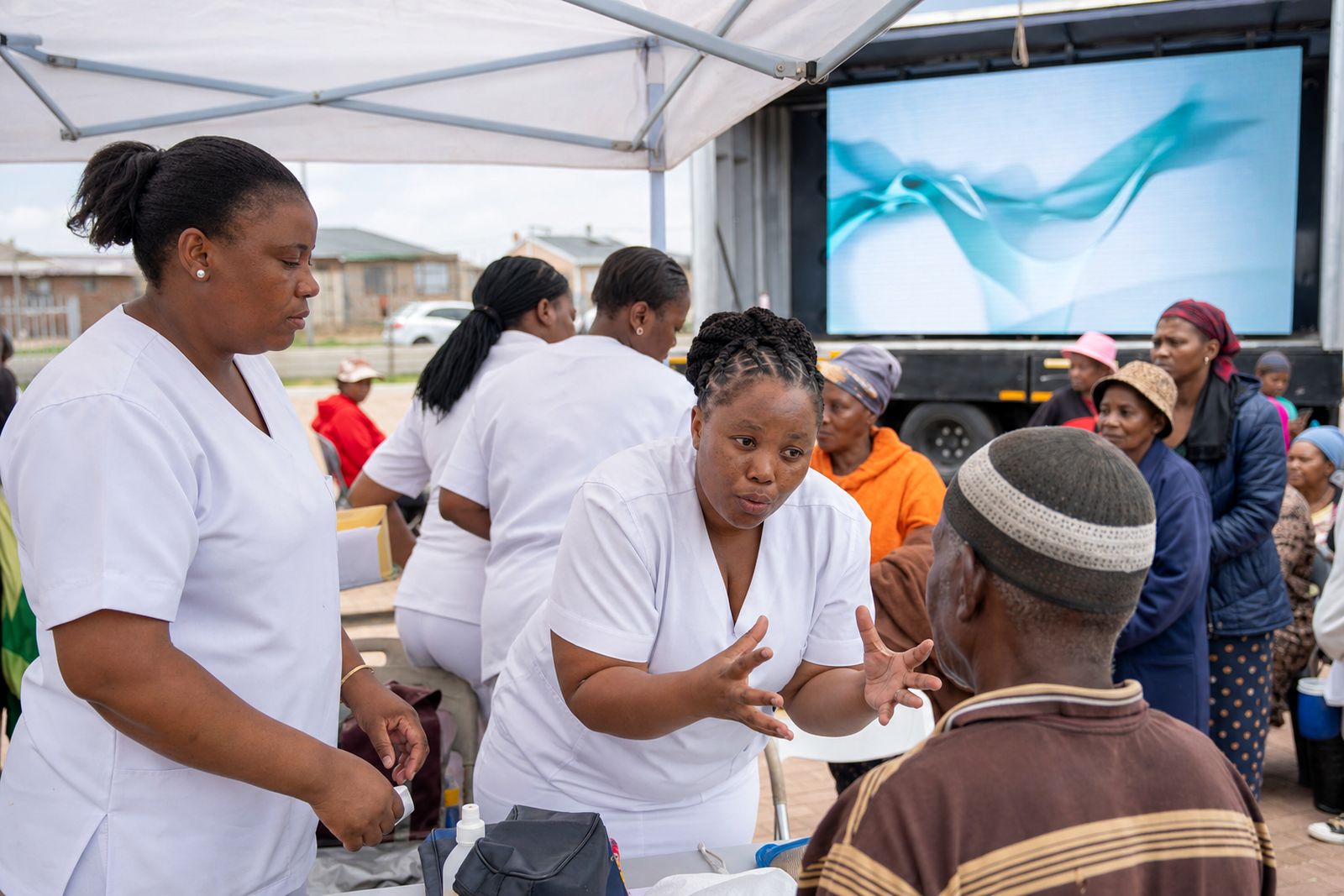
An awareness drive works best when the screen travels with the campaign and plays at every stop along the way. The right trailer can be towed between sites in Johannesburg, Pretoria, Durban, Bloemfontein or Polokwane and set up where people already gather, such as taxi ranks, sports fields, shopping centres and municipal outreach points.
For this kind of campaign, the message usually needs repeated loops, simple calls to action and clear graphics that hold up in daylight. Outdoor LED panels are commonly specified by pixel pitch to suit viewing distance, with brighter output for day use and content that remains readable in moving traffic. Where the site demands it, a hydraulic lift and rotation setup helps angle the screen toward the crowd or road edge, while the technician manages playback from a media player or live input.
Outdoor work also means practical planning. Wind, road access, ground conditions and permission from landowners or municipalities all matter. If a trailer needs to stand near a public route or on municipal land, permit guidance and site notes should be part of the booking rather than left for the last minute.
What usually goes on the trailer
Most awareness campaigns do not need a complicated screen package. They need a bright display, dependable power and a clean message loop that can run through a full programme without fuss. Depending on the site, the screen may run from mains power or a generator mounted with the trailer, and the technician keeps an eye on signal, brightness, audio and playback order.
Typical equipment for these drives can include:
- Outdoor LED screen trailer with a suitable pixel pitch for the viewing distance
- High-brightness display for daylight visibility
- Hydraulic lift and, where specified, rotation positioning
- Content player for scheduled loops, slides and video clips
- Live feed support for openings, speeches or sports day announcements
- Power cabling, distribution and site safety checks
- On-site technician for setup, monitoring and pack down
Where the route includes several stops in one day, multi-stop planning matters as much as the screen itself. Different parking bays, slopes and entrance points can affect sight lines, so each stop needs a quick check before the trailer is placed.
How the layout should serve the audience
Awareness campaigns are strongest when the screen faces the people who are most likely to stop and watch. That may mean setting the unit slightly off the road so vehicles can slow without blocking traffic, or placing it near a queueing area where pedestrians already gather. The aim is to keep the message in view long enough for it to be seen, read and remembered.
Content should be planned for short attention spans. Large text, strong contrast and a simple sequence of messages work better than dense copy. If the campaign includes a live speaker, the technician can balance the screen content with the spoken programme so the two support each other instead of competing.
When weather changes, the display position may need adjustment. Bright sunlight can wash out weak content, while strong wind can affect where a trailer can safely stand. That is why weather monitoring and site checks are part of the planning, especially for outdoor activations that move across townships, CBD edges and open venues.
The mistakes that waste a busy route
Awareness drives often lose impact when the screen is treated like a static banner. A moving campaign needs content loaded in the correct order, tested before the route starts and matched to each stop. If the file format is wrong or the aspect ratio does not fit the panel, the message may lose clarity just when it should be strongest.
- Lettering a taxi passenger cannot read at 60 km/h
- Skipping a site check on uneven or exposed ground
- Ignoring permit needs for public spaces or road-adjacent sites
- Running the same loop too long without a clear sequence
- Forgetting sound checks when the campaign includes speech or music
- Placing the screen where glare or trees block the view
A trailer that is well built but poorly planned can still underperform. A smaller, cleaner layout in the right place often does more than a larger screen facing the wrong direction.
Budget bands in Rand for awareness work
Budgets vary with the number of stops, the duration on site and whether the campaign needs a simple loop or live support. For short awareness activations with a single trailer, a basic package may sit in the lower tens of thousands of Rand, especially if the route is short and the content is ready. Once the drive adds several towns, live feed support, extended technician hours and multi-stop logistics, the cost can rise into the mid to upper tens of thousands, and larger route plans can move beyond that.
The main cost drivers are usually transport, screen size, setup time, power arrangement and permit handling. If the campaign needs both daylight viewing and evening visibility, brightness and power planning become even more important. Roadshows that cross Ekurhuleni, Gauteng and farther provinces also need fuel, travel time and route coordination folded into the quote.
A clear budget conversation should cover what is being shown, where it will be shown and how many times the message must repeat. That is the easiest way to match the screen package to the route without overspending on features that never get used.
From Germiston base to roadshow routes nationwide
LEDBox works from Germiston in Ekurhuleni and handles awareness campaigns across Johannesburg, Pretoria, Durban, Bloemfontein and Polokwane. Some clients need one busy day at a single public point, while others need a moving route with several touchpoints, pack down and reset between each stop. The team manages delivery, setup, playback, live feed support, power planning and pack down with an on-site technician present for the run.
For a route with public visibility, the practical details matter most: where the trailer can park, how the screen faces the audience, whether mains power or a generator is required, and what the municipality expects in that area. Awareness work tends to look easy from the road, but it depends on careful setup and steady control behind the screen.
Health departments and NGOs often start with a list of stops, and we turn that into a trailer and route plan.