
When a public viewing needs a proper centre point
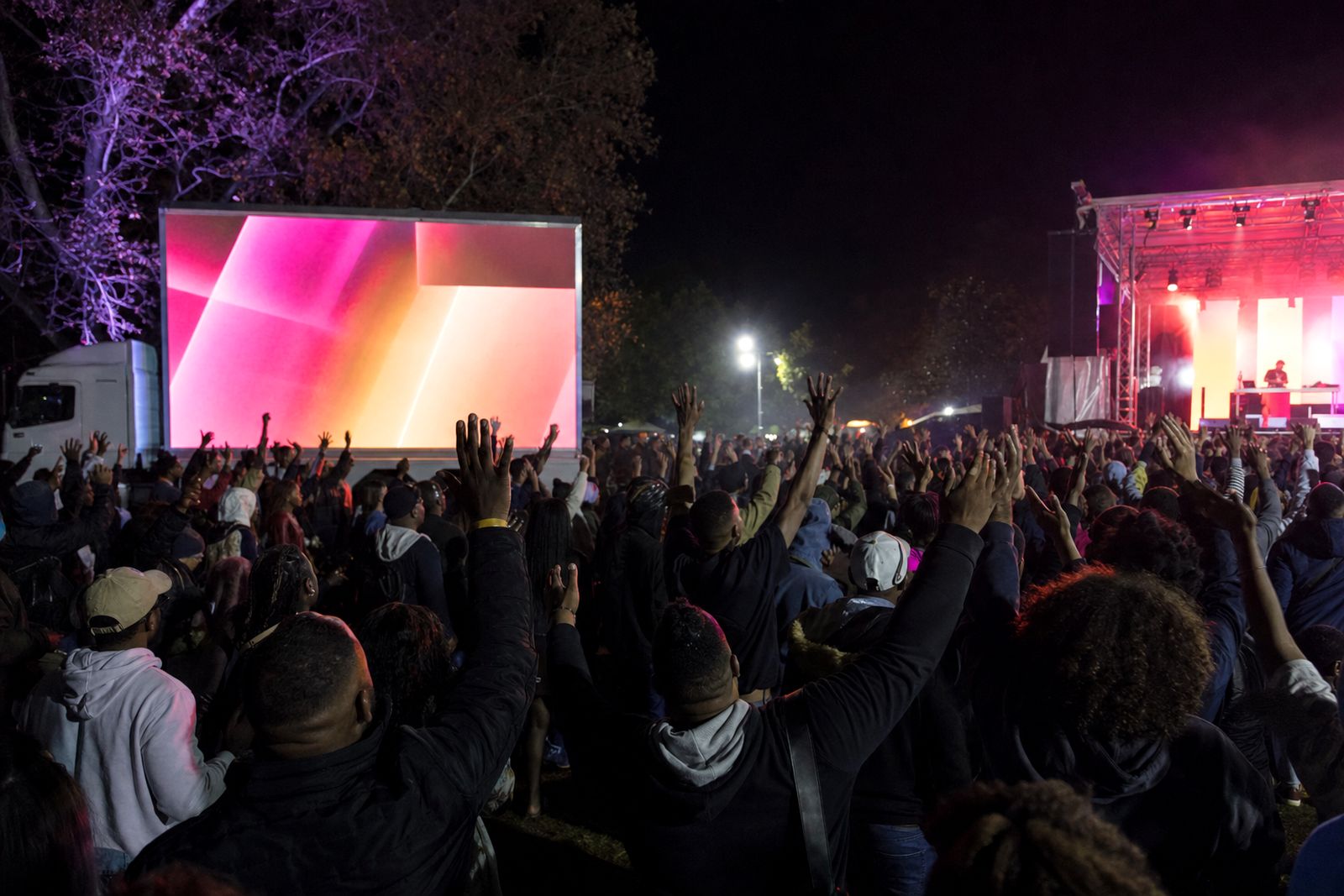
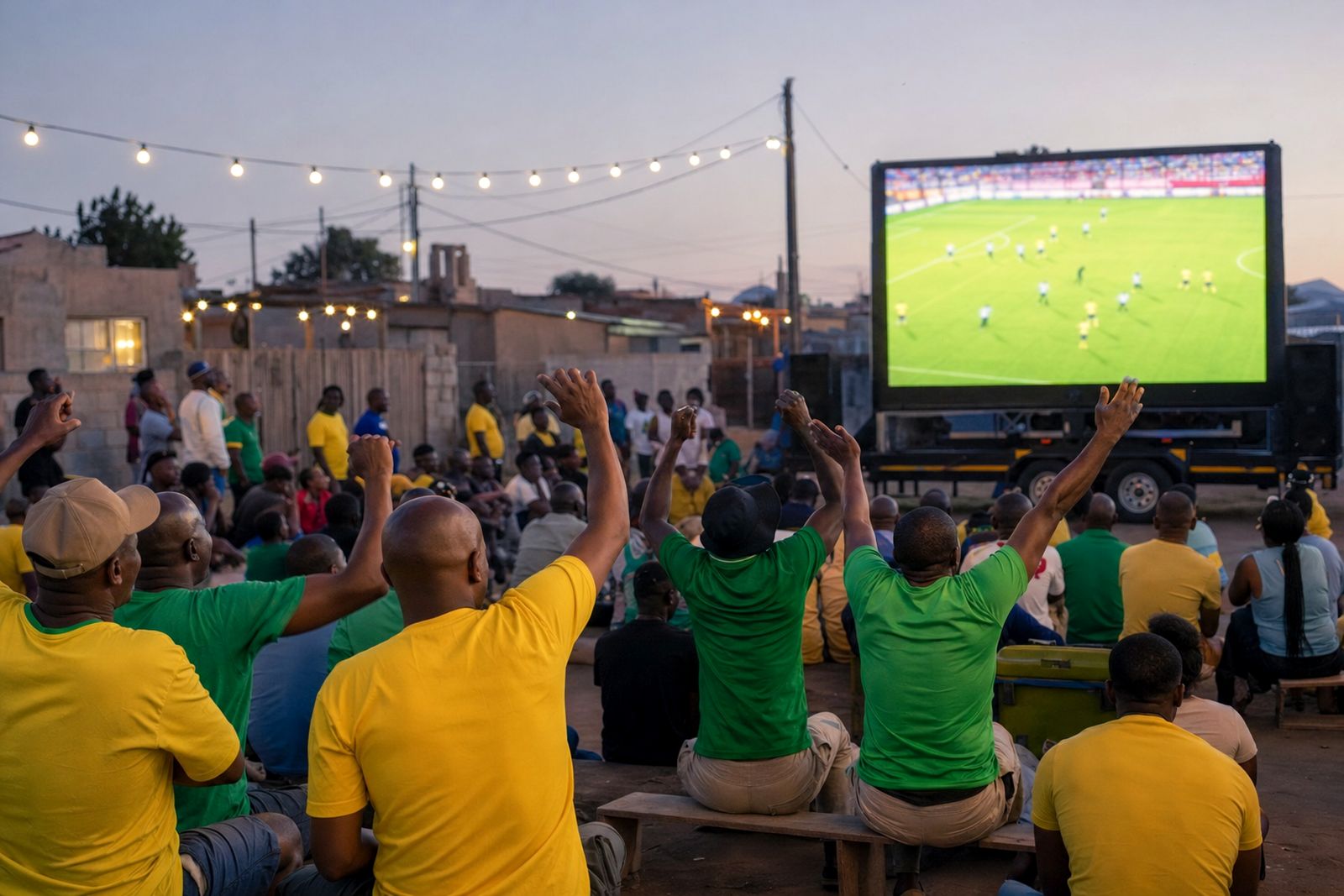
Public viewings are often set up for sports finals, civic announcements, school gatherings, community watch-ins and campaign moments where a crowd needs one clear focal point. The screen has to sit where people can see it from the back row as well as the front, with enough brightness for daylight and enough structure to stay steady in wind.
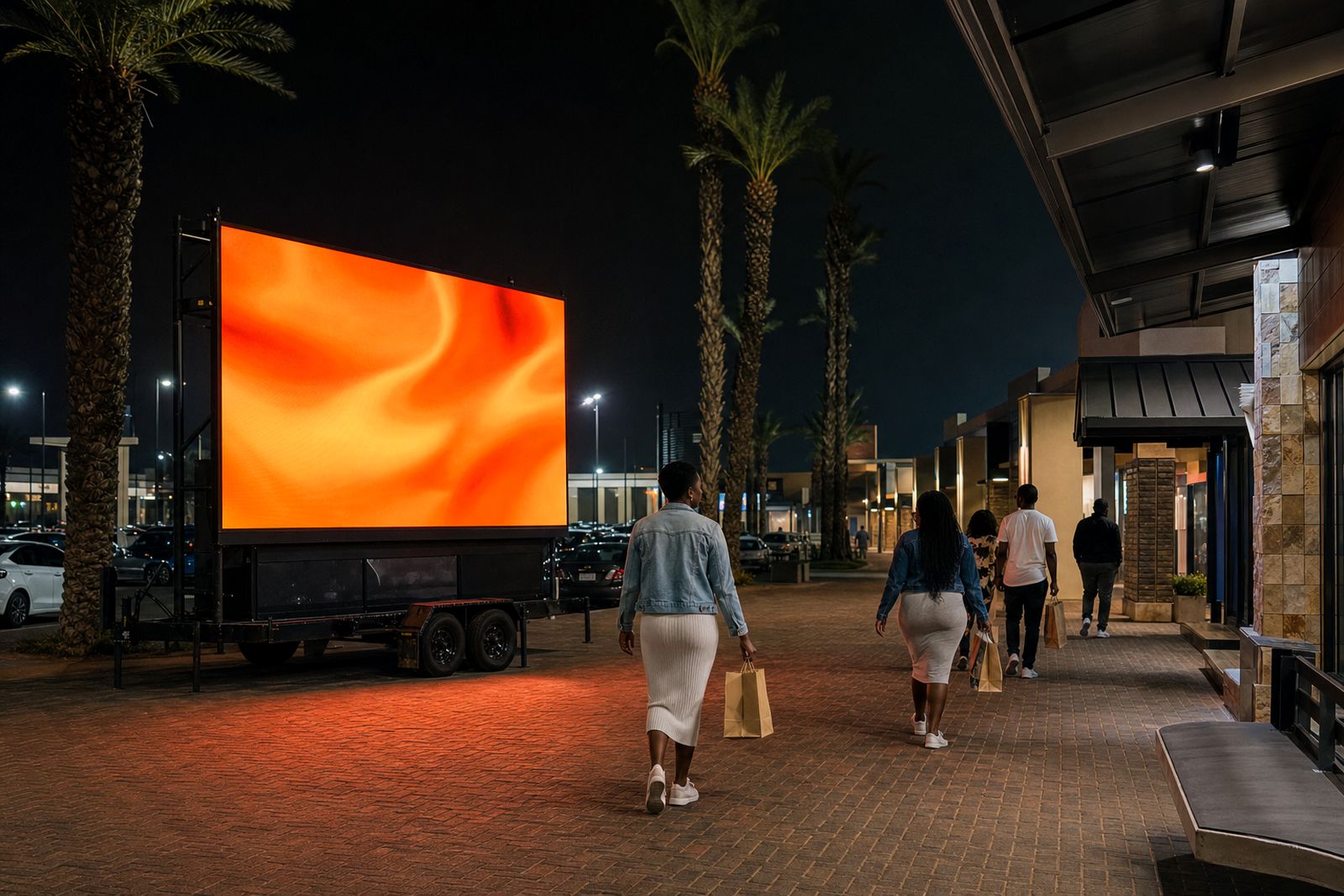
Outdoor LED trailers work well where the audience changes size through the day. A trailer can be parked, levelled and lifted into view, which helps in school fields, open parking areas, municipal grounds and roadshow stops where there is not a fixed stage or wall to mount onto.
Screen specs that matter in open daylight
For daytime viewing, pixel pitch and brightness sit at the centre of the brief. A finer pixel pitch gives clearer detail at closer viewing distances, while higher brightness helps the image stay readable under strong sun. The right balance depends on how close the crowd stands and how much ambient light the site gets.
- Outdoor-rated LED panels with weather protection for open-air use
- Brightness suited to daylight rather than shaded indoor viewing
- Content playback from media players, laptops or scheduled feeds
- Live feed support for sport, announcements or streamed ceremonies
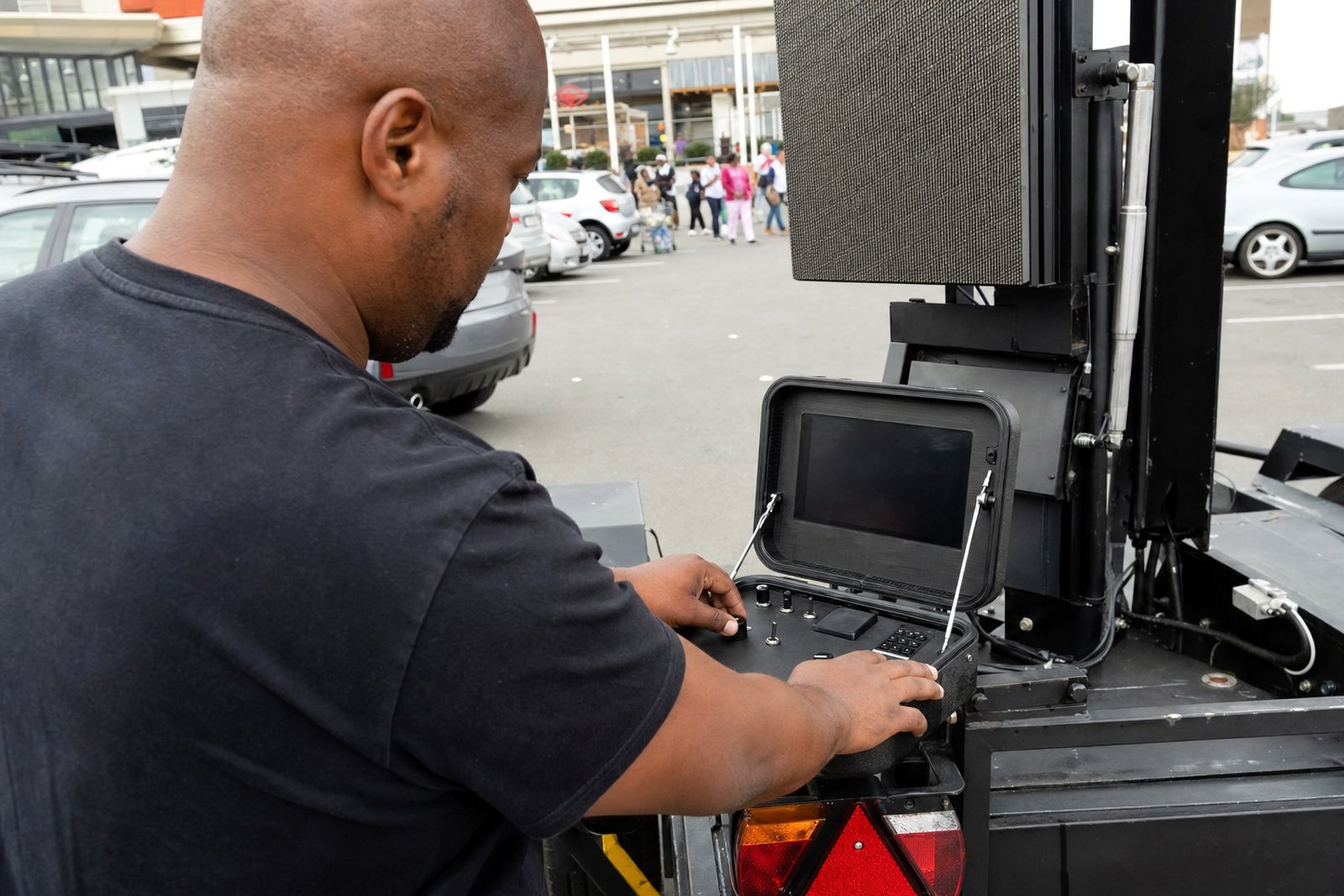
- Hydraulic lift and rotation on trailer units where viewing angles matter
Trailer screens are often paired with a generator or mains supply, depending on the site. Where a venue has stable municipal power, mains can work well, but many public viewings still need generator support for the full event window and backup planning if the venue has limited infrastructure.
Layout planning for people standing, sitting and moving
A public viewing layout has to allow for arrival points, emergency access, speaker positions and clear walking lines. The screen should not sit where crowd pressure builds near a fence or a gate. It helps to place the trailer so the screen faces the largest open viewing field, while speakers and tech gear stay protected from foot traffic.
Wind exposure matters more on open sites than many people expect. Trailer screens are rated for certain wind conditions, and that limits where and how they can be operated. If the forecast turns rough, the technician may need to lower the screen, pause operation or adjust the setup to suit the weather and the site rules.
- Measure viewing distance before picking screen size
- Leave space for cabling, generator placement and technician access
- Nothing tall between the crowd and the screen face, whether branch, lamp post or bakkie
- Plan for crowd flow, barriers and municipal permit needs where required
- Mark the best sightline before the audience arrives
Where public viewings go wrong on the ground
The most common problem is choosing a screen that is too small for the crowd or too dim for the light. Another is placing the trailer where people cluster too close, which creates poor sightlines and makes supervision harder. A screen that seems fine on paper can still fail if the site surface is uneven or the crowd faces the sun.
Content mistakes also slow the event down. Files that are the wrong format, audio that is too low, or live feeds that have not been tested against the playback kit can all lead to avoidable pauses. On a public viewing, the screen is only one part of the job. The feed, sound, power and site controls need to work together.
Budget ranges for public viewing hires in Rand
Pricing depends on screen size, trailer or fixed LED box format, travel distance, technician cover, power plan and how many hours the unit is on site. A smaller public viewing setup for a local gathering may fit a lower budget band, while a larger daylight screen with live feed handling and longer operating hours will sit higher.
As a practical guide, public viewing budgets often start in the tens of thousands of Rand for short local hires and move into higher ranges for larger screens, multi-stop roadshows or jobs needing more complex power and permit coordination. Transport to Johannesburg, Pretoria, Durban, Bloemfontein or Polokwane also affects the final figure, especially when the setup needs overnight staging or extra crew.
- Screen size and pixel pitch
- Delivery distance from Germiston, Ekurhuleni
- Generator hire or mains integration
- On-site technician cover and pack down
- Permit guidance and site check requirements
What the crew handles on event day
LEDBox works from Germiston, Ekurhuleni and supports public viewings across South Africa, including Johannesburg, Pretoria, Durban, Bloemfontein and Polokwane. The team covers delivery, setup, content loading, playback management, live feed support, power planning, weather monitoring and pack down, so the site stays controlled from first lift to final switch-off.
The people involved are practical screen specialists rather than general labour. Sibusiso Shezi oversees the business, while Anika Chetty handles operations, Thabo Bhengu leads screen work, Noluthando Maluleke coordinates logistics, Ruan Mabena manages fabrication and Karabo Abrahams handles playback. That mix matters on public viewing jobs because a screen that is lifted too high, aimed badly or fed the wrong file can spoil the whole crowd experience.
For municipal sites, open fields and community venues, permit guidance is part of the process where the venue requires it. The aim is straightforward: place the screen safely, keep the image visible and give the audience one clear viewing point without crowding the site.