Roadshow stops need a screen that resets cleanly
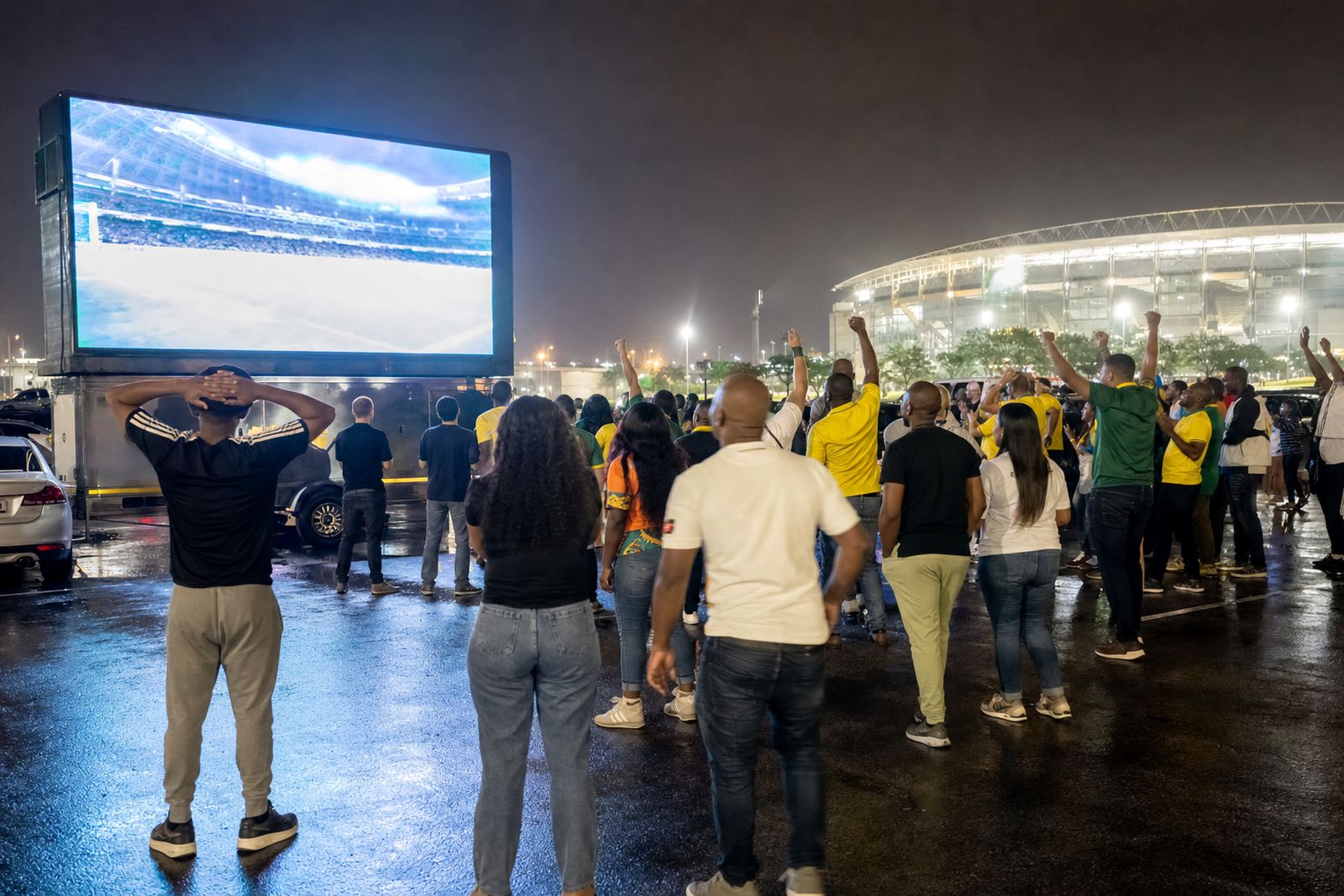
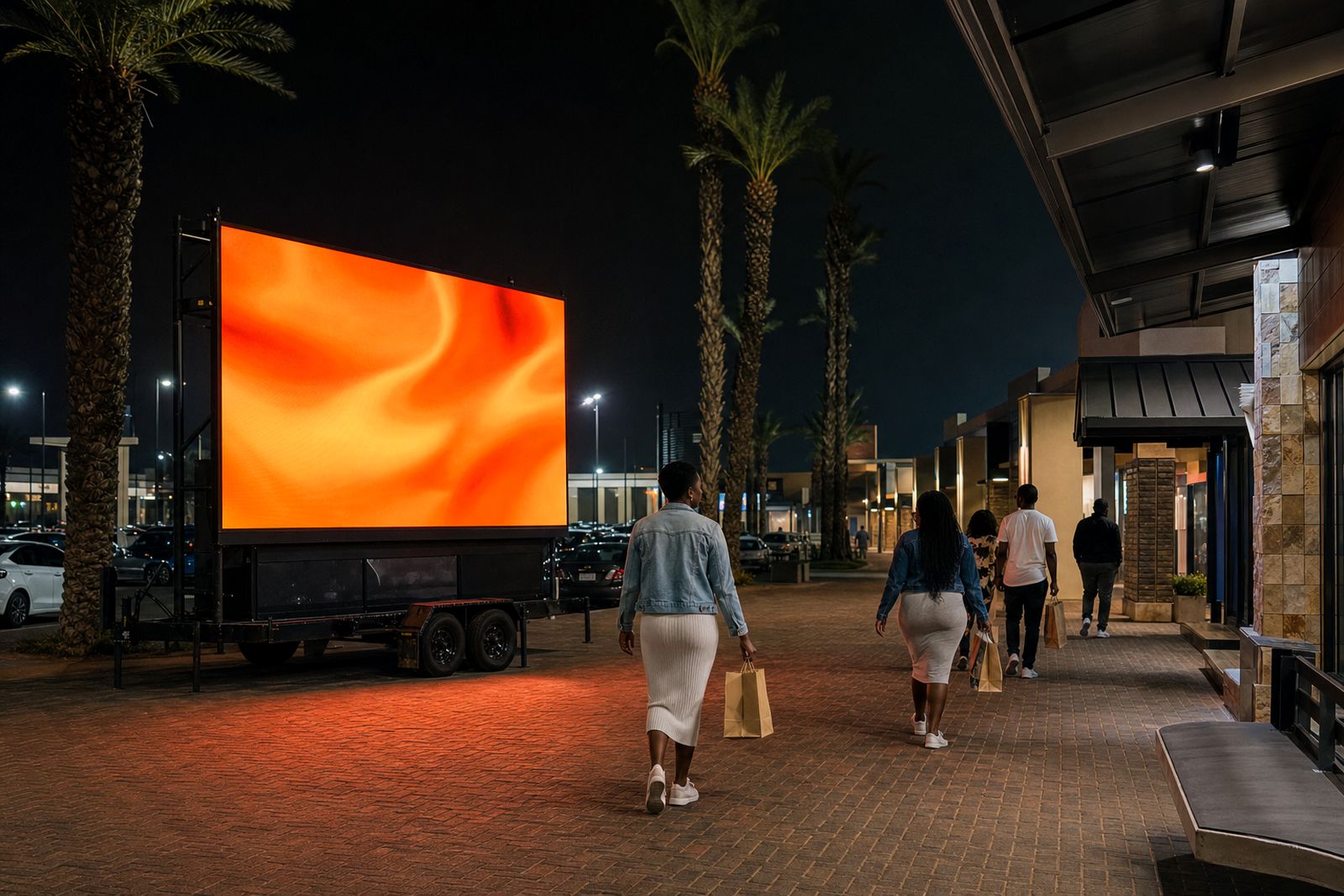
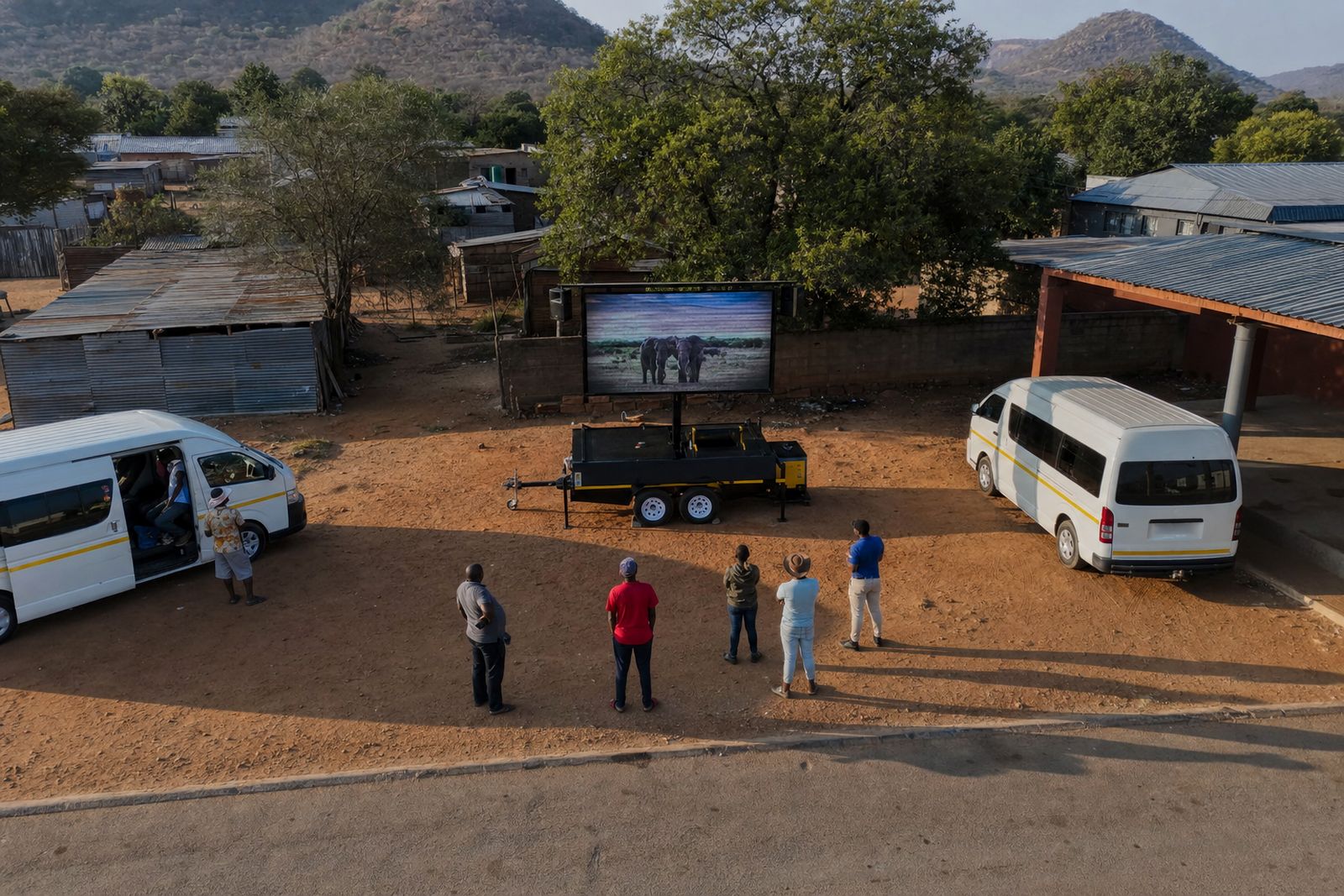
A roadshow is rarely a single neat site. One day it is a shopping centre forecourt in Germiston, the next it is a sports ground in Pretoria or a public square in Bloemfontein, with different access points, surface conditions and crowd flow. The screen package has to travel well, stand up fast and run the same way at every stop.
That is why outdoor LED screen trailers suit this work so well. The screen is mounted on a towable base, then lifted into viewing position with a hydraulic system. A proper unit can rotate to face the crowd, which helps when the vehicle has to park in tight spaces or the site layout changes at short notice. For daylight viewing, pixel pitch and brightness matter. Smaller pixel pitches give finer image detail when people are closer, while high brightness is needed so the picture still reads in direct sun and coastal glare.
For roadshows, the point is not only to show content. It is to keep the message consistent from one stop to the next while the crew manages traffic flow, access control and local site rules.
What usually travels with the trailer
Most roadshow deployments use a practical mix of equipment rather than a single oversized unit. The screen size depends on the site, the distance to viewers and the route between stops. Some campaigns use one trailer as the main attraction, while others add smaller LED boxes for branding, wayfinding or secondary messaging near a queue or activation table.
- Outdoor LED screen trailer with hydraulic lift and rotation
- LED boxes for extra branding or support visuals
- Playback player, media files and a tested content playlist
- Power plan for generator use or mains connection where available
- Rigging, cabling and weather covers suited to open sites
- Technician attendance for setup, playback and pack down
Content needs to be prepared for outdoor conditions. Bright graphics, strong contrast and short video loops usually read better than dense text. If a campaign includes live feeds, the signal path must be checked before the first stop so the screen does not turn into a technical delay point when the crowd is already there.
Route planning is part of the equipment plan
Roadshow work sounds simple until the route details are counted properly. Loading points can be narrow, municipal permissions may differ from one town to the next, and a site that works in Johannesburg may need a different approach in Kempton Park or Durban. The set-up area must allow for turning, levelling and safe crowd separation, with enough clearance for the lifted screen and any support vehicle.
Wind is one of the biggest practical limits on an outdoor screen trailer. A responsible crew will monitor weather and set operating limits for safe use, especially on open erven, high streets and coastal sites where gusts can move through quickly. In some locations the team also has to work around municipal permit requirements, traffic control rules and venue conditions. That means the planning has to start with the site, not with the screen alone.
When the route is mapped properly, the roadshow feels controlled. The crew arrives with the right power plan, the screen points the right way and the content starts where it should, not after a scramble for cables or a level spot.
Where roadshow campaigns usually go wrong
Most problems on roadshows are avoidable, but only if the details are treated as real site work. A file that looks fine on a laptop may fail on a bright screen if the aspect ratio is wrong or the video is compressed too hard. A trailer that fits in the yard may still struggle at an awkward loading bay. Even a good crowd draw can be wasted if the screen is facing the afternoon sun or the audio plan is too weak for the area.
- Sending the wrong file format or low-quality artwork
- Assuming every stop has the same space and surface
- Leaving permit checks until the route is already fixed
- Ignoring wind exposure, especially on open sites
- Using text-heavy slides that nobody can read at speed
- Forgetting who will swap content or manage live playback
On roadshows, repeatable operation matters more than flashy extras. The screen should load the same way at each stop, the technician should know the sequence, and the content should be ordered for quick viewing, not long attention spans.
Power, playback and live support on the move
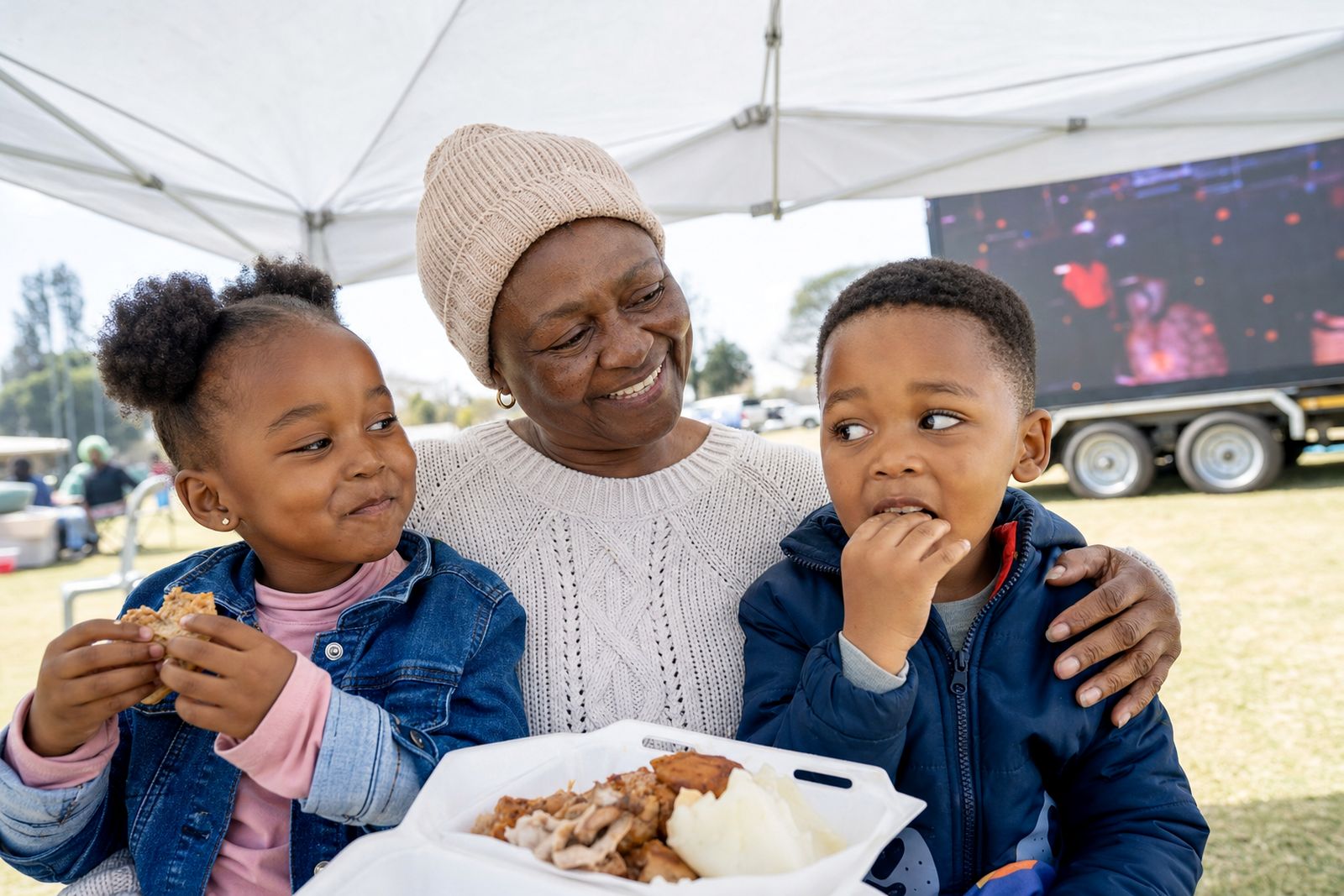
Outdoor LED screens need stable power and clean playback. Some roadshow sites can use mains power, while others are better handled with a generator on the trailer or a separate supply arrangement. The choice depends on the venue, available capacity and whether the campaign is stopping in a park, roadside venue or sports field with limited infrastructure.
Playback management is just as important as power. A roadshow often needs a loop that can restart after a power interruption, a live feed window for speeches or sports moments, and a technician who can adjust the display if a file needs correction. This is where on-site support matters most. The screen is only useful if it keeps playing the right material while the event is in motion.
For campaigns that move across South Africa, the same package may be used in Johannesburg one week and Polokwane the next. The equipment must travel safely, the content must stay organised and the handover between stops should be clear enough for the crew to work without confusion.
Budget bands for roadshows in Rand
Roadshow budgets vary by route length, screen size, number of stops and the amount of on-site support needed. A short campaign with one trailer and basic playback is priced differently from a multi-stop route that needs more logistics, more content handling and tighter permit planning. The quote also changes if the job includes generator power, live feed support or extra LED boxes at each venue.
- Smaller roadshow hire packages: usually from about R12 000 to R25 000 per stop, depending on screen size and setup needs
- Mid-range multi-stop deployments: often R25 000 to R60 000 across a route with technician support and logistics
- Heavier campaign packages with live feeds, extra screens and complex route planning: from about R60 000 upward
These figures are broad working ranges, not fixed prices. A route through Germiston, Johannesburg and Pretoria is not the same as one that reaches Durban or Bloemfontein with longer travel legs. The final structure depends on the number of days, the terrain, the access points and the content support required at each stop.
The crew that keeps the route moving
Roadshow work needs people who understand both the screen and the movement around it. Sibusiso Shezi oversees the overall direction, while Anika Chetty coordinates operations and site timing. Thabo Bhengu handles the screen technology on site, Noluthando Maluleke manages logistics, Ruan Mabena oversees fabrication and Karabo Abrahams supports content playback.
That mix matters because a roadshow is never only about a screen on a trailer. It is about getting the unit into position, checking the wind, confirming the surface, loading the content and keeping the route moving across the next stop without fuss.
Clients in Germiston, Ekurhuleni, Kempton Park, Johannesburg, Pretoria, Durban, Bloemfontein and Polokwane reach us through our contact form. For roadshow planning, it helps to have the route, site list, approximate crowd size and preferred screen format ready before the first layout is set.