
Public spaces need a screen that stays readable
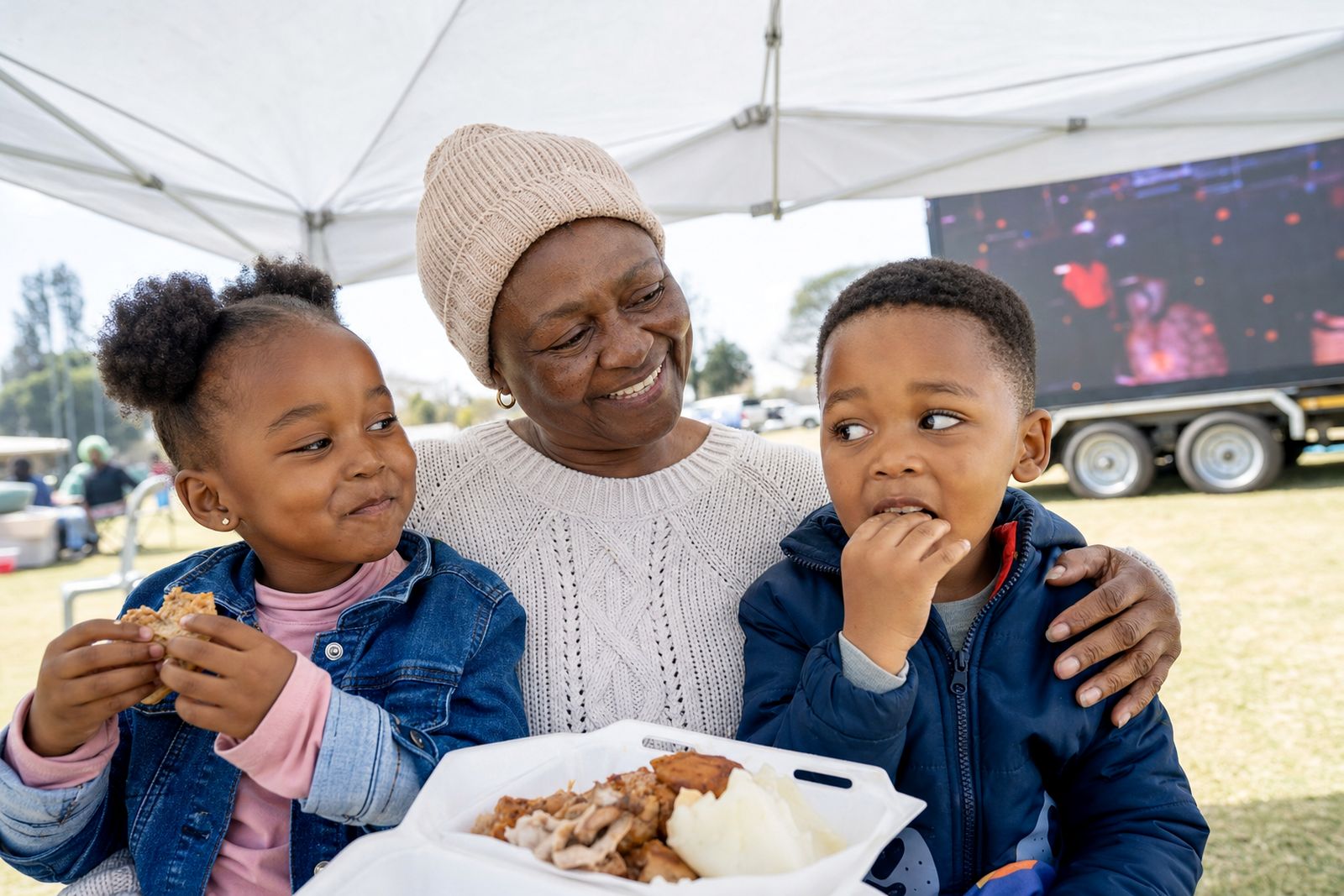
Community days often happen in parks, school grounds, civic halls, taxi ranks or open municipal spaces where people gather at different times of the day. The screen has to carry notices, programme details, announcements and live visuals without losing clarity when the sun is high or the crowd spreads out.
For this kind of use, outdoor LED screens are usually selected with a pitch suited to the viewing distance. Smaller pitches give a tighter image for closer viewing, while larger pitches suit wider crowds and bigger layouts. Daylight brightness matters as well, because a screen that looks fine indoors can wash out badly in the afternoon heat. In open Ekurhuleni venues, that difference is hard to ignore.
- Short stage announcements and roll calls
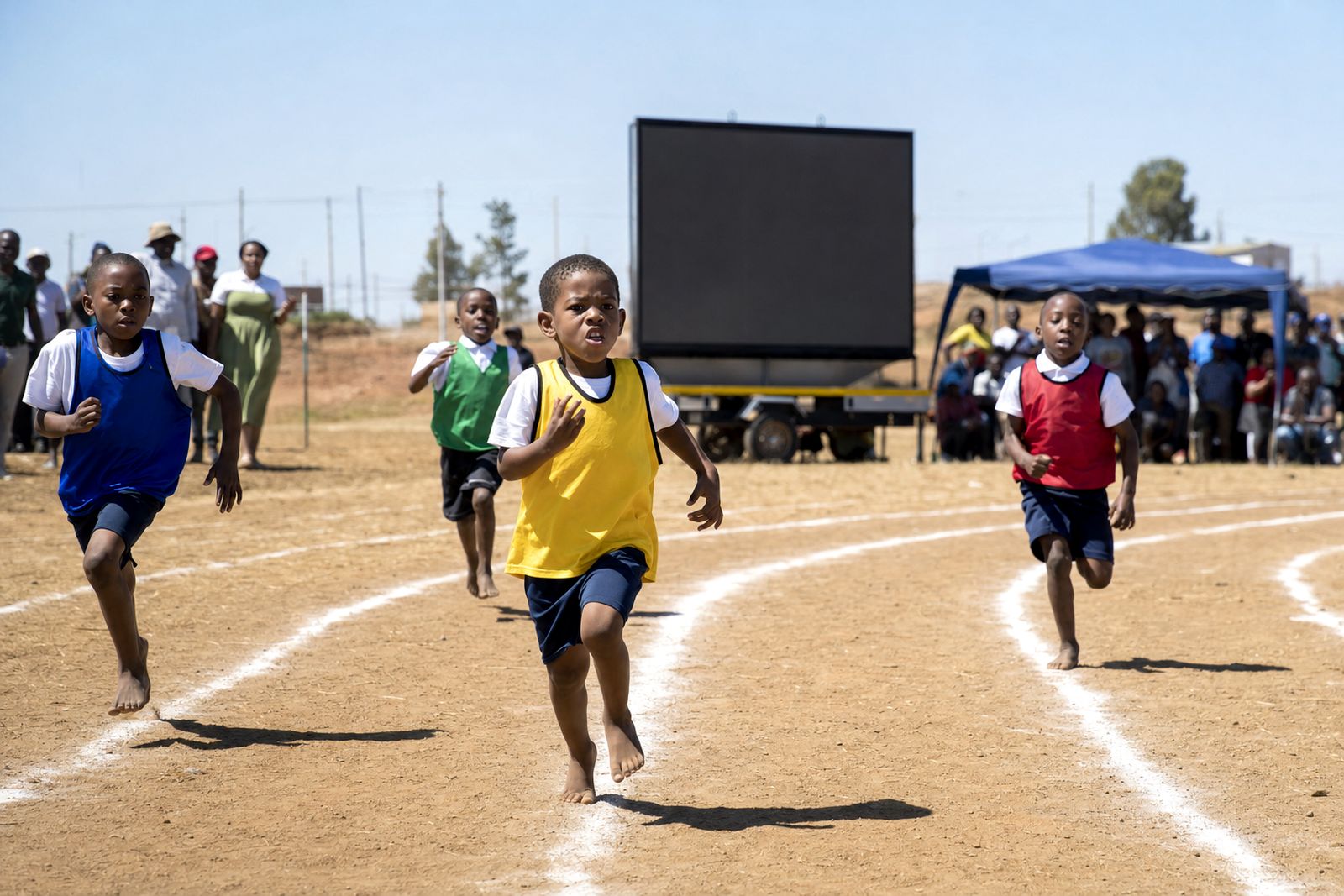
- Community performances and prize giving
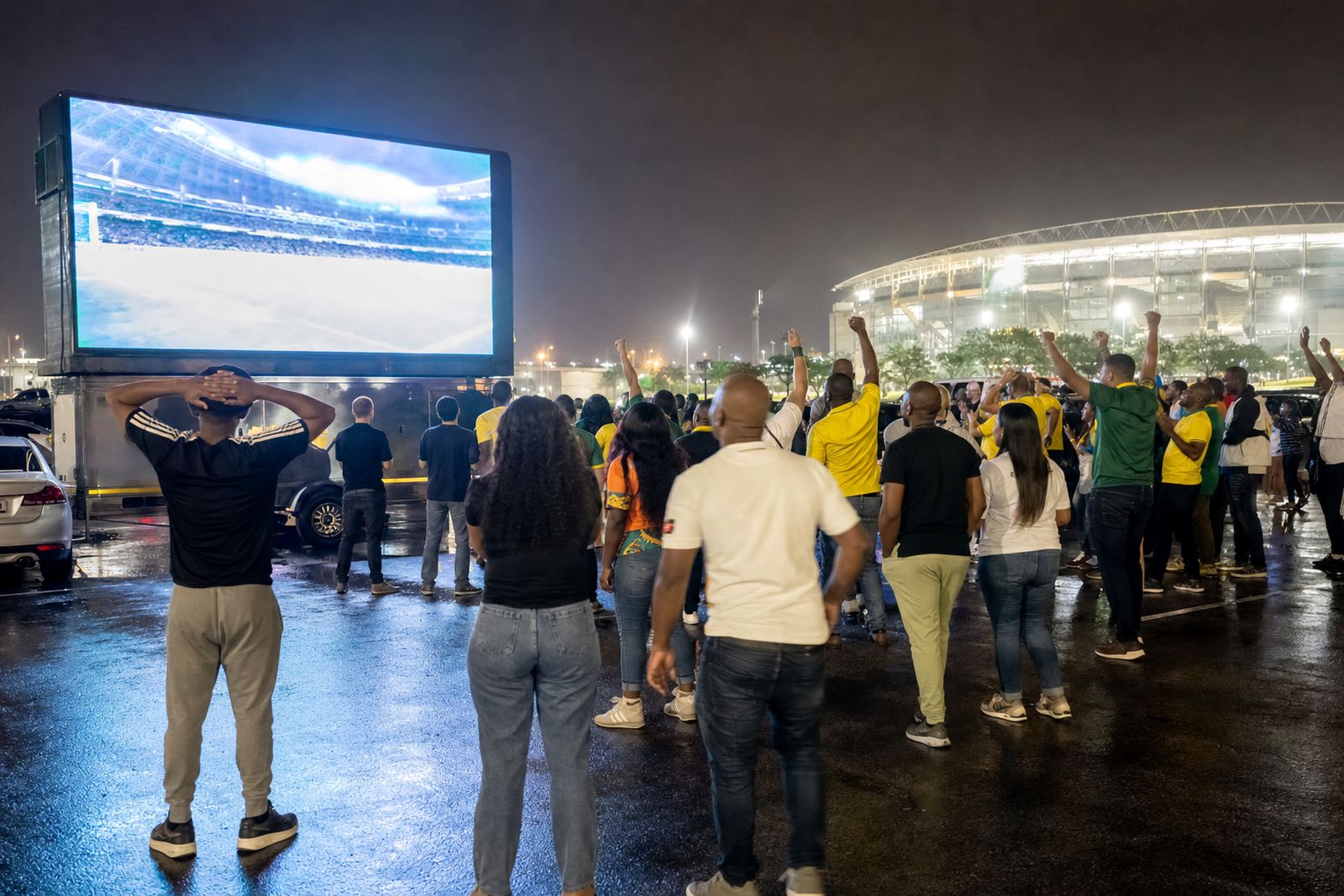
- Shared viewing for sport, film or live feeds
- Programme schedules, notices and sponsor loops
Trailer mounted screens that do the heavy lifting
Outdoor LED screen trailers suit sites that need fast positioning and a clean, elevated sightline. The trailer carries the screen structure, a hydraulic lift and often a rotation system so the face can be aligned to the crowd or stage area. Once on site, the unit can be raised to a practical height without building a temporary scaffold or frame.
Power can be arranged through generator supply or mains power, depending on the venue and the site layout. For municipal spaces, the actual choice often depends on access, cable runs and what the venue allows. Wind limits matter too. A screen on a trailer must be placed and operated with weather in mind, especially in open areas where gusts can move through the site.
- Hydraulic lift for the screen deck
- Rotation for better crowd alignment
- Content playback system for loops and schedules
- Live feed input for speeches or sports coverage
- On-site technician for operation and checks
Layout decisions that save trouble later
The right layout starts with sightlines. A screen that is too low gets blocked by people standing near the front, while one that is too far back can lose impact for small announcements. For community days, we usually look at the stage position, the main gathering area, pedestrian flow and where vehicles or stalls may create a visual barrier.
Spacing around the trailer matters too. The screen needs room for safe access, cable runs and technician movement. If the event includes music or a live speaker, the screen should sit where the audience can face both the stage and the display without turning their backs on the action. In tighter urban spaces, a compact layout is often more useful than a large one.
- Keep the screen clear of trees, tents and high masts
- Allow space for crowd movement and safety barriers
- Place the trailer where pickup and removal stay practical
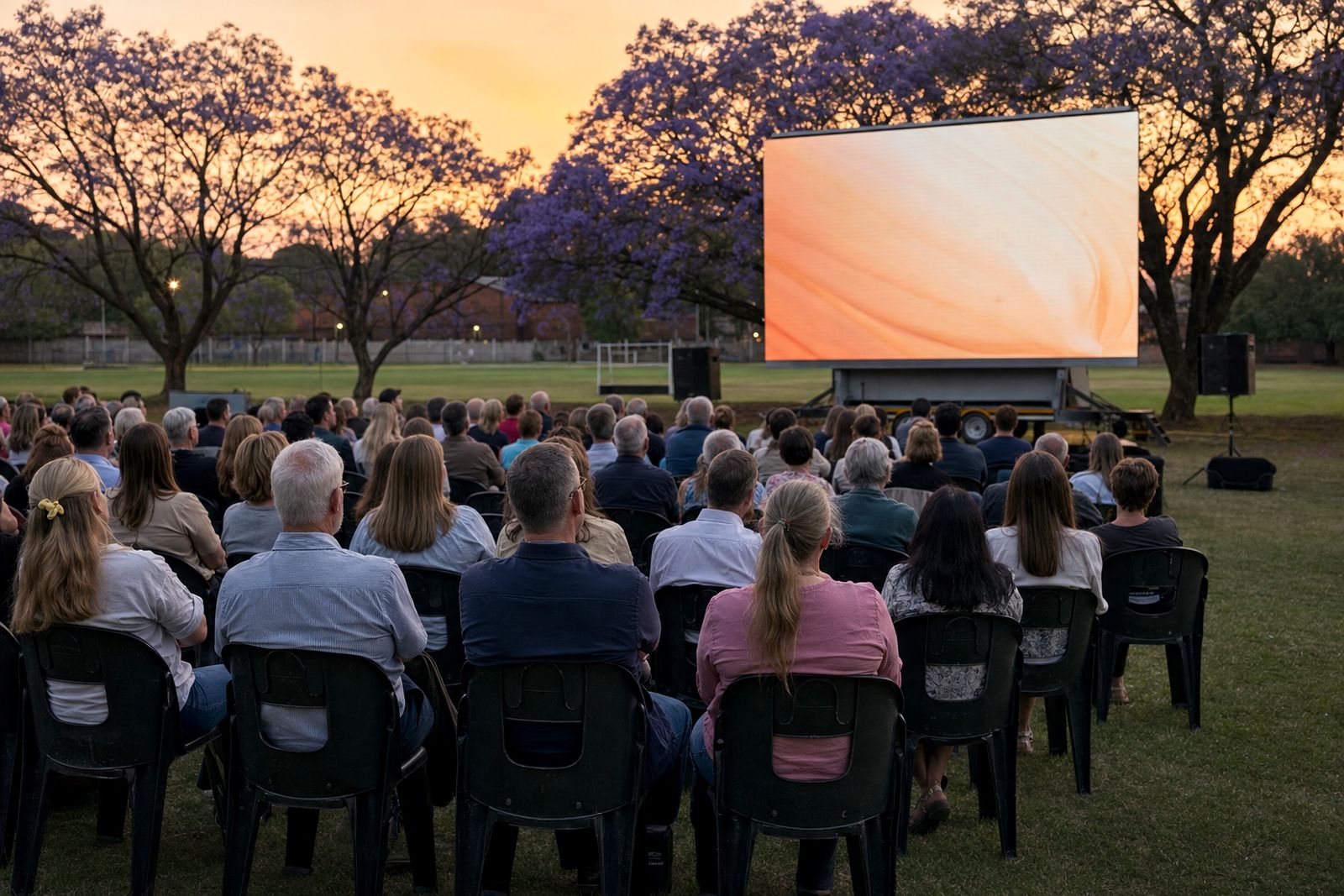
- Check whether the audience will view seated, standing or both
Municipal rules, permits and weather checks
Community days in public areas can involve local permissions, venue approvals and traffic or safety conditions that need attention before the event. Permit guidance is often part of the planning because municipal spaces may require notice for equipment placement, sound levels, trading areas or access routes. The exact requirements change from one town to another, so the paperwork needs to match the site rather than a generic event note.
Weather monitoring is just as important. Outdoor LED screens can handle open-air use, but they still need sensible positioning, safe operation and a plan for wind or rain. A technician on site can adjust playback, manage the screen and assess conditions as the day unfolds. That is useful on school fields, church grounds and township venues where the event timetable can shift quickly.
- Permit guidance for public space use
- Weather checks before and during the event
- Power planning for generator or mains supply
- Pack down coordinated around crowd exit times
Common mistakes that make a community day harder
One common mistake is picking a screen that is too small for the crowd and the daylight. Another is leaving content loading until the last minute, then discovering that the files are the wrong format or the message sequence is incomplete. Community days usually have mixed content, so notices, speaker graphics and live feed material need to be loaded in a tidy order.
It is also easy to underestimate the value of an on-site technician. A screen can be physically present and still underperform if no one is watching brightness, feed quality and playback sequence. Poor placement creates another problem. If the trailer is parked where people congregate or where vehicles block access, the whole setup becomes awkward.
- Do not place the screen where glare will wash it out
- Do not treat content loading as a last-minute task
- Do not ignore cable paths, access lanes or exits
- Do not forget a backup plan for live feed material
Budget ranges for community day screen hire
Community day budgets usually depend on screen size, rental period, transport distance, technician cover, power setup and whether the event needs live feed support or multi-stop planning. A small local gathering with basic playback can sit in a lower band, while a larger public programme with a taller trailer and more crew support moves into a higher one.
As a broad guide, short community day hires may start from about R15 000 to R35 000 for a compact setup with delivery, setup and playback support. Mid-range events often fall between R35 000 and R75 000 when the screen is larger, the site is more complex or the schedule runs longer. Bigger municipal or district programmes can move from R75 000 upward where the trailer, content handling, live feed and pack down need more time and coordination.
The most accurate figure comes from the venue, crowd size, viewing distance and the number of stops in the day. A compact field event in Kempton Park is priced differently from a travelling programme across Johannesburg, Pretoria and Polokwane.
What our Germiston team sets up on site
From our Germiston base in Ekurhuleni, the team handles delivery, setup and operation for community days across Johannesburg, Pretoria, Durban, Bloemfontein and Polokwane. The screen trailer, playback system and technician are matched to the site, so the event team is not left guessing about cables, content order or viewing angles.
Sibusiso Shezi oversees the operation, while Anika Chetty coordinates the moving parts around access and timing. Thabo Bhengu looks after screen performance on site, Noluthando Maluleke handles logistics, Ruan Mabena supervises fabrication and Karabo Abrahams manages playback detail. That combination matters when a public programme needs both order and flexibility.
- Site Checks for public venues and open grounds
- Delivery and setup across major South African cities
- On-site technicians for screen operation
- Content Loading, Playback Management and Live Feed Support
- Pack Down and multi-stop movement when the day includes more than one venue