
When the crowd sits outside the gate
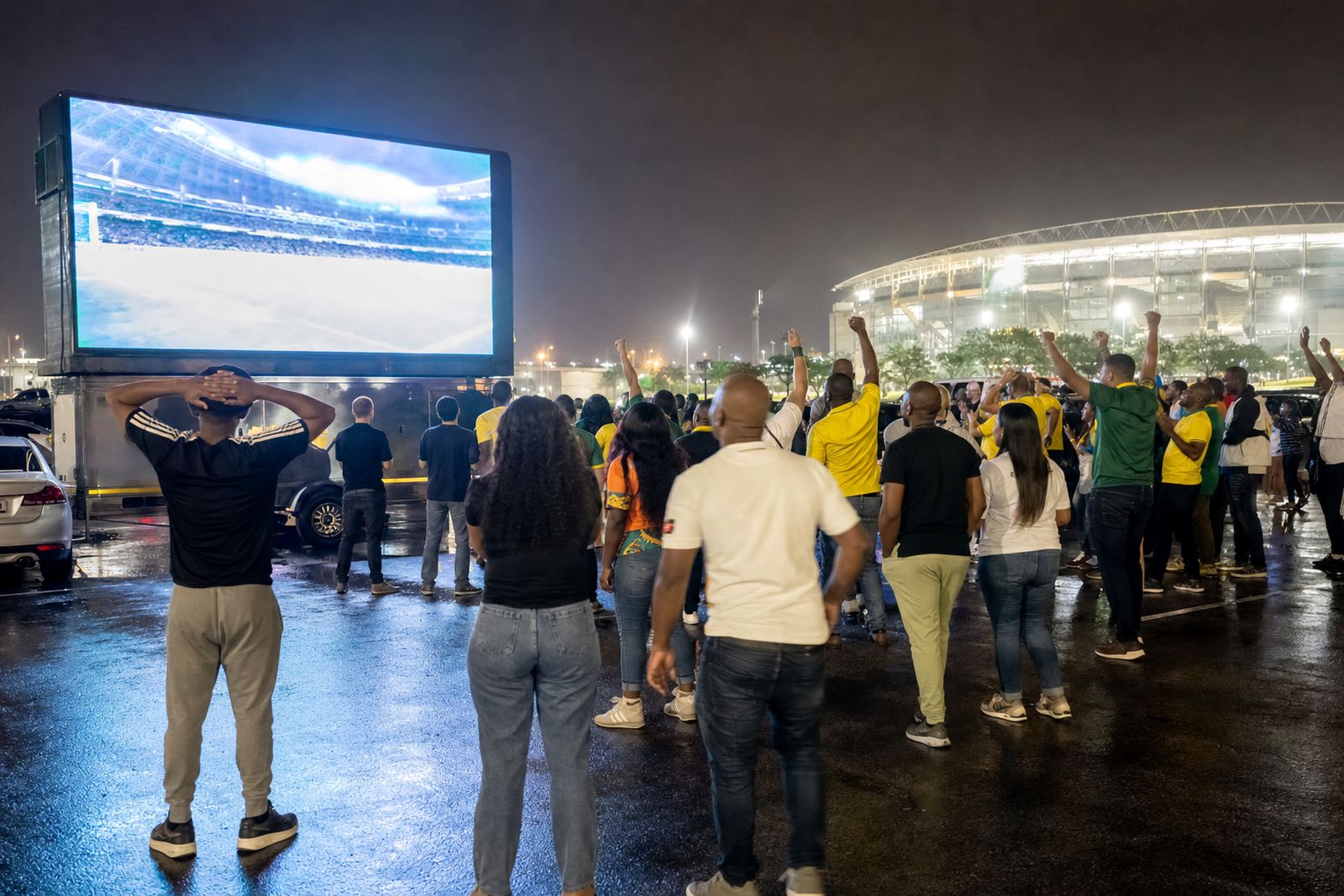
Stadium overflow areas are usually tight on space and full of movement. People arrive in waves, stop for food, check notices, then drift back toward entrances or seating blocks. A screen in that space has to stay readable in daylight, carry match action cleanly, and keep running while staff guide foot traffic around it.
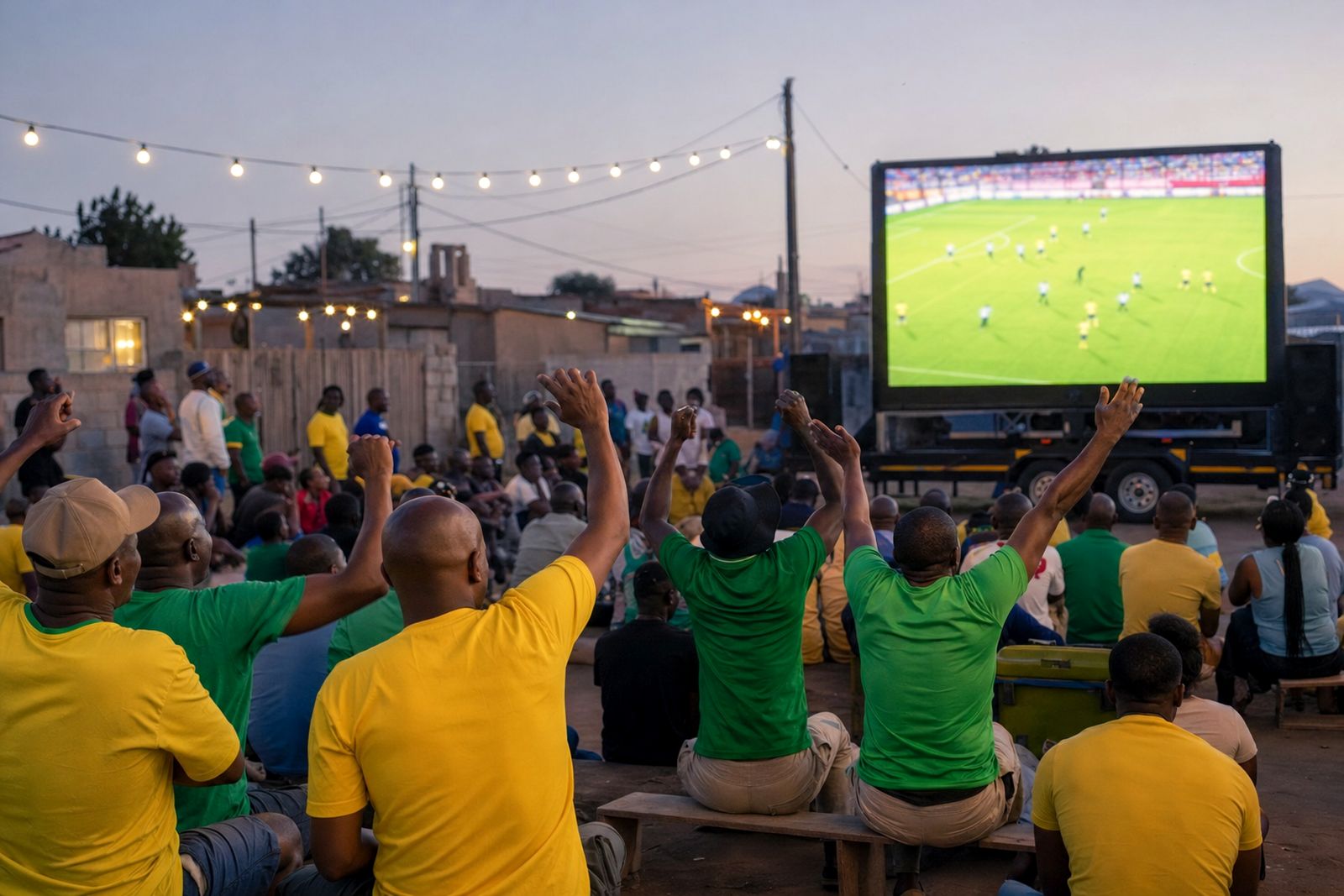
For this kind of use, the screen becomes a practical information point as much as a viewing point. It can carry live feed from the main event, sponsor rotation, venue notices, safety messages and half-time updates. If the overflow area is far from the main bowl, the screen also helps people feel connected to the event instead of standing in a dead zone with no view of play.
We work from Germiston, Ekurhuleni and place these units across Johannesburg, Pretoria, Durban, Bloemfontein and Polokwane, with delivery and setup handled on site. The layout depends on where people gather, where vehicles move, and how the venue wants to control access. Getting that layout right counts for as much as the LED panel.
Screen trailers that hold their own in daylight
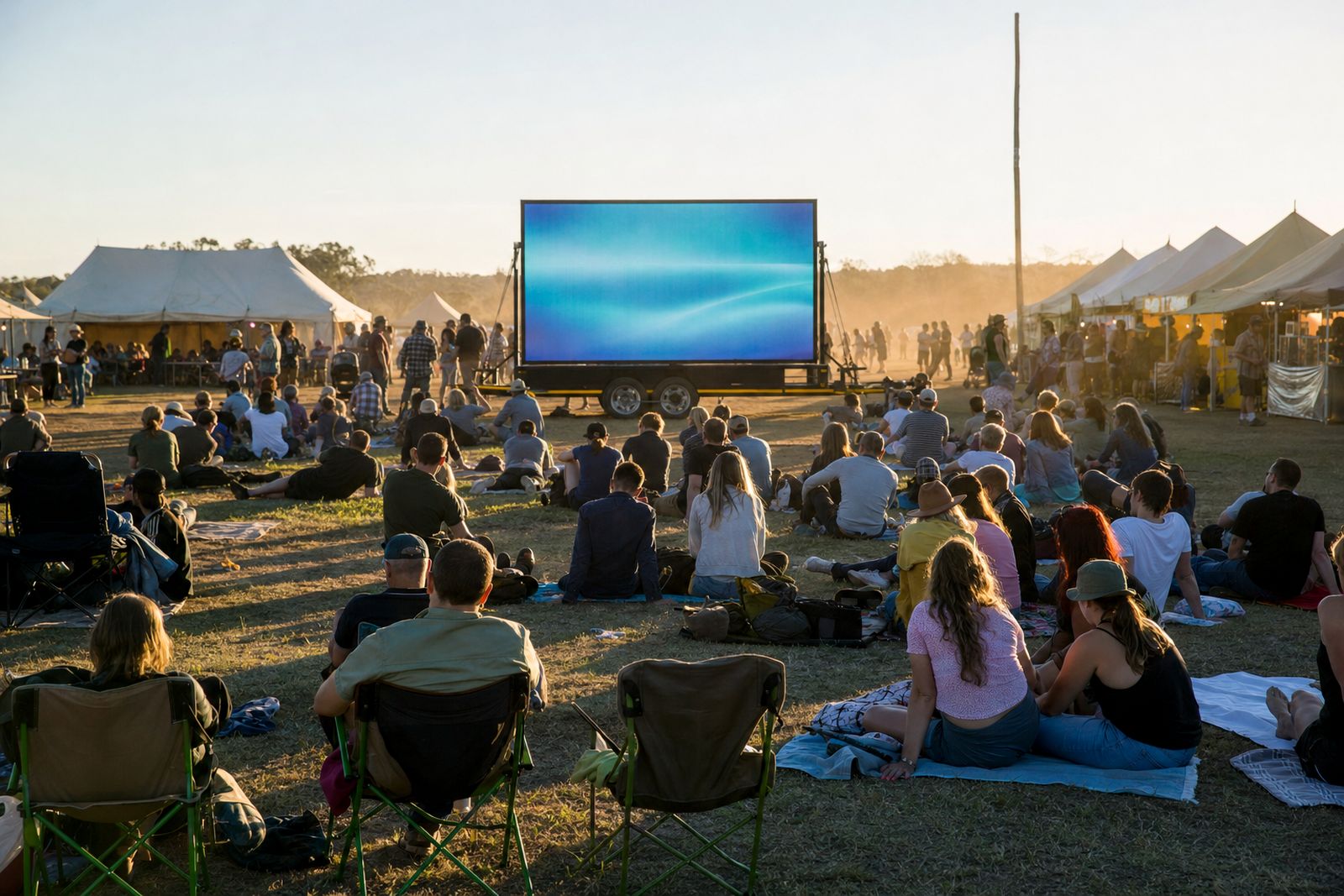
Outdoor LED screen trailers for stadium overflow are normally built around high-brightness display panels, with pixel pitch chosen to suit the viewing distance. For close overflow areas, a finer pitch gives sharper text and cleaner sponsor artwork. For larger stand-off distances, the pitch can be wider without losing legibility. Brightness has to be strong enough for daytime use, because shaded areas near venues still pick up a lot of reflected light.
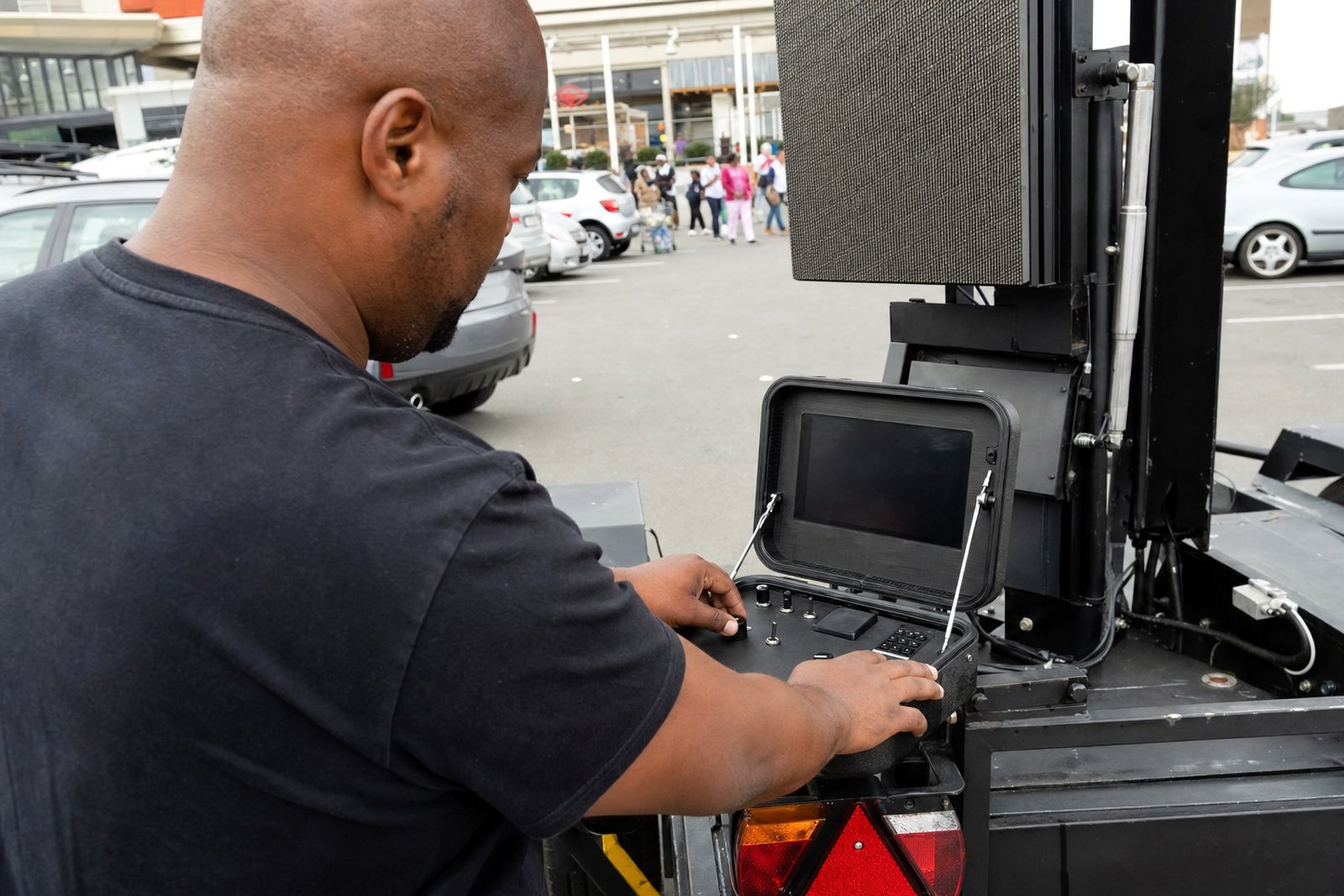
The trailer format gives the crew a stable base, a hydraulic lift for raising the screen into view, and rotation where the site layout needs a better angle. Power can be from a generator or mains connection, depending on what the venue allows and what the site can support. Content can be loaded in advance, then managed live with a playback system that handles sponsor loops, slide changes and live feed input.
On some jobs the screen trailer sits on its own. On others, LED boxes are grouped for a wider viewing wall or for separate information points around the venue perimeter. We keep the equipment set matched to the viewing distance, the available turning space and the amount of time staff have for setup and pack down.
- Fine pitch panels for closer viewing zones
- Higher brightness for daylight and open air conditions
- Hydraulic lift and screen rotation where angles matter
- Generator or mains power planning, depending on the site
- Content playback for live feed, notices and sponsor rotation
How the overflow layout is usually arranged
The first job is to keep sightlines open. A screen that sits too low gets blocked by heads, poles, barriers or food service points. One that sits too high can leave the nearest viewers looking up at a steep angle. We look at the actual standing pattern, the access lanes, and the nearest hard surfaces that can bounce glare back into the display.
Good placement also depends on what the crowd is doing around the screen. If the area is a hold point before entry, the screen may need a wider viewing face and clear notice space beside it. If it is a fan gathering point, audio and live feed matter more. Where municipal rules or venue rules apply, permits and approvals usually form part of the planning, especially where the unit sits near public walkways, roads or controlled entrances.
- Leave a clear viewing lane in front of the trailer
- Keep the screen away from sharp glare and reflective surfaces
- Plan space for barriers, cable runs and staff movement
- Set the screen angle to suit the main viewing cluster
- Check wind limits and ground conditions before the unit is raised
Weather monitoring matters on open sites. Wind can change the way a raised screen behaves, and venue staff need a plan for lowering the structure if conditions shift. That is one reason overflow work needs proper supervision rather than a screen left running without a technician nearby.
The mistakes that turn a useful screen into a blockage
The most common mistake is treating overflow viewing like a normal parked display. Stadium areas are active, noisy and often crowded. If the screen is too small for the distance, people lose interest and move elsewhere. If it is too close to a wall or tenting, the picture picks up shade in one part and washout in another. If the playback schedule is not checked properly, sponsor clips may cut off mid-screen or the live feed may not match the event pace.
Another issue is power planning. A generator needs the right load balance, safe fuel access and enough room for maintenance. Mains power sounds easier, but it still needs checking against the venue supply and the cable route. On many jobs the real pressure sits in the setup window, not during the match itself, so the delivery plan must allow for access gates, traffic flow and the space needed to level the trailer.
We also see overflow screens placed without thinking about announcements. If the venue wants safety notices, entry instructions or sponsor rotation, those elements need to be timed properly. A live feed may run most of the day, but it should not crowd out the messages people actually need to see.
Budget ranges in Rand for stadium overflow jobs
Stadium overflow pricing usually follows the size of the screen, the length of hire, how much delivery and setup work is needed, and whether the job includes live feed support or a technician staying on site. A compact setup for a local sports day or a smaller venue spill-over area can sit in the lower part of the range. A larger trailer with stronger brightness, more complex playback and longer event coverage will move higher.
As a working guide, smaller overflow hire jobs often start from about R15 000 to R30 000. Mid-sized stadium overflow setups commonly sit between R35 000 and R75 000, while larger multi-screen or multi-stop event runs can go well beyond that depending on distance, power, content handling and site conditions. If permits, extra cable runs, overnight guarding or special access timing are needed, those items may add to the total.
The useful way to compare budget is not just screen size. It is the full job around the screen: transport, raising the unit, playback management, weather watch, pack down and the technician who keeps the display operating while the crowd is moving around it.
On-site control when the venue is under pressure
A stadium overflow screen has to stay practical even when the rest of the event is busy. That is where the on-site technician matters. The technician handles content loading, live feed support, picture checks, power coordination and the pack down sequence when the event closes. For multi-stop planning, the same team can manage movement between locations without losing track of content files or setup notes.
LEDBox works from Germiston, Ekurhuleni and supports venues and event teams in Johannesburg, Pretoria, Durban, Bloemfontein and Polokwane. Venue managers usually call on us a few weeks before a big fixture, once they know the overflow area and how many people it must hold.