
When a festival site needs a screen that can be seen from the back line
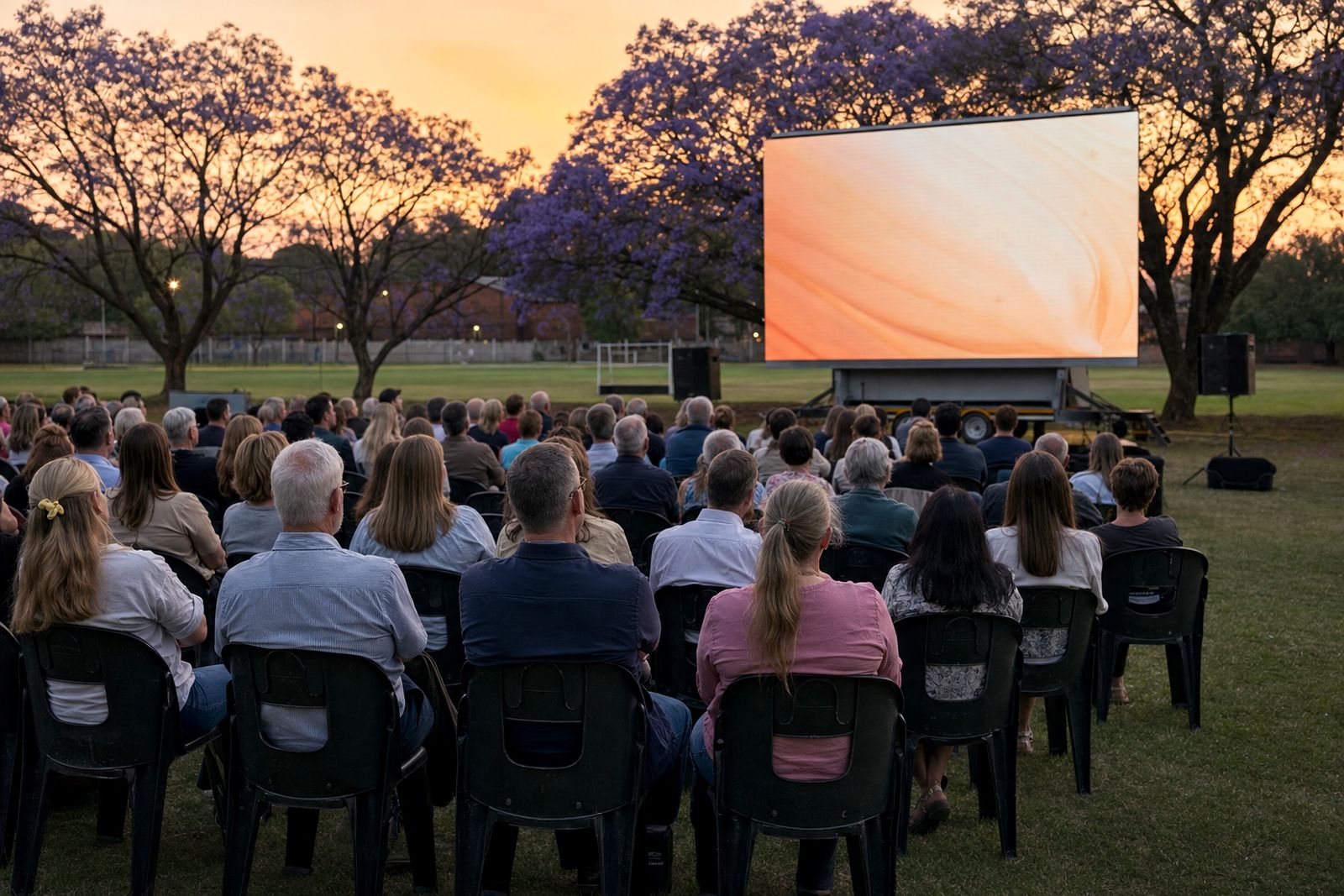
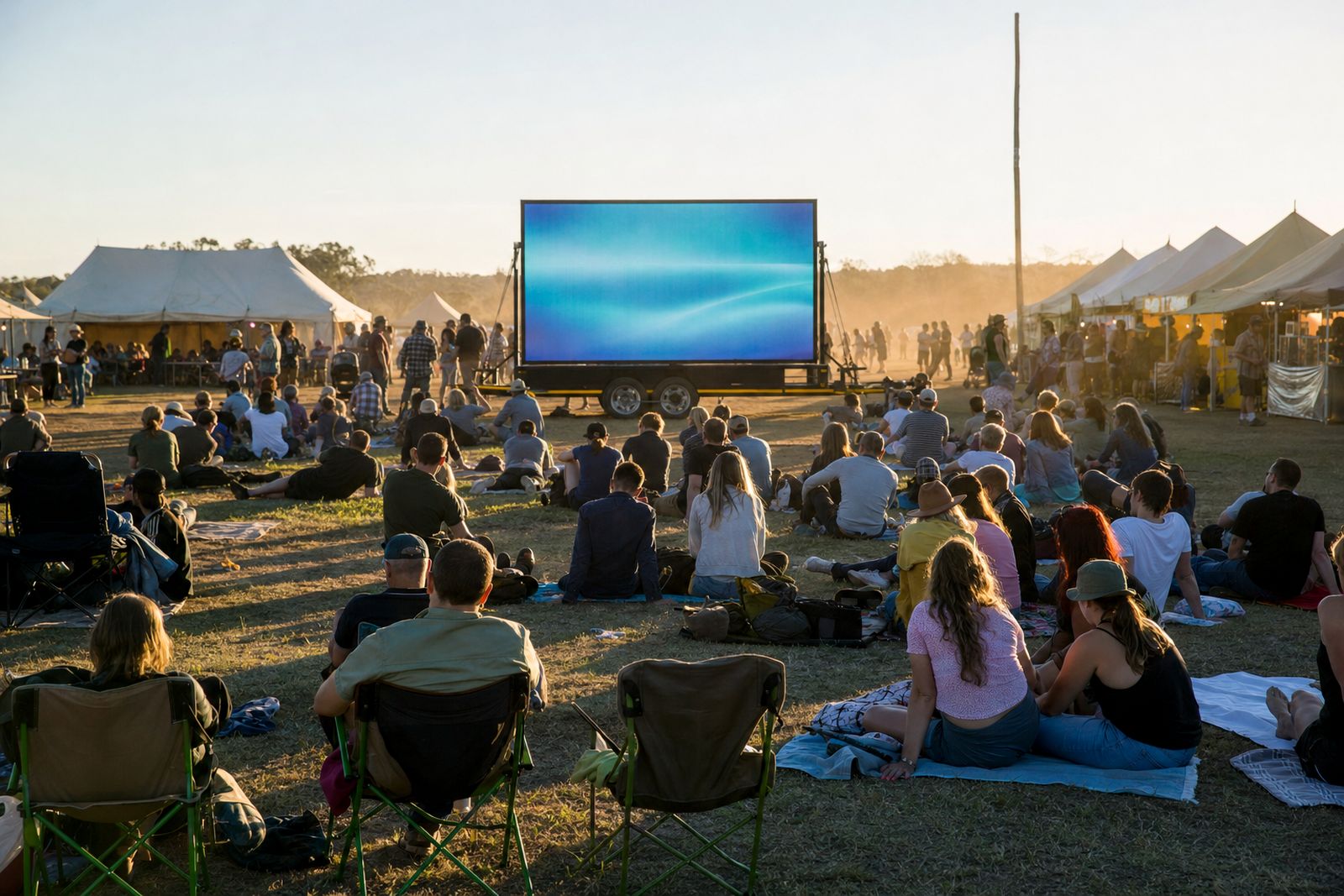
Open festival grounds ask a lot from a screen. Sunlight changes through the day, crowd lines shift, and people move between gates, food courts, stages and activation zones. A trailer-mounted outdoor LED screen gives organisers a high display point, a stable frame and a practical way to run programme content without building a full temporary structure.
For this use, organisers usually want a screen that carries programme schedules, sponsor reels, stage changeovers, safety notices and directional prompts. Where the site is spread out, an LED box set on a raised structure can help cover a secondary route or a sponsor area. The right choice depends on viewing distance, ground access, generator space and where crowds are allowed to stand.
Screen specs that matter in daylight and open wind
Festival work usually calls for outdoor LED panels with a pixel pitch suited to the viewing distance. Smaller pitches give a tighter image for closer viewing, while wider pitches work well when people are watching from further away. Brightness matters too, because daylight can flatten content fast if the screen is underpowered.
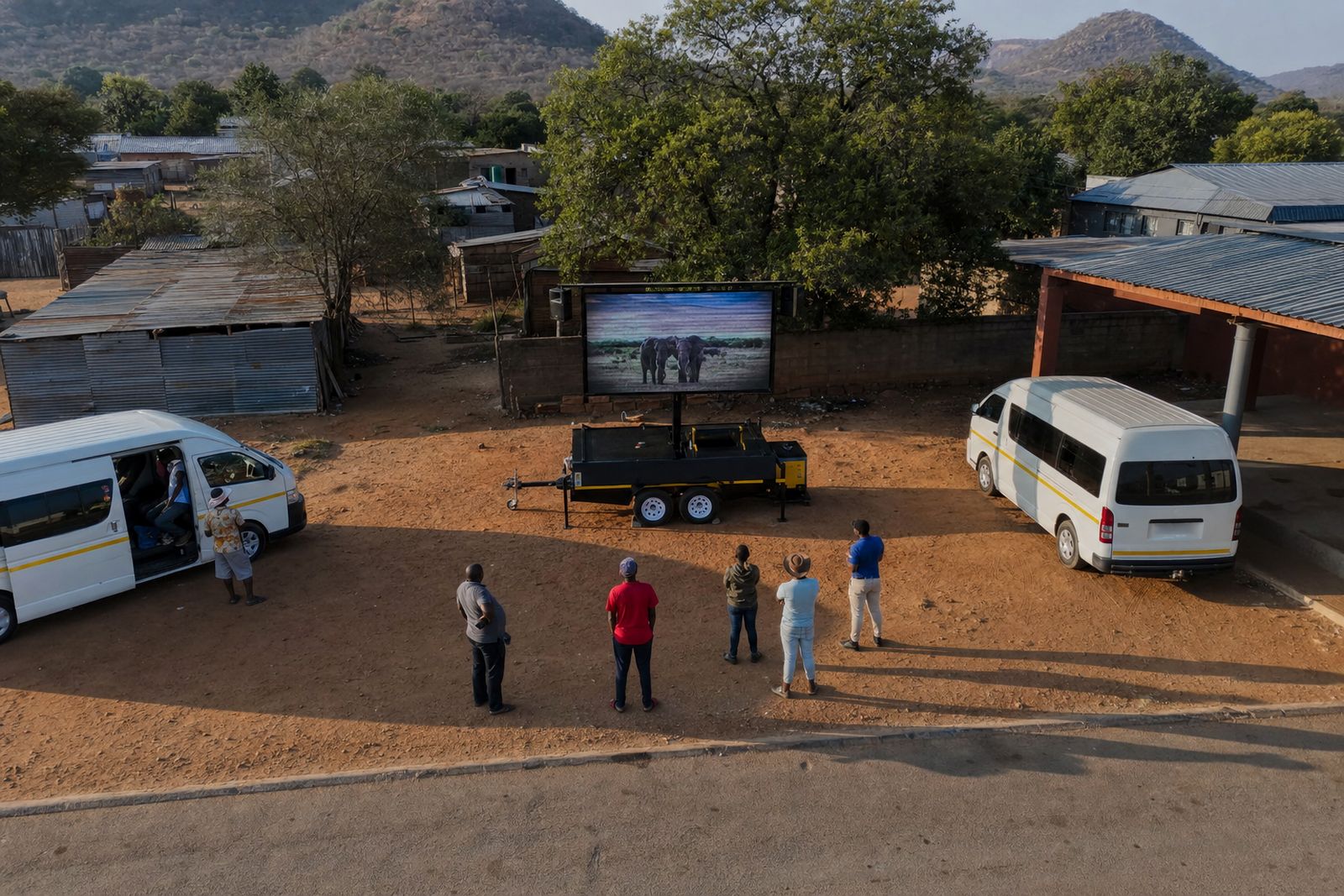
Trailer systems often include a hydraulic lift, with the screen raised to a better viewing height once parked. Some units also rotate so the face can be angled toward the main audience flow or the stage. Power can be taken from a generator or a suitable mains supply, depending on the site plan and what the venue allows.
- Pixel pitch matched to the audience distance
- High brightness for full sun conditions
- Hydraulic lift for fast deployment
- Rotation for better crowd alignment
- Playback from a media player, laptop or live feed source
- Wind limits checked before the screen is raised fully
Layout choices that keep movement clear on the ground
A festival screen should support the movement of people, vehicles and staff, not block it. The screen face needs a clean line of sight and a safe buffer around the trailer, especially where crowds gather near food stalls or entrance lanes. On larger grounds, more than one screen may be used so the site team can place messaging where it matters rather than forcing everyone toward one point.
Planning also needs to account for where the sun rises and sets, where vehicles turn, and how weather can change through the day. In coastal or high-wind conditions, the structure may need a lower operating position or a more sheltered spot. If the ground is uneven or soft, that affects parking, levelling and the amount of space needed for safe access around the unit.
- Keep the trailer clear of pedestrian bottlenecks
- Allow space for lift, rotation and technician access
- Place the screen where the audience naturally gathers
- Check surface firmness before parking
- Use a layout that keeps sponsor content visible without crowding exits
Content that works at a festival, not just in an office
Festival content needs to move quickly and read cleanly. Long sentences, tight graphics and small text disappear once people are standing at a distance or walking past. Simple programme slides, large headings, bold sponsor marks and short safety messages tend to work better than busy artwork. Where live feeds are part of the plan, the playback chain must be tested before gates open so the system is ready for line-up changes, MC cues and stage updates.
Our team handles content loading, playback management and live feed support on site. That matters when a festival needs a running order, sponsor loops and short notices for parking, access or route changes. For organisers, it is better to have one content structure for the day than to keep improvising new files under pressure.
Permit and weather details that often get missed
Open-air festival work often needs permit guidance, especially where the screen sits near public access routes, municipal land or road-facing areas. Different venues and local authorities may have their own requirements for placement, access, safety buffers and event sign-off. It helps to plan early so the screen position, power source and trailer access match the paperwork.
Weather monitoring is just as important. Wind can force changes to the screen position or pause a lift, and rain can affect content handling, cable routing and ground conditions. On the day, the on-site technician watches the screen, checks playback, and keeps an eye on the practical details that organisers do not want to manage while the crowd is moving.
Budget ranges in Rand for festival grounds
Festival screen budgets vary with screen size, number of days, travel distance, power arrangements and how much technical support is needed on site. A short hire for a single screen at a local ground will sit very differently from a multi-stop roadshow or a large weekend programme with live feed support. Transport and setup also affect the total, especially when the site is outside Gauteng or needs careful access planning.
As a broad guide, smaller festival screen hires can start in the range of R18 000 to R45 000 for a compact job, while larger trailer screens with setup, playback support and technician cover may run from about R45 000 to R120 000 or more, depending on the brief. Multi-day or multi-site work is priced around the movement, screen size and support hours rather than a single fixed figure.
The festival mistakes that cost time on the ground
Most problems start with site choice, content format or access. A screen parked too far from the audience loses impact. A playlist with tiny text gets ignored. A trailer placed without enough turning room can delay setup and pack down. Content files sent in the wrong aspect ratio also waste screen space and create black borders that reduce the message.
Another common issue is forgetting that a festival site changes through the day. Morning setup may look fine, then shade moves, wind picks up or a vehicle route is blocked by foot traffic. Good planning keeps the screen useful from gate opening to the last announcement, without making the crew fight the layout.
- Do not place the screen where traffic blocks the sightline
- Avoid text-heavy slides with small print
- Allow space for generator, cabling or mains connection
- Check the file format before loading content
- Do not leave wind and ground conditions to the last minute
For festival grounds, LEDBox works from Germiston, Ekurhuleni and serves Johannesburg, Pretoria, Durban, Bloemfontein and Polokwane. Our contact form is used for bookings, site checks, delivery planning, content loading and permit guidance.