
When the crowd is wide and the stage is not close
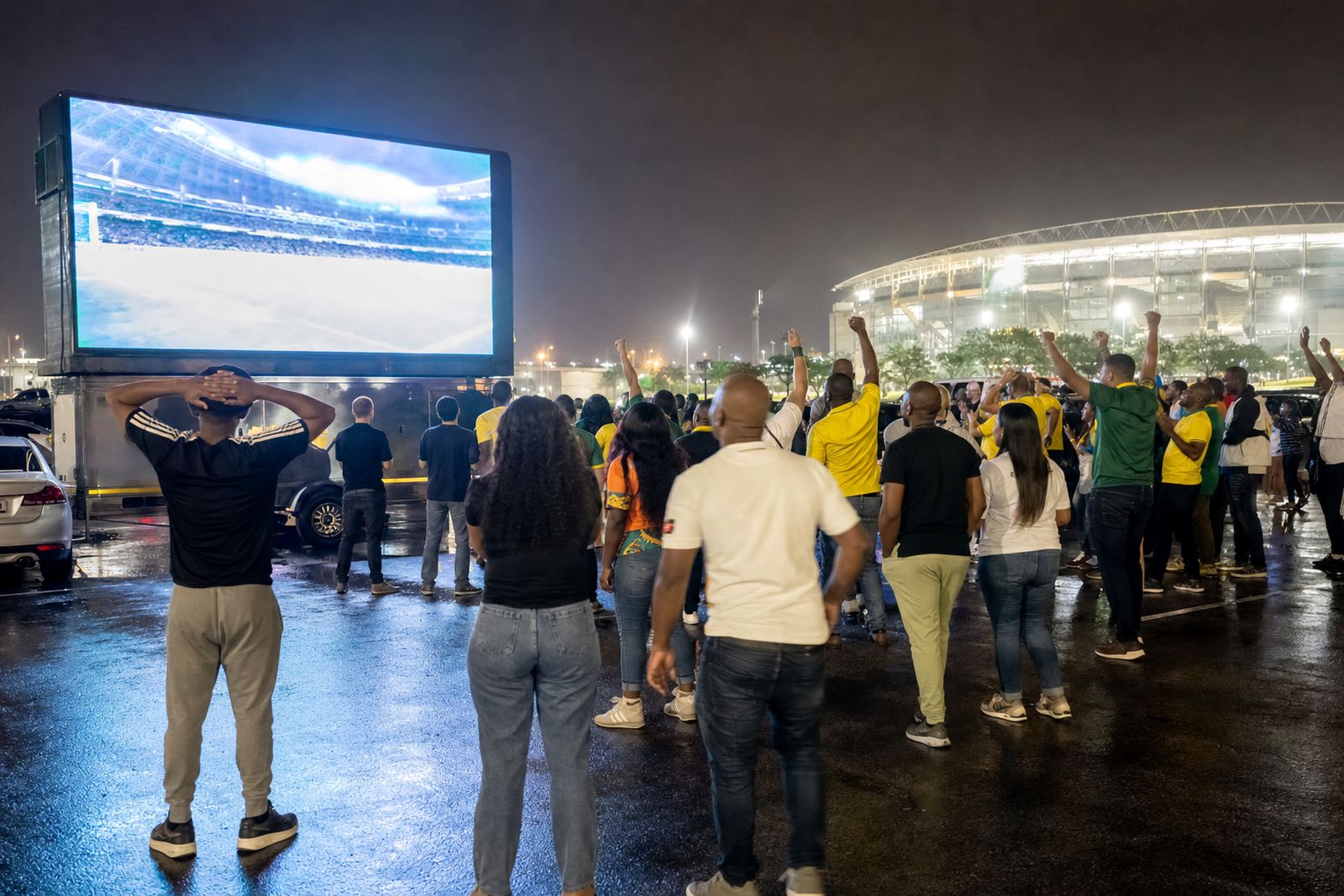
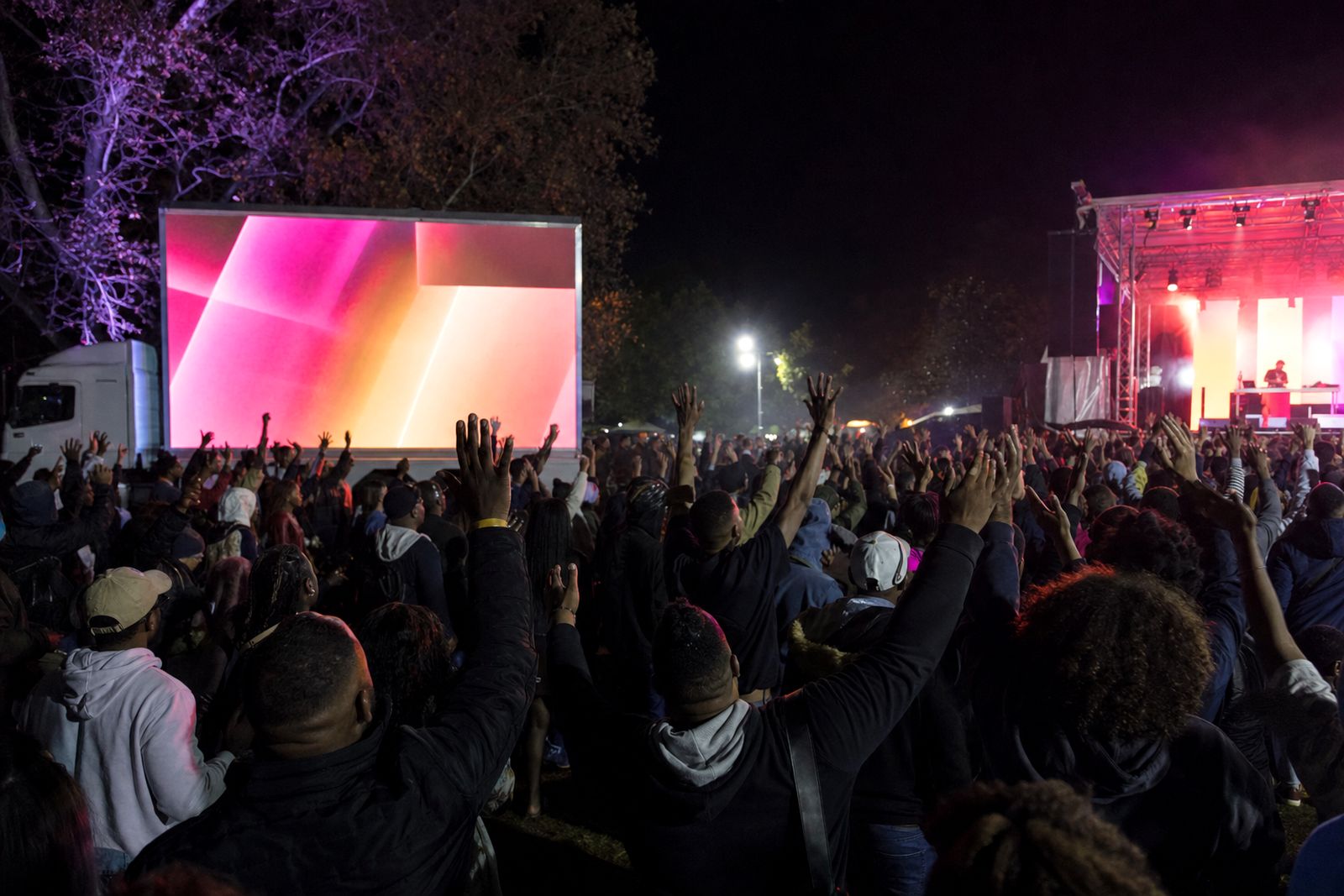
Outdoor concert screens do more than repeat the stage image. They carry the close-up shots, title slates, sponsor loops and safety notices that keep a big crowd informed while the show is running. On open grounds in Johannesburg, Pretoria, Durban, Bloemfontein and Polokwane, a trailer mounted screen often makes the difference between a distant performance and one that feels immediate.
For concerts, the first question is usually sightlines. The screen has to sit high enough to clear heads, lighting truss and front-of-house structures, yet still stay secure in wind. A trailer based unit can be raised hydraulically and rotated to face the audience, which helps when the stage layout or viewing angle changes on site. Pixel pitch depends on viewing distance, while brightness must be strong enough for daylight use without washing out the picture.
- Open-air concerts usually need a daylight-rated display.
- Rear audience areas often benefit from a taller screen position.
- Rotation matters when the crowd is off-centre or split across zones.
The equipment set that suits a live show
A concert screen hire normally includes the LED display panels, trailer frame, lifting mechanism, playback hardware, signal cabling and on-site supervision. For some venues the screen runs from generator power, while others provide mains power close to the setup point. Both options need planning, especially where cable runs cross walkways or where access is tight behind the stage.
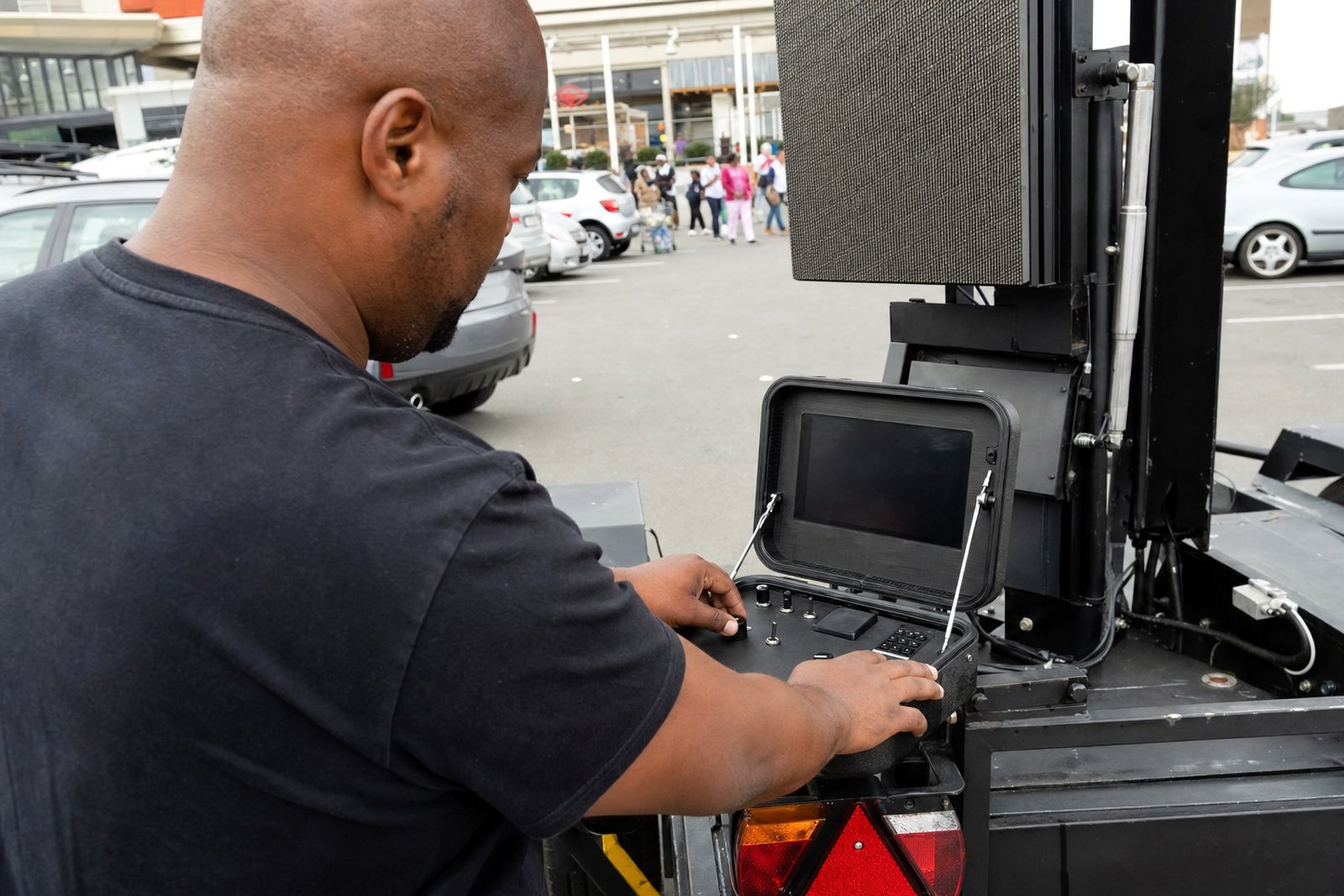
Content playback should be checked well before doors open. That includes format, aspect ratio, audio handoff if needed, and whether the show will use pre-loaded clips, live camera feed or a mix of both. A technician on site can manage cueing, content changes and screen checks through the event, which matters when the programme shifts faster than expected.
- Trailer-mounted screens allow quicker positioning on hardstanding or compacted ground.
- Live feed support helps the back rows follow performers and stage action.
- Weather monitoring is part of the job, especially in windy or damp conditions.
- Wind limits must be respected, with lift height adjusted to suit the site.
Layout choices that save trouble on concert day
Good layout planning starts with crowd flow, stage position and vehicle access. The screen must not block emergency routes, artist access or ticket control points. In some venues the best position is off to one side of the audience bowl, with the screen angled inward. In others, a central rear position gives cleaner visibility for long viewing distances.
Permit guidance is also part of the planning conversation. Municipal rules can differ from place to place, and larger public events may need notices or approvals around temporary structures, road use, noise and public space occupation. A practical site check helps identify where the trailer can stand, where power can reach, and how pack down will happen once the crowd has moved out.
- Check the surface early, because soft ground and loose gravel can limit trailer placement.
- Measure the viewing distance before choosing pixel pitch.
- Keep the screen clear of trees, poles and stage wash that can interfere with visibility.
Where concert screens get set up to struggle
Concert bookings often come in a size too small for the people who actually turn up. A screen that looks fine on paper can disappear once the audience is spread out and the sun is still up. Another issue is content prepared in the wrong shape or with tiny text that no one can read from the back. Concert graphics need bold framing, clean motion and enough contrast to stand up outdoors.
Power is another place where jobs go sideways. If generator supply is undersized, or mains power is shared with other event gear without proper planning, the screen can be affected at the worst moment. Cable routes also need care because trip hazards around stage fronts and public walkways are not worth the risk. Then there is wind. Trailer screens are built for outdoor use, but they still have operating limits and should not be treated like fixed signage.
- Avoid text-heavy slides that force people to squint.
- Do not leave power planning for the last sweep of setup.
- Do not place the screen where crew and crowd routes collide.
- Do not ignore the forecast when wind picks up later in the day.
Budget ranges for concert screen hire in Rand
Concert budgets vary with screen size, rental duration, transport distance, power setup and whether live feed support is needed. Smaller outdoor trailer screens for tighter audience zones generally sit in a lower range, while larger daylight units with full technical support move higher. Multi-stop roadshows and complex layouts also add to the total because they need more coordination, more driving and more time on site.
As a broad guide, a modest concert screen hire may start around R15 000 to R35 000 for a shorter booking, while mid-size outdoor concert setups often land between R35 000 and R85 000. Larger screens, longer hire periods, extra technicians and more involved logistics can move beyond that. These figures are only a working guide, not a fixed rate card, because each venue and content plan has its own demands.
- Transport distance affects the price when the venue sits far from Germiston.
- Live camera support needs extra signal handling and technical attention.
- Multi-day events usually need more careful power and weather planning.
What the team handles on the day and at pack down
On concert days the work is practical and very visible. The screen arrives, is positioned, levelled and lifted, then the technician checks picture quality, playback order and visibility from the crowd side. If the programme uses pre-loaded content, the file list is verified and the sequence is tested. If the event uses live feed, the signal path is checked before anyone expects the screen to carry important moments.
At the end of the event, pack down needs the same care as setup. Cabling is removed cleanly, the trailer is lowered, and the unit is prepared for travel without rushing through the safety steps. That matters on dark sites, crowded exit routes and wet ground. For concert organisers, a screen solution works best when it behaves like part of the show rather than a separate problem to manage.
- Delivery, setup and on-site technicians are part of the service.
- Content loading and playback management keep the screen aligned with the programme.
- Live feed support is useful for speeches, solos and crowd-facing moments.
- Pack down and multi-stop planning help when the same rig must move again.