
What the technician carries through on site
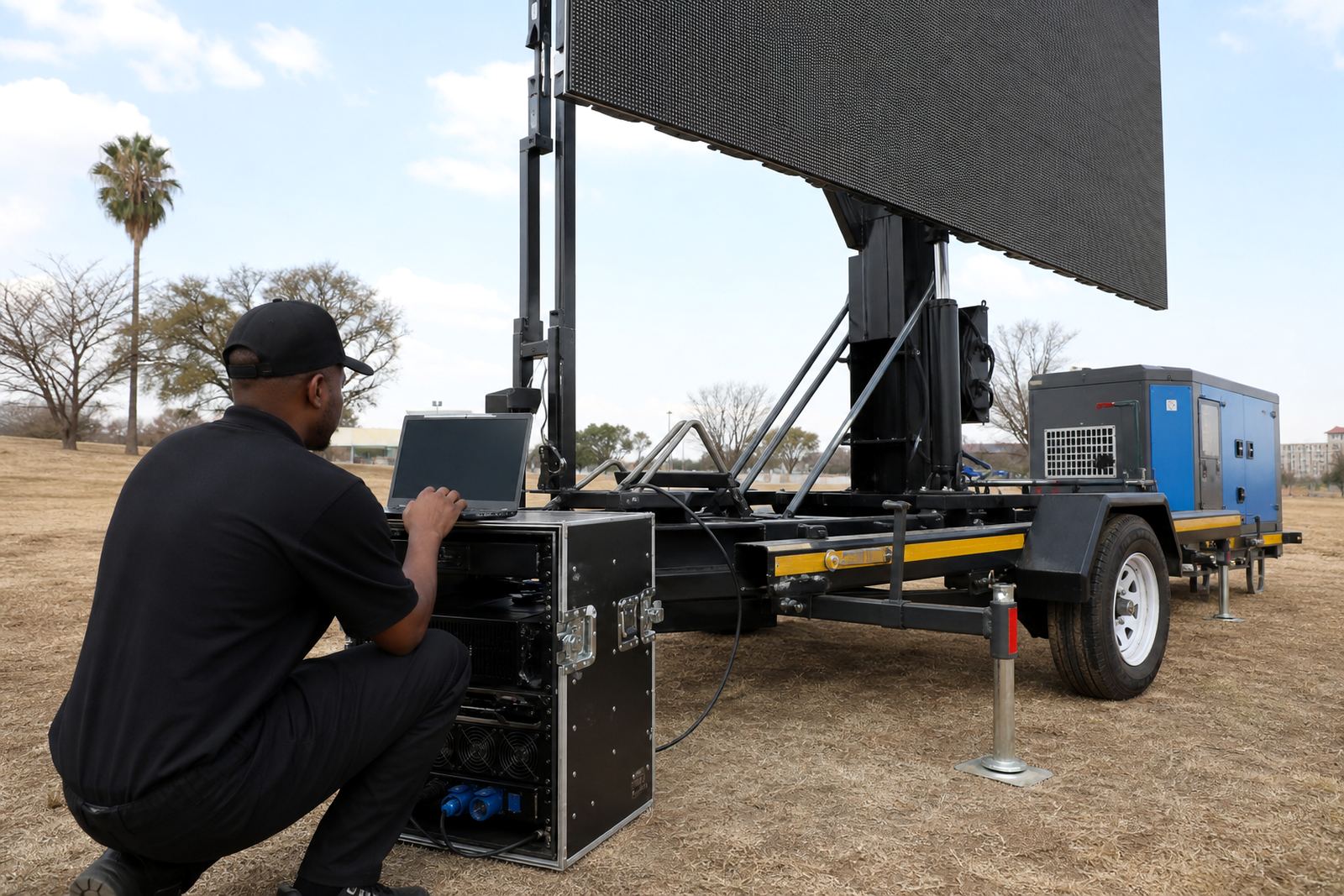
An on-site technician is more than a person standing near the screen. They manage the day-to-day run of the unit, from power checks and image confirmation to the last shut-down sequence. For outdoor campaigns this matters, because daylight, wind, dust and changing site access can affect how the screen performs. Our team works with LED screen trailers and boxed LED units used for advertising, sports days, concerts and roadshows across Germiston, Johannesburg, Pretoria, Durban, Bloemfontein, Polokwane and surrounding Ekurhuleni routes.
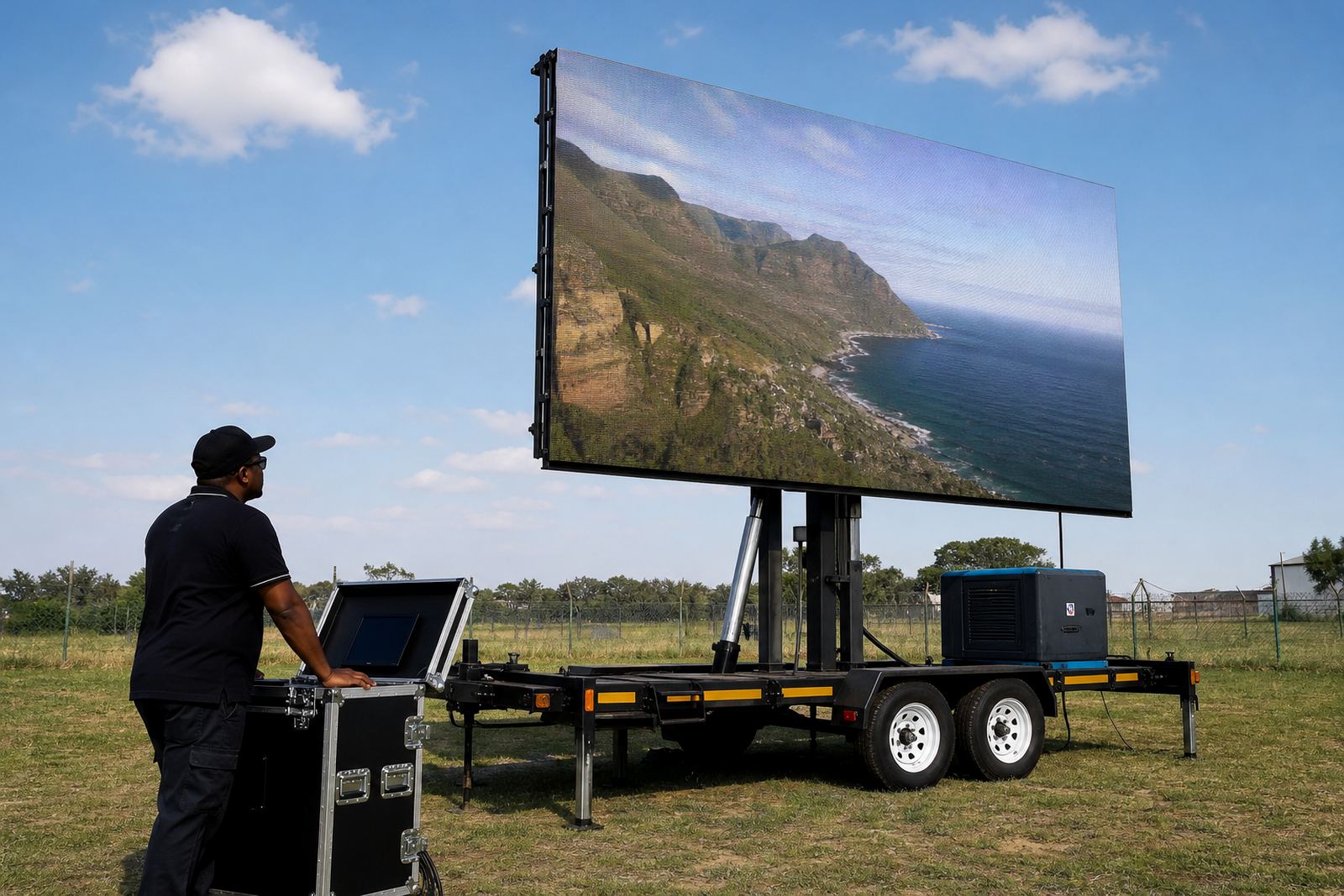
The technician oversees playback files, confirms resolution match, checks audio where needed, and watches for signal issues during live content. They also keep an eye on the hydraulic lift, rotation position and trailer stability, especially when the unit is set up on open ground or near foot traffic. If the screen is running from a generator, mains supply or a planned power source, the technician manages that handover as part of the setup.
Screen details that affect the job on the ground
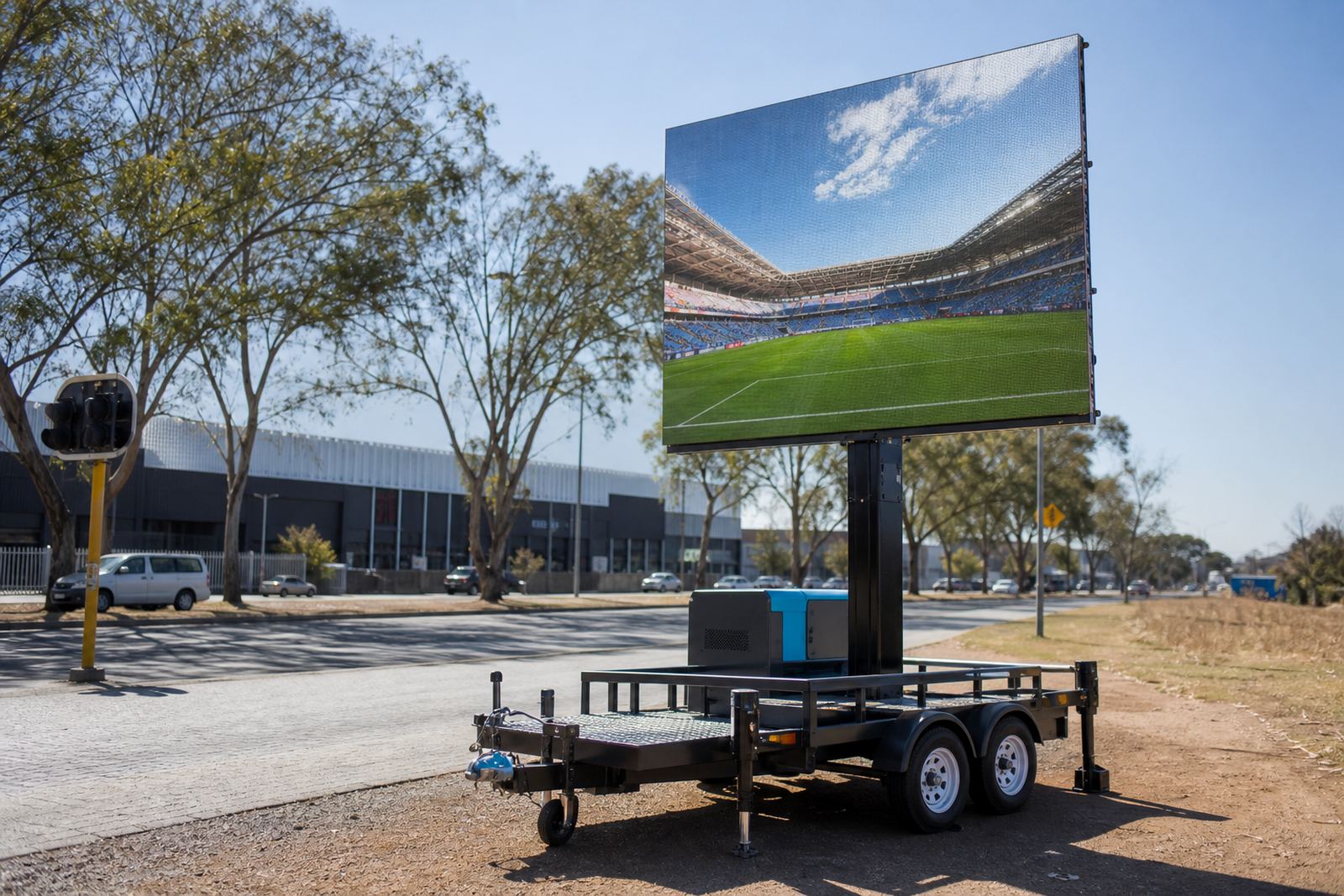
Outdoor LED trailers are built for clear visibility in bright South African daylight, with pixel pitch chosen to suit viewing distance. A tighter pitch gives finer detail for closer audiences, while a wider pitch works well when viewers are further away. Brightness levels for outdoor use are high enough for sunlit sites, and the technician balances that with content contrast so text and motion stay readable.
The unit may use hydraulic lifting to raise the screen to the working height, and some trailers allow rotation so the face can be angled toward the audience or away from glare. Wind limits matter on every outdoor setup, because the screen surface acts like a sail and the trailer must sit within safe conditions. For public spaces, permit guidance is part of the planning. Municipal rules can differ by location, so the site, viewing line and access route all need to be checked before the screen goes live.
How the on-site run is handled
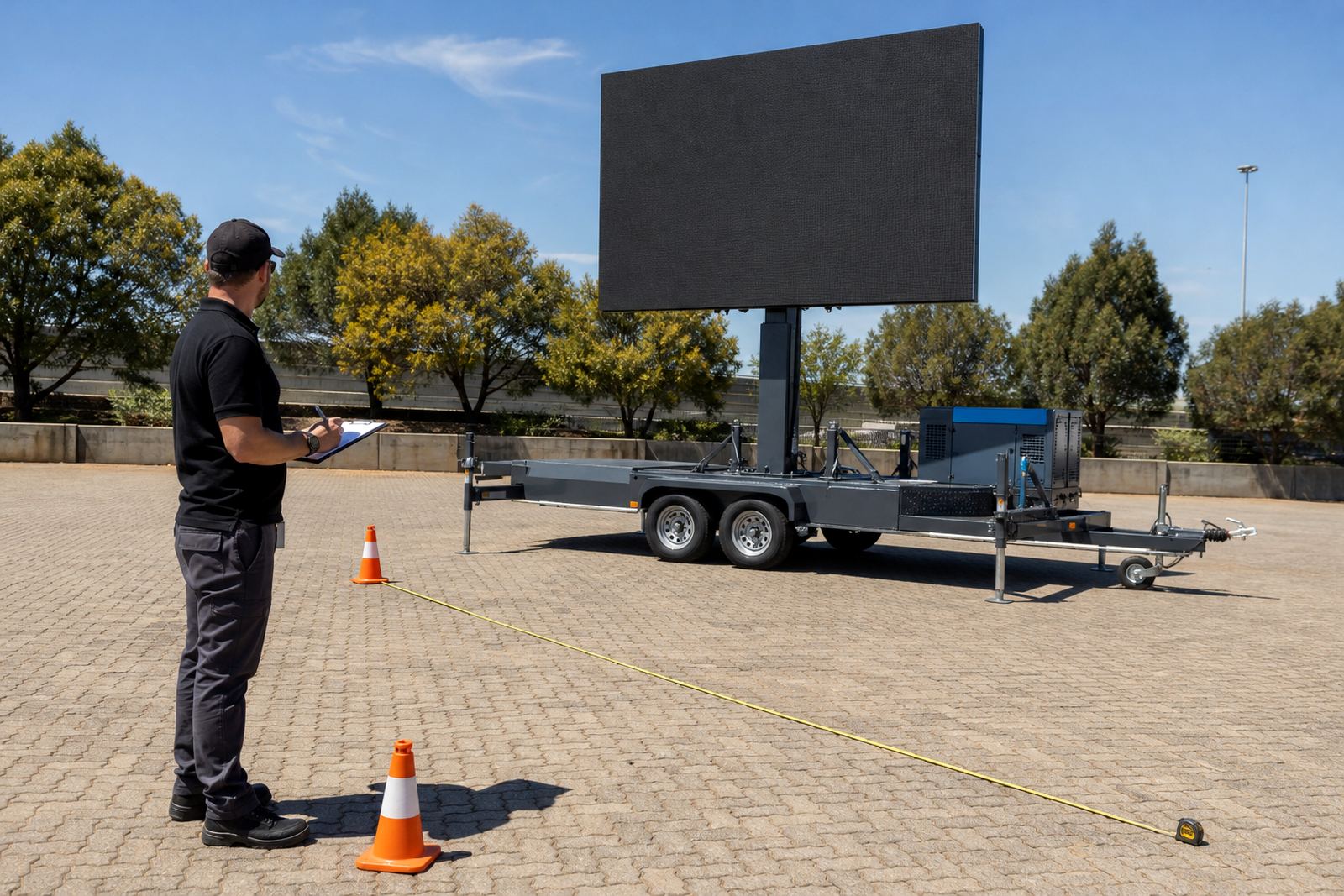
We keep the process practical. The team starts with the location, the audience size and the content format, then matches the screen specification to the route and the venue. On arrival the technician checks the ground, sets the unit, tests the power source, loads content and confirms that playback is clean. If a live feed is part of the brief, the signal path is checked before the screen is handed over for use.
- Site check and position planning
- Delivery and safe placement of the trailer or boxed screen
- Hydraulic lift, rotation and structural checks
- Content loading and playback setup
- Live feed support where required
- Weather watch, shutdown and pack down
For roadshows or multi-stop campaigns, the same technician approach keeps the unit familiar from one stop to the next. That helps with timing, parking angles and the order of each move, especially when the next site has different access or viewing direction.
Pricing is tied to the run, not just the screen
Pricing for on-site technicians is usually built around the screen size, the number of days on site, travel distance, setup complexity and whether the job needs live content support or multi-stop movement. A simple roadside promotion with one trailer is priced differently from a longer roadshow that includes several locations and repeated pack down. If the job needs generator coordination, extended monitoring or permit support, that is worked into the brief as well.
We quote from the real movement of the job, not from a flat label. That means the route from Germiston to a venue in Pretoria, Durban or Polokwane can be planned with the technical labour, transport and site time already accounted for. Where a campaign changes mid-way, the technician load may shift too, especially if fresh content arrives or the playback order needs adjusting.
Aftercare once the screen is off
After the event, the technician handles shutdown, safe lowering, content removal and the pack down sequence. That final stage matters because outdoor screens carry moving parts, cabling, storage media and weather exposure, and all of that needs to be closed off properly before the unit leaves site. If there were changes during the run, the playback notes are kept with the job record so the next outing starts cleanly.
Aftercare also covers practical handover points such as what content worked best on the display size, whether the day called for stronger contrast, and if the route or parking position should be adjusted next time. For hired units, this makes the next setup smoother, because the same crew already knows the screen behaviour, the site limits and the power arrangement that worked on the last visit.
The people who handle the unit
The on-site work is backed by a Germiston team that knows the route and the equipment mix. Sibusiso Shezi oversees the business side, while Anika Chetty coordinates operations, Thabo Bhengu leads screen technician work, Noluthando Maluleke handles logistics, Ruan Mabena supervises fabrication and Karabo Abrahams manages playback support. That mix keeps the technical side close to the delivery side, which matters when a screen must be placed, tested and run without unnecessary back-and-forth.
Send the venue, the date and the file format, and we will match a technician to the shift. From there the job is matched to the right screen, the right technician cover and the route that suits the site. The aim is straightforward: the unit arrives ready, the image runs properly and the shutdown is handled with care when the event is done.
- Outdoor LED screen trailers for daylight viewing
- Boxed LED screens for fixed or semi-fixed setups
- Technician presence for playback and live support
- Delivery across major South African cities
- Permit guidance and weather checks where needed
Key facts
| Pixel pitch | Chosen to suit viewing distance and screen size |
|---|---|
| Brightness | Outdoor daylight visibility with high-nit output |
| Lift system | Hydraulic raising for safe display height |
| Rotation | Trailer screen can be angled to suit the site |
| Power options | Generator or mains supply, based on venue and plan |
| Playback | Content loading, live feed support and on-site control |