
What our weather monitoring covers on site
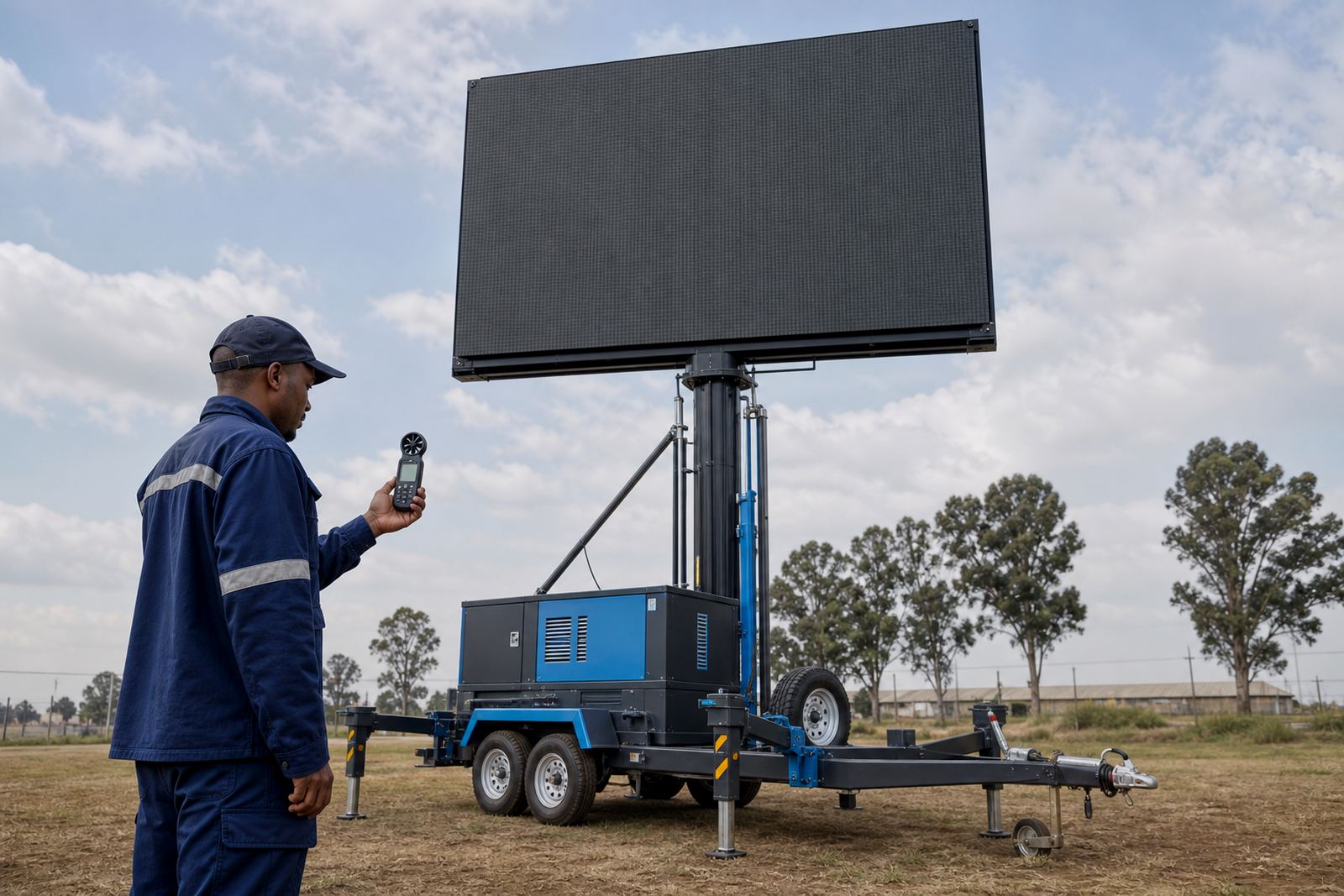
Outdoor LED screens behave differently from indoor displays. A trailer in an open car park, sports field or roadside activation can catch stronger gusts than a sheltered venue and that changes the risk profile very quickly. Our weather monitoring service looks at wind speed, visible exposure, the trailer position, ground firmness, and the space available for safe lift and rotation. We also consider whether the content is due to play in daylight, because bright afternoon conditions can make it tempting to push the screen harder than the site will comfortably allow.
The aim is practical control. We monitor the conditions around the unit, watch the structure during use and decide when the environment is moving outside the safe operating window. That includes checking whether the hydraulic lift is fully settled, whether outriggers are correctly set, and whether a rotating screen position leaves too much surface catching the wind. On some roadsides and event grounds, a small change in angle matters more than people expect.
- Wind observations around the trailer and nearby structures
- Site exposure checks for open ground, tall buildings and channelled gusts
- Lift, rotation and stabiliser position review before playback starts
- Operator notes for changes during the activation window
Screen trailer specs that affect wind decisions
The weather call is linked to the actual trailer build. LEDBox outdoor units are typically specified for daylight visibility with pixel pitches suited to viewing distances from close public areas to larger roadside reads. Brightness needs to be strong enough for midday conditions, yet the real safety question is how the full assembly behaves when the wind picks up. A larger screen face creates more sail effect, and a trailer with a raised hydraulic mast will always need more attention than a low parked unit.
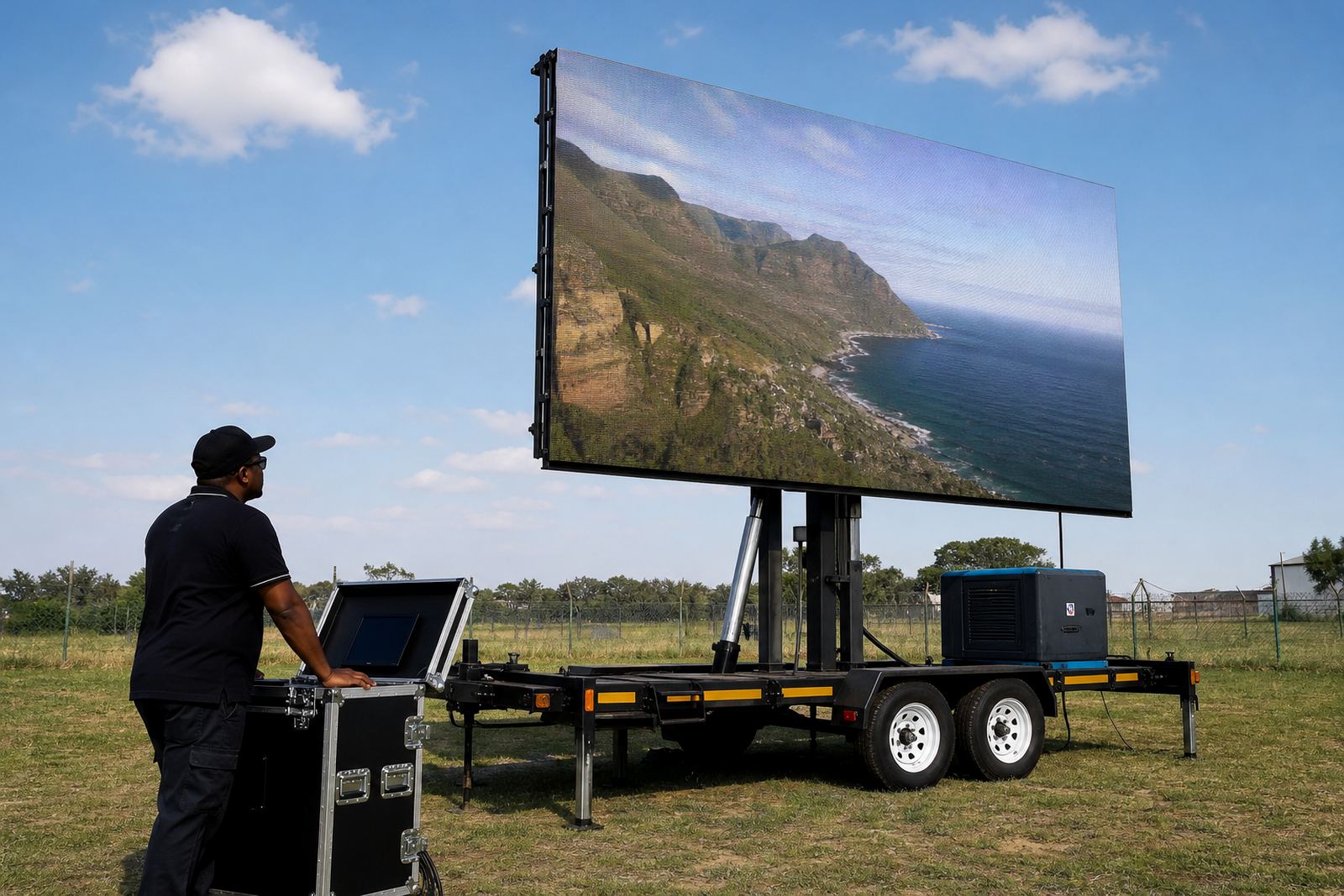
We work with practical site factors, not guesses. Some deployments run on mains power where that is available, while others use generator supply on the trailer or at the event point. Either way, the weather watch remains the same because the risk comes from the wind and exposure, not from the power source. Content playback also matters. A screen showing full motion video can hold attention even in bright conditions, but if the site becomes unsafe the playback plan has to change before the structure does.
- Outdoor pixel pitch selected for legibility at event and roadside distances
- High brightness output for daylight viewing
- Hydraulic lift and rotation used for setup and display position
- Generator or mains power planning, depending on the site
How the monitoring process runs during a booking
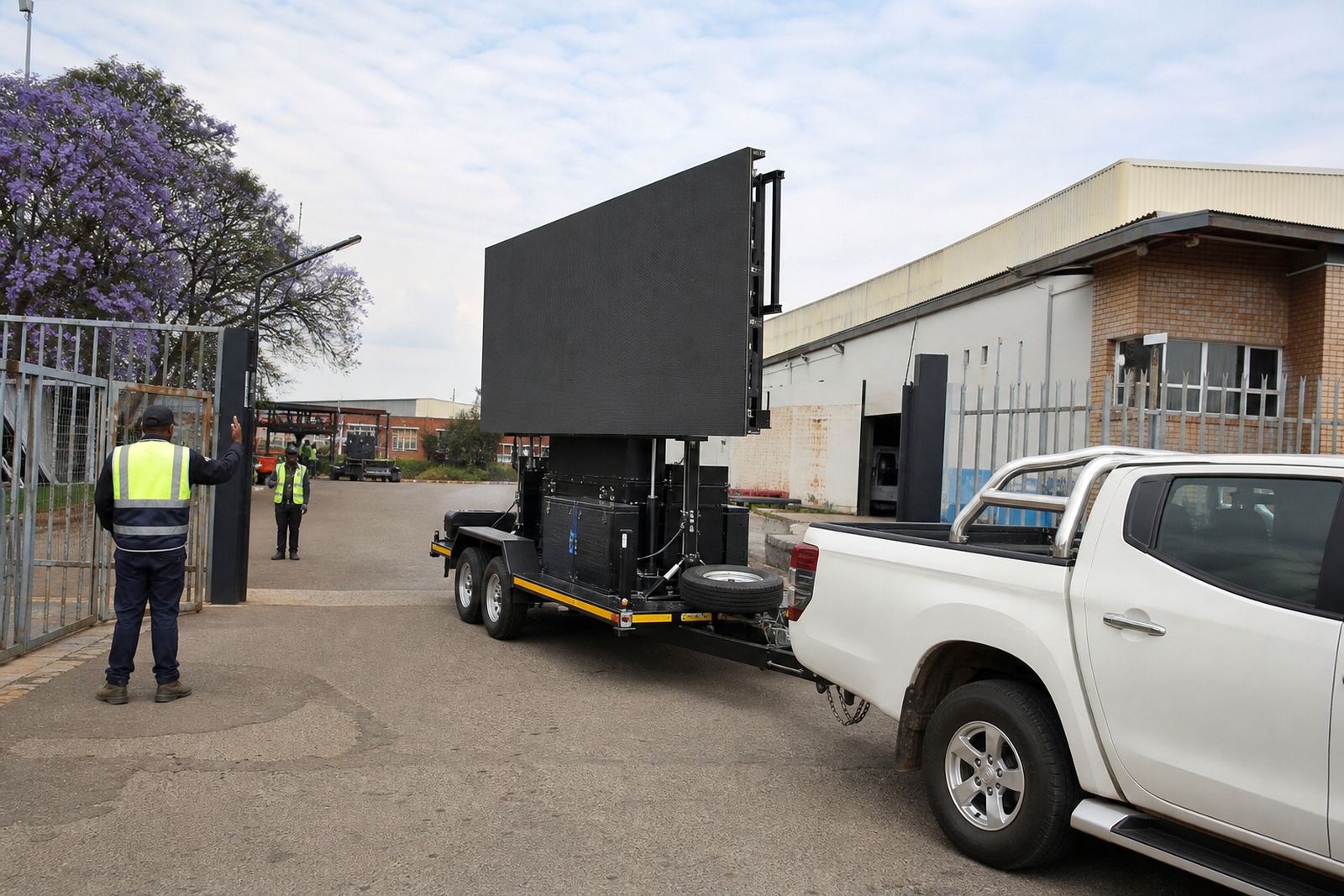
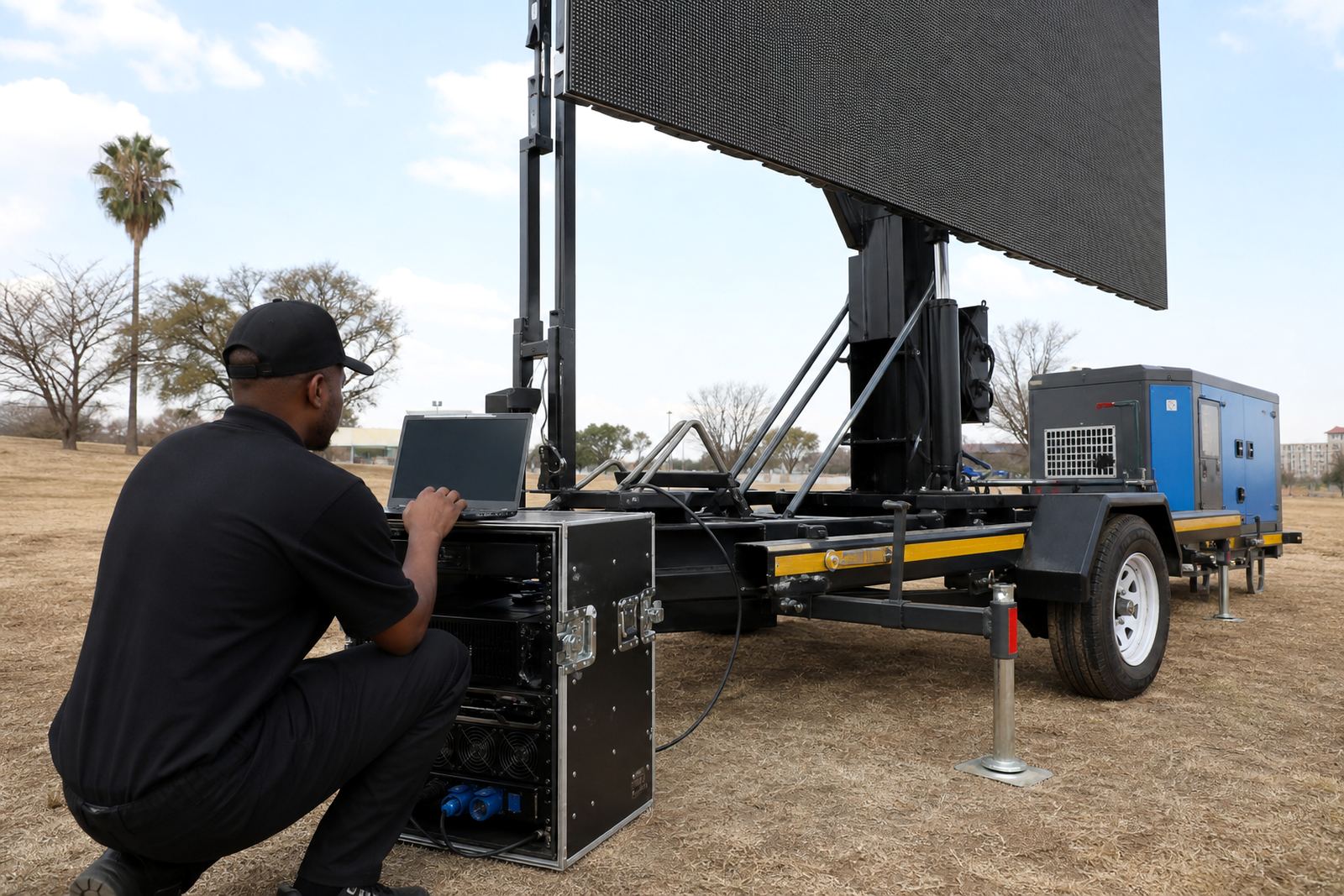
Before use, we check the venue layout, wind exposure, and any likely pinch points where air movement can become stronger. On arrival, the technician settles the trailer, sets the stabilisers, and confirms the screen face is positioned for the viewing plan. If a site is in Germiston, Kempton Park or another inland area with exposed open ground, conditions can change faster than people assume once the area heats up. Coastal humidity is a different matter in Durban, where the air can feel still but the wind can arrive in sharp bursts from one side.
During operation, the technician keeps watch on the screen and surrounding conditions. If gusts build or the site starts to flex under weather pressure, the display may be paused, lowered or re-angled. That is not over-cautious, it is how these units stay within their working envelope. We also consider local permit requirements in general terms where councils or venue managers ask for documentation tied to public deployment, traffic flow or outdoor exposure.
- Pre-use site review and access walk-through
- Positioning of the trailer for the safest viewing angle
- Weather watch throughout playback and live feed support
- Lowering or pausing the unit when conditions shift
Turnaround for weather planning and event days
Weather monitoring is not a paper exercise that sits on its own. It forms part of the lead-up to delivery, the setup on site, and the hours when the screen is actually in use. For roadshows, sports days and roadside campaigns, the planning starts with the route, the venue access, and the exposed points where wind could build. A multi-stop schedule can need different decisions at each location, because one site may be tucked in behind buildings while the next stands out in a wide open parking area.
For live event days, the technician works with the content playback specialist and operations team so the screen, power plan and weather checks line up. If the screen needs to be lowered between sessions, or rotated to reduce wind exposure, that is handled as part of the normal site rhythm. The point is not to overcomplicate the day, only to keep the equipment and audience area in a sensible operating state.
What the pricing approach takes into account
Weather monitoring is usually quoted as part of a wider outdoor screen booking rather than as a loose add-on with no context. The pricing approach depends on screen size, number of days, travel distance, the type of site, and whether the booking needs one location or a sequence of stops. A roadside activation in Johannesburg will not take the same planning load as a campus setup in Bloemfontein or a coastal event where conditions shift through the afternoon.
Where a site is particularly exposed, extra monitoring time may be included because the trailer needs more frequent checks during use. If the brief includes live feed support or content loading as well, those items are considered together so the operation stays tidy. We keep the costing practical and tied to the actual deployment, not padded with unrelated extras. That approach makes it easier to compare a short campaign against a longer touring run.
Aftercare once the screen is packed down
After the booking, the technician and logistics team handle pack down, securing the trailer, and checking for any wind-related wear before it leaves site. Screens used outdoors often collect dust, fine grit or moisture marks, and a sensible post-use check helps spot issues before the next deployment. If the unit was run through a changing weather window, we also note any limits that were reached so the next site plan can be adjusted, or the mounting position changed a little.
For repeat campaigns across Ekurhuleni, Pretoria, Durban and beyond, this follow-up keeps the handover neat between one activation and the next. It also gives the team a clearer view of which locations need more allowance for wind, where access is tight, and where the screen should be turned differently next time. Small fixes save trouble later, especially on busy roadshows.
- Pack down and securing of trailer equipment
- Visual check for moisture, dust and loose fittings
- Notes on any weather limits reached during use
- Planning input for the next site or route
Key facts
| Service area | Germiston, Ekurhuleni, Johannesburg, Pretoria, Durban, Bloemfontein and Polokwane |
|---|---|
| Screen type | Outdoor LED screen trailers and LED boxes |
| Visibility spec | Daylight brightness suited to outdoor viewing |
| Structural controls | Hydraulic lift, rotation and stabiliser checks |
| Weather focus | Wind speed, site exposure, rain movement and safe operating limits |
| Support included | On-site technician, playback oversight and pack down |