
Ground truth before the screen arrives
A site check starts with the actual space, not the drawing on paper. We look at entrance width, turning room, overhead clearance, driveway strength and the patch where the trailer or screen box will stand. A level hardstand matters, especially where the unit needs to sit safely while the hydraulic lift raises the screen into position.
We also check where vehicles, pedestrians and emergency access move through the area. If the crowd faces the wrong way or the sun lands straight on the screen at the key viewing time, the result can look flat even on a bright panel. Small changes in placement can improve the viewing line, reduce glare and keep the trailer out of the way of foot traffic.
- Access routes for towing, reversing and final positioning
- Ground condition, slope and surface strength
- Viewing direction, sun position and audience flow
- Space for generators, cables and technician access
Power, playback and outdoor operating conditions
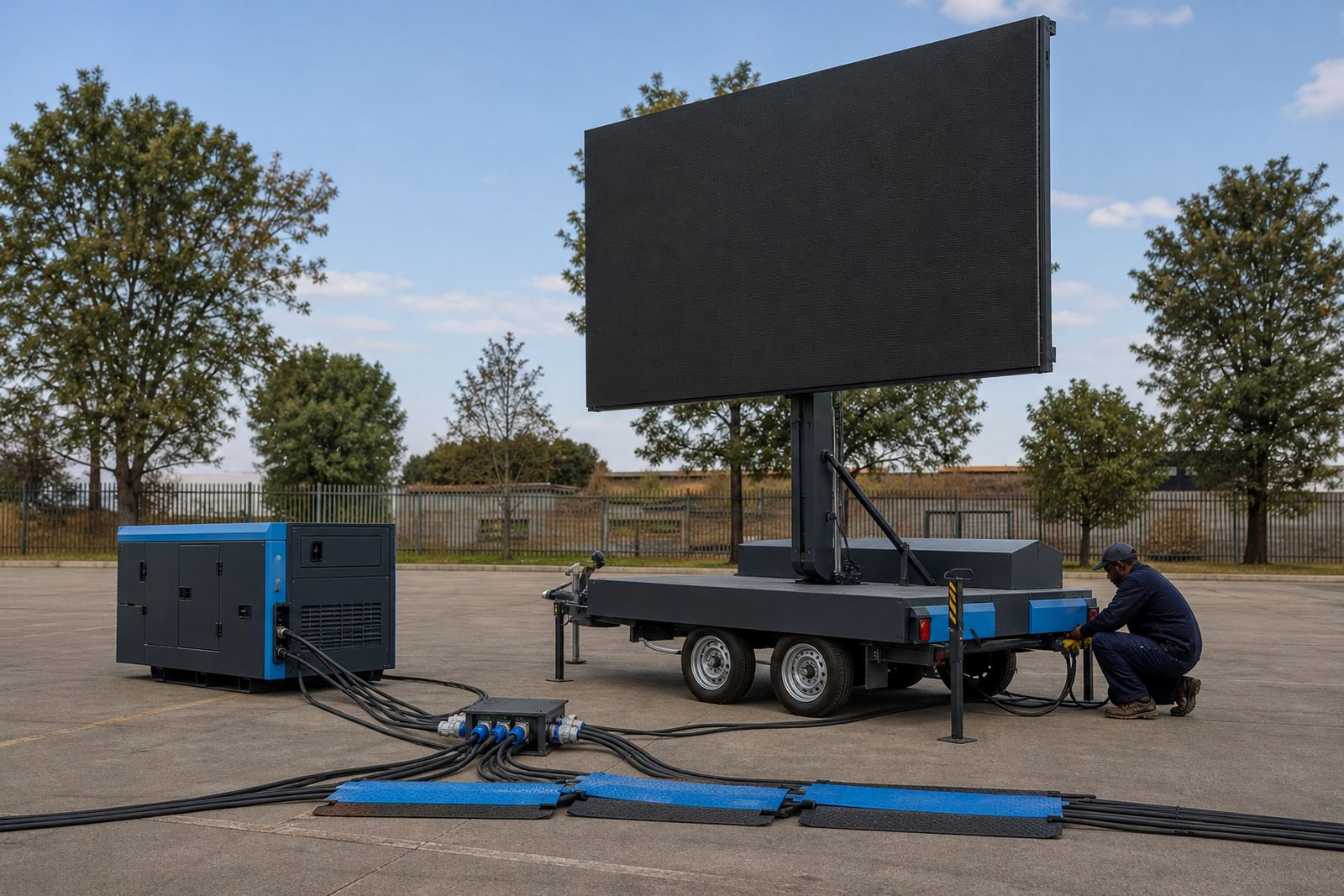
Outdoor LED screen trailers can run from generator power or a suitable mains supply, depending on the site and the load available. We assess where the cabling will run, what protection is needed at the point of supply and whether the site can support the planned screen size. The goal is to avoid a last minute scramble when the unit is already on site.
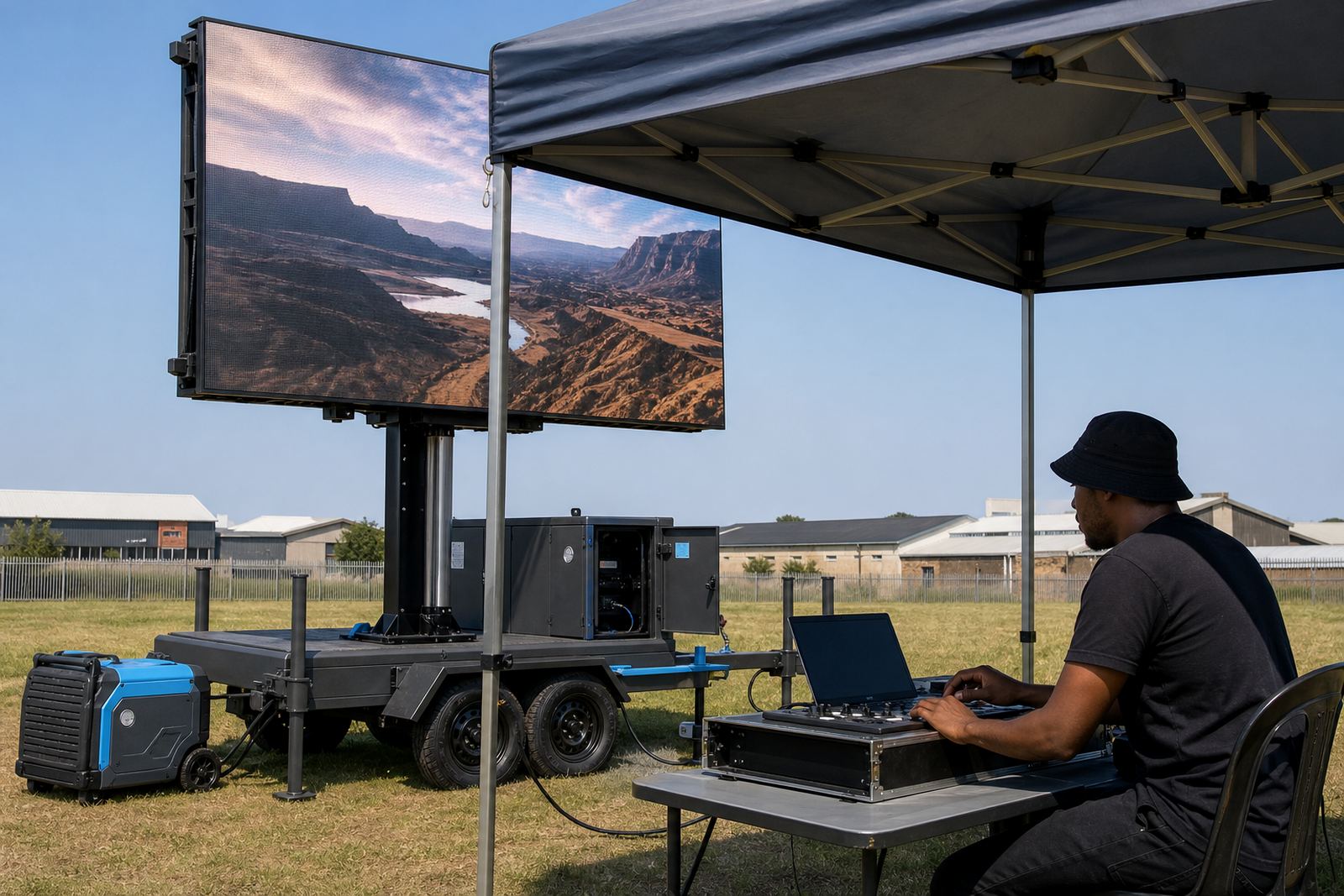
For content, the check covers playback format, screen resolution needs and live feed support where the job calls for it. High-brightness outdoor panels are commonly used for daylight viewing, often in the 5,000 to 7,500 nits range or higher depending on the build. Pixel pitch is matched to viewing distance, with tighter pitches giving finer detail for closer audiences and wider pitches suiting bigger viewing distances. We also look at whether the content will be played from local storage or fed live from another source.
- Generator or mains power planning
- Content file format and playback method
- Live feed path, where required
- Brightness and pixel pitch matched to the audience distance
Wind, weather and permit questions that matter
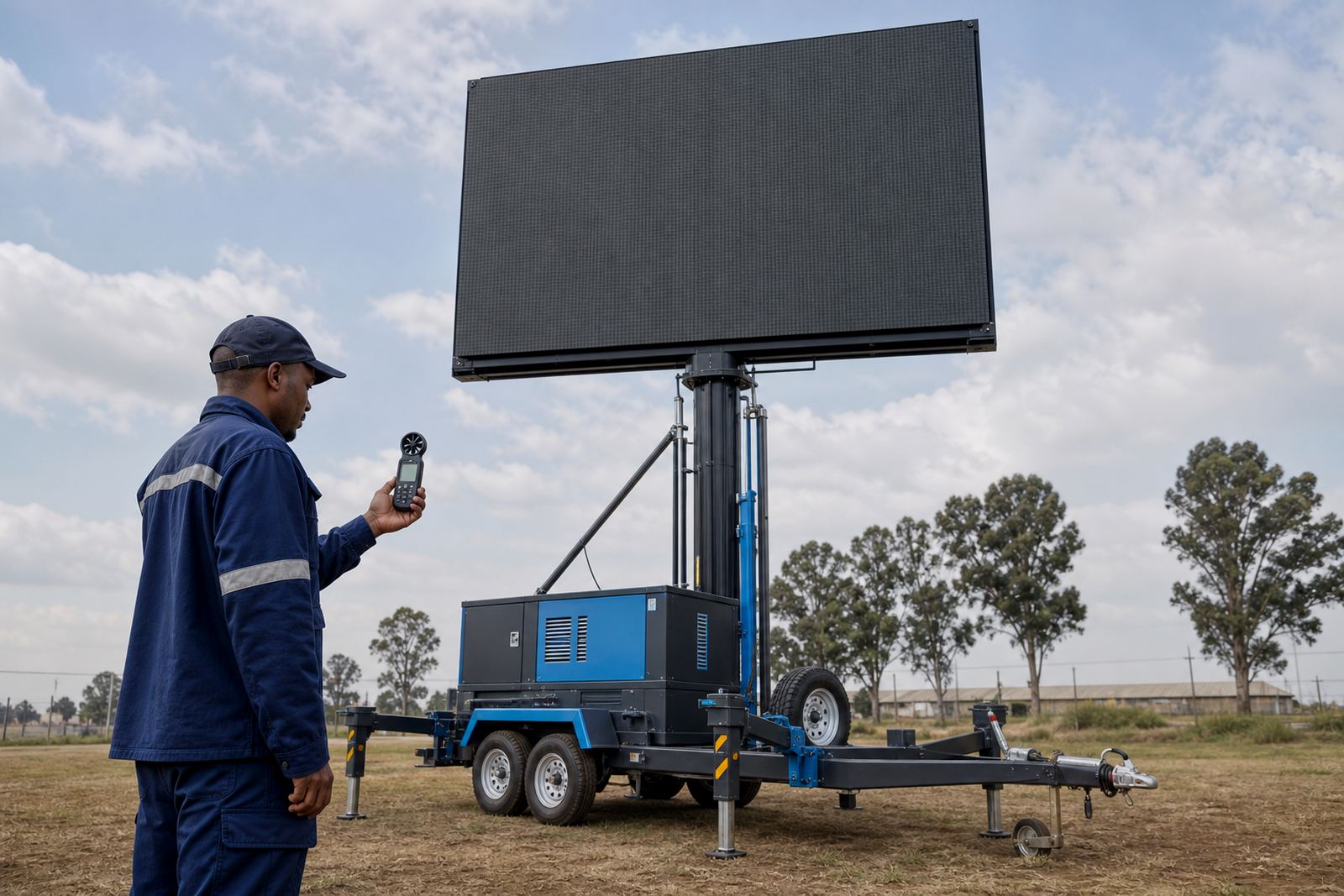
Outdoor screens need more than a flat spot and a plug point. Wind exposure changes the way a trailer or raised screen can be used, and open sites near highways, sports fields or hilltops often need closer checks. We look at the shape of the site, nearby structures and the direction of prevailing wind so the setup plan makes sense for the day.
Municipal permit requirements can vary by area and by the way the screen is used, especially where public space, road visibility or traffic control is involved. We do not make assumptions on that part. The site check records the details that usually matter for permit guidance, such as access points, viewing position, installation footprint and the likely impact on neighbouring properties. In some cases the site may also need a plan for security, cordons or marshals.
- Wind exposure and exposed edges
- General permit guidance for municipal review
- Neighbouring buildings, roads and public movement
- Security, barrier and control point notes
What the visit covers, from first walk-through to final notes
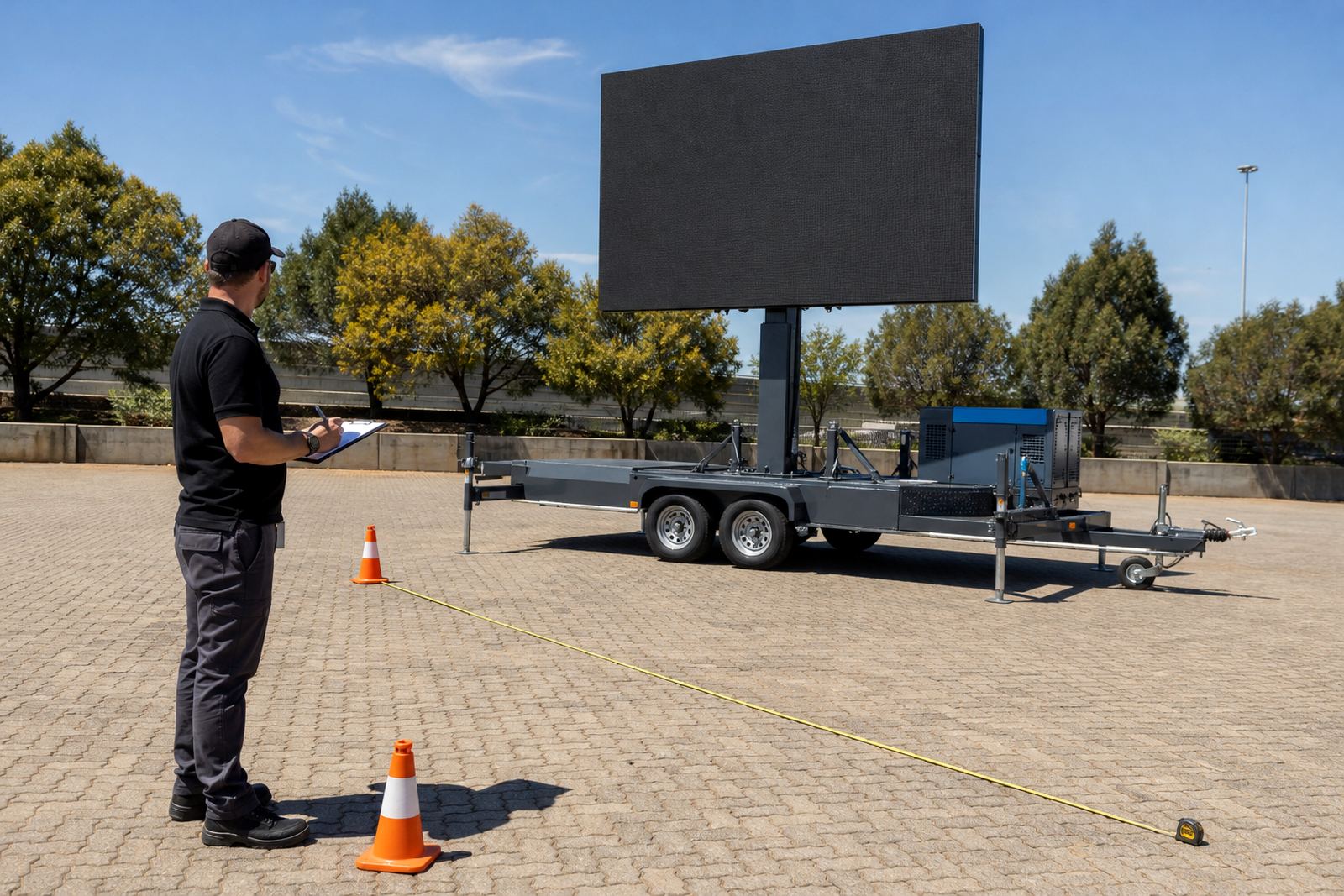
The visit is practical. We walk the site, take measurements and note the position of gates, power points, obstacles and traffic flow. If a trailer is being used, we check whether it can enter, turn and stand without blocking the route. If a fixed LED box is planned, we look at the mounting area, safe access and cable paths.
After the walk-through, the notes are used to shape the deployment plan. That can include the screen size, trailer position, content format, technician requirements and any extra gear needed for a live feed or extended operating hours. The point is to reduce guesswork. A site that looks fine from the entrance can still fail on clearance, angle or surface strength once the unit is measured properly.
- On-site measurements and photo notes
- Trailer positioning and screen angle
- Mounting area review for LED boxes
- Deployment notes for technicians and logistics
How the process normally moves
Once a request comes in through our contact form, we review the location, the type of screen and the date range. If needed, we ask for maps, access notes or a rough sketch of the area. For larger deployments, the site check may also cover more than one stop if the trailer is moving between venues, shopping centres or roadshow points.
The process usually moves from planning to visit, then to a written summary of what the site can support. That summary can include the power route, any restrictions on movement, likely wind concerns and whether the planned screen size suits the audience area. When the job includes setup, playback and live support, the site notes help the team arrive with the right equipment and the right sequence.
- Review of the brief and location details
- On-site inspection and measurements
- Deployment notes for power, access and viewing
- Planning support for roadshows and multi-stop work
What the price depends on
Site check pricing depends on the distance from Germiston, the number of locations involved and the level of detail required. A single venue in Ekurhuleni is not the same as a multi-stop route across Johannesburg, Pretoria or further afield. The amount of planning needed for a trailer, a live feed or a permit-sensitive public area will also affect the quote.
The visit is priced alongside the deployment it is checking. If the site check forms part of a larger hire, delivery or setup package, the cost is usually shaped around the whole job rather than only the inspection. For clients managing campaigns across Durban, Bloemfontein or Polokwane, travel, timing and the number of touchpoints all matter.
- Distance and travel time from Germiston
- Single site or multi-stop route
- Complexity of power and access planning
- Need for permit notes, playback checks or live feed support
Aftercare once the site has been signed off
After the site check, we keep the deployment notes clear for the crew, the technician and the logistics side. That helps with delivery, setup, content loading and pack down if the event goes ahead. If weather changes or the site layout shifts before the job, the notes can be reviewed against the new conditions rather than working from memory.
Aftercare also means helping the client understand what to keep ready on the day: access control, power availability, content file checks and the final viewing position. If the job includes on-site technicians, they use the same site notes to manage playback, live feed changes and weather monitoring during the run. That is especially useful where the audience area is busy or the screen is part of a long programme.
- Deployment notes kept with the job plan
- Support for changes in access or weather
- Content and playback notes carried into setup
- On-site technician handover for active events
Key facts
| Screen types | Outdoor LED screen trailers and LED boxes |
|---|---|
| Common pixel pitch range | Fine to medium outdoor pitches matched to viewing distance |
| Typical brightness | High-brightness daylight viewing, often 5,000 to 7,500 nits or more |
| Power options | Generator power or suitable mains supply |
| Movement features | Hydraulic lift and rotation on trailer units |
| Service areas | Germiston, Ekurhuleni, Johannesburg, Pretoria, Durban, Bloemfontein and Polokwane |