What permit guidance covers on a real deployment
Permit guidance is the paperwork side of an outdoor screen job, and it matters most where the trailer sits in a public space, near a road reserve, at a sports field, or on land where a municipality or venue manager wants formal notice. We help set out the site position, the operating hours, the access route for the trailer, and the technical notes that support the application.
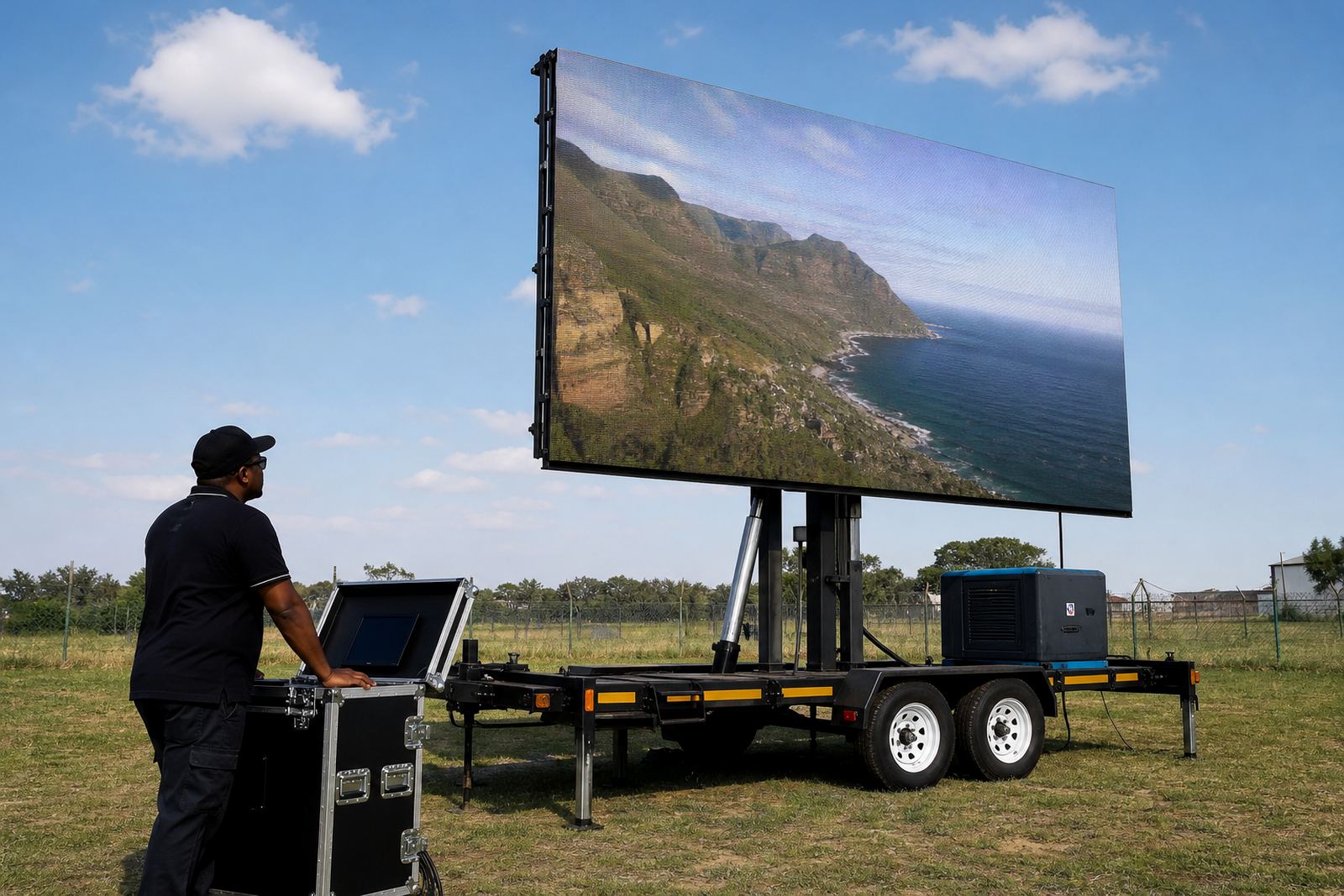
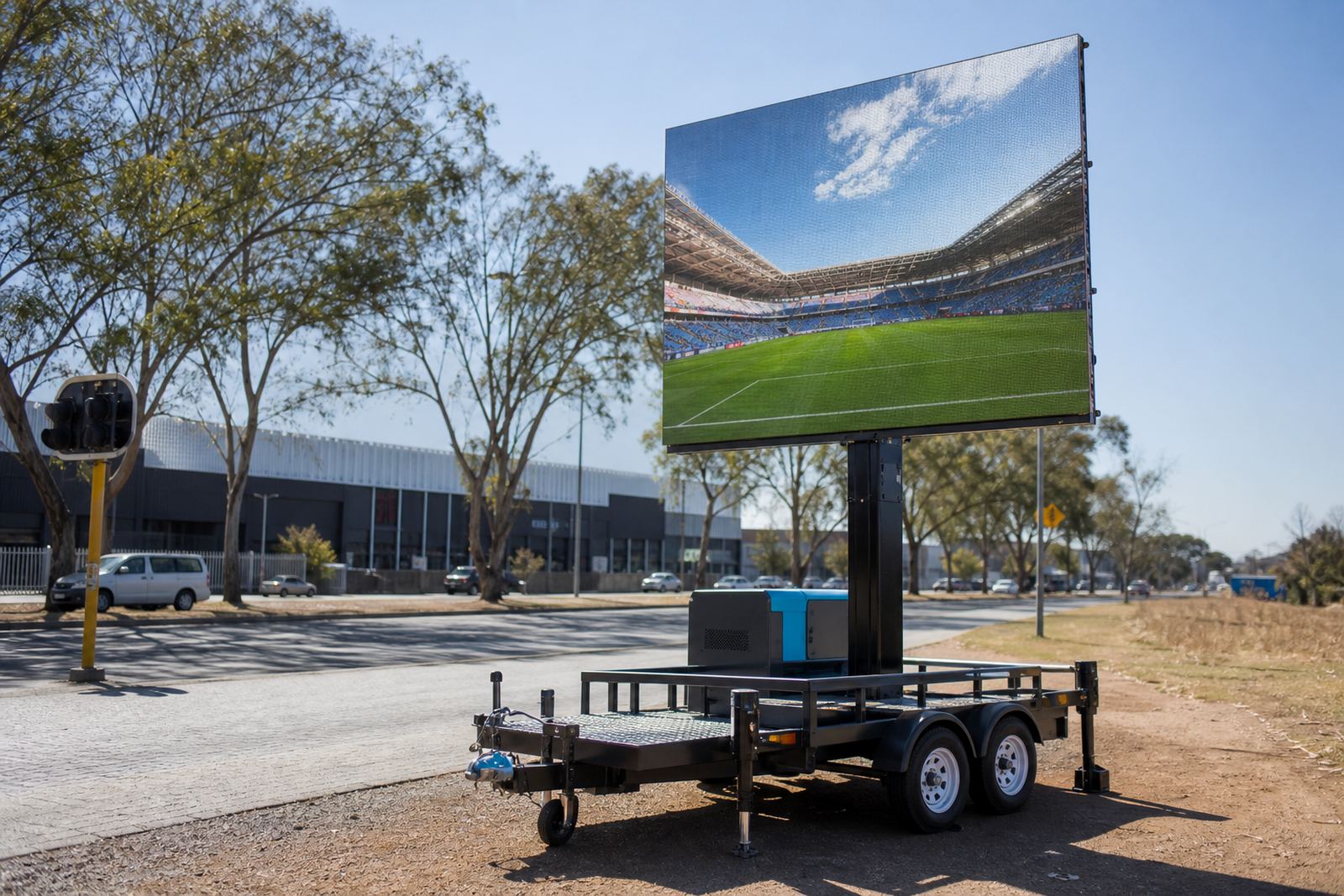
The screen itself is usually an LED box or trailer built for outdoor viewing, with pixel pitch chosen for viewing distance, daylight brightness suited to strong sun, and a cabinet layout that can handle dust and damp air. For public use, officials often want to know how the unit is stabilised, whether the hydraulic lift and rotation are being used, and what the wind limits are for safe operation.
- Site position and orientation notes
- Trailer access and set-down space
- Screen height, lift range and rotation details
- Power source, generator or mains
- Weather and wind operating notes
Documents and details that usually matter
Different towns and venues ask for different paperwork, so the pack is shaped around the job rather than one fixed form. A school sports day in Kempton Park does not need the same setup as a roadshow on a busy street edge in Johannesburg or a concert field in Durban. The drawing shows where your trailer will really stand.
Typical supporting details include the event date, the exact site, contact people on the ground, and a clear note on whether the screen will run from generator power or a mains feed. For outdoor trailers, the technical sheet may also show screen dimensions, brightness in nits, pixel pitch, and how content playback will be managed on the day.
- Event or campaign location
- Landowner or venue consent where needed
- Power note and cabling route
- Traffic or pedestrian flow around the unit
- Playback plan for ads, live feed or mixed content
How we handle the permit support step
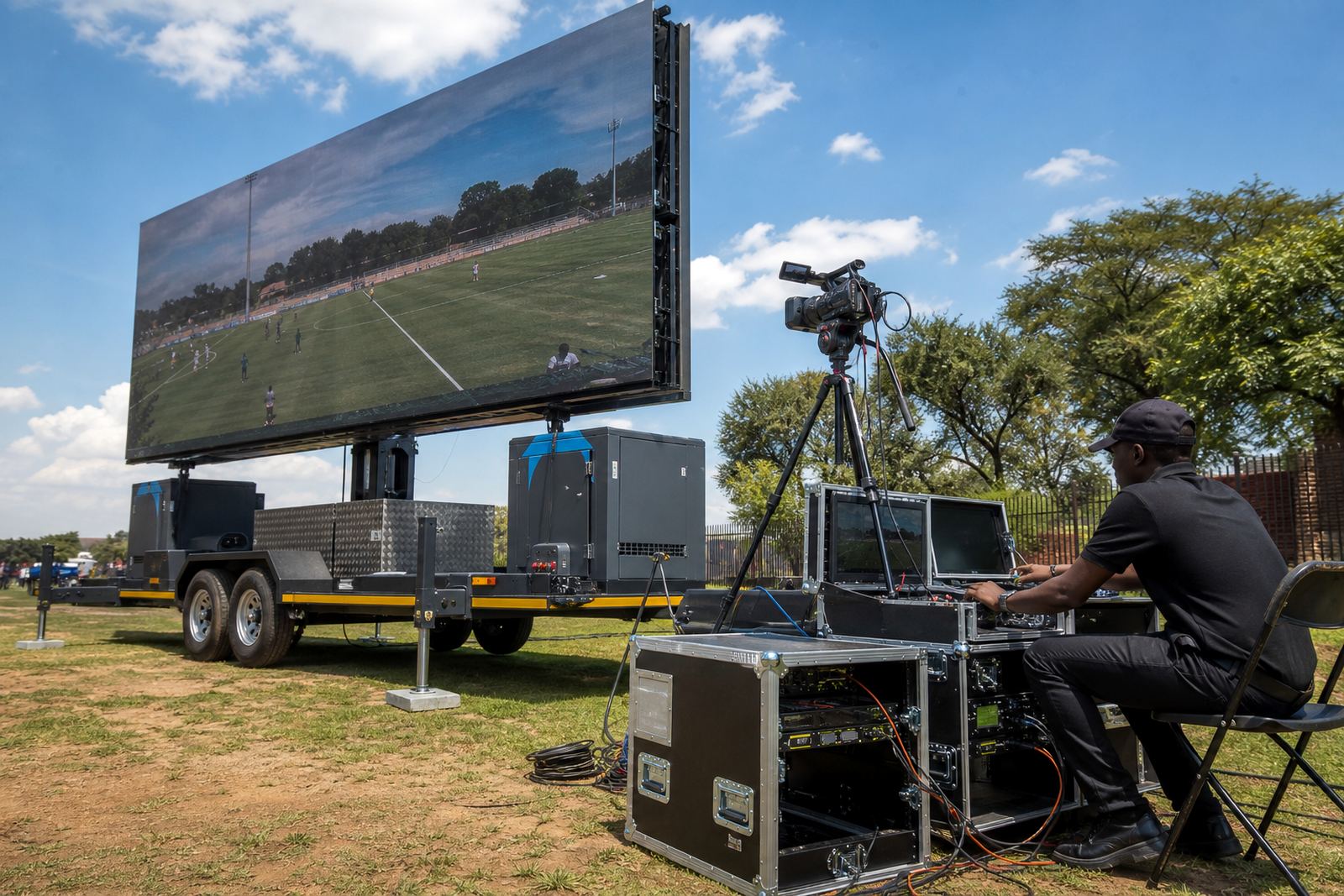
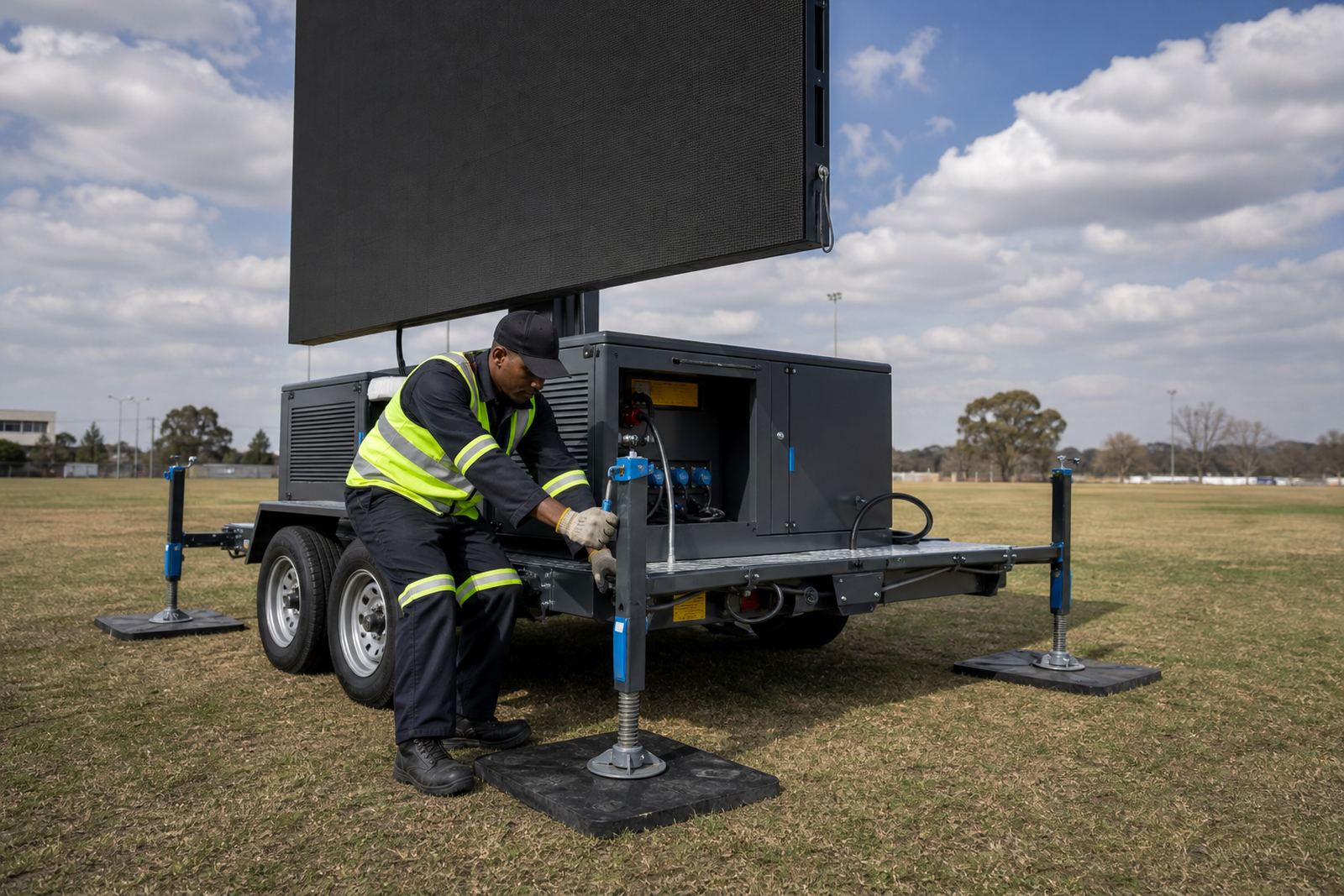
We start with the site facts, then build the permit pack around the deployment. That usually includes the screen trailer specification, the proposed location, the direction the screen will face, and the working footprint around the trailer once the stabilisers are out. If the job is in a public area, we also flag the items a municipality may query, such as access, safety perimeter, and whether there is a need for special notice or road-related approval.
Our team in Germiston, Ekurhuleni works with the logistics and screen crews together, so the paperwork matches the physical plan. That keeps the permit notes aligned with the real trailer, the real ground conditions, and the real viewing distance. It also helps where the job needs pack down later the same day and the site has strict access windows.
- Initial site review and technical note
- Permit support pack preparation
- Site checks for ground level and access
- Coordination with delivery and setup teams
- On-site verification before the screen runs
Screen specs that shape the approval notes
Outdoor LED trailers are not all the same, and the permit notes often depend on the actual screen build. A tighter pixel pitch gives cleaner text and video at shorter viewing distances, while a wider pitch suits larger crowds and longer sightlines. Brightness matters in daylight, especially for open fields, hard surfaces and midday campaigns.
Hydraulic lift systems help raise the screen into a usable position, and some trailers allow rotation so the display can face the audience without awkward vehicle movement. Most approvals also want the power arrangement described clearly, whether the unit runs from a generator, a mains connection, or a managed power plan with cable protection. In coastal towns and windy inland sites alike, wind limits and rain watch points need to be written into the operating notes.
- Pixel pitch matched to viewing range
- High-brightness outdoor panels for daylight use
- Hydraulic lift for screen height adjustment
- Rotation capability for audience-facing setup
- Power plan for generator or mains feed
Turnaround on a permit pack and what affects it
The pace of permit preparation depends on the site facts, not on a generic template. A straightforward private venue with clear access may need only basic support notes, while a roadside campaign or public square can need more detail around safety, placement and local rules. Events in Johannesburg, Pretoria, Bloemfontein, Polokwane or Durban can all bring different forms and local sign-off steps.
Weather also plays a part. A strong wind forecast may change the operating note, delay the lift, or require the screen to stay lowered until conditions settle. If the site sits in a humid coastal zone or on an exposed open ground, the permit guidance should reflect those realities instead of papering over them.
- Site type and public access level
- Local authority requirements
- Weather window and wind exposure
- Power method and cable routing
- Whether live feed support is part of the run
Fees, aftercare and the handover to the field team
Pricing for permit guidance is usually linked to the complexity of the site, the number of locations, and the level of supporting detail needed for the application pack. A single trailer in one venue is different from a multi-stop roadshow with several municipalities, changing access points and different power plans. We quote around the paperwork, the site notes and the coordination required, not around guesswork.
After the permit pack is in place, the field team keeps the notes close during setup, content loading and playback management. If the venue asks for a revised position, a changed viewing angle, or a fresh weather note, the on-site technician and logistics team work from the same information. That makes the handover cleaner and keeps the screen operation tied to the approved site plan.
- Quoted to the site complexity and paperwork load
- Separated from delivery and setup where needed
- Includes handover notes for the on-site technician
- Supports content loading and live feed checks
- Can be paired with multi-stop planning
Key facts
| Screen type | Outdoor LED trailer or LED box |
|---|---|
| Pixel pitch | Typically selected from fine to medium outdoor viewing ranges |
| Brightness | High-brightness daylight viewing spec, suited to outdoor use |
| Lift system | Hydraulic lift with variable screen height |
| Power | Generator or mains power planning |
| Coverage | Germiston, Ekurhuleni and major South African metros |