Setting the trailer where the picture works best
Setup starts with a proper look at the site, not a guess from the gate. Our team checks access width, turning space, ground condition, overhead lines, slope and where the crowd or traffic will face the screen. In Germiston and across Ekurhuleni, hard ground, uneven kerbs and tight service yards can change the whole placement plan, so the trailer is positioned with that in mind.
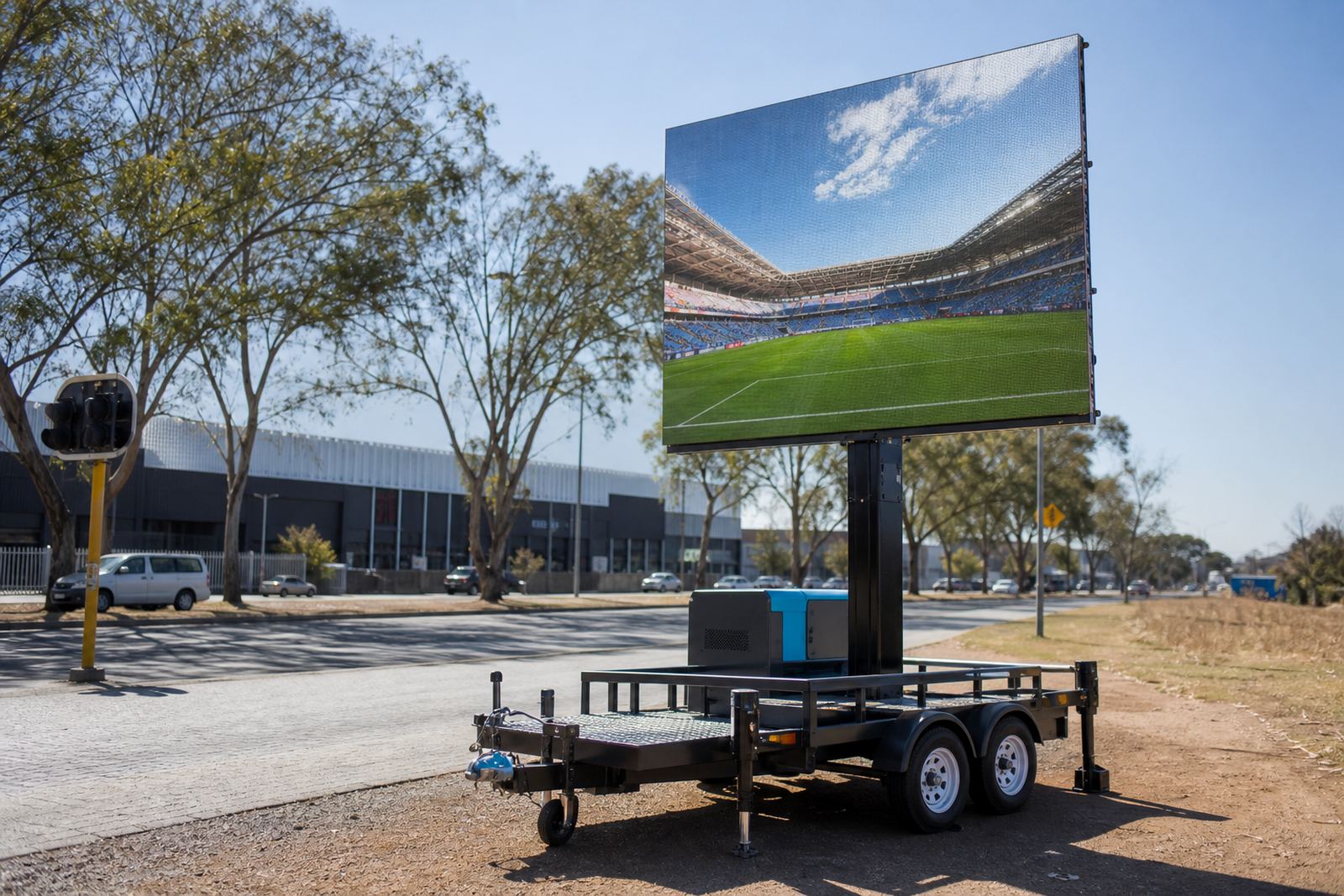
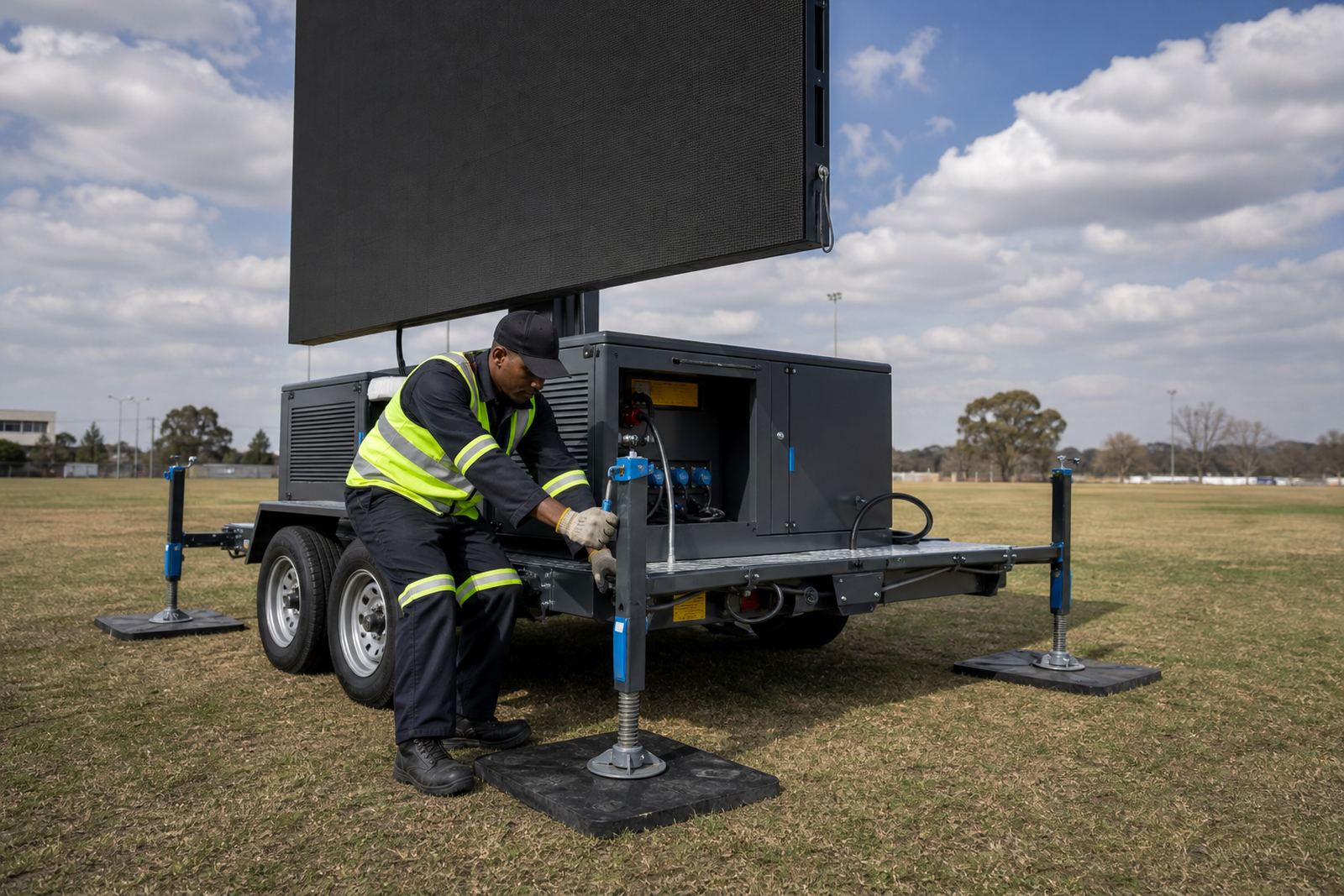
The LED screen trailer is then levelled and stabilised before anything is raised. Hydraulic lift systems are used to bring the screen into viewing height, and the frame can usually be rotated to suit the audience line. That matters at roadshows and outdoor events where the front row, parking area or passing traffic sit at different angles.
- Trailer positioning for open ground, paved areas and event entrances
- Levelling and wheel chocking before lift work begins
- Rotation set to match the audience line or roadside view
- Clear working space kept around the unit during setup
What gets prepared before the screen goes live
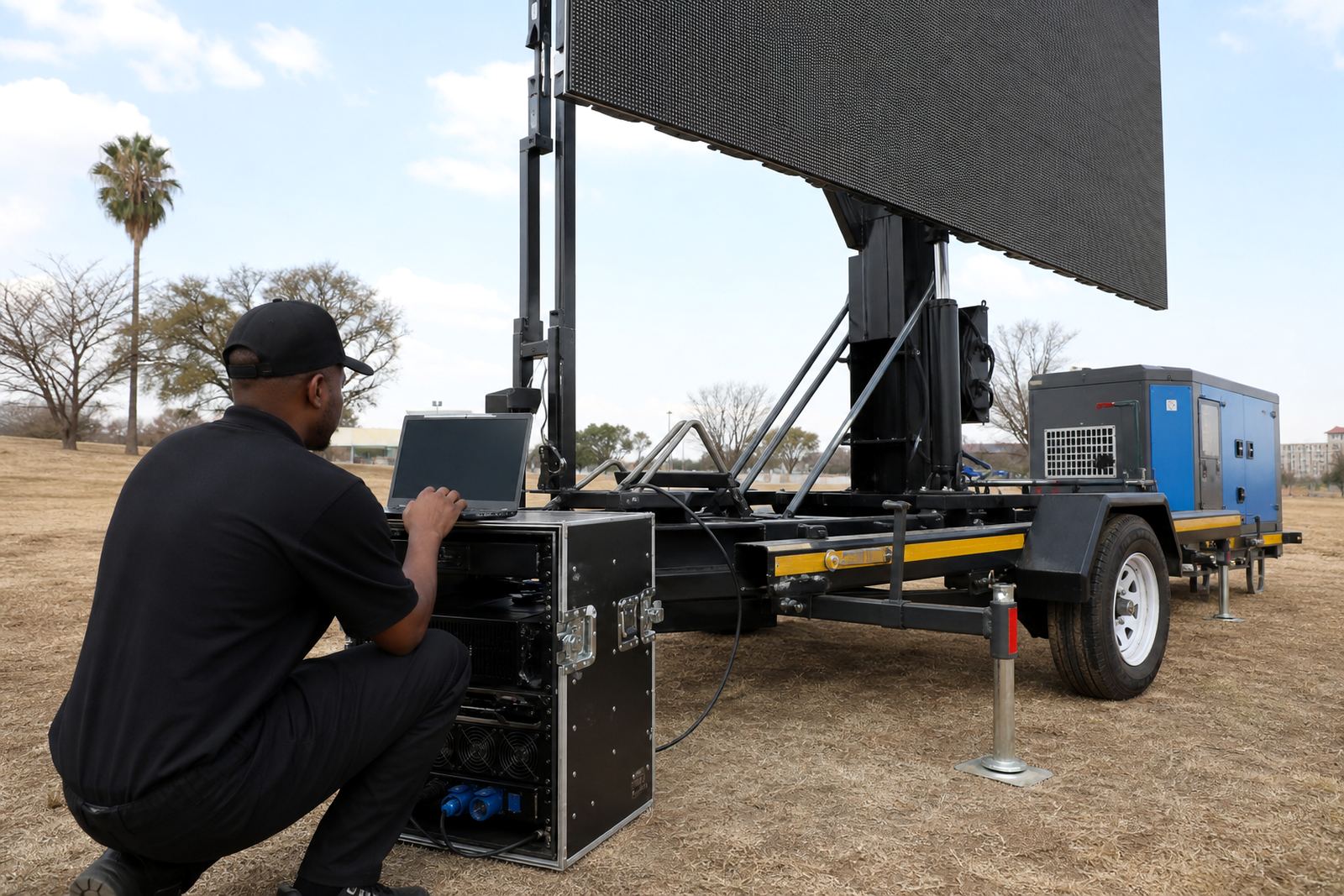
Once the trailer is in place, the control side is built out. That includes the video processor, signal path, playback device and any live feed link if the brief calls for it. Screen boxes are checked for clean content flow, and the technician confirms that the display aspect ratio matches the media supplied.
When used outdoors, brightness must remain clear in daylight. Our screen boxes are specified for high brightness output, with fine pixel pitch options available for closer viewing and larger pitch options for bigger viewing distances. The right mix depends on whether the audience is standing near the screen, moving past it or viewing from a longer distance at a sports day or concert field.
- Content loading and playback checks
- Signal path testing for video and graphics
- Live feed support where the event needs it
- Brightness and pixel pitch matched to the viewing distance
Power planning that suits the site
Outdoor LED setup needs power that is planned before the trailer is raised. Depending on the site, the unit can run from a generator or from mains power where the venue has the correct supply and access. The aim is steady operation for the full event window, with cable runs kept neat and protected from foot traffic.
We also look at where the generator sits, how noise may affect the crowd and how refuelling or isolation is handled during the day. For municipal sites, public roads and busy open spaces, power placement often sits alongside permit checks and safety control. The setup work is coordinated so the screen, technician position and access points all make sense together.
- Generator or mains power option assessed on site
- Cable routing planned around pedestrian movement
- Noise and access taken into account for public events
- Control equipment placed where technicians can work safely
Wind, weather and permit details that affect setup
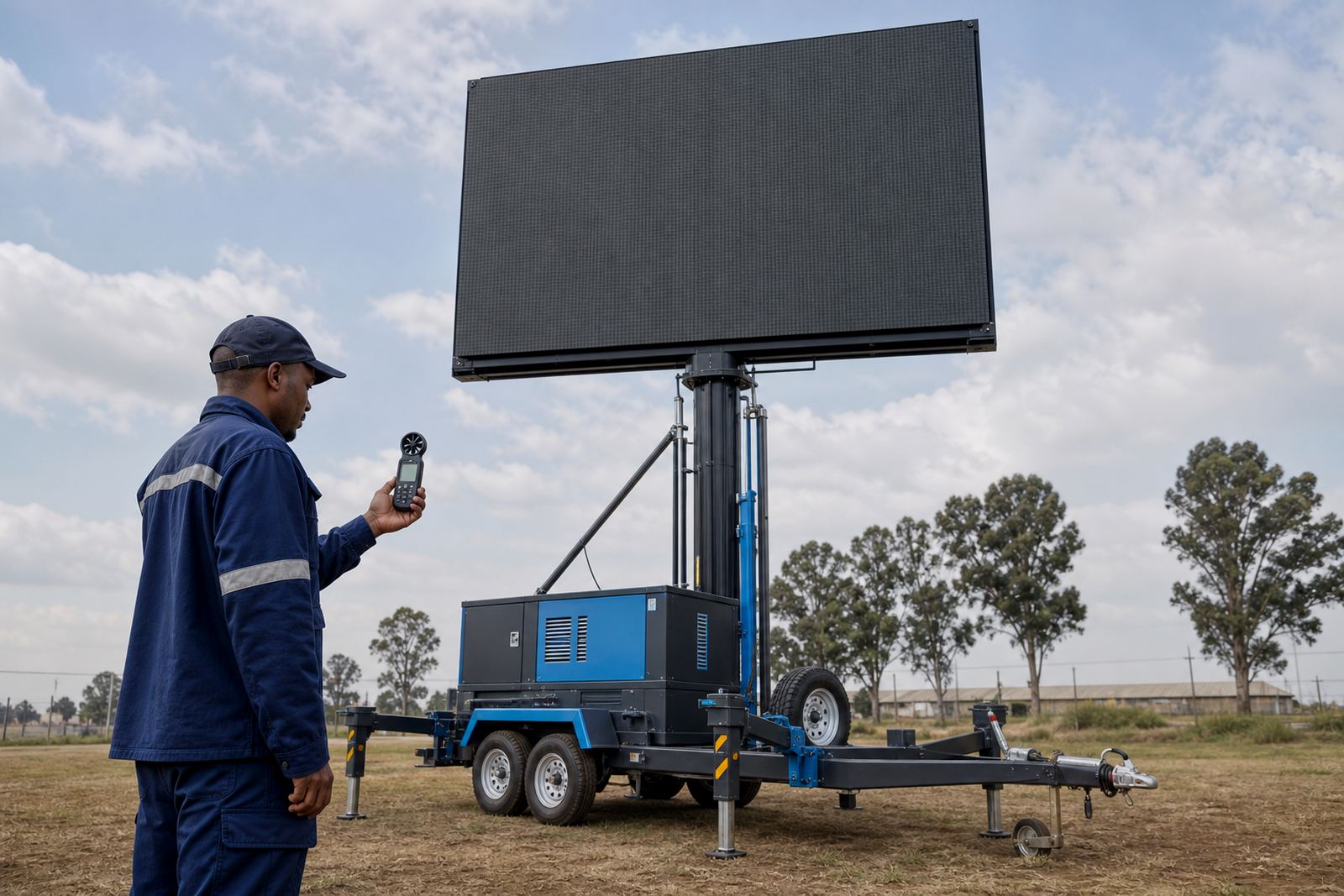
Outdoor trailers need weather awareness, especially when the forecast turns windy or unsettled. The screen is only raised when the site conditions suit the unit and the trailer is secured correctly. Wind limits depend on the trailer size, screen surface and the exact setup, so the technician watches the conditions rather than treating every venue the same.
Permit guidance is part of the service where a site or municipality needs paperwork for public use, roadside placement or occupied municipal ground. We do not fill in legal steps on the client side, but we can guide the setup around the likely requirements and keep the layout practical for the area. That is important in Johannesburg, Pretoria, Durban, Bloemfontein and Polokwane where municipal expectations can differ from one site to the next.
- Weather monitoring during setup and operation
- Wind limits checked before the screen is lifted
- Permit guidance for public and roadside locations
- Layout adjusted to suit municipal and venue rules
The setup sequence on the day
A normal setup follows a clear order. The trailer arrives, the site is confirmed, the unit is parked and levelled, then the screen is lifted and rotated into position. After that, the technician connects power, checks the signal chain and loads the playback material or live feed. The final stage is a picture check from the audience side, because a screen can look fine from the control position and still need a small adjustment on the viewing line.
When the brief includes more than one stop, the sequence is tightened around travel, access and pack down time. Multi-stop planning helps when a campaign moves between branches, shopping areas or sports grounds in one day. In those cases, setup has to stay disciplined so the next site starts in order, without crowding the handover.
- Arrival and site confirmation
- Level, stabilise, lift and rotate
- Power and signal connection
- Playback check and viewing-line adjustment
What setup pricing is based on
Setup pricing is shaped by the site and the level of work around it. A short indoor-style access yard, a roadside pull-off, a municipal open field and a multi-stop route do not carry the same labour or logistics. The quote normally reflects trailer movement, on-site technician time, power planning, permit guidance, weather checks and any live feed support requested for the event.
Screen size and pitch can also affect the work, because larger boxes and tighter-pitch displays need more attention during alignment and content checks. We keep pricing practical and item-based, so the client can see what the setup scope includes before the trailer arrives. If the event needs delivery, setup, monitoring and pack down as one service block, that is handled as a combined project rather than a loose list of extras.
- Site access and setup complexity
- Screen size, pitch and viewing distance
- Power source and cable requirements
- Technician cover, playback and pack down needs
After the picture is live
Once the screen is running, the technician stays with the unit for the operational period where the brief requires it. That support covers playback changes, live feed checks, picture adjustments and basic fault checking on the display and signal path. If the weather shifts or the crowd position changes, the screen can be adjusted within the practical limits of the site and trailer.
After the event, pack down is handled in the same measured way as the setup. The screen is lowered, the trailer is made safe, cables are cleared and the equipment is prepared for the move or next site. For clients in Germiston, Kempton Park and the wider Ekurhuleni area, that practical finish matters because the venue still needs to be left tidy and workable for the next user.
For setup requests, clients usually send the venue address, date, crowd size, screen position and whether power or live feed is part of the brief. A few lines with those details is enough for the yard to start planning.
- On-site technician support during the operating period
- Playback changes and live feed adjustments
- Pack down and safe trailer preparation after use
- Site left clear and ready for handover
Key facts
| Screen type | Outdoor LED screen trailers and LED boxes |
|---|---|
| Pixel pitch | Fine and medium pitch options for different viewing distances |
| Brightness | High-brightness output suited to daylight use |
| Lift system | Hydraulic lift with adjustable height and rotation |
| Power options | Generator or mains power, site dependent |
| Coverage | Germiston, Ekurhuleni, Johannesburg, Pretoria, Durban, Bloemfontein and Polokwane |