
Power choices for the screen and the site
Every site works differently. A roadside promotion in Germiston may suit a generator fed trailer, while a stadium forecourt or municipal field may have mains supply available through an approved distribution point. We look at the screen size, the run time, the distance to power, and the ground conditions before we settle on the right arrangement.
Outdoor LED trailers normally run on 220V single phase or 380V three phase input, depending on the screen build and the surrounding equipment. Bright daylight viewing calls for high output modules, often around 5,000 to 7,000 nits for good visibility in sun. That brightness matters because power planning is tied to the actual screen load, not just the trailer itself.
- Generator supply for sites without reliable mains access
- Mains supply where the venue offers a suitable point
- Battery backup only where the setup and run time support it
- Power draw matched to screen size, processor and any audio kit
Cable routes, distribution and safe clearances
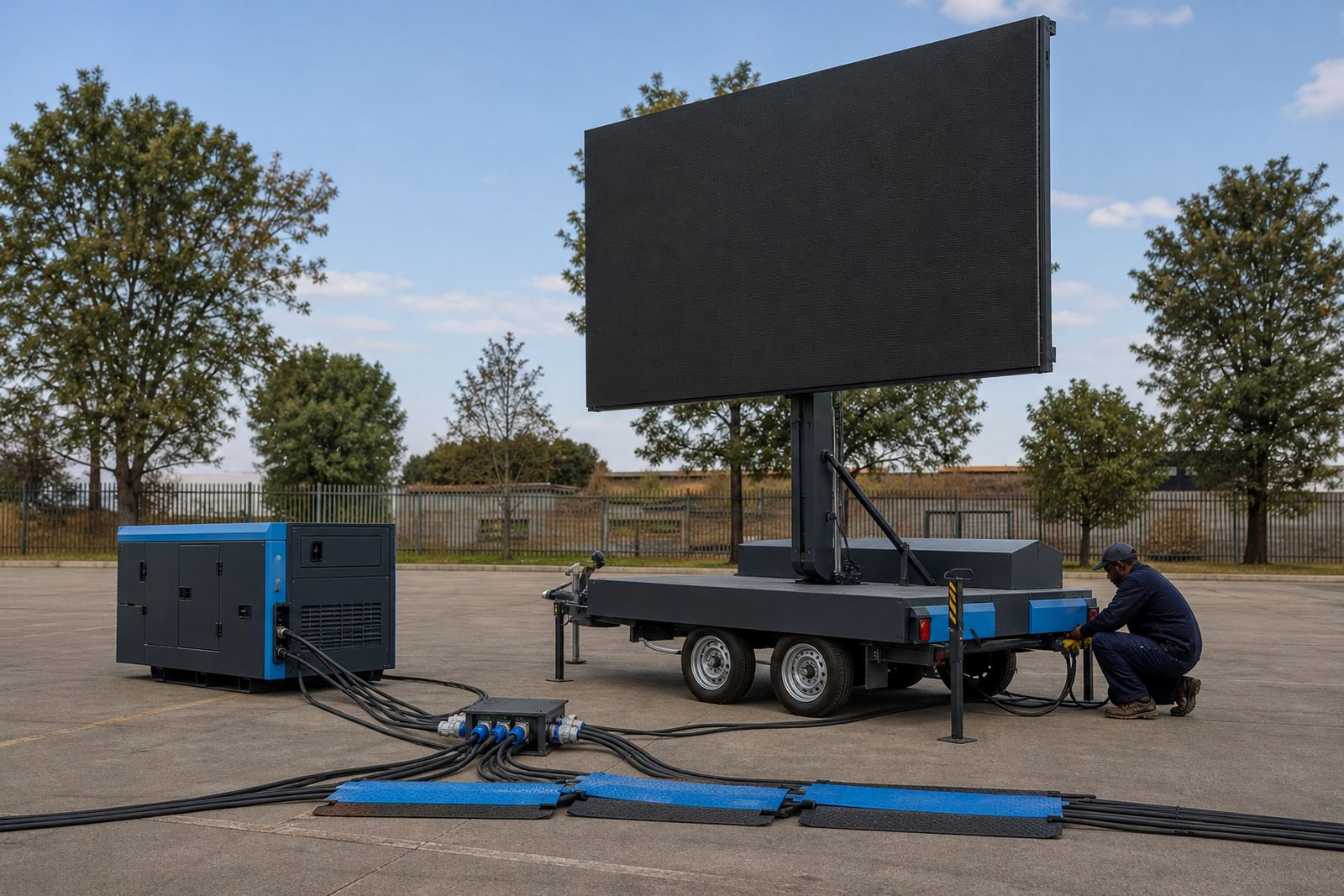
Cables should not trail across walkways, vehicle lanes or wet ground. We plan the route from power source to screen position with cable ramps, protected joins and practical clearances around the trailer base. On hot days in Gauteng or humid coastal conditions in Durban, cable placement and ventilation both need a proper look.
We also check how the screen will be parked, whether the hydraulic mast can lift cleanly, and how far the display can rotate without crossing into a fence line, tree canopy or nearby structure. The power plan has to work with the physical trailer movement, not against it.
- Shortest safe cable run is preferred
- Distribution boards kept off wet ground
- Connections secured against accidental pull-out
- Clear access kept for technicians and venue staff
Wind, weather and operating limits
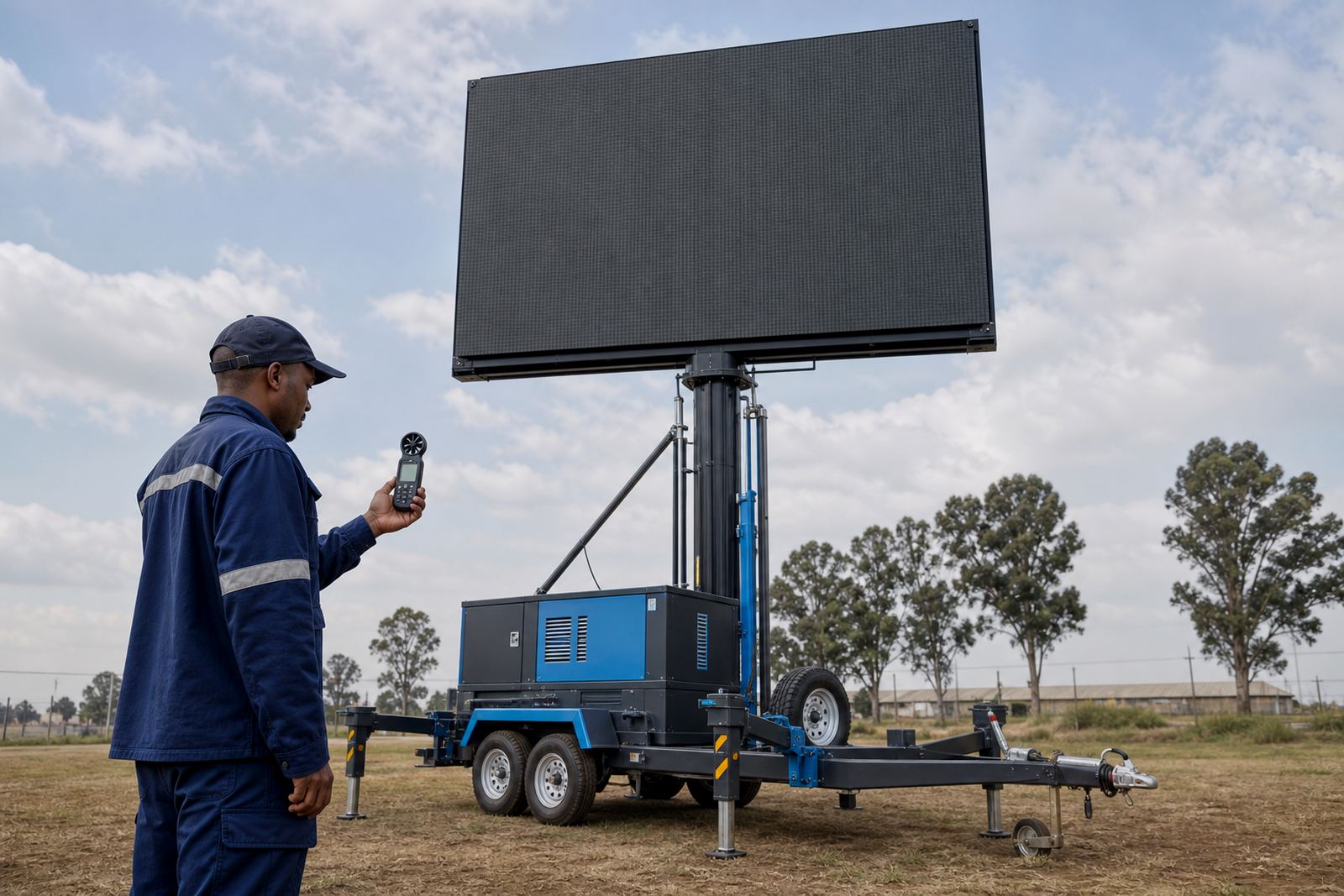
Outdoor LED screen trailers are made for open air use, but they still have limits. Wind speed matters when the mast is raised and the panel face is fully exposed. We monitor the weather before and during the run, and we adjust the operating position if conditions shift. Rain and dust protection matter too, especially for roadshows and sports days that move through different towns and terrain.
Power planning includes the practical side of weather monitoring. If the site has a live event window, the technician needs room to lower the mast, secure the trailer and isolate supply in a controlled way. That keeps the equipment, crew and crowd area better managed.
What the site check covers before setup
Walking the site first shows us where every cable can run tidily. We look at the approach road, turning space, ground firmness, power access, tower height limits and where the audience will stand. If the trailer has to park on uneven ground or close to a kerb, we plan for levelling and access before the truck rolls in.
Permit requirements vary by municipality and venue, so the power plan has to sit inside the wider site approval process. In some cases the venue wants proof of generator arrangement or a drawing that shows the screen position and cable path. We keep the notes useful and aligned with the actual layout.
- Ground condition and trailer parking position
- Power source location and cable run length
- Public access and vehicle movement around the screen
- Venue rules, local permits and operating notes
How the planning work runs on the day
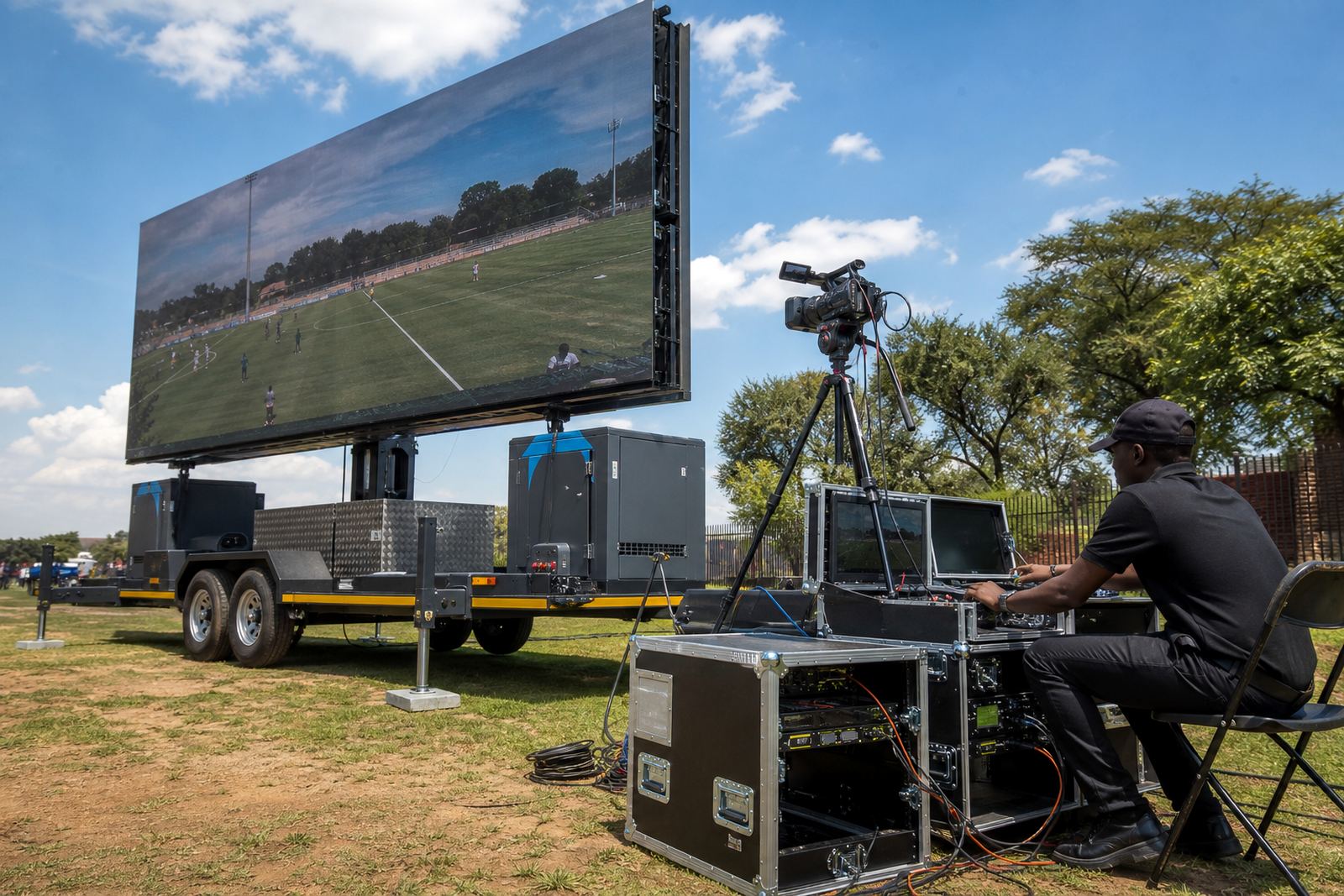
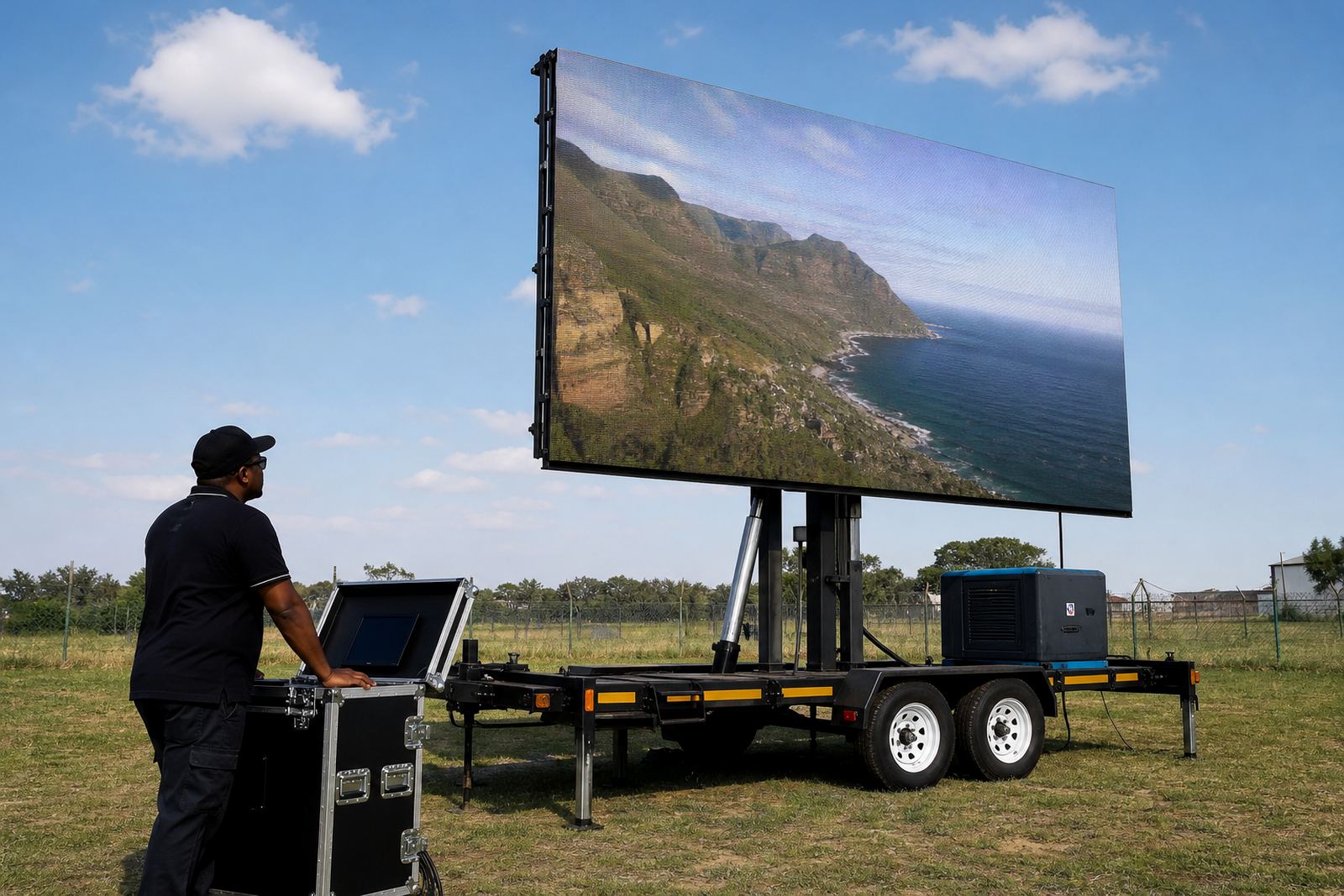
Once the layout is signed off, the delivery team brings the trailer, positions it and sets the screen in place. The technician checks the incoming power, starts the generator if that is the chosen source, and tests the screen with the playback device before the audience arrives. Content loading and live feed support are included where the brief asks for them.
The process is steady rather than flashy. We test the display, confirm cable security, check the image brightness, and watch for any power fluctuation that could interrupt playback. For roadshows with several stops in Johannesburg, Pretoria, Bloemfontein or Polokwane, the same power notes travel with the unit so each site is handled from the same working file.
- Delivery and position the trailer
- Connect power and test load
- Load content and check playback
- Monitor the display during the run
- Pack down and secure the site
Pricing follows the power footprint
Power planning is priced around the actual footprint of the job. A small trailer on mains supply is not costed the same way as a large screen with generator support, longer cable runs and an on-site technician for live playback. The number of stops, the location, the hours on site and the need for weather monitoring all shape the quote.
We keep the figures tied to the equipment and the travel involved. That means the plan reflects the screen size, the power source, the delivery distance and the level of on-site control needed for the run. For campaign teams and event organisers, this makes the budget easier to line up with the site notes.
Handover notes after the screen is packed down
After the job, we leave the site with the power equipment isolated, cables packed and the trailer secured for movement. If the same screen is heading to another stop, the next power setup is matched to the previous notes so the run remains consistent. That helps when the route moves between Ekurhuleni, Kempton Park and other inland or coastal sites.
We also review any issues from the site, such as limited access, awkward cable runs or generator positioning that needs a better layout next time. The aim is to keep the next setup cleaner, safer and easier for the venue crew and our own technician team.
Key facts
| Screen type | Outdoor LED screen trailers and LED boxes |
|---|---|
| Typical input power | 220V single phase or 380V three phase |
| Viewing brightness | Around 5,000 to 7,000 nits for daylight use |
| Power options | Generator supply or mains supply |
| Movement and lift | Hydraulic lift with rotation for positioning |
| Service area | Germiston, Johannesburg, Pretoria, Durban, Bloemfontein and Polokwane |