
A trailer screen that works in open-air music settings
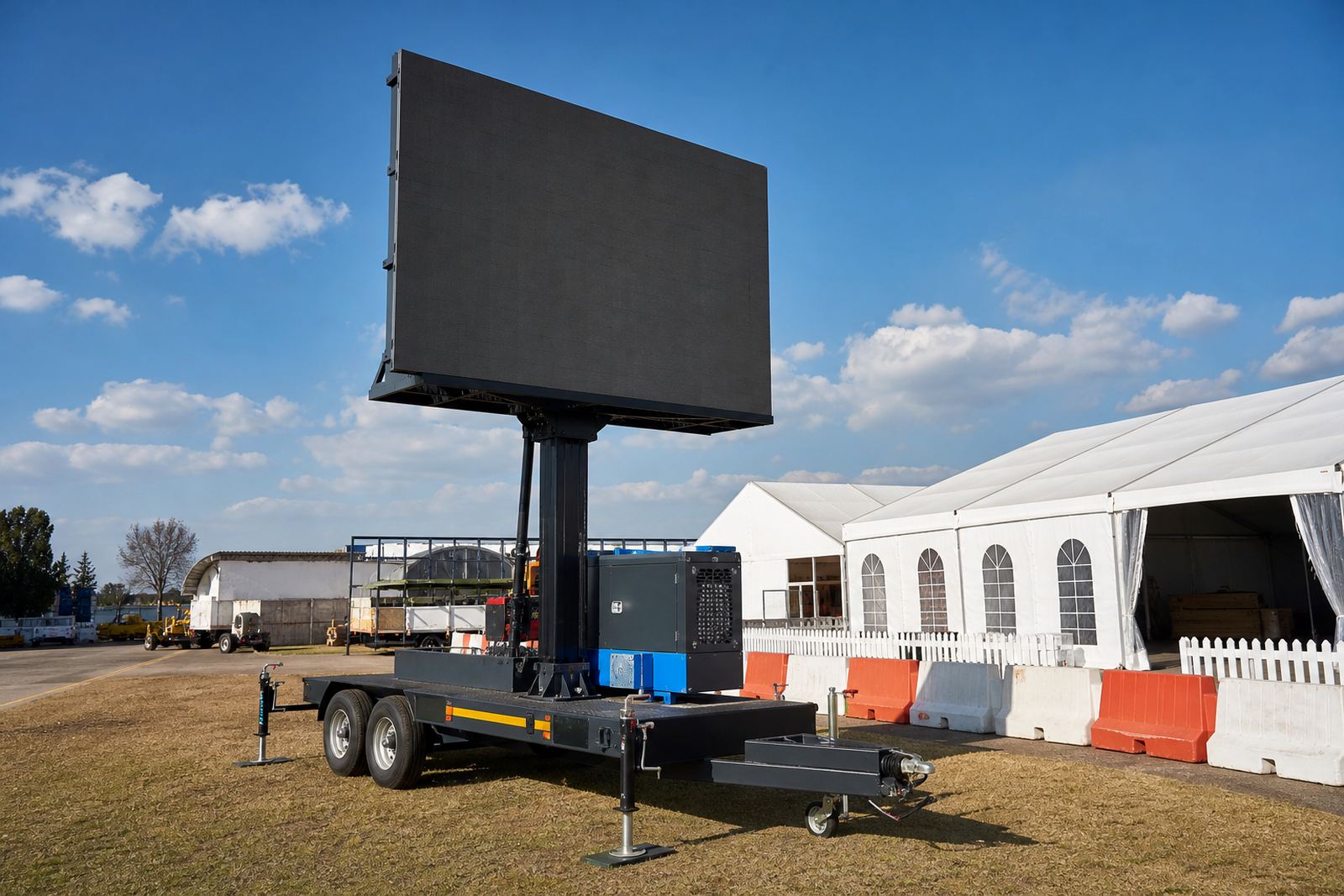
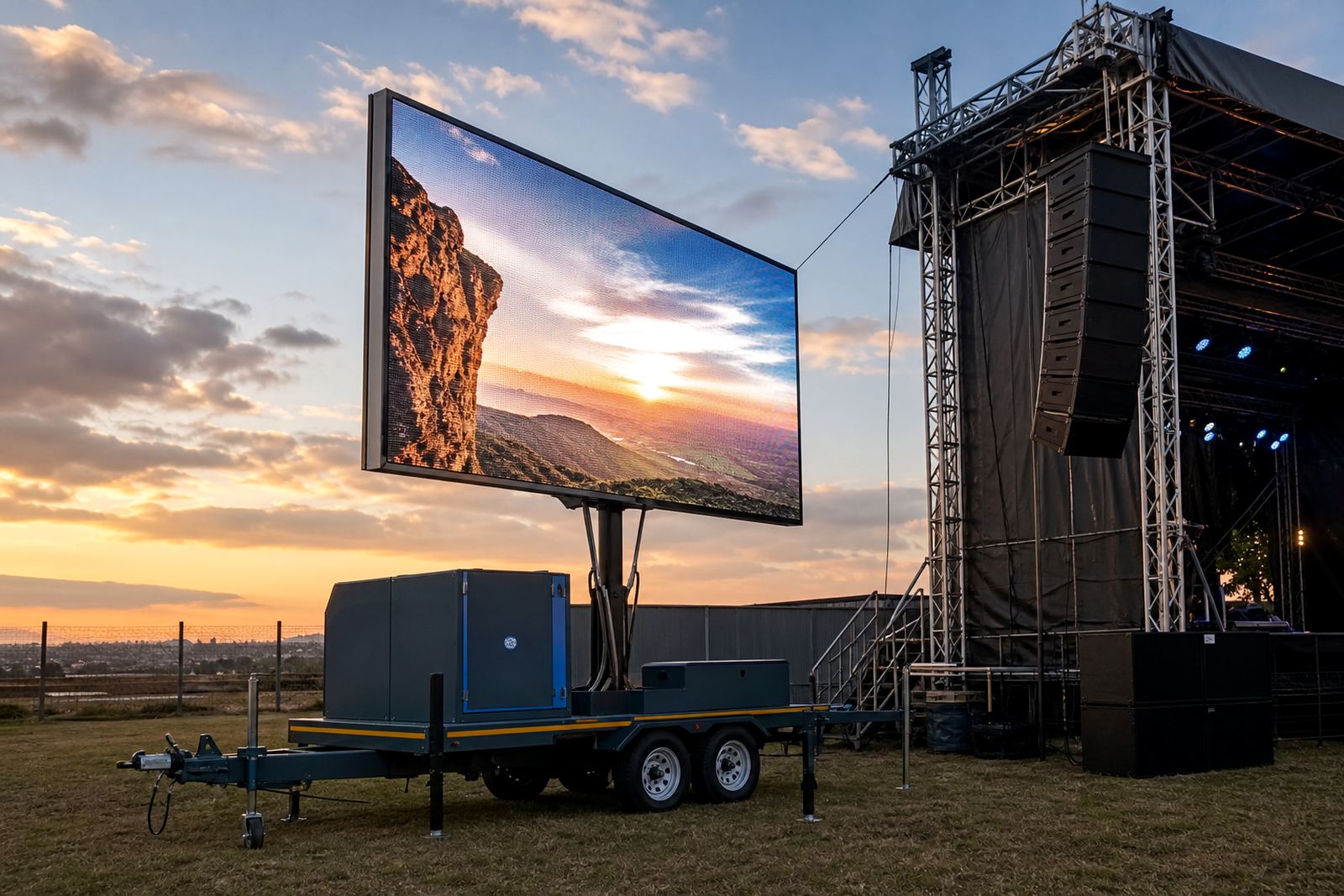
Concert Screen is an outdoor LED screen trailer set up for live stages, field events and crowd-facing activations where people need to see lyrics, camera feeds, sponsor messages or match-style visuals in strong daylight. The screen is mounted on a towable trailer, with a hydraulic lift for raising it into position and, on many jobs, a rotation setup that helps angle the face toward the audience or stage apron. Pixel pitch is selected to suit viewing distance, with tighter pitch giving cleaner detail for closer viewers and broader pitch working well for larger audience areas.
For daytime use, brightness matters. Outdoor LED cabinets are typically built for high-nit viewing in sunlit conditions, with weather-rated panels and a screen surface that stays readable when the venue is open to the sky. The trailer format is useful where access changes from site to site, because the unit can be delivered, parked, levelled and raised without a fixed structure. Content can be played from a media player, laptop or switcher, and live camera feeds can be taken in where the show needs real-time audience relay.
Screen sizes, viewing distance and trailer choices
The right size depends on how far the front row sits from the screen, how wide the audience area runs and whether the screen is for close stage support or a larger field layout. Smaller outdoor LED trailers suit tighter event footprints, while larger faces are better for concerts, sports days and sponsor loops seen from further back. The trailer chassis, lifting mast and screen frame are matched so the unit stays stable during setup and through the show.
- Fine pixel pitch for closer viewing around stages and sponsor zones
- Broader pitch for bigger audiences and longer viewing distances
- Single-face screens for one main audience direction
- Rotation and angle options where the site layout needs a different line of sight
- Generator-fed or mains-fed operation, depending on venue power and access
Outdoor trailers are also useful where the organiser needs a screen moved between sites over a run of dates. That can include music events in Gauteng, coastal shows in Durban or regional roadshows through Bloemfontein and Polokwane, where delivery plans and access times need proper coordination.
What the screen supports during a concert
At a live music event, the screen can carry crowd close-ups, stage relay, countdowns, sponsor spots, artist identifiers and safety notices. It also helps people at the back of the field keep up with the action when the stage is too far for detail. For mixed programmes, the playback system can switch between preloaded clips and live camera feeds, with content loading done before gates open so there is less rushing on site.
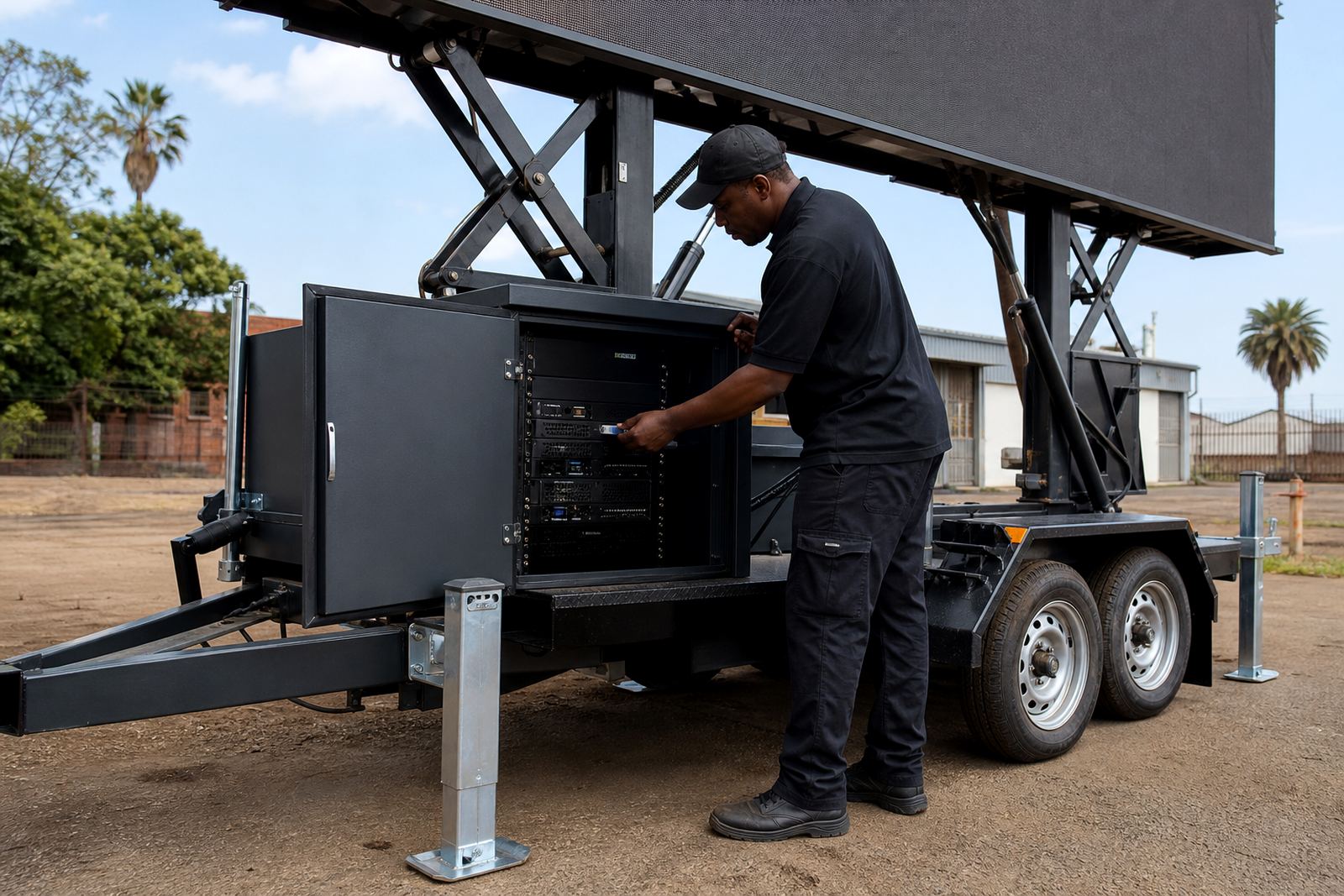
Concert Screen is also used where event crews need a reliable surface for branded loops before the headline set starts. The format suits launch nights, music festivals and open-air celebrations where audience movement changes through the day. When live feed support is part of the brief, our on-site technician manages the signal path and checks that the screen holds cleanly through the show, from first soundcheck to pack down.
- Live feed relay for stage action and camera cuts
- Sponsor content and branding loops between performances
- Countdowns, artist slides and programme notices
- Audience messaging for entry, safety and venue movement
- Content playback support through a dedicated technician
Power, permits and weather on real sites
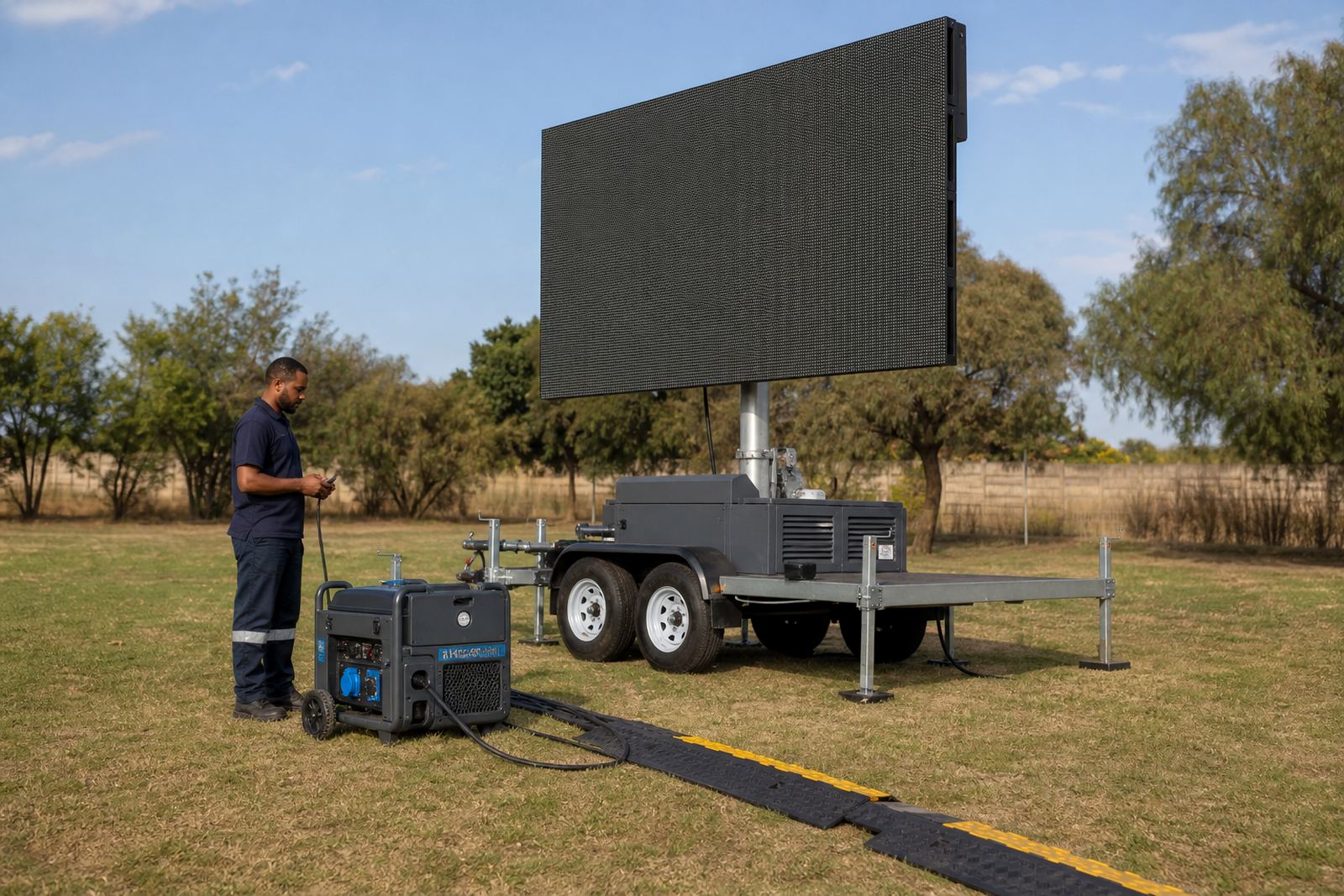
Outdoor LED screen trailers need proper planning around power, access and site control. Some venues use mains power, while others run the unit from a generator sized for the screen and support equipment. Cable routes, fuel handling and positioning all need to be sorted before the crowd arrives. The trailer is levelled and checked, then the lift is raised only once the ground conditions and overhead space have been assessed.
Wind is one of the main limits on any outdoor screen setup. If the gusts rise beyond safe operating levels, the screen may need to be lowered or paused until the conditions settle. In public spaces, municipal permission and event approvals can also come into play, especially where the trailer sits near roads, pedestrian routes or open municipal land. Permits are usually handled in general terms through the event process, with site notes, access details and timing shared before delivery. Our weather monitoring helps the crew decide when the screen can stay up and when it should be brought down.
Care on site and after the last cue
These screens do best when the trailer is parked on firm, level ground and the viewing face is kept clear of vehicle dust, spray and foot traffic. The LED modules should not be exposed to direct knocks during loading or pack down, and the lifting frame needs regular inspection for pins, locks and hydraulic movement. In coastal air or during a humid spell, extra care around connectors, seals and storage matters because moisture can work into outdoor equipment.
After the event, pack down includes lowering the screen, securing the trailer and checking that the panels, cabling and playback gear are all accounted for. If the unit is being moved across multiple venues, the logistics plan needs to cover route access, parking space and site turnaround. For organisers working in Germiston, Kempton Park, Johannesburg, Pretoria, Durban, Bloemfontein or Polokwane, that coordination is often the difference between a tight show window and a messy handover.
Details that help us size the job correctly
When ordering Concert Screen, it helps to know the audience size, venue type, screen purpose and whether the unit needs to face one crowd area or multiple viewing points. The content format matters too, because a live camera feed, sponsor loop and timed show rundown do not all use the same playback setup. If the site has restricted access, low branches, uneven ground or limited parking, those details should be included early so the trailer, lift and support plan fit the space.
- Venue name and suburb or town
- Audience distance from the screen
- Daytime or evening use, or both
- Power source on site, mains or generator
- Need for live feed support or simple playback
- Access limits, gate widths and ground conditions
Our contact form is the cleanest way to send the brief, especially when the job covers more than one stop or needs site checks before delivery. The information helps match the screen size, brightness, mounting plan and technician support to the actual event rather than a guess.
Key facts
| Screen type | Outdoor LED screen trailer |
|---|---|
| Pixel pitch | Selected to suit viewing distance and content detail |
| Brightness | High-nit daylight viewing specification |
| Lift system | Hydraulic raise and lower mechanism |
| Power options | Generator-fed or mains-fed, depending on site |
| Support | On-site technician for setup, playback and live feed |