
A trailer screen that works the show floor
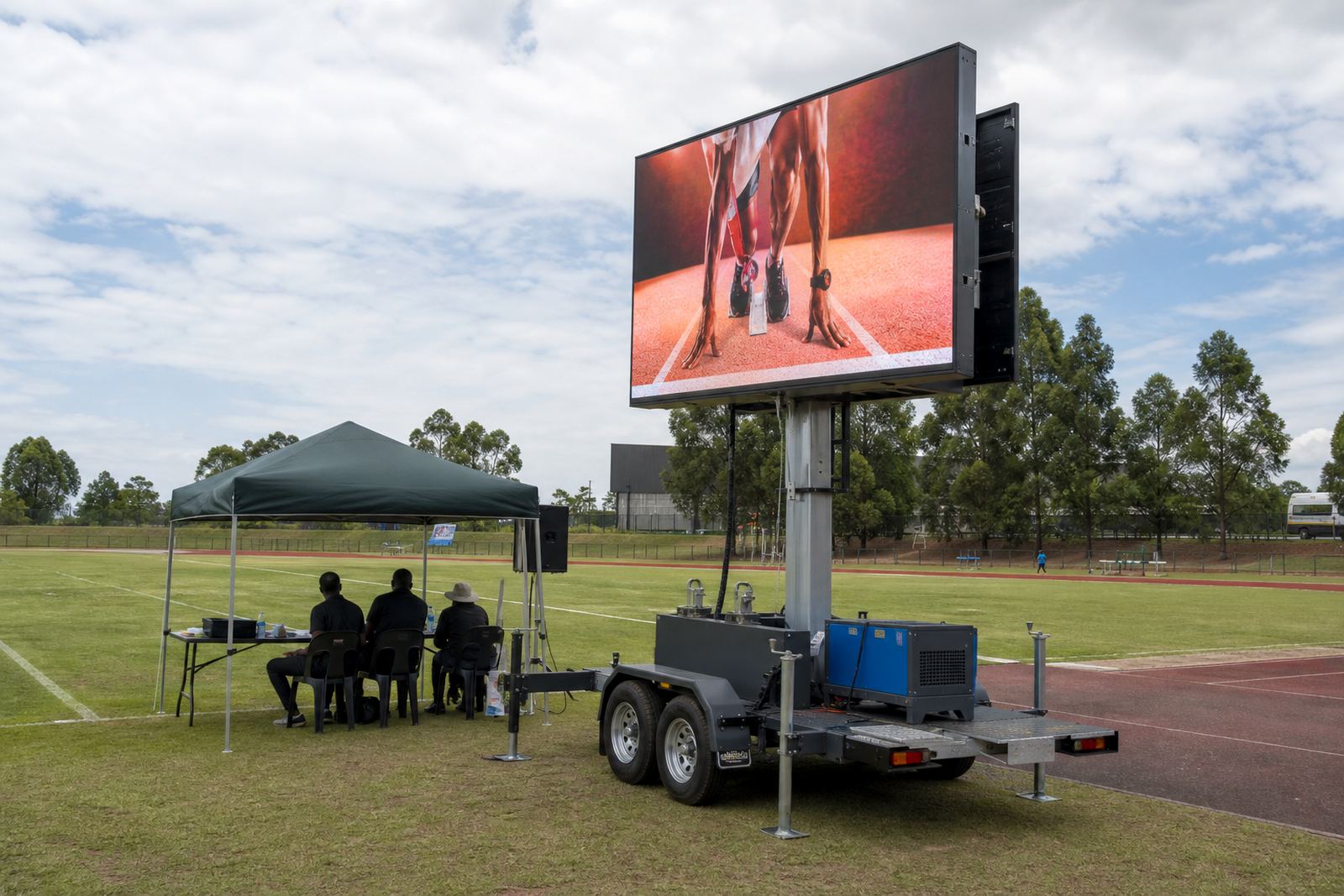
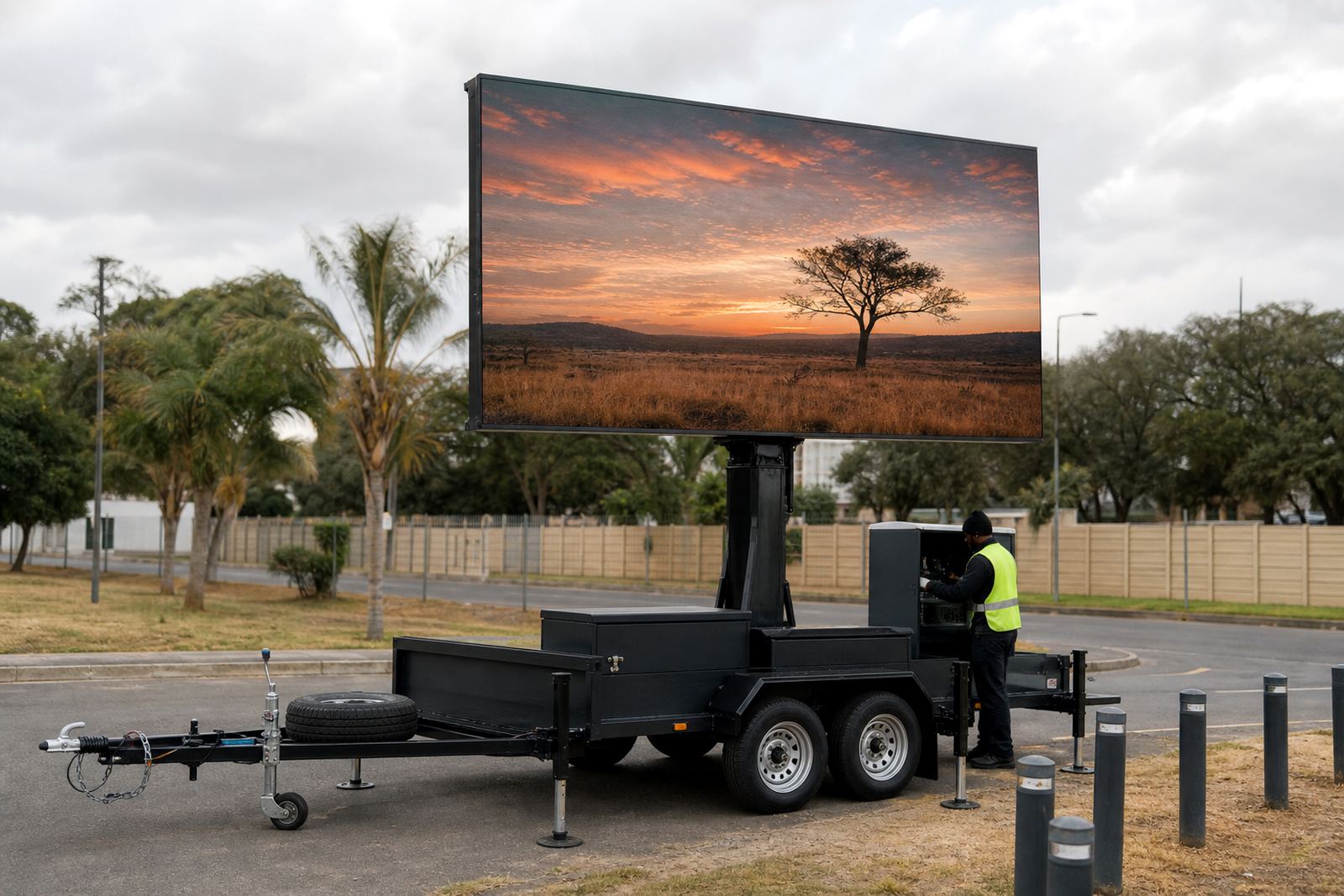
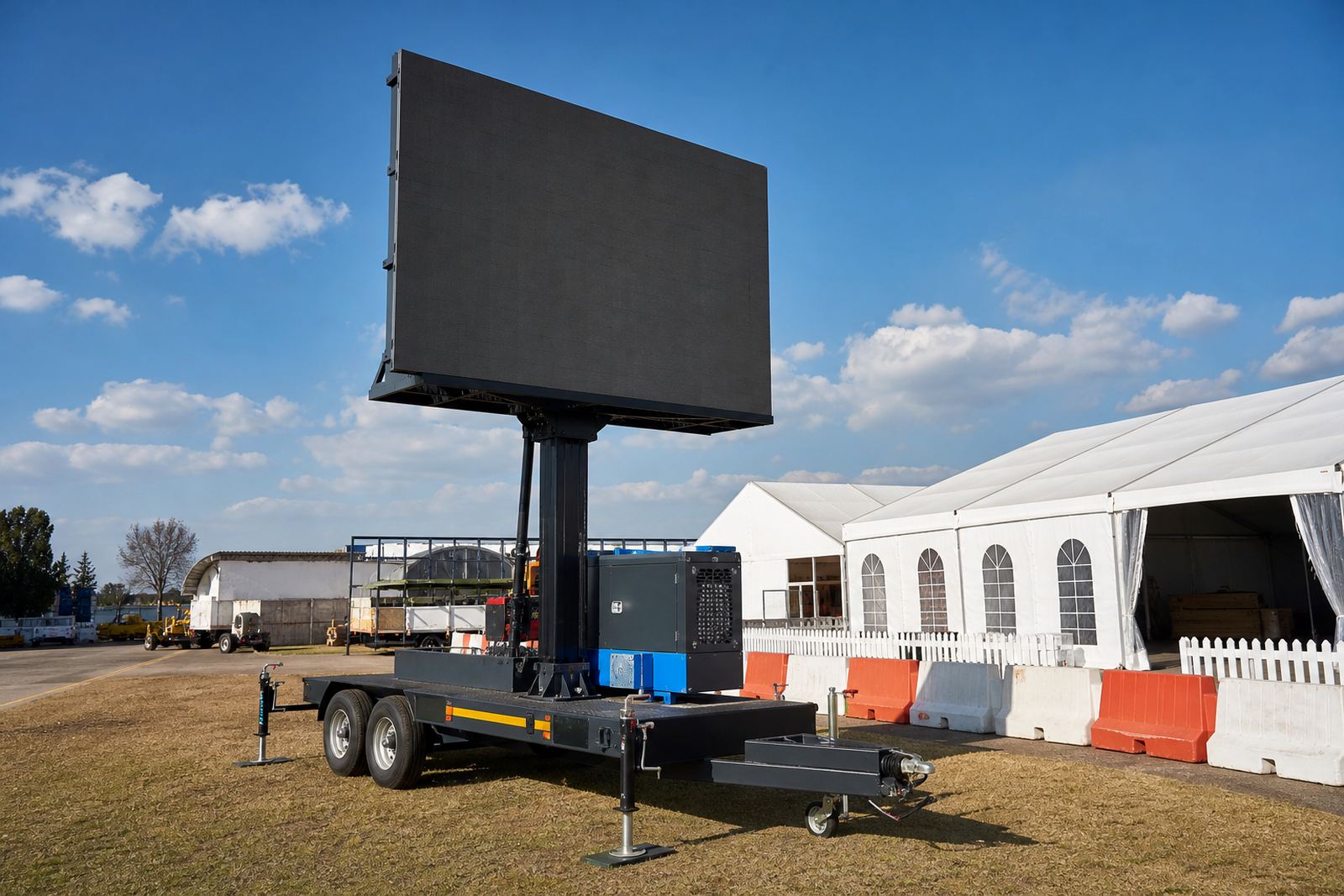
An expo trailer is an outdoor LED screen mounted on a towable frame, set up to face foot traffic, stand entrances or vehicle approaches. The screen is built for bright daylight viewing, with typical outdoor LED cabinets in the 3.9 mm to 6.9 mm pixel pitch range and high brightness levels suited to open-air use.
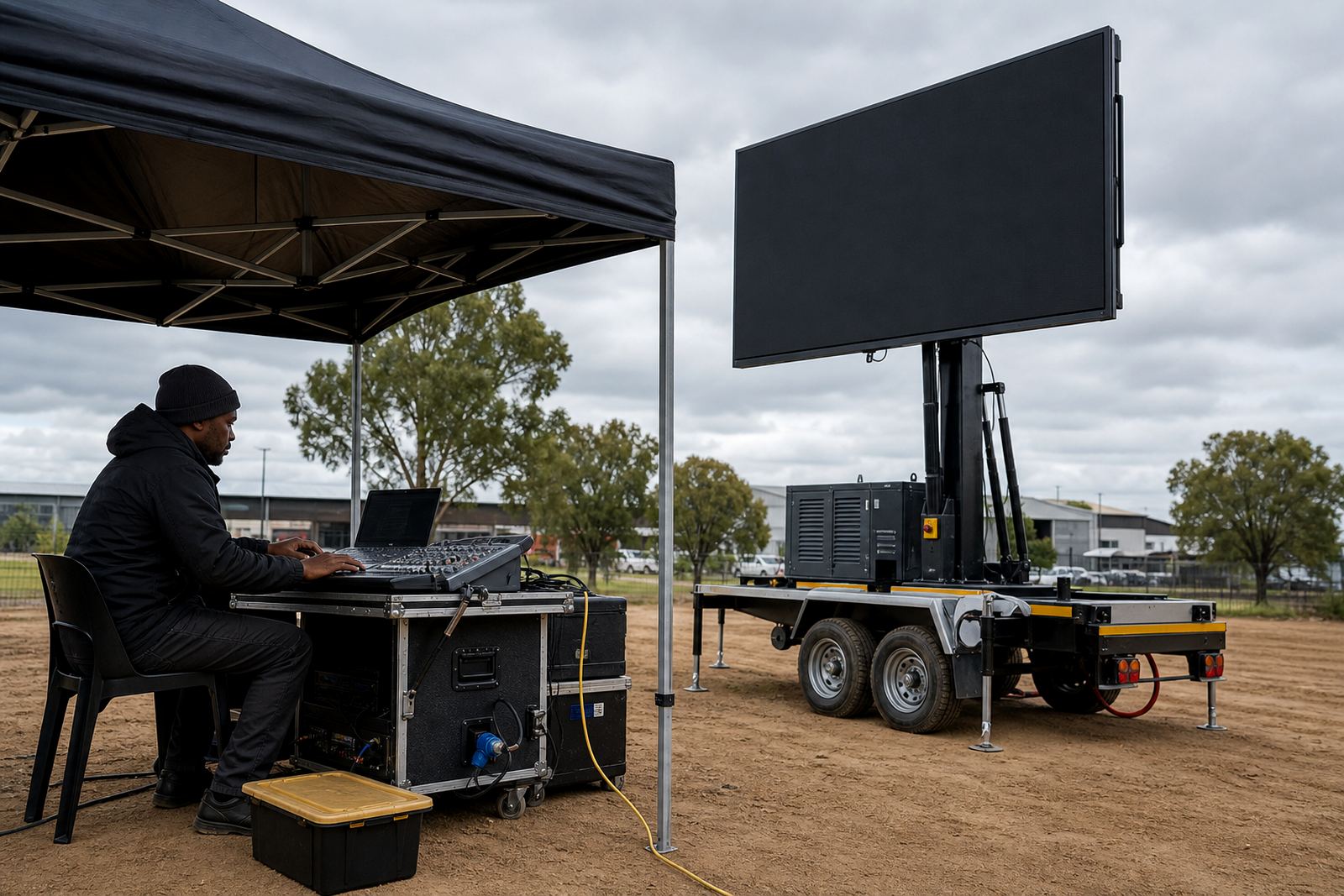
The trailer format gives you flexibility where fixed structures are not practical. Our team positions the unit for sightlines, crowd movement and access control, then raises the screen with a hydraulic lift and can rotate or angle it depending on the site layout. Content can run from a media player, laptop, live video feed or scheduled playlist, with playback managed on site by a technician.
Sizes, viewing distance and screen formats
Expo trailer screens are selected around viewing distance and the amount of detail in the content. Smaller pitches are better for close viewing and text-heavy graphics, while wider pitches suit larger outdoor spaces and longer sight lines. The right format also depends on whether the screen must face one crowd lane or serve people moving from several directions.
- Screen size options usually cover compact roadside units and larger event-facing displays.
- Typical outdoor brightness is in the 5,000 nit to 7,500 nit range for daylight legibility.
- Cabinet builds are weather-rated for outdoor handling, with sealed LED modules and protected cabling.
- Playback can support loops, timed slides, preloaded video and live input where required.
- Trailer systems may include generator supply, mains connection or a planned power feed from site.
For expo work, the viewing distance matters as much as screen size. A well placed smaller screen can carry wayfinding, sponsors and stand directions better than a bigger unit parked too far from the audience.
Where an expo trailer fits best
This format suits outdoor exhibition grounds, agricultural shows, product launches, sports days, open-air trade zones and roadshows where people move between stands or gates. It can also help direct arrivals at overflow parking areas, stage entries and registration points. Because the trailer is mobile, placement can be adjusted when foot traffic changes during the day.
- Entrance points where attention has to catch from a distance.
- Central exhibition lanes with steady pedestrian flow.
- Perimeter positions for wayfinding, sponsor reels and live notices.
- Event forecourts where content must be visible above crowds and equipment.
- Temporary brand activations where a fixed structure is not available.
Municipal permissions may be required depending on the site, the event type and where the trailer stands. If the screen sits close to roads, public land or controlled access points, permit guidance and site approval are worth sorting before the unit arrives.
Setup, power and weather on the day
Expo trailers need a level surface, clear overhead space and enough room to deploy the mast, stabilisers and service access. The towing vehicle, access route and turning space should be checked before delivery, especially where the site has tight gates, soft ground or limited loading access. In some cases the trailer is positioned early so the screen can be lifted before the crowd builds.
Power planning depends on the site. Some trailer units run from generator supply, others can take mains power if the event has a proper feed and the cable path is safe. The technician handles content loading, signal checks, brightness settings and playback control, and also monitors wind conditions. Outdoor screens must be lowered or paused when conditions move beyond the safe operating limit for the structure.
- Level standing area with firm ground and no buried services in the anchor zone.
- Clear access for delivery, towing and pack down.
- Confirmed power source and cable route if mains is used.
- Wind monitoring for safe lift, run and closure of the screen.
- Space for technicians to work around the trailer during setup and shutdown.
Keeping the screen clear and reliable
An expo trailer does best when the cabinet surfaces, vents and cable points are kept free of dust, grit and moisture. After a dusty showground or a coastal activation, the unit should be inspected and cleaned before the next movement. Any loose connectors, damaged signage or scuffed cabinet edges need attention before travel. That small bit of care helps the screen hold its image and the trailer stay neat on arrival.
Content files should be checked for the right aspect ratio, resolution and audio settings before loading. If a playlist carries mixed formats, the playback order has to be tested so transitions do not stutter or cut off. We also check that live feed sources and backup files are ready when a programme includes speeches, sponsor loops or rolling announcements. Simple things like readable fonts and strong contrast make the difference outdoors.
Details to settle before the trailer moves
When ordering an expo trailer, it helps to confirm the site layout and the way people will move through the space. A clean brief saves time on the day and helps the technician set the screen for the right audience position. We usually look at the viewing distance, content type, power source, travel access and whether the screen must support live feed or just looped playback.
- Event date, venue and the exact set-down point.
- Preferred screen size or the approximate viewing distance.
- Whether the unit will use generator supply or mains power.
- Content format, file sizes and whether live feed support is needed.
- Any permit or site approval rules from the venue or municipality.
- Access details for delivery, including gates, slopes and parking limits.
Clients in Germiston, Ekurhuleni, Johannesburg, Pretoria, Durban, Bloemfontein and Polokwane use the expo trailer format when they need a screen that can move with the audience rather than sit in one fixed corner. It suits outdoor exhibition spaces where the layout changes through the day and the message has to stay visible from more than one approach.
Key facts
| Product type | Outdoor LED screen trailer for exhibition and event use |
|---|---|
| Pixel pitch | Typically 3.9 mm to 6.9 mm, depending on viewing distance |
| Brightness | High brightness outdoor panels, usually 5,000 to 7,500 nits |
| Power options | Generator supply or site mains power, depending on venue setup |
| Movement | Hydraulic lift with trailer positioning and angle adjustment |
| Support | On-site technician for setup, playback, live feed and pack down |