
Screen frontage that works in midday sun
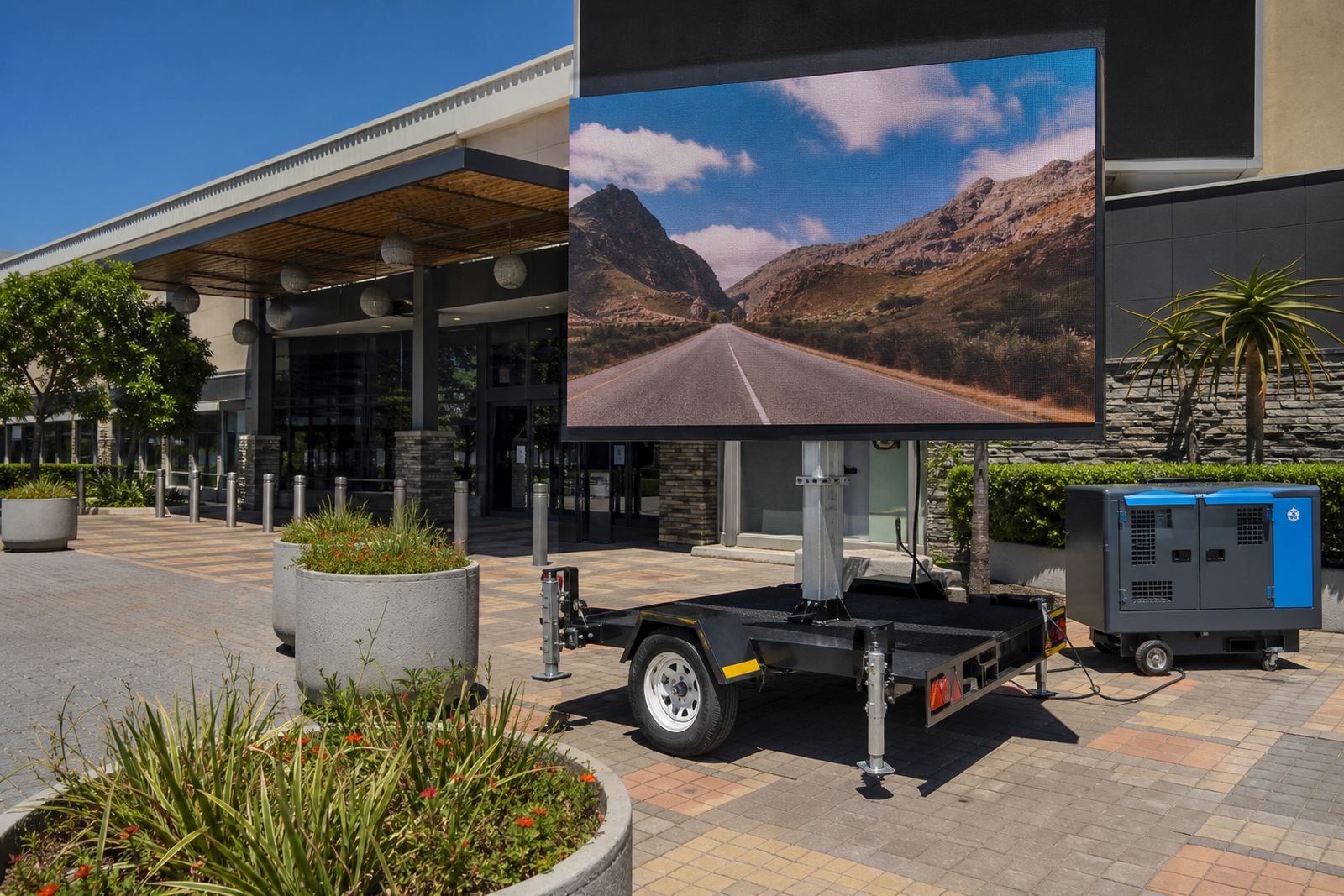
A mall exterior screen is built for forecourts, parking entrances, promo courts and other high-footfall spaces where people pass at speed and still need to read a message. The panels are made for outdoor viewing, with brightness levels typically around 5 000 to 7 500 nits for daylight conditions, and the layout can be set up in portrait or landscape depending on the frontage and the content plan.
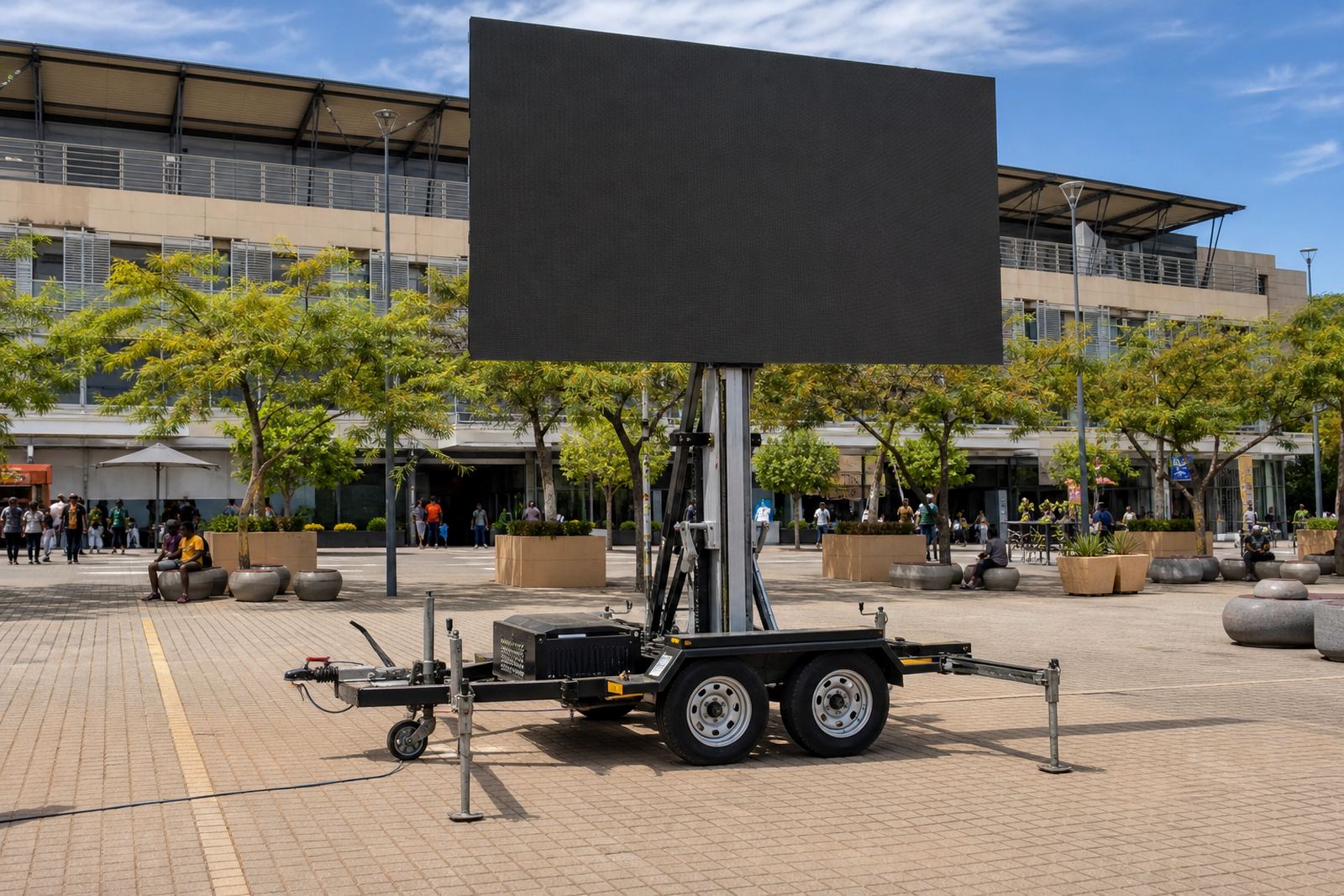
For shopping centre campaigns, the screen often sits on a trailer or on a grounded frame so it can be placed where the foot traffic is strongest. Pixel pitch is chosen to suit viewing distance, with finer pitches giving cleaner text and motion when people are closer to the display. For a mall exterior, that choice matters because the audience may be walking, standing near a queue point, or crossing from the car park.
- Suitable for eye-level viewing across busy exterior walkways
- Outdoor cabinet construction for dust and weather exposure
- Content can run as video, still images, ticker lines or live feeds
- Bright daytime output for open-air mall edges and entrance zones
Formats and screen sizes for mall activations
The right size depends on the mall frontage, the distance from the audience and the kind of message being shown. Smaller units work well for promoter areas and branded welcome points, while larger formats suit parking approaches, court-side activations and seasonal campaigns that need stronger visibility from a wider angle.
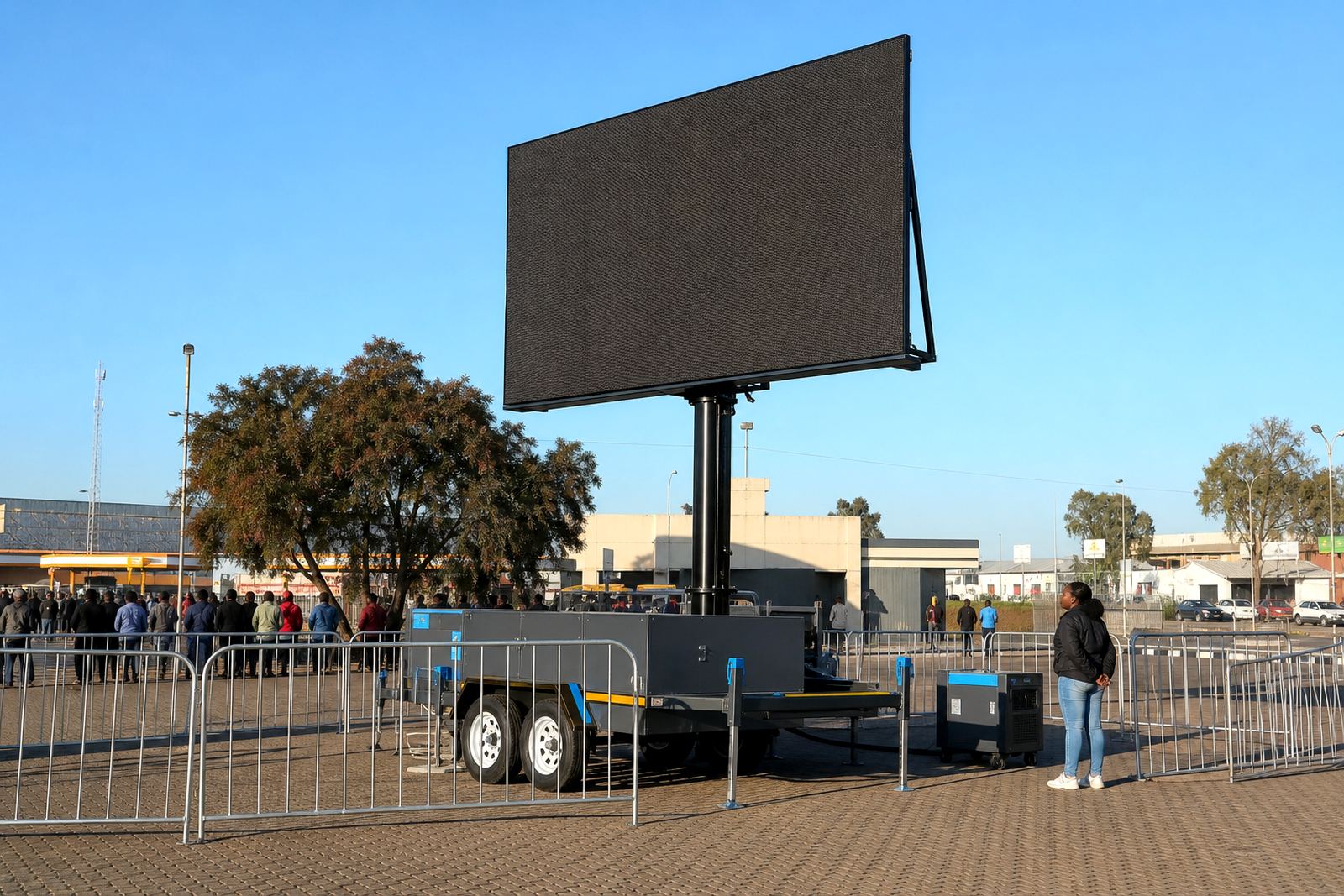
Outdoor LED screen trailers can be supplied in compact or larger display spans, and the trailer frame allows the screen to be towed into position and raised with a hydraulic lift. Rotation is useful when the viewing line changes across a parking court or a parade route, and it helps the display face the busiest footpath instead of sitting at an awkward angle.
- Trailer-mounted screens for mobile mall campaigns and roadshows
- Fixed-position LED boxes for longer running exterior placements
- Mixed layouts for portrait signage, wide format video or split screens
- Options suited to short activations and multi-day mall programmes
Where the brief needs a cleaner finish near a centre entrance, LED boxes can be fitted into a more permanent looking arrangement. That works well for repeat brand moments, tenant promotions and seasonal retail campaigns that need a tidy edge and controlled cable routing.
Power, lifting and weather control on the day
Outdoor screens in this setting can run from a generator or from mains power, depending on what the site allows and what is available near the display position. On a mall site, power planning needs to happen alongside access control, pedestrian safety and the centre's own movement rules so the screen sits in the right place without blocking loading routes or emergency access.
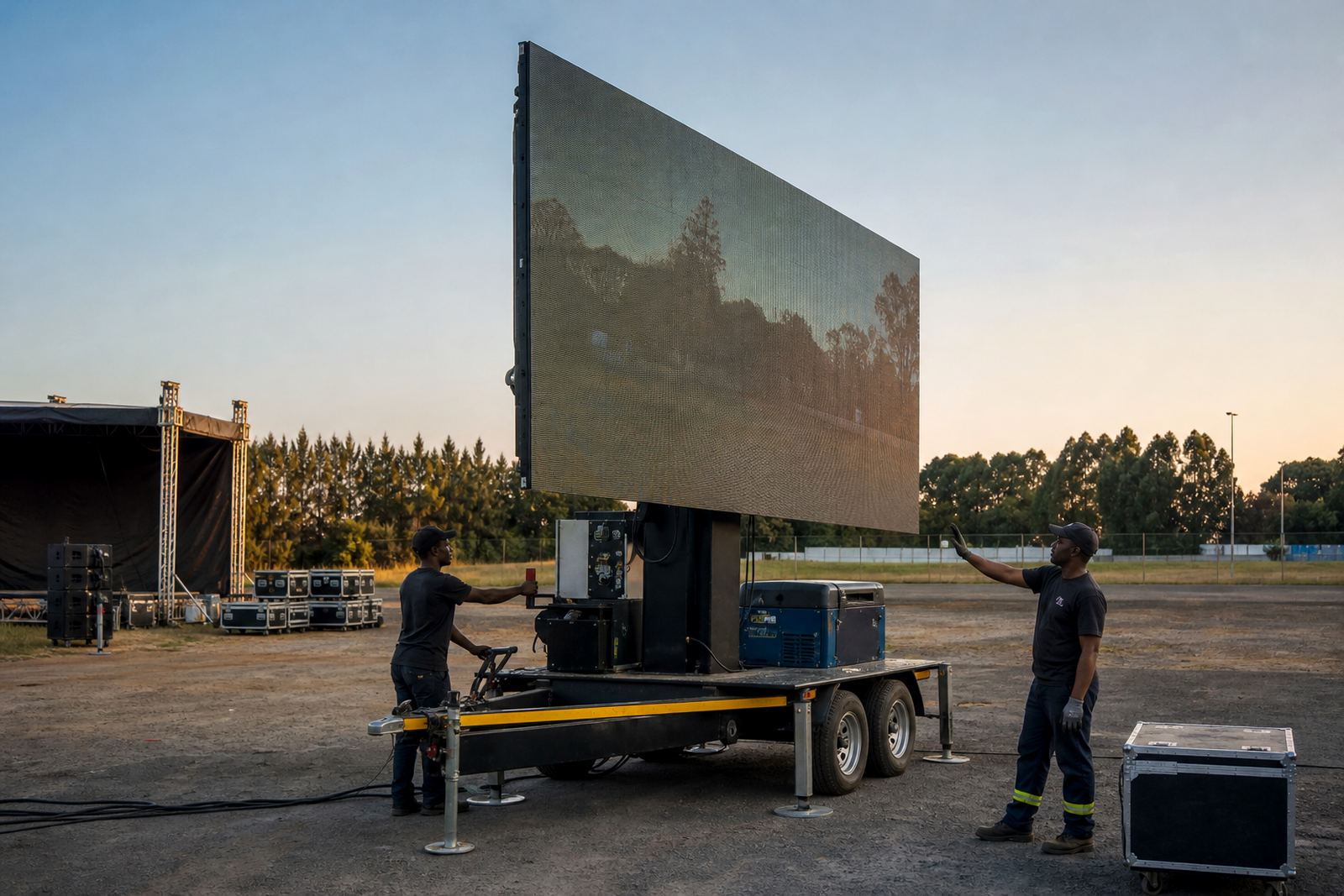
The hydraulic lift is part of what makes trailer systems practical for retail forecourts. It allows the screen to rise to a viewing height that clears vehicles, planters and low barriers, while the technician checks the lock points, angle and cable run. Wind limits are also part of the setup, because a raised display must be treated with proper caution in open areas where gusts can move through between buildings.
- Generator or mains supply can be planned for the site conditions
- Hydraulic lift used to raise the screen to the display height
- Rotation can be set to suit the best audience line
- Weather monitoring is part of the on-site technician's duties
Where a centre needs permit support, the paperwork is usually tied to the local municipality, the property manager and any site-specific rules for public advertising, traffic flow or temporary structures. The details differ from one location to the next, so the fitting plan has to respect the rules of the property and the surrounding roads.
Content playback for retail crowds and live moments
A mall exterior screen has to do more than show a loop. The playback plan needs to handle brand clips, simple promos, live schedule items, countdowns and any event content that changes through the day. For roadshows and activations, the technician can load media, test aspect ratios, manage sound where relevant and make sure the screen content still reads cleanly in bright light.
Live feed support is useful for launches, sports-day tie-ins and shared public moments where a delayed feed would feel flat. The content format should be prepared in the right resolution before arrival, because pixel pitch and screen shape affect how text, logos and moving footage appear once the display is live. A mall screen often carries short, clear messaging rather than dense copy, since the audience is moving and the forecourt is noisy.
- Content loading for video files, stills and playlist changes
- Playback management for scheduled promotions and event cues
- Live feed support where the programme needs real-time footage
- Display checks for clarity, scaling and safe screen operation
Where this setup fits on a shopping centre site
This product suits entrance plazas, food court spill-out areas, promotional stands, taxi drop-off zones and open parking decks where sightlines stay clear. It also works on mall edges that face passing traffic, especially when the campaign needs a screen visible from a vehicle queue or from a walking route between anchor tenants.
For advertisers, the value lies in placing the message where shoppers are already slowing down. For event teams, the screen can support activations, stage side messaging and public announcements. For retail centres, it gives a controlled outdoor surface for seasonal promotions, opening campaigns and community notices without needing a permanent build at every location.
- Shopping centre forecourts and entrance approaches
- Temporary retail activations and brand takeovers
- Parking courts with strong pedestrian movement
- Roadshows moving through Gauteng, KZN and beyond
Germiston is the base, and deliveries can be arranged for Johannesburg, Pretoria, Durban, Bloemfontein, Polokwane and other South African points where the route and access plan make sense for the screen size being moved.
Care, pack-down and the details to lock in
Outdoor LED screens need regular care because dust, rain splash and transport vibration can all affect the cabinets and the connections. After each hire, the screen is packed down in sequence, checked for loose fittings and prepared for the next move. On longer placements, the technician watches for image drift, input issues and any sign that cables or connectors need attention.
When ordering a mall exterior screen, the useful details are the site address, the viewing distance, the planned dates, the power position, the available access route and whether the centre wants a trailer unit or a fixed LED box arrangement. It also helps to know if the display must face a pedestrian stream, a parking court or a roadway, because that changes the size and the pitch choice.
- Exact site and access points for delivery and setup
- Desired screen size, orientation and viewing distance
- Power source available on site, or generator planning if needed
- Permit or property manager requirements for the location
Our contact form is where to send those details, along with any content timing, live feed needs or multi-stop routing for a mall campaign that moves between centres.
Key facts
| Product type | Outdoor LED screen trailer or LED box for mall exteriors |
|---|---|
| Pixel pitch | Selected to suit viewing distance and message detail |
| Brightness | High-brightness daylight output, typically 5 000 to 7 500 nits |
| Power options | Generator or mains power, depending on site conditions |
| Mechanical features | Hydraulic lift and directional rotation on trailer units |
| Support | On-site technician, playback management, weather monitoring and pack down |