A moving screen point for open-air programmes
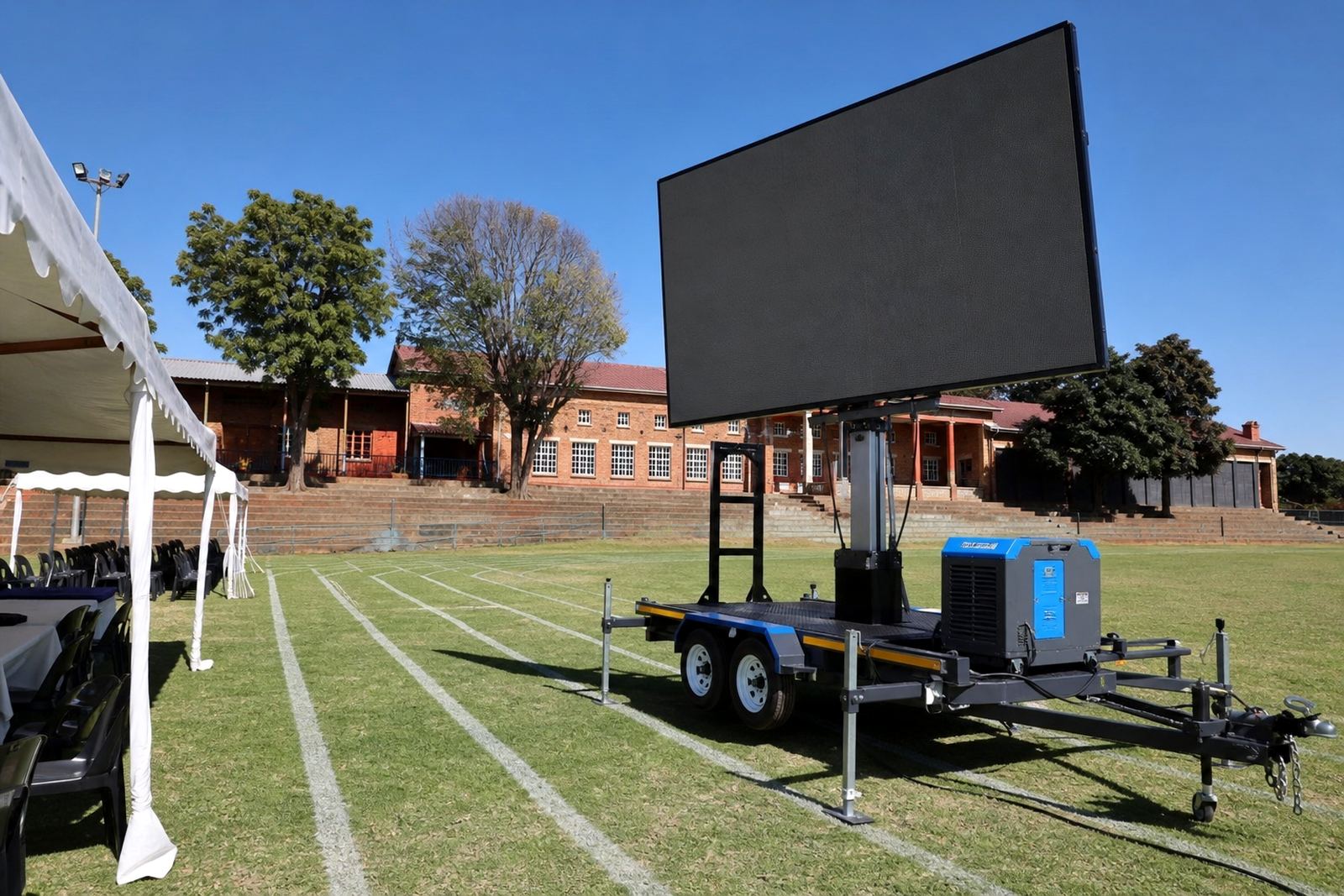
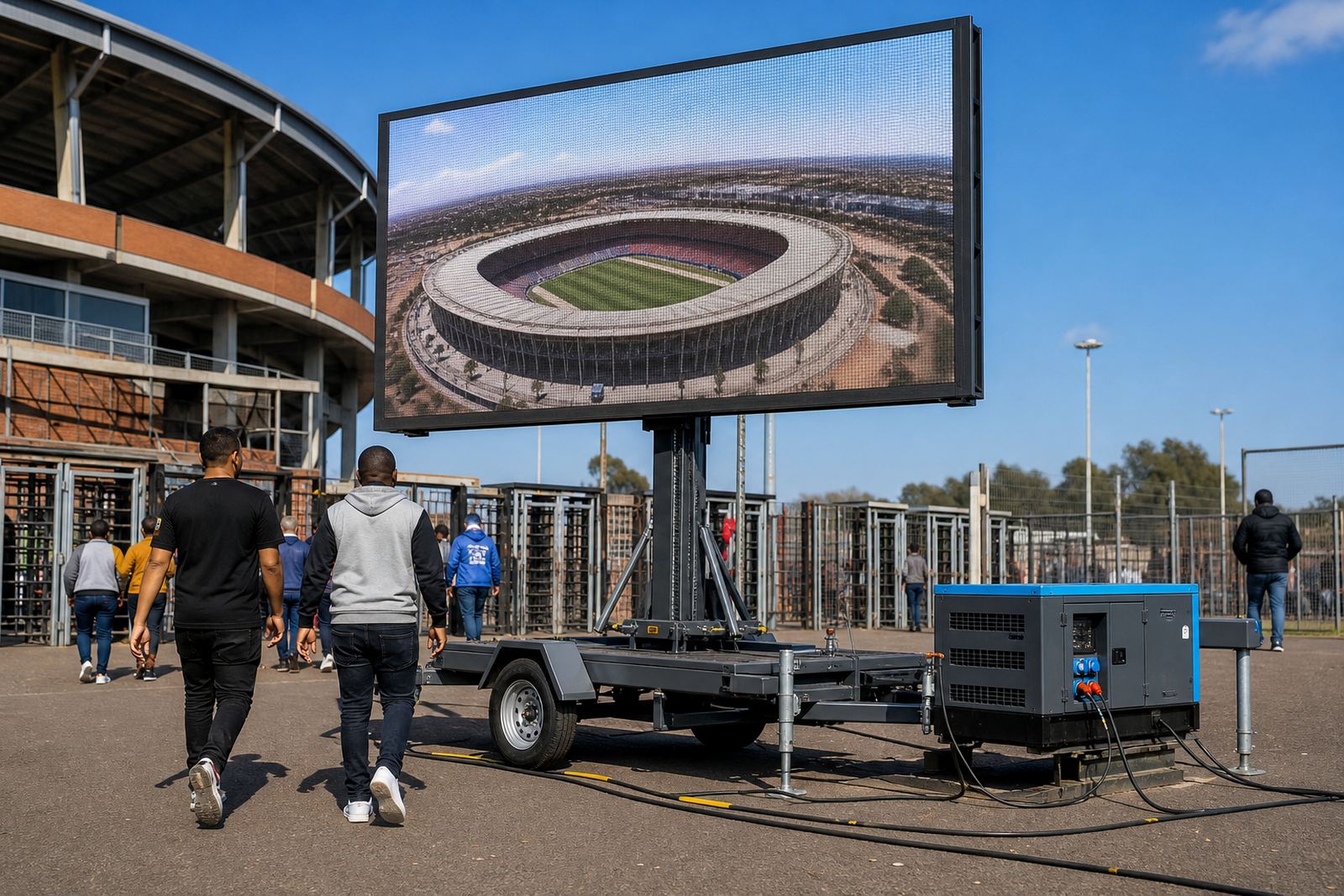
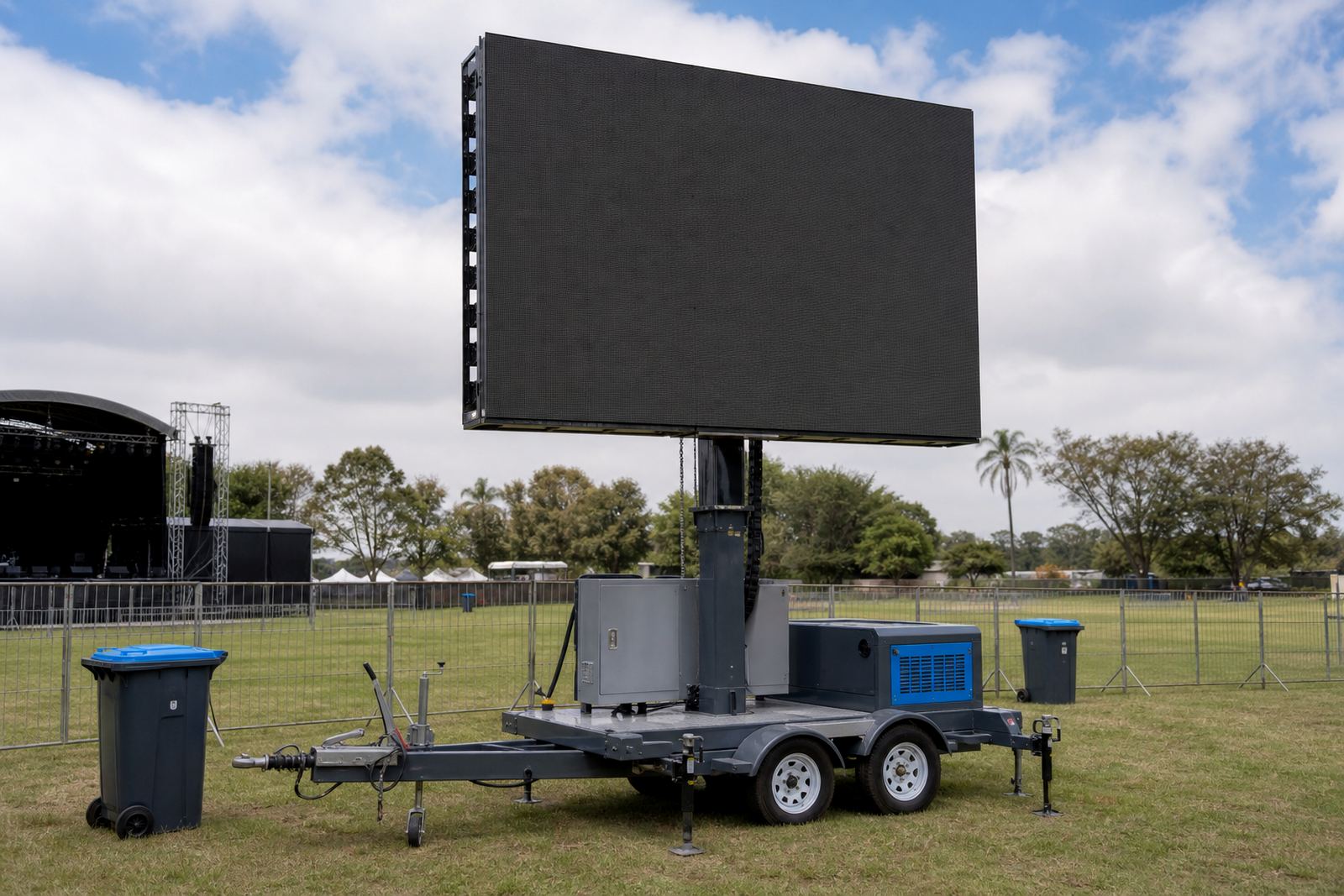
The Festival Trailer is a towable outdoor LED display built for temporary event use where people gather in open spaces and need to see content from a distance. It carries the screen, hydraulic lifting frame, control gear and power arrangement on one trailer, so the unit can be positioned near entrances, food courts, spectator areas or a main field without building a fixed structure.
For festival work, the screen is normally specified with a pixel pitch suited to viewing distance, often around 6 mm to 10 mm for mixed outdoor crowds. The panel brightness is set high enough for daylight conditions, usually in the 5,000 nits range and upward depending on the screen size and sun exposure. That makes it practical for sponsor reels, programme schedules, live camera feeds and safety notices where the image must hold up under full sun.
The trailer format suits roadshows, community festivals, sports days and concert support because it can be towed in, lifted into position and packed down without heavy site works. The screen face can be used for repeated content loops or live output from a feed switcher, which is useful when the programme moves between music, announcements and stage links.
Height, viewing angles and the right trailer size
Screen size is usually chosen against the crowd flow and the open area available. Smaller trailer screens work well for tighter festival villages, while larger formats are better where audiences stand further back or when the screen must carry sponsor visibility above stalls and tents. The viewing angle matters too, because people do not stand in a straight line at a festival and the image has to stay readable from the side as well as from the centre.
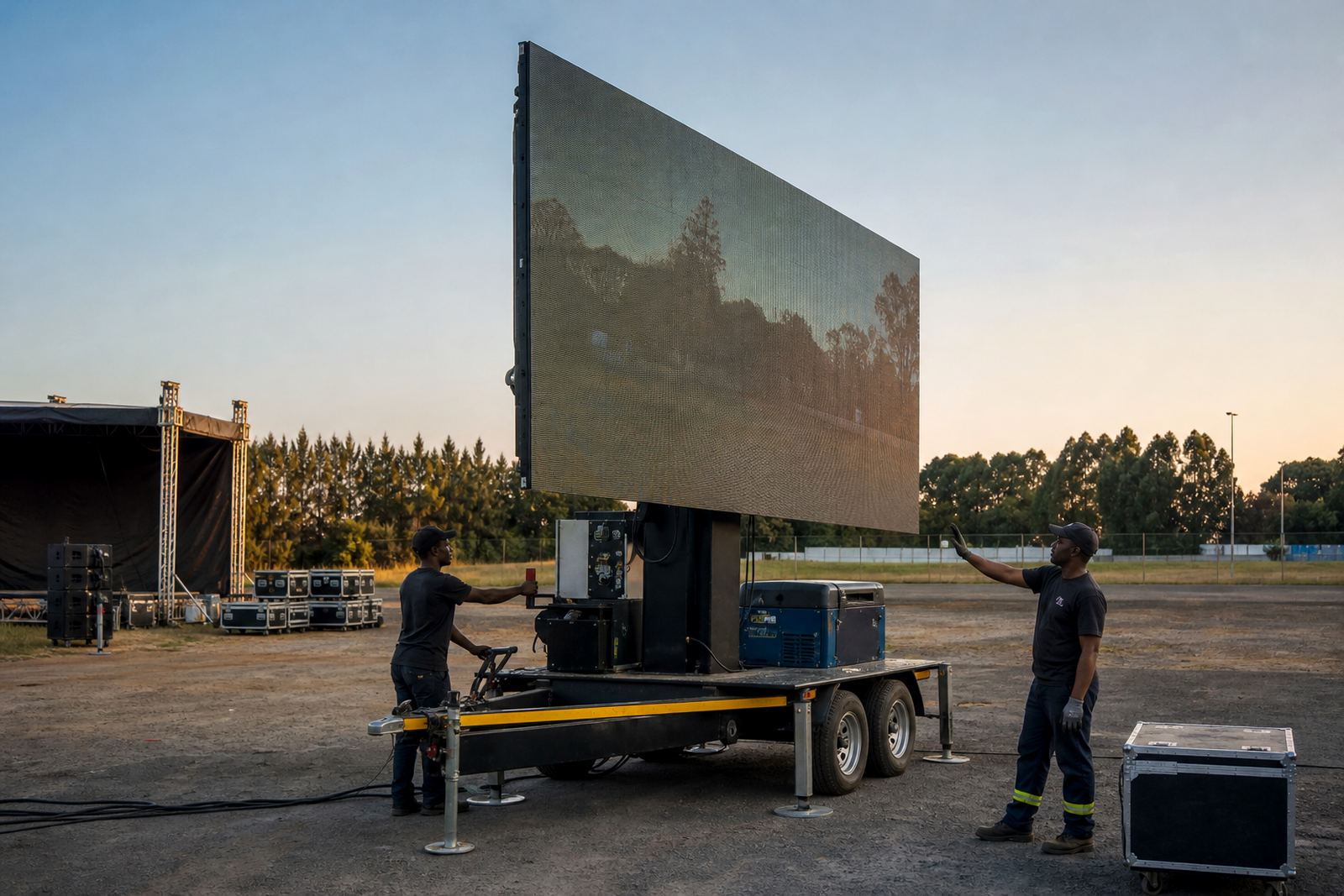
A hydraulic lift lets the screen rise into a higher line of sight, which helps when there are vehicles, marquees or crowds in the foreground. Some units also allow rotation, so the screen can be turned to face the correct audience zone without moving the whole trailer across the site. That is useful on curved access roads, long festival grounds or when the same screen has to serve more than one activity area.
- Screen size matched to crowd distance and site layout
- Hydraulic lift for higher viewing clearance
- Optional rotation for angled audience positions
- Trailer body designed for tow-in, set-up and pack down
Power, playback and live content on the day
Festival trailers can run from a generator or from mains power where the venue supply is available and appropriate for the load. Power planning matters because outdoor LED screens draw steady current and the control kit needs clean power for reliable playback. On larger festival sites, the technician checks cable runs, grounding and the point where the power source sits relative to the screen position.
Content is loaded before the event or on site, depending on the running order. The system can loop sponsor reels, display text notices, show countdowns and handle live feed inputs for stage screens or crowd updates. Where a sound counter or live camera source is involved, the playback plan needs the correct feed format and a clean handover between clips, stills and live input. When a festival has multiple programme blocks, the content list needs a proper sequence so the screen does not sit on the wrong frame while the crowd is waiting.
- Content playback for clips, stills, crawls and notices
- Live feed support where the programme needs camera input
- Power planning for generator or venue supply
- On-site technician for operation and content control
Permits, wind limits and site checks before arrival
Outdoor screen trailers sit within general municipal and event control rules, especially where the unit is parked near public roads, pedestrian flow or municipal land. Depending on the site, organisers may need permission for placement, access control, traffic management or overnight parking. The screen position should also be checked against sight lines, emergency routes and any restrictions on structures near the crowd area.
Wind loading is a real consideration on a raised LED screen. The trailer needs to be parked on stable ground, levelled correctly and secured as required for the site and weather conditions. If the wind picks up beyond safe operating limits, the technician may lower the screen or stop operation until conditions settle. That is part of normal outdoor practice, especially on open fields, coastal sites and high-exposure venues where the weather can shift during the afternoon.
A proper site check covers access width, turning space, overhead clearance, power point location and the best viewing direction. It also helps to confirm whether the unit can be towed in at the planned time, or whether the route has soft ground, low branches or uneven surfaces that need attention before the trailer arrives.
Care for a screen that works outdoors all day
Outdoor LED panels need clean handling, dry storage between jobs and sensible wash-down around the trailer body only where the manufacturer’s practice allows it. Dust, road grime and coastal humidity can build up on moving parts and connectors, so the trailer should be inspected after transport and before each event. The screen face must be checked for dead pixels, loose modules and any damage from handling or weather.
When the trailer is parked for a festival run, the technician keeps an eye on cables, access locks, ventilation and the control box. During operation, the content should be monitored for signal loss, looping errors or brightness mismatch between panels. If the event runs over several days, the unit may need a fresh content load, a quick visual check at the start of the next programme block and a review of the power source and battery or generator status where relevant.
Cleaning is gentle and organised. The screen face should not be scrubbed with rough cloths, and the hydraulic components need routine inspection so lift action stays smooth. A trailer that moves between Germiston, Johannesburg, Pretoria, Durban, Bloemfontein and Polokwane needs regular attention to bolts, wheels, latches and towing fittings because road travel exposes every moving part.
Details to confirm when ordering this trailer
Before a festival trailer is booked, the key details are the site address, programme dates, audience distance, screen position and whether the event uses generator or mains power. The content format matters too, because some runs need a simple looping playlist while others need live feed support or timed sponsor slots. If the screen will be used for site-wide announcements, the organiser should note the number of message changes and the order in which they need to play.
It also helps to confirm the access route for towing, the ground condition where the trailer will stand and whether municipal or venue permission is already in hand. If the site has multiple zones, the crew may need multi-stop planning so the trailer supports different programme points across the day. The more exact the location notes, the cleaner the setup and content handover will be on site.
- Where the festival is and which gate we tow through
- Audience distance and preferred screen orientation
- Power source on site, generator or mains
- Content format, playback order and live feed needs
- Permission status for roads, public space or venue land
- Weather exposure, ground condition and pack down timing
Key facts
| Screen type | Outdoor LED screen trailer with hydraulic lift |
|---|---|
| Typical pixel pitch | Around 6 mm to 10 mm depending on viewing distance |
| Brightness | High-brightness outdoor display for daylight use |
| Power options | Generator or mains power, based on site setup |
| Mobility | Towable unit with rotation and level setup |
| Support | On-site technician for playback, live feed and pack down |