A screen that works the edge of the crowd
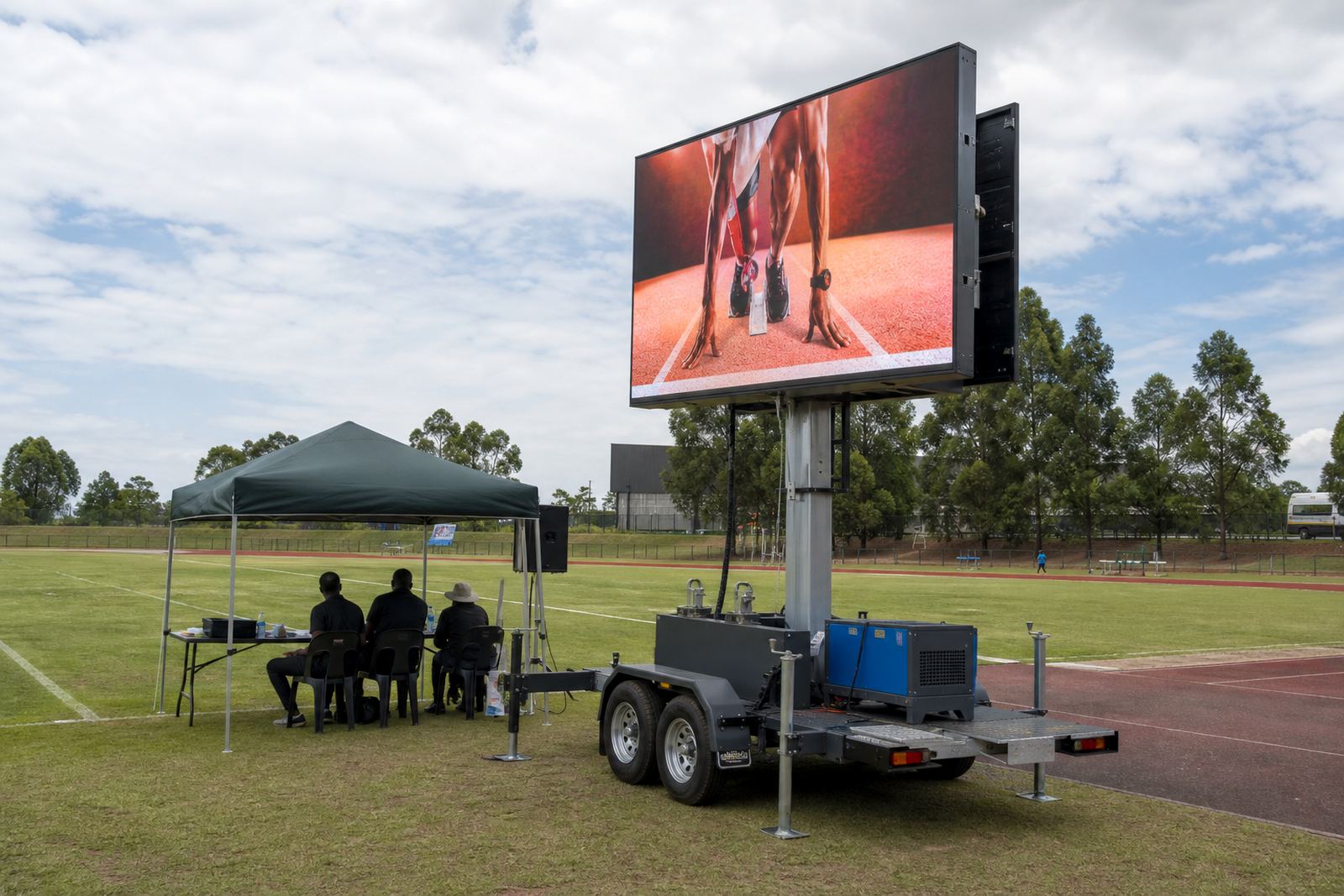
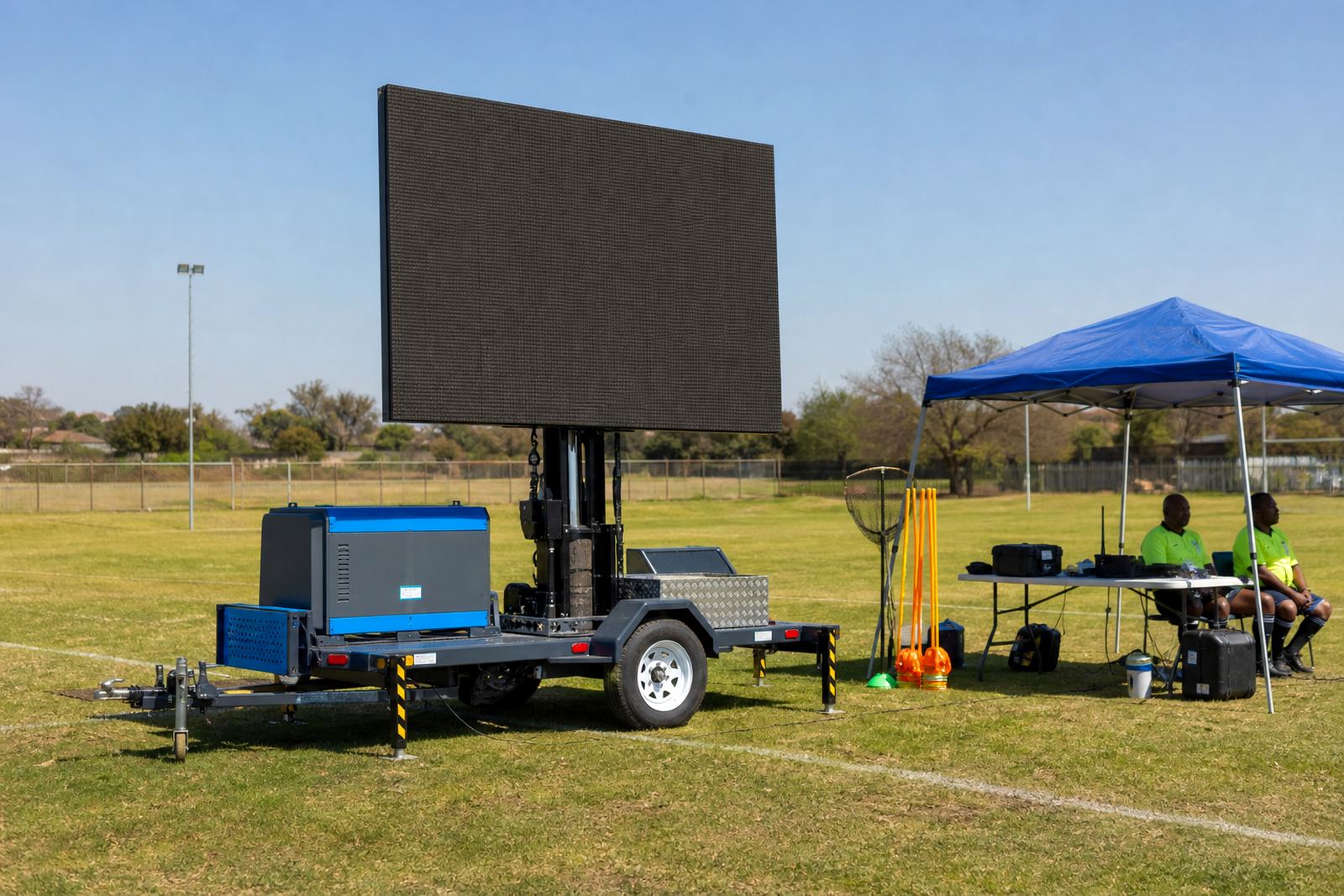
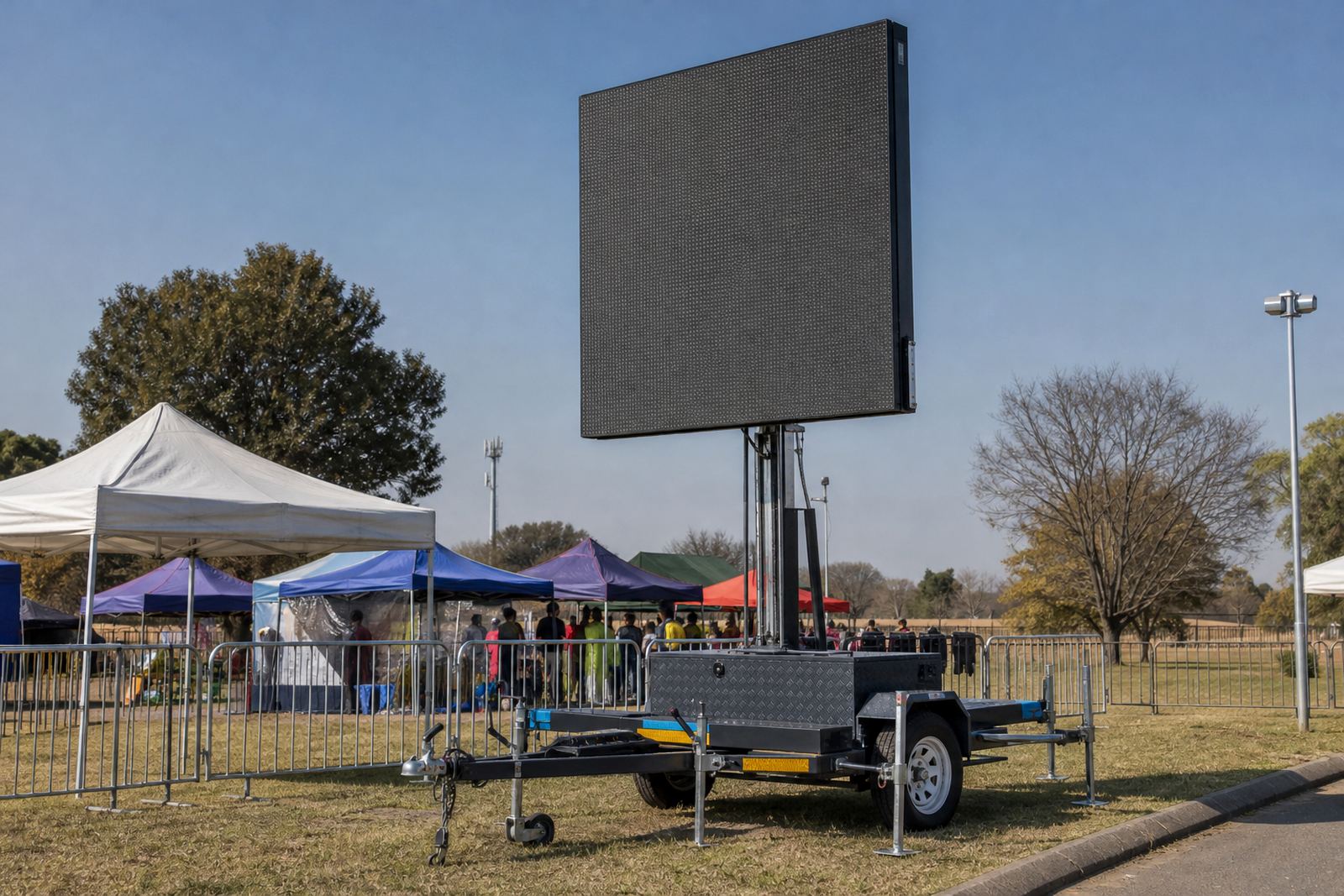
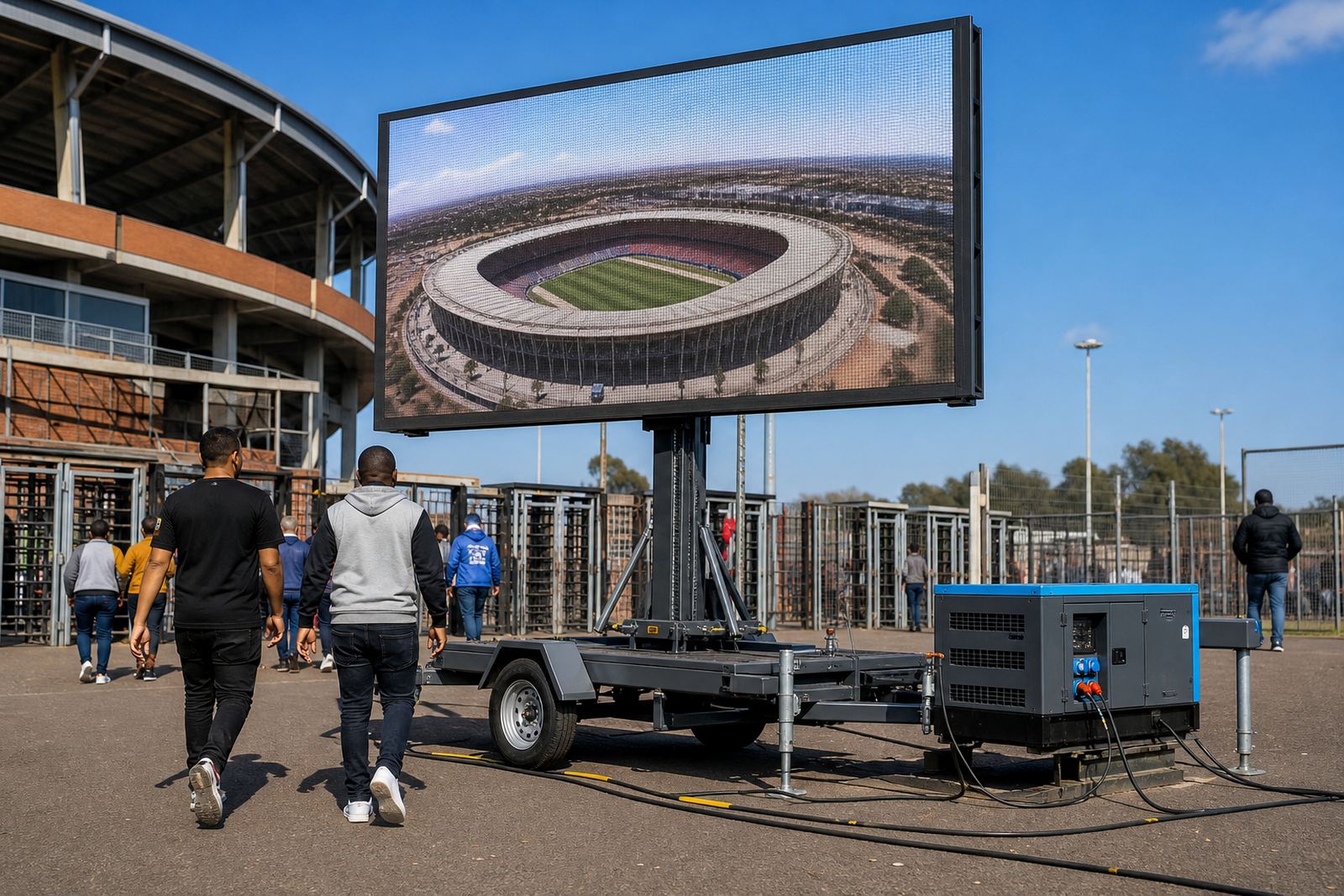
The Stadium Perimeter format is built for open-air viewing beside entrances, fan parks, overflow areas and boundary lines where a fixed wall screen is not practical. The trailer carries the LED display, lifting frame and control hardware in one mobile unit, so the screen can be positioned where foot traffic, sightlines and sponsor exposure matter most.
We work with outdoor LED cabinets suited to bright daylight use, with pixel pitch options generally from P4.8 through to P10, depending on viewing distance and content detail. Fans in the front rows sit close, and a tighter pitch keeps sponsor marks crisp at that range. For larger perimeter placements, a wider pitch can suit long viewing distances and bigger format graphics.
Brightness is set for outdoor conditions, usually in the 5,000 to 7,500 nits range or above for strong midday visibility. Content can be played from a media server, laptop or live feed input, with the layout tailored to sponsor loops, event graphics, score feeds or safety notices. The unit is built for repetitive use at outdoor venues, with sealed cabinets and solid mounting points for transport and deployment.
Trailer, lift and rotation details that matter on site
The trailer design uses a hydraulic lift to raise the screen into position, and many layouts allow rotation so the face can be aimed along the best sightline. That helps when the screen must cover a concourse, a queueing lane or a long perimeter run where one viewing angle would otherwise miss the crowd.
Stability is managed with levelling, outriggers and site checks before the screen goes live. Wind limits are part of the planning, and the screen may need to be lowered or paused if conditions move beyond safe operating range. On busy match days or concert setups, this matters as much as the screen size itself.
- Hydraulic lift for fast vertical deployment
- Rotation options for better audience alignment
- Outriggers and levelling for uneven ground
- Wind monitoring during operation
- Suitable for paved areas, grass edges and temporary event zones
Because the screen is trailer mounted, fitting needs are less invasive than a fixed structure, but access still matters. The towing vehicle route, turning circle and final parking position all need to suit the venue layout, especially where security fences, vendor stands or spectator flow leave tight margins.
Where stadium perimeter screens fit best
This setup suits sports days, match venues, concert approaches, roadshows and public events where the outside perimeter carries part of the audience experience. It is also useful for sponsor loops and branded messages near gates, parking areas and hospitality entrances. In venues with multiple access points, one trailer can be placed where the highest footfall passes through.
For municipal or private venues, permit requirements may involve access approval, trading rules, traffic controls, safety sign-off or site permissions. The exact paperwork depends on the location and the kind of event, but it is wise to allow for venue management, local authority rules and any marshal positions needed around the screen.
- Sports days and tournaments
- Concerts and outdoor performances
- Fan zones and sponsor walls
- Roadshows with repeat stops
- Venue entrances and perimeter walkways
In Gauteng, KwaZulu-Natal, the Free State and Limpopo, we plan for transport access, ground condition and visibility from different approach points. A stadium perimeter screen needs to be seen from the right distance, not merely placed near the venue. That is what shapes the size, pixel pitch and final position.
Power, content and playback on event day
Outdoor LED trailers can run from generator power or mains power, depending on what the venue can provide and what the event plan allows. The choice affects cabling, noise management and placement near the screen. Where mains power is available, the supply needs to be checked for load and protection. Where generator power is used, fuel planning and positioning need attention too.
Playback is managed through a technician who handles file loading, source switching, live input checks and screen calibration. That matters when a sponsor reel, a countdown, a live camera feed or a score update must sit in the same playlist without glitches. Colour balance, brightness and image scaling are set before the crowd arrives.
- File formats and aspect ratio confirmed in advance
- Live feed support for cameras or external sources
- Playlist order matched to the event run sheet
- Backup playback options where needed
- Audio routing discussed where the venue requires it
For stadium perimeter use, content often needs to be legible from a moving crowd as well as from stationary viewers. That means large type, clean logos and strong contrast. Long scrolling text is rarely the best fit, while short sponsor messages and high-impact motion clips work more reliably at outdoor distance.
Care, weather watch and pack down
Outdoor LED cabinets need regular inspection for dust, moisture seals and transport wear. In coastal air, especially when a unit has been used near Durban, the team pays attention to corrosion points and connector covers. After rainy conditions, the screen and trailer are checked before the next lift, and wet cables are not left coiled up against the hardware.
Our technicians watch the weather on every stadium booking. Heat, rain and strong wind all affect how long the screen can stay up and where it should be placed. If the venue surface becomes soft after rain, the outriggers and tow position may need adjusting before operation can continue safely.
- Keep panels clean and dry after use
- Check brackets, locks and latches before transport
- Inspect power leads and signal cabling routinely
- Store content files with a backup copy
- Lower the screen before towing or severe weather
Pack down is done in a sequence that protects the display, the trailer and the surrounding site. That includes shutting down playback, securing the lift, folding the structure and clearing all loose items from around the stand area. Proper care reduces downtime and keeps the unit ready for the next venue.
What to confirm before the trailer rolls in
When ordering a Stadium Perimeter screen, the main details are the venue access, viewing distance, screen size, power option and content format. It also helps to know whether the screen is needed for one day, a multi-stop roadshow or a longer campaign with repeated venue changes. The route, gate height and turning area should be considered early.
Confirm the place where the trailer will stand, the surface type, the time the screen is needed on site and whether the venue wants permit guidance handled in general terms. If sponsor messages, live feeds or score content are part of the brief, the file list should be matched to the event schedule before loading begins.
- Venue name and exact placement point
- Expected viewing distance and audience angle
- Power source preference: generator or mains
- Content type: adverts, sponsor loops, live feed or score board
- Need for permit guidance and site checks
LEDBox handles delivery, setup, playback management, live feed support and on-site technicians from Germiston, Ekurhuleni, with coverage into Johannesburg, Pretoria, Durban, Bloemfontein and Polokwane. The right perimeter screen is not only about size, it is about the angle, the ground, the weather and the flow of people around the venue.
Key facts
| Screen type | Outdoor LED trailer for stadium perimeter use |
|---|---|
| Pixel pitch | P4.8 to P10, depending on viewing distance |
| Brightness | Outdoor daylight brightness, typically 5,000 to 7,500 nits or above |
| Lift system | Hydraulic raise with rotation options on selected units |
| Power | Generator or mains power, depending on site conditions |
| Support | Delivery, setup, content loading, playback and on-site technician |