A trailer that turns the picture to the crowd
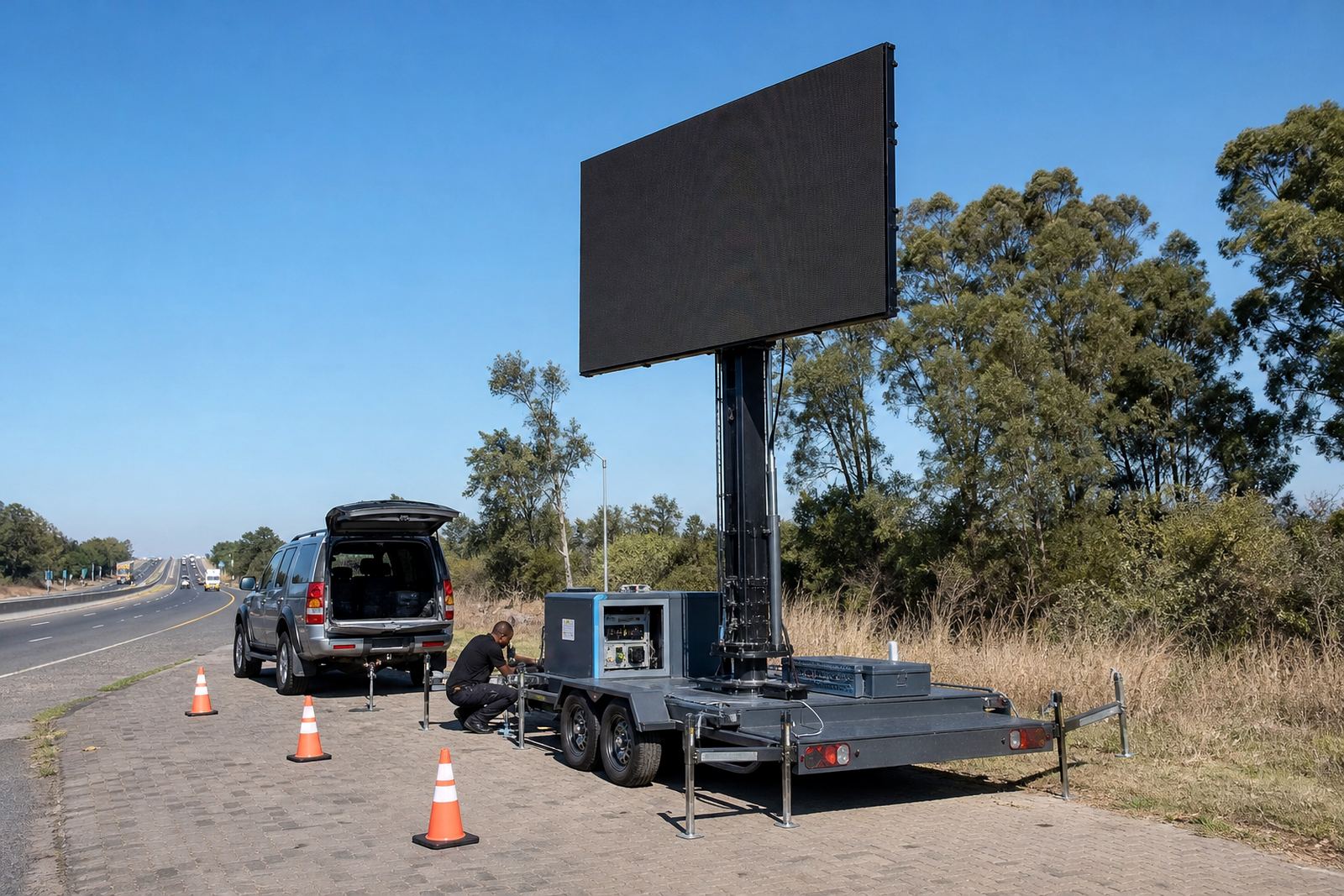
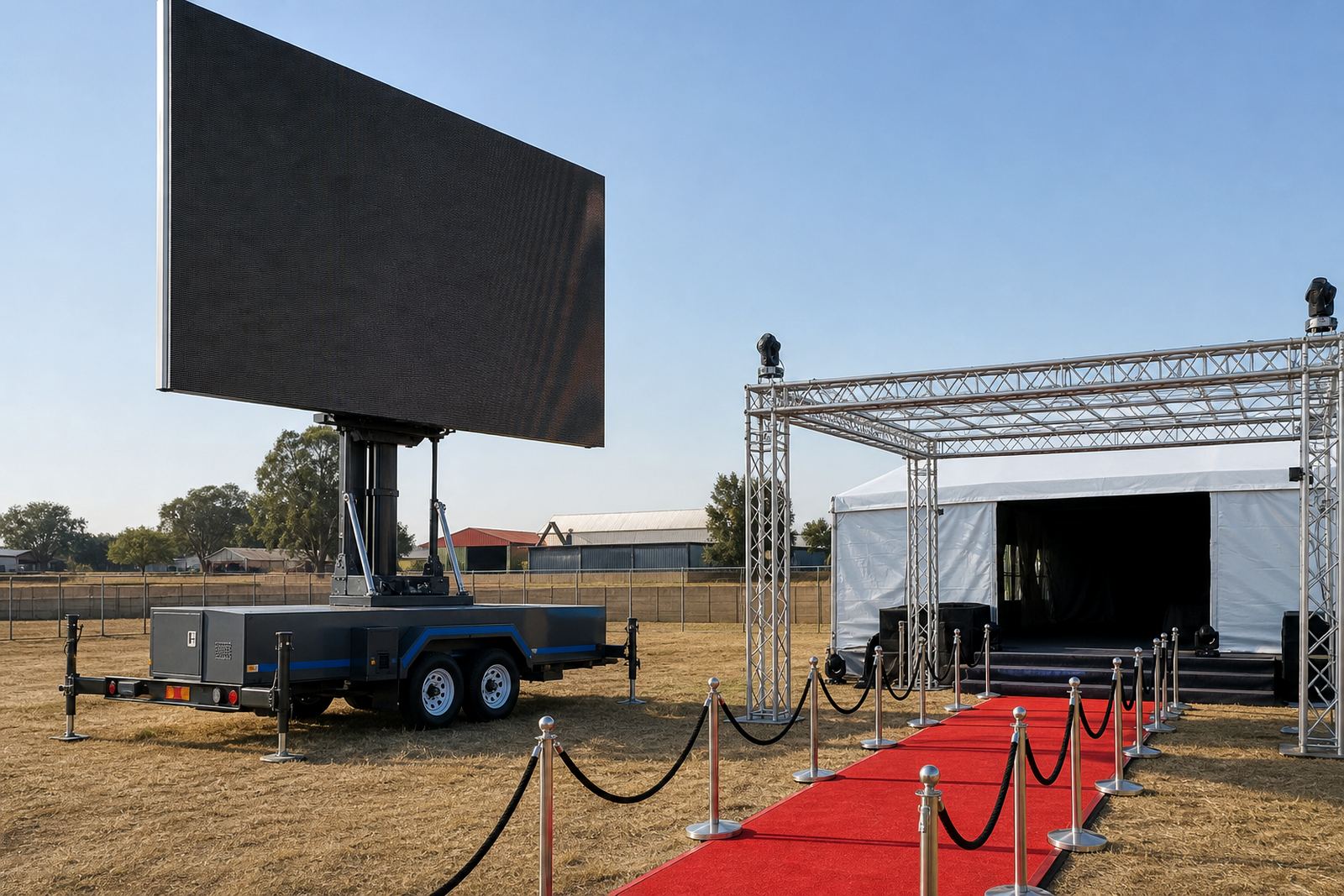
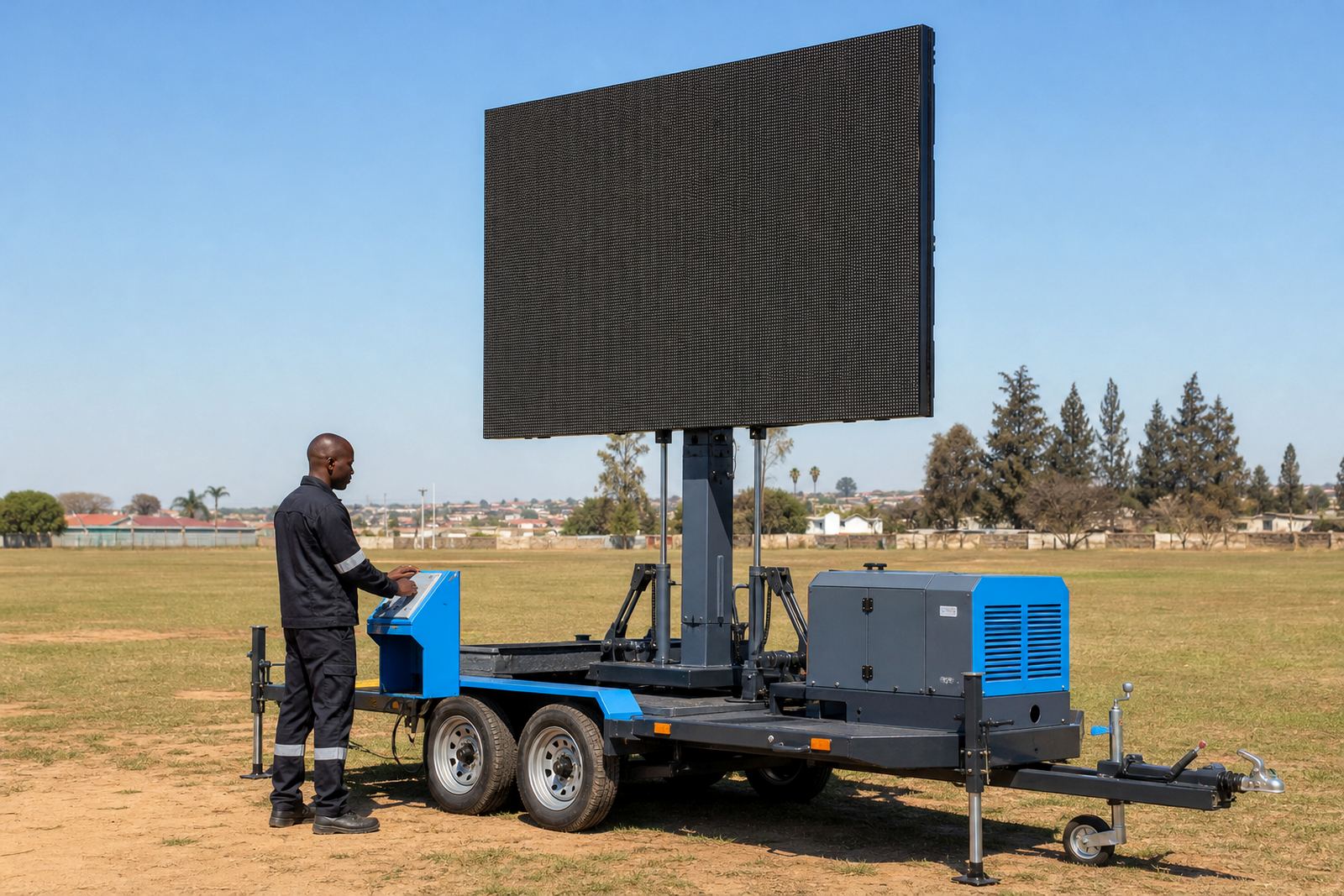
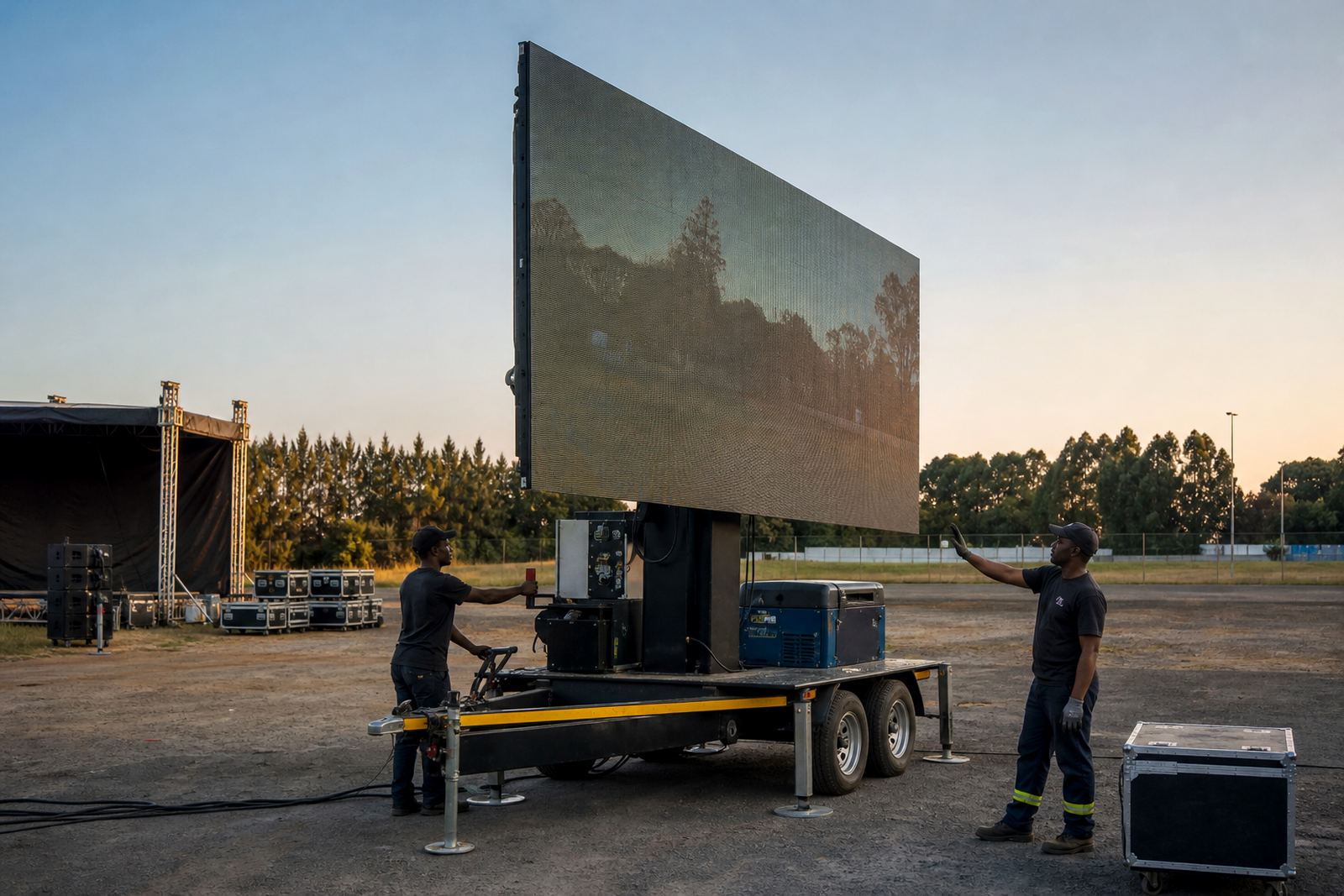
The rotating trailer is built for outdoor viewing where the best sightline changes during the day. The screen module sits on a trailer chassis with a hydraulic lift, then rotates so the display can be aimed toward the main audience path, the entrance gate or the longest viewing line.
For roadside advertising, sports days and outdoor launches, that movement matters. A fixed screen can leave part of the audience looking at the side angle, while a rotating unit can be adjusted to suit the layout on site. Most builds use LED panels with fine pixel pitch options for cleaner text, logos and moving video at close and medium viewing ranges.
Brightness is set for daylight viewing, with high-nit output that stays readable in sun, glare and open-air conditions. Depending on the brief, the trailer can run from mains power or generator supply, and the content can be played from a media player, laptop feed or live input when the event needs it.
Typical screen builds and movement options
Rotating trailer units are usually specified around the viewing distance, the size of the artwork and the ground space available for safe parking. Smaller builds suit tighter urban sites and short-range crowd viewing, while larger screens work better for broad exposure along roads, forecourts and festival grounds.
- Screen sizes commonly range from compact formats for site entrances to larger billboard-style displays for open outdoor spaces.
- Pixel pitch can be selected for closer text-heavy content or wider viewing distances, depending on the campaign.
- Hydraulic lift height helps raise the screen above vehicles, barriers and low street furniture.
- Rotation allows the face of the screen to line up with changing foot traffic or passing vehicles.
- Weather-rated cabinets and outdoor cabling are used for outdoor conditions and coastal humidity where needed.
The trailer format also helps when the event needs repositioning during the day. A technician can adjust the screen angle, confirm the viewing line and lock the unit in place once the audience flow is settled. That is useful for markets, expos, sporting fixtures and activation points where the crowd does not stay in one direction for long.
Where the rotating trailer earns its keep
This product suits roadshows, promotions, outdoor product launches, school sports days, brand activations and municipal events. It also works well at intersections with legal stopping points, car parks, stadium forecourts and open grounds where a screen needs to reach people from more than one direction.
In Germiston, Johannesburg and the wider Ekurhuleni area, the trailer format is practical for busy sites where access needs to be managed carefully. For Pretoria, Durban, Bloemfontein and Polokwane, transport planning matters too, because the screen must arrive in good order and be set where the viewing line and safety space both work.
Municipal permission can matter for public land, road-facing placements and certain event venues. The exact paperwork depends on the site, the traffic position and whether the screen is being used in a controlled private space or a public-facing area.
- Good for traffic-facing promotions and short-term brand exposure.
- Useful where the audience approaches from different sides.
- Suitable for venues that need a raised screen line above heads and vehicles.
- Works well when content changes during the day and the angle must change with it.
Setup, power and on-site running
These units are not just dropped off and left. They need siting, levelling, hydraulic lifting, rotation checks, signal testing and a proper power plan before content goes live. LEDBox handles delivery, setup and operation with an on-site technician, which helps keep the trailer aligned, the playback stable and the screen ready for the live programme.
If the site has mains power, the technician will connect to a suitable supply with the right protection and cable routing. If the brief calls for generator use, the power setup must be matched to the screen load, audio extras and any playback equipment on site. Good cable management matters in dusty yards, wet grass and parking areas where people are moving around the trailer.
Live feed support can be added where the event needs a camera signal, presenter feed or stage relay. The technician monitors playback, checks content resolution and keeps an eye on brightness settings so the picture stays legible in changing daylight. Wind limits are also part of the site check, because a raised rotating screen needs safe operating conditions and stable ground.
Content loading and picture quality on the day
The rotating trailer works best when the material is prepared for outdoor LED viewing. That means the content should match the screen ratio, avoid thin type at small sizes and use strong contrast for daylight legibility. A fine-pitch screen can carry more detail, while a coarser pitch suits larger artwork viewed from further away.
Content loading can include adverts, sponsor loops, motion graphics, scoreboards and live visual feeds. The playback specialist checks file format, resolution and sequence order before the event starts, then keeps the show running in the right order during the hire period. Where the site needs multiple messages, the playlist can be arranged to suit time slots or audience flow.
- Use clean artwork with large type for moving crowds.
- Keep logos and safety messages away from the very edge.
- Match the file resolution to the chosen screen size and pitch.
- Allow for daylight brightness and a wide outdoor viewing angle.
Care, packing down and what to confirm first
Outdoor LED trailers need sensible care before, during and after use. The screen surface should stay clean, the trailer should be parked on stable ground, and the unit should not be run beyond the wind conditions set for the site. After the event, pack down must be handled carefully so the lift, rotation system and panel edges are protected during travel.
Before a hire is confirmed, it helps to pin down a few practical details. Screen size, viewing distance, power source, content format, rotation direction, parking space and permit needs all affect the final setup. If the trailer is moving between stops, the route plan matters too, especially for multi-stop roadshows and long-distance deliveries.
- Confirm the viewing angle and whether the screen must face one fixed point or several crowd positions.
- Confirm site access, height limits and the space needed for the trailer to park and rotate safely.
- Tell us if the trailer will run on mains power or a generator.
- Confirm the content ratio, playlist length and whether live feed support is needed.
For rotating trailer hires in Germiston, Ekurhuleni and beyond, LEDBox handles the practical side of the screen, the transport and the on-site running so the display sits where it should and the audience gets a clear view.
Key facts
| Screen type | Outdoor LED screen trailer with rotation capability |
|---|---|
| Typical pixel pitch | Fine-pitch and standard outdoor options, chosen for viewing distance |
| Brightness | High-brightness daylight viewing specification |
| Movement | Hydraulic lift with screen rotation for audience alignment |
| Power options | Mains power or generator supply, site dependent |
| Support | Delivery, setup, content loading, live feed support and on-site technician |