Mobile live feed screens for moving crowds
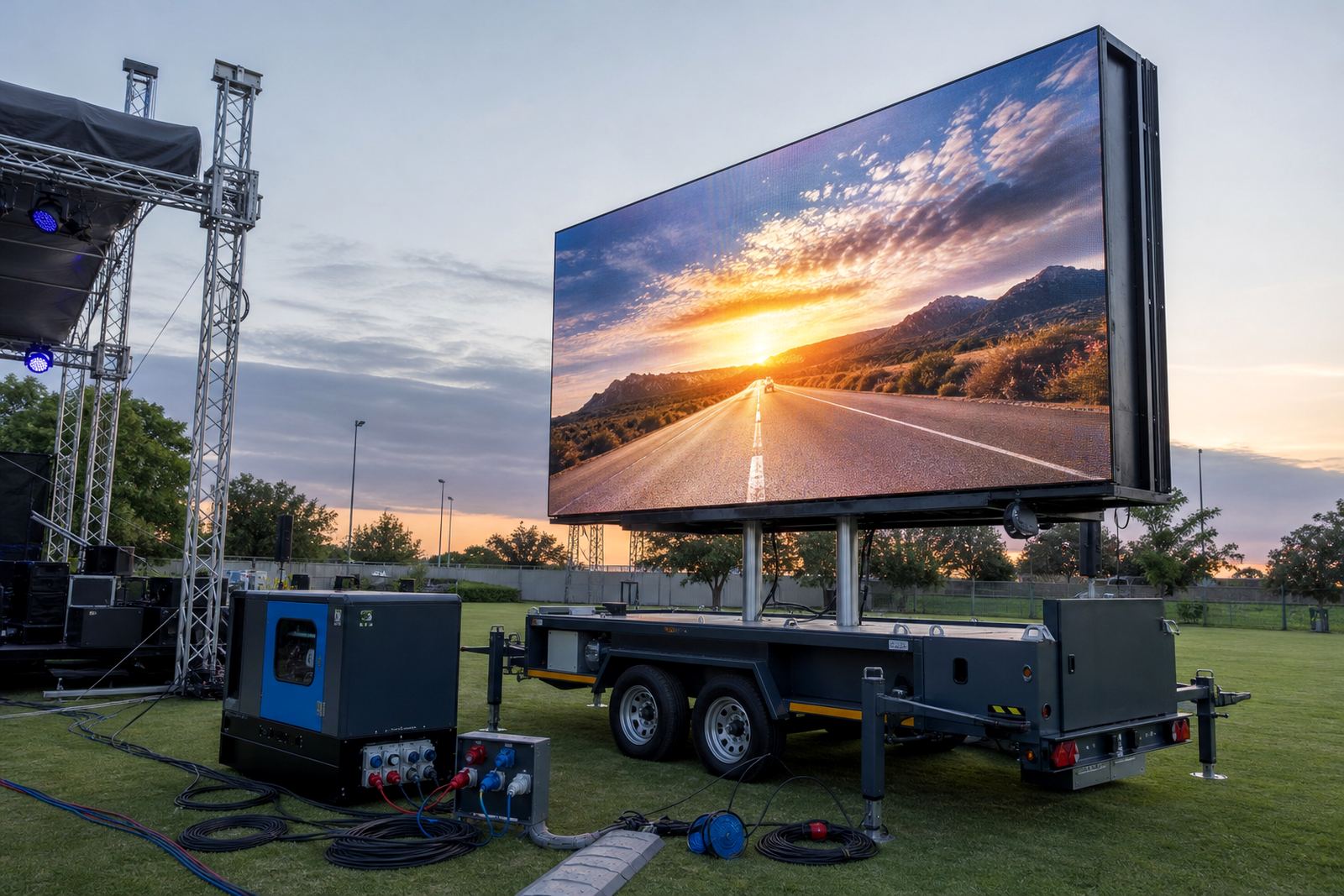
A live feed screen is a mobile outdoor LED display set up to show real-time camera footage, programme output or split-screen event graphics while people are already on site. It suits sports days, concerts, school functions, brand activations and roadshows where the audience needs to see the action from a distance. The screen can be trailer-mounted for fast placement on a hard stand, or fitted as part of a wider event layout when space planning is tighter.
Our live feed screens are built for outdoor viewing, so the image stays readable in daylight and under changing cloud cover. Pixel pitch is selected for viewing distance, with tighter pitches for closer crowds and wider pitches for larger open areas. Brightness levels for outdoor use are typically set high enough for direct sun, while the content chain is managed so the feed stays stable from the camera point to the screen.
- Trailer-mounted LED screen for quick positioning
- High-bright display for outdoor daylight viewing
- Camera feed, laptop output or media player input
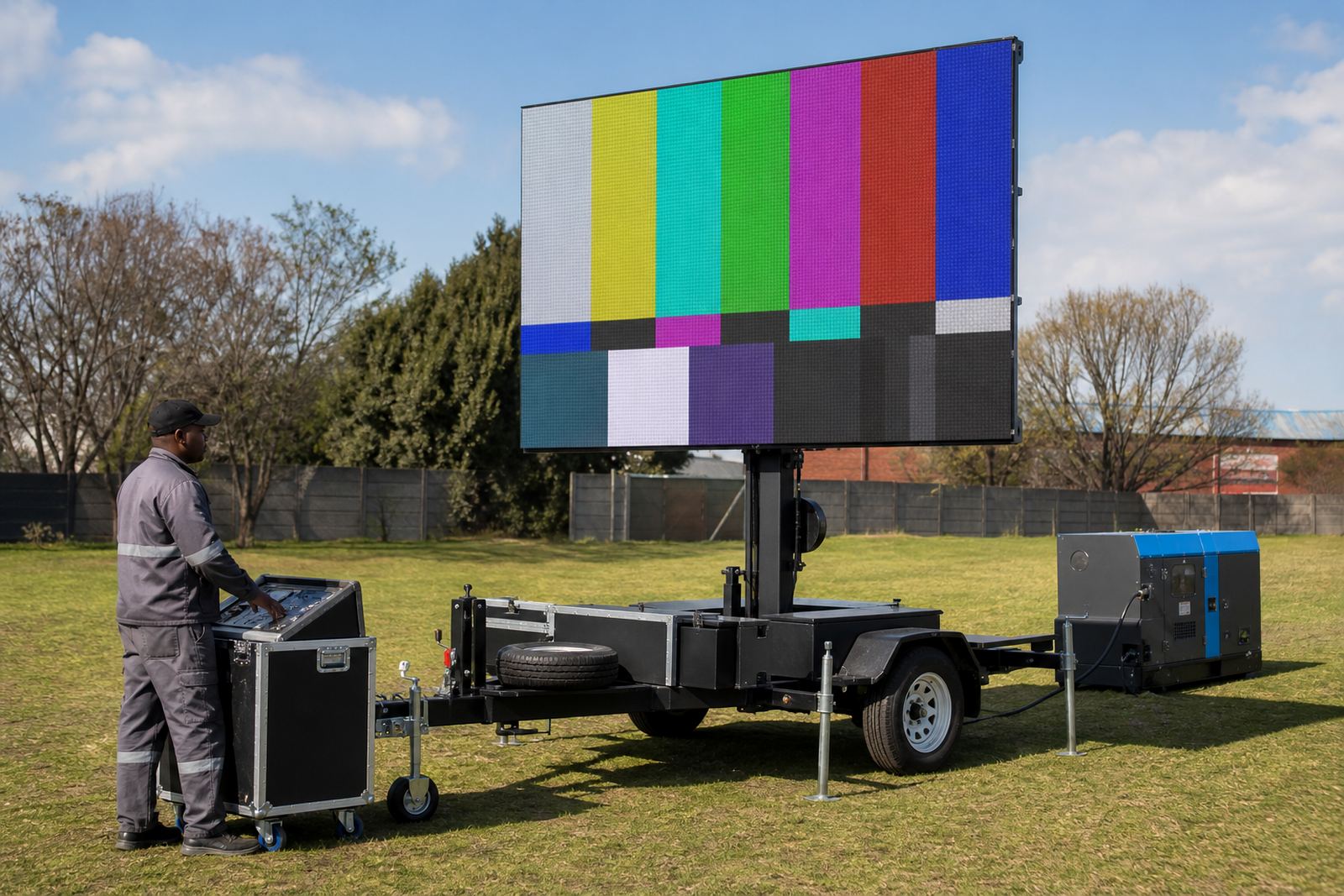
- On-site technician managing setup and playback
Screen sizes, pixel pitch and viewing distance
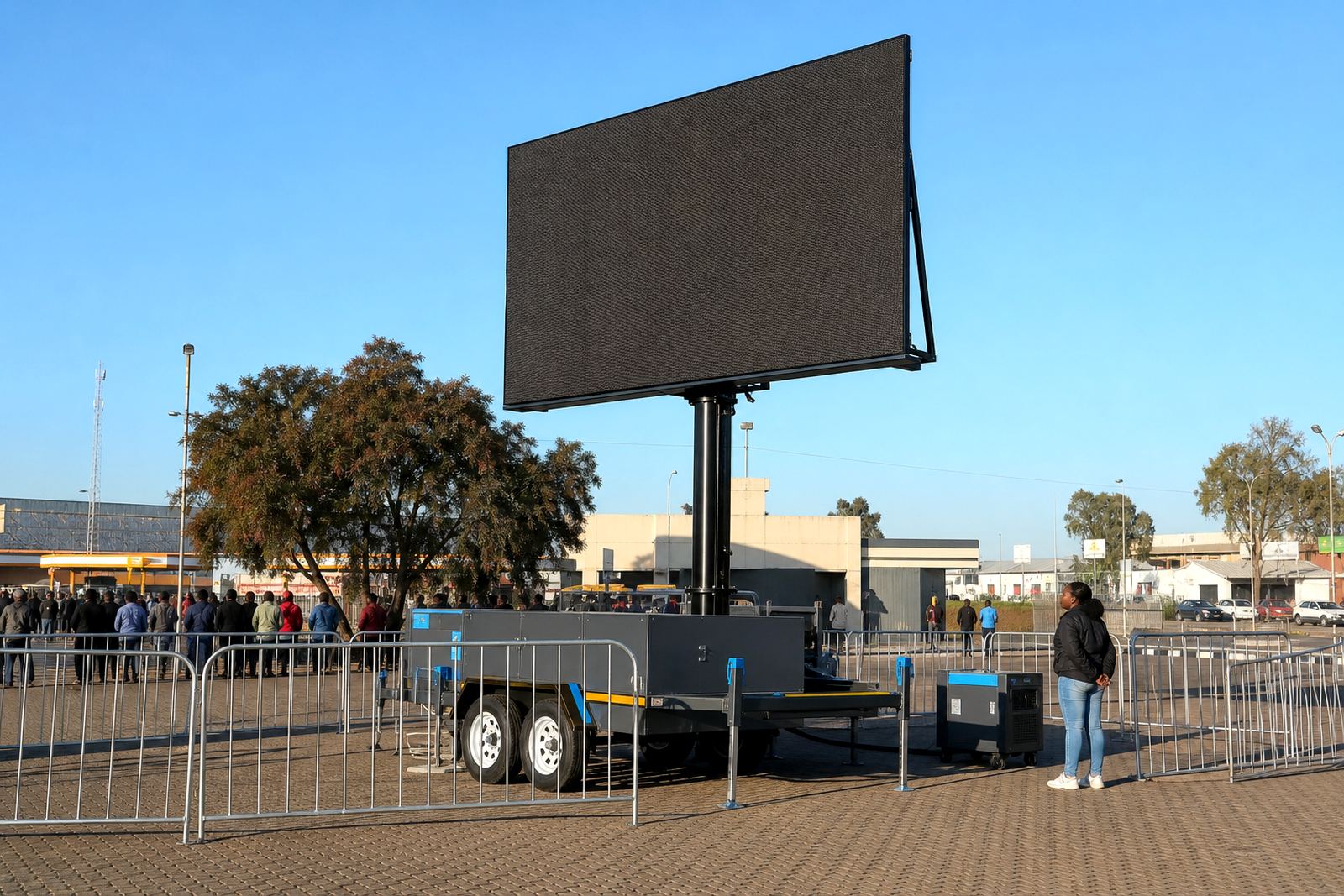
The right live feed screen depends on how far the crowd will stand from it, how much motion is in the feed and how much detail must stay sharp. Smaller events may work well with a more compact trailer and a finer pixel pitch, while large sports grounds and concert lawns call for a bigger image with a format that holds up at distance. For many outdoor jobs, the screen face sits above head height so sight lines stay open across the venue.
We match the screen size to the crowd shape, not only to the field or stage. A wider aspect ratio helps with camera shots and graphics overlays, while the operator can switch between live camera, sponsor loops, scoreboard content and announcements without crowding the image. If the venue has narrow access roads or a tight setup zone, trailer placement and rotation are planned around that space from the start.
- Compact, medium and large outdoor screen options
- Pixel pitch chosen to suit audience distance
- Wide aspect ratios for live camera and graphics
- Raised viewing position for open venues
How the trailer, lift and power are handled on site
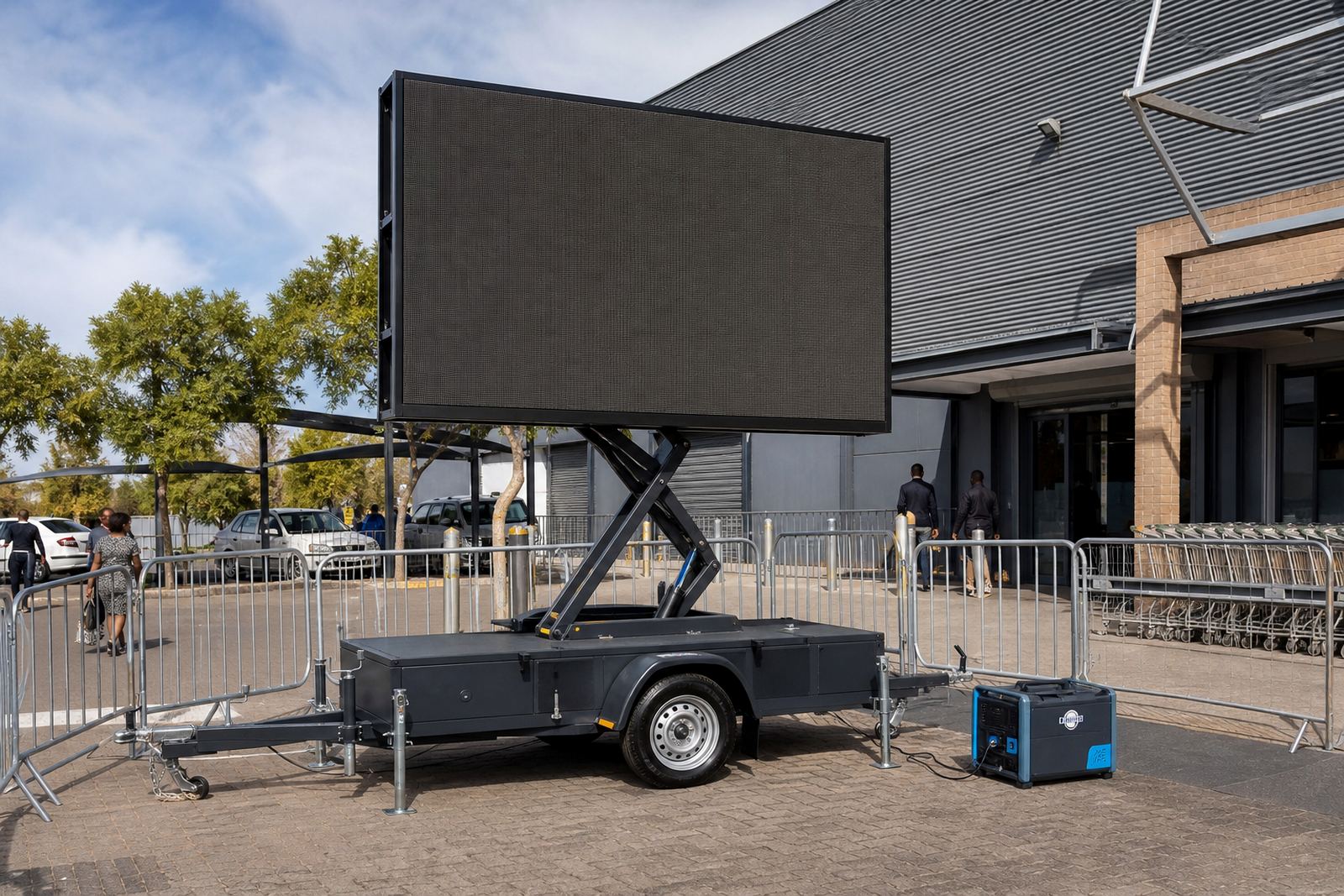
Outdoor screen trailers are built to be positioned, levelled and raised with proper control. The hydraulic lift brings the screen into operating height, and many units can rotate so the face points toward the main audience area. That matters at school sports fields, festival lawns and roadside promotions where the best viewing angle shifts with the site layout. Once in position, the frame is secured and checked before the feed goes live.
Power planning depends on the event setup. Some live feed screens run from mains power where a suitable supply is available, while others use a generator arranged for the load and run time needed. Cable routes, distribution points and the technician's working space are planned with the venue team, and permit guidance is provided where municipal requirements apply for roadside placement, public open space or temporary outdoor trading areas.
- Hydraulic lift for raising the screen safely
- Rotation to face the main crowd area
- Mains or generator supply, depending on the venue
- Permit guidance for relevant municipal setups
Where live feed screens earn their keep
This product works well wherever people need to follow action from a distance or across a busy venue. Sporting matches, athletics days, concerts, public viewing areas and product launches all benefit from a screen that keeps the camera feed readable and immediate. In larger outdoor spaces, live video can also help with presentations, cue timing and stage communication when the audience cannot stand near the performance area.
For roadshows and multi-stop events, the trailer format keeps movement and reset practical between venues. The technician can load the feed source, test the signal and manage playback while the event team focuses on the programme. In windy coastal conditions, exposed sites and open fields, the screen position and operating limits are checked against site conditions before the display is raised.
- Sports days and field events
- Concerts and stage programmes
- Roadshows and public activations
- Municipal, school and private outdoor venues
Setup details, signal handling and care between hires
A live feed screen needs careful signal handling, clean cabling and a proper weather watch. The technician checks the camera feed path, confirms the playback source and keeps an eye on brightness, contrast and frame sync once the event starts. Where live camera switching is involved, a simple run sheet helps the crew keep the right source on screen without confusion at cue points.
Between hires, the screen is cleaned, inspected and packed for the next site. Trailer tyres, stabilisers, connectors and lifting parts need regular attention, and outdoor LED modules are kept dry, dust-free and protected during transport. If a venue has soft ground, tight access or overhead obstacles, those details must be shared in advance so the layout can be planned around them.
- Confirm camera source, laptop or media player output
- Share site access, ground condition and viewing direction
- Note whether mains power or generator supply is available
- Tell us about permit needs, wind exposure and working hours
Delivery from Germiston to events across South Africa
LEDBox operates from Germiston, Ekurhuleni and supports live feed screen hire and build work across Johannesburg, Pretoria, Durban, Bloemfontein and Polokwane. Delivery, setup, on-site technicians and pack down are all part of the job, with each site handled according to its access points, crowd flow and technical needs. Our contact form is where to send the venue details, event date and the feed source you plan to use.
For organisers, the useful details are the site address, floor plan or field layout, the audience distance, the power point arrangement and any municipal conditions that affect temporary outdoor placement. If the screen must work beside a stage, touchline, race track or roadside stop, those load-in details help the crew plan the lift, rotation and signal path before the truck arrives.
Key facts
| Product type | Outdoor live feed LED screen trailer and box screen |
|---|---|
| Brightness | High-bright outdoor display for daylight viewing |
| Pixel pitch | Selected to suit viewing distance and content detail |
| Power options | Mains supply or generator support, depending on site |
| Mounting | Hydraulic lift with trailer-based positioning and rotation |
| Service area | Germiston, Ekurhuleni, Johannesburg, Pretoria, Durban, Bloemfontein and Polokwane |