Built for after-dark viewing, not just a bright picture
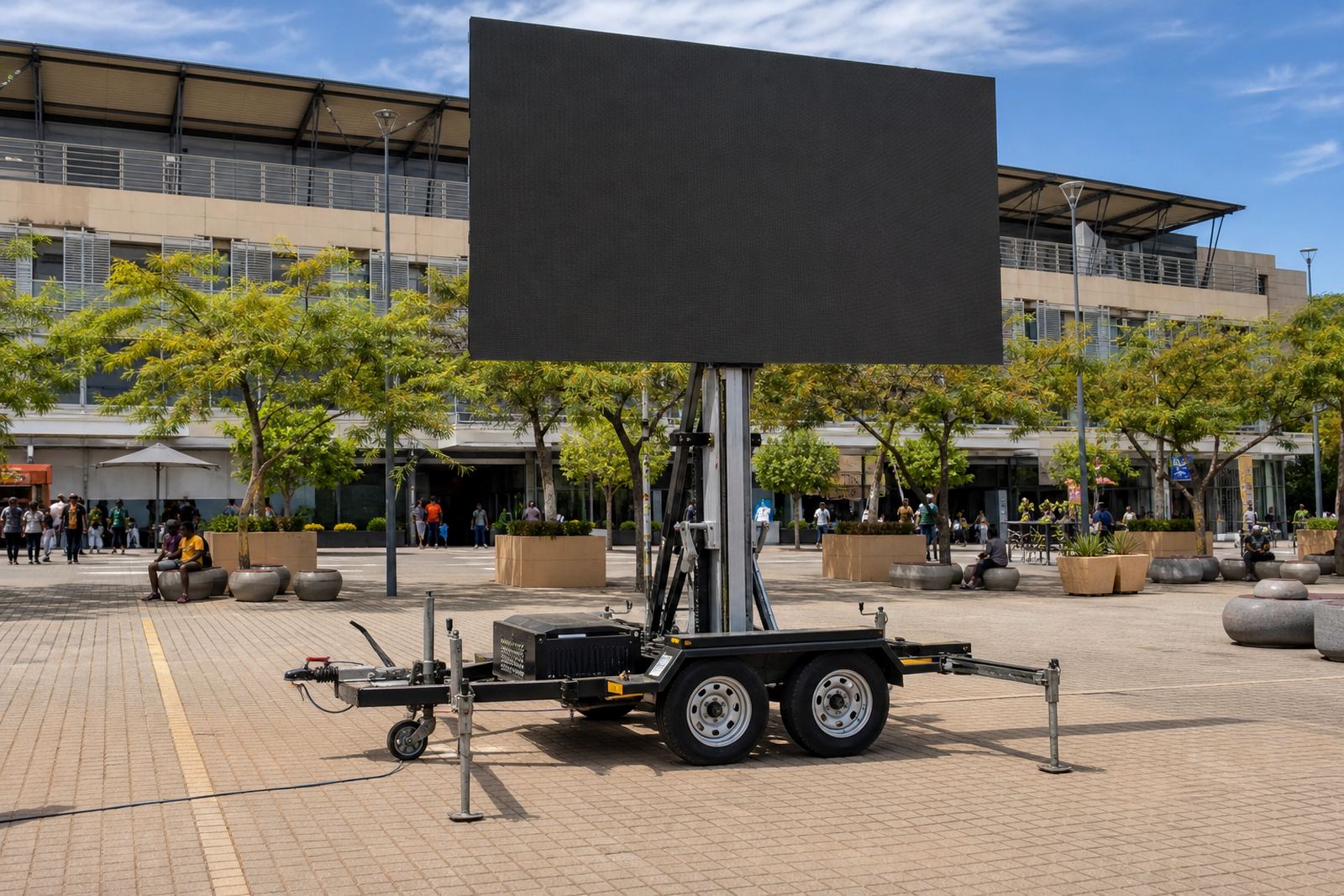
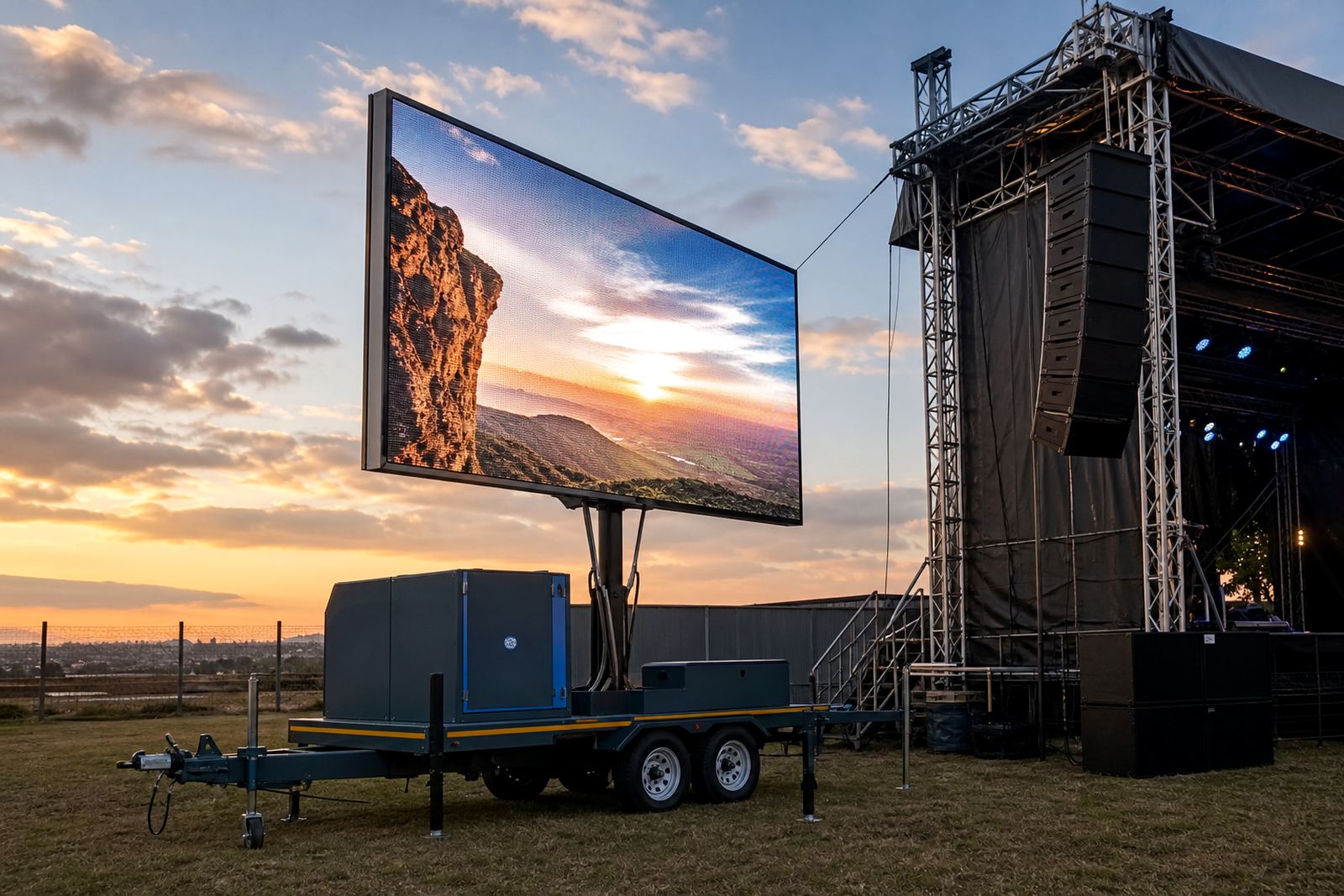
The night event screen is a trailer-mounted LED display arranged for evening work where the picture must stay readable from a distance and hold its shape under outdoor lighting. Pixel pitch is selected to suit viewing distance, with tighter pitches used for closer audiences and wider pitches for larger open areas where the crowd stands further back.
Outdoor panels are specified for high brightness, often in the 5,000 to 7,000 nits range, so the image still carries once the sky goes dark and venue lights are active. The screen face is built for live playback, static artwork, motion graphics and camera feeds, so it can run a brand loop one minute and a stage relay the next. For night use, colour balance matters just as much as brightness, because washed skin tones or muddy blacks are easy to notice when the crowd is settled and watching closely.
The trailer frame allows the screen to be raised into position with a hydraulic lift, then rotated or angled to suit the site. That helps when the viewing area sits to one side of the vehicle, or when the screen has to face a stand, parking area or open field without the trailer body blocking sightlines.
Screen sizes, trailer formats and viewing distances
Our night event screen options are planned around the audience shape, the access route and the amount of open ground available for parking and lift-off. Smaller trailer screens suit tighter venues and quick brand activations, while larger LED boxes suit concerts, roadshows and screenings where the picture must carry over a bigger crowd.
- Smaller trailer units for tighter forecourts, school grounds and compact activation spaces
- Mid-size screens for sports days, community events and branded evening showings
- Larger screens for concerts, public screenings and open-air audience areas
- Fine-pitch panels for closer viewing where detail matters on text and video
- Standard outdoor pitches for wider audience spread and stronger visibility at distance
The physical footprint of the trailer matters too. Access gates, turning circles, uneven ground and overhead clearance all affect where the unit can sit. In Germiston, Kempton Park and other built-up areas, the route to the setup point can be just as important as the final viewing angle. For roadshows, a screen that packs cleanly and moves well between stops keeps the day easier to manage.
Where evening screens earn their keep
This setup suits live music, civic events, outdoor film nights, brand launches, product reveals and sporting fixtures where the crowd stays outside after sunset. It also works for retail centres, municipal gatherings and promotional roadshows that need a moving visual focal point without setting up a permanent structure.
At sports days and tournaments, the screen can carry scoreboards, sponsor loops, safety messages and live camera shots. At concerts, it supports stage relays, sponsor graphics and timed visuals between acts. For screenings, the image has to stay stable in low light, with audio and playback tested against the crowd size and venue shape. Around Johannesburg, Pretoria, Durban, Bloemfontein and Polokwane, the same unit can be adjusted for very different ground conditions, from open parking areas to tighter event access points.
Because outdoor work can involve wind, route restrictions and municipal controls, the event plan has to match the site. Permit guidance is often needed for public spaces, road-facing activations and locations where the trailer sits near pedestrian traffic. The screen can be used in private venues too, but the access and positioning still need careful checking before the unit is brought in.
Power, lift and playback details that shape the setup
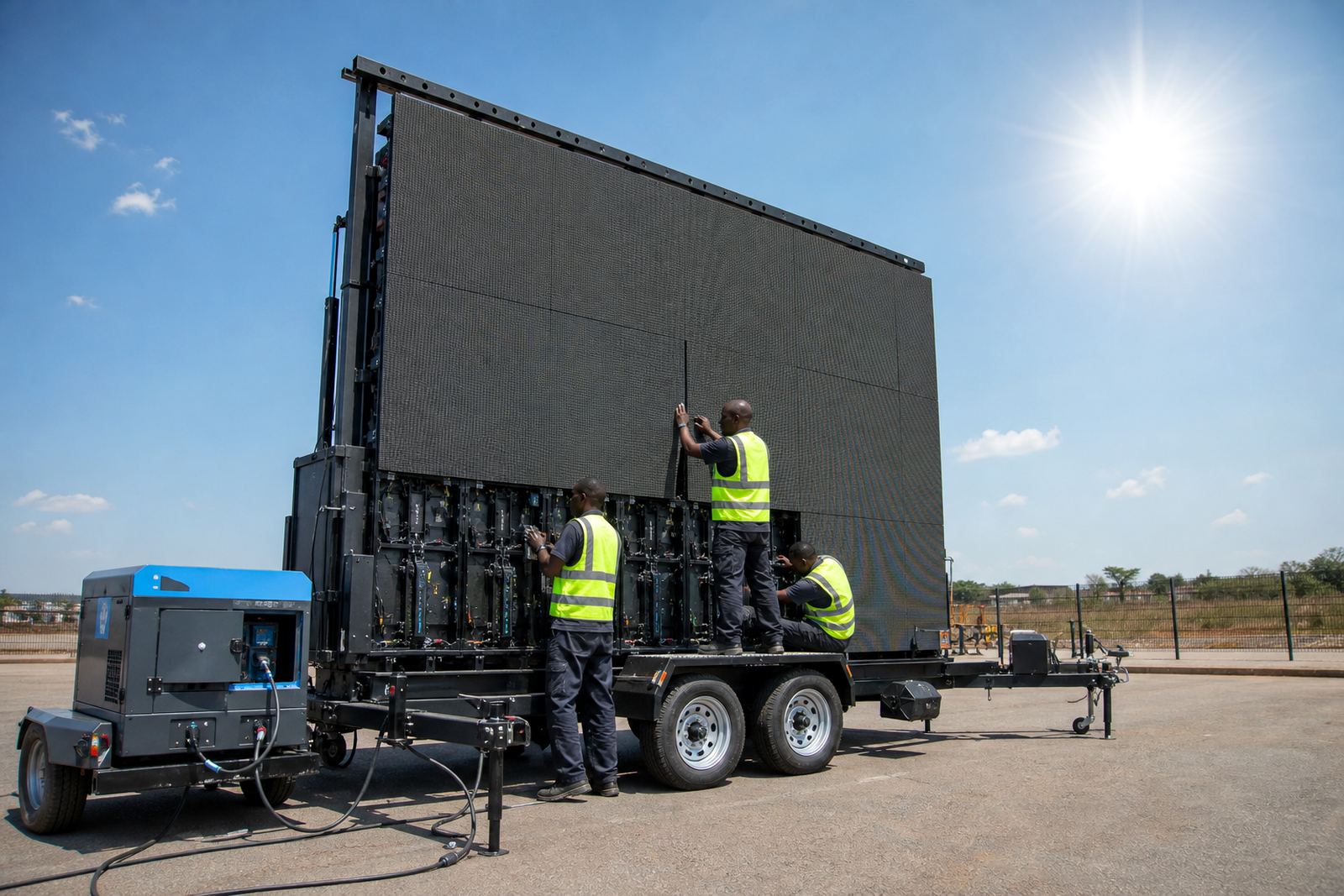
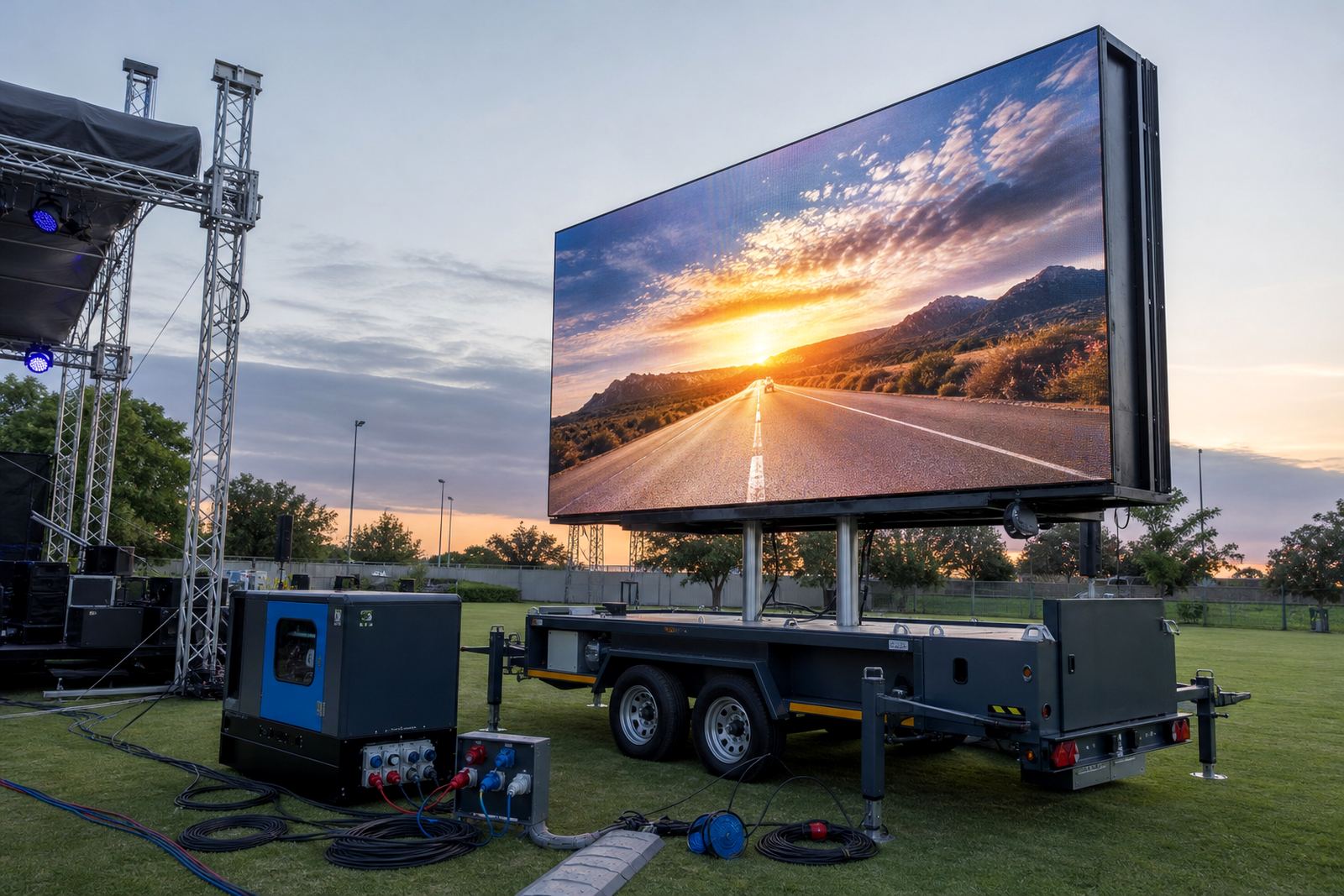
Depending on the venue, the screen can run from a generator or from mains power where site supply is available and suitable for the load. Power planning matters because the screen, processor, audio link and any support equipment all need a stable feed. After dark, the crew double checks power and cable routes before the gates open.
The hydraulic lift raises the screen into working position, and the technician checks the locking points, stabilisers and overall orientation before playback starts. Rotation is useful when the audience sits at an angle to the parking bay, or when site access forces the trailer to park in a different direction from the crowd. Wind limits are always part of the conversation for outdoor LED work, because a tall raised surface needs sensible operating conditions and a responsible pack down call when the weather turns.
- Generator or mains supply, depending on site conditions
- Hydraulic lift for raising the display into viewing position
- Rotation and angle adjustment for site layout
- Playback testing for video, slides, loops and live feeds
- Weather monitoring and wind checks before and during use
An on-site technician handles the screen during the event, including content loading, playback management and live feed support where needed. That keeps the picture format, audio handoff and screen timing aligned with the rest of the programme.
Keep the unit clean, secure and set for the next job
Outdoor LED panels do not like dust build-up, careless loading or damp storage. After a night event, the screen face, frame and trailer body need a proper inspection, especially if the site was exposed to wind-blown dust, coastal humidity or light rain. The screen should be packed down with care so connectors, locks and moving parts are not left under strain.
On South African routes, potholes, uneven shoulders and stop-start traffic can shake equipment hard enough to loosen fittings if the unit is not secured properly. The technician and logistics team check tie-down points, cables, access steps and trailer condition before movement. If a venue is on grass, sand or a sloping surface, the standing position and wheel support need extra attention. That is one of the reasons site checks and pack down work sit alongside setup rather than separate from it.
For longer hire periods, the screen should be kept under cover when idle, with the display face protected from moisture and direct impact. If the unit is used for a roadshow with multiple stops, the content file format, source device and playback sequence should stay consistent so each site runs the same way. That saves confusion when a campaign is moving between towns and venues across the week.
What to confirm before the trailer rolls in
A night event screen order works best when the site details are clear before delivery. The key information is not complicated, but it needs to be accurate so the trailer arrives with the right screen size, power plan and support crew.
- Venue address and exact setup position
- Audience direction and viewing distance
- Preferred screen size, pixel pitch and aspect ratio
- Power source available on site, or generator planning if needed
- Event timing, content format and any live feed requirement
- Access rules, permit needs and any wind-sensitive restrictions
- Whether the job needs setup only, full operation or multi-stop planning
Content should also be checked in advance so the screen receives the right file type, resolution and playback order. If audio is part of the programme, that needs to be mapped into the handoff as well. With outdoor evening work, a small mismatch in format can slow the setup, while a neat brief keeps the screen, sound and venue flow working together. For clients in Germiston, Ekurhuleni and wider South Africa, that is usually the difference between a tidy install and a crowded site with too many moving parts.
Key facts
| Screen type | Outdoor LED screen trailer for night events and after-dark brand visibility |
|---|---|
| Brightness | High-brightness outdoor display, typically around 5,000 to 7,000 nits |
| Pixel pitch | Available in fine and standard outdoor pitches for different viewing distances |
| Lift system | Hydraulic lift with angle and rotation adjustment |
| Power options | Generator or mains power, depending on site conditions |
| Support | Delivery, setup, on-site technician, playback management and permit guidance |