What a wide angle screen does in the field
A wide angle screen is selected when the audience sits left, right and far back from the centre line. The cabinet and pixel layout are arranged to hold colour and contrast over a wider viewing cone, so the picture stays readable when people are moving, standing at the edges or watching from vehicles and walkways.
For outdoor work, these screens are commonly built around 2.6 mm to 6 mm pixel pitch, depending on viewing distance and content detail. Brightness usually sits in the high-brightness outdoor range, often 5,000 nits or more, so daylight content still carries properly. For a roadshow in Johannesburg or a school sports day in Kempton Park, that daylight legibility matters more than a pretty close-up image.
- Wide viewing angle for off-centre audiences
- Outdoor brightness for sunlit venues and open sites
- Suitable for video, live feeds, graphics and sponsor loops
- Works on trailer mounts, temporary stands or fixed event positions
Trailer sizes and screen options that fit the brief
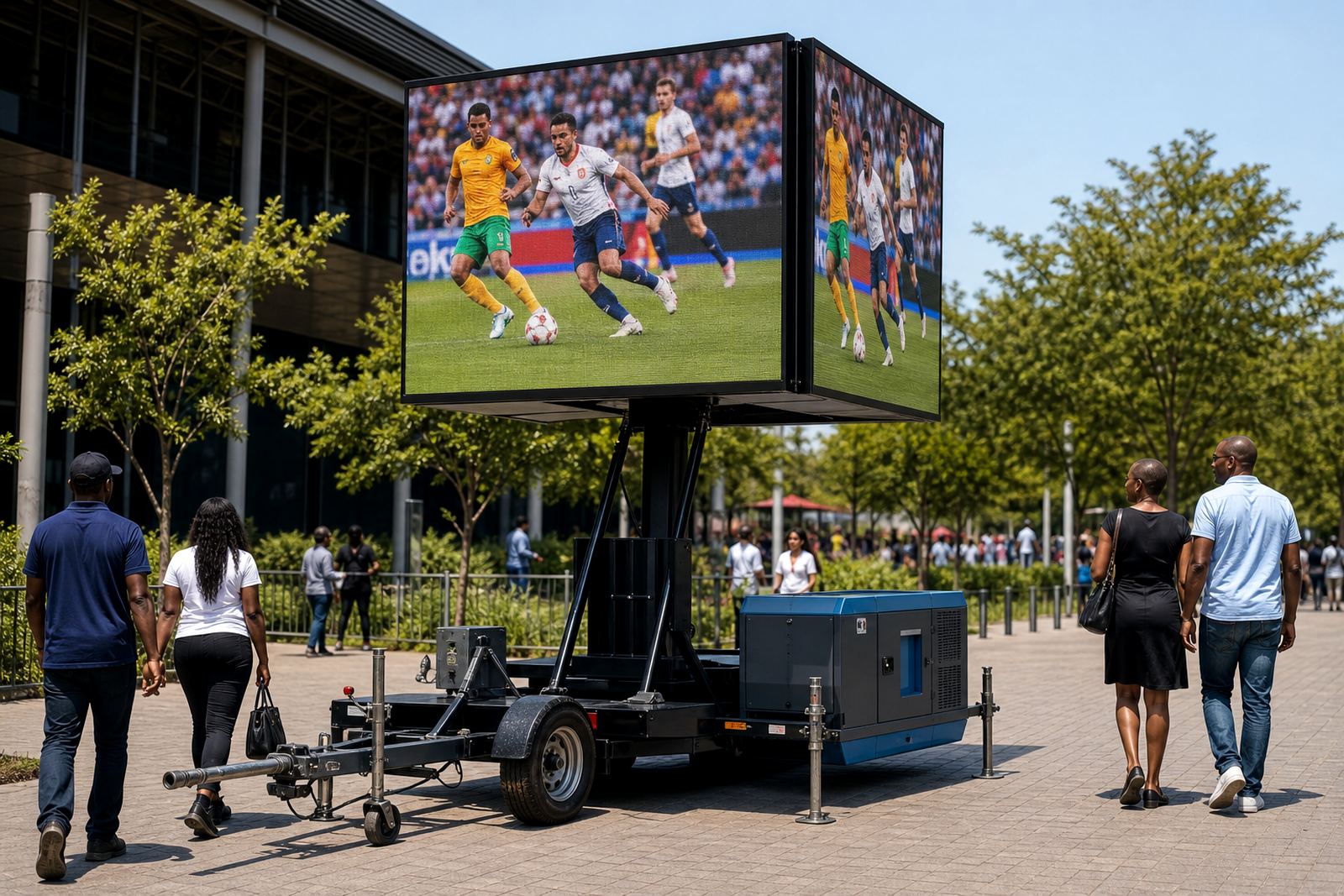
We match the screen face to the viewing area, travel route and stopping points. A smaller trailer suit fits tighter sites, while a larger box or dual-side display gives better reach on open ground and along busy public edges. Where the audience is spread across one side of the screen only, a single face is often enough. Where foot traffic moves both ways, a dual-view option can make better use of the same setup.
Options normally include the cabinet size, aspect ratio, pixel pitch and playback format. Some jobs need a taller image for stage listings or live camera feeds, while others call for a wider field for branding, scores or sponsor blocks. If the route includes Durban humidity or coastal wind, we also look at the structure, trailer footprint and safe operating conditions.
- Single face or dual face viewing
- Screen sizes scaled to venue access and audience spread
- Pixel pitch selected for viewing distance
- Playback from media files, live input or scheduled loops
Where this setup usually works best
This format suits public events where people do not stand in one clean row. Sports days, athletics fields, concerts, product launches, civic activations and roadside campaigns all benefit from a screen that holds its image across a wide field of view. It is also useful where the audience is in motion, such as at a parade route, expo entrance or forecourt activation.
With hard Highveld sun and coastal haze, where the trailer stands decides almost as much as which panel you hire. We look at sun path, traffic flow, sound position, access for the trailer and any municipal controls that affect temporary outdoor structures or event equipment. If a site needs permit guidance, we help with the usual local checks, including positioning, public access and operational restrictions.
- Sports grounds and school fields
- Concerts, roadshows and brand activations
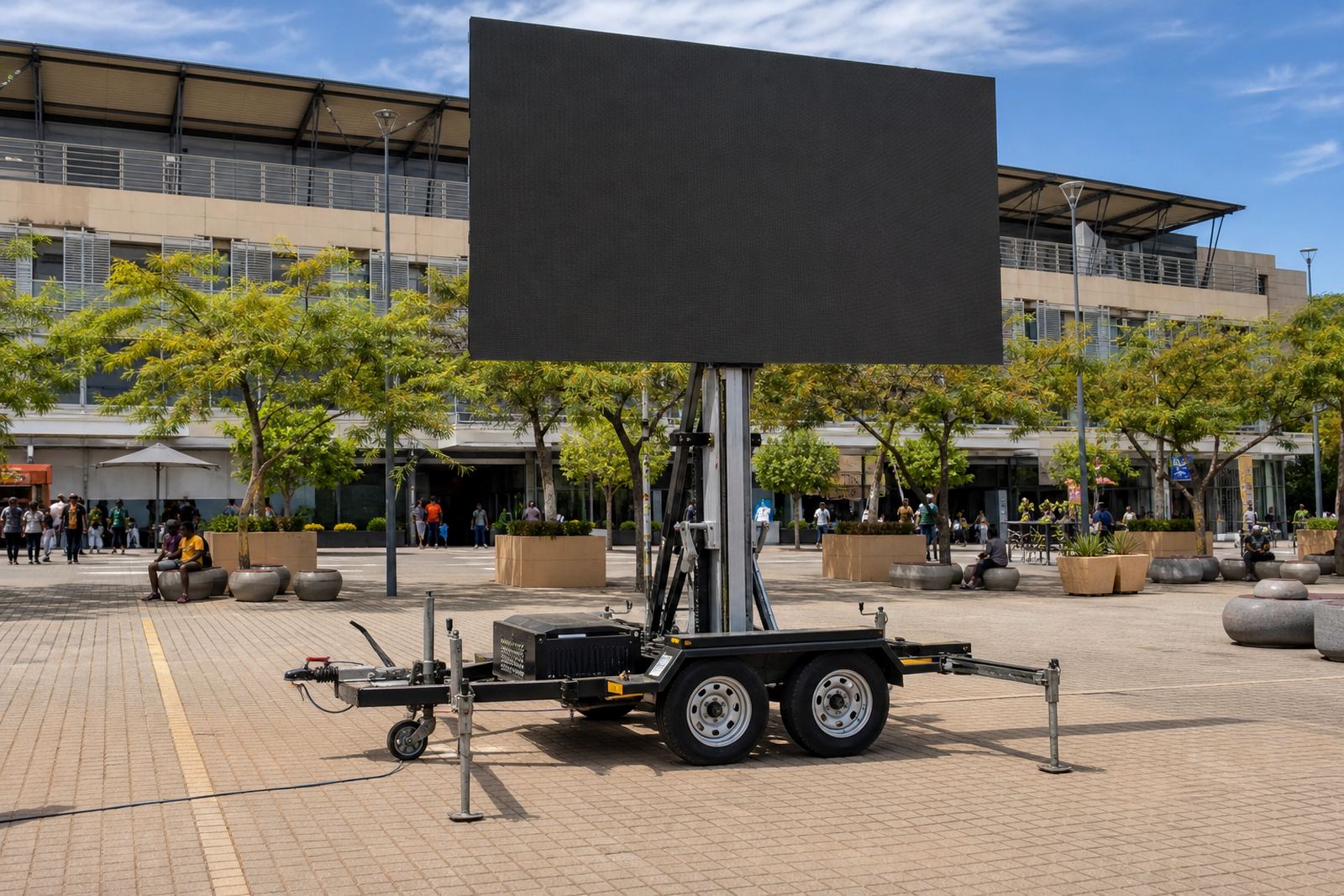
- Retail forecourts and public walkways
- Municipal events and temporary outdoor venues
Installation, lifting and power planning
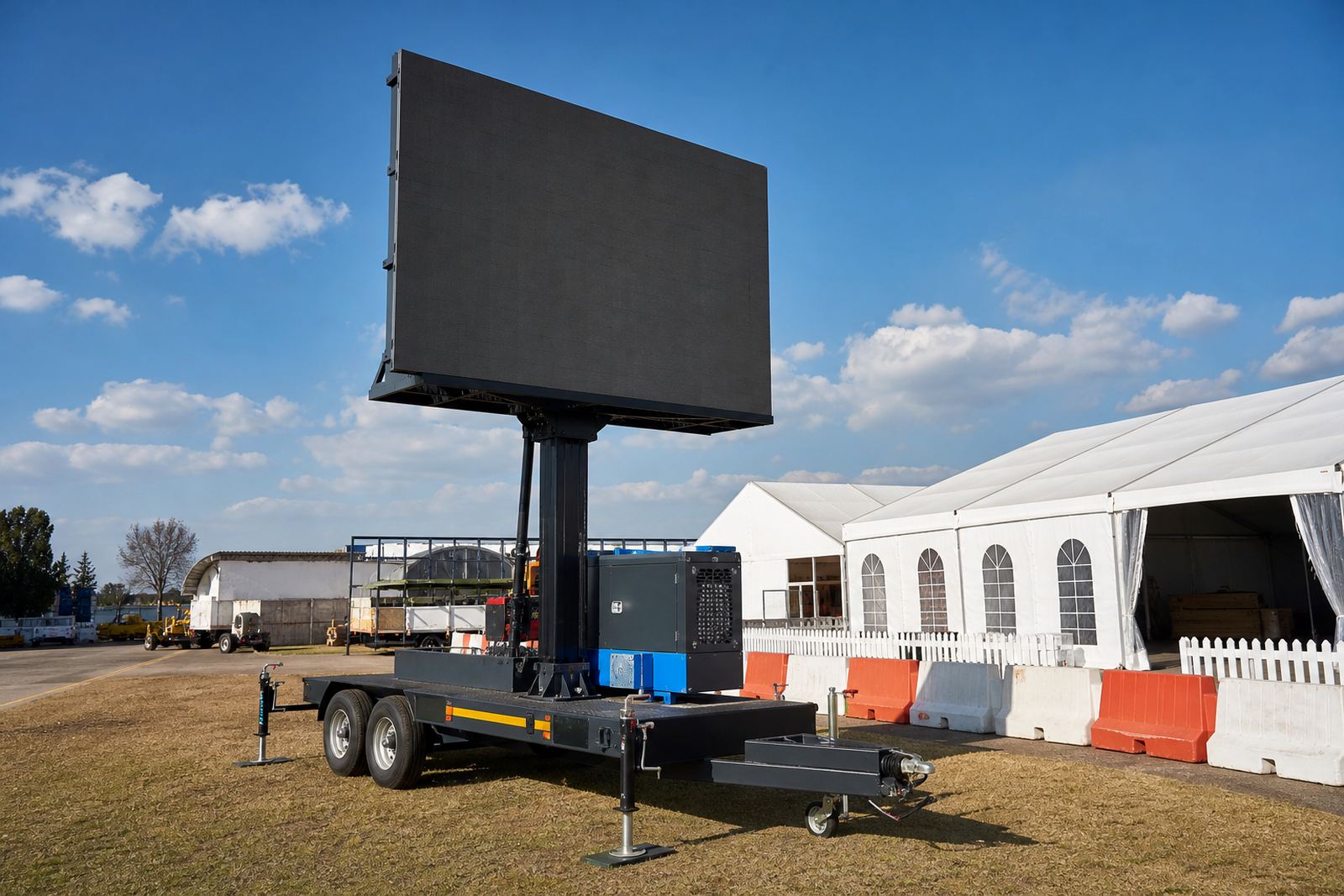
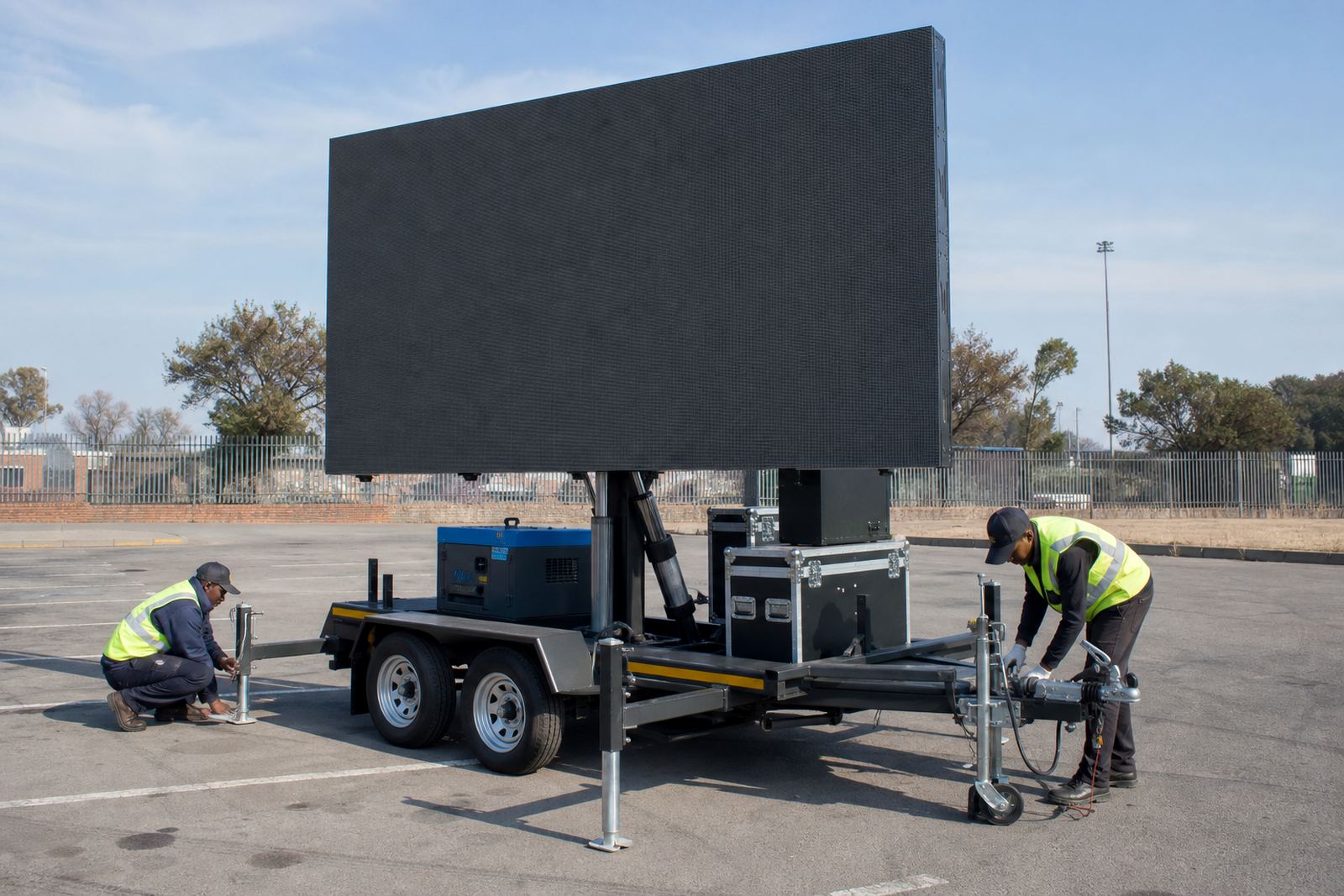
Outdoor screen trailers are made for fast deployment, but the set-up still needs proper handling. A hydraulic lift raises the screen to a usable height, and some units allow rotation so the display can face the audience or traffic line cleanly. On level ground, the technician checks stabilisers, access space and the swing of the structure before power-up.
Power can be arranged from a generator or a suitable mains supply, depending on the site. The load profile, cable run and distribution point need to match the display and any support gear used on the day. Wind limits matter as well, because large outdoor panels catch air like a sail. The technician monitors conditions and will only run the screen inside the safe operating range for the unit and the venue.
- Hydraulic lift for height adjustment
- Rotation where the site calls for directional viewing
- Generator or mains power planning
- Wind checks and stabilising procedures
Running content without ugly surprises
Good screen work depends on content that suits the format. Wide angle screens handle motion, text, logos and live video well, but the files need the right ratio and resolution. If the content is stretched, cropped or poorly compressed, the image can lose clarity fast, especially on a broad audience screen where people view from different angles.
We load material on site, test playback and check that the sound, if used, sits properly with the video. For live feed support, the incoming signal must be clean and the source device set correctly. If the event uses sponsor loops or a programme schedule, we make sure the file order and timing are correct before the audience arrives.
- Correct aspect ratio for the screen face
- Readable text sizes for outdoor distance
- Clean file formats for playback stability
- Live input tested before the programme starts
Ordering details worth pinning down
When you ask for a wide angle screen, the useful details are the viewing distance, crowd spread, site access, power source and whether the content is static, moving or live. It also helps to note the town, the surface type and whether the setup has to move between stops. A roadshow through Germiston, Johannesburg and Pretoria needs different travel planning from a single-day event in Bloemfontein.
Tell us whether you need delivery only, delivery and setup, or a full package with on-site technicians, playback management and pack down. If the venue has permit rules or a venue manager with specific layout conditions, include that too. Those details shape the trailer choice, the screen size and the crew on the day.
- Venue town and access route
- Audience spread and expected viewing distance
- Power source and any site restrictions
- Content type, file format and live feed needs
Key facts
| Screen type | Outdoor wide angle LED display on trailer or temporary event frame |
|---|---|
| Pixel pitch | Typically 2.6 mm to 6 mm depending on viewing distance |
| Brightness | High-brightness outdoor output, often 5,000 nits or more |
| Viewing angle | Wide off-centre visibility for dispersed audiences |
| Power options | Generator or suitable mains supply |
| Services | Delivery, setup, on-site technicians, playback management and pack down |