
A trailer screen built for roadside viewing
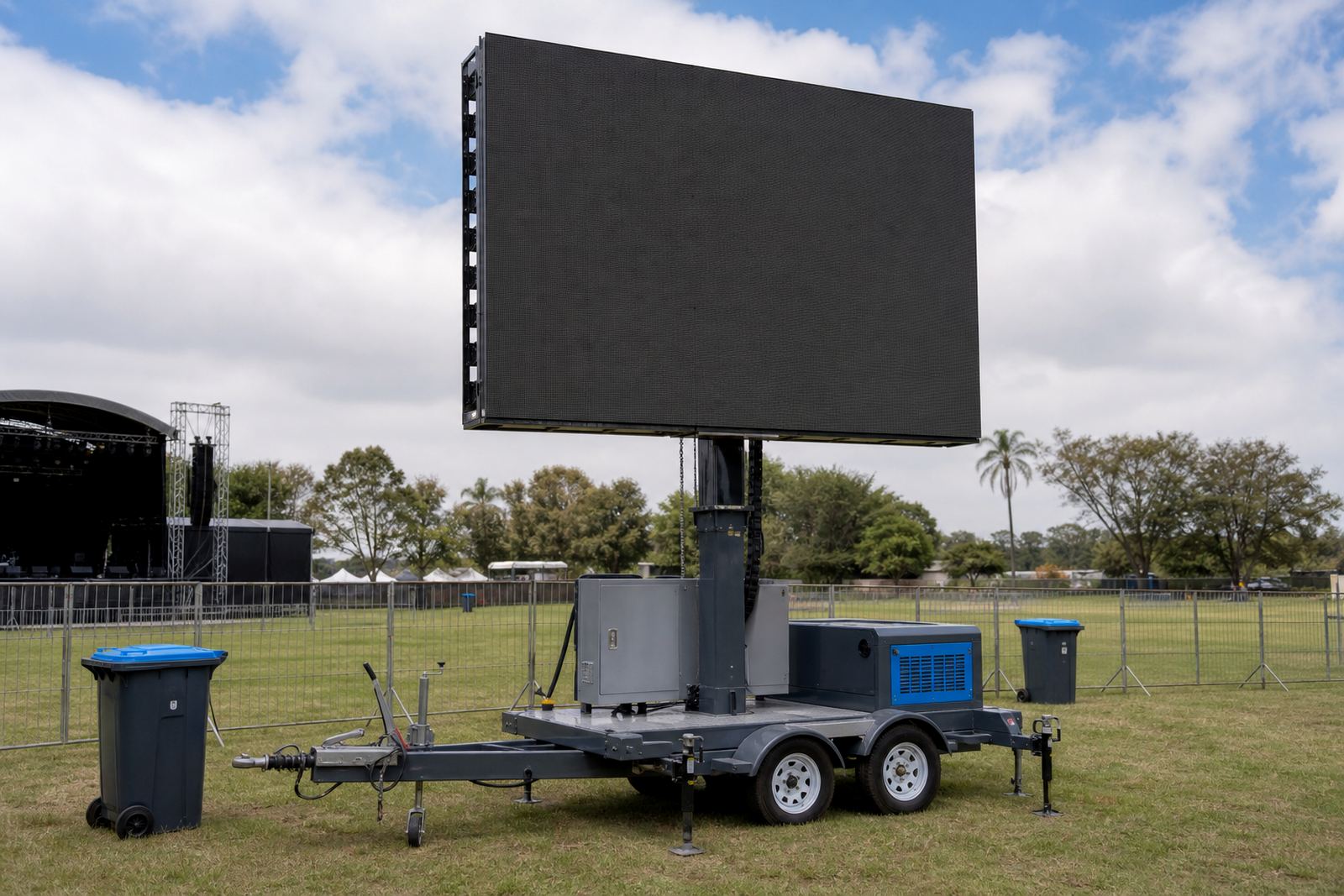
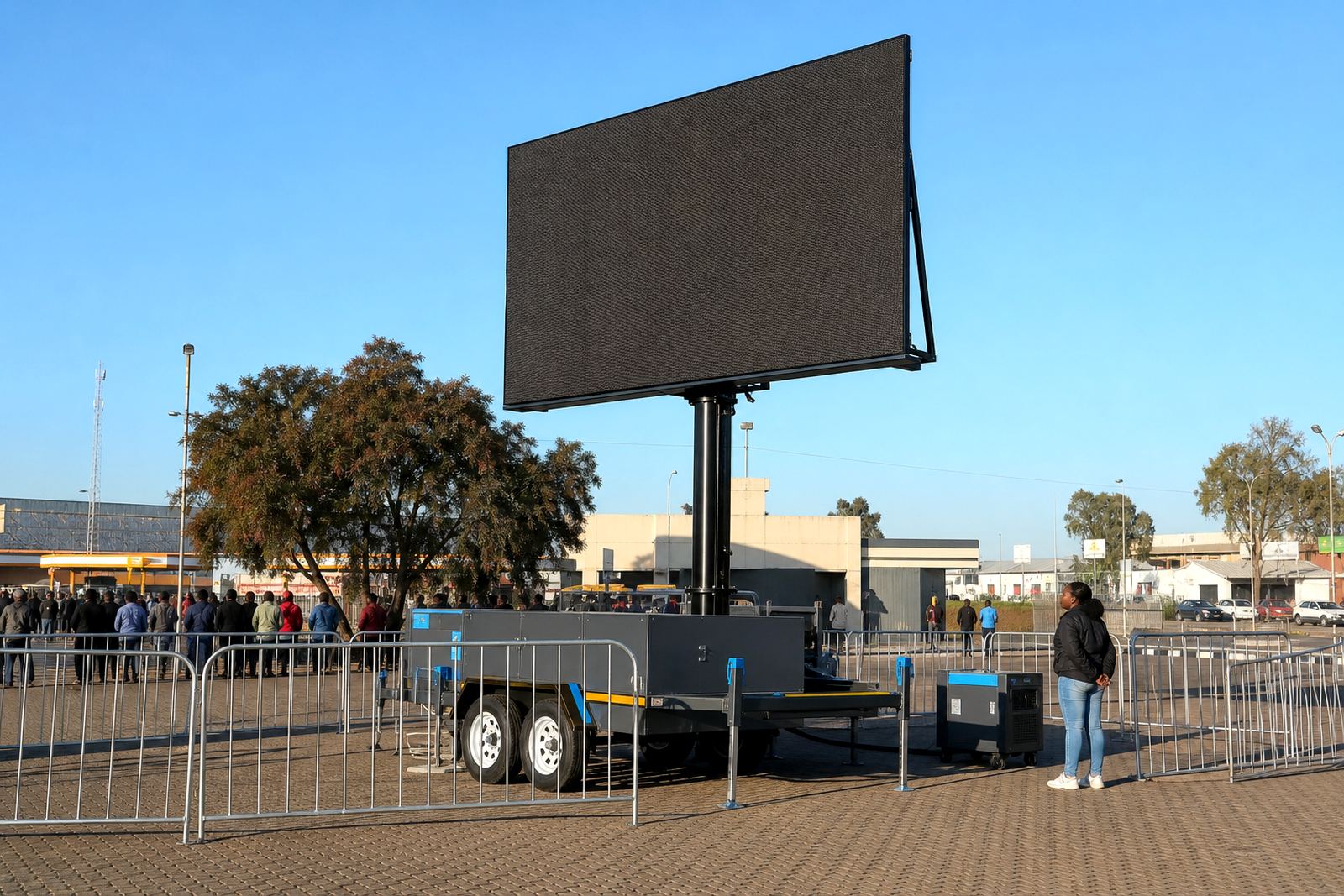
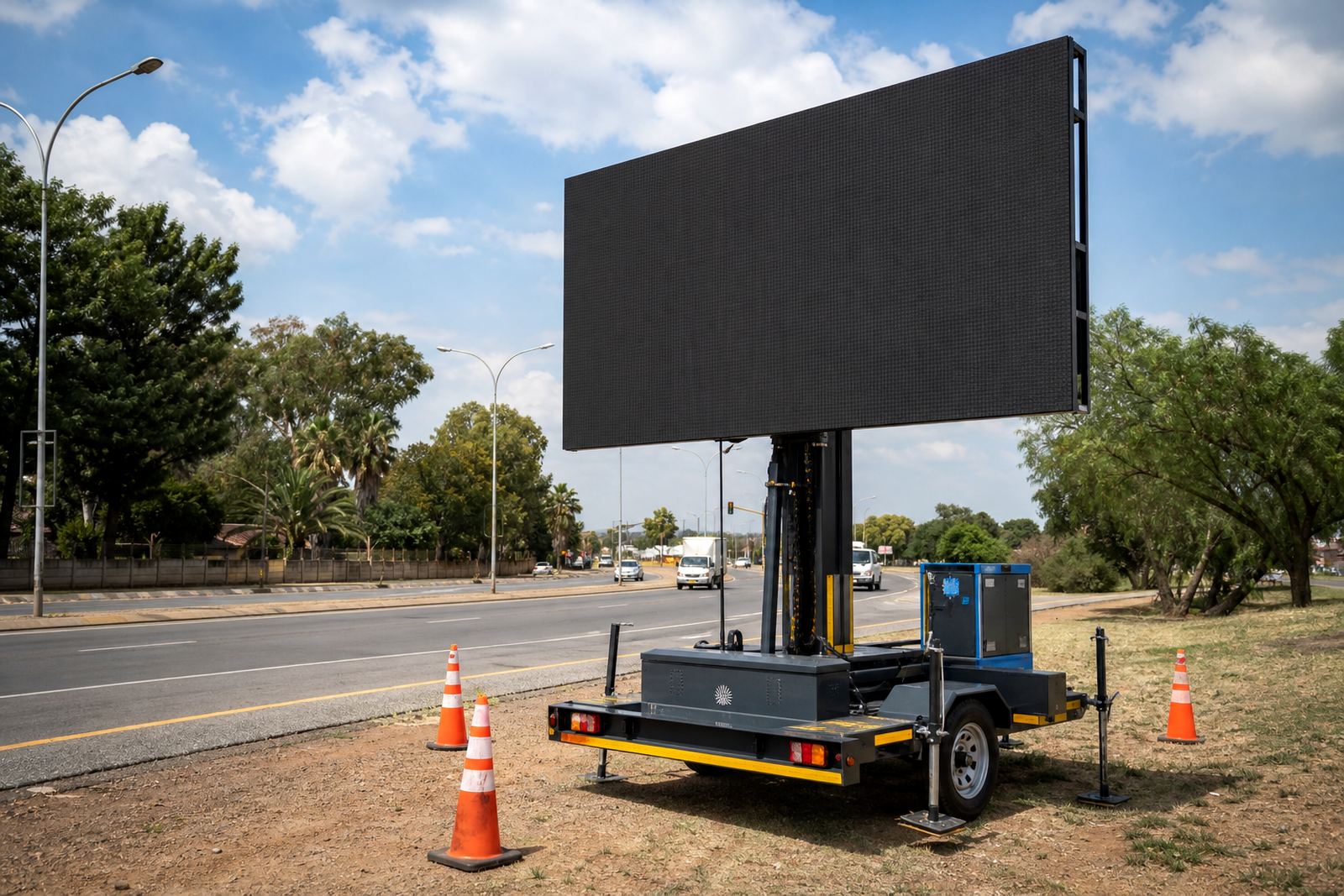
A roadside screen is a mobile outdoor LED display mounted on a trailer chassis, fitted for temporary advertising where line of sight matters and passing traffic gives you only a few seconds. The cabinet layout is designed for strong daylight visibility, with high brightness panels that can cope with sun glare, dust and the hard reflections you get on tar roads and open verges.
For most roadside jobs the screen face is set up in a landscape format, although the final size depends on the viewing distance, the shoulder space available and what the municipality allows at that spot. Pixel pitch is selected to match the audience range, so closer roadside positions use finer pitch while larger viewing gaps can work with a wider pitch and still read cleanly from the road.
- Common roadside screens use outdoor LED modules with high brightness output for daytime use.
- Screen sizes are planned around access, towing limits and where the trailer can sit safely.
- Playback can handle still images, loops, scheduled campaigns and live inputs where needed.
Sizes, lift systems and viewing angles
Roadside units are usually built with a hydraulic lift that raises the screen into viewing position once the trailer is parked and levelled. Many units also allow rotation so the face can be angled toward the main traffic flow, which helps when the road bends, the site sits on a corner, or the available ground space forces a different layout. The lift and lock points must be checked before every move, especially on uneven shoulders and gravel pull-offs.
We match the screen format to the job, whether you need a compact roadside box for targeted municipal areas or a larger display for longer stints beside a main route. The final build also takes wind loading into account, because a raised LED face catches more air than a low trailer and the setup must stay within safe operating limits for the site and weather on the day.
- Hydraulic lift systems raise and lower the display for transport and display positions.
- Some units can rotate to improve angle, traffic alignment and visibility.
- Safe use depends on ground condition, anchoring, wind and clear setback from traffic.
Where roadside screens work best
This format suits advertisers and event teams who need a message to carry past a moving audience rather than sit in one fixed hall or stadium. It is commonly used for dealership promotions, festival approach roads, sports days, civic notices, launch days and multi-stop roadshows where the same screen travels from one point to the next.
Roadside screen placement also needs the right kind of visibility. A busy arterial road, a venue entrance, a service lane with controlled traffic flow, or a municipal open space with permit approval can all work well if the screen can be seen without blocking sight lines or creating a traffic hazard. In built-up areas around Germiston, Kempton Park, Johannesburg and Pretoria, the route plan and parking position matter just as much as the content.
- Best suited to roads with steady vehicle movement and a clear viewing corridor.
- Useful for campaigns that move between suburbs, venues and retail nodes.
- Can support morning traffic, afternoon commuter flow and event arrival periods.
Power, playback and on-site control
Roadside screens can run from generator power or mains power, depending on the site layout and what is available at the venue or roadside position. Power planning matters because the display, control rack and support equipment must stay stable for the full run. When the site uses mains supply, the connection points, cable runs and access must be checked before setup. Where a generator is used, fuel, placement and noise control are part of the plan.
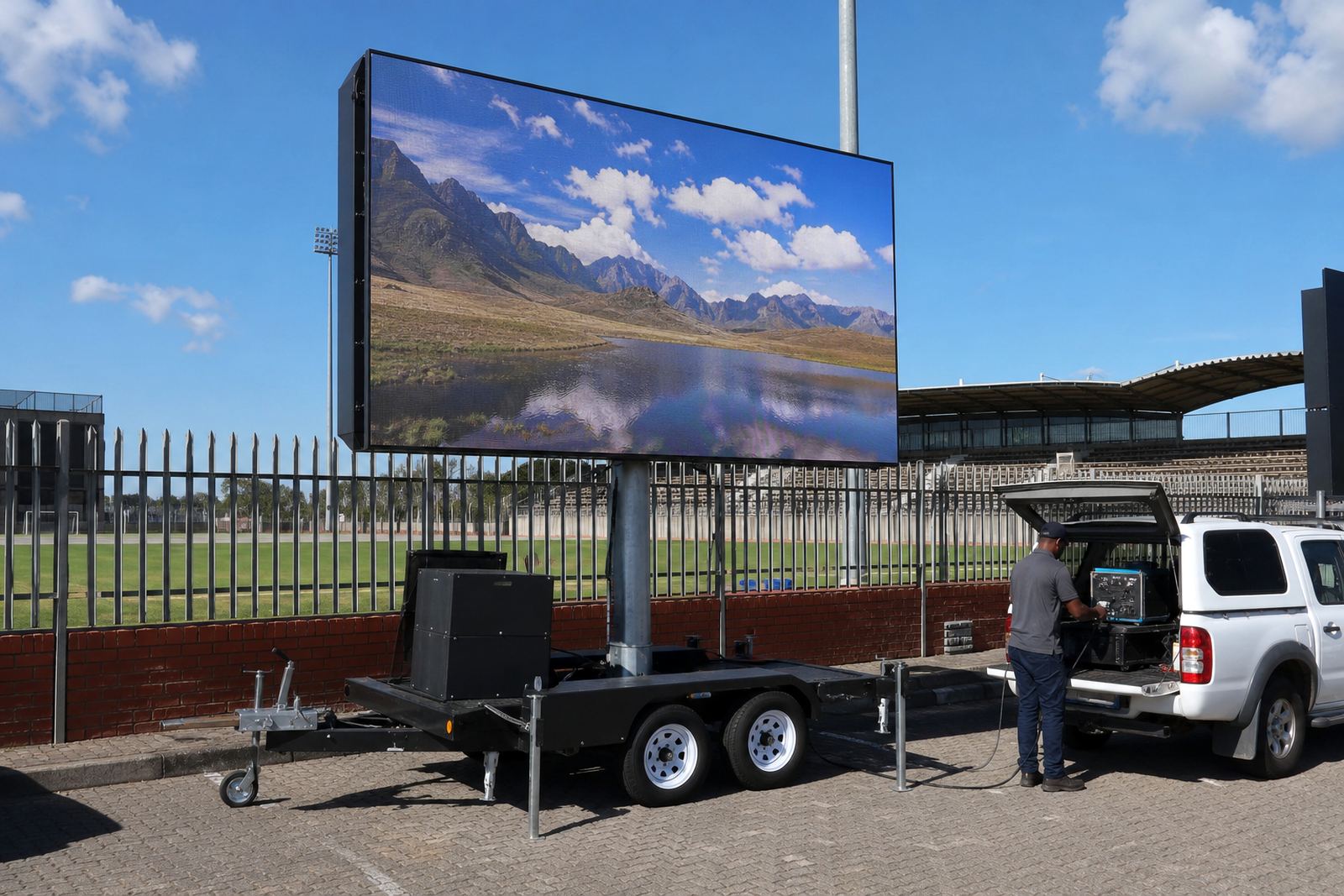
Content loading is handled before or during setup, then the technician checks playback, brightness, timing and any live feed requirements. A live feed can be useful for sports days, launches or public events where the screen needs to show a feed from another source. The technician also monitors the display during the run, making sure the screen stays readable and the content order remains correct.
- Supported content includes stills, video loops, campaign sequences and live input.
- Power planning covers generator placement, mains access and cable routing.
- On-site control includes playback checks, screen timing and basic content supervision.
Permits, weather and roadside safety checks
Any roadside placement needs proper attention to permits, local rules and the actual ground conditions at the site. Municipal requirements differ from one area to another, and the position may need approval if the trailer sits near a public road, a pedestrian route or a controlled access point. Safe positioning also means checking setback distances, traffic flow, signage sight lines and whether the trailer can be set without blocking any emergency route.
Weather monitoring is part of the work because wind, rain and poor ground drainage can affect a raised screen. The technician checks for stable footing, the ability to level the trailer, and whether conditions allow the display to stay up for the planned period. A roadside screen should never be treated as a simple plug-in unit, it needs the same care as other outdoor equipment that stands beside moving traffic and open space.
- Permit guidance is part of the service where public placement rules apply.
- Wind and weather limits are checked before the screen is raised.
- Ground level, shoulder width and traffic movement all affect safe siting.
Keeping the screen ready for the next move
Roadside units work best when the frame, tyres, jacks, lift system and LED face are kept clean and inspected between bookings. Dust from road shoulders, coastal moisture on longer routes and fine grit from loading areas can all affect the finish and the connectors if the unit is left unchecked. The screen face should be cleaned with suitable non-abrasive methods, and the trailer body should be inspected for loose fittings after each move.
For longer hire periods, the team should also confirm trailer access, turning space and the pack-down route so the unit can leave the site without delay or damage. Content files should be checked for the right aspect ratio, safe margins and readable type size, especially when the message must be seen from a moving vehicle. Strong roadside work is about keeping the screen clear, the setup legal and the message readable at speed.
- Inspect the lift hardware, towing points and cable terminations between jobs.
- Keep media files in the correct format for the target screen size.
- Plan the pack-down route before the display is raised at the site.
Key facts
| Format | Outdoor LED screen trailer for roadside use |
|---|---|
| Pixel pitch | Selected to suit viewing distance and road speed |
| Brightness | High brightness outdoor panels for daylight visibility |
| Lift system | Hydraulic raise and lower mechanism |
| Power options | Generator or mains power, depending on site |
| Service area | Germiston, Ekurhuleni, Gauteng and selected South African routes |