What the Sports Day Screen does on the field
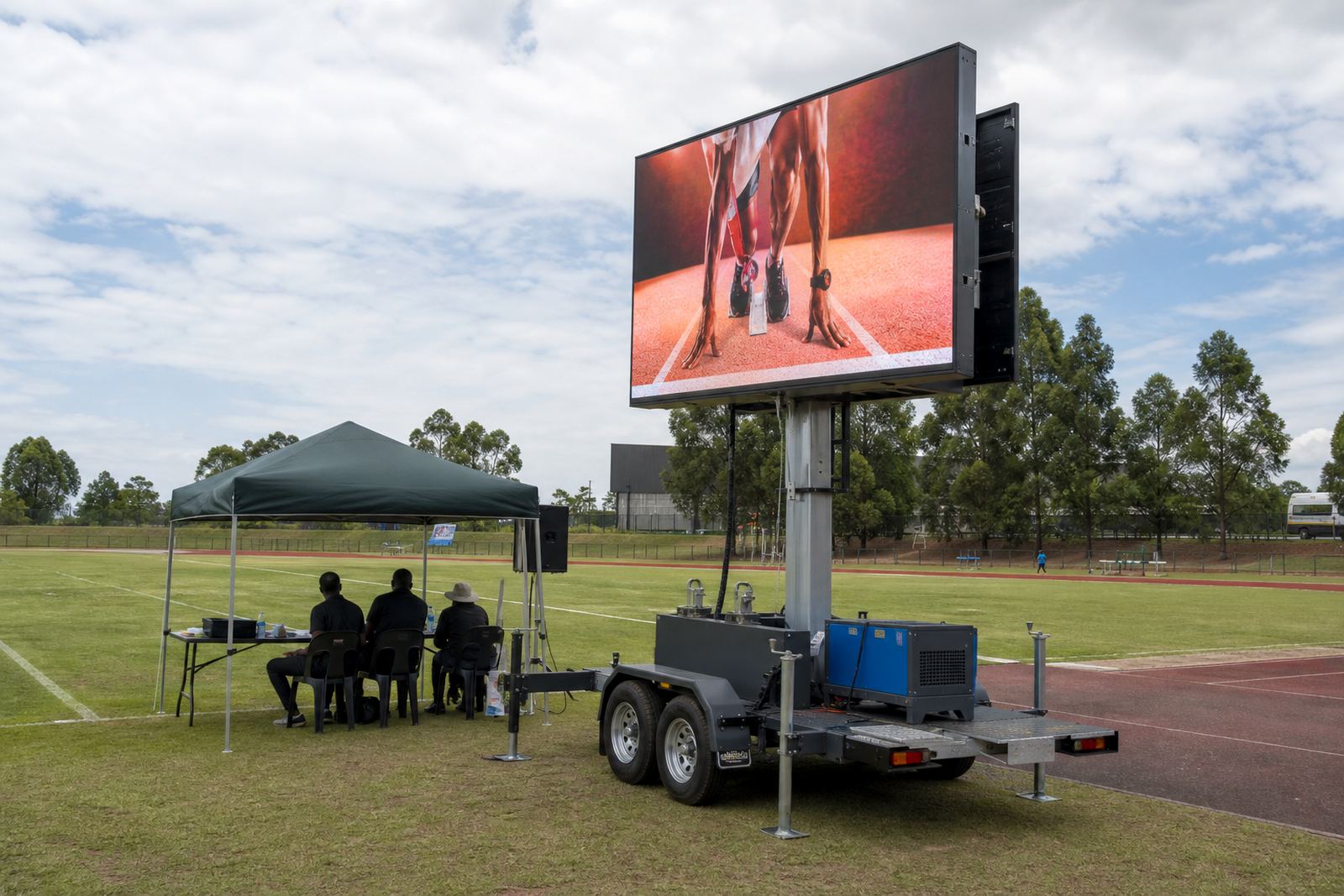
This product is built for open-air sports grounds where the crowd sits across a field, along a track or beside a netball court. The screen is used for lap times, heat boards, programme updates, welcome messages and live camera views, so organisers can keep the day moving without people crowding a noticeboard or tent.
The display uses outdoor LED panels with a fine pixel pitch suited to readable text and moving images at short to medium viewing distances. For daytime use, outdoor brightness is set high enough to stay visible in direct sun, while content can be changed through a media player, laptop feed or live video input depending on the run sheet.
- Outdoor LED screen for school and club sports days
- Clear display for scores, race numbers, announcements and sponsor loops
- Suitable for static graphics, video clips and live camera feeds
- Managed by a technician during setup and screening
Trailer build, screen size and viewing distance
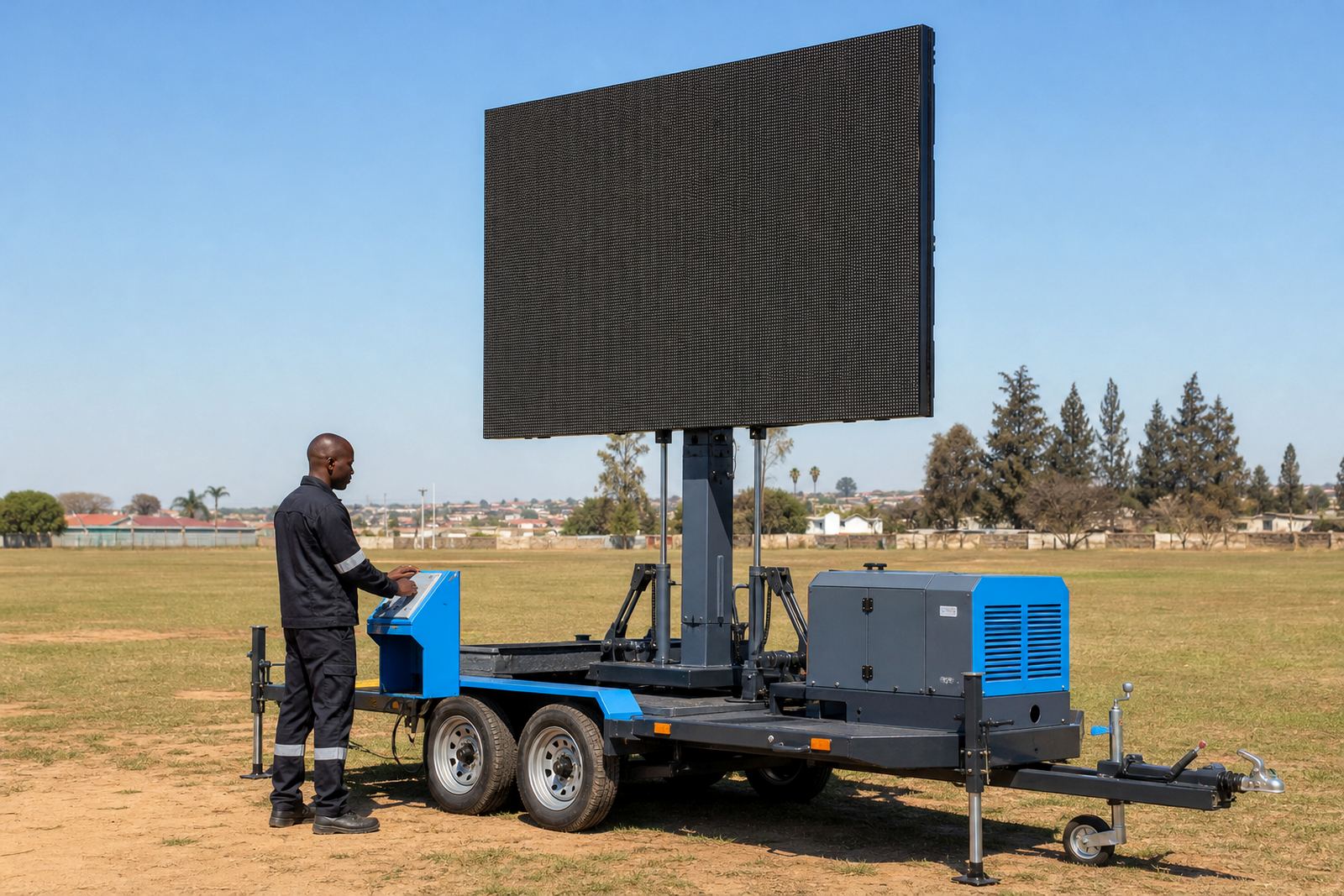
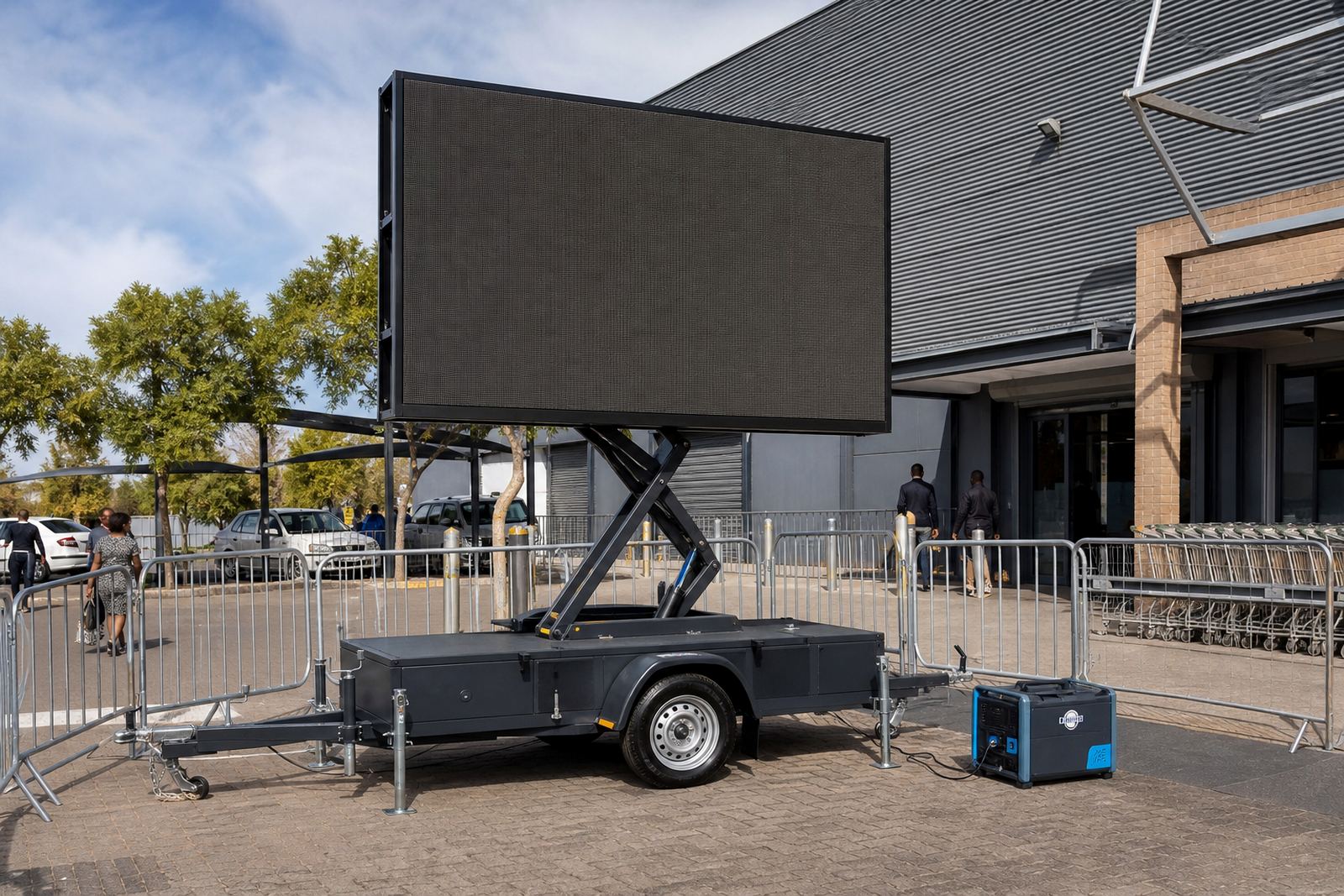
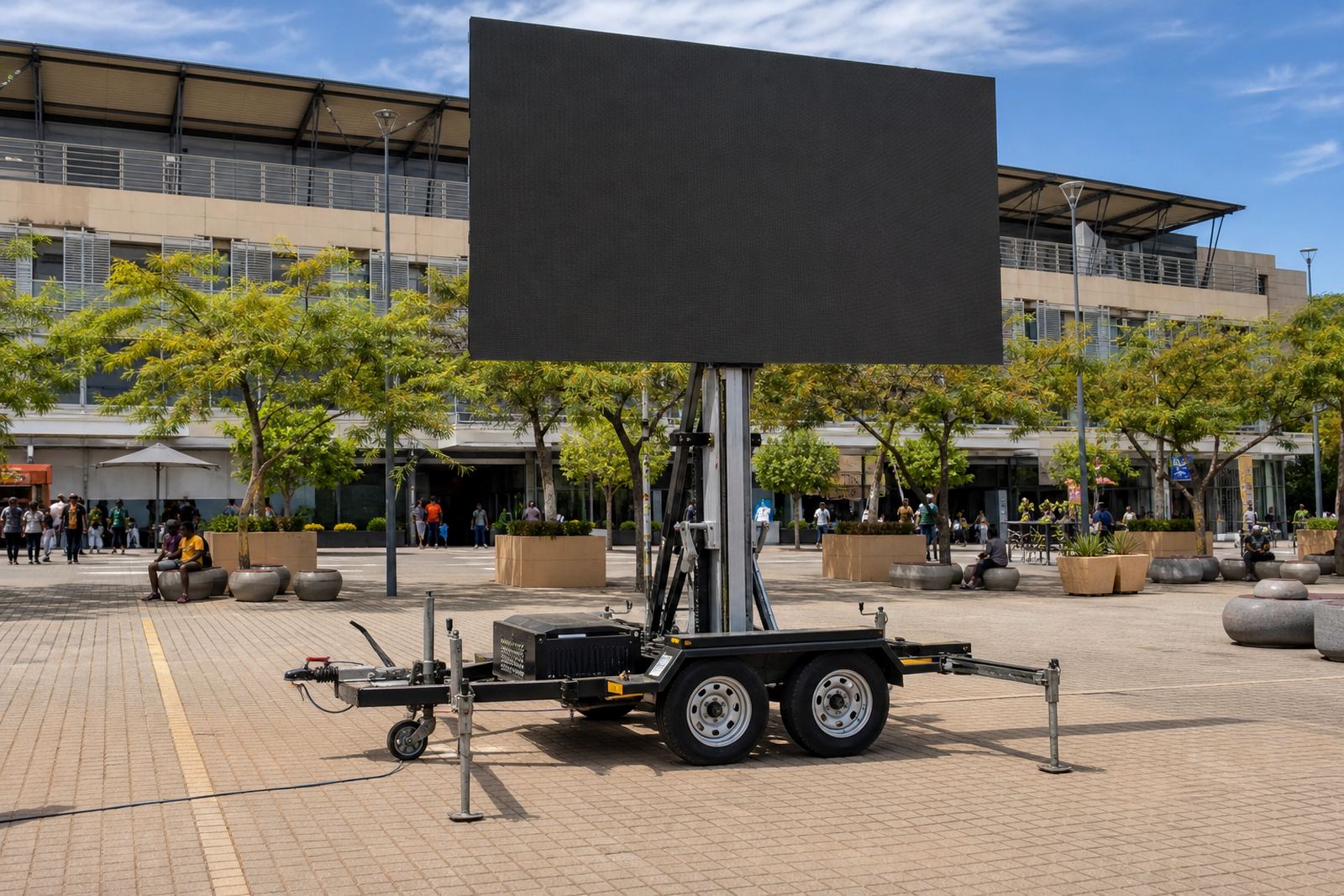
The screen is normally supplied on a mobile trailer with a hydraulic lift that raises the display into position. Some units also allow rotation or angle adjustment so the face can be turned toward the main viewing side of the field. That helps when the crowd is split between grandstands, shade areas and standing space on different sides of the venue.
Screen size is chosen around the size of the venue and the distance from the furthest viewer. Smaller school grounds often work well with a compact display, while larger fields and packed sports days benefit from a wider screen with stronger legibility from the back rows. Pixel pitch matters here, because tighter pitch gives cleaner text and sharper camera feeds at closer viewing ranges.
- Trailer-mounted outdoor LED screen with hydraulic lift
- Rotation or angle positioning where the site allows it
- Screen size matched to field layout and audience distance
- Fine pixel pitch options for text, graphics and live video
Power, playback and live feed control
Sports days often need a mix of preloaded slides, music cues and live input from a camera or laptop, so the screen is prepared for content playback before the first race starts. The operator checks file formats, slide timing, input connections and the order of play so the information on screen stays current through the day.
Power can be arranged from a generator or from mains supply where the site has suitable access and the event plan supports it. The choice depends on the venue, cable runs and the load the screen package requires. For live feed support, the technician can connect a camera source, route the signal and keep the display aligned with the programme.
- Content loading for scoreboards, sponsor loops and event slides
- Playback management for scheduled announcements and music cues
- Live feed support for camera output at the venue
- Power planning for generator or mains connection
Where this screen fits best on a sports calendar
This screen suits school athletics, mini cricket days, inter-house programmes, club finals, fun runs, gala days and municipal sports events. It also works for roadshows linked to sport or youth programmes where organisers need one visual point for messages and timing. The trailer can be parked beside a track, rugby field, soccer pitch or central concourse, as long as the sightline is planned properly.
For public venues, permit guidance may be part of the booking because outdoor screen placement can affect access routes, noise planning, parking control and site rules. The exact requirements depend on the municipality and the venue. Wind monitoring also matters, since trailer screens must stay within safe operating limits for the day’s conditions.
- School athletics and inter-house sports days
- Club fixtures, finals and prize-giving events
- Fun runs, roadshows and community sports activations
- Sites where permit guidance and weather checks are needed
Setup on site and what the technician handles
Delivery includes positioning the trailer, stabilising the unit and preparing the screen for use. The on-site technician checks the lift, cabling, signal input and power source before the first item goes live. If the programme changes during the event, the operator can update the screen without stopping the whole day.
Because sports grounds can be dusty, windy or uneven, the setup needs a clear access route and enough space for safe placement. The trailer should sit on firm ground with the screen facing the main audience area. Pack down is handled after the event, once the final announcements and result boards have been cleared.
- Site checks before delivery where access and ground conditions matter
- Setup, levelling and basic screen safety checks
- On-site technician for operation during the event
- Pack down and removal after the programme ends
Care on event day and the details to confirm
Outdoor LED screens work best when the content is prepared in the correct aspect ratio and the graphics are large enough to read from the crowd. Dark backgrounds, bold lettering and simple score layouts usually perform better than crowded slides. If live camera is part of the programme, the camera position and cable path should be planned before the gates open.
When ordering, confirm the venue address, surface conditions, start and finish times, screen position, power access, content format and whether live input will be used. It also helps to confirm the audience size, likely viewing distance, whether the site has permit conditions and whether the day includes more than one stop. LED screens are tough, but they still need sensible handling around rain, dust and strong wind.
- Venue location and exact field or stand position
- Power source, cable route and generator or mains choice
- Content type, file format and live feed requirements
- Permit notes, weather concerns and any multi-stop movement
Key facts
| Product type | Mobile outdoor LED screen trailer for sports days and field events |
|---|---|
| Typical use | Results, announcements, sponsor messages and live camera feeds |
| Display detail | Outdoor LED panels with fine pixel pitch for readable text and video |
| Brightness | High-brightness daylight viewing for direct sun conditions |
| Mounting | Hydraulic lift trailer with safe positioning and optional rotation |
| Power options | Generator supply or mains connection, subject to site planning |