
Mobile screen format for open community spaces
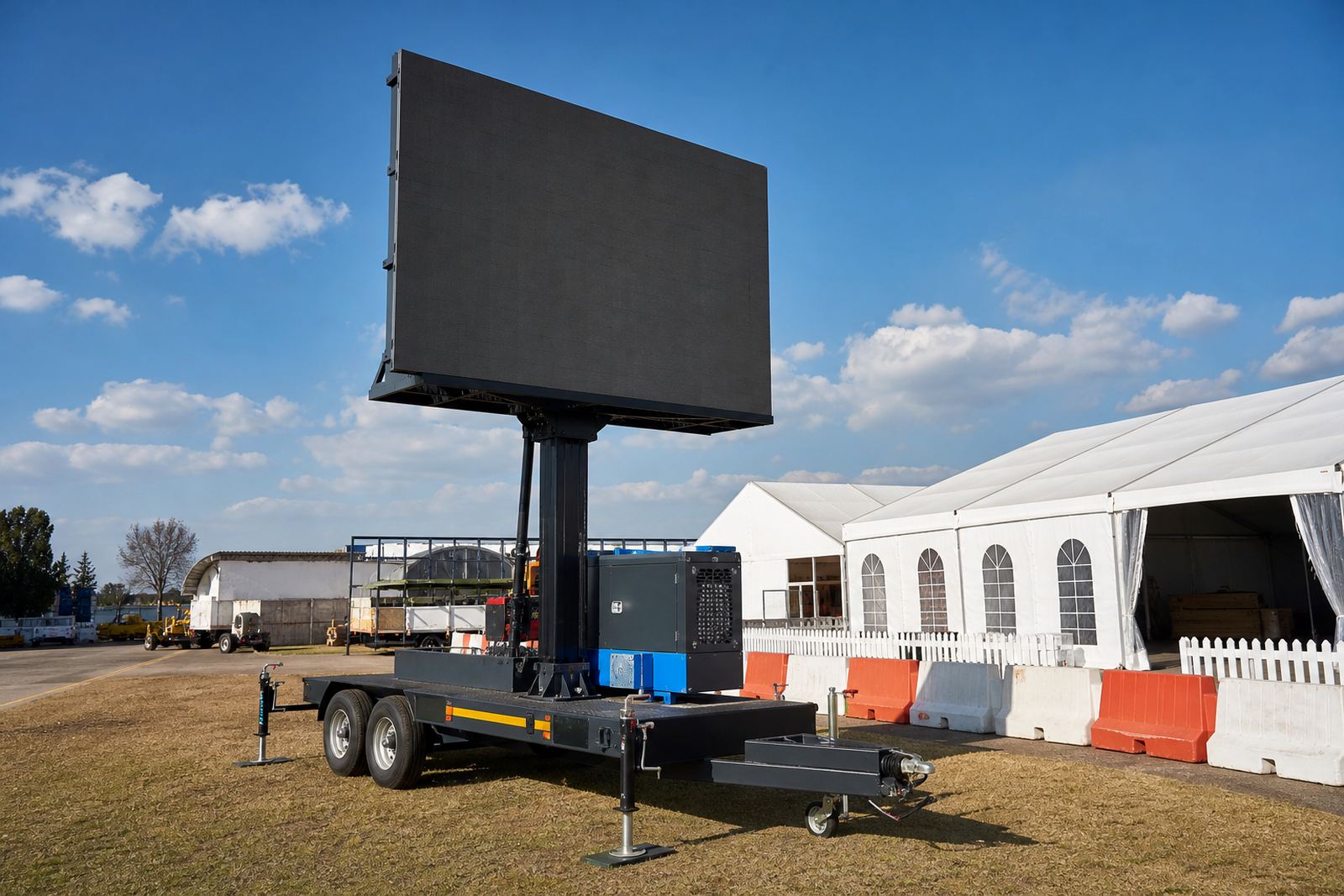
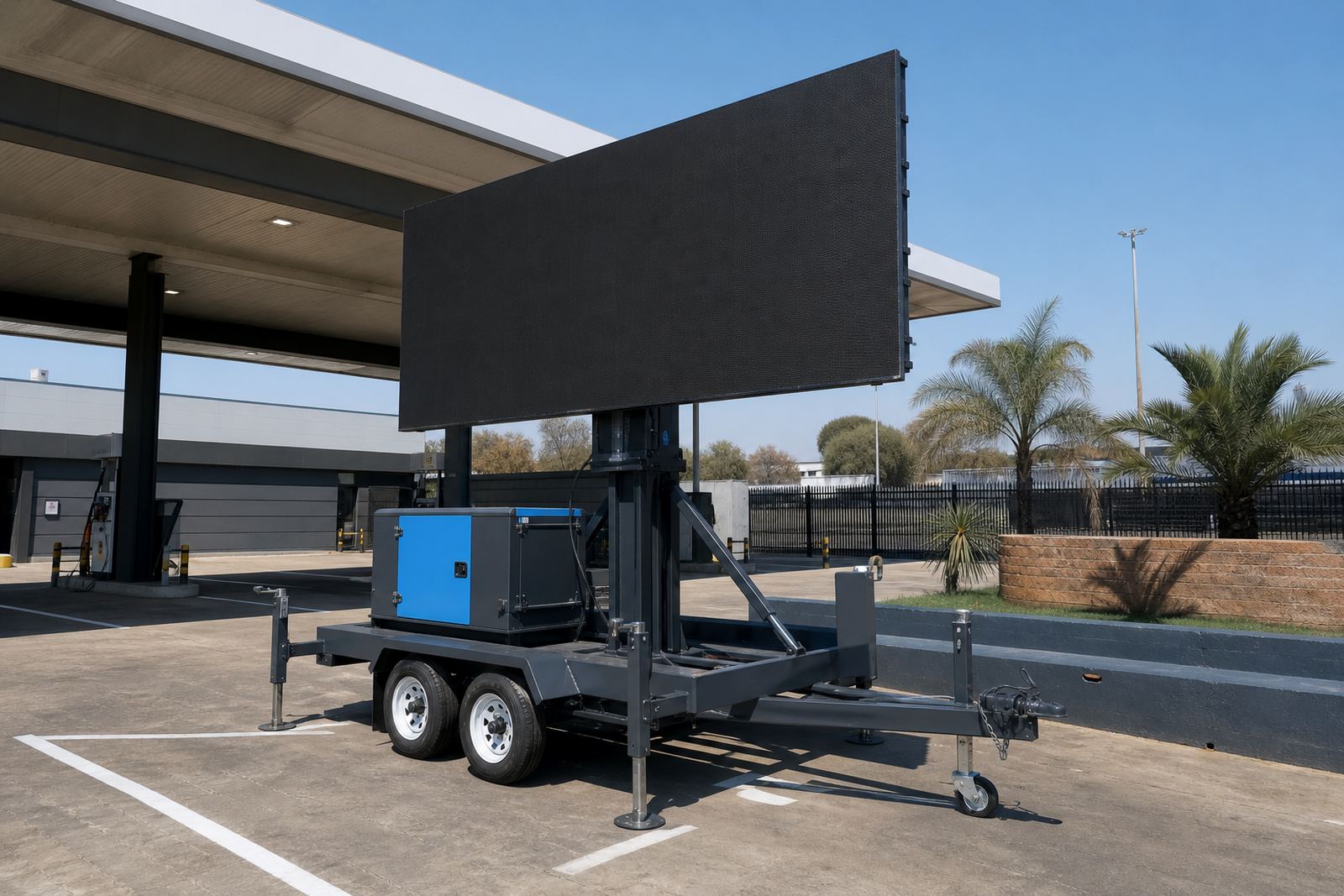
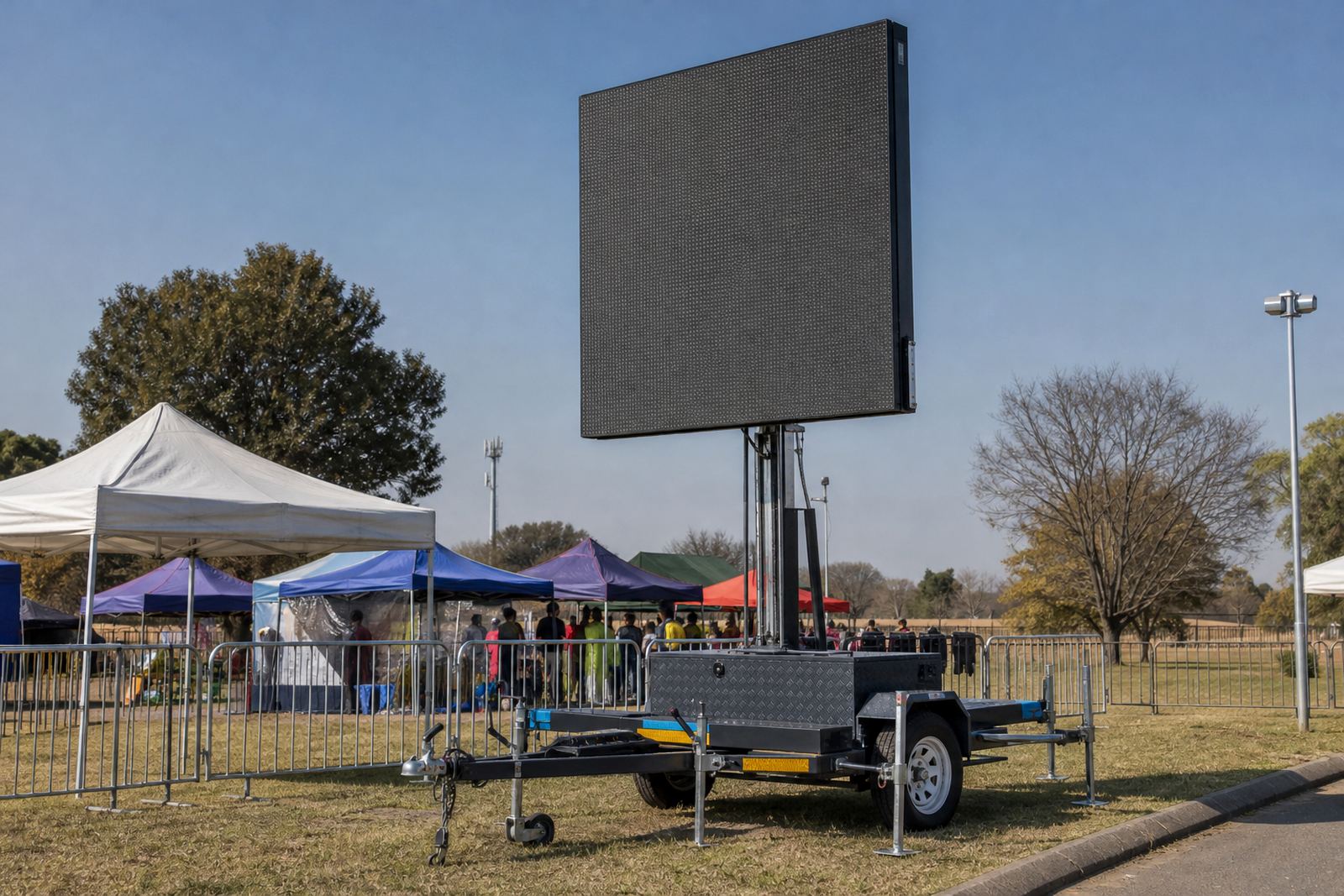
The Community Event Screen is a trailer mounted outdoor LED display built for parks, sports fields, civic squares and roadside gatherings where the audience needs a clear picture in daylight. The panel size is set to suit the crowd and the viewing distance, with common screen widths ranging from about 3 metres to 6 metres and larger builds available when the site can take the footprint.
These screens use LED panels with pixel pitch selected for the distance and content type. A finer pitch gives cleaner text and sharper logo work, while a wider pitch suits bigger crowds and simpler visuals. Daylight viewing needs high brightness, usually in the 5 000 to 7 000 nits range, so the image stays readable under sun and haze.
- Trailer mounted outdoor LED screen
- Bright daylight readable display
- Video, live feed and slide playback
- Sized to the venue and sightlines
Trailer build, lift and positioning on site
The trailer is the working base for the screen. It includes a hydraulic lift that raises the display to viewing height and, on many builds, a rotation frame that helps angle the screen toward the crowd. That makes the unit useful where the audience stands off to one side or where the space is long and narrow.
Placement needs a level surface, safe vehicle access and enough turning room for the trailer. We check the ground, overhead clearance and the route in and out before setup starts, because grass, paving and compacted soil all behave differently under load. In some municipal areas the placement may need permit guidance, especially where the screen sits near public roads, sidewalks or council property.
- Hydraulic lift for fast screen rise
- Rotation options on selected trailers
- Level stand area and clear access route
- Permit guidance for public sites where required
Power, playback and live content handling
The screen can run from generator power or a suitable mains supply, depending on the venue and the run time required. For community days in open spaces, generator use is common when there is no reliable site supply. Where mains power is available, we plan the cable run, protection and load carefully so the screen stays stable during the programme.
Content loading is handled before the event and playback is checked on site. We work with mixed material such as video clips, title slides, logos, scoreboards and live camera feeds. If the programme includes speeches, announcements or sports results, the content order matters, so the file format, resolution and aspect ratio need to be confirmed in advance.
- Generator or mains power planning
- Playback management for scheduled content
- Live feed support for speeches or sport
- Content loading matched to the screen format
Where this screen fits best around South Africa
This product suits municipal style gatherings, school days, awareness campaigns, family fun days, prizegivings and public information displays. It also works for roadshows where the message must move from one stop to the next without building a fixed rig at every venue.
LEDBox delivers and runs community event screens across Germiston, Ekurhuleni, Kempton Park, Johannesburg, Pretoria, Durban, Bloemfontein and Polokwane. The trailer format is especially practical when the event needs quick positioning and a clean crowd facing image, with enough height to clear people, vehicles and low stage structures.
For roadshows, the screen can be planned as a multi-stop unit with pack down at one venue and re-positioning at the next. That keeps the equipment use focused and allows the same screen to serve different locations across the programme.
Weather, wind and working care on the day
Outdoor LED screens are built for real weather, but they still need proper care. Wind limits depend on the trailer model, screen size and whether stabilisers or ballast are required. In stronger wind or exposed coastal air, we may lower, pause or protect the screen depending on the site conditions and the event plan.
Community days get rained on, dusted and steamed, and the cabinet copes. The screen faces need to stay clean enough for sharp viewing, and the trailer components need regular checks on locking pins, cables, connectors and brakes. A screen used on open veld, paved civic space or near the coast should be inspected after each move, especially when moisture and grit get into fittings.
- Wind limits depend on screen size and rigging
- Weather checks before and during operation
- Screen faces and connectors need routine care
- Coastal moisture means we pack and inspect with care
Information we need before booking the trailer
The ordering details matter because the screen must match the audience, the venue and the message. We confirm the screen size, viewing distance, content type, power source, access route and any site restrictions before the trailer is assigned. If the event has speeches, live sport or public notices, that changes the playback plan and the support needed on site.
Useful details include the venue surface, the available power point, the gate width, the truck access route, the crowd direction and whether the screen must face one fixed area or rotate for different viewing angles. If there are municipal conditions, council notices or safety controls for public land, those details should be part of the brief from the start.
- Screen size and approximate audience distance
- Power source and cable route
- Venue surface and access width
- Content type, live feed or slide playback
On-site handling from setup to pack down
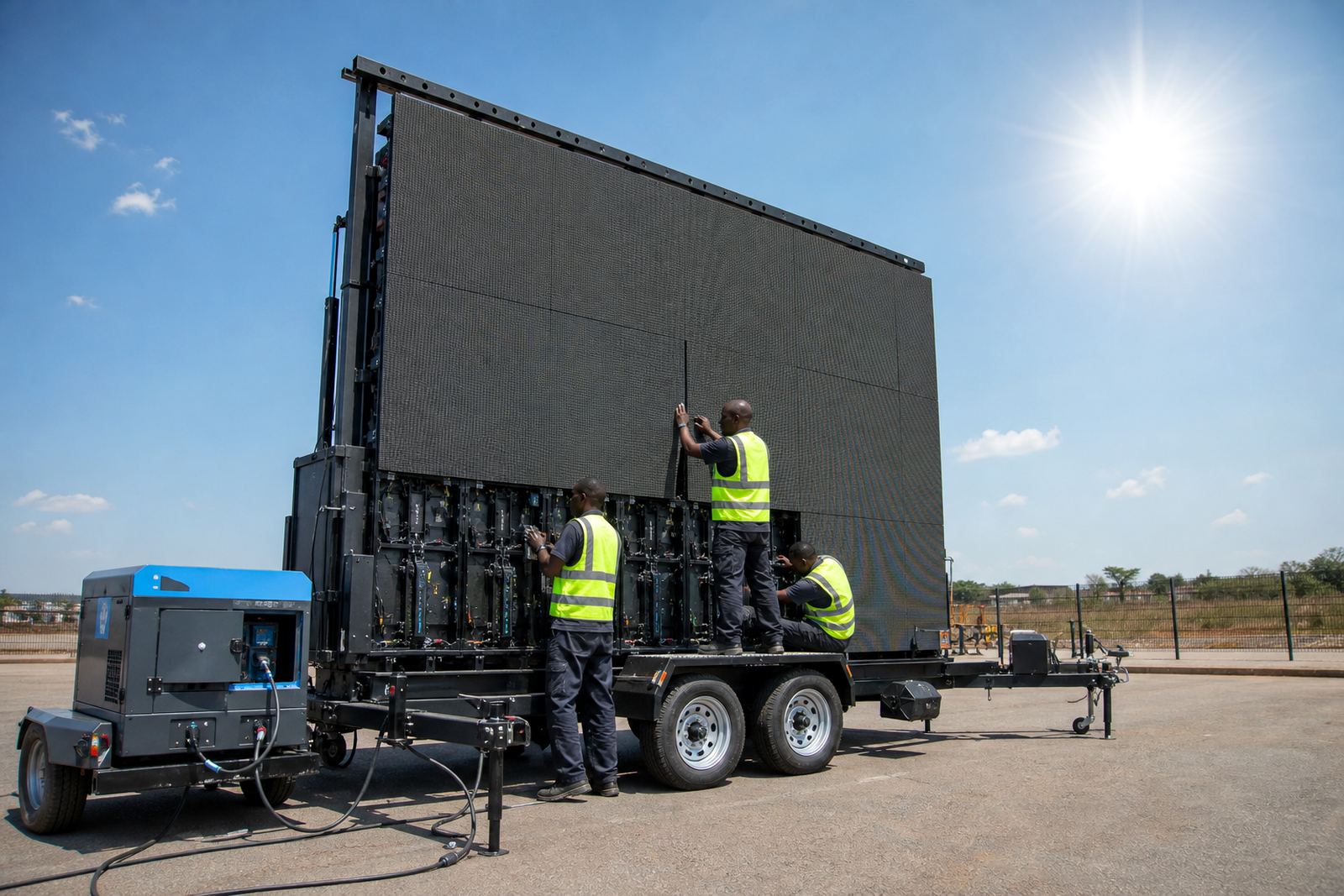
Every community event screen is delivered, set up and run by an on-site technician. That covers positioning, lift operation, playback checks, content changes during the programme and pack down once the event ends. For municipal style work, that hands-on handling matters because the screen is often part of a wider schedule with announcements, music, prizegiving and community notices in one run.
Our Germiston base supports work across Johannesburg, Pretoria, Durban, Bloemfontein and Polokwane, with delivery planning matched to the route and the site window. The team includes a managing director, operations, lead screen technician, logistics, fabrication and playback support, so the screen, trailer and content flow are handled as one job rather than separate pieces.
Key facts
| Screen type | Outdoor LED screen trailer for community events |
|---|---|
| Typical pixel pitch | About P3.9 to P6.9 depending on viewing distance |
| Brightness | High brightness daylight viewing, usually 5 000 to 7 000 nits |
| Screen sizes | Common builds from about 3 metres to 6 metres wide, larger on request |
| Power | Generator or suitable mains supply |
| Mobility | Trailer mounted with hydraulic lift and selected rotation options |