
What sits inside the weather cover set
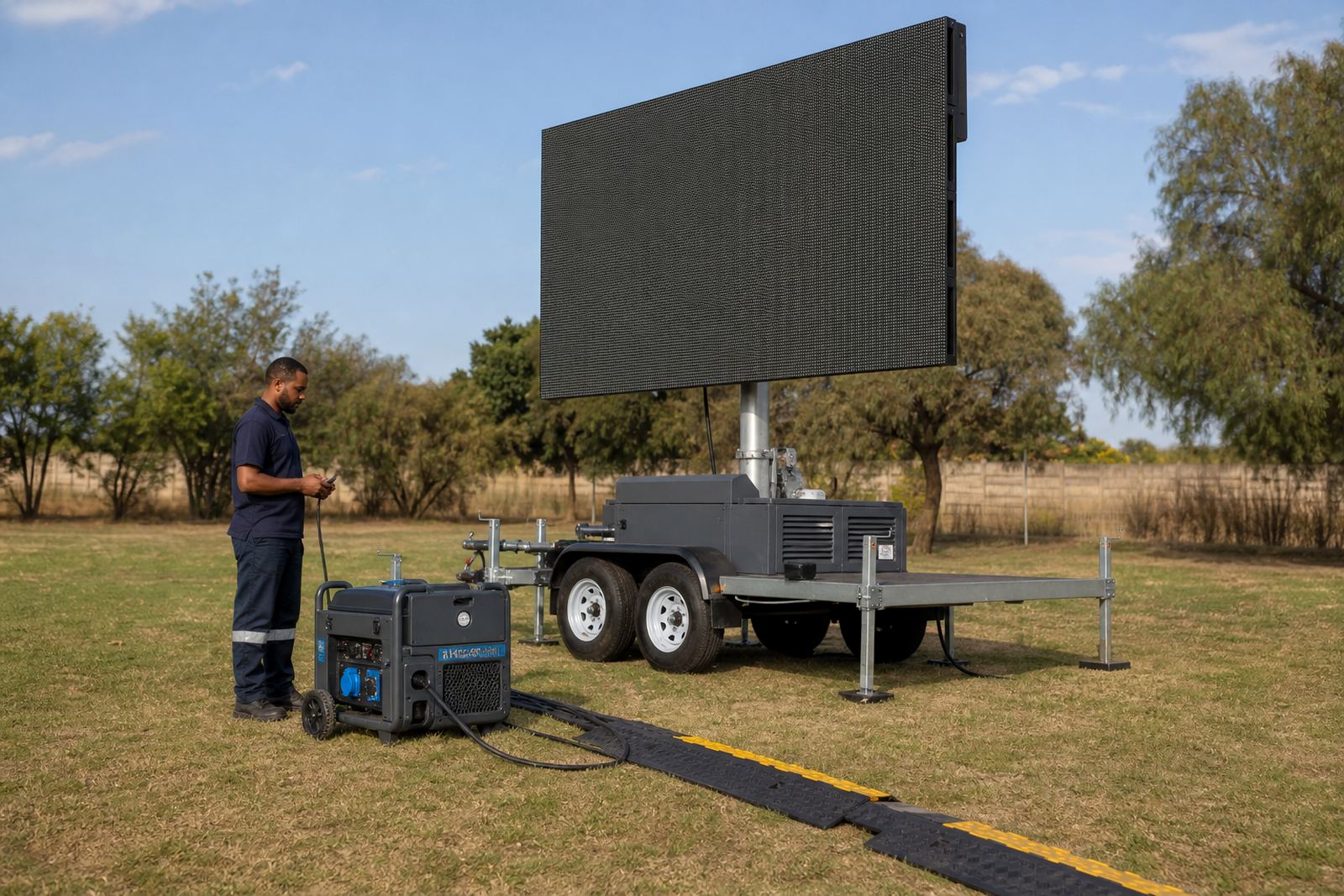
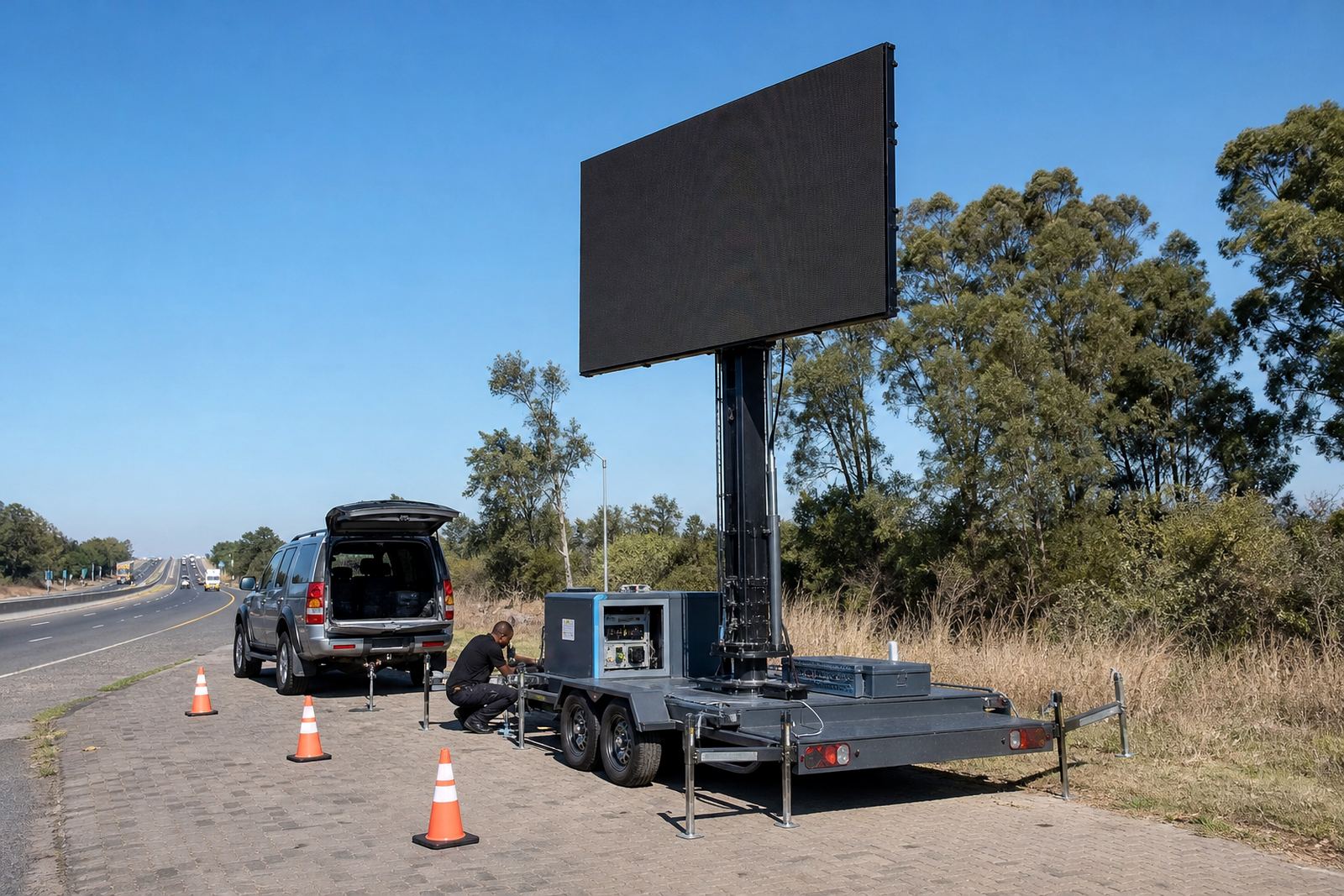
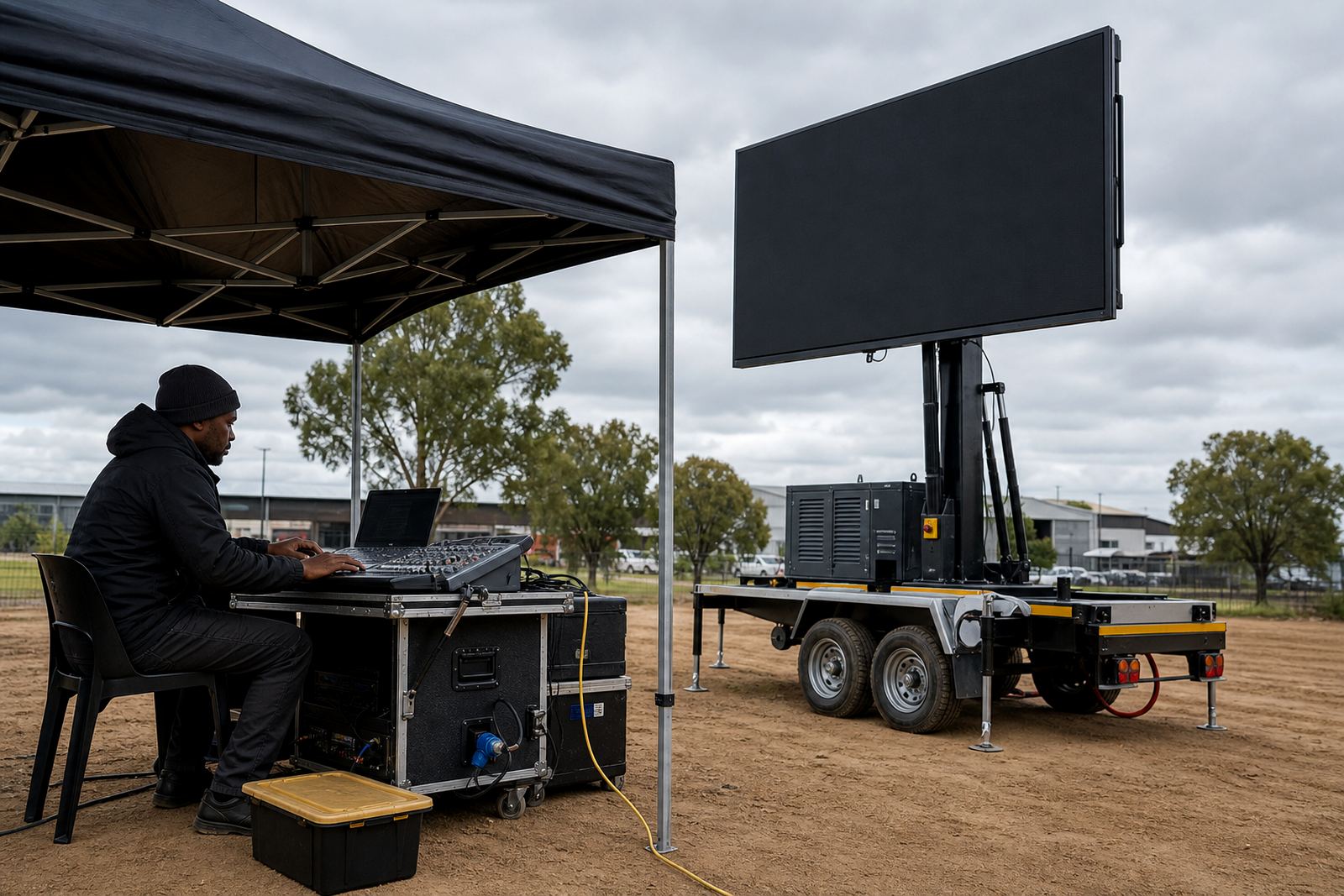
The set brings together the protective parts needed around an outdoor LED screen trailer when the site is exposed to weather. It is built for the technician area, the playback position, exposed connectors and the ground zone where people move around the trailer during setup and running.
Typical pieces include a fitted control shelter cover, cable protection sleeves, sealed flap openings, weighted tie-down points and a ground cover for the work area. On longer activations, the cover set helps keep dust off control equipment and reduces splash exposure where the trailer is parked on hardstand, paving or compacted ground.
- Protective cover panels for control and playback equipment
- Covered cable exits and sealed access points
- Weighted hems and tie-down loops for outdoor use
- Ground protection for the technician zone
Covers cut for each trailer we tow
Weather cover sets are matched to the size of the trailer and the layout of the screen box, control point and working area. Smaller road-facing trailers need a lighter cover footprint, while larger screens call for deeper side skirts, wider sheltered zones and stronger anchoring points.
Options are chosen to suit screen height, trailer deck width, the space left for the technician and the usual wind exposure at the site. Where the unit is rotated or lifted hydraulically, the cover must leave clear movement space and not foul the hinge line, mast or screen frame.
- Compact cover sets for shorter activations and tighter sites
- Extended side covers for open venues and roadside visibility
- Clear access panels for content loading and maintenance checks
- Reinforced tie-downs for windy coastal or open veld conditions
South African site work where this package works best
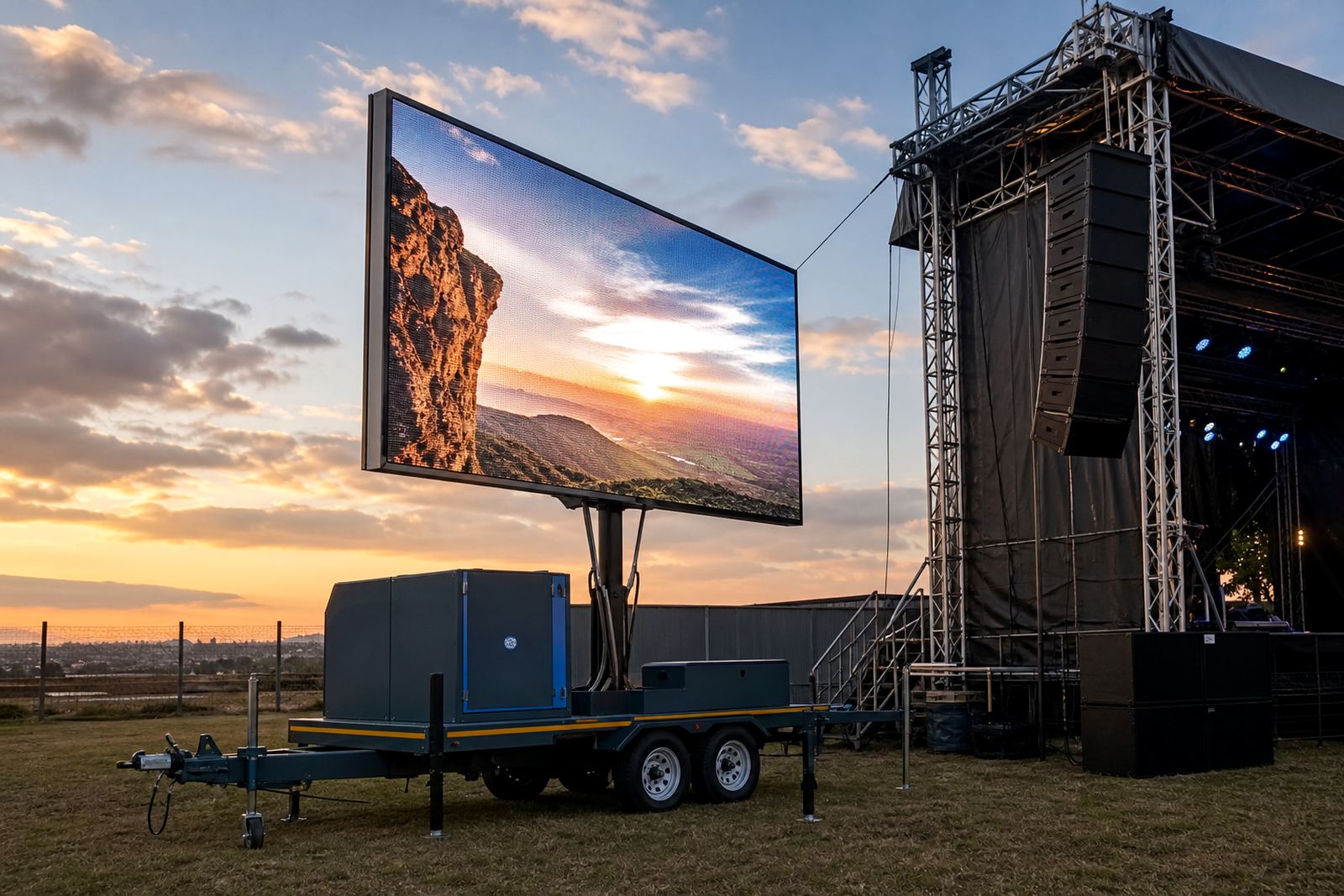
This package suits open-air advertising stands, public viewing areas, school sports fields, municipal events, community roadshows and retail forecourts where the trailer sits outdoors for several hours or longer. It is also useful when a screen needs to operate through changing weather in places like Germiston, Johannesburg, Pretoria, Durban, Bloemfontein and Polokwane.
The cover set is practical where there is dust from site traffic, sudden showers, bright sun on control gear or rough ground around the setup point. It is often added when the deployment needs to look tidy as well as stay protected, especially where the public can walk close to the working area.
- Open public spaces with foot traffic around the trailer
- Roadshows where the unit is moved between stops
- Sports days where the screen stays live across a full programme
- Outdoor brand activations with no sheltered back-of-house area
How the cover is fitted around power, playback and movement
Fitting is done around the actual trailer layout, the cable path and the location of the playback kit. If the screen is running from mains power, the cover must allow a clean route for the supply lead and a safe point for the technician to work. When the unit uses a generator, the cover arrangement has to keep heat, exhaust and service access separate from the protected control space.
The cover set is installed after the trailer is parked, levelled and checked for clearance. The technician then secures the side panels, positions the ground cover, routes the leads and confirms that the hydraulics can lift or lower without snagging any edge of the material. A proper fit leaves room for the screen to rotate or lock into place as needed.
- Park and level the trailer before the cover goes on
- Check cable paths before securing the side panels
- Keep hydraulic travel clear of loose material
- Leave service access for playback checks and maintenance
Care, cleaning and storage between activations
The cover set lasts better when it is folded dry and kept clear of grit, oil and sharp edges from the trailer deck. After wet weather, it should be opened out and dried before storage so mould does not settle into seams or hems. Dust from roadside work should be brushed off before the material is packed away.
Small tears need attention before the next site, especially around tie-down points and corners that take strain in the wind. If the deployment has been near the coast, a wipe-down helps remove salt film from buckles and fittings. The storage bag or crate should keep the set together with the related straps and clips, not scattered across other gear.
- Dry fully before long storage
- After each use, clear off dust and grit
- Check hems, loops and fasteners for wear
- Keep fittings together with the main cover pieces
Details to confirm when ordering the set
When ordering, the team needs the trailer dimensions, the screen size, the height of the raised unit and whether the site uses generator or mains power. It also helps to know if the screen will sit in one place or move between multiple stops, because that affects the cover layout and how much handling protection is needed.
Municipal permit requirements may shape the working area, access route or public setback, so it helps to share the site address and the type of event before the cover is packed with the rest of the deployment gear. The more accurate the site notes, the better the cover set can be matched to the job at hand.
- Trailer length, width and deployed height
- Screen size and whether the unit rotates
- Power source and cable entry position
- Type of site, ground surface and expected exposure
Key facts
| Product type | Outdoor deployment weather cover set |
|---|---|
| Use case | Protection for control gear, cable runs and working space |
| Fitment | Trailer-based screen systems with raised or rotated screens |
| Common cover materials | Weather-resistant coated textile, clear viewing panels, reinforced hems |
| Site conditions | Sun, dust, drizzle, splash exposure and open wind |
| Coverage options | Compact, extended and heavy-duty site-specific layouts |