Trailer stance that holds its line in open ground
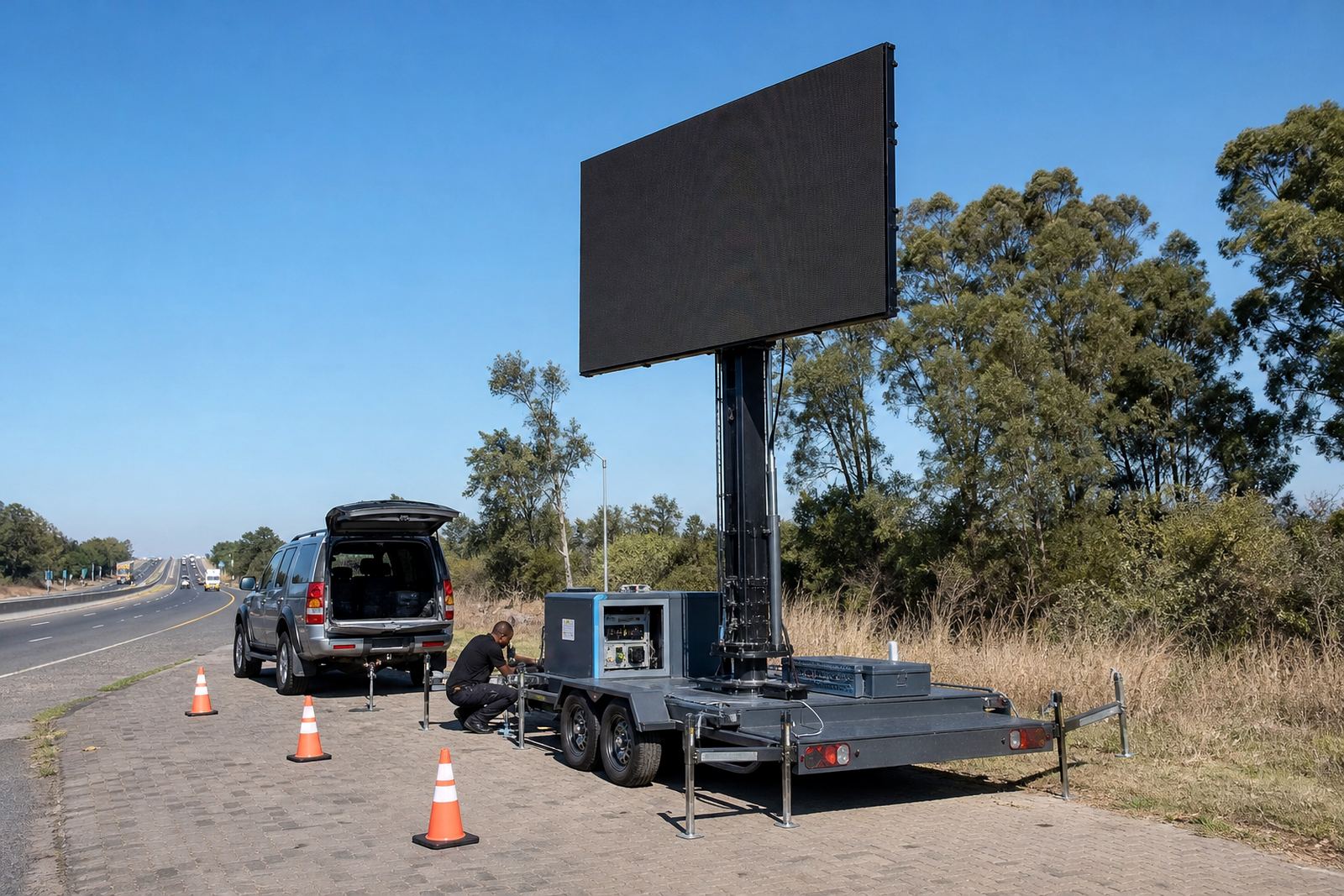
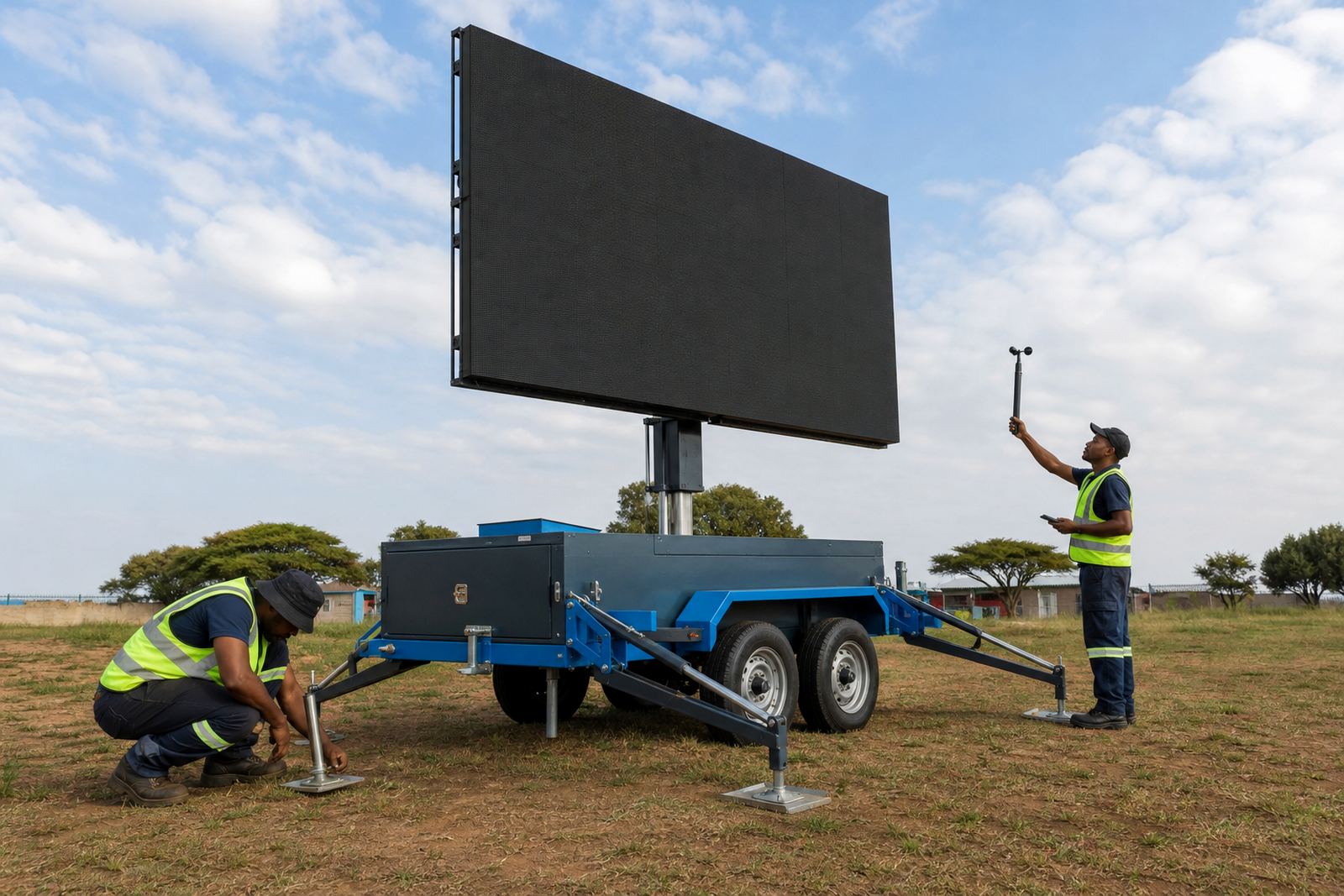
A wind-safe deployment starts with the trailer body levelled, stabilisers extended and the screen face set to suit the site. On grass, paving or compacted ground, the footing must spread the load properly and the tow unit must sit square before the lift is raised. A screen can be deployed with a hydraulic lift and, on suitable units, rotation so the face can be turned toward the crowd or away from the strongest weather pressure.
For outdoor work in Germiston, Johannesburg, Pretoria, Durban, Bloemfontein and Polokwane, the site layout matters as much as the screen itself. Open veld, coastal air, exposed forecourts and wide parking areas all need different spacing, barrier lines and cable runs. A trailer that is facing the wrong way in gusty conditions can place more strain on the frame, so orientation is checked before playback starts.
Screen sizes and viewing detail that suit the job
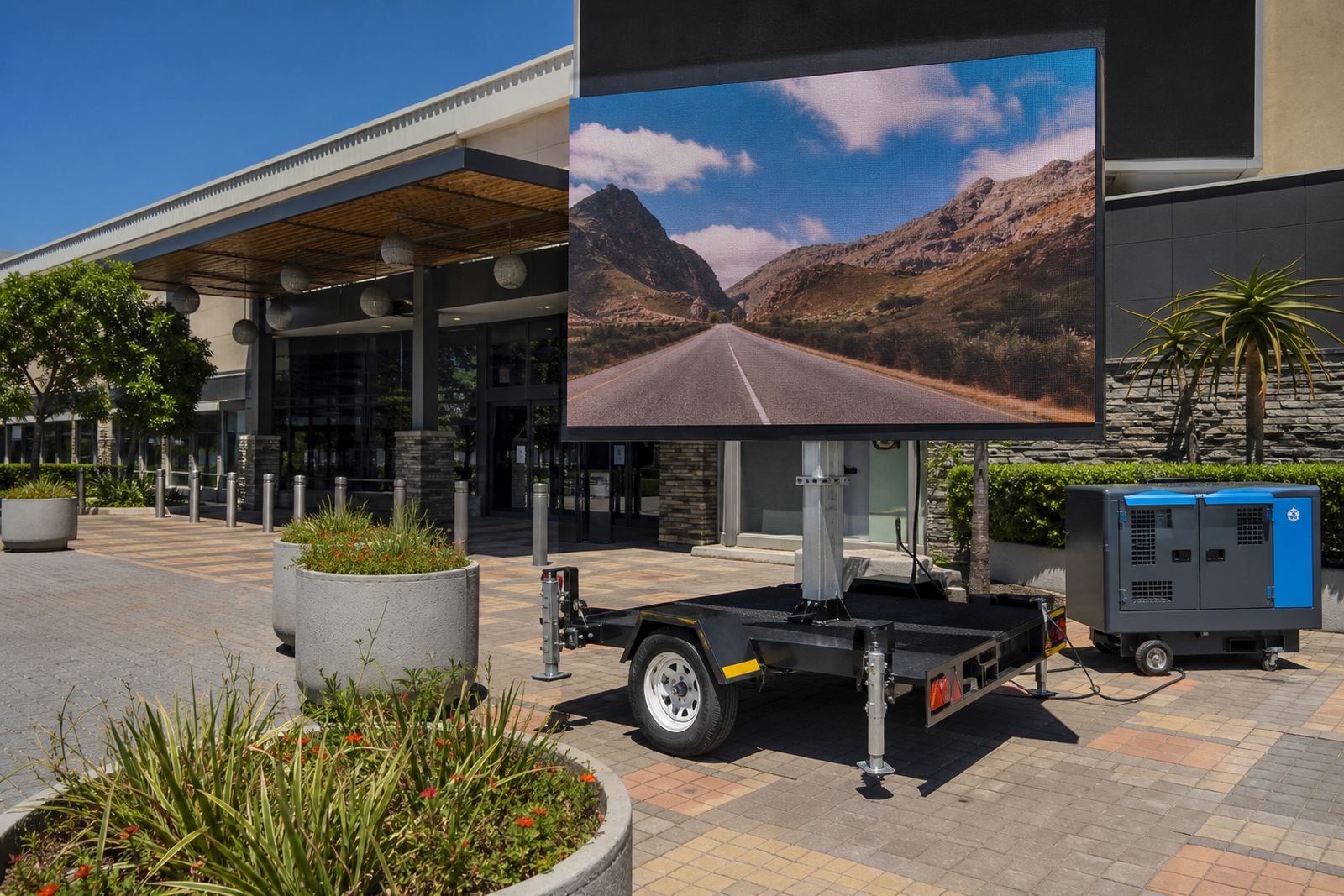
Outdoor LED boxes and trailer screens are usually specified by visible screen size, cabinet format and pixel pitch. Smaller pixel pitch gives finer image detail at closer viewing distances, while larger formats work well for roadshows, sports days and larger crowd areas. Brightness for daylight viewing is part of the spec, because a screen that looks fine after dark can wash out in full sun if it is not built for outdoor use.
- Common outdoor pixel pitches include 4 mm, 6 mm, 8 mm and 10 mm, based on viewing distance.
- High brightness outdoor panels are typically set above 5,000 nits for daytime visibility.
- Trailer formats can be compact for tight access or larger for open grounds and roadside visibility.
- Some units are arranged for portrait or landscape use, depending on the campaign layout.
The right option depends on where viewers stand, how fast they pass, and whether the screen will run static graphics, live sport or full motion video.
When this setup suits a live site better than a fixed wall
Wind-safe trailer deployment is useful where the audience changes through the day or the site has no permanent screen structure. It suits product launches, roadshows, school sport, municipal events, public viewing areas and outdoor advertising where the screen must be delivered, raised and managed on site. The same setup also works when a campaign needs to move from one town to another without rebuilding the display each time.
The trailer platform helps when access is controlled or where ground conditions may shift during the day. For a coastal venue in Durban, for example, wind direction and salt air need to be taken seriously. In inland areas such as Bloemfontein and Polokwane, gust patterns can change quickly across open fields and the screen should be positioned with that in mind.
Power, content and the controls that keep it steady
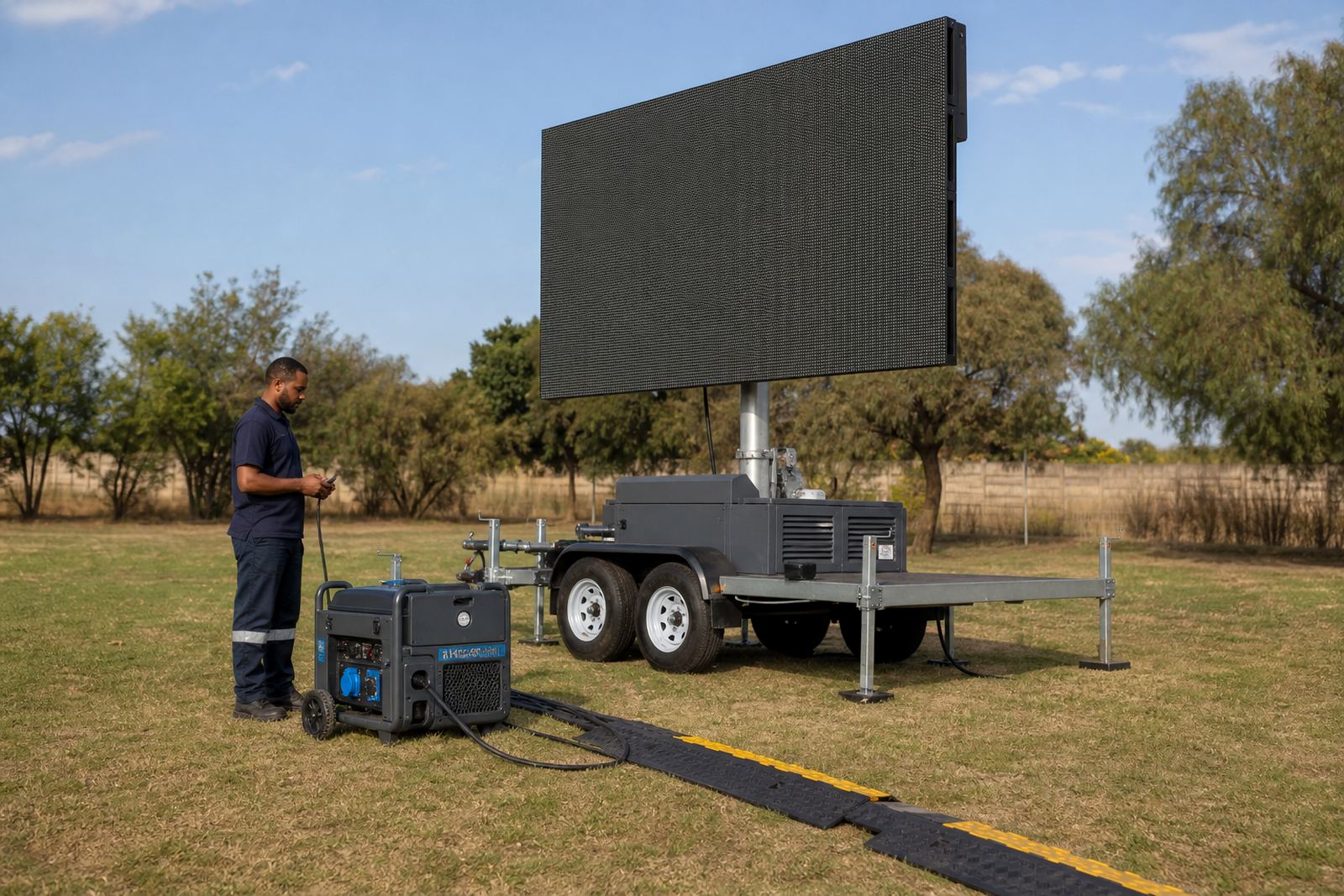
These units can run from mains power where the site has a proper supply, or from a generator where that is the more practical option. The choice depends on distance from the source, cable routing, load needs and how long the screen must operate. Content is loaded before the event, then managed through media playback software so the technician can handle schedules, live feeds and signal changes without disturbing the screen face.
- Power planning should cover screen load, control gear and any audio or source equipment on site.
- Live feed support needs tested signal paths and the correct input format before the crowd arrives.
- Generator placement must allow safe exhaust direction and enough clearance for refuelling and access.
- Backup media should be prepared in a format that matches the playback system in use.
When the trailer is running on mains, the cable path should stay protected from foot traffic and vehicle movement. If the event uses a generator, the technician checks output stability and the screen load before the first loop starts.
Permits, weather checks and the limits that matter
Some sites need permit guidance, especially where the screen faces a public road, sits near traffic, or is placed in a municipal area with specific outdoor rules. Wind limits are never a guess. The crew must look at the trailer rating, the panel size, the lifting position and the site exposure before the screen is left raised. If the wind rises above the safe operating range, the screen may need to be lowered or parked in a safer orientation.
The technician tracks the weather for the whole hire. Rain, strong gusts and lightning all affect how an outdoor trailer should be managed. The technician also checks for loose soil, overhead obstacles and nearby structures that can funnel wind across the screen face.
What to confirm before the trailer rolls in
Before ordering, it helps to confirm the site access, the expected audience distance and whether the screen must face a street, stand in a parking area or sit inside a fenced venue. The team also needs the event date, setup window, power source, content format and whether live feed support is required. If the site has height restrictions or narrow entry points, that should be noted early so the trailer and lift arrangement can be matched to the route.
- Screen size needed and the viewing distance on site.
- Pixel pitch requested for the image detail required.
- Power source available, mains or generator.
- Site surface, access width and turning space for delivery.
- Need for permit guidance, weather monitoring or live feed support.
- Whether the unit must rotate, lift higher, or stay in one facing direction.
For bookings across Ekurhuleni, Kempton Park and further afield, the contact form helps the team capture the site notes, service needs and screen spec in one go.
Key facts
| Product type | Outdoor LED screen trailer and LED box deployment |
|---|---|
| Pixel pitch | Typically 4 mm to 10 mm, based on viewing distance |
| Brightness | Outdoor daylight viewing, commonly above 5,000 nits |
| Lift system | Hydraulic raise and lower arrangement |
| Orientation | Fixed face or rotation depending on trailer model |
| Power options | Mains supply or generator with on-site power planning |