A fairground brief with moving parts
The organising team in Benoni needed one outdoor screen that could carry the day without slowing the rest of the programme. The brief covered stage announcements, programme changes, sponsor acknowledgements and family information for parents moving between food stalls, seating and activity areas.
The site had mixed sightlines, a steady flow of foot traffic and open exposure to sun and wind. That meant the screen had to stay readable in daylight, sit high enough above the crowd, and remain stable while the programme changed through the day. We reviewed where people would gather, where vehicles could access the site, and where the trailer could be placed without blocking movement around the fair.
- Event type: community fair with stage and family programme updates
- Town: Benoni, Ekurhuleni
- Use case: announcements, schedules, sponsor messages and live information
- Access needs: public movement, vehicle set-down space and clear pedestrian paths
Screen choice, height and daylight legibility
For this kind of event, pixel pitch and brightness matter more than most people expect. A finer pixel pitch gives cleaner text at shorter viewing distances, while high brightness helps the image hold up in direct sunlight. We supplied an outdoor LED screen trailer suited to open-air viewing, with content that stayed legible when the crowd was standing, walking or seated farther back.
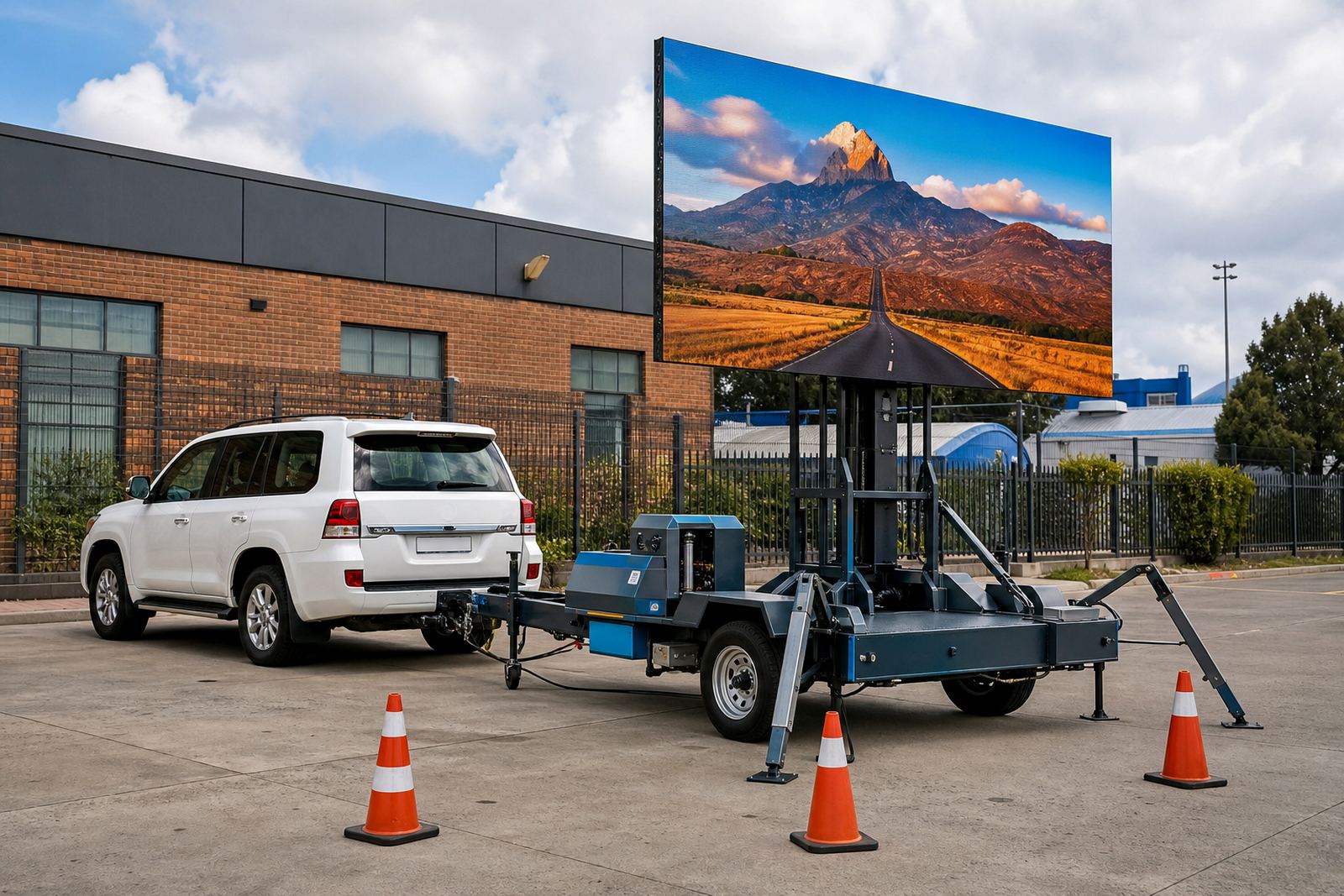
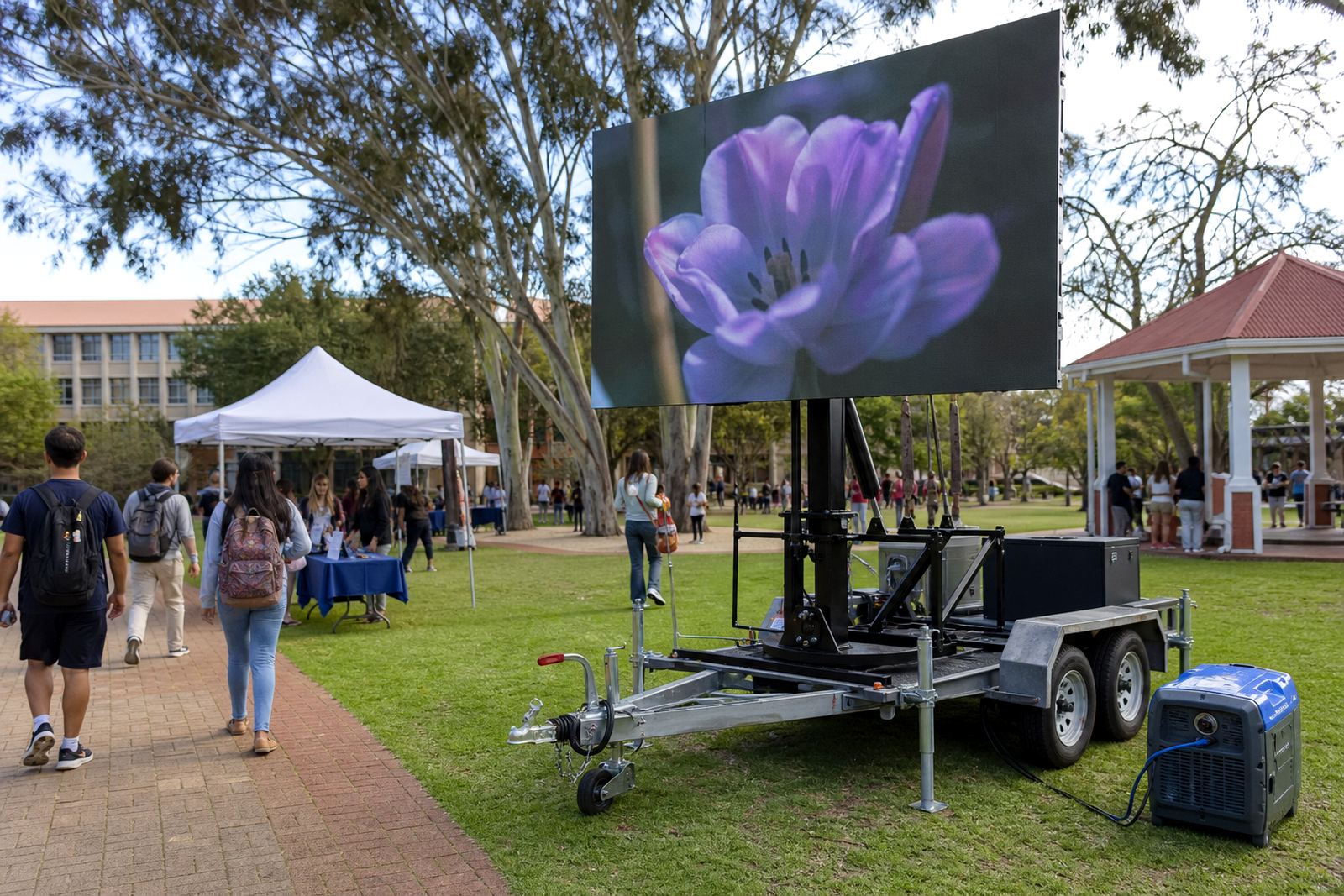
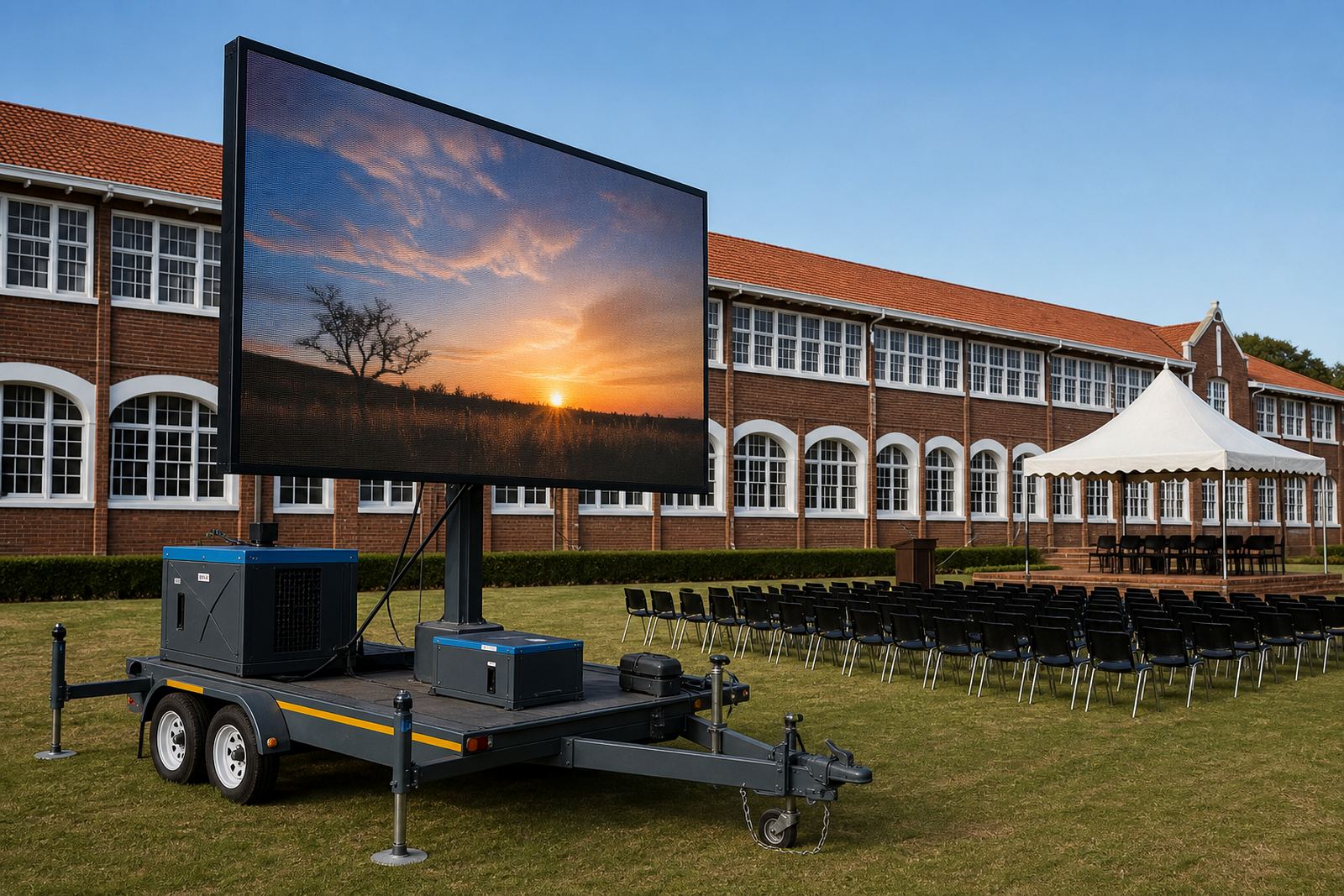
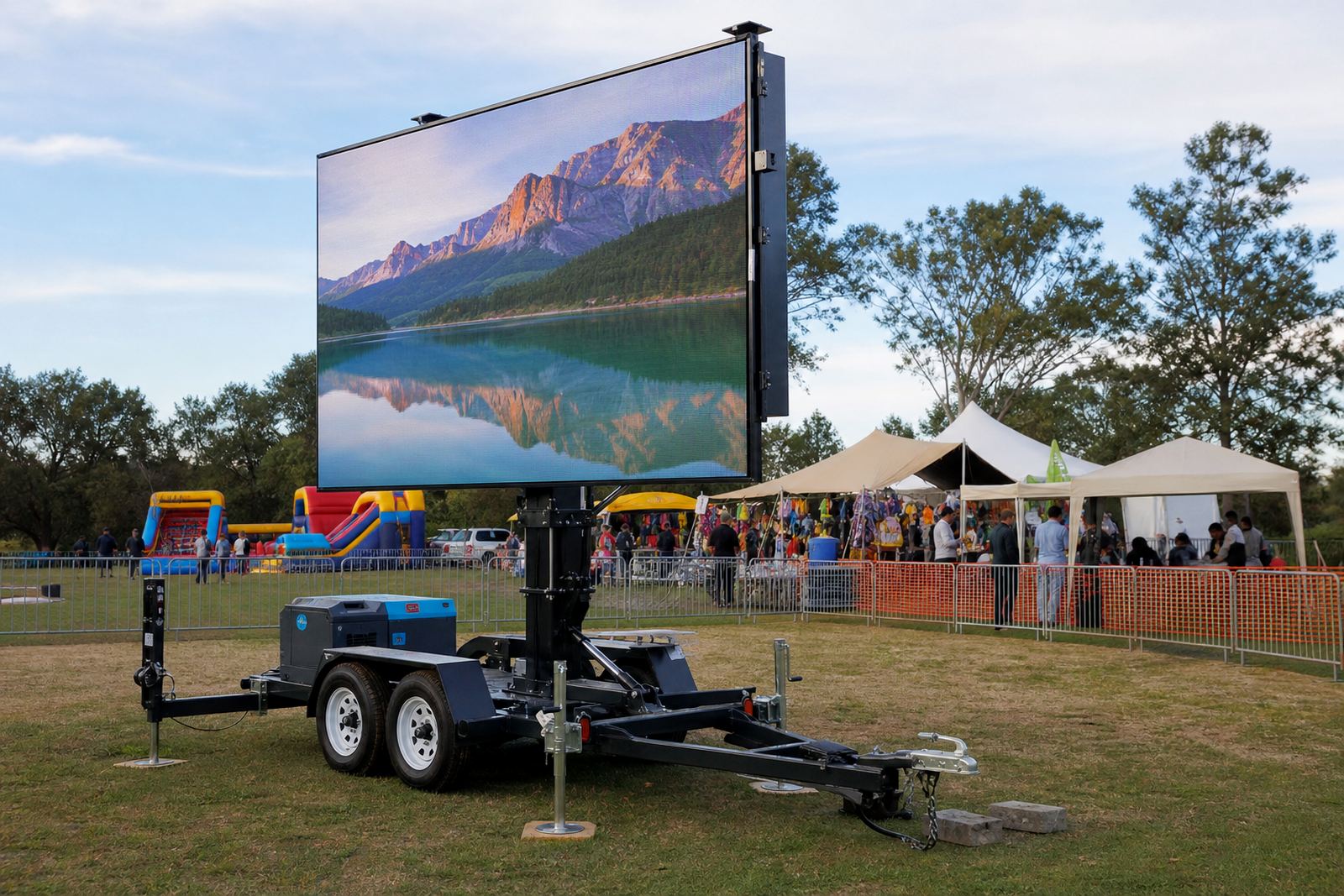
The trailer included hydraulic lift and rotation so the screen could be raised into view and angled toward the main audience area. That helped the display work with the shape of the site instead of fighting it. The screen was run from planned power on site, with the setup ready for generator use or mains supply depending on what the venue could provide.
- Mobile screen that could be turned toward the stage area
- Daylight-ready brightness for open outdoor viewing
- Content playback for slides, announcements and timed programme items
- Power planning matched to site conditions and available supply
Permit notes, weather checks and site rules
A fair in a public setting usually needs a bit more coordination than a private function. We worked through permit guidance in general terms with the organisers so they could deal with venue and municipal requirements, especially where public space, noise control, access routes and safe placement were concerned. The trailer position was kept practical for the site layout and for the people moving through the grounds.
We planned for the weather from the start. Outdoor screens need attention to wind limits, and the trailer had to be placed where the display could stay secure if the conditions shifted. We monitored the forecast around the event window and adjusted the setup plan around the safest position for visibility and stability.
- General permit guidance for municipal and venue processes
- Weather monitoring around wind and open-site exposure
- Placement planned for crowd flow and safe access
- Clear sightlines kept in mind for stage use and family messaging
What the three-week run-up covered
The project ran over three weeks. The first week focused on the site check, placement options and the information needed for power and access planning. In the second week, the content plan was finalised so the playback list could be loaded in the right order for announcements, schedule changes and family notices. The final week covered delivery timing, setup steps and checks on the screen position before the fair opened.
On event day, our technician handled the screen, playback and live support from the site. That meant the organisers could keep the programme moving without having to shift attention to the equipment every few minutes. The content was loaded in sequence and adjusted as the fair moved from opening remarks into the main programme blocks.
- Week 1: site check and placement planning
- Week 2: content loading and playback order
- Week 3: delivery, setup and final checks
- Event day: on-site technician for playback and live feed support
On-site work that kept the screen useful
The fair needed more than a screen placed in the right spot. It needed someone to keep the output clear, the timing right and the display relevant to the crowd. Our on-site technician remained with the unit, handled playback control and watched for programme changes so the organisers did not need to interrupt the event flow to manage the screen.
The content included stage announcements, reminders for the family programme and simple directional messages. Where needed, live feed support was used to keep the screen aligned with the actual programme. That helped the event team communicate with people spread across the grounds, from the seating area to the activity spaces near the edges of the site.
- On-site technician with screen operation and playback control
- Live feed support for programme updates and stage use
- Announcement slides loaded in the correct sequence
- Pack down handled after the programme finished
What changed for the organisers
The main outcome was clearer communication across the fair without crowding the stage with repeated announcements. People could see the next item, catch schedule changes and follow the family programme without relying only on speakers or printed notices. That reduced confusion around timing and gave the organisers a cleaner way to manage movement through the day.
If we were handling a similar Benoni fair again, we would keep the same approach to site checks, early content loading and direct on-site technician control. For a public event with families and mixed traffic, the screen needs to be placed once and managed properly, not left to run on guesswork. Multi-stop planning would also be useful if the same trailer had to move between venues or programme points over a weekend.
- Better visibility for schedule changes and stage notices
- Less pressure on announcers to repeat information
- Cleaner crowd guidance across a busy family site
- Simple handling for future fair layouts or multi-stop use
Key facts
| Project | Benoni Community Fair |
|---|---|
| Location | Benoni, Ekurhuleni |
| Service | Outdoor LED screen trailer hire and event support |
| Screen use | Stage announcements, family programme information and live updates |
| Display features | Outdoor brightness, pixel pitch suited to readable text, hydraulic lift and rotation |
| Support | Delivery, setup, content loading, playback management, weather monitoring and on-site technician |