
A hardstand screen for a crowded expo apron
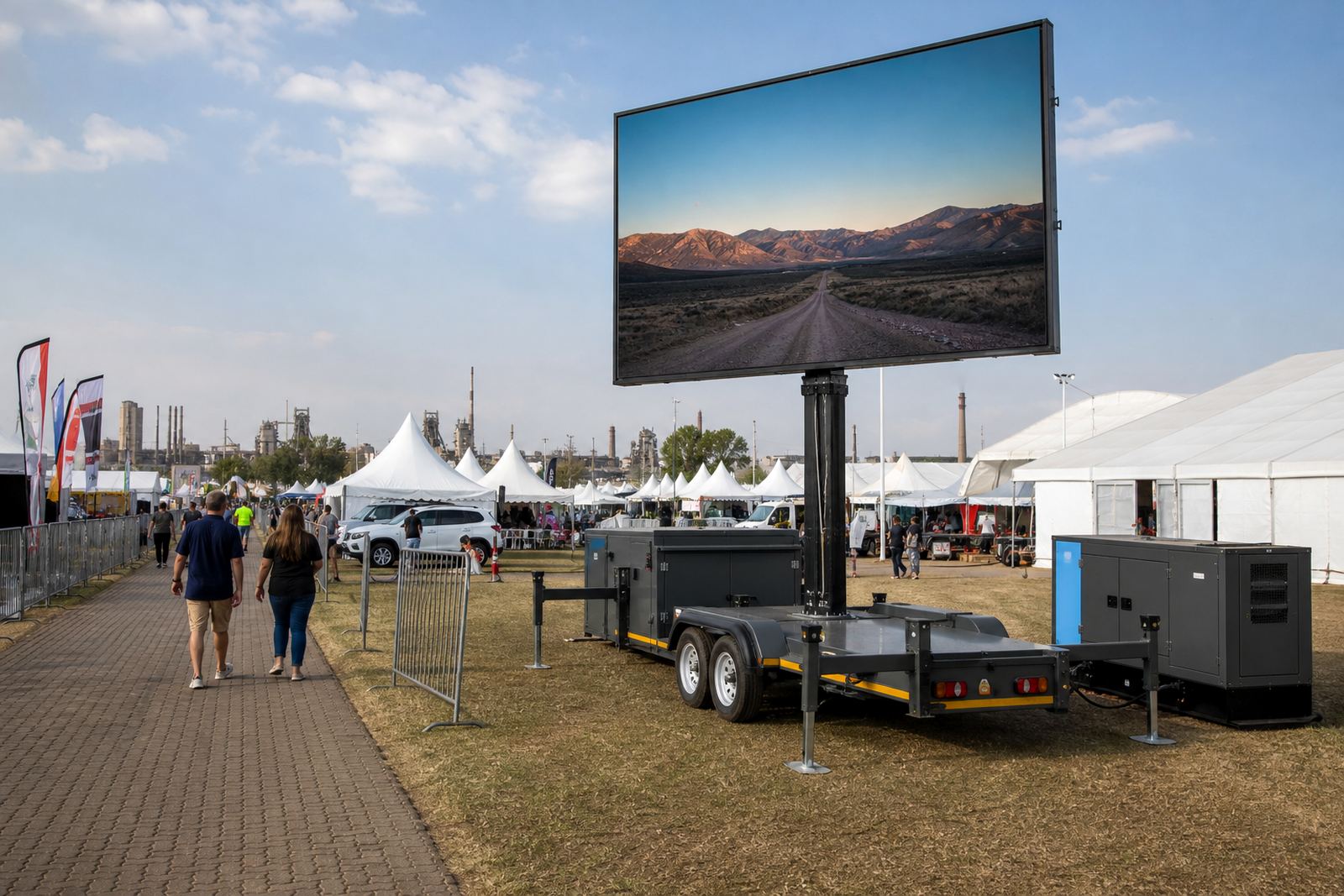
The client was an event organiser working on an expo site in Centurion, where the screen had to sit on hardstanding and stay visible to visitors moving between stands, entrances and food areas. The main job was not just display, but timing. Programme slots, speaker changes and sponsor messages had to cycle cleanly without staff having to keep watching the player all day.
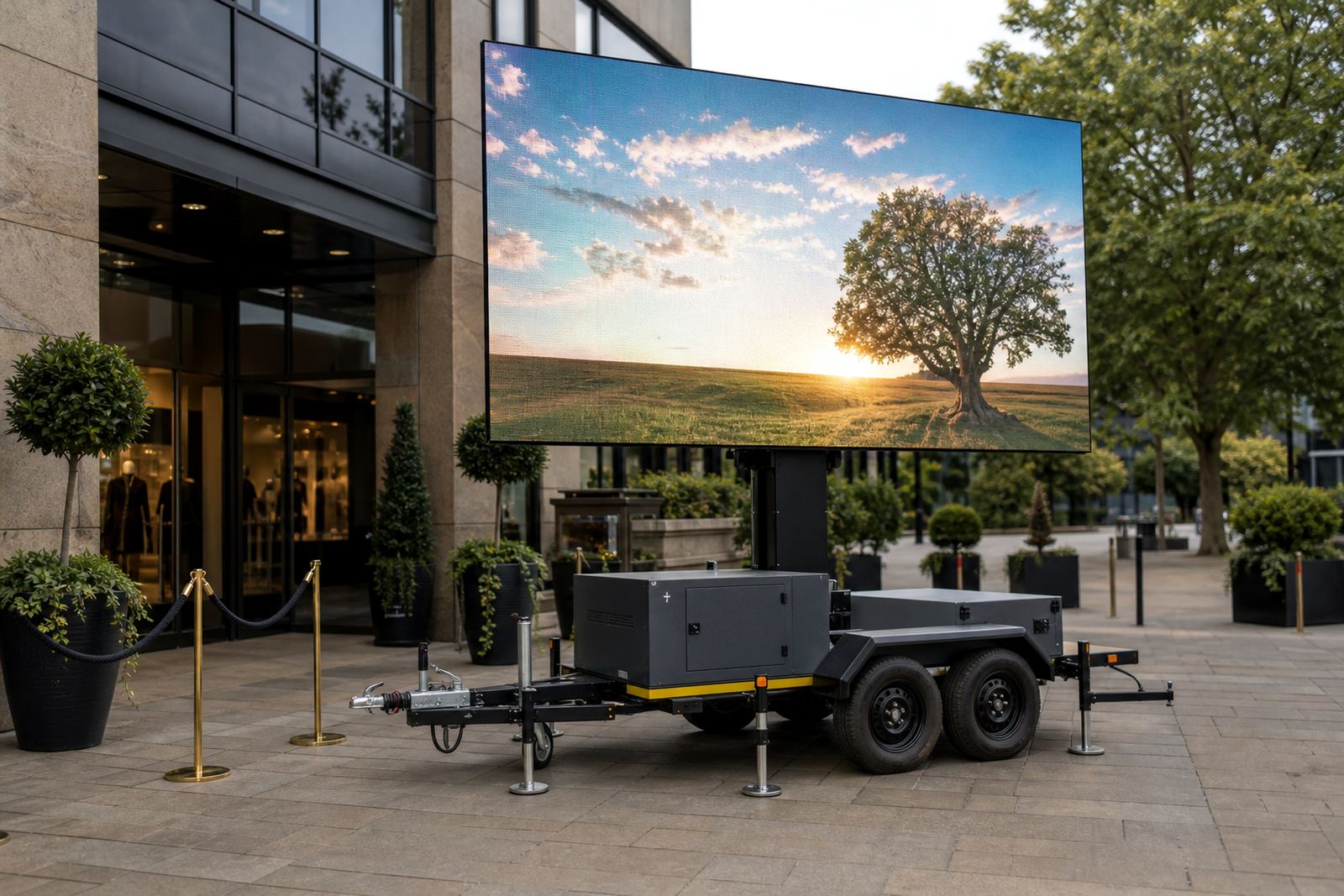
We planned the screen as a mobile outdoor unit rather than a fixed wall build. That gave the site more freedom with placement, and it meant the structure could be positioned where foot traffic, sightlines and vehicle access all lined up. The client also wanted a setup that could be handled by our on-site technician, so the expo team could focus on the programme and not the screen controls.
- Client type: expo organiser
- Town: Centurion
- Use case: schedule support and sponsor visuals
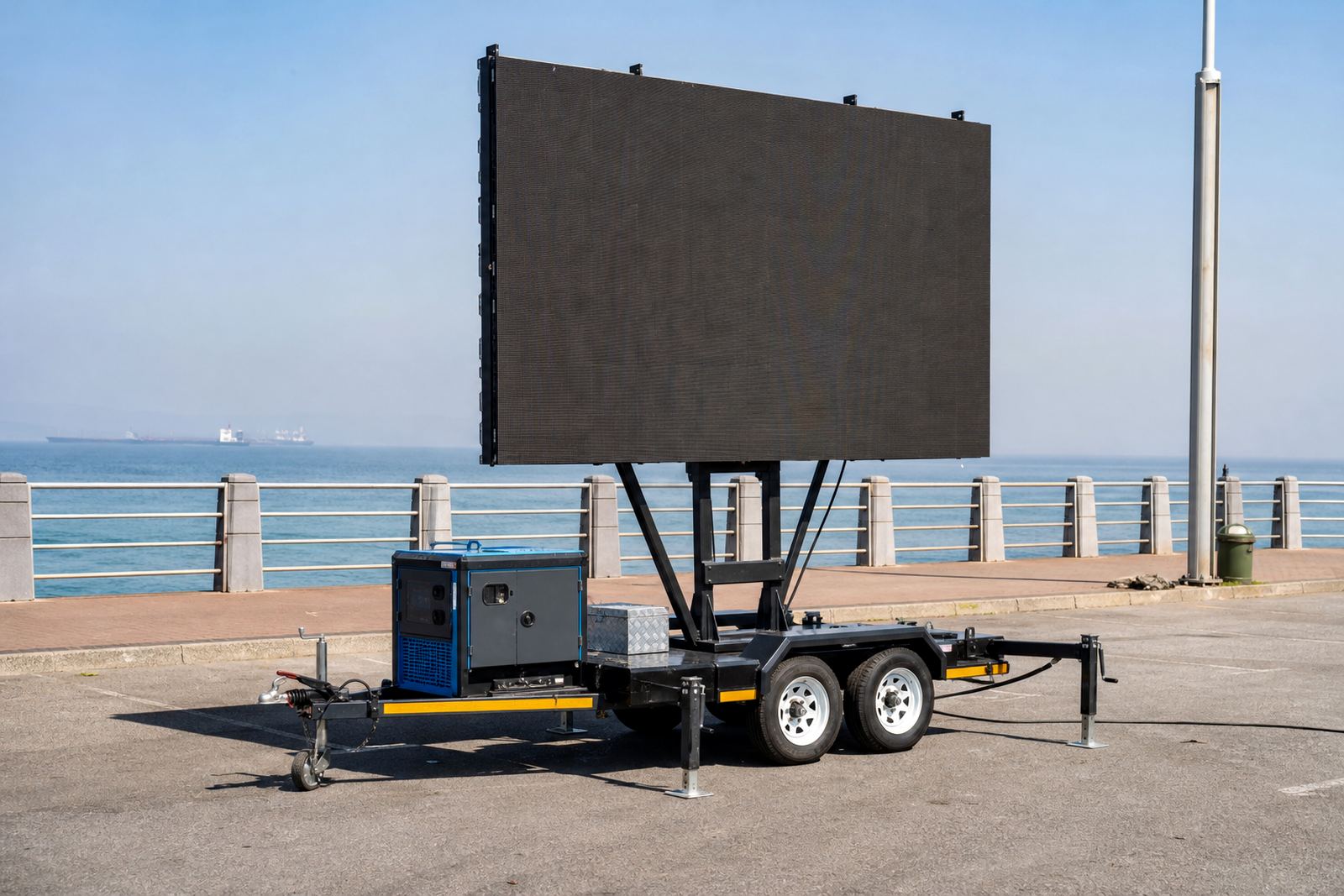
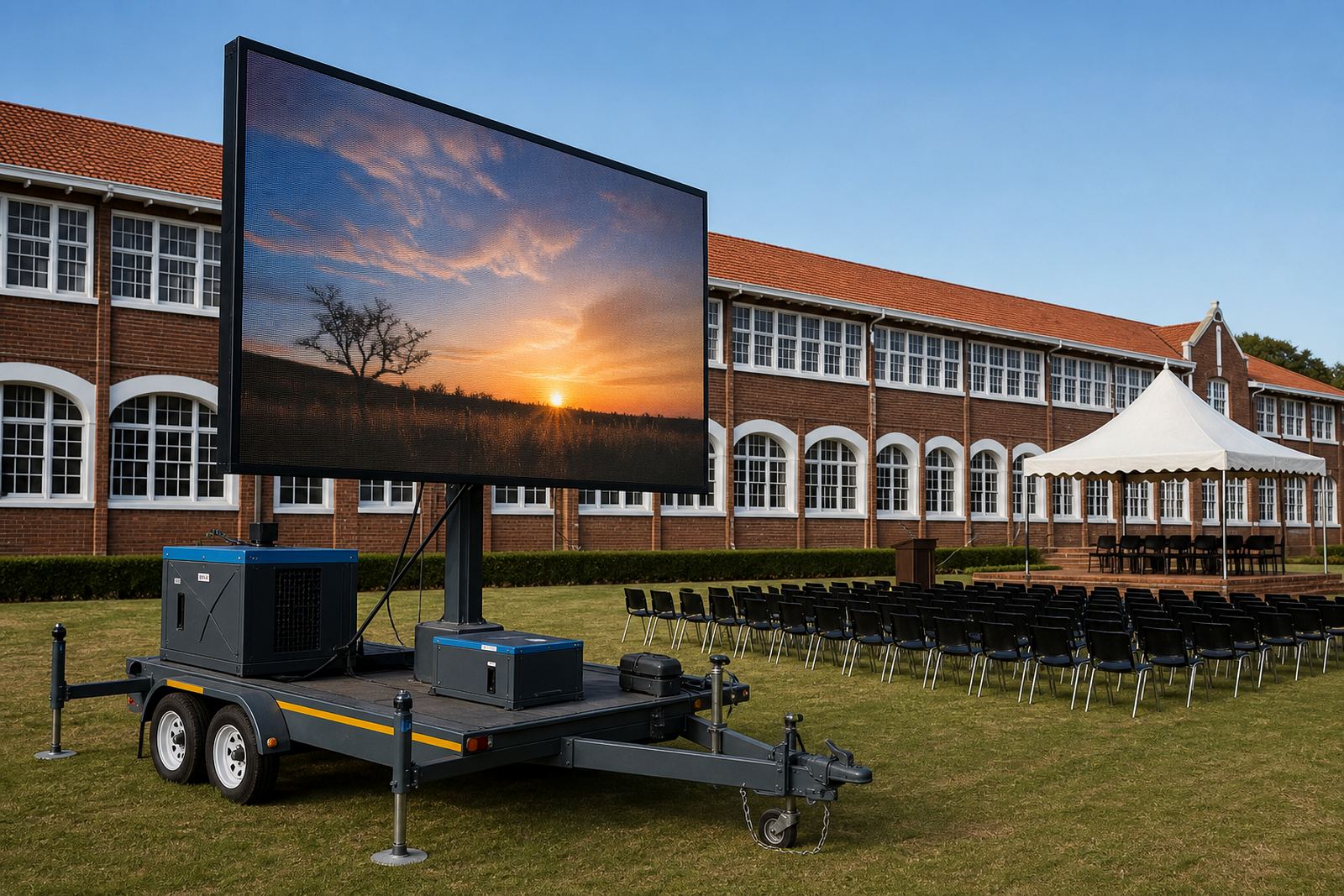
- Format: outdoor LED screen trailer on hardstand
The visibility brief and the site limits
The brief called for strong daylight visibility because the screen would run outdoors for most of the day. We selected an outdoor LED configuration with a fine enough pixel pitch for text, logos and simple motion graphics, while still keeping brightness suited to direct sunlight. The content needed to be readable from a distance, but not harsh up close when people paused near the viewing zone.
There were also practical constraints. Hardstand positioning meant the trailer had to be level, stable and set inside the allowed footprint. Access routes had to remain open for setup vehicles, and the client wanted the screen rotation handled in a way that improved line of sight without blocking expo movement. Where a site needs permissions or municipal clearance, we always treat that as part of the early planning, because public-facing events can involve permit checks, loading rules and placement limits.
- High brightness for daytime viewing
- Stable placement on a level hardstand
- Rotation set to suit the audience flow
- Permit guidance considered during planning
What we supplied on the ground
We supplied the outdoor LED screen trailer, set it up on site and ran the display through the event period with one of our technicians present. The system was loaded with the day’s schedule, sponsor loops and supporting content before the opening session, then checked again once the crowd started moving. That kept the display order clean and prevented awkward gaps between items.
Our team also handled content loading, playback management and live support for any screen changes that came up during the event. Where the site layout allowed it, we adjusted the screen angle and viewing direction to match the main pedestrian flow. For power, the unit could run from generator supply or mains power depending on what the venue made available, and the technician monitored the feed, cabling and screen state throughout the hire.
- LED trailer with hydraulic lift
- Rotation used to improve viewing direction
- Content playback and live feed support
- Power planning for generator or mains supply
The working plan across the two-week window
The project ran over a two week working window from planning through to pack down. The first stage covered site checks, access planning and the screen position. After that, we prepared the playback material, checked aspect ratios and made sure the schedule items sat in the correct order. The unit was then delivered, lifted into position and tested before the expo opened.
During the event, the technician remained with the unit and kept an eye on weather changes and playback flow. Wind limits matter on outdoor trailer screens, so the setup is never treated casually. If conditions shift, the screen can be paused, lowered or adjusted according to the site and the day’s conditions. Once the expo closed, we handled pack down and removal with the same traffic and access care we used at setup.
- Week 1: site check, content prep and logistics
- Week 2: delivery, setup, event running and pack down
- Weather monitoring during outdoor operation
- Multi-stop planning kept the move organised
What the expo audience got from the screen
The screen gave the organisers a single focal point for timing, sponsor rotation and on-the-day announcements. It helped reduce confusion around session changes, especially when people were coming in from different entrances. Sponsor visibility was steadier too, because the visuals cycled in a controlled order instead of being left to ad hoc staff handling.
For the organiser, the benefit came from having direct control. The content stayed aligned to the programme, the screen remained visible in daylight and the on-site technician dealt with the operational side. That left the client free to manage the expo floor, speakers and exhibitors without trying to run the display from a distance.
- Cleaner schedule visibility for visitors
- Controlled rotation of sponsor visuals
- Less pressure on expo staff
- Clear viewing in outdoor daylight
For a similar brief, we would set up in the same way
On a comparable expo or roadshow job, we would keep the same structure: early site checking, careful placement, prepared content, and an experienced technician on site for the full run. The exact screen size and pixel pitch would depend on viewing distance, but the process stays grounded in visibility, access and safe operation rather than guesswork.
We would also stay focused on the practical demands of public event work across Gauteng. If the venue needs municipal guidance, traffic coordination or placement approval, that needs to be folded into the plan before the screen arrives. A mobile LED trailer is useful because it lets one unit handle a lot of ground, but it still needs proper spacing, power planning and weather awareness to work well.
- Daylight brightness matched to outdoor viewing
- Hydraulic lift used for quick positioning
- Trailer rotation matched to crowd movement
- On-site control kept the display consistent
Key facts
| Product | Outdoor LED screen trailer |
|---|---|
| Pixel pitch | Fine-pitch outdoor configuration for text and sponsor graphics |
| Brightness | High-brightness daylight viewing |
| Power | Generator or mains power |
| Movement | Hydraulic lift with rotation |
| Support | Delivery, setup, playback management and on-site technician |