
Beachfront brief and the moving parts
The brief came from a Durban promotions team working with a retail and events client that wanted repeat exposure along the beachfront route. The screen had to carry looping campaign video, sponsor slides and live messaging for passing foot traffic, with enough brightness for full sun and clean sound planning around the open air setting.
The location brought a few tight conditions. Sea air can be hard on connectors and cabinets, wind can force a rethink on placement, and public space use often needs permit checks with the local authority or venue control team. We also had to allow for vehicle access, safe pedestrian flow and a clean viewing angle for people moving past the promenade.
- Client type: coastal promotion team handling brand visibility and crowd engagement
- Town: Durban, KwaZulu-Natal
- Format: repeated campaign playback on an outdoor LED screen trailer
- Operating need: public facing display with controlled setup and pack down
The trailer build that matched the site
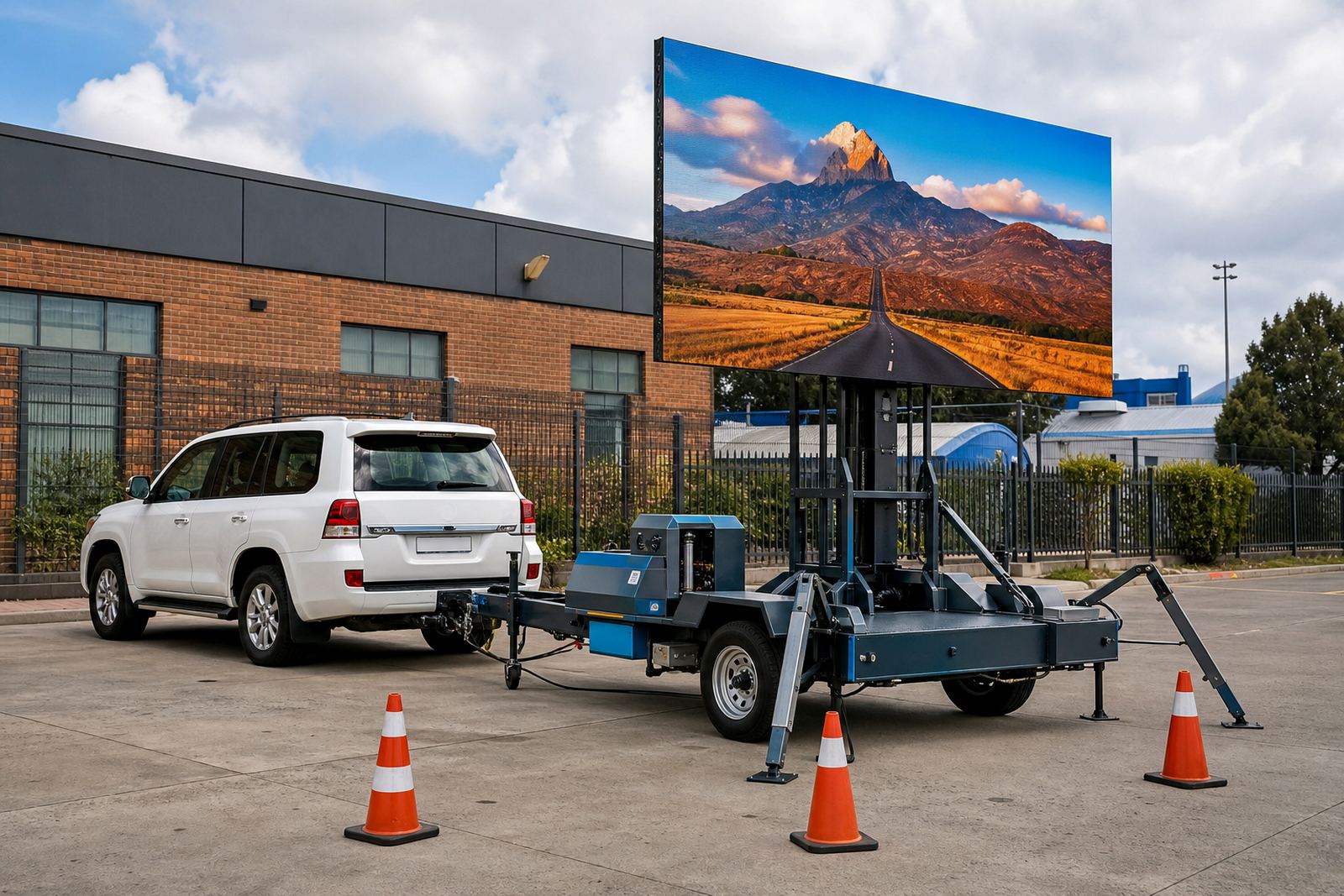
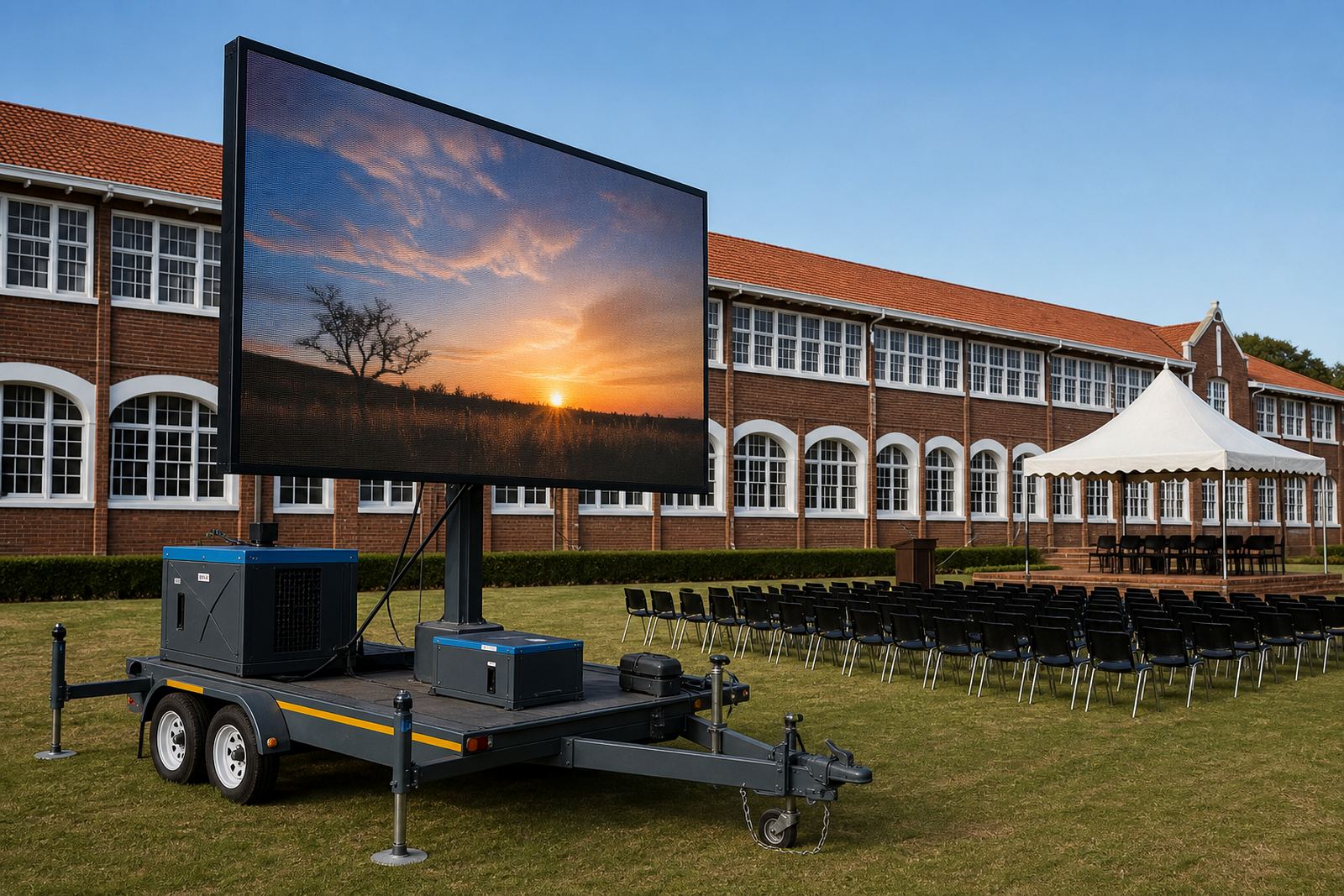
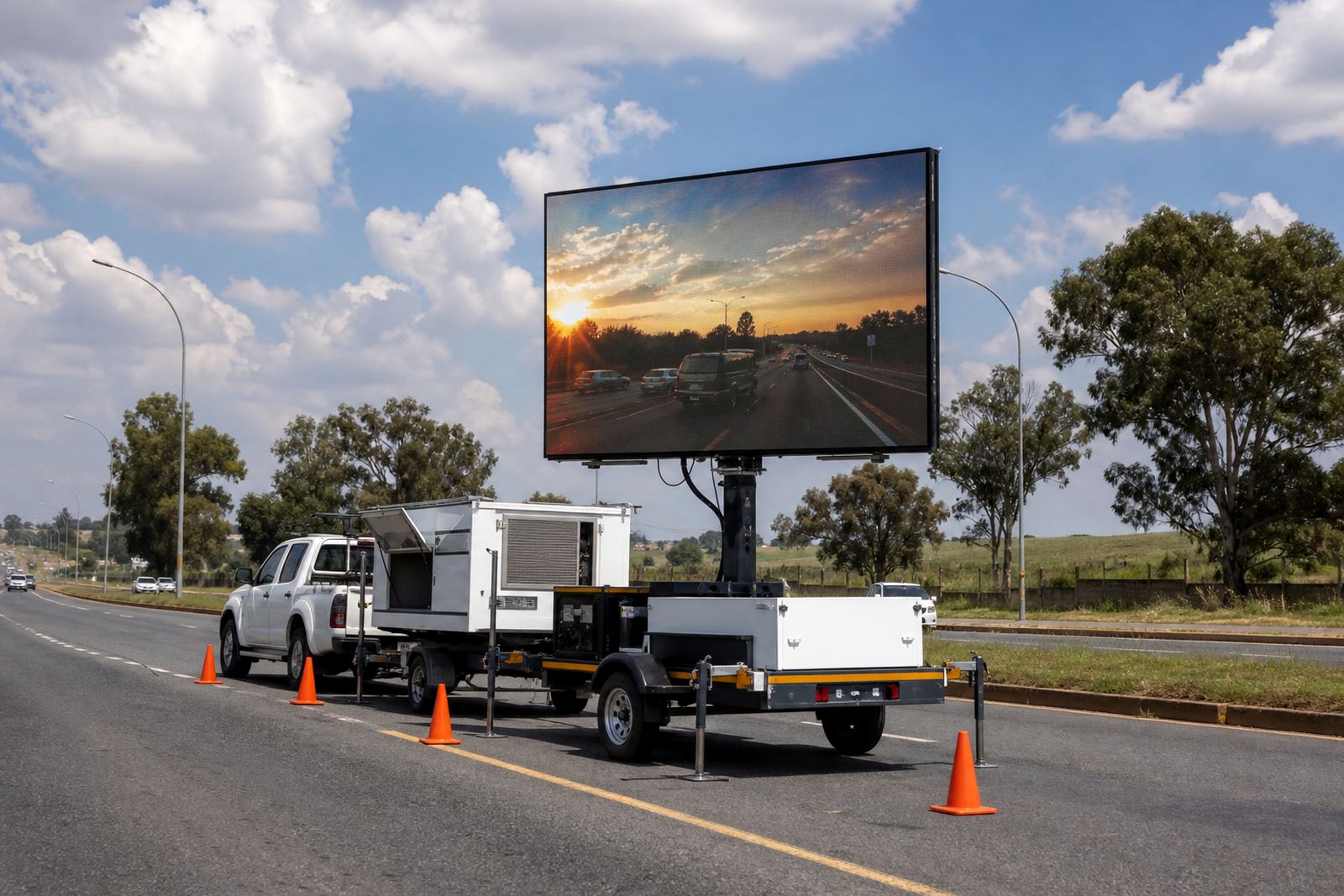
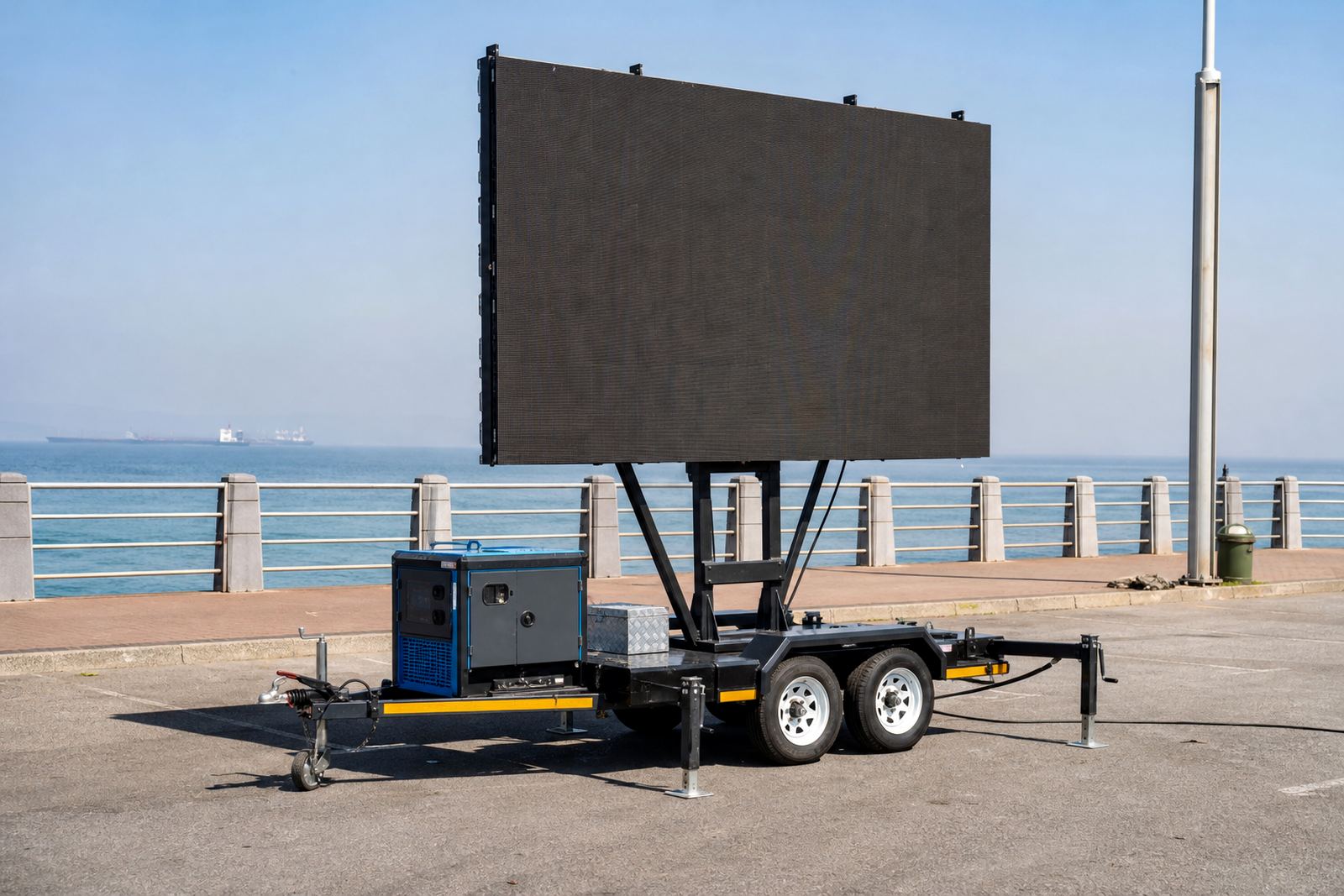
We supplied an outdoor LED screen trailer with a daylight rated display, built for strong visibility in changing weather and bright coastal light. The panel specification used a fine pixel pitch suitable for close and medium viewing distances, which matters when people pass within a few metres of the screen rather than only seeing it from far away.
The trailer included hydraulic lift and rotation so the display could be raised to the required viewing height and turned into the best line of sight on site. Power planning allowed for either generator supply or mains connection, depending on the venue layout and the approvals in place. Content played from a dedicated media source with scheduled loops, and our technician kept the file format, playlist order and volume checks tidy through the campaign window.
- Bright display for daylight viewing near the beach front
- Hydraulic lift for screen height and safe positioning
- Rotation to suit viewing direction and pedestrian movement
- Playback support for looping ads and timed campaign reels
Three weeks from site check to pack down
The work took three weeks from start to finish. The first week covered the site check, access planning and permit guidance. The second week focused on trailer positioning and content loading. The final week covered live playback, weather monitoring and pack down once the campaign window closed.
That sequence mattered because beachfront work does not forgive loose planning. We had to watch wind conditions, confirm the trailer sat level on the paved area and keep the screen aimed where walkers and passing vehicles could both see it. The team also checked that the mounting position did not block access routes or interfere with nearby activity, which is often where public space jobs get delayed.
- Week one: site check, route planning and permit guidance
- Week two: delivery, setup and content loading
- Week three: playback management, monitoring and pack down
On the ground in Durban's salt air
Durban adds a coastal layer that inland sites do not bring. Salt in the air can sit on metal surfaces and connectors, while sudden breezes can affect a trailer that is not properly parked and stabilised. Our logistics team planned the arrival path carefully, and the screen technician handled the lift, alignment and safety checks before playback started.
The campaign also needed flexible support for repeated runs, because the client wanted the same message visible at different times of day rather than a single one-off showing. Karabo handled file loading and playback checks, while Thabo kept an eye on the screen behaviour once the display was live. Where the venue asked for proof of safe positioning or screen dimensions, we supplied the technical detail that usually helps the permit process move along with less back and forth.
- Weather monitoring for wind shifts and changing light conditions
- Content loading with checked file order and loop timing
- Live feed support available if the programme changed on site
- Permit guidance for public placement and local rules
What the client got from the run
The main result was simple: the campaign stayed visible, readable and consistent across the beachfront window. The display held attention during brighter hours, and the repeated playback format suited the rhythm of foot traffic and passing vehicles. The client also had one technical contact on site, which reduced confusion when timing or content changes came up.
From a campaign point of view, the trailer format gave the client a moving asset that could be placed, watched and removed without building a fixed structure. It also meant the screen could be used again at another stop in the same roadshow style, with the same playback method and a familiar setup sequence. For a coastal promo, that flexibility is often the difference between a busy schedule and a clean one.
- Clear daytime visibility along a bright beachfront stretch
- Repeat playback that suited a long public-facing window
- Single on-site technician to keep the display steady
- Trailer format ready for future roadshow movement
What we would use on a similar Durban route
We would keep the same split between logistics, screen work and playback control. That approach kept the setup orderly and reduced the chance of missed checks when the site grew busy. For a coastal route, we would again prioritise wind checks, secure parking, sensible cable routing and early agreement on content length so the loops stay tight.
We also allow room to adjust the power setup. Some venues suit mains power, while others are easier to manage with generator support, and the final choice depends on access, approvals and the exact position on the day. A screen trailer works best when the technical load is matched to the site rather than forced onto it, and Durban made that point very clear.
- Keep the viewing angle set before the crowd builds
- Confirm power choice against the access plan
- Load the final playlist before live display starts
- Allow for weather checks and a cleaner pack down
Key facts
| Project | Durban Beach Promo |
|---|---|
| Town | Durban |
| Format | Outdoor LED screen trailer |
| Pixel pitch | Fine pitch suited to close and medium viewing |
| Brightness | Daylight rated for outdoor visibility |
| Power options | Generator or mains power |
| Core support | Setup, playback management and on-site technician |
| Campaign length | Three weeks |