Roadside brief in Kempton Park
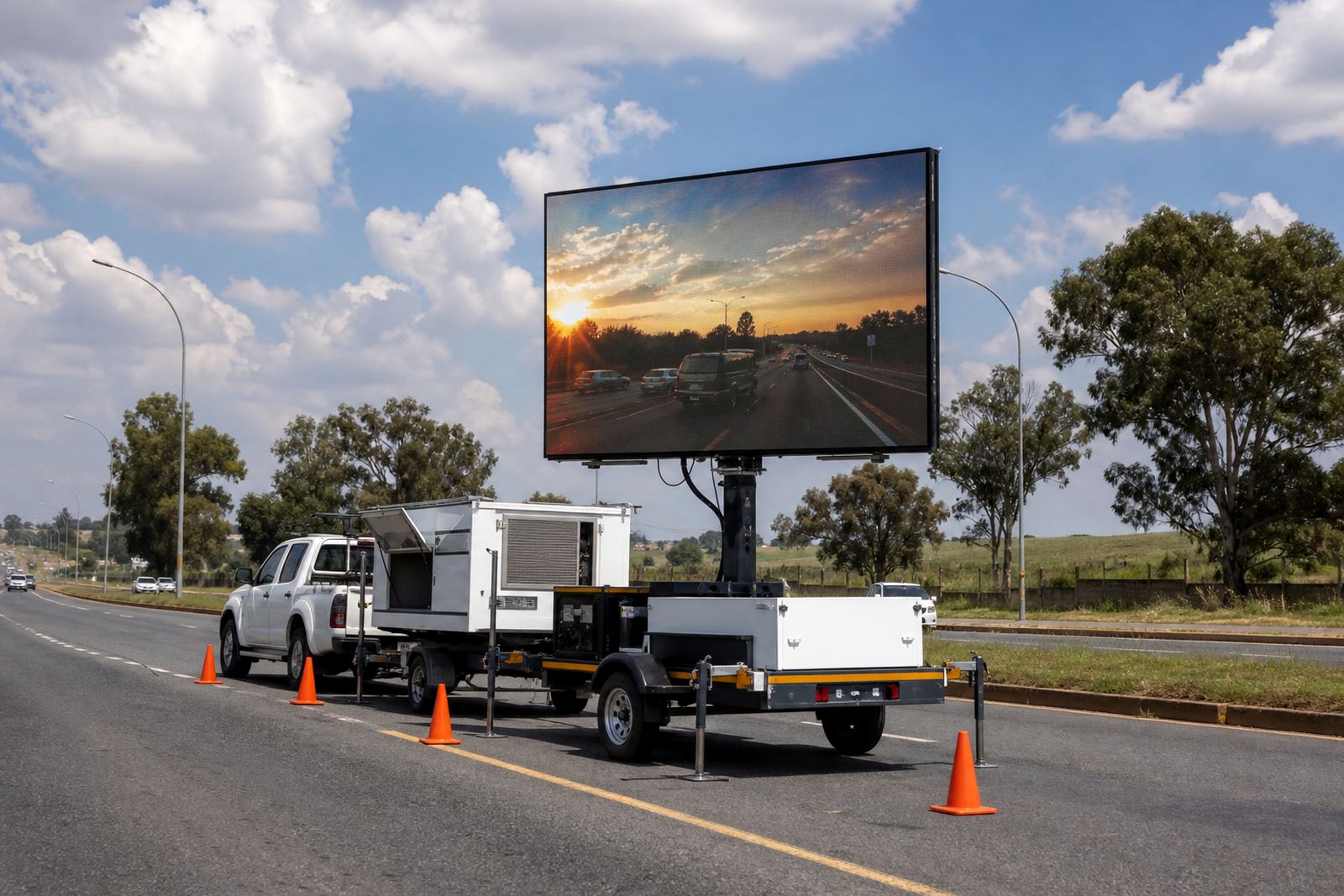
The client wanted roadside visibility for passing traffic in Kempton Park, with a display position that stayed readable from vehicles moving through the area. The use case sat between advertising and event support, so the screen had to handle branded motion content, quick content changes and a controlled setup footprint. Access around the trailer needed to stay orderly, because roadside work leaves little room for loose cables, wide manoeuvres or casual foot traffic.
We treated the site as a visibility job first and a logistics job second. That meant checking the stand area, the approach route for the trailer, the turning space for the towing vehicle, and where the on-site technician could work without blocking movement near the road edge.
- Roadside visibility for passing traffic
- Controlled set-down and technician access
- Live playback and content loading support
Screen specification and power set-up
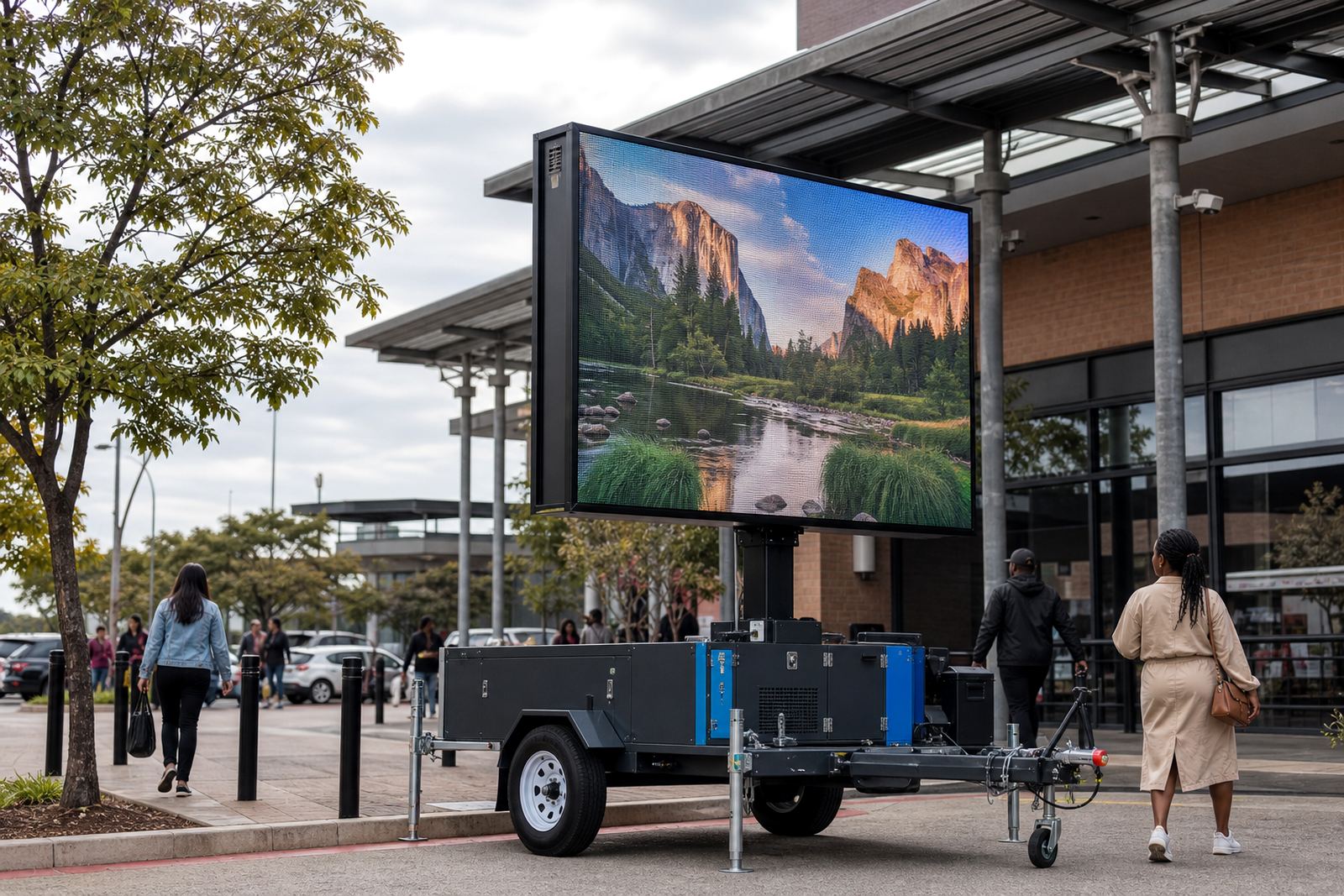
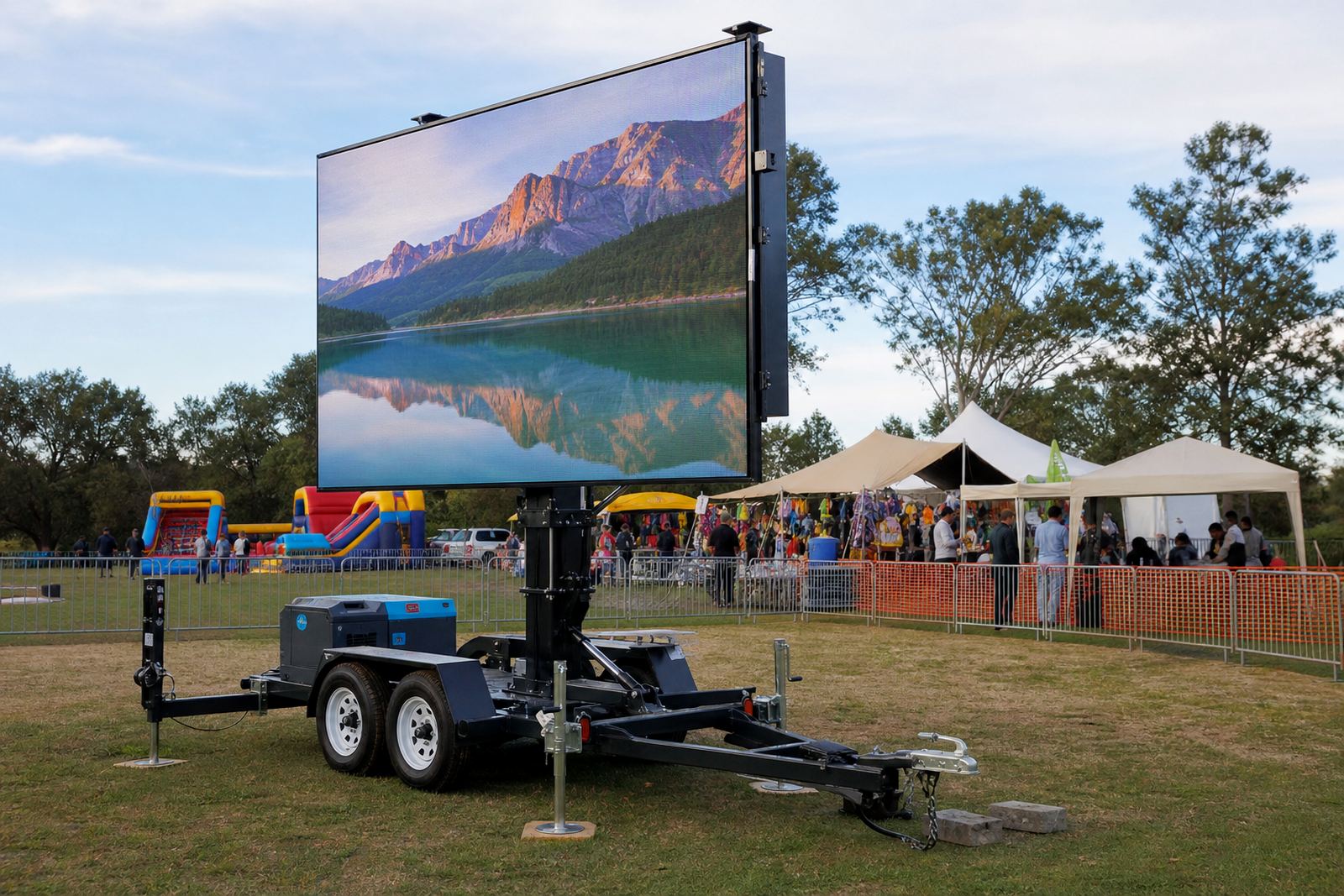
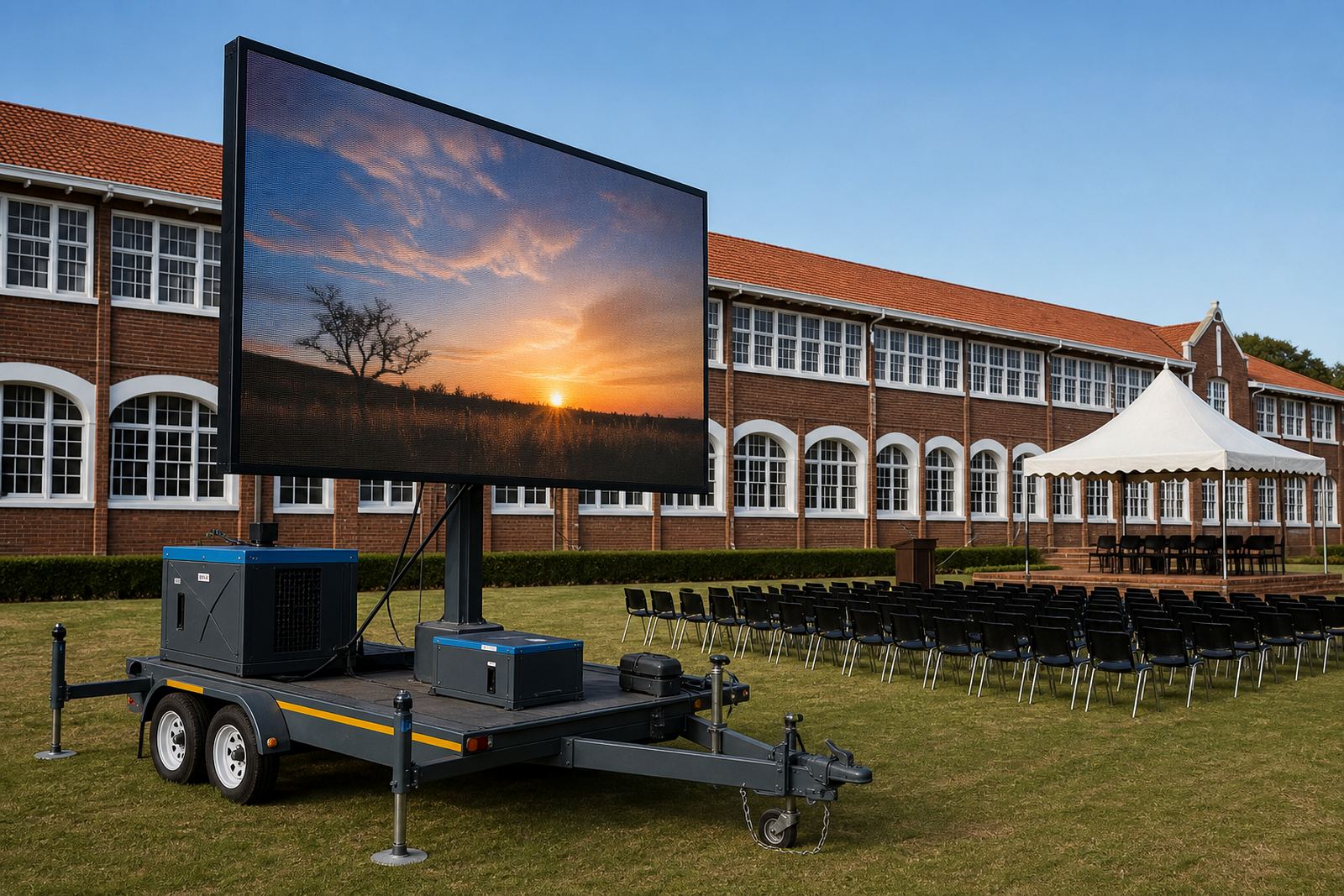
The trailer carried an outdoor LED screen built for daylight use, with a fine enough pixel pitch for close roadside viewing and a brightness level suited to strong sun. Outdoor screens of this kind are normally configured for content that needs clean text, bold graphics and moving visuals, not just distant viewing from across a field. The screen can be raised on a hydraulic lift and rotated into the required viewing direction, which helps when the roadside angle or traffic flow changes the best viewing line.
Power planning depended on the site layout. Where mains power is available and suitable, that can be used. Where it is not, a generator-based setup is more practical for roadside work. We also watched wind conditions, because lifted screens need sensible limits and a cautious approach when gusts pick up. The content player was loaded before deployment and then managed on site so the loop, timing and feed source stayed under control.
- Outdoor LED screen with daylight brightness
- Hydraulic lift and rotation for positioning
- Generator or mains power options
- Content playback and live feed handling
- Wind-aware setup and monitoring
The weeks on the ground
We handled the project within a few weeks of planning. In the first week, the site was reviewed for access, sight lines and practical set-down points. In the second week, transport planning and content loading were lined up so the trailer could arrive with the display ready to go. The final stage covered delivery, erection, alignment and testing, with the screen checked from the roadside viewing angle before it went live.
Permits and municipal rules were handled in general terms, because roadside placement can touch on local authority requirements, pavement use and any limits tied to public space. The team kept the position tidy and the trailer footprint contained, which matters in Ekurhuleni where roadside work can move past council land, private access and traffic control boundaries in a single stretch.
- Site review and access planning
- Transport and content preparation
- Delivery, lift, alignment and testing
- General permit and municipal guidance
What the on-site team managed
The screen was not handled as a simple drop-off. An on-site technician remained with the deployment to manage playback, monitor image consistency and handle live source changes where needed. That matters when a roadside campaign has to move from a looping message to a fresh one, or when a live feed must be kept in step with the screen output. The technician also watched practical site matters such as cable routing, brightness balance and the display angle after setup.
Our team also handled delivery, pack down and the practical edges of a roadside day. That included keeping the working area clear, checking the trailer stand after lift, and making sure the route in and out stayed workable for the driver and crew. In a place like Kempton Park, where traffic movement can tighten quickly, those details matter as much as the screen itself.
- Delivery and controlled set-up
- On-site playback management
- Live feed support where needed
- Pack down and removal after use
What shifted once the screen was live
The roadside position gave the client a display point that was visible to passing vehicles and consistent through the day. Brightness and content scale were matched to the traffic context, so the screen carried motion clearly without looking muddy in direct light. The lift height helped keep the display above low visual clutter, and rotation gave us a better face-on viewing line for the roadside approach.
The result was a cleaner campaign presence with less on-site fuss. The trailer stayed manageable, the access route stayed controlled and the content ran under technician oversight. That mix works well on roadside jobs because the screen is doing public-facing work while the crew is still dealing with traffic, weather and placement limits in real time.
- Clear daytime visibility from the road
- Better viewing angle after rotation
- Controlled crew movement around the trailer
What we would carry forward
On a similar roadside deployment, we would follow the same order of work: check sight lines first, plan the approach route next, then finalise content and power around the actual site conditions. The lift position and viewing angle are never just technical details, they shape whether a roadside screen feels properly placed or awkwardly parked. We would also keep a technician on the unit for the full run, because roadside content changes are easier when someone is already standing at the screen and watching the output in context.
For future Kempton Park roadside work, the strongest lesson is simple. Good visibility depends on setup discipline, not just a bright screen. When the trailer is placed well, the content reads cleanly and the access plan does not fight the road conditions, the whole job behaves better from start to pack down.
- Look at it from a driver's seat first
- Keep playback under on-site control
- Plan power and access around the actual frontage
Key facts
| Project type | Kempton Park roadside LED screen trailer deployment |
|---|---|
| Screen format | Outdoor LED trailer with content playback support |
| Pixel pitch | Fine-pitch outdoor configuration for readable roadside graphics |
| Brightness | High-brightness daylight viewing setup |
| Lift system | Hydraulic lift with rotation for viewing alignment |
| Power options | Generator or suitable mains supply |
| Support | On-site technician, content loading and live feed support |