
A launch point that needed to carry the room
The client was an events team working on an exterior launch in Umhlanga, with guests arriving through an open forecourt before moving into the main programme. The screen had to sit where traffic and footfall could see it straight away, then switch from welcome content to a reveal sequence at the right moment without a break in flow. The setting was close to the coast, so glare, humidity and wind all shaped the layout and the final screen height.
We treated it as a live piece of event infrastructure, not just a display. The position had to suit the arrival line, the content had to hold up in bright daylight, and the trailer had to leave enough room for safe access around the rig. We also needed to keep the footprint neat because the space was shared with guest movement, service access and vehicle control.
- Exterior launch support for arriving guests
- Timed reveal content with controlled playback
- Screen position planned around foot traffic
- Coastal conditions factored into placement
Screen build, lift and brightness for a daylight reveal
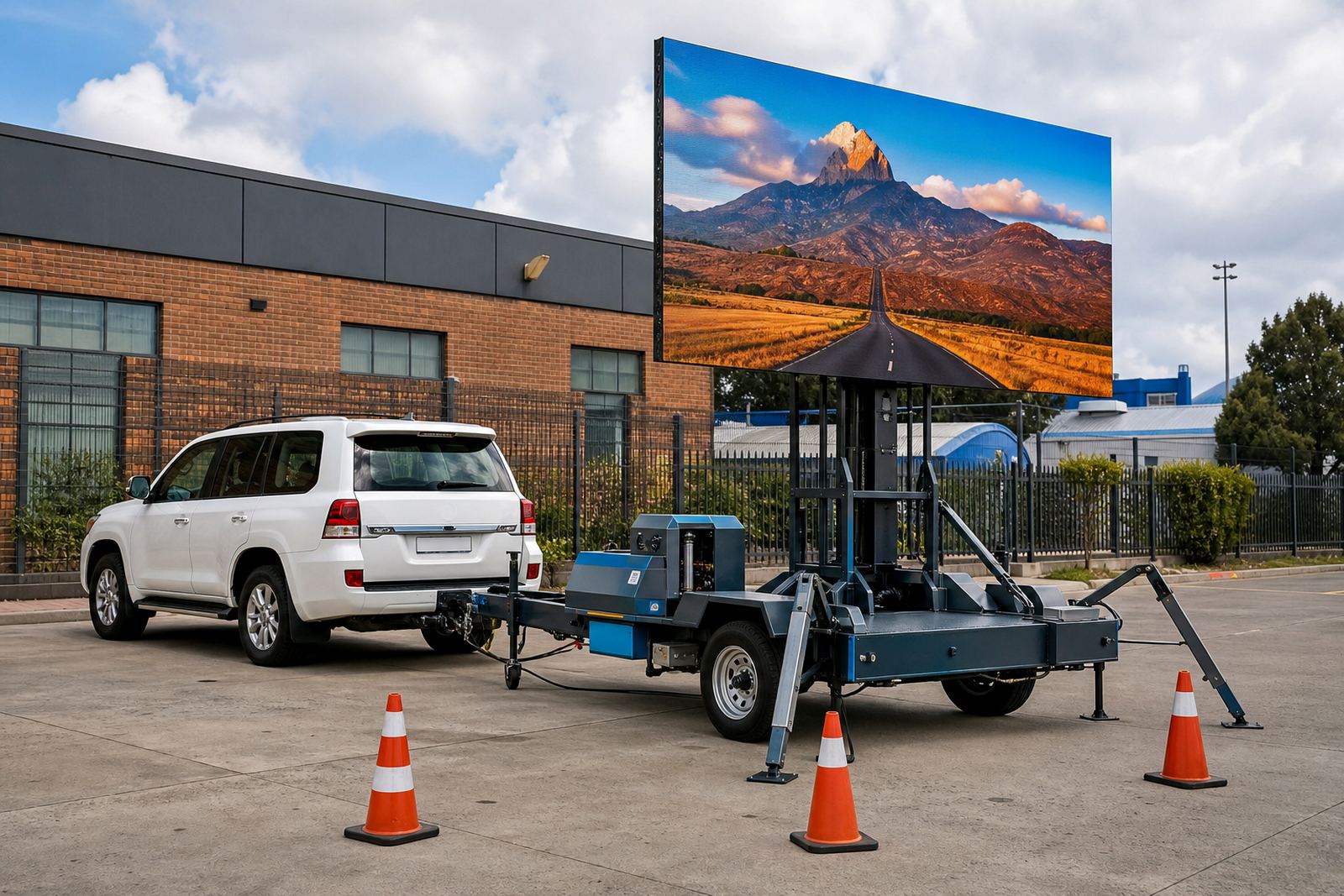
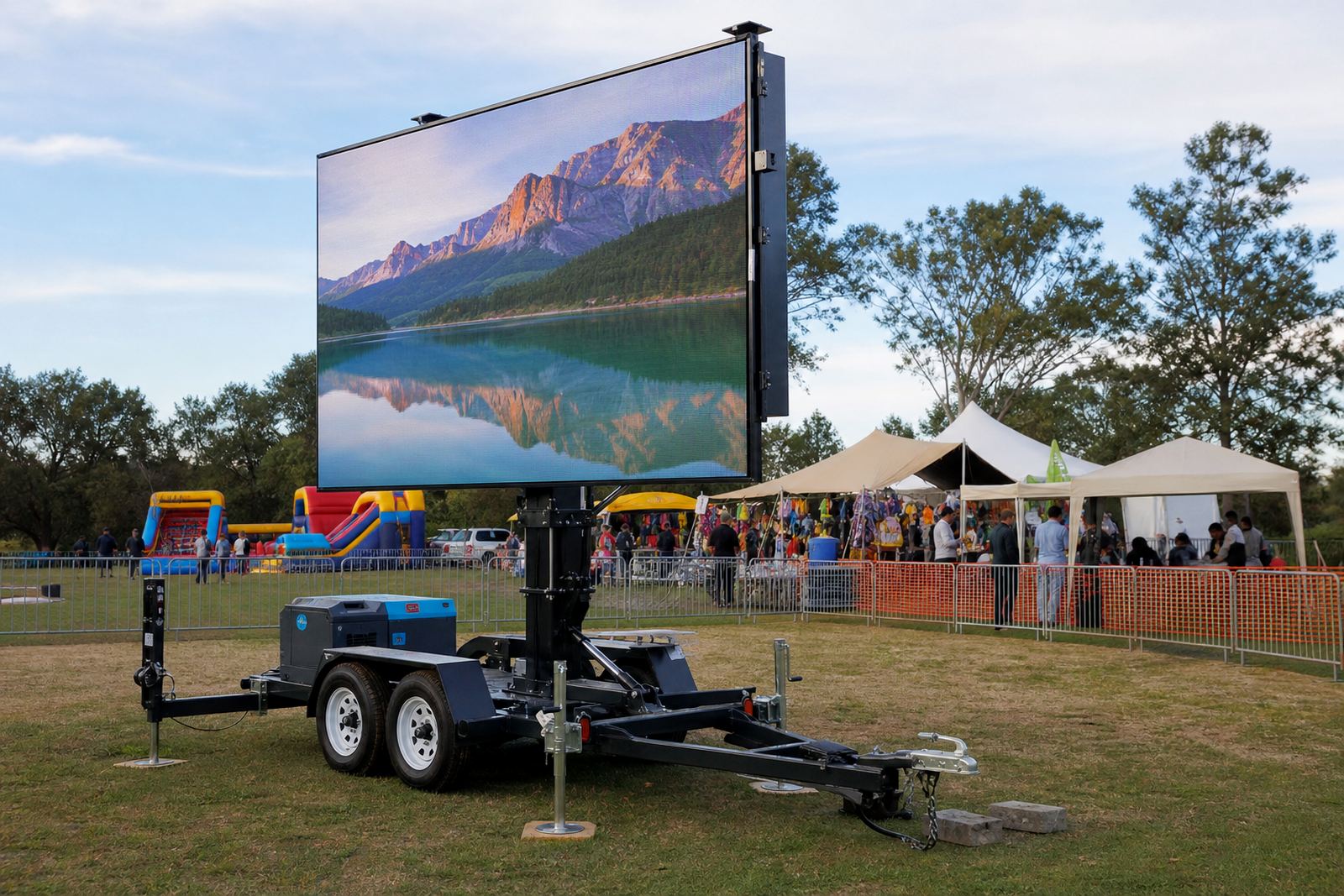
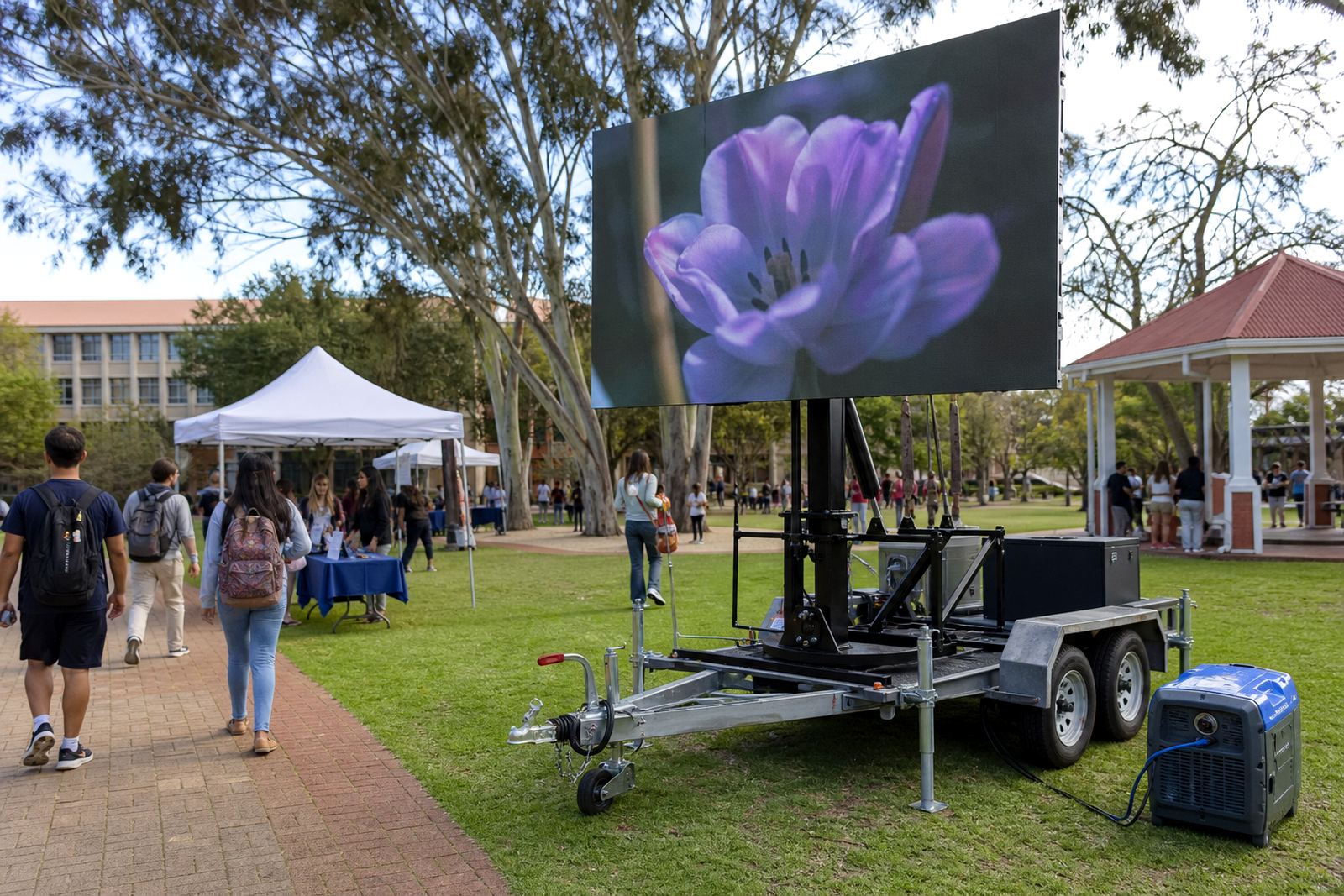
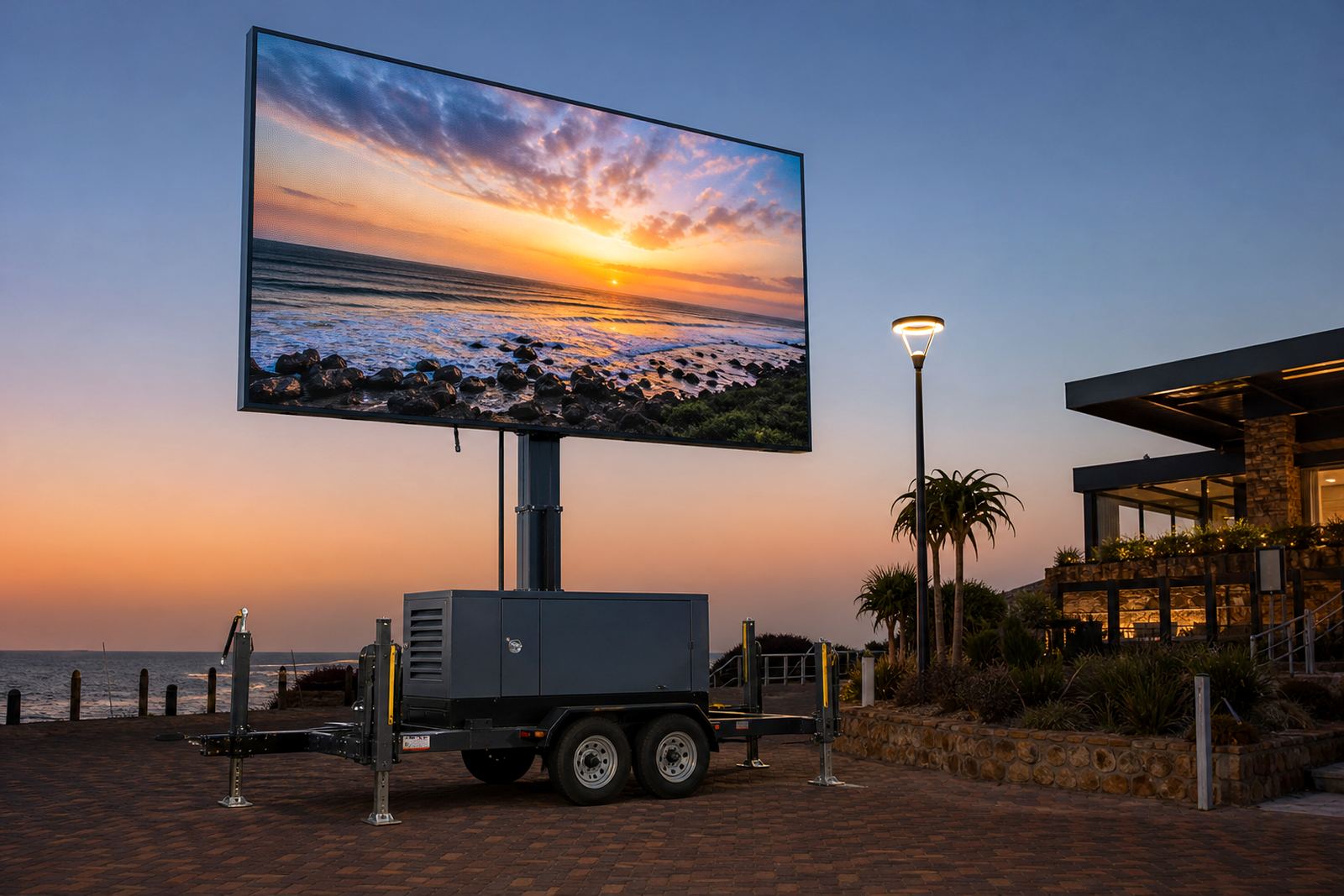
We supplied an outdoor LED screen trailer with a fine enough pixel pitch for close viewing at arrival distance, while still giving strong visibility from across the forecourt. Brightness was set for daylight conditions, which matters when the sun is still high and the first guests are gathering outside. The trailer used a hydraulic lift so the screen could rise to the right viewing height, and the frame allowed controlled rotation to suit the site angle.
For the content side, the screen ran from a playback system handled by our on-site technician. That let the sequence move from holding slides to a timed reveal cue without anyone trying to manage media from a phone or laptop in the crowd. Where required, the unit can run from generator power or mains power, and the choice depends on the site layout, cable runs and the event power plan. Wind limits were checked before final placement, because an exposed coastal site needs a practical safety margin even on a calm day.
- Outdoor LED trailer with daylight brightness
- Hydraulic lift for viewing height adjustment
- Rotational alignment for better sightlines
- Generator or mains power options
- Playback handled on site by a technician
What our crew handled on site in Umhlanga
The work started with a site check, then moved into delivery, setup and content loading. Our logistics coordinator planned the route and arrival window, while the screen technician and fabrication supervisor handled the physical rig. The setup included levelling, securing the trailer, checking viewing angle, testing the screen content and confirming the handover points for the event team. We also worked through basic permit guidance, since outdoor screens and trailer placements can sit under local venue or municipal rules depending on the site.
On the day itself, our team remained with the screen through the programme so the client did not have to chase anyone for playback changes or live feed adjustments. That matters at launch events because the content often shifts between holding artwork, sponsor material and the reveal itself. If the weather changes or the crowd pattern shifts, the technician can adjust the playback order and keep the display steady.
- Site check and placement planning
- Setup and delivery
- Content loading and playback testing
- Live feed support if required
- Weather monitoring during the event window
- Pack down after the programme closed
From first brief to event night, allow three weeks.
The project moved across three weeks in a practical sequence. The first week was for the brief, site information and content format checks. The second week focused on screen planning, power options, transport details and permit guidance for the venue. The final week covered delivery prep, playback testing and the last site adjustments before the event day. That rhythm left room for changes without turning the job into a scramble.
Because the screen was part of a launch, the timing mattered more than a long list of extras. The client needed the unit in place before guests arrived, and the reveal cue had to line up with the programme. We kept the setup lean and direct, which made it easier to protect the viewing line and maintain a clean finish around the trailer and working area.
What the screen achieved on the evening
The screen carried the arrival content clearly, even as daylight shifted into evening. Guests could see the messaging from the entry side, and the reveal sequence played cleanly when the programme reached that point. Because the display sat at the right height and angle, the organiser did not need to push people forward or repeat cues across the crowd. The on-site technician also kept the playback changes controlled, which gave the event team a stable point of contact on the ground.
For a launch like this, the win is not only picture quality. It is the way the screen settles into the site, supports the moment and stays manageable while the event is moving. A trailer unit with good brightness, steady power planning and proper weather checks can do that job well, especially in a coastal setting where conditions change fast enough to matter.
If we repeated the same brief across another coastal venue
We would keep the same approach for a similar launch on a coastal site: early site checking, a trailer position that respects guest movement, and content set up for the actual programme rather than for a generic loop. We would also keep the technician on site for playback management, because launch content often needs a human eye at the exact moment the sequence changes. That is where a screen can help the whole programme feel settled instead of rushed.
For events in Umhlanga, Durban, Johannesburg, Pretoria, Bloemfontein or Polokwane, the same practical details matter: screen brightness, viewing distance, power choice, wind exposure and the route in and out of the venue. When those pieces line up, the display supports the event without getting in the way of the people running it.
- Keep the screen angle tied to the arrival path
- Load content in the order it will be used
- Allow space for safe access around the trailer
- Match power planning to the venue layout
Key facts
| Project | Umhlanga Launch Screen |
|---|---|
| Screen type | Outdoor LED screen trailer |
| Pixel pitch | Fine pitch suitable for close arrival viewing |
| Brightness | High brightness for daylight outdoor use |
| Power | Generator or mains power, depending on site needs |
| Service area | Umhlanga, Durban, Johannesburg, Pretoria, Bloemfontein and Polokwane |