
Where an expo screen earns its place
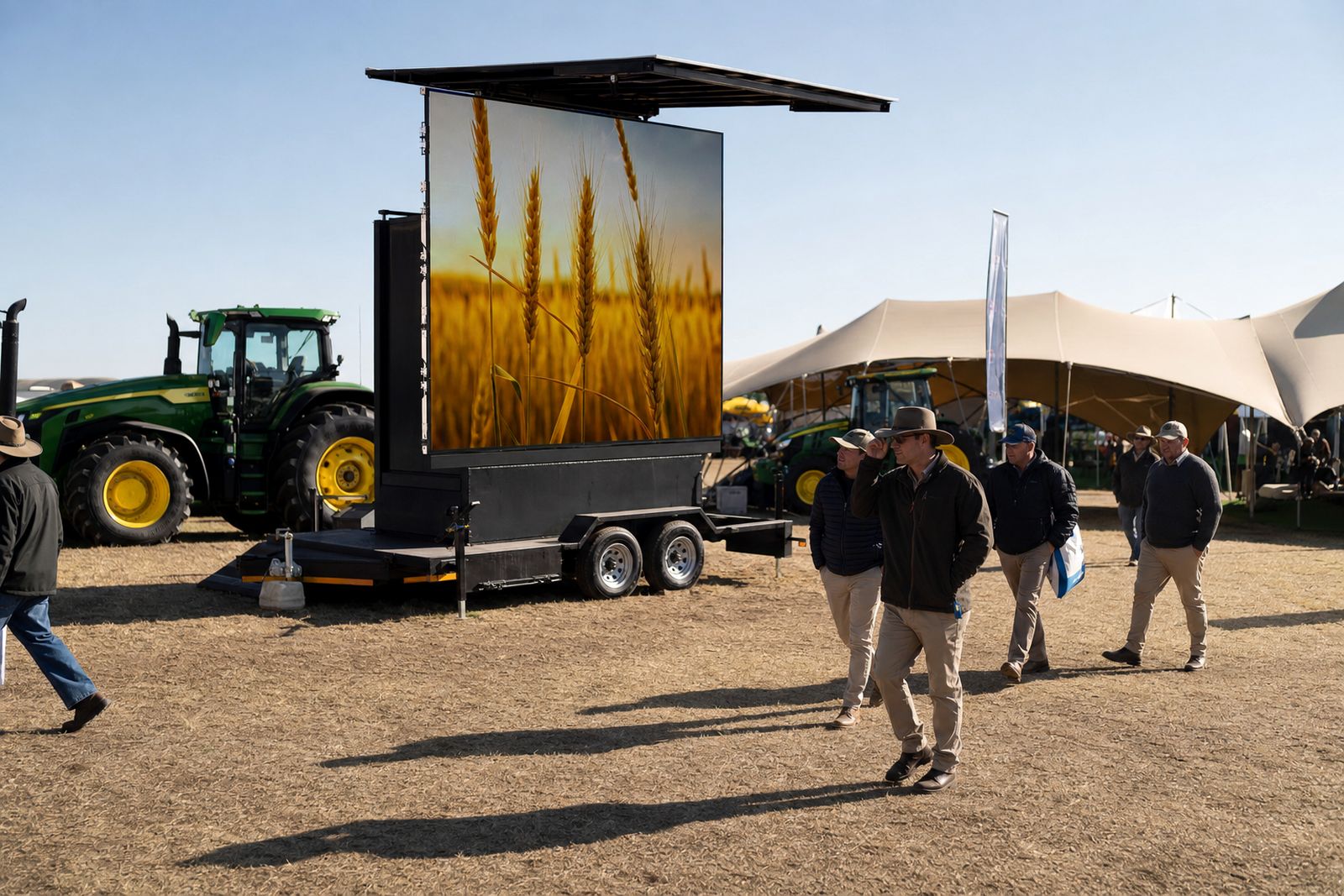
An expo floor or outdoor showground has a lot happening at once, and visitors do not always move in a straight line. A tall mobile screen gives organisers a clear focal point for opening times, stage updates, safety notices and sponsor loops, while also drawing foot traffic toward a stand, gate or demonstration zone.
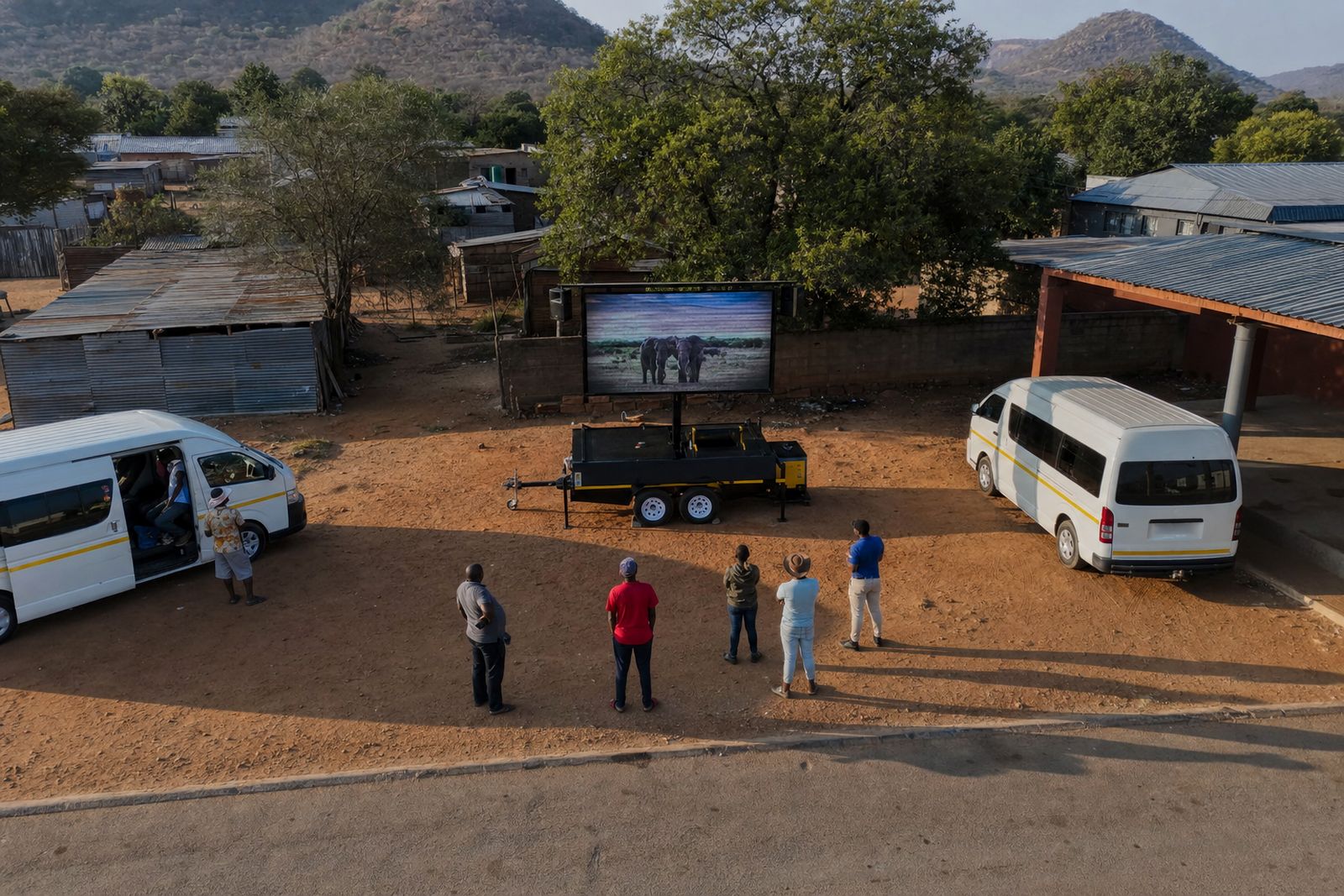
For outdoor expos in Johannesburg, Pretoria, Durban, Bloemfontein or Polokwane, the screen has to stay readable in bright sun and still hold its image when the wind picks up. That is where a trailer mounted display works well. It can be positioned near the entrance, beside a demo lane, or at the edge of a crowd area where a fixed wall mount would be awkward or too slow to put in place.
We often see expo teams using one main screen for public messaging and a second unit for a quieter registration lane, product reveal or sponsor loop. That split keeps the main programme visible without crowding the rest of the site.
Screen sizes, pixel pitch and daylight clarity
Outdoor LED screens for expos are usually specified by viewing distance, the size of the audience area and how much text or video needs to be read from afar. A smaller pixel pitch gives finer detail, which matters when the screen carries dense graphics, speaker names or scrolling timetables. Larger pitches can still work well for long viewing distances, especially on wide outdoor stands where visitors are moving through the space.
Brightness matters just as much. Daylight use calls for a screen that stays clear in harsh sun, not a panel that only looks good after sunset. For most expo sites, the content should be built with large type, bold contrast and short messages. Videos with fast edits can work, but the screen should also handle static slides, sponsor rolls and live camera feeds without loss of legibility.
Our team can advise on the display format that suits the site, whether the brief leans toward a compact unit for a tighter courtyard or a larger trailer for an open outdoor arena.
- Closer viewing areas usually need finer pixel pitch.
- Open fields and vehicle access lanes suit larger formats.
- Daylight use needs strong brightness and high contrast.
- Text should stay short, with large headings and clear timing.
Setting the trailer on an expo site
A trailer screen does more than stand in one spot. It needs enough clearance for unhitching, levelling and safe operation, plus a position that does not block fire routes, pedestrian movement or exhibition access. If the site has a paved forecourt, grass verge or mixed ground, the base needs to be checked before setup so the unit sits level and stable.
Hydraulic lift systems allow the screen to rise to a better viewing height, and some units can rotate for improved sightlines. That helps when the audience flow changes through the day or when a site has two clear viewing zones. Power can come from a generator or mains supply, depending on what the venue allows and what the site layout can support. For longer programme days, the technician will also plan for cable routing, safe anchoring and practical access around the unit.
- Keep the trailer clear of emergency routes and loading points.
- Allow space for lift, rotation and technician access.
- Check that the screen faces the busiest pedestrian line.
- Use a position that avoids glare where possible.
Content that works at an expo gate or demo zone
Expo audiences rarely stand still for long, so content has to work fast. Timetables, hall directions, speaker turns and sponsor loops should be readable in a few seconds. When the screen carries live feeds or stage cameras, the operator has to manage signal flow carefully so the picture remains steady and the content does not stutter at the wrong moment.
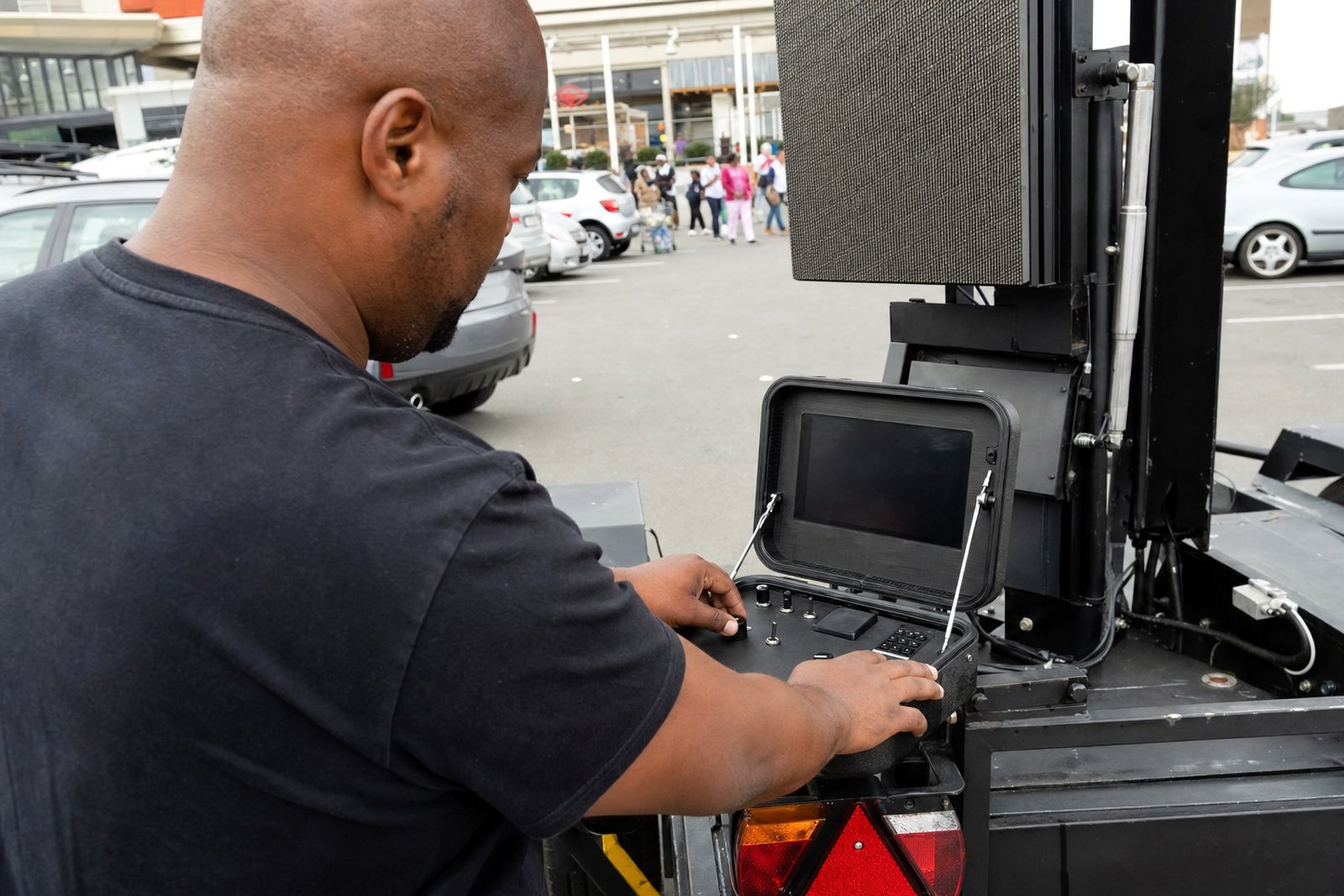
We handle content loading and playback management on site, which helps when the programme changes through the day. A live feed can be switched in for a keynote, then replaced with a looping presentation, safety message or wayfinding graphic. If the expo includes outdoor demonstrations, the screen can also show the action to people standing further back from the stage line.
Good expo content does not rely on packed slides. Short copy, large figures, strong colour contrast and clean motion usually work best. Dense text or tiny logos tend to disappear once people start moving across the site.
Weather, wind and permit points
Outdoor expo work needs weather planning, especially in places where afternoon wind or sudden rain can change the way a site behaves. A trailer screen has wind limits and should not be operated outside those limits. That is one reason the setup team watches the forecast and checks the location against the day’s conditions rather than treating the screen as a fixed piece of furniture.
Permit requirements can vary depending on where the expo is held, whether the screen faces public roads, and how close it sits to municipal walkways, entrances or temporary structures. In general terms, organisers may need to clear the placement with the venue and local authorities. Our team can guide the process and flag the practical issues that usually come up, such as access, footprint, visibility and safe placement.
- Watch wind and rain before deciding on final placement.
- Confirm whether the venue needs written placement approval.
- Check if the screen may affect road visibility or entrances.
- Allow time for permit steps when the site is public facing.
Budget bands for expo screen hire in Rand
Expo screen hire budgets usually depend on screen size, rental length, power arrangement, site access and whether the brief includes a single location or multiple stops. A compact outdoor LED box for a short expo run may sit in a lower band, while a larger trailer screen with on-site technician cover, live feed support and multiple setup points will cost more.
As a broad guide, smaller expo setups can start around R15 000 to R35 000, while mid-sized trailer packages often sit between R35 000 and R85 000. Larger events with more complex logistics, longer hire periods or multiple movement points can run from R85 000 upwards. The actual figure depends on the viewing size, content handling and whether the site needs generator supply, extra crew or more than one screen position.
We also see costs shaped by transport and timing. A single point delivery into Germiston or Kempton Park is very different from a multi-stop roadshow that moves through Johannesburg, Pretoria and a further city in the same programme.
Common expo mistakes that waste screen value
The biggest mistake is treating the screen like a static banner. If the content is too small, too busy or too slow to change, the audience loses interest before the message lands. Another frequent issue is poor placement, where the screen is visible only to people already inside the stand instead of the visitors walking past the busiest edge of the site.
Teams also underestimate the value of an on-site technician. A screen that is loaded and left alone can become a problem when a speaker runs late, a sponsor loop changes or a live feed needs adjustment. At expos, timing shifts are normal. The screen needs someone who can keep the playback, power and layout steady while the rest of the site keeps moving.
LEDBox supports expo sites with delivery, setup, playback management and pack down from Germiston, with work across Ekurhuleni, Johannesburg, Pretoria, Durban, Bloemfontein and Polokwane. Our team includes Sibusiso Shezi, Anika Chetty, Thabo Bhengu, Noluthando Maluleke, Ruan Mabena and Karabo Abrahams, each responsible for a part of the work that shapes the final result.