
Daylight viewing that still reads from the back row
A Daylight Screen uses high-brightness outdoor LED modules so video, live camera feeds and motion graphics stay visible when the sun is hard on the pitch, forecourt or roadside. The cabinet layout is chosen for outdoor use, with weather-rated framing, protected signal paths and a screen face that keeps contrast usable in bright conditions.
For most outdoor work, the screen is matched to the viewing distance and the size of the crowd. Smaller formats suit compact promotions and court-side activations, while larger display faces are used where people stand further back or where traffic passes at speed. Pixel pitch is selected for the job, often in the range of about 6 mm to 10 mm for mixed outdoor viewing, with tighter pitches used where the audience stands closer.
- High brightness for daylight conditions, typically 5,000 nits and above
- Outdoor cabinet construction for wind, dust and rain exposure
- Content playback for adverts, loops, schedules and live camera input
- Screen layout planned around the venue, sight lines and crowd distance
Trailer formats and fixed positions for different site shapes
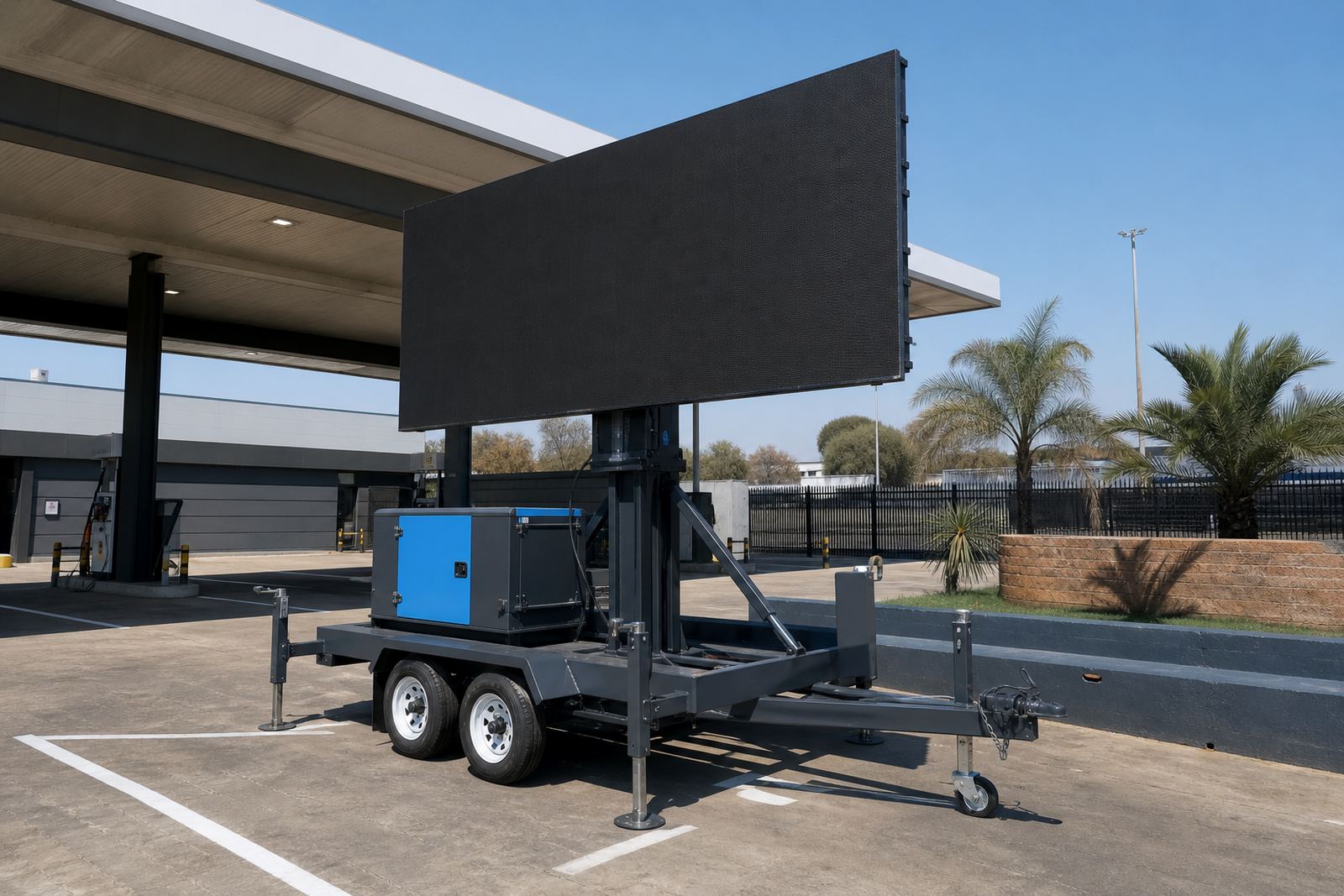
The Daylight Screen can be supplied as a trailer-mounted unit or as a fixed outdoor LED box arrangement, depending on where the viewing point sits and how the crowd moves. Trailer units work well for roadshows, sports days, launch activations and stop-start campaigns, because the screen can be positioned, lifted and rotated to face the audience more cleanly.
Trailer models are generally fitted with a hydraulic lift system that raises the screen to a safe viewing height, then locks it in place for use. Many units allow rotation so the display can be aimed across a field, parking area or roadside frontage without awkward viewing angles. Where the site is more permanent, a fixed ground setup may be used with anchored framing and controlled cable runs.
- Trailer screen heights can be adjusted for line of sight and crowd flow
- Rotation helps when the audience is spread across more than one side
- Fixed positions suit repeat activations at the same venue
- Multi-stop roadshow planning helps when the screen moves between towns
Power, playback and the practical side of fitting it in
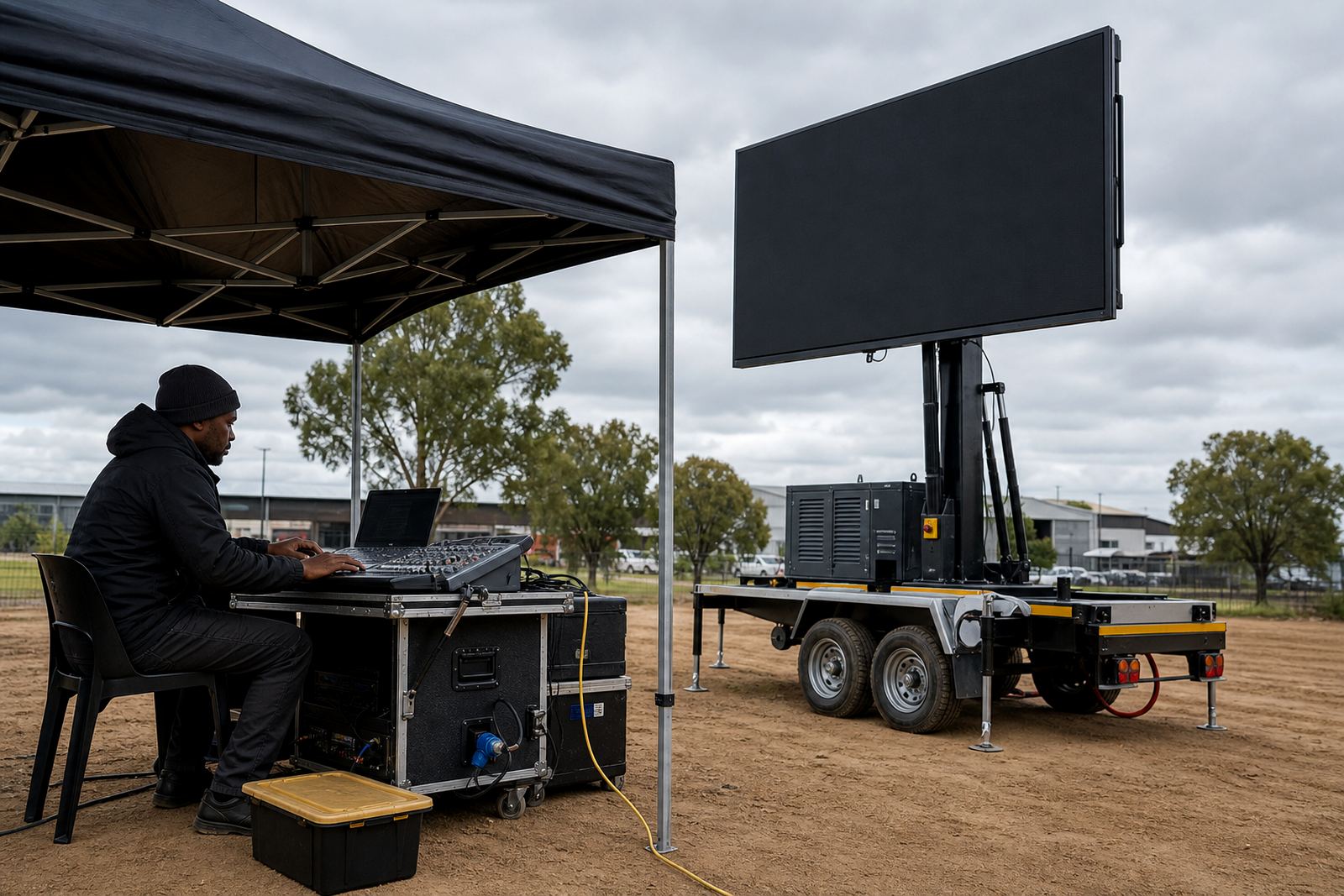
The screen can run from generator power or mains power, depending on the venue setup and the load available on site. On larger outdoor jobs, power planning matters as much as the screen itself, because the LED wall, playback system and support equipment must be fed cleanly and kept stable for the full programme.
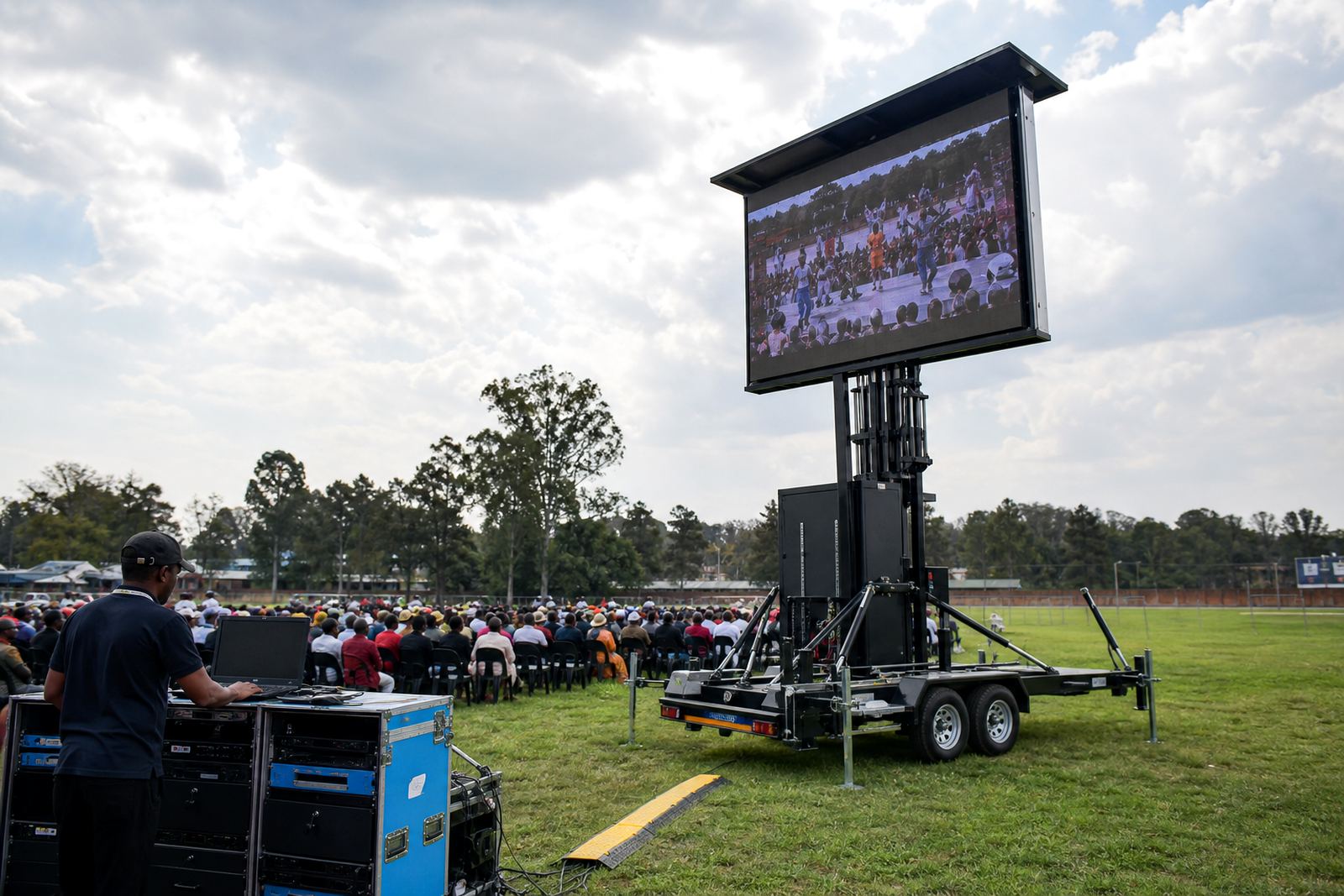
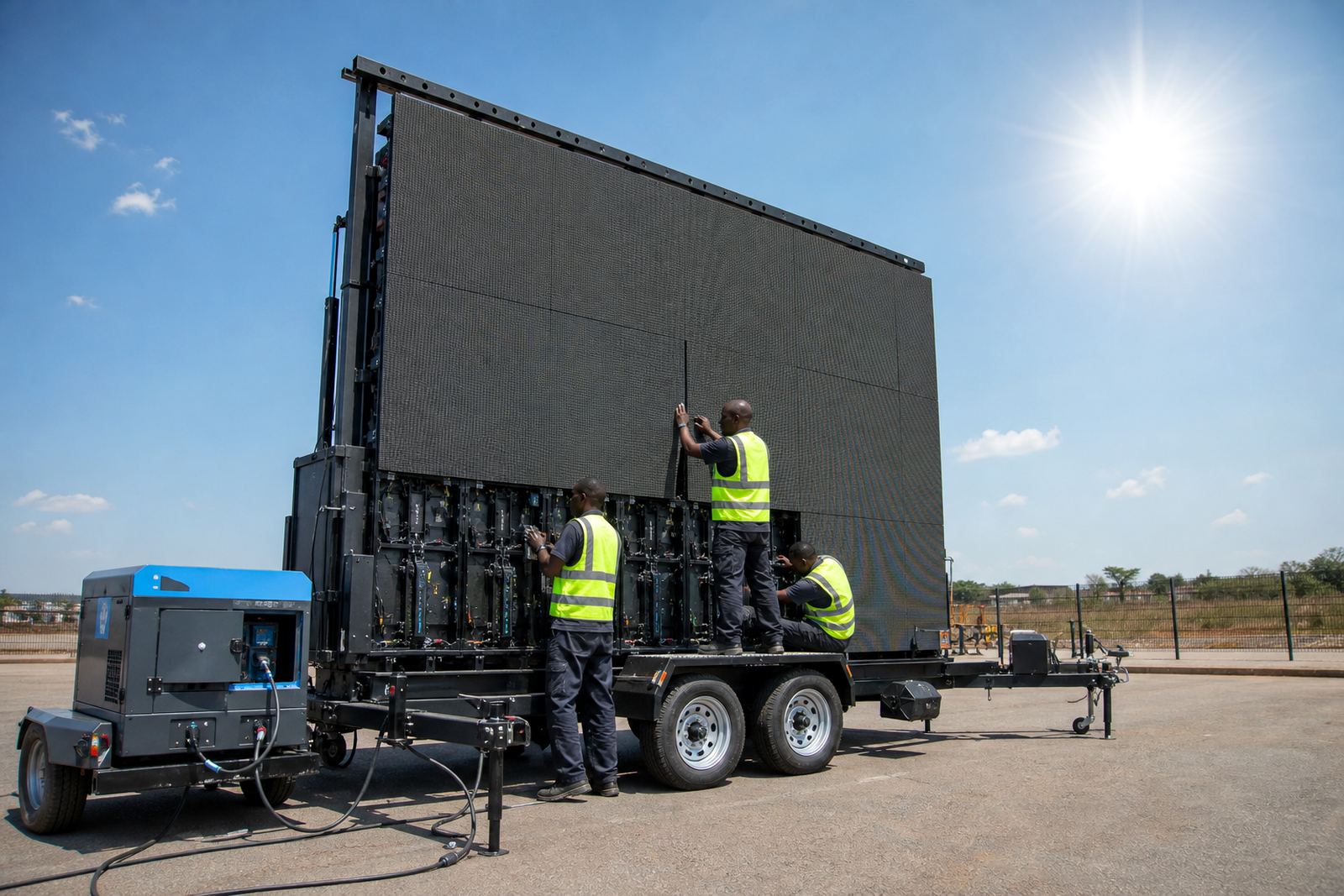
Installation normally includes levelling, anchoring, cable routing, test playback and a check on viewing angles before the audience arrives. For live content, an on-site technician manages playback, screen timing and any signal changes. If a live feed is required, the signal path must be confirmed in advance so the camera feed, media player and screen control all speak the same language. Municipal permit requirements can also affect placement, especially where the screen faces public roads, pavements or open municipal land.
- Generator or mains supply can be planned for the venue
- Content loading covers adverts, video loops and scheduled playlists
- Live feed support needs a stable signal path and tested inputs
- Permit guidance is useful for public-facing placements and roadside work
Where a daylight screen earns its place
This product suits advertising campaigns, sports days, concerts, school functions, civic activations and roadshows where the screen must hold its colour under direct sun. It also works well for morning and midday crowd peaks, when shadows shift and a standard display can wash out quickly.
In Germiston, Johannesburg, Pretoria, Durban, Bloemfontein and Polokwane, the screen is often used where there is open space, vehicle movement or a need to pull attention from a distance. Coastal humidity, dust and changing weather conditions all matter when the screen is moved between venues, so the setup has to be checked with the site in mind. The right choice is not only about size, but about how far away people are standing, how long the programme runs and whether the screen must move during the day.
- Good for daylight crowds, not just after-dark programmes
- Useful where people watch from cars, stands or open grounds
- Suitable for touring activations across several towns
- Works where a clear visual focal point is needed outdoors
Keeping the screen clean, steady and readable
Outdoor LED panels need routine care because dust, wind and transport vibration can affect the finish and the image over time. The screen face should be kept clear of grime, and the trailer or frame should be inspected for loosened fasteners, cable wear and any sign of physical stress after transport or bad weather. A technician should also check playback storage and signal paths before each run.
Weather monitoring forms part of the job when the screen is operating in open ground. Wind limits are always important, especially on raised trailer units, because the screen presents a large surface to the breeze. If conditions shift, the display may need to be lowered, stopped or repositioned. Good care also means safe pack down, proper cable stowage and careful handling during load out so the next site starts cleanly.
- Keep the screen face and framing free of dust build-up
- Check wind conditions before and during outdoor use
- Inspect cables, locks, mounts and storage cases after transport
- Use controlled pack down to protect panels and signal gear
What to confirm before the screen leaves Germiston
Before a Daylight Screen is scheduled, the key details are the venue size, audience distance, expected viewing hours, power source and whether the screen must rotate or stay fixed. It also helps to confirm the content format, whether live camera input is needed, and whether the site has any permit or access rules that may affect delivery or placement.
For outdoor jobs, the trailer position, ground condition and truck access matter just as much as the media file. If the screen is being used for more than one stop, the route between venues should be mapped with enough time for delivery, setup, testing and pack down. Our contact form can be used to share the site details, the event schedule and the screen size you have in mind, so the practical side can be lined up properly.
- Venue type, ground condition and access route
- Screen size, pixel pitch and audience distance
- Power source, playback format and live feed needs
- Permit guidance, weather exposure and multi-stop timing
Key facts
| Product type | Outdoor LED screen trailer or fixed LED box |
|---|---|
| Brightness | High-brightness daylight configuration, typically 5,000 nits and above |
| Pixel pitch | Selected to suit viewing distance, often about 6 mm to 10 mm for outdoor use |
| Power options | Generator power or mains power |
| Movement | Hydraulic lift with rotation on trailer-mounted units |
| Use case | Advertising campaigns, sports days, concerts and roadshows |