
Forecourt layouts need clear sightlines and controlled movement
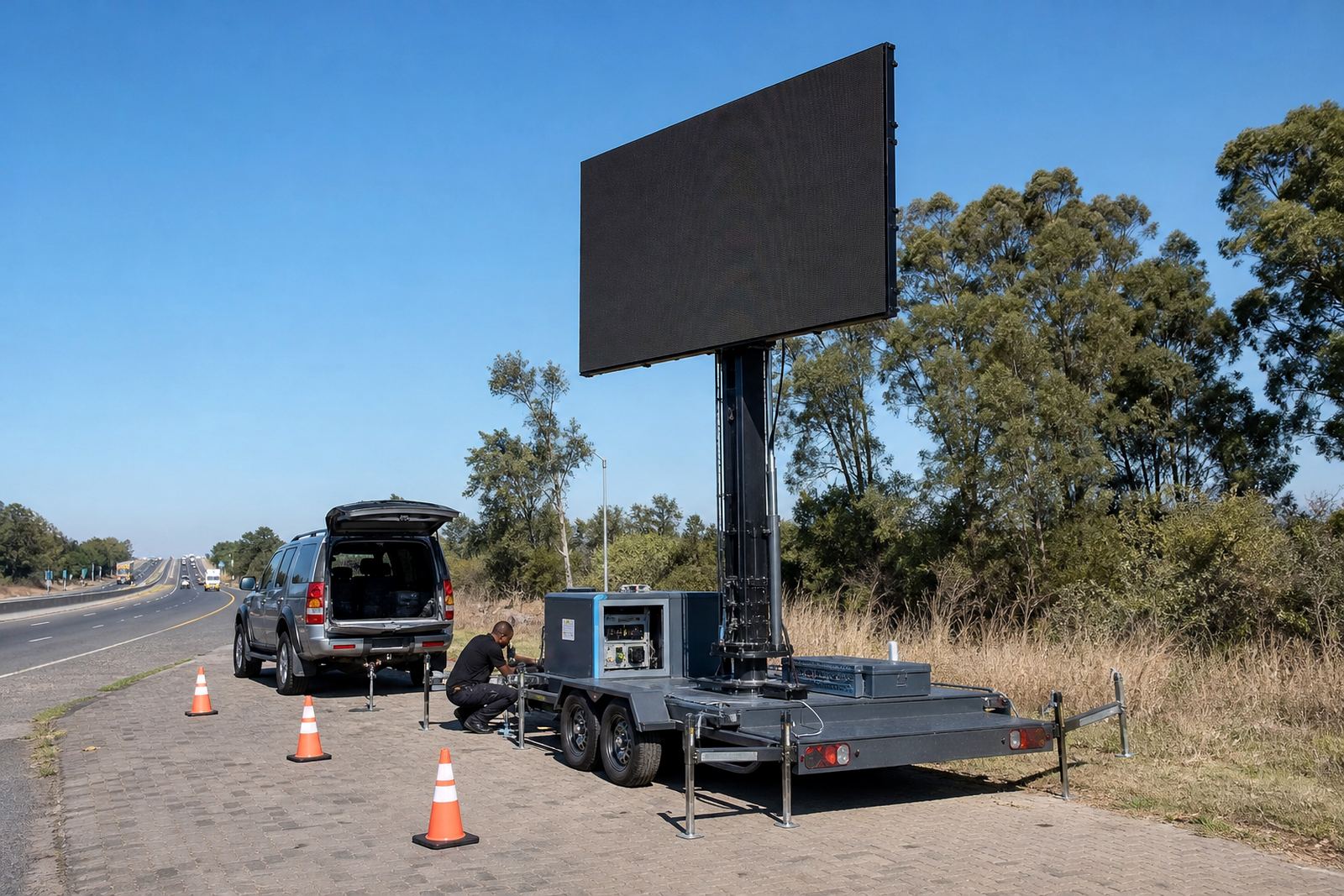
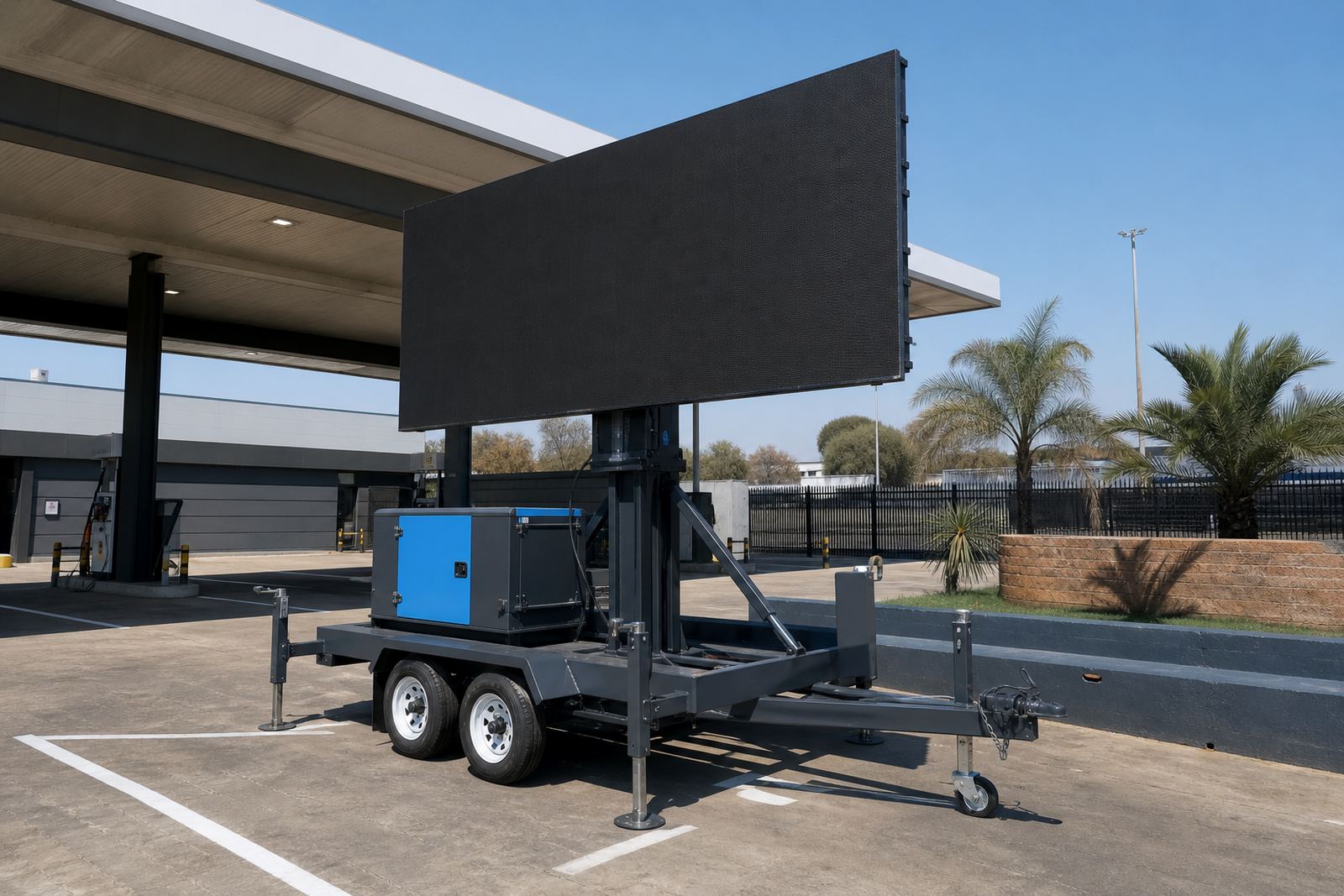
Forecourt work is different from a roadside board or a field event. The screen must face drivers and pedestrians at a sensible angle, leave turning space open, and stay within the access rules of the site. On petrol station forecourts, retail parking aprons and similar managed spaces, the screen is usually placed where it can be seen from the entry route, queue line or parking edge without blocking pumps, exits or emergency access.
Outdoor LED screen trailers suit temporary forecourt campaigns because they can be positioned for the site plan, then lifted to the viewing height needed for the audience. Where a site needs a more permanent arrangement, LED boxes can be framed and mounted to suit the available wall line or ground point. In both cases, the aim is the same: clear visibility, neat routing of cables and a layout that works with the traffic flow rather than against it.
For forecourts in Germiston, Johannesburg, Pretoria, Durban, Bloemfontein or Polokwane, we look at entry points, canopy height, pedestrian crossing paths and where the public will naturally slow down. That is where a screen earns its place.
- Controlled audience access around vehicle lanes
- Suitable for forecourts, parking aprons and forecourt promotions
- Placement planned around pumps, entrances and exit lines
Display sizes that hold up in bright daylight
Forecourt screens need enough brightness to read in full sun and enough pixel density to keep text, logos and motion content crisp at the viewing distance. Common outdoor pixel pitches for this type of work range from around 6 mm to 10 mm, depending on how close the audience stands or drives past. For tighter forecourts and shorter viewing distances, a finer pitch gives cleaner detail. For larger, faster-moving sites, a wider pitch can still work well when the screen is set at the right height.
In daylight, brightness counts for as much as screen size. Outdoor LED cabinets used on forecourts are normally set at high brightness levels suited to direct sun and changing cloud cover, so the message stays visible from morning through late afternoon. Screen width and height can be matched to the site, with trailer formats and box builds used in compact or wider layouts. We also plan the content canvas so a forecourt message does not get lost in tiny type or thin graphics.
For campaign use, the screen can be run in portrait or landscape format, depending on the lane geometry and the creative. A forecourt installation often works best when the main callout sits high on the display and the supporting lines stay brief. That keeps the message readable from a moving vehicle and from people on foot.
- Typical outdoor pixel pitches: 6 mm to 10 mm
- High-brightness panels for daylight visibility
- Portrait or landscape layout available where the site allows
Lift, power and rotation for the site line
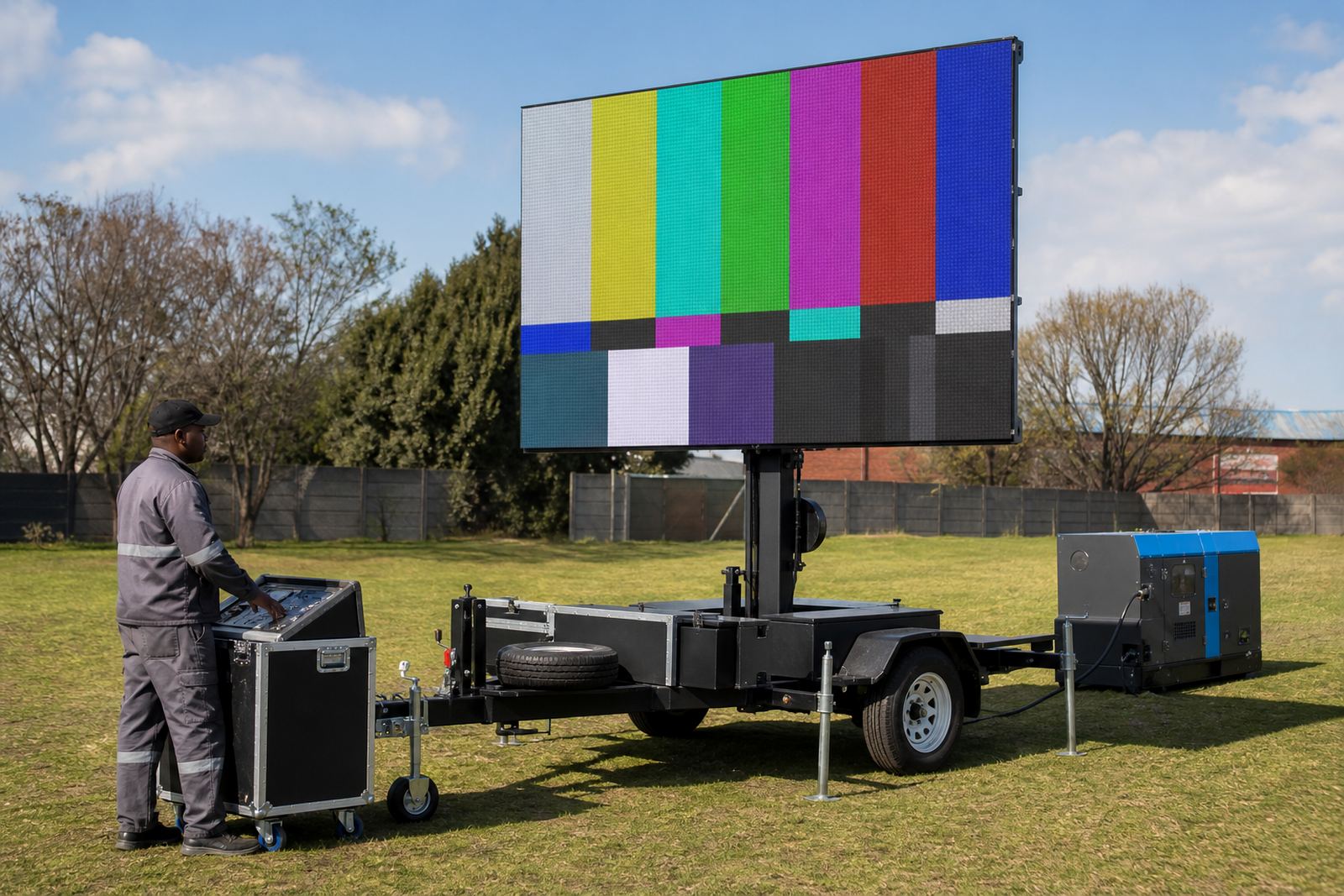
Trailer-mounted forecourt screens are built for practical deployment. A hydraulic lift raises the display to the required viewing height, and the screen can rotate where the site plan needs a different facing direction. That makes it easier to align the display with the traffic flow, parking apron or forecourt entrance without a long build. The trailer itself is secured and levelled before playback begins, then the screen is checked for angle and stability.
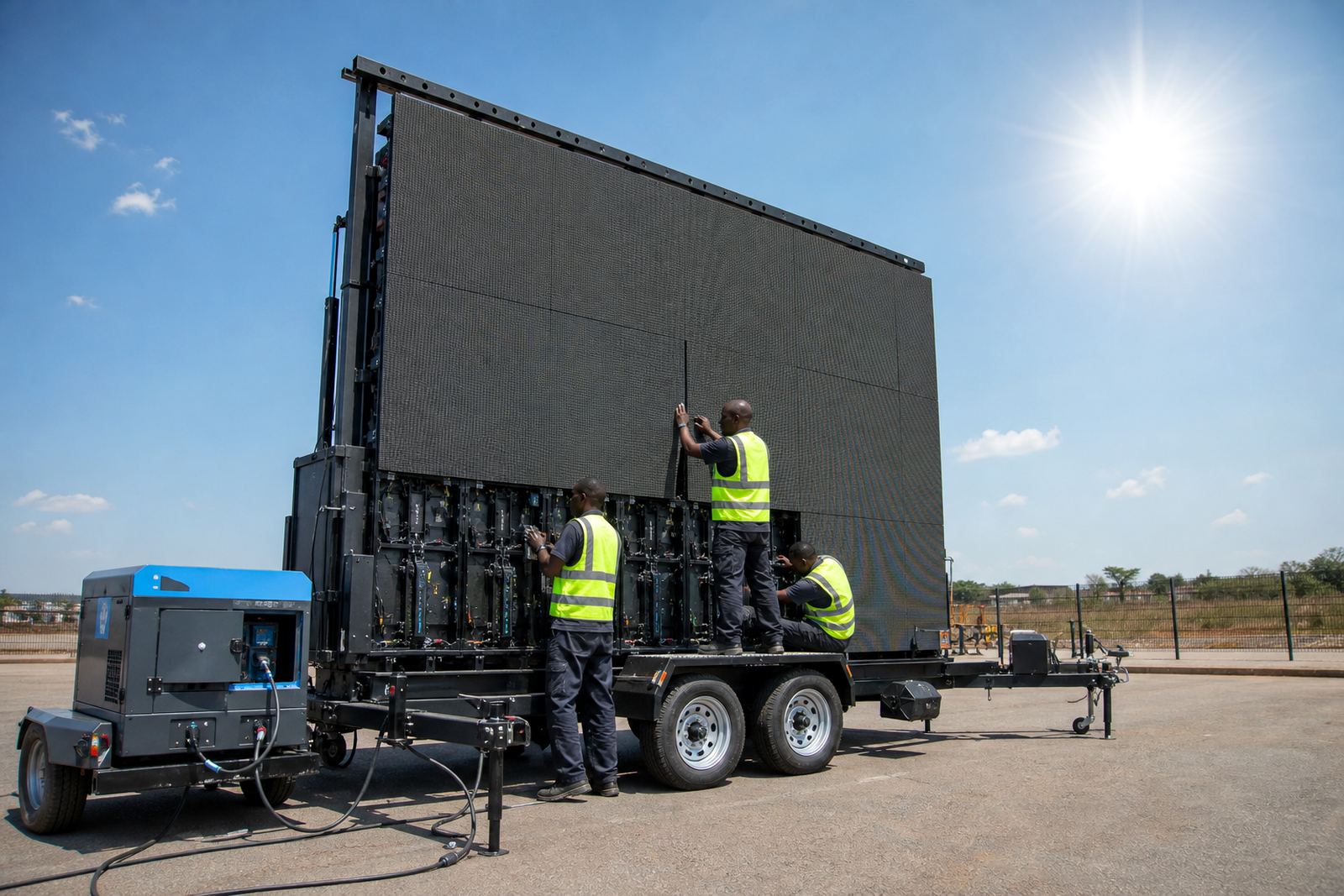
Power can be arranged from a generator on site or from mains power where the location provides a suitable supply. Forecourt conditions, campaign length and site rules determine the choice. Power planning matters because LED screens draw steady load, and the technician has to account for cable runs, connection points and safe placement away from vehicle movement. Where a generator is used, fuel handling and noise need to be considered as part of the setup.
Playback is handled from the screen system so loops, motion graphics, time slots and live inserts can run in sequence. If the brief includes live feed support, the input path and signal test are checked before the screen is handed over for use. Municipal permits and site permissions are usually handled in general terms with the property owner, local authority or managing body, depending on where the forecourt sits.
- Hydraulic lift for height adjustment
- Rotation available on suitable trailer units
- Generator or mains power planned per site conditions
Where forecourt screens do the job best
Forecourt screens suit sites where you want a controlled audience and a strong visual point close to the vehicle line. They are used for retail forecourts, service station promotions, parking apron activations, sports day arrivals, roadshow stop points and short-run campaign messaging. The screen works well where people pause, queue or slow down naturally, because that gives the content time to land.
They also suit seasonal promotions, brand takeovers and event wayfinding at sites that can manage access. On busy roads in Ekurhuleni or along city routes in Gauteng and KZN, the screen can support a message without needing a permanent build. For bigger events, more than one screen position can be planned so different entry points receive the same message or different versions of the same campaign.
Because forecourts are operational spaces, the screen must fit around daily site use. That includes vehicle movement, loading bays, service access and any restrictions on where a trailer can park. Our on-site technician works through the placement, content load and test cycle so the display sits in the right place and runs cleanly.
- Retail forecourts and fuel station sites
- Parking aprons and managed access areas
- Roadshows, sports days and controlled event entries
Keeping the screen clean, stable and readable
Outdoor LED cabinets need regular visual checks, especially on forecourts where dust, tyre grime and weather shifts can affect the finish. The screen face should be cleaned with suitable methods only, and the trailer frame, outriggers and locking points need inspection before each move. In coastal air, the metalwork and electrical points deserve extra attention because humidity and salt carry faster wear than inland sites.
Wind limits matter on elevated trailer screens. If the weather picks up, the screen may need to stay lowered, or the site may require a pause in display use until conditions settle. That is part of normal weather monitoring for outdoor screen work. Content should also be checked for brightness balance and readable typography, because a forecourt screen that is too busy can lose impact very quickly.
When the setup is used for several days, the technician can keep an eye on playback, signal stability and the physical position of the trailer. That includes checking that the screen still faces the intended audience and that no obstacle has moved into the line of sight.
- Clean screen faces with suitable non-abrasive methods
- Check locks, outriggers and cable runs before use
- Monitor wind, moisture and visibility conditions
What we check with the forecourt manager first
When you are ordering a forecourt screen, the key details are the site width, parking or hardstand space available, traffic flow, viewing distance and the screen face you want. It also helps to know if the campaign needs a trailer or a fixed LED box, whether the content will loop or change through the day, and whether live feed support forms part of the plan.
We also need to know what power is available on site, if any, and whether the forecourt management needs permit guidance or a written site note for access. If the location has tight turning space, steep cambers or overhead restrictions, those points should be noted early. For multi-stop planning, the travel order matters too, especially when the screen is moving between Johannesburg, Pretoria, Durban, Bloemfontein, Polokwane and surrounding Ekurhuleni areas.
Good forecourt planning is mostly about fit. The screen must match the site, the route and the message, without forcing the forecourt to work around the display.
- Site dimensions and clear parking or hardstand space
- Preferred screen size, orientation and viewing distance
- Power source, permit needs and content playback format
Key facts
| Screen type | Outdoor LED trailer or fixed LED box |
|---|---|
| Typical pixel pitch | 6 mm to 10 mm |
| Brightness | High-brightness daylight viewing |
| Lift system | Hydraulic lift |
| Power options | Generator or mains power |
| Support | On-site technician with playback management and setup |