
When a lower screen gets blocked
Elevated viewing is the raised-screen arrangement used when a standard ground-level display would sit too low for the crowd line. The screen face is lifted above heads, bakkies, fencing, staging edges or parked vehicles so the image stays visible from a wider spread of angles. In practice, that means the audience sees less of the crowd in front of them and more of the content on screen.
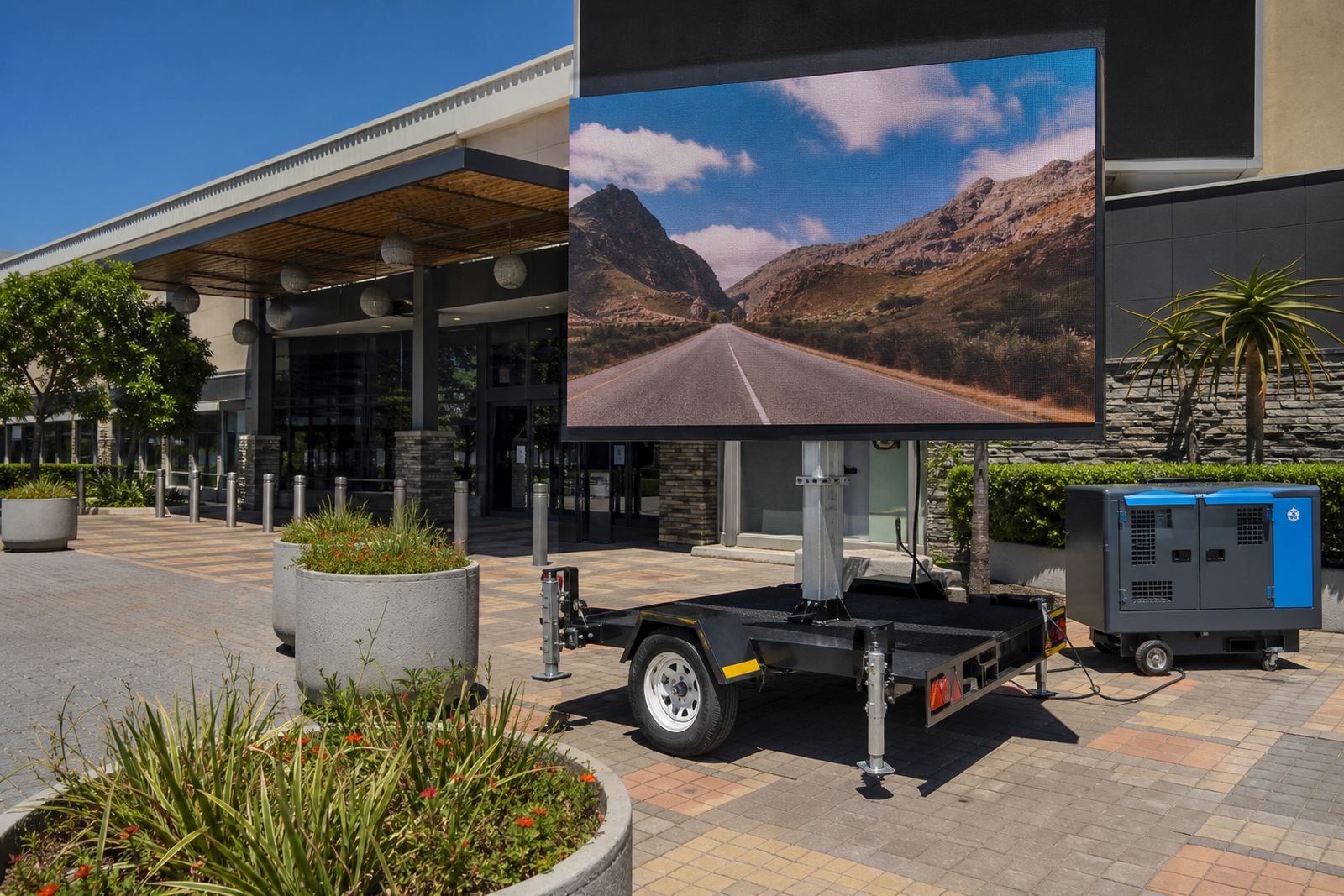
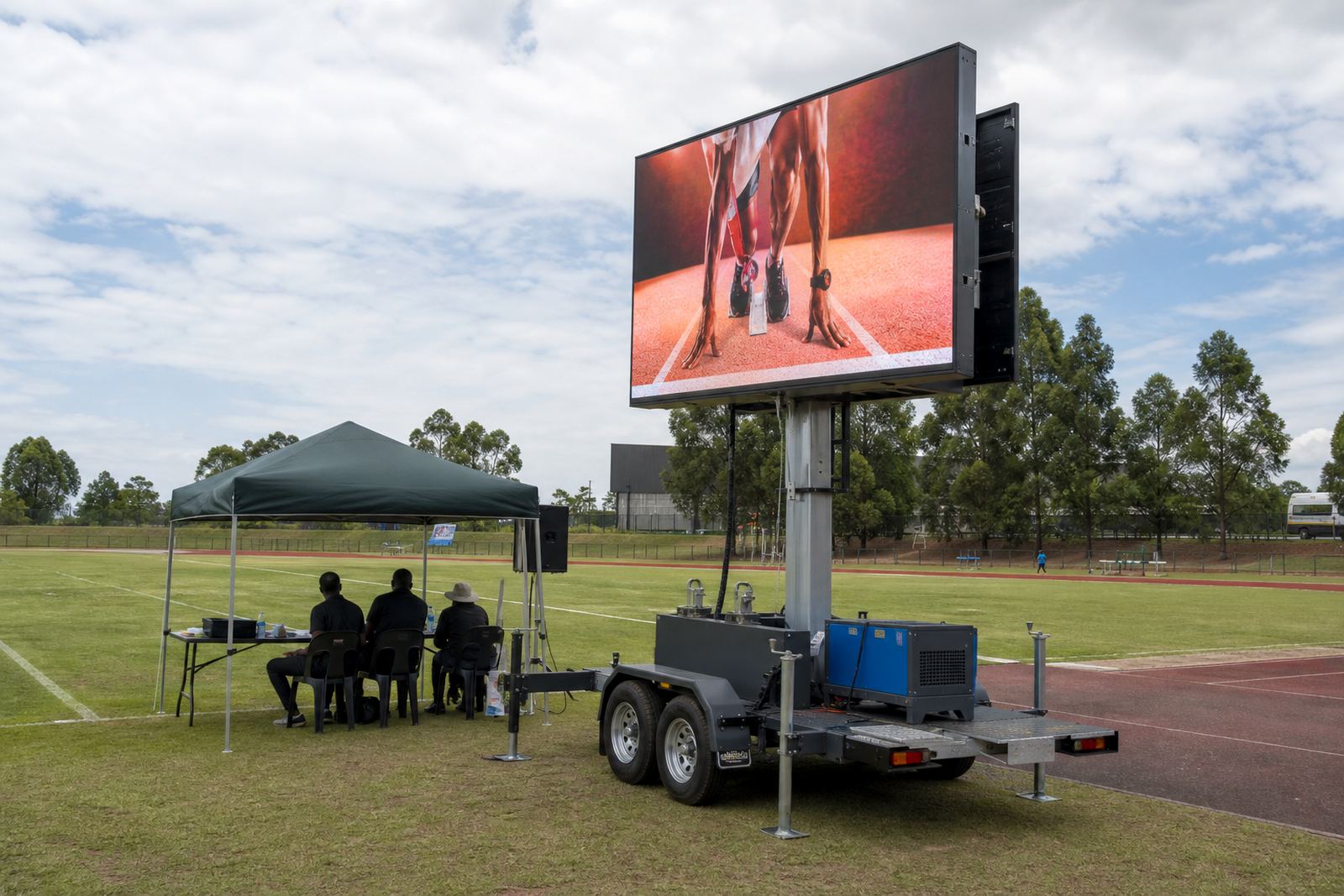
For outdoor work, this is usually done with a trailer-mounted LED screen or a framed LED box set to a height that suits the site. The screen can be angled for better sightlines and, where the layout needs it, rotated or repositioned before the programme starts. Daylight viewing matters here, so outdoor panels are chosen for high brightness, often in the 5,000 to 7,000 nit range, with pixel pitch selected to suit the viewing distance and camera feed quality.
Raised viewing is useful where there is a moving audience, a crowd behind barriers, or a route where people stand and pass through in waves. It also helps at roadshows and promotional stops where the screen has to work in tight public spaces without getting lost behind foreground activity.
Screen sizes, pitch choices and bright-light use
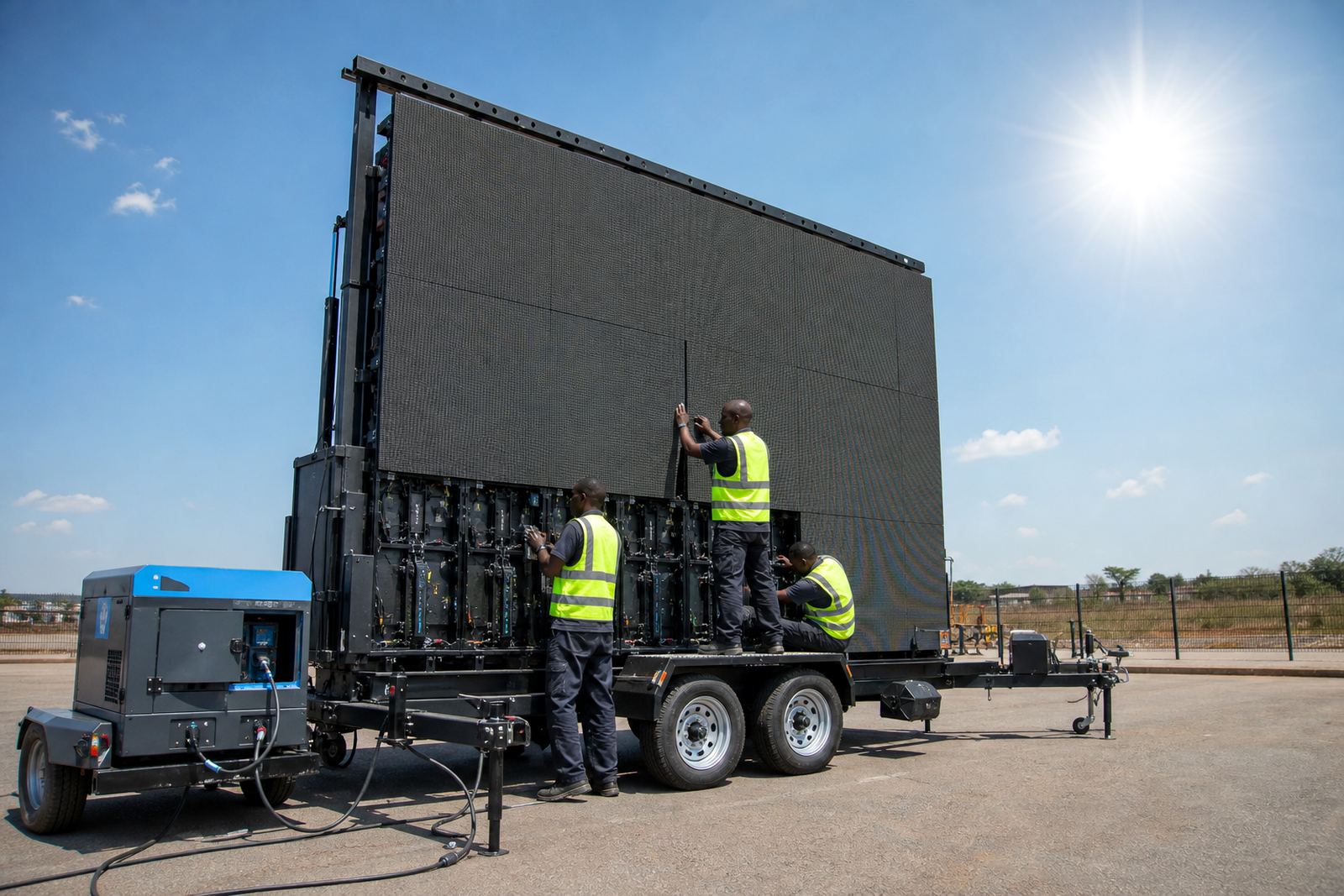
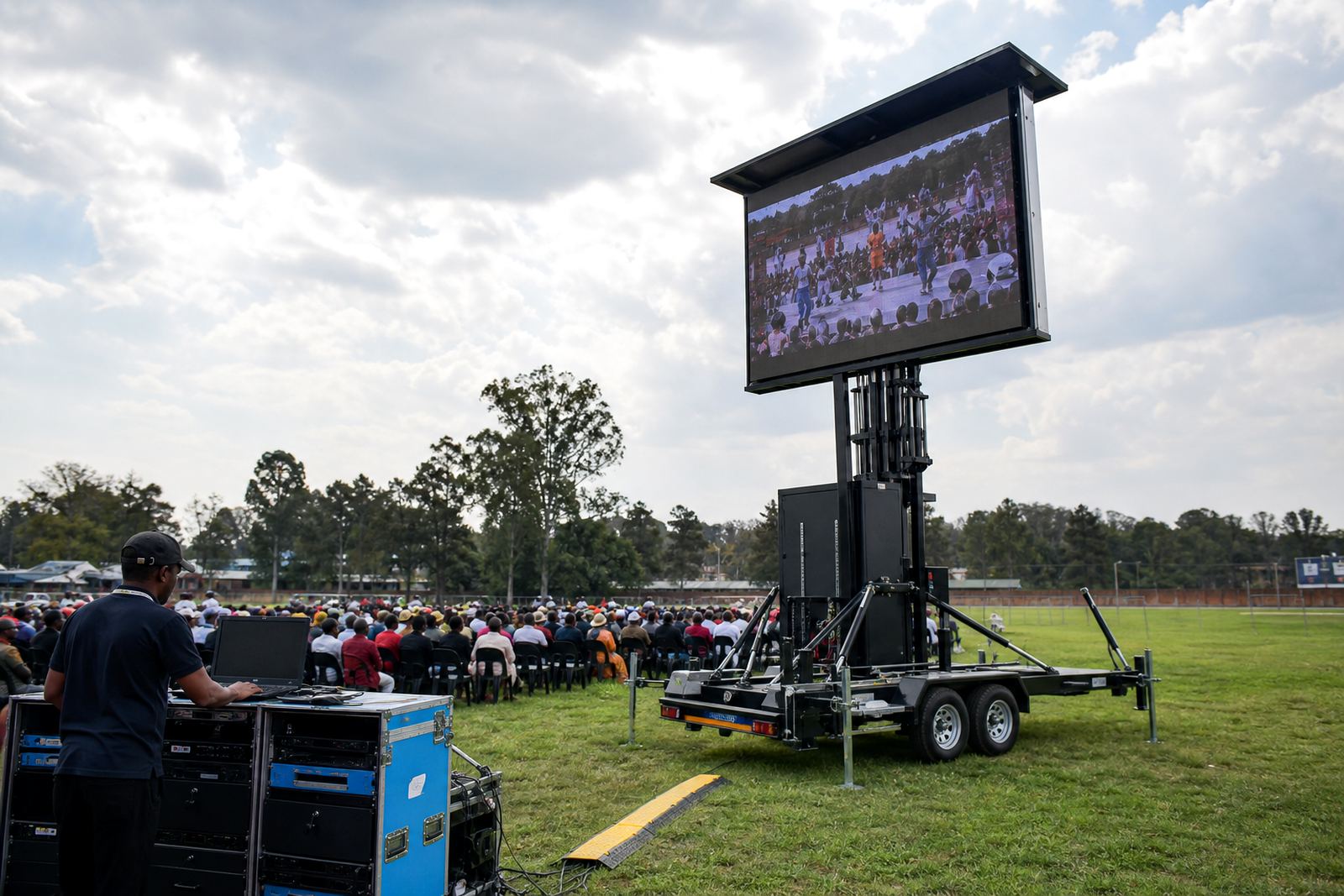
The right elevated setup starts with the picture size and the viewing distance. Smaller roadshow stops may use compact LED box units, while larger audiences need wider screen faces mounted on trailers with hydraulic lift systems. Common outdoor pitch ranges include 3.9 mm, 4.8 mm and 6.9 mm, with the finer pitches better for closer viewing and motion-heavy content. A trailer or box can be matched to the site so the image remains sharp without wasting power or weight on a screen that is too large for the venue.
Brightness is a real factor outdoors, especially in direct sun or on hard reflective surfaces. Raised screens are usually set with enough output to stay readable in bright conditions, and the content itself should be prepared with strong contrast, large type and clean motion. If the event includes live camera feeds, the playback plan needs to account for cabling, signal routing and any delay between source and screen.
- Screen face height selected for seated, standing or mixed audiences
- Pitch chosen for the closest row of viewers
- Brightness set for daylight use and changing cloud cover
- Wide-format content used where the screen ratio allows it
- Hydraulic lift on trailers for fast height adjustment on level ground
What the trailer or LED box needs on site
An elevated screen is not only about the panel itself, it also needs space, access and a sound plan for power. Trailer units can run from a generator or a suitable mains source, depending on the venue and the size of the display. Where power is available, cable runs must be kept neat and protected. Where a generator is used, the set-up must allow for safe fuel handling, ventilation and enough clearance around the trailer or box.
Hydraulic lift and rotation systems are there to help with positioning and viewing lines, but they still need a level parking surface and enough room for deployment. The site must also allow for safe loading, wind monitoring and a clear line of sight for the technician who is checking the screen, feed and power at ground level. In many public spaces, municipal permit guidance matters too, especially when the screen sits near roads, walkways or public gathering points.
- Level ground for trailer stabilising and safe lift operation
- Clear overhead space for raising the screen to full height
- Access for delivery vehicles and the technician team
- Allowance for wind limits and weather checks during the booking
- Permit support where public space or road frontage is involved
Where elevated viewing works best
This setup suits events where sightlines are easy to lose. Sports days need the score and action visible over a moving crowd. Concerts and festival routes need the audience to see stage content from further back without craning over people in front. Roadshows benefit from a raised screen because the crowd changes all day and the viewing distance shifts as people move in and out of the space.
It also works well for product launches, outreach activations and retail forecourts where cars, barriers or display stands would otherwise block part of the picture. In Germiston, Johannesburg and the wider Ekurhuleni area, a raised screen is often the practical answer for compact sites with active foot traffic. Further afield, the same arrangement can be delivered for Pretoria, Durban, Bloemfontein and Polokwane with the screen height and footprint adjusted to the site layout.
Making the screen taller is not the whole aim. It is to keep the image readable from the places people actually stand, park or pass through.
Setup, playback and on-site control
Raised viewing jobs usually need more than delivery and a plug-in. The setup includes positioning the trailer or LED box, checking ground stability, lifting the screen into place and loading the content in the correct aspect ratio. If the programme uses a live feed, the signal path must be tested, the playback system checked and the screen set to the right resolution before the audience arrives.
An on-site technician stays with the screen to manage playback, watch the weather and keep an eye on the image as conditions change. Content loading matters more than many people expect, because a poorly sized clip can sit awkwardly on the screen or lose detail in the corners. If the day includes multiple stops, the route, pack-down sequence and re-setup order need to be planned around traffic and access points.
- Content loaded in the correct resolution and ratio
- Live feed support where cameras or event video are included
- Playback management for programme changes and loop control
- Weather monitoring for wind, rain and safe operating windows
- Pack down and multi-stop planning where the screen moves between venues
Keeping the screen clean, safe and presentable
Outdoor LED equipment is tough, but it still needs care. The screen face should be cleaned with the right tools so dust and splash marks do not build up on the panels. Trailer hinges, hydraulic components and locking points need regular checks, and cables should be inspected for wear after transport. In coastal or humid conditions, hardware and connectors need extra attention because moisture and salt in the air can creep into places that dry inland sites never see.
Good care also means respecting wind limits and not forcing a raised screen beyond the site conditions. The technician should keep the display stable, the image clean and the area around the trailer free of loose items. If the booking runs over several days, the unit should be checked each morning before use and again when the weather changes, because a clear screen is only useful if the structure behind it is sound.
For hired units, ask for the screen face size, the pixel pitch, the height range, the power option and the access needs for the site. If the booking involves road frontage, public space or a venue gate, include the permit requirements and the exact delivery point. That lets the team prepare the right trailer, lift height and playback plan before the screen arrives.
- Confirm audience distance and the expected viewing angle
- State whether power will come from mains or generator
- Share site access notes, turning space and parking limits
- Give the content format, screen ratio and source type
- Note weather exposure, coastal air or public-space restrictions
Key facts
| Product type | Elevated outdoor LED screen trailer or LED box |
|---|---|
| Typical pixel pitch | 3.9 mm, 4.8 mm or 6.9 mm |
| Brightness | High-output daylight viewing, commonly around 5,000 to 7,000 nits |
| Lift system | Hydraulic raise with adjustable viewing height |
| Power options | Generator or suitable mains supply, depending on site |
| Service area | Germiston, Ekurhuleni, Johannesburg, Pretoria, Durban, Bloemfontein and Polokwane |