
One viewing face, one clear message
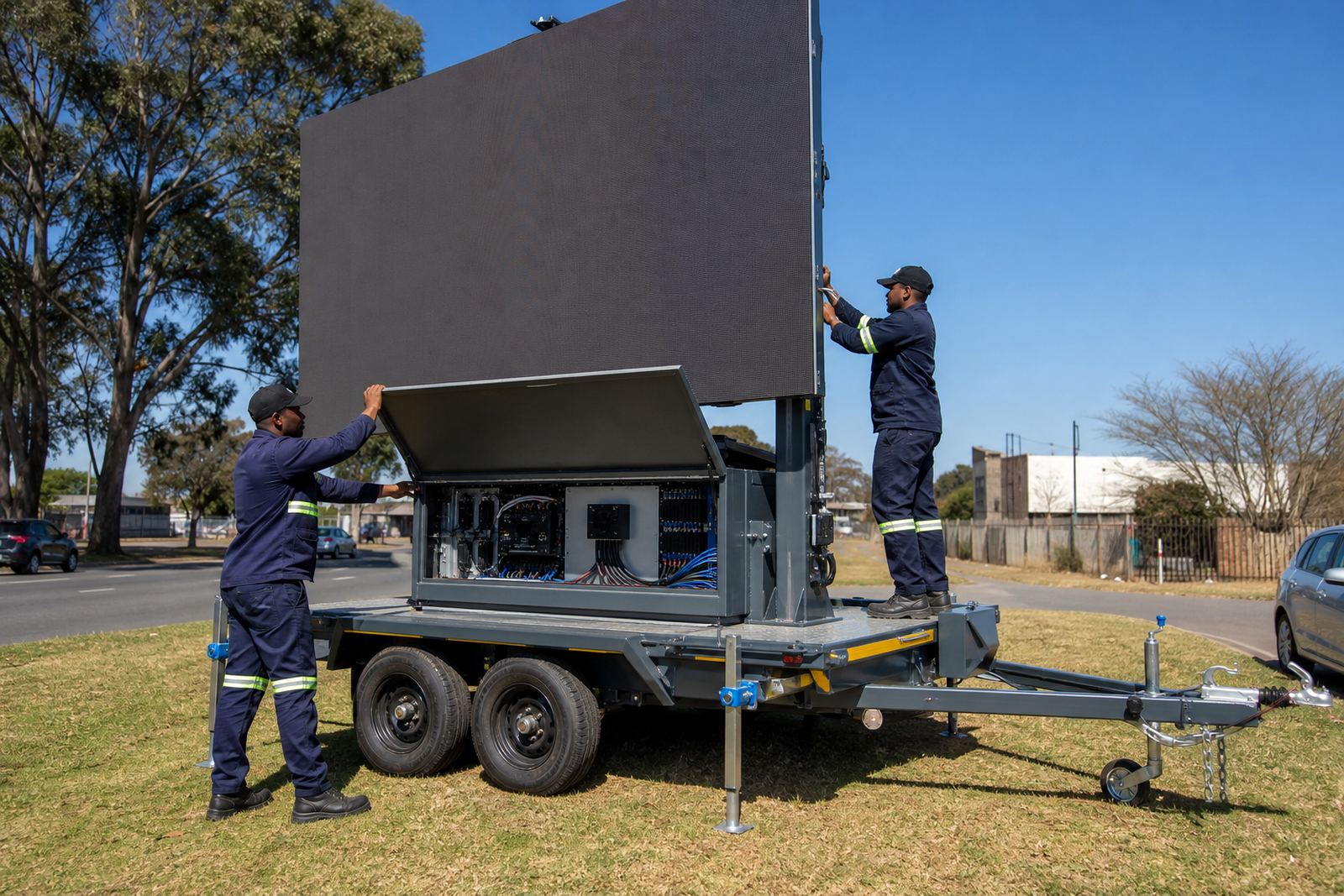
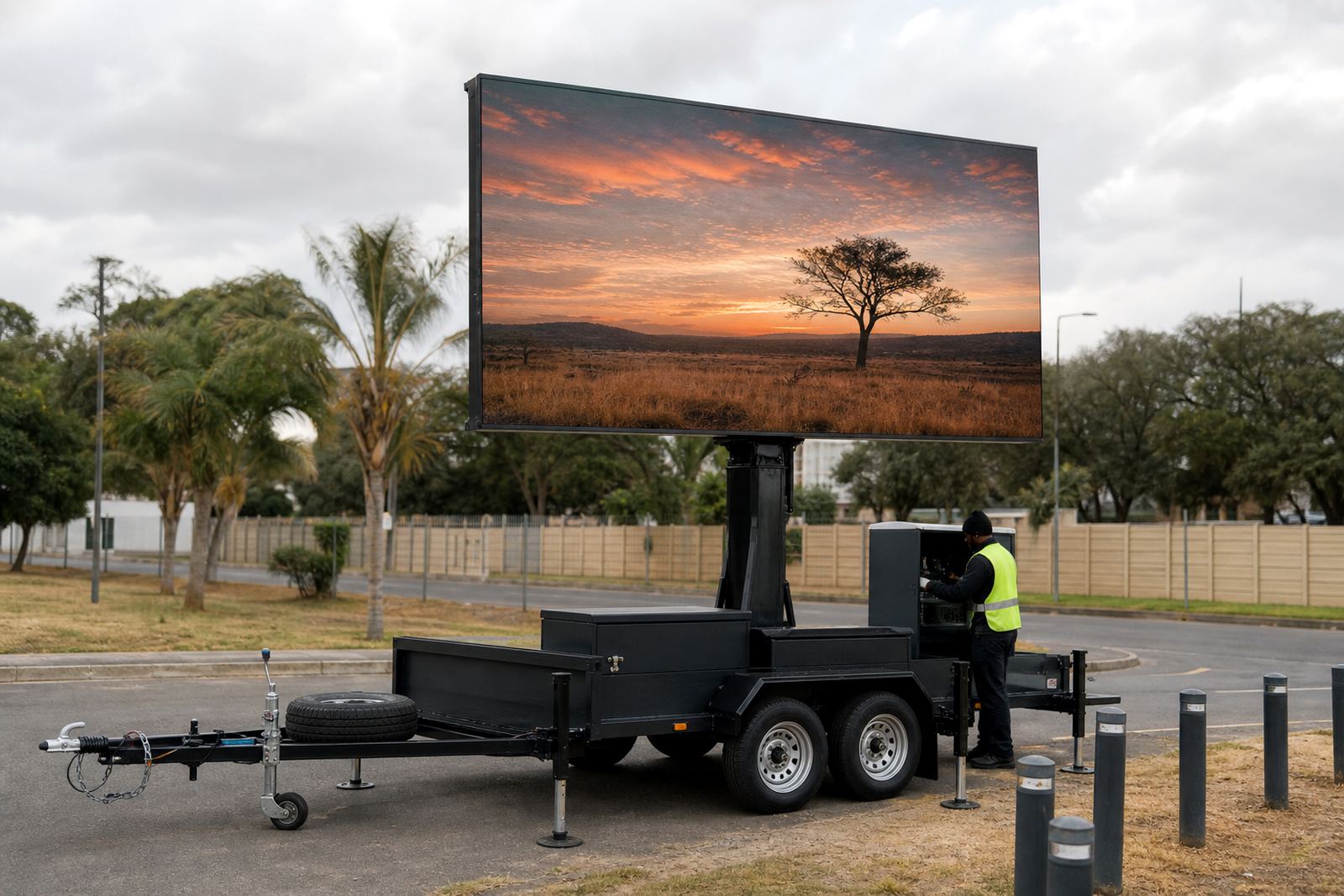
The single sided trailer is built for audiences gathered in front of one display plane, where the message needs to land quickly and stay readable from a practical viewing distance. It is used for roadside advertising, entrance points, sports days, product launches, community activations and roadshows where people move past in one main direction. The screen is mounted on a trailer frame with a stabilised base, so the unit can be positioned, levelled and prepared for outdoor use by an on-site technician.
The LED display uses a fine outdoor pixel pitch selected for the viewing distance and content type. Smaller pitches suit closer viewing and text heavy layouts, while larger pitches suit broader video and motion graphics. Brightness is set for daytime conditions, with outdoor panels typically running at high nit levels so the image remains visible in direct sun and mixed shade. Content can be played from a media player, laptop feed or live source, depending on the brief and the signal path planned for the site.
Sizes, brightness and the trailer build
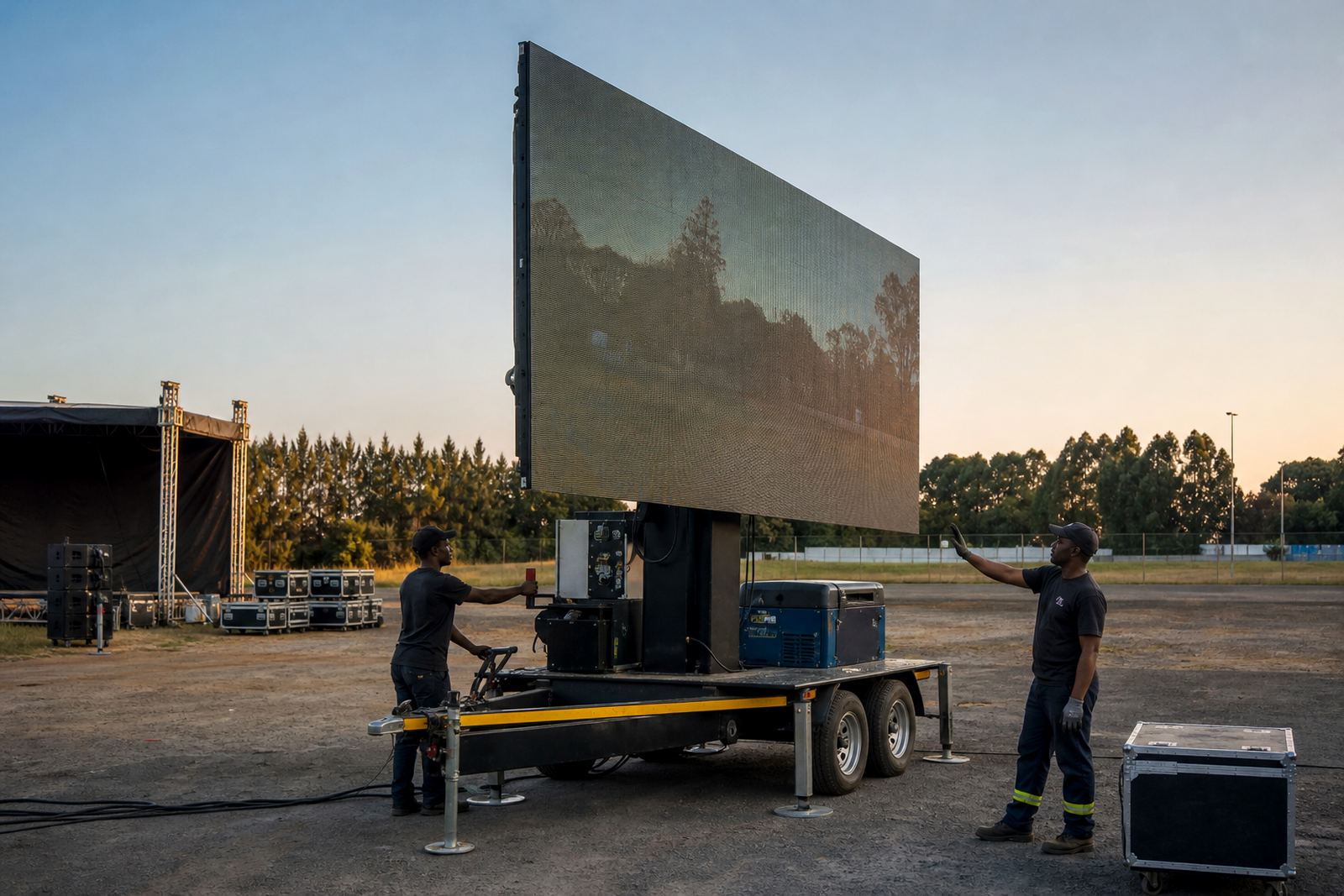
Single sided trailer builds are usually specified by screen size, viewing distance and the road access available at the venue. The trailer frame carries the display, control gear and lifting assembly, with hydraulic lift on many units to raise the screen into operating position. Some setups also allow rotation so the face can be angled for the best line of sight, though the final angle depends on the ground space and safe set-down area.
- Outdoor pixel pitches from close viewing to wider broadcast style viewing
- High brightness panels for daylight and high ambient light conditions
- Hydraulic lift for raising the screen into working height
- Optional rotation where the site layout allows it
- Integrated playback hardware for scheduled or live content
- Trailer chassis prepared for towing, parking and stabilising on site
For longer roadshows, the screen size is matched to the route and the kind of audience movement expected. A compact unit can suit tighter urban sites in Johannesburg or Kempton Park, while a larger face works well for open grounds, race days and roadside campaigns where distance matters more than close detail.
Where this format fits best
A single sided outdoor LED screen works best where the crowd gathers on one side of the trailer and the message does not need to wrap around the unit. That makes it practical for queue areas, race village entrances, stage side viewing, forecourt promotions and stand-alone brand takeovers. In busy municipal environments, the trailer format also helps when a site needs a temporary installation rather than a fixed structure.
Across South Africa, the format suits locations that need visibility without complicated rigging. We work on projects in Germiston, Johannesburg, Pretoria, Durban, Bloemfontein and Polokwane, and the planning changes with each area. Coastal humidity, wind exposure and surface conditions can all affect placement, especially in Durban and other open sites. That is why site checks, power planning and weather monitoring form part of the booking process.
- Advertising campaigns beside roads, retail parks and venue entrances
- Sports days where the audience faces one main direction
- Concert support for crowd messaging, schedules and sponsor loops
- Roadshows needing fast set-up and controlled playback
- Temporary municipal or private events where permits may apply
Setup, power and site control
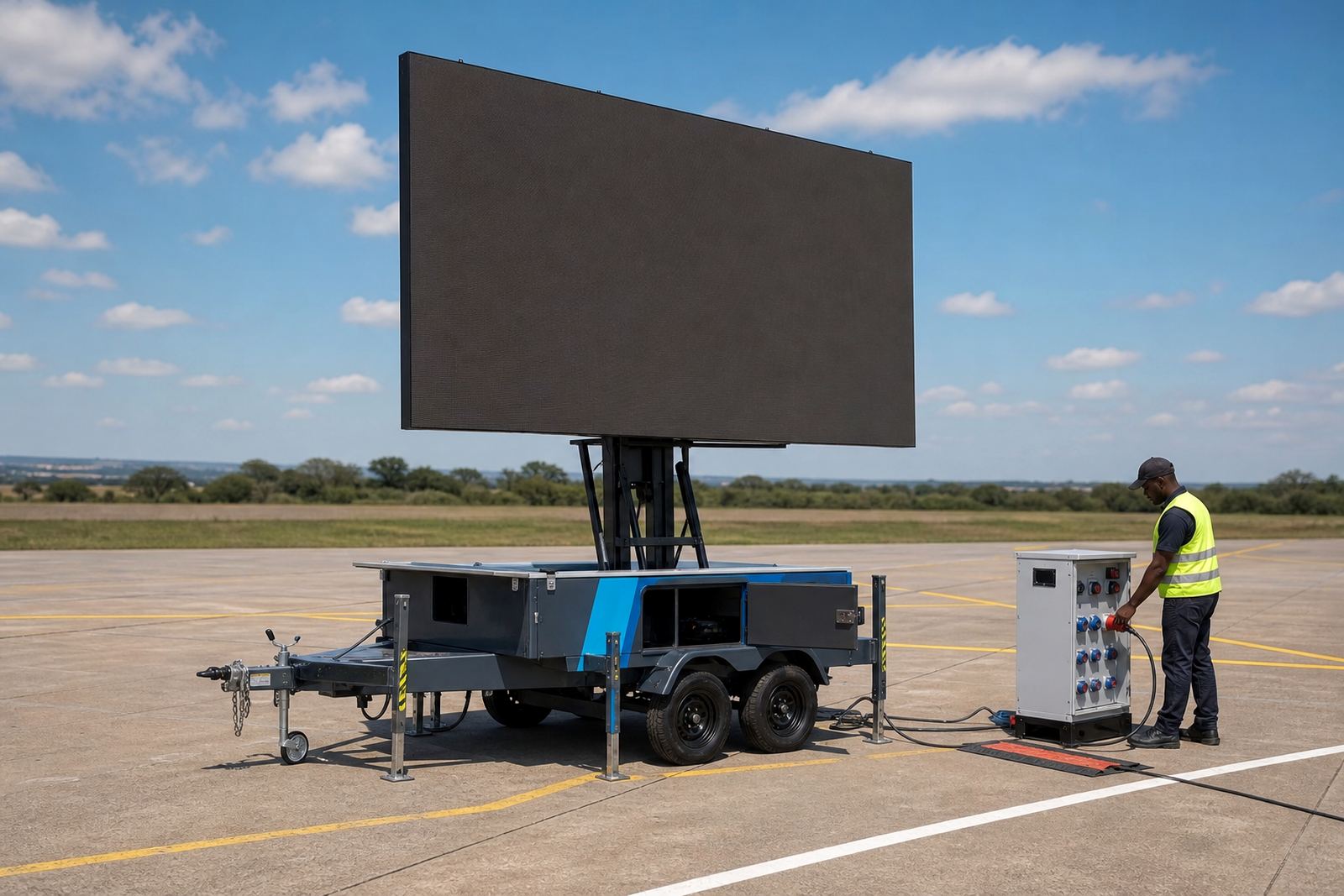
The trailer is delivered to site, positioned and levelled before the screen is raised and tested. Depending on the venue, power may come from mains or from an onboard generator arrangement. The power choice depends on the site rules, the duration of use and the practical access to supply. When a venue has restricted access or outdoor conditions that complicate cabling, the technician plans the feed and checks the cable run, signal route and placement before playback starts.
Municipal permits may be needed for roadside placement, public land, advertising exposure or traffic-sensitive areas, and those conditions are best checked early in the planning stage. Wind limits also matter on an exposed site, so the trailer is monitored and secured according to the weather and the local ground conditions. On-site technicians manage the screen, content loading, live feed support and playback adjustments so the display stays aligned with the programme on the day.
Content loading, playback and live support
Single sided screens work well when the content is planned with one strong focal direction. The playback system can run scheduled loops, still frames, motion clips or live feeds, provided the source format and signal path are prepared properly. For sports days or concerts, the technician can assist with timed messages, sponsor rotations and live camera input where required.
- Content loading for pre-approved video and still artwork
- Playback management for looping schedules and timed segments
- Live feed support for camera or stage input where the brief allows it
- Screen brightness checks for changing light through the day
- Weather monitoring during outdoor operation
- Pack down and towing after the booking ends
Content should be supplied in the correct aspect ratio and resolution for the selected screen size, because stretched or cropped footage weakens the presentation. If the trailer is being used at multiple stops, the material can be organised into a sequence for each location so the handover between sites stays orderly.
Care steps, access needs and booking checks
Outdoor LED panels need careful handling, especially when the trailer is moved between venues with dust, rain spray or rough access roads. The screen face should be protected during transport, and the technician checks connections, lifts and mounting points before each run. Cleaning must be done with the right cloths and methods, because the surface and seals can be damaged by harsh wiping or unsuitable chemicals.
Before ordering, confirm the site access, the viewing direction, the available power source, the setup window, the ground surface and whether any permit or venue approval is needed. It also helps to confirm the rough audience distance, content format, number of days on site and whether the unit needs to move between stops. Those details shape the screen size, the trailer position and the playback plan.
- Screen size and viewing distance
- Pixel pitch suited to the content and audience range
- Power source at site, mains or generator planning
- Access route, turning space and ground conditions
- Permit needs for public or roadside locations
- Content format, duration and any live feed input
LEDBox handles single sided trailer work from Germiston, with delivery and support across Ekurhuleni and beyond. The team includes logistics, fabrication and screen playback roles, which keeps the process practical when the booking involves multiple sites or tightly timed movement between venues.
Key facts
| Format | Single sided outdoor LED trailer |
|---|---|
| Typical use | Directional audiences, roadshows, sports days and campaigns |
| Display options | Outdoor pixel pitches suited to viewing distance |
| Brightness | High brightness for daylight visibility |
| Lift system | Hydraulic lift with trailer mounted support |
| Power options | Mains supply or generator planning, depending on site |