What the hydraulic lift trailer is built to do
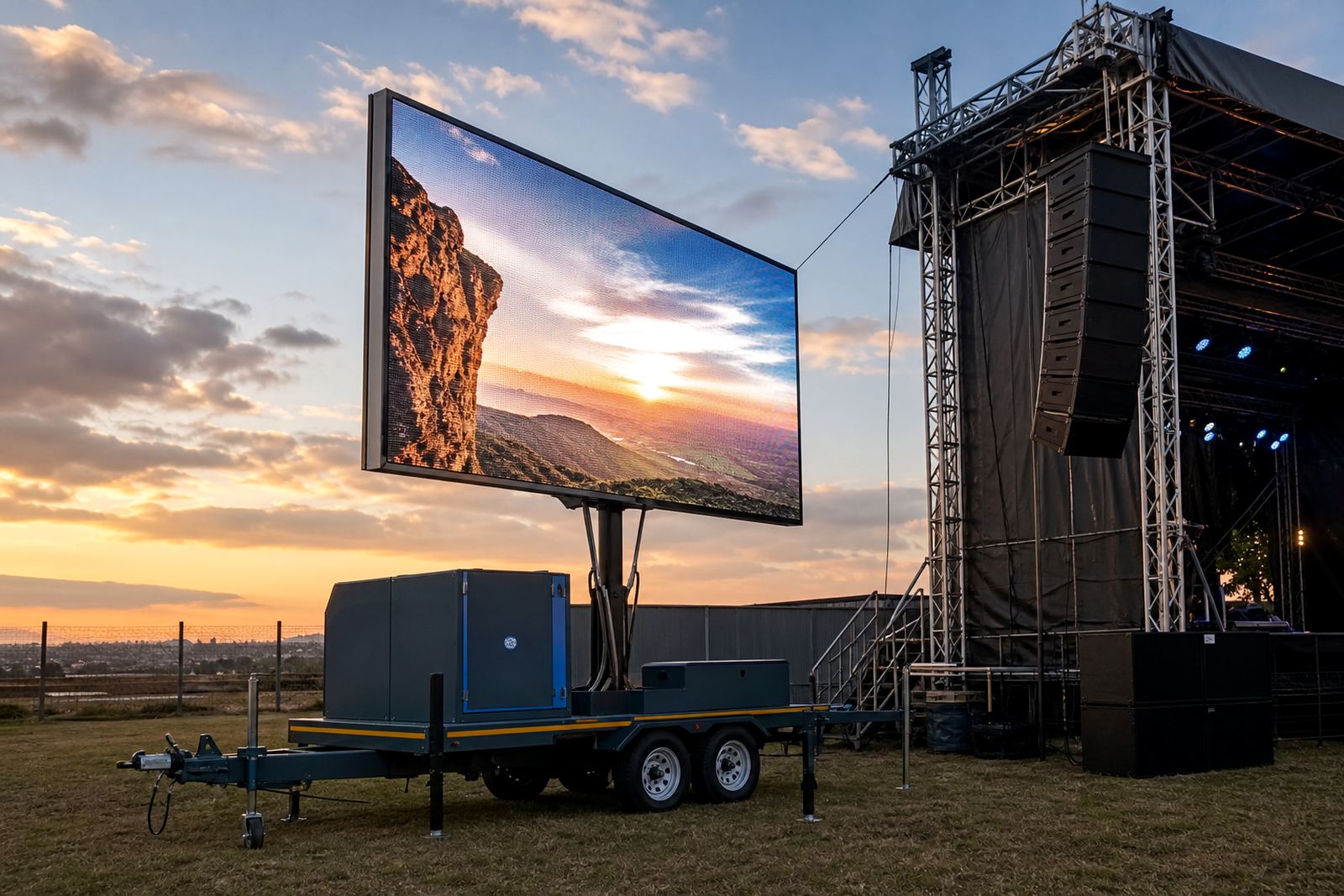
This trailer unit carries an outdoor LED screen on a lift frame that raises the display into viewing position with hydraulic action. The screen is used for live adverts, event feeds, match content and roadshow playback where the audience needs a higher sightline and the crew needs a faster setup. The hydraulic system also helps with repeat use, because the screen can be lowered for travel and raised again on site without awkward manual rigging.
Outdoor LED screens in this class are usually supplied in panel sizes that can be matched to the site, the crowd distance and the angle of view. Pixel pitch is chosen around viewing range, with finer pitches suited to closer audiences and larger pitches working well for broader viewing areas. Brightness for daylight use is typically set high enough to stay readable under sun and glare, which matters at open sports grounds, roadside campaigns and busy public venues.
Screen sizes, pitch choices and viewing distance
Trailer-mounted LED boxes are commonly built in modular widths and heights, so the layout can be matched to the brief rather than forced into one fixed format. A compact screen can suit a tighter forecourt or activation area, while a larger face is better for stadium edges, festival grounds and roadside visibility. The screen face, trailer body and lift mast all need to be matched so the unit remains balanced during transport and stable when raised.
- Pixel pitch options are selected for viewing distance, content detail and budget.
- High-brightness panels are used for outdoor daylight legibility.
- Screen orientation can be matched to landscape or tall-format content.
- Cabinet layout must suit the trailer frame and the planned viewing height.
- Content resolution should be prepared to match the active LED area.
For adverts with dense text or fine detail, a tighter pixel pitch is usually the better fit. For crowd-facing playback at wider distances, a coarser pitch can still carry motion content clearly and at lower cost. The right balance depends on where the crowd stands, how far traffic passes, and whether the screen is meant for close reading or broad visibility.
Where the lift system earns its place
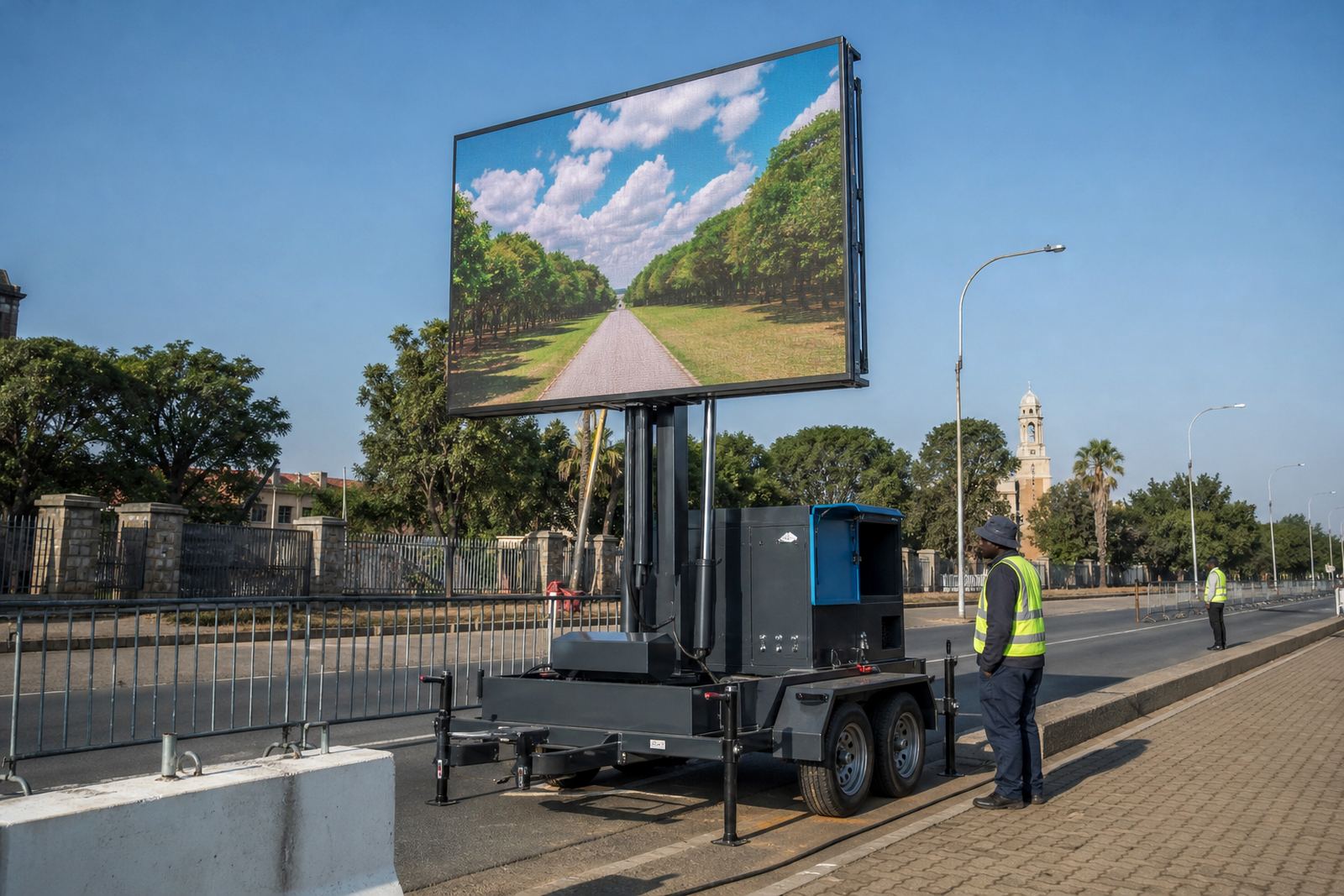
This format suits sites where the screen needs to stand above vehicles, fences, stage edges or pedestrian flow. It works well for retail roadshows, sporting events, municipal activations, school fields, launch days and temporary outdoor promotions. The raised screen face gives better viewing lines when there are people standing, walking or seated at different heights across the site.
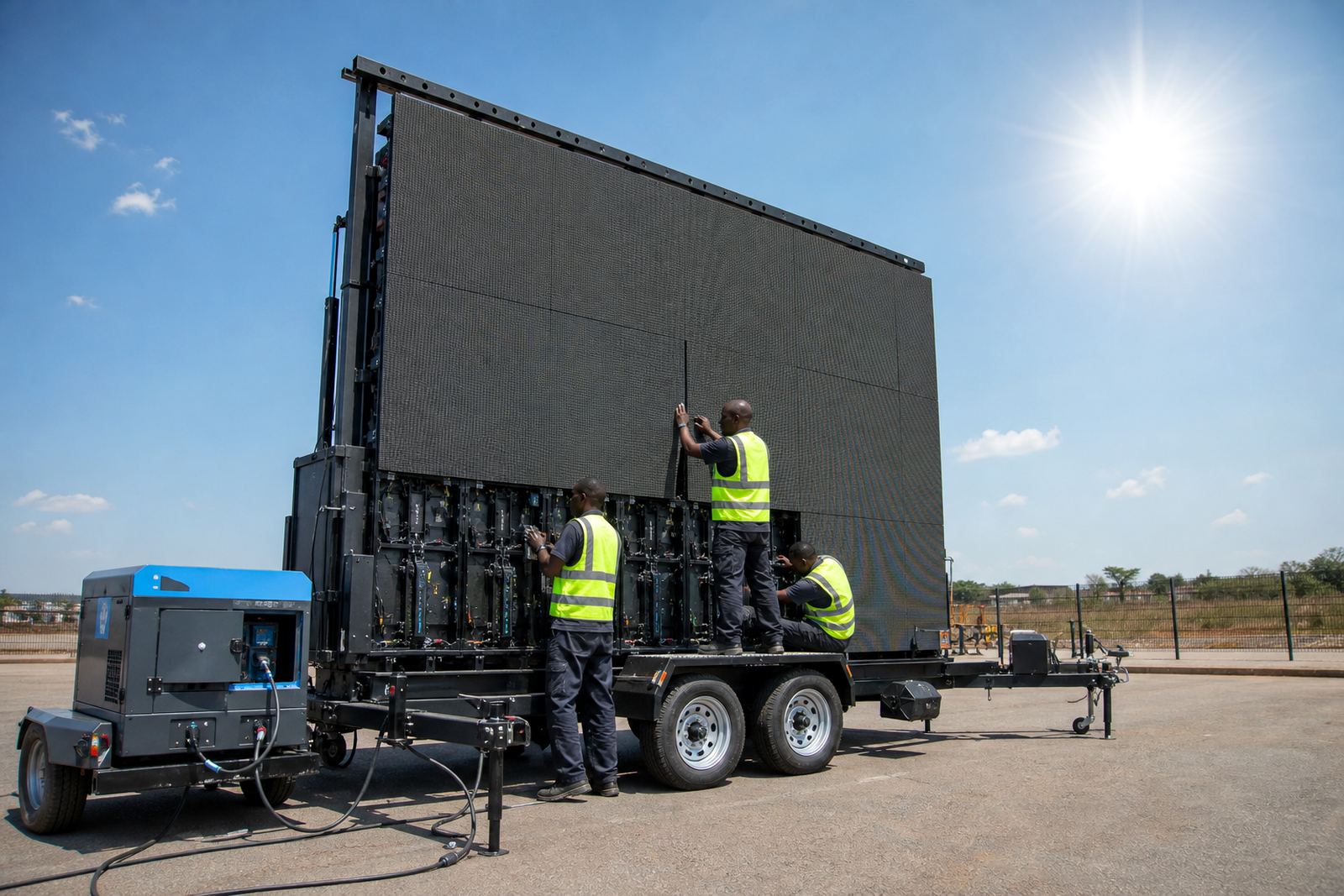
The hydraulic lift is also useful where a site is busy during build-up and pack-down. Crews can move the unit into position, level it, raise the screen, connect the signal path and start playback without building a separate scaffold structure. On tighter sites in Germiston, Kempton Park or central Johannesburg, that sort of compact deployment helps where access is controlled and turnaround on the ground is tight.
- Roadshows where the screen must move from town to town.
- Sports days and public viewing areas with mixed sightlines.
- Concert forecourts and outdoor activation zones.
- Campaign stops that need quick positioning and clear visibility.
- Sites with access rules, barricades or pedestrian control.
Power, playback and on-site control
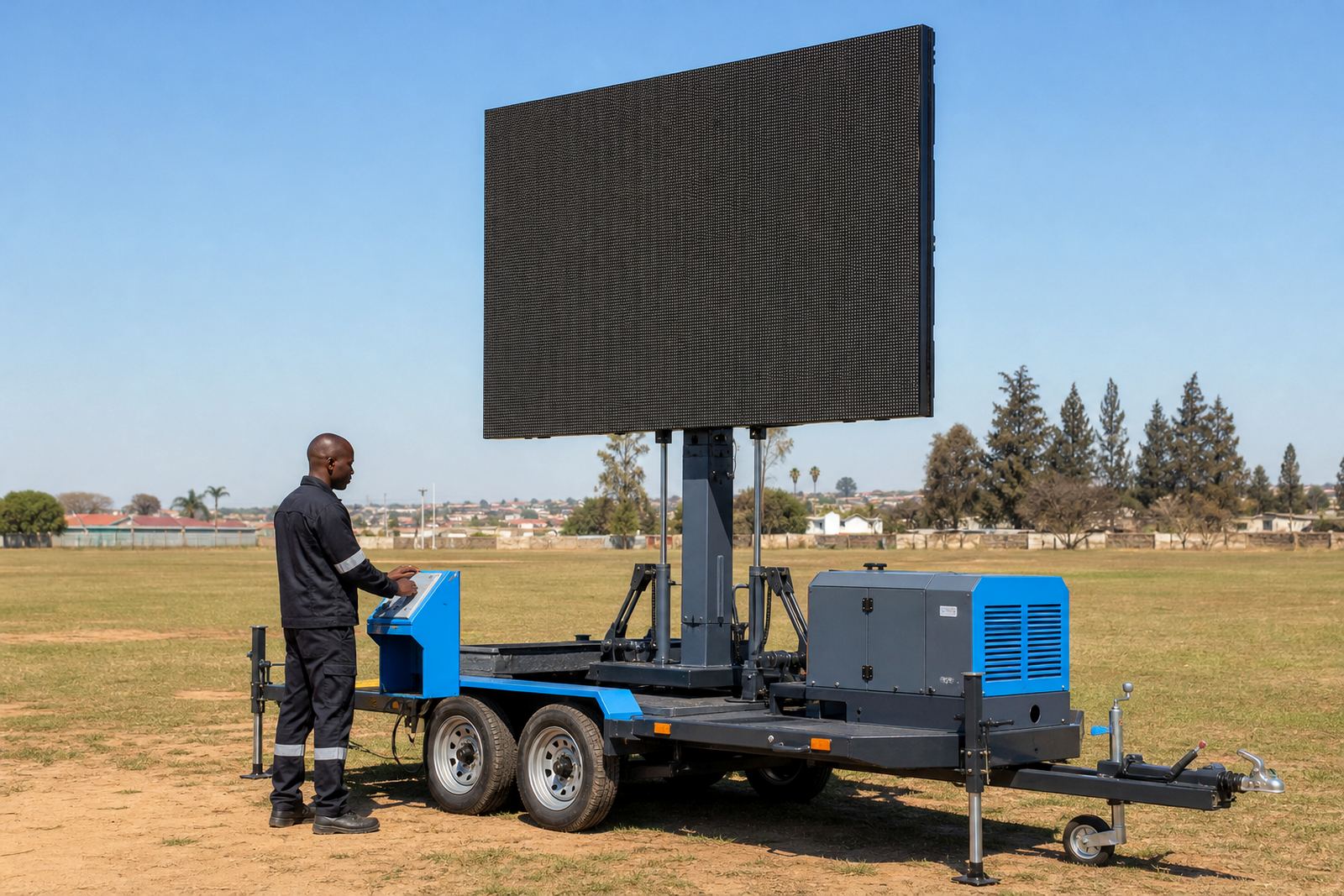
These trailer units can be run from generator supply or from mains power where the venue provides a suitable connection. The choice depends on the site layout, cable distance, access and any permit conditions tied to the location. Content playback is managed from the control side of the system, with the technician loading media, checking the sequence and watching the screen for signal stability during the session.
Live feed support can be added where a broadcast, camera feed or presentation source needs to run onto the screen in real time. That requires a sound signal chain, stable source input and a prepared content plan, especially where the audience is large or the show schedule is tight. Power planning also matters when the trailer is placed away from the main activity zone, since cable routes must stay neat, safe and practical for the crew on site.
Municipal permits are usually part of the wider site approval picture for outdoor display use. Depending on the town or venue, the organiser may need clearance for placement, traffic effect, noise management, by-law controls or occupation of public space. Weather monitoring also stays part of the job, since high wind, heavy rain and unstable ground can affect safe operation.
Fitting, setup and pack down on the ground
Our team handles delivery, positioning, hydraulic raising, screen alignment and final checks once the trailer reaches site. The unit needs level ground, space for the towing vehicle, and enough room for safe opening, lifting and cable routing. If the site surface is soft or uneven, the crew may need to adjust the placement before the screen is raised. That is one of the reasons a proper site check matters before the event day.
Pack down is done in reverse, with the screen lowered, signal removed, cables secured and the trailer made ready for travel. On multi-stop work, the logistics plan has to cover fuel, route timing, site access and the order of stops across a week or a month. A clean handover between sites keeps the unit easier to manage, especially when it is moving between Johannesburg, Pretoria, Durban, Bloemfontein and Polokwane.
- Ground must support the trailer, stabilisers and access path.
- Clear space is needed for the lift range and viewing angle.
- Cable runs should be short, protected and easy to inspect.
- Content must be loaded in the right format before arrival.
- Wind limits and weather checks must be respected during use.
Steps to check before placing your order
Outdoor LED trailers are handled best with regular checks on hydraulic action, screen face condition, wheel gear, cable ends and locking points. Dust, road grime and coastal humidity can affect exposed parts, so the unit should be cleaned and inspected after transport and after long outdoor use. The screen face itself should be treated carefully, with no pressure on the panel surface and no loose items stored against the cabinets during movement.
Before an order is placed, the practical details must be clear so the unit fits the site and the content works properly. That includes screen size, viewing distance, pitch, brightness level, power source, event location, access route, expected running hours, and whether the feed is preloaded or live. If the site has height limits, public access restrictions or municipal requirements, those need to be raised early so the trailer and its position can be planned without last-minute changes.
For bookings in Germiston, Ekurhuleni, Johannesburg, Pretoria, Durban, Bloemfontein or Polokwane, our contact form is the right way to send the site details, the event date and the screen preference. That helps the team line up the trailer type, the technician support and the transport plan around the actual ground conditions.
Key facts
| Product type | Outdoor LED screen trailer with hydraulic lift |
|---|---|
| Typical use | Advertising campaigns, sports days, concerts, roadshows |
| Lift system | Hydraulic raising for elevated viewing and travel lowering |
| Power options | Generator supply or suitable mains connection |
| Brightness | Outdoor daylight grade, selected for sun-readable viewing |
| Support | Delivery, setup, content loading, playback and on-site technician |