Trailer screens built for moving audiences
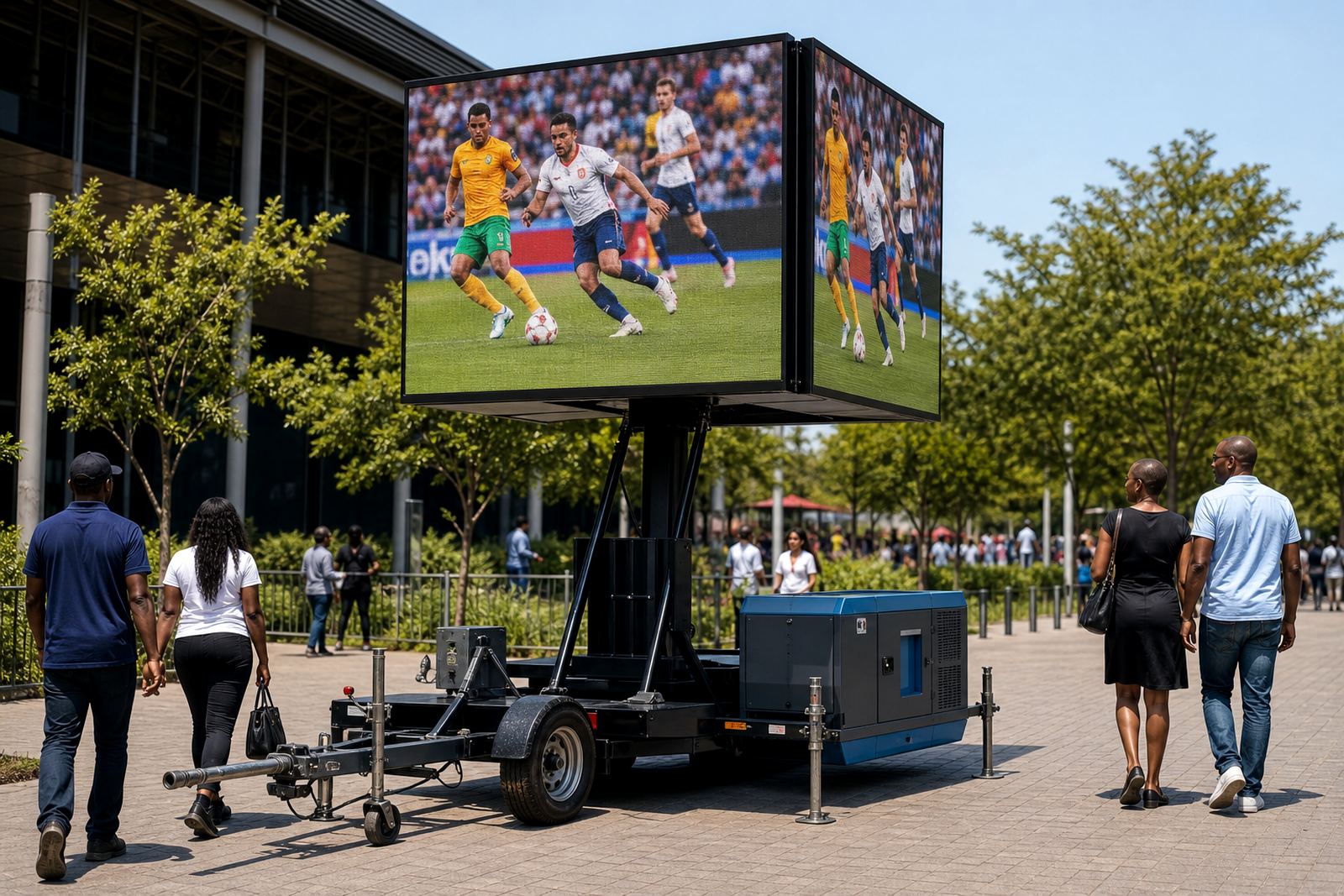
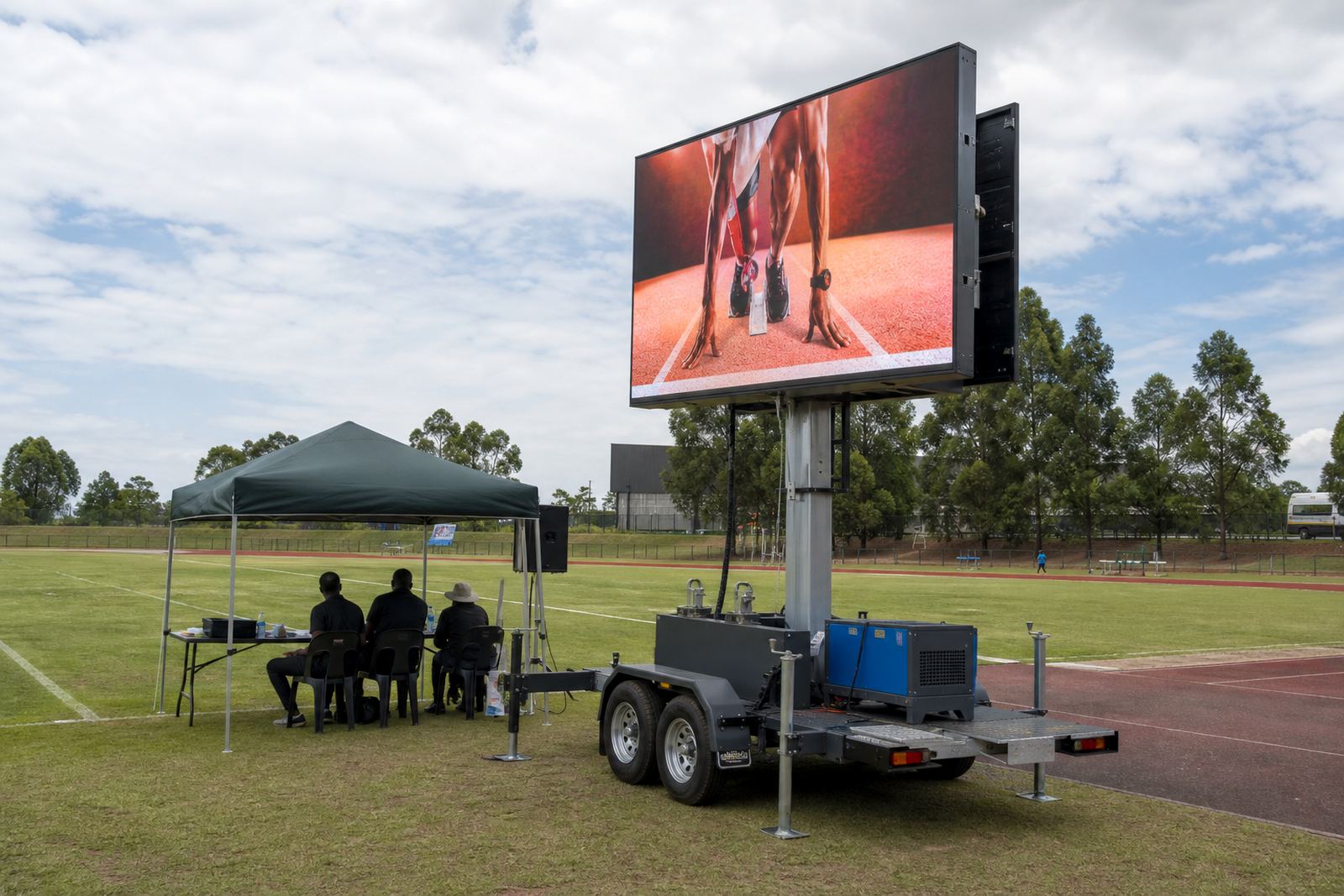
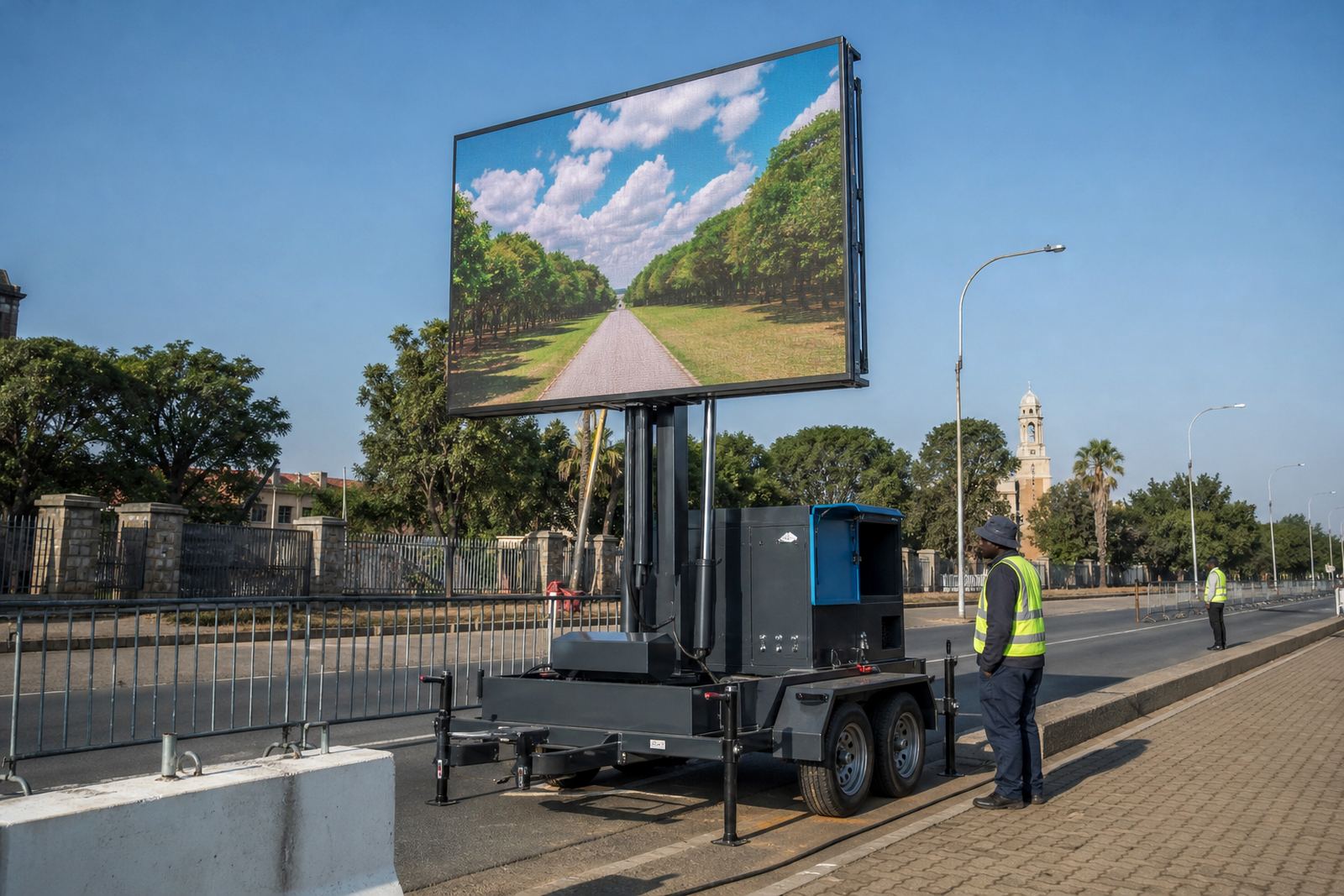
A Parade Route Screen is a mobile outdoor LED display mounted on a trailer, sized to carry route schedules, sponsor loops, safety notices and live camera feeds where people are lining the streets. The screen is set high enough for passing crowds and placed where it can face foot traffic, marshals and vehicles without blocking the route.
For parade work, the screen needs bright output for daytime viewing, usually in the 5,000 to 7,000 nits range, with a fine enough pixel pitch to keep text legible at the distances people stand. A common parade setup uses P3.9 to P6 modules, depending on viewing distance, route width and how much text or graphics must fit on screen.
Size and format options that fit a route
Route screens are usually supplied in a few trailer formats, from compact units for town centres to larger faces for broader avenues and open public spaces. The right choice depends on stopping points, turning circles, tow vehicle access and where the crowd will gather along the route.
- Small trailer screen for tight streets, councils and short route stops.
- Mid-size trailer screen for sponsor rotation, timing boards and live camera use.
- Larger screen face for long straight sections, ceremonial routes and open verges.
- Hydraulic lift mast for raising the display to a workable public viewing height.
- Rotation features where the trailer must be positioned to face a bend or junction.
Where the event uses several content zones, the screen can show a main loop, a side sponsor panel and a live feed window. That helps keep route information visible without forcing one single message to do all the work.
Power, movement and the on-site setup
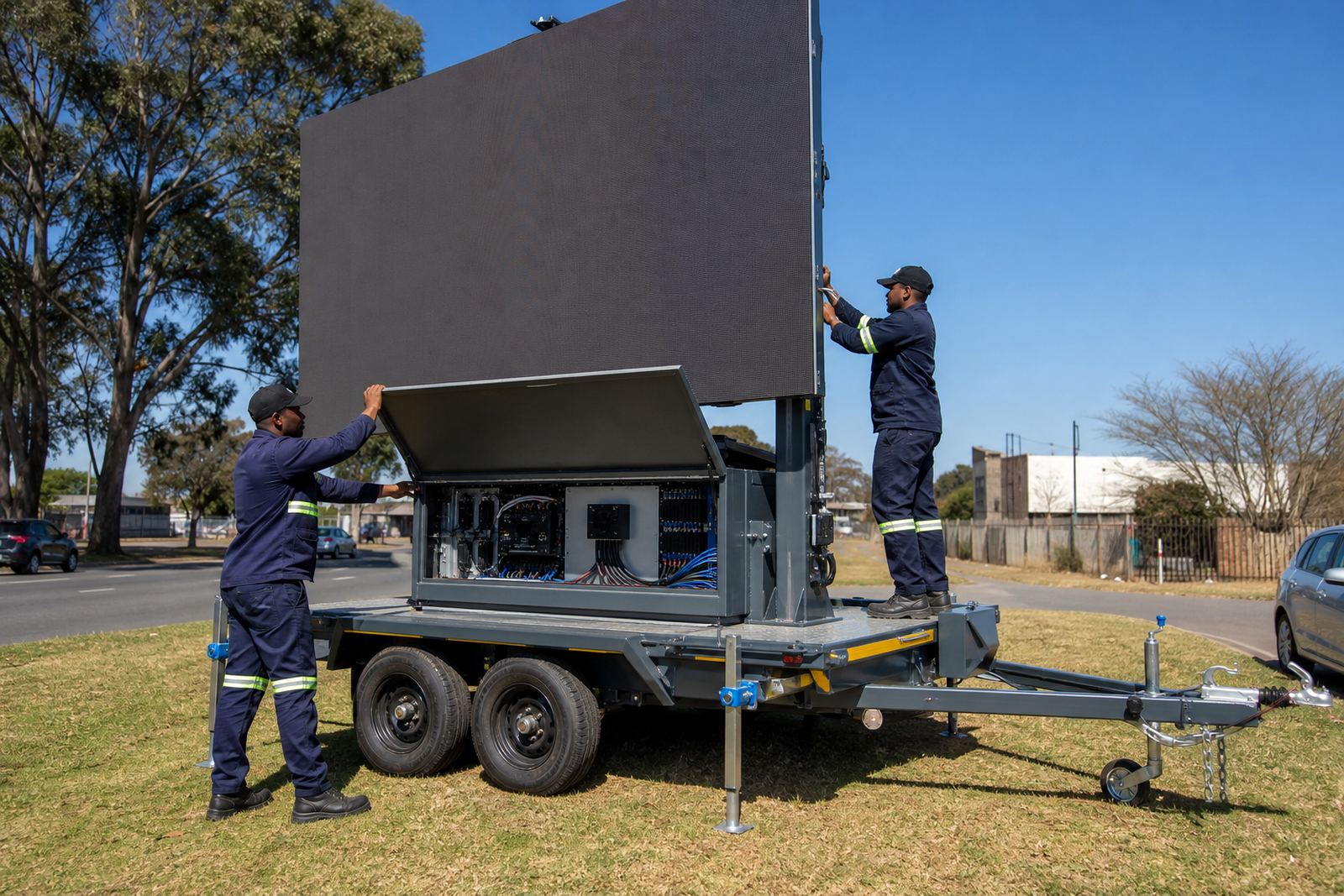
Parade route work often needs a trailer that can run from mains power where available, or from an onboard generator when the route position changes during the day. Power planning matters because the screen, processor, audio feed and control gear all need a stable supply, especially when a unit is parked for long viewing windows.
Installation starts with site checks, ground position, tow access and overhead clearance. The trailer is levelled, the mast lifted, the screen face locked into place and the playback system tested before content goes live. If the route demands a stop-and-start pattern, the technician can adjust the content order, audio levels and feed source on site.
Wind limits are part of the planning too. Outdoor LED trailers should not be lifted or left exposed when conditions exceed the safe operating range set for the unit, and the crew monitors weather through the event window. In stronger wind, the screen may need to stay lowered or be repositioned to reduce load on the mast and panels.
Where parade route screens do the job best
This product suits civic parades, heritage processions, school parades, campaign routes, sports day marches, festival processions and roadshows that move through several public points. It also works where a route needs live direction changes, sponsor reminders or safety messages that must stay readable from the roadside.
- Urban parade routes with controlled traffic flow and marshal points.
- Township roadshows where crowd control and stop points matter.
- Municipal public events that need permit guidance and route discipline.
- Sports day marches and school events with sponsor panels and timing notes.
- Roadshows that need a moving screen and repeated content playback.
Where a municipal permit or route approval is needed, the screen package can be planned around the location rules, access times and public safety conditions in general terms. That keeps the trailer placement practical for the organisers and the crew.
Content that reads cleanly at street level
For parade viewing, content needs large type, strong contrast and short messages that can be read in a glance. A screen that carries too much copy becomes hard to follow when people are walking, cheering or watching from the curb.
LEDBox can load schedules, sponsor loops, welcome messages, live feeds and safety notices before the route starts, then manage playback on site as the procession moves. The playback system can be arranged so that time-based items sit in the right order, and live content can be switched in when a camera feed is part of the programme.
- Schedule blocks with times, route stops and marshal notes.
- Sponsor rotations with clean image or text placement.
- Live feed support for stage cameras or route coverage.
- Weather alerts and event notices where organisers want them shown.
- Playback management for repeated route loops and timed segments.
Towing, upkeep and booking checks for parade routes
Outdoor screens on trailers need regular checking of locks, cabling, panel edges and mast function. In coastal humidity or dusty inland conditions, the enclosure and connectors should be inspected before loading out, and again after pack down, so moisture and grit do not sit in the wrong places.
When ordering a Parade Route Screen, it helps to confirm the route length, viewing distance, tow access, power source, content format and any permit or municipal requirements that affect placement. If the screen must face different parts of the route, say so early so the hydraulic lift, rotation range and trailer footprint suit the site. For straight boulevard use, the screen can be set differently to a tighter urban turn and that changes the spec on the day.
Use our contact form with the route outline, timing windows and the kind of content you plan to show. That gives the team enough detail to set the trailer, playback and power plan around the procession rather than forcing the procession around the screen.
Key facts
| Screen type | Outdoor LED screen trailer for parade and procession routes |
|---|---|
| Typical pixel pitch | P3.9 to P6, depending on viewing distance and content detail |
| Brightness | Daylight-rated output, commonly 5,000 to 7,000 nits |
| Lift and movement | Hydraulic lift mast with trailer positioning and rotation options |
| Power options | Mains power or onboard generator, depending on site conditions |
| Service areas | Germiston, Johannesburg, Pretoria, Durban, Bloemfontein, Polokwane and Ekurhuleni |